thorns


her smile is bloody from thorns pinning it in place

the rose of her long since dead, but


the thorns stayed behind in memoriam, jagged

headstones that look happy in the lowlight —


that dusk effect, blurry edge, deepened haze

that ghosts call alarm clock;


roses look so lovely at dusk, all those velvet layers

in velvet light, switchblades thinly sheathed in dim green;


roses have no use for subtlety,

and thorns never forget anything,


and ghosts know better than to

disturb something bleeding;


EMILY DOLAN is an American poet currently living in Seville, Spain. Her work has been previously published in The Mangrove Review, and when she isn’t writing or playing professional soccer, she can be found trying to befriend feral alley cats with cans of tuna and honest conversation.

Untitled

This slideshow requires JavaScript.


CEDRIC VAN EENOO is an award winning artist, musician, filmmaker and scholar. He is a member of Brooklyn Arts Council and affiliated with Manhattan Graphics Center. His art is represented by Tokyo Art Agency, Gallery 104 and World Fine Art Gallery in New York City.

Vinifera

The vines grew. Leaves tangled. Fruit burst. The earth cracked in its effort to thrust up more life.

In the spring, people called Maggie lucky. In the summer, they said she was blessed. With autumn, her harvest came in large and radiant, straining the other growers’ smiles with envy. Winter stilled the country, and yet the vines shone a healthy green through a thin dusting of snow, pulsing with life like veins under pale skin. And neighborly eyes grew cold.

Fruit ripened and oozed on the vine. The juice beaded and froze, transforming grapes to glittering diamonds. Maggie wondered if she should harvest them. She worried everything would shrivel and die come spring.

“It’s alright, Auntie,” her niece said, slicing onions with thin precision.

Maggie stood at the kitchen window, frowning at the dark spots where fallen grapes stained the snow.

Her niece and nephew had come to spend their winter holidays. They always did. Becca seemed much older, as if she had done all her growing in one year. She watched the vines rioting in the winter field with practiced nonchalance. While Benjy shied from them, darting down the dirt lane every morning, skates and stick slung over his shoulder.

He came back with the early sundown, sluggish and reeking from a day of pond hockey. Sometimes he came home with bruises, once with a black eye. Maggie never asked if it was the game’s natural play, or if the other boys said things that her nephew had to answer. He had grown distant in the last year, as if concentration could keep him a willow limbed boy with spring colored eyes forever.

“It’s alright, Auntie,” Becca said, again.

“Mhhmm,” Maggie’s low voice hummed off the glass.

“Benjy’s late today. The sun’s almost down.”

“They’ll be at the back porch soon.”

Becca scraped the onions into a pan, they hissed and spat as she stirred them through hot oil. Maggie left the frost-edged window and began piling dishes in the sink. Becca helped herself to what remained of her aunt’s red wine. Maggie raised an eyebrow. Becca raised a shoulder.

“Mom will never know,” she said. “Besides, red wine’s good for your heart.”

“You’re too young for heart trouble.”

“You should grow Syrah.”

“Syrah’s surly. We don’t have the right climate for it.”

“December’s not the right climate for anything.”

And yet the vines grew.

In the year past, Becca had gotten notions of Paris and culinary school and romance under European skies. But Maggie’s sister believed illusions were best shattered early. She told Maggie to take the kids to town, stuff them with burgers and fries, anything salted and greased, rather than let Becca near a stove. But Maggie never had much defiance in her and found it too easy to bow to her niece’s efficiency.

And watching the tall girl at the stove, Maggie knew Becca would run to the Old World. She’d run from her mother’s petty tempers and her own unfinished dreams.

Maggie had made the journey herself, once. But she hadn’t sought oil painted sunsets or velvet accents. She’d gone to Germany, learned about soil, mineral deposits, and microclimates. The only thing that caught her eye with longing was a cottage on an abandoned bit of vineyard, choked by wild hops, untamed vines mingling for as far as she could see under a sky leaded with rain.

When Benjy came home at last, there was a bloody gap where his left eyetooth used to be. He insisted it was a baby tooth, not a big deal. Wasn’t he too big to still have baby teeth? Maggie fretted, thought about warming up the beastly old pick-up and taking him to a doctor? A dentist? She wasn’t sure. And eventually she gave into his thirteen-year-old obstinacy and settled for giving him some ice wrapped in a dishtowel.

“You won’t tell Mom?” he mumbled, through the towel.

“She’ll notice.”

Benjy shrugged his doubt.

“They trapped a bird,” he said.

“The other boys?” Maggie frowned.

“The vines.”

Maggie peered out the window, but in the dusk, she saw no feeble flap of wings.

“It’s probably caught in the wire,” Maggie said. “They’re pests, you know.”

“It’s the vines,” the boy insisted. “They’re mad it tried to eat the grapes.”

Becca clucked her tongue from the stove, but she didn’t tell her little brother he was being stupid. Maggie shrugged on her heavy coat, swamping her in flannel and old- snow musk.

She tramped along the nearest row of vines, listening for any cries from further afield. But the bird must have freed itself. All Maggie found were a few gray feathers twisted in a trellis wire.

Later, ice melting in the sink, bloody towel crumpled by the draining board, Maggie watched the vines in the bluish moonlight. She wondered what had filled them with such unsleeping life, and if they meant to strangle the house. Maybe she could find the answers in their wind raked pattern. Flakes whisked down, catching on the still green leaves, lacing the trellises. The vines seemed to shiver. Maggie blinked, feeling foolish.

She decided Benjy’s jaw needed to recover, so she took the kids to town the next day. On the main street, a gaggle of boys sprayed slush over her shoes, as they chortled past on their fat-tired bikes. Maggie sunk her fingers into Benjy’s puffy coat sleeve when his body jackknifed toward the retreating riders.

“Who wants ice cream?” Maggie asked.

Benjy swore and sucked at the red gap in his teeth.

“Don’t talk like that,” Maggie said. She turned an appealing gaze to Becca, who watched two women lean over strollers and wag pointed chins at Maggie. Becca’s eyes turned to flint.

Maggie repeated the offer of ice cream.

“It’s winter,” Becca said.

Their cheeks were apple bright and stinging, the sun too pale and distant to do more than wring water from last night’s icicles.

“Since when do kids turn down sweets?” Maggie asked. But she thought of Becca sipping the tannin dried wine without a pucker to her lips.

Benjy had slipped three doors ahead, close to the corner where the boys lingered with their bikes.

“It’ll be good for his tooth,” Maggie said.

“It won’t grow back.”

But she caught up with her brother and hustled him across the street. The shop was empty, as Maggie had known it would be. The bell above the door muffled by a wilting sprig of mistletoe. A poison and a bane against witches, her sister had whispered on a far-gone winter eve.

The air was sweet and warm, but the ribbons around the proud chocolate nutcrackers looked defeated. A teddy bear cradled a sign in his coco paws declaring the holidays were now for sale, half-off.

Mr. Peters, white haired and weathered, stood behind the counter in his neat pinstriped apron. He looked like a gnarled tree but he bustled about their order without a creak of arthritis. He gave the children extra scoops and Maggie a wink doubled by his round, wire rimmed glasses.

“Trouble with your vines, I hear,” he said.

“Yes,” Maggie smiled tightly. No one talked to her about the vines anymore.

“They’re getting all grown-up,” Mr. Peters nodded at Benjy and Becca, their faces sticky with black cherry and pistachio. They didn’t look grown-up just then, elbowing giggles out of each other.

“You can’t do much about it,” Mr. Peters adjusted his glasses with a fluorescent twinkle. “Except stay on your toes. Vinifera’s tricky.”

“Yes,” Maggie agreed.

“Hard to manage on your own.”

“I manage.”

“And no one ought to say otherwise. You been there six years now, haven’t you?”

“Seven.”

“I ought to be minding my own business.”

A sound like ice cracking on a warm winter day silenced Maggie’s next question. Benjy stood amidst glass shards and rolling gumballs.

“I’m sorry,” Maggie said. “I’ll pay for it.”

Mr. Peters waved a papery hand. “Don’t worry. These things happen.”

Still, Maggie tucked some bills under the memo pad beside the register while the old man went for a broom. Benjy apologized and did his best to help with the mess, but his well-intentioned feet sent the rainbow-colored candy spinning into corners. Maggie felt Mr. Peters was better left on his own. She ushered the children back toward the faded mistletoe.

“I’m sorry, again,” she said, over her shoulder.

“It’s nothing. Don’t let it discourage you,” Mr. Peters chuckled. “Not too late to have one of your own.”

He meant it mildly, so Maggie only shook her head and left.

Later, Maggie stood in her kitchen, twirling a long-stemmed wineglass like a flower she meant to pluck the petals from, while the sun flared away in the west. She could hear the children bickering in the next room. Mixed with the hum of the television, their voices sounded scripted and hollow.

The awful truth was they wore on her. She would be relieved when they returned to their mother and Maggie was left alone with the reaching vines. It wasn’t what she should want. She knew that.

The syrup sweet liquid in her glass smelt of strong sun and ripe flowers. It was the first she had pressed from the unlikely grapes and it made her head light.

She wondered again if she should harvest before winter was through. By spring, the crop might be lost. By summer, the town might find an impassable wall of greenery around the house. But Maggie had shears out in the shed, the metal darkened with age still held its edge, and the next autumn might bring grapes bursting with a finer vintage.

The children had subsided. Maggie would call her sister in the morning, tell her to let Becca go to Paris. The girl would have to see things for herself sooner or later. And if she came home with her dreams scattered, well maybe by then Maggie would be ready for an extra hand about the place.

A coyote darted, russet and ragged at the tree line. The sun stained the sky like spilled wine. And the vines grew.


B. B. GARIN is a writer living in Buffalo, NY. She holds a B.F.A. in Writing, Literature, and Publishing from Emerson College. Her work has appeared in the online journal Embark. Her chapbook New Songs for Old Radios is available from Wordrunner eChapbooks and she has been nominated for a 2020 Pushcart Prize. She is a current member of the Grub Street Writing Center, where she has developed a series of short fiction pieces, as well as a novel.

Interview with Ryan Black

Naomi Day: Your poems invoke many numbers: dates, measurements of time and space, etc. Does this represent anything personal for you? Is this intentional? 

Ryan Black: I don’t know if it represents anything personal other than my want of documenting the histories of these spaces. And by histories I mean the constructed histories, both personal and public. And there’s so much I’ll get wrong, so I can at least get the numbers right. Mostly.


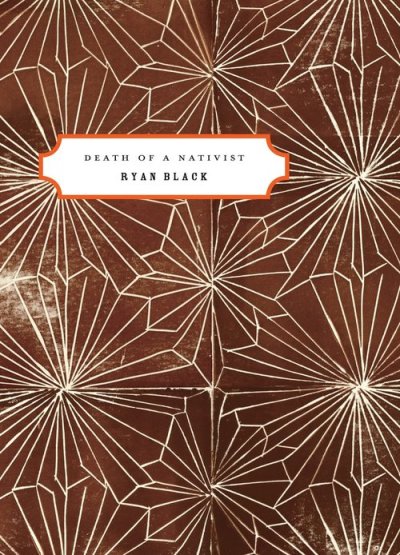
Death+of+a+Nativist+cover.jpg

Death of a Nativist by Ryan Black (Poetry Society of America, 2016). Click here to learn more and purchase a copy.


ND: You track time in fascinating ways in your poems. You do it with different speakers, points of view, different times, etc. Does this reflect how you experience time yourself or is it the way you process in writing? Do your poems come out in this fashion or is the timed structure set up later, during the editing process?

RB: You’re right. Time is, perhaps, the recurring preoccupation of the book. It loops. It overlaps. It runs ahead and trails behind. It’s an experience of time as a kind of simultaneity, a past that “is not even past,” as Faulkner says, or something like that. I think of many of the poems as reckonings with history and place. If Queens is a model of where our nation is heading demographically, which has been long been argued, then an honest interrogation of its past feels paramount to me. Honesty has never been our national inheritance.

Joanna Cleary: Your poems drastically differ in form, from couplets in “Skip to My Lou” to less traditional aesthetic styles in “Why Bother” and “Not Once.” Do you have a poetic style that most resonates with you? How do you go about determining the way in which a poem should be written?

RB: The book’s longer poems are mostly written in tercets. I feel most comfortable in that form. I think tercets allow for the weaving of time I mentioned earlier. Or at least it feels that way to me. They look back as they move forward. They’re discursive, open to digressions. And they braid time like a fabric. A textile.

The couplets in “Skip To My Lou”were the form I found for a sequence of ballads spaced throughout the book. Each poem in the sequence takes for its title a different traditional American song. I was interested in how the folk tradition, with its narratives of misogyny, racial strife, class struggle, and sudden, inexplicable violence, might be adapted to contextualize hyperbolic and fetishized representations of Queens within an America steeped in sensationalism. The material for these poems is stories of petty crime (the hustler in “Skip To My Lou”), or murder (the racial violence of “Stagger Lee,” the misogyny of “Ommie Wise” and “In the Pines,”) or failed responses to natural disaster (the disrepair of post-Hurricane Sandy in “Home By the Sea”). If we pay attention to consistencies in the representation of urban spaces, we might recognize these as rhetorical spaces, that is: spaces made by rather than creating modes of representation.

Forgive me. I didn’t answer your question about the couplets. I’m not sure why couplets other than that tercets weren’t quite right.


JC: Regardless of the extent to which your poems are autobiographical, you write about extremely vivid characters, such as Bobby in “Not Once.” Who are your muses?

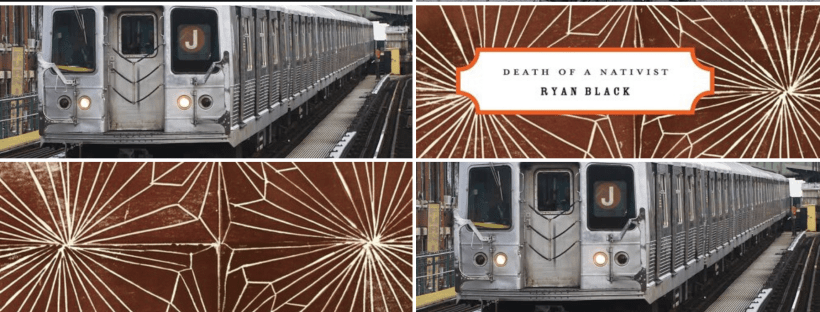
RB: Bobby is a muse, for sure. The people I would see everyday as a kid living in South Queens. The places in New York City I’ve known intimately. And trains. Elevated trains. The J train is the elevated muse of “Not Once.” It’s my favorite train in the city.

ND: You mentioned constructed histories and interrogations of the past, and many of your poems explore those themes by looking at what’s already happened. Do you ever write forward, with an eye to envisioning what the future might look like based on these past experiences, or do you find the honest exploration of bygone events more impactful?

RB: I would love to write poems that envision potential futures. I would love to write speculative poems like Cathy Park Hong or Eve Ewing. I’m just not there yet. I’m still mining the past for truthful ways to talk about the now. The closest I’ve come to writing “what the future might look like” is the final poem in the book, “A Gun to the Heart of the City,” which imagines an alternative past, one in which a planned protest—a protest that never actually occurred—of the 1964-65 World’s Fair in Queens did in fact happen. A stall-in that disrupted opening day, forcing the city to confront its continued racist practices.


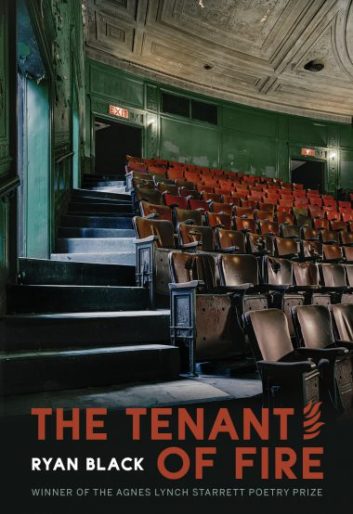
black_ryan_comp-380x554

The Tenant of Fire by Ryan Black (University of Pittsburgh Press, 2019). Click here to learn more and purchase a copy.


ND: Your poems often have an unidentified “we”. Is this intended to pull the reader into actively occupying the space you’ve set up, or do you have a specific “we” in mind — or is it something else entirely?

RB: I think I often have a specific “we” in mind, or a “you,” at least. Many of the poems come out of an epistolary tradition. The intimacy and logic of letter writing seemed right for the kind of work I wanted to do in the book. I worry about writing out of a “we”, of speaking for someone else. I certainly don’t want to adopt an Olympian tone, but sometimes “we” just felt necessary.


157777871438027382.pngRYAN BLACK is the author of The Tenant of Fire (University of Pittsburgh Press, 2019), winner of the 2018 Agnes Lynch Starrett Prize, and Death of a Nativist, selected by Linda Gregerson for a Poetry Society of America Chapbook Fellowship. He has published previously in AGNI, Blackbird, Ploughshares, The Southern Review, Virginia Quarterly, and elsewhere, and has received fellowships and scholarships from the Adirondack Center for Writing, The Millay Colony for the Arts, PLAYA, the Sewanee Writers’ Conference, the Queens Council on the Arts, and the T. S. Eliot House. He is an Assistant Professor of English at Queens College of the City University of New York.


Writing in The New Year

2020 began four days ago, and folks around the world are already eagerly fulfilling their New Year’s Resolutions. The Inklette team came up with three questions to jumpstart thinking about their writing lives in 2020. Take a look through our answers, and come up with your own!


What single piece of work are you most proud of having completed in the last ten years?

Between 2018 and 2019 I finished an Afrofuturist short story in which I explore my own experience as a Black mixed-race woman through the lens of a dark-skinned woman who learns she can swap her skin color with other peoples’. This was an emotionally challenging story to write, but it was also incredibly cathartic.

– Naomi Day, Blog Editor


Small Talk, my most recent poetry collection that came out in 2019 and was published by Writers Workshop India, Kolkata, is the work I am proudest of. It is an intimate poetry collection and, at least for me, a radical labour of self-love and self-care, actually. This is the kind of poetry collection I wanted to write and get published as a child, at the start of the decade I believe. And I have now managed it. It feels beautiful. 

-Devanshi Khetarpal, Editor-in-Chief


In 2019 I published Survive July, my first fiction chapbook. The collection of flash, mini plays, search histories, and text messages addresses a young woman’s experiences grappling with mental health, sexuality, and relationships. In addition to working with these complex themes, ensuring each piece in the collection was both self-contained and cohesive with the work as a whole was incredibly challenging and rewarding.

-Sophie Panzer, Prose Editor


I’m most proud of my first poetry collection, Uniform published by Aldrich Press in 2016, because I at first thought I didn’t have the courage to write it. Once the first poem was put to paper, the others gushed out of the dark places they’d been hiding. Since its publication, I’ve made meaningful and lasting relationships with other writers and have found a niche of friends in the military writing community. If Uniform would have never come about, I know the poems of my second collection, Permanent Change of Station published by Middle West Press in 2018, would have never found the page. Uniform has given me the confidence that poetry can come out of the times that seemed that most vacant.

-Lisa Stice, Poetry Editor

What projects do you anticipate starting or finishing in 2020?

I’m currently working on a series of short stories set in a fictional world whose timeline parallels our own. In this world, society runs on creativity. Those who don’t have creative abilities spend their lives trying to awaken it, and those who do have the power to shape the course of their world. I’m exploring different gender rules, familial structures, and styles of discrimination in this space. I’d love to complete rough drafts of at least seven more short stories over the course of the year.

– Naomi Day, Blog Editor


I am not quite sure. I want to finish my translation of Pasolini’s text on India, but I also want to write a series of short stories or a collection of essays on trauma, being an Indian woman in the complexities New York while belonging from a small town, and on running. I don’t know what I will complete this year, but one of them, at the very least, I hope I can get close to finishing. 

-Devanshi Khetarpal, Editor-in-Chief


My goal for 2020 is to write more queer fairy tales. My second poetry chapbook, Bone Church, is also pending release with dancing girl press. 

-Sophie Panzer, Prose Editor 


I have couple manuscripts that I’m continuing to edit and submit and one brand new project that might be a finished (except for more editing) manuscript soon.

-Lisa Stice, Poetry Editor

What is one new thing you are challenging yourself to learn in 2020?

Novel structure! I wrote two full novels when I was a teenager, with no awareness of the pace or framework of my narratives. I want to study what is captivating for readers, what is most often used by “alternative” writers, and what the novels of folks writing from the margins look like from a writers perspective. I plan to do this by reading a lot more books intentionally, looking for the structure and the ways the author stitches their narrative together (rather than just reading for the powerful story!). I’d also love to find some classes that do this.

Also, dialog! I’ve been stepping slowly into it with my short stories, but I tend to avoid it because dialog is hard! Written dialog is not the same as spoken dialog, which makes it even harder. This is a challenge I don’t really know where to start with, so this should be fun.

– Naomi Day, Blog Editor


Dialogues and movie/television scripts, I’d say. I love film and television now, thanks to my boyfriend plus Netflix plus iconic New York city cinemas. I am very much interested in cinema as a visual language, as a language with a unique albeit occasionally unsettling syntax of sound, images and movements. And I always wonder what a film in my vision would be. As a writer, a script for a short or feature film, or even a few television episodes, seems appealing. I would love to write a drama largely between middle-class, urban Indian women in the spaces designated to them even as they are continuously disowned and disregarded by them and in them, or are not fully and equally included in them. 

-Devanshi Khetarpal, Editor-in-Chief


I would really like to further develop my humor writing in whatever mediums I can find, including prose, satire, scripts, or stand-up.

-Sophie Panzer, Prose Editor


For 2020, I’m challenging myself to learn crocheting and accordion, and to get my dog and I both out doing scent detection again. I find that challenging myself to do something totally different than anything I’ve ever done before helps me approach familiar tasks with a more open mind. My daughter and I both took a couple crochet classes at a local yarn store while she’s been on winter holiday, and I’ve started a project of making my mom a scarf. My daughter has played button accordion for three years. Over that years, I’ve watched each of her lessons and thought, “Heck, I think I’m going to give it a try.” It’s been really fun (yet difficult). My terrier and I have been missing working as a scent detection team, so I have committed for us to regularly work together in 2020.

-Lisa Stice, Poetry Editor

To learn more about our staff members, please visit our Masthead page here.

Bookstores We Love

It is the holiday season, which means it’s time to visit some bookstores and buy book-gifts for your loved ones. The Inklette team has curated a list of their favorite bookstores across the world. So check these out if you happen to be in any of these cities:


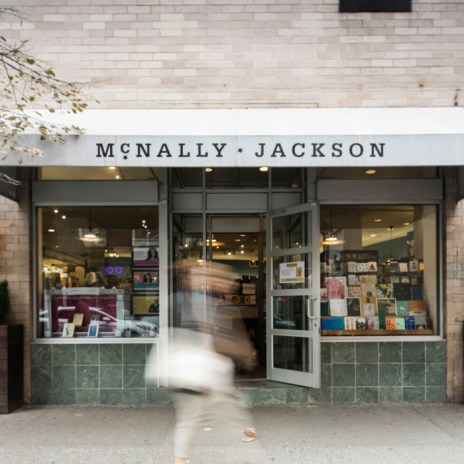
McNally Jackson Books (Nolita)

52 Prince Street

New York, New York (United States of America)

08-mcnally-jackson.w700.h700

Source: Vulture

One of my favorite things about McNally is their international fiction section, where they sort different books and/or writers according to the region or country they are from. And unlike other bookstores, the international fiction section is not hidden away in some corner or under some staircase. They also do not use the more hegemonic terminology by labelling them all as “foreign” literature, and make it easier for visitors to see what contemporary fiction currently looks like in different parts of the world. The way they do it almost makes one feel as though it is a love letter to translation and translators as well. The Nolita location is my favorite: it’s cozy with a wonderful cafe, and all their events are free, with cozy seating and give ample opportunities for readers to interact with writers after the event. 


Libreria del Viaggiatore

Via del Pellegrino

Rome, Italy

47227837_2232434857004725_5083747140946100224_n

Source: Facebook

From what I recently read online, this bookstore is about to close soon. But my friend and I discovered this bookstore in a rather quiet neighbourhood of Rome. It was small and cozy; Italian was a more recent acquisition for me, and I was living in Italy for months. I discovered a book by Henry James on Washington Square, downtown New York, where I go to school and lived my freshman year, in Italian. And then, of course, I saw Pasolini’s book on India– one I never knew existed in a shelf at the corner. The Traveler’s Bookshop in Rome is not just travel guides and cookbooks, but much more. It’s a bookstore to read about place(s) in a different language of place.

-Devanshi Khetarpal


The Elliot Bay Book Company

1521 10th Ave

Seattle, Washington (United States of America)

dcfaae07fd713826e8ba2c479d199377

Source: Pinterest

Elliot Bay is an open bookstore with a second, smaller level and a cute little cafe in the back that’s perfect for working (with earphones in – it gets noisy!). My favorite sections are the graphic novels — there are at least three rows near the front of the store — the POC history section on the second floor, and the queer section towards the cafe. It also has an enormous selection of cookbooks and a lovely atmosphere.


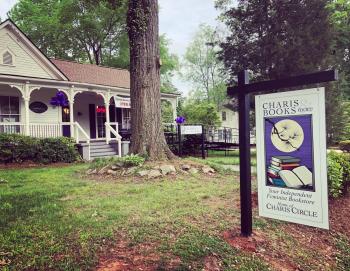
Charis Books & More

184 S Candler Street

Decatur, Georgia (United States of America)

Charis is a small feminist-centered bookstore in Decatur, just east of Atlanta. There are always several friendly women there ready to help you find what you’re looking for. They have a small but vibrant queer section, as well as many POC and international authors. I’ve seen books in other languages in several sections of this bookstore, and they highlight books that several book clubs are reading in the front section. They have a larger space in the back of the store where they hold events and author readings.

-Naomi Day


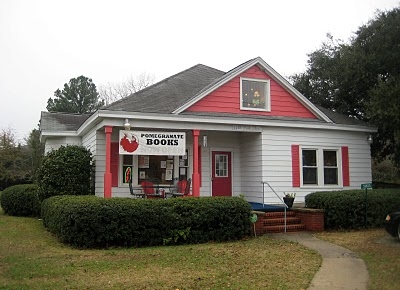
Pomegranate Books

4418 Park Ave

Wilmington, North Carolina (United States of America)

It’s a bit of a drive for me, but Pomegranate Books is worth it. They have a great poetry section, and they love supporting local authors. Comfy couches and wingback chairs create a place where I feel like I’m right at home. Their coffee shop is also a nice perk; my favorite treat is the coconut milk thai tea. On the second Friday evening of each month, Pom Books hosts an open-mic poetry session. I don’t get to attend the open-mics as much as I like (my husband often trains out of town, and so I have no one to watch my daughter), but the other poets are always kind and welcoming when I do get a chance to join them.

-Lisa Stice


Ramesh Bookstore

Dharampura Bazaar

Patiala, Punjab (India)

ramesh-book-service-patiala-ho-patiala-book-shops-jjyo9av-250

Source: Just Dial

Occupying a corner of a complex composed of a handful of shops in the busy bazaar of Dharampura, Patiala, the bookshop is a flash poem—ending the moment it began. It is December right now, and I realise how far the store lies from the sunrays. This is in contrast to the place from where Ramesh used to sell second-hand books several years back— the staircase right outside his house a couple of metres away in the same bazaar. I don’t know if Ramesh lives in the same house now, or if the house hasn’t been razed. I can’t tell if the switch from an open-air place of business to a nameless cave signifies progress, economic or otherwise. All I am aware is that I owe my introduction to Mario Vargas Llosa and J.M. Coetzee to this dark recess in town.

-Sudhanshu Chopra


To learn more about our staff or read their bios, kindly visit our Masthead page here.

What We Love(d) and Want(ed) More of as Young Writers

The young writers’ community is an ever-growing one and while great resources, networks and programs for young writers do exist, they are not always accessible to everyone. As a magazine run primarily by young writers, we decided to ask Inklette’s staff members what they love(d) and want(ed) more of as young writers and for young writers. 


What We Love(d) As Young Writers

For me, my experience at Iowa was the best experience I had as a young writer. I felt that the schedule of our workshop was conducive to exploring the city and culture of Iowa City. We had some writing jam sessions in the morning and workshops or seminars that would end in the afternoon, leaving us a great deal of time to write, eat and explore or attend readings in Iowa City bookstores and the University of Iowa campus. But apart from that, the readings were very different from the ones I have encountered in other workshops. There were more translated works, more works by writers and writing published by small, independent publishers.

-Devanshi Khetarpal, Editor-in-Chief

I also attended the Iowa Young Writers Workshop, and was captivated by the space and the feeling that there were real people who did what I wanted to do in real life, as opposed to on the side of whatever they did to make real money. I also loved the professors, family members, friends, and occasional random strangers who validated what I was doing with my free time. I find writing as a full-time profession is often looked down upon by others, so having folks around who constantly said “Yes, you are absolutely allowed to spend all your free time creating these wonderful imaginary worlds” did wonders for my passion for creative spaces. Additionally, spaces like PANK magazine that welcomes submissions from folks no matter their age range or backgrounds helped me understand that I didn’t have to have the credentials I saw so many others with — I just had to have my passion for writing!

-Naomi Day, Blog Editor 

I completely agree with Devanshi’s and Naomi’s description of Iowa, so I won’t add much more to that, but I was lucky enough to also participate in the Adroit Journal Summer Mentorship Program in the same summer. In Adroit, I loved the close one-on-one relationship I had with my mentor, the support of all my fellow mentees, and the flexibility of the program. Between traveling and attending other conventions, I was relieved to know the community at Adroit was never more than a text or email away. Throughout the entire month of the program, I thoroughly enjoyed the specially curated reading list and writing prompts my mentor had organized, but I also distinctly remember loving the final project: creating a final portfolio of your work and sharing with another mentee! In reading the collection of another’s work, I felt I had truly understood not only his work, but who he, as a person, stood for. Now, more than anything, I am so so grateful for this little writing community that still keeps in touch.

-Sarah Lao, Social Media Manager 

When I was around 12-13 and had just developed an interest in creative writing, I spent a lot of time reading and posting on Cicada Magazine’s The Slam, an online forum where readers could post their own work. Not only did I have an outlet for my developing prose and poetry, but I was also able to make several long-distance creative friendships. While I never met any of these fellow young writers in person, I still think of them often and am immensely grateful for the love and trust we had when sharing work with each other. 

-Joanna Cleary, Blog Editor

I loved attending writing programs when I was in high school. The summer before my junior year I was accepted into the Missouri Scholars Academy, and while its not strictly writing centered, the classes that I took were. Being around people who were writing and creating because they loved it and not because it was assigned in a classroom was so refreshing and wonderful, and I was so inspired while I was there. I also rediscovered my love of poetry as an added bonus! 

The following summer I attended the Young Women’s Writers Workshop at Smith College and had an incredible time. I made so many friends and discovered so many incredible female writers that I would never have some across in one of my classes in high school, even in the creative writing and advanced placement english classes I had been taking since my freshman year. I very much doubt that I would have gone on to create my own arts centered major in college if I hadn’t had the privilege of surrounding myself with other creative spirits so early on. 

-Savannah Summerlin, Blog Editor

What We Want(ed) More Of As Young Writers

I wish there were more workshops, programs, avenues for literary translations and learning of regional languages and local dialects, and literatures written in those languages and dialects. My education was a product of colonialism and encouraged a more colonial attitude towards regional languages, dialects and even Hindi. I wish we could break apart and disintegrate the hegemony and glorification of the kind of literacy and literature that privileges colonialism and the process of colonizing today.

-Devanshi Khetarpal , Editor-in-Chief 

I wish there had been more community around the genres I was interested in writing: I did a lot of fantasy writing (think farms with talking wolves and cities with magic stones) but never shared them because I didn’t think young people wrote fantasy like that. Having a greater sense of community and space to share and receive feedback would have helped my sense of belonging.

-Naomi Day, Blog Editor 

Having always suffered from a drastic drop in creative productivity once the school year hit, I think I would want something that could hold me more accountable. I’m not exactly sure what that would look like, but certainly, I think a long-term program during the school year would help. In other words, I’m hoping the stress of a series of deadlines would encourage me to break through any writer’s block.

-Sarah Lao, Social Media Manager 

I wish there were more online workshops. It’s expensive and not practical to travel. Most people can’t take large chunks of time off from school or work, and others (like me who is 40 years old) have children who depend on us for care. Even when a retreat or workshop offers daycare options, that only works if one’s child(ren) are not school-age. When I was in high school, I would have loved to have taken a creative writing course or belonged to a creative writing club. Some high schools offer such courses, but mine did not, even years later when I returned to teach at the school. 

-Lisa Stice, Poetry Editor

To learn more about our staff and read their bios, visit our Masthead page by clicking here.