BY DEVANSHI KHETARPAL
I spent the last semester in Florence, Italy, which seems like a long time ago. I returned to my hometown of Bhopal, India, in mid-December still confused about my time there. I thought that choosing to learn Italian or to choose Italian literature as one of my fields of study in college was an impulsive choice on my part. In hindsight, however, given the fact that I was reading works by Elena Ferrante, Italo Calvino, Jhumpa Lahiri and Antonio Tabucchi around the time, it doesn’t seem to be such an impulsive decision now. I don’t know why I decided to go to Italy though. I was happy in New York, a city where I think I truly belong. I didn’t want to leave New York and yet I passively wanted to spend some time in Italy.
My Italian was alright when I got there: I loved listening to Italian music, I could read some short poems in Italian and I could sustain small talk in the language. Yet I never imagined what it would be like to be surrounded by the Italian language, its differences and dialects. When I first arrived in Florence, I realized what it means for a world to be somehow written and formed by a language. Squares became piazzas, train became treno, and other words permeated from the landscape into my own imagination, on to my own tongue and memory. I recalled the world differently, I came to know its greetings differently; the lens through which I saw the world began to fade away and made way for a new one. Today, as I write this in New York, I find it difficult to go back to the way in which I used to look at the world. I have fleeting thoughts in Italian more often now. This afternoon, I had a small thought in Italian and immediately found myself scribbling it onto a piece of paper: Nel mio cuore, c’è un lago.
What does it mean to have a lake in one’s heart? I am not sure at all. My hometown of Bhopal has a lake that I think of when Bhopal emerges in my thoughts or dreams. It is strange that Italian is becoming the language that carries these thoughts of home to me. It is strange that Italian is becoming the language that can so succinctly and accurately describe almost instinctively what my heart is and consists of. How did I get here? Where did this language come from? And how did it become the language of my heart? I lack the most accurate answers to these questions but I think they don’t have accurate answers either. Maybe Italian will not be the only language of my heart and maybe there is another language that knows my heart better. For now, however, I am at peace with these thoughts I harbour in Italian. As a poet, I know that my relationship with language is an intimate one. It goes beyond the realm of love or romance; it exists within the realm of friendship. For so long, Italian and the experience of speaking or writing it and thinking in it, felt strange, foreign. But I have come to realize that like any other friendship, it is one that blossoms with time. Like any other friendship, you grow to be comfortable with it and like any other friendship, a language can make you feel less lonely.
In Italy, the Italian language became my friend. I didn’t have my closest friends with me in Florence and though I now think my childhood was very lonely, loneliness is now something I find painful and almost intolerable. But, on the other hand, I recognize that loneliness is a excruciating yet essential part of writing, and of being a writer. I feel lonely when I conceive a poem but not after I have delivered it. Once it’s on the page, I have something to look at, something to hold on to. In Italy, as I reflected on this practice of writing, I realized that the arrival of language into my mind and on the page is what truly dispels the darkness of this loneliness. With Italian as a third language, I had received another friend to populate the space of my mind, the depth of my heart. Even when I was travelling around Italy, my companion, who had a different temperament than mine, made me feel lonelier at times. It was then that I was forced to keep turning back to Italian, to language and words as way to continue living and thriving. Loneliness can be depressing and isolating and the lack of words usually makes it worse. But with another language, I feel as though I have a way to look at the world even when I am submerged in the depth of the lake that is in my heart.
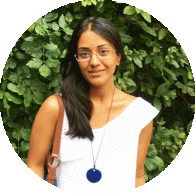 DEVANSHI KHETARPAL is a sophomore at New York University, majoring in Comparative Literature with a minor in Creative Writing. She is from Bhopal, India, and currently lives in New York. She works as an application manager for The Speakeasy Project, poetry reader for Muzzle Magazine and an intern at Poets House. Her poetry collection, Small Talk, is forthcoming soon from Writers Workshop, Calcutta. She is a recipient of the David J. Travis Undergraduate Research Fund from NYU Florence and her work has been published in Best Indian Poetry 2018, Transom, Aainanagar, Vayavya, TRACK//FOUR and Souvenir among others. Website: www.devanshikhetarpal.co.
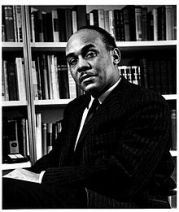
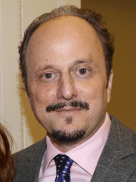 This American novelist and short story writer’s novel
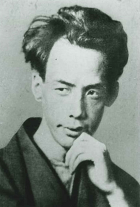
 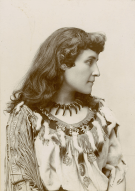 Because her father was a Mohawk chief and her mother was an English immigrant, Johnson’s poetry explores Indigenous and mixed race identity at a time when colonialism in Canada was at its peak.
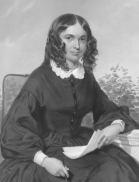
 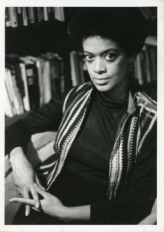 A prominent writer in the 1960s Black Arts Movement, Bambara’s 1970 anthology
  JOANNA CLEARY is an undergraduate student double majoring in English Literature and Theatre and Performance at the University of Waterloo. Her work has previously appeared or is forthcoming in The /tƐmz/ Review, The Hunger, Pulp Poets Press, Every Pigeon, Glass: A Journal of Poetry, andSubterranean Blue Poetry, among others.
 upon the lexicon, and found that in many other cultures (Latin American/Mexican, for instance) much of the mothering work is shared by tías, hermanas, abuelas, primas (i.e., female relatives) and I was taken, for instance, with Laura Esquivel’s novel Like Water for Chocolate and the role of Nacha, the abuela figure, the magical cook, an indigenous woman who is the primary caregiver of Tita as she grows up, and then later, adult Tita as the wet nurse of her sister’s baby, who becomes a Nacha-like figure to the girl, raising her in the kitchen. As I searched through the literature and began forming my own poetics, I asked questions of motherhood such as is the infertile woman the fertile woman’s doppelganger? Does she represent a fear of being without value in patriarchal society? This all helped me develop a poetics of motherhood outside of the patriarchy in my first collection and beyond, and I’m currently working on a lyric-hybrid memoir Quinceañera with Baby Fever that further delves into my experiences as a Latina growing up on the Mexicali border, examining the cultural stigmas toward childbearing and mothering in the Latina community filtered through my own experiences with teenage sexuality, contraceptives, abortion clinics, miscarriages, and violent relationships with machismo boys/men.
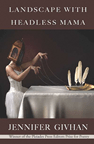
  JENN GIVHAN, a National Endowment for the Arts and PEN/Rosenthal Emerging Voices fellow, is a Mexican-American writer and activist from the Southwestern desert. She is the author of four full-length collections: Landscape with Headless Mama (2015 Pleiades Editors’ Prize), Protection Spell (2016 Miller Williams Poetry Prize Series edited by Billy Collins), Girl with Death Mask (2017 Blue Light Books Prize chosen by Ross Gay), and Rosa’s Einstein (Camino Del Sol Poetry Series, forthcoming 2019), and the chapbooks: Lifeline (Glass Poetry Press) and The Daughter’s Curse (Yellow Flag Press). Her novels, Trinity Sight and Jubilee, are forthcoming from Blackstone Press. Her honors include the Frost Place Latinx Scholarship, a National Latinx Writers’ Conference Scholarship, the Lascaux Review Poetry Prize, Phoebe Journal’s Greg Grummer Poetry Prize chosen by Monica Youn, the Pinch Poetry Prize chosen by Ada Limón, the Joy Harjo Poetry Prize 2nd place chosen by Patricia Spears Jones, and fifteen Pushcart nominations. Her work has appeared in Best of the Net, Best New Poets, Poetry Daily, Verse Daily, Ploughshares, POETRY, TriQuarterly, Boston Review, AGNI, Crazyhorse, Witness, Southern Humanities Review, Missouri Review, and The Kenyon Review, among many others. Givhan holds a Master’s degree in English from California State University Fullerton and an MFA from Warren Wilson College, and she can be found discussing feminist motherhood at
  JOANNA CLEARY is an undergraduate student double majoring in English Literature and Theatre and Performance at the University of Waterloo. Her work has previously appeared or is forthcoming in The /tƐmz/ Review, The Hunger, Pulp Poets Press, Every Pigeon, Glass: A Journal of Poetry, and Subterranean Blue Poetry, among others.
 Inklette Magazine