Interview with Cema D’Souza

Read Cema D’Souza’s story here. 


 Inklette: How did your story, “Unseen,” come into being? What was your inspiration?

Cema: Trying to overcome a writer’s block was my inspiration, honestly!

Inklette: What is your relationship to writing? When did you first begin and what do you prefer writing?

Cema: I’ve been writing ever since I began reading at the age of ten. The process of story-writing always fascinated me. I would wonder how an author concocts brilliant plots and characters to bring out stories. So, I tried writing my own. I prefer writing short fiction.

Inklette: Are there any works or authors who have significantly influenced you? 

Cema: Harnidh Kaur’s poetry, definitely.

Inklette: Do you have a writing community around you? What is the writing scene like where you live? 

Cema: I currently reside in Bangalore, India and there is quite a wonderful writing community here. I’m lucky to call some of the best writers I know friends.

Inklette: What is the kind of writing you want to see more of?

Cema: Since it is so hard to find representation in mainstream literature, I would say Indian Writing in English.


IMG_2398

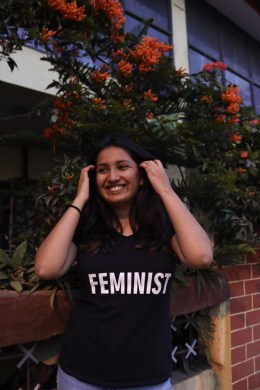
CEMA D’SOUZA, 19, is currently studying in Christ University, Bangalore. She’s happiest when surrounded by books and dogs.

Unseen

Camphor, I decided, as I sniffed the air delicately. It had to be. My head throbbed; rubbery veins would pump with thick red blood that threatened to tear the walls of its containers. I clench my jaw to calm the throbbing. It works, and the musty aroma settles on my skin, my mouth. Taste buds on my tongue curl into oblivion; hoping to avoid the smell that fast travels through my nostrils; it won’t be long before-

You’re awake, the voice says; it’s oily. I nod, aware that the voice cannot see me. Have you slept at all? he asks, concern clouding his voice.

I shake my head, ever so slightly. This time he knows because my hair rustles against the fabric of my pillow. Blue, he told me, is the color of our pillows, when we dressed them in their cases last week. I imagine resting my head against the sky when I sleep.

Do you want me to tell you a story? he asks softly, after a pause of uncertainty.

My moods for my husband’s stories vary greatly; I lust after them on some days, on others they make me sick with all the improbable plots.

Today, I crave a story, and he tells me one about a girl with only four fingers on one hand. I imagine jagged flesh, unevenly cut; yellow bone peeking out of the pink flesh. The handiwork of a jealous lover, he says unfeelingly. Handiwork, handy work, hands, cut hands. My tongue flips these words around. No man ever gave her a ring. There was no finger to place the ring on. My stomach turns at the thought of fresh blood, smelling of coarse iron dripping on her skirt, unable to stop. When it finally ceases, she smiles, the worst is over.  

In the morning, I kiss his arm; the velvety skin like a pot of honey, like the ones my father would gift my mother on their anniversaries. As kids we found it touching, though she never liked honey. The pots were always the same; glass and rounded. They had a ribbon tied around the neck, always baby pink. Sometimes, the honey stained the ribbon. I would dip my chubby finger in the pot when my father was not looking and suck it. The chalky, cloying honey left a bitter aftertaste. The dregs that remained on my fingers would be wiped against the back of my dresses. He grunts contentedly, possibly happy that my kiss woke him up rather than the piercing alarm. He lightly reciprocates the kiss on my forehead, like a grazing feather. We are late; me for my dog-sitting and him for his magazine job. I write, he told me once, stories, thought pieces, anything they want me to write.

Anything? I asked.

Sometimes, he replied, they ask you to write against what you stand for. I do it anyway. The real world has no place for morals.

That’s not true. You are not firm enough, my voice rises.

And you don’t understand the real world, he retorted immediately, almost too fast, as if he had rehearsed the answer.

I cry for a long time after that, he brings roses. The silky texture of the flowers calms me. It’s as if he never uttered those words. Roses are the flowers I like the least, he knows it.

When he returns home from work, the honey on his skin disappears, instead replaced by salt, not like the salt in sea-water. Stale, musty sweat, a fluid I believe only he secretes. I relish it.

Oli, I hear him coo. My neighbor’s ten year old labrador jumps from my lap towards him. Do you think we should get a dog? he asks absently. The thumping of Oli’s tail on our wooden floor tells me he is scratching the dog under his ear, and then moving his fingers just above his snout, finally cupping Oli’s face in both his hands. I would love one, I answer. The conversation is a script. A reused one. It repeats periodically but never materializes. As he walks towards me, the smell of his sweat mixed with Oli’s odor floats towards me, reaching me before he does. We kiss for a moment, the duration decreases every day, knowingly or unknowingly. Oli is probably watching, wondering about the depth of our affection. Quite shallow, old boy, I say in my head. If we were dogs, him and me, we could fuck and separate. Unfortunately, we are human beings with a pressing need to commit.

Growing up on a farm, I prayed for modernity to hit my family like a truck. They were old-school. The frills in the collars of my dress suffocated me and I wore my hair long enough to tie it around my neck like a noose. Let me cut it, please, I begged routinely. Yet they were adamant.

Jesus wore his hair long, too. If he could, as a man, you can, my mother said, eliciting giggles from my father and oldest brother. I cut an inch or two every month and buried the strands in the soil. A subtle act of rebellion. I was empowered. Then, I saw him. He was scrawny, built like a thirteen year-old boy instead of eighteen. Sparse tufts of hair grew on his face, above his lip. I wanted to know what his body would feel like against mine, how my skin would redden when his prickly beard chafed it. When we had sex, it was bumpy, like pulling a worn car over a rocky hill. It didn’t matter. The entire time he was inside me, I thought of how invigorating it was to break yet another rule my parents bound me by.

The next day, I went blind.

Blind is too absolute. What happened to me was slightly different. I ceased to see. My eyes refused to open, like they were glued shut. The days that followed, I felt different fingers on my face. My mother’s sleek, pearl-like finger tips that were scented with cocoa butter, the lotion my aunt sent her from abroad that she used, tried to pry my eyes open. My father pushed hers aside and did the same with his stubby fingers coated with the sour smell of smoke. Doctors’ fingers touched my face too. I remember a particular doctor, a middle-aged man with soft hands. His gentle touch comforted me. Amidst all this, I was oddly peaceful. My usual bellowing nature rested gently against the adversity, accepting its fate without question. Perceptive, the doctor stated one day. I could smell fairly well. I could distinguish scents, flavors, fragrances. Fresh pine, citrus, floral, mint, rot. I made an inventory in my head. Smells were stacked up against each other, available to me when my sight failed.

My only friend back then visited our house every day, brimming with gossip and stories. My eyes remained closed, a mystery according to doctors. Surprisingly no illness accompanied my sudden loss of sight. I was healthy. My friend would hold my hand and we would walk by a lake for hours. She told me about her cousins abroad who wore mini-skirts and dyed their hair; about Sandi the German shepherd that the postman adopted; about her boyfriend who was saving himself until marriage. I was abreast with the news of the world around me.

He asked about you, she said on one of such walks, referring to the boy I hadn’t seen since the night we slept together.

What does he say?

He wants to meet you again. I told him about what happened, she said. We arranged a meeting, for him to meet me. It had to be discreet, away from my house lest my parents found out. On the day of the meeting, I rubbed some of my mother’s cocoa butter lotion on myself. By then, I knew all my dresses just by their textures. I chose the one which I would wear for a party; slightly shorter than the others and lavender. I pulled it down so that the beginning of the line of my cleavage was visible. I hoped he hadn’t changed since the day I saw him and slept with him.

Does it hurt? he asked, not wanting to be insensitive.

No, I shook my head.

I wanted to ask you if- if I could, well, see more of you?

I smiled in assent.

It was during our courtship that my eyes opened. I woke up one morning, and my eyelids were open. My family jumped with joy and clapped, but I still could not see. It was dark.

You have magnificent eyes, he said when he saw me.  They are like little globes. I could stare at them forever.

They are empty, I said. He touched his lips to my eyebrows. His strong perfume overpowered my sense of smell. My eyes watered. A cheap, imitation perfume that stores sold, with a picture of a man with bulging muscles, I assumed. Beneath that, I drew in his coconut-like scent, the one that he carried with him even after we got married.

Our wedding was a modest affair, like our marriage. All the guests could fit into the large canopy my mother designed in front of our house. He stood by me the entire time, describing every single aspect of the ceremony. My dress, he told me, was an ivory colored satin piece that clung to my upper body and then flowed to the ground. It shone in the sun, he said, like a pearl. Its sleeves ended at my elbows and the neckline plunged. I carried a bouquet of roses, his choice. The intense fragrance seeped into the roof my head during the ceremony and developed into a slight headache later. That night, after all the guests left, we made love in my bedroom. It felt different from the first time. This time, he knew what to do with his hands; his tongue did not slobber all over my chin; he asked if I was pleased at regular intervals and I was. We slept on our wedding clothes afterwards.

After Oli’s mother, an old, cheerful woman took him back home, I feel a strange sort of loneliness. I want a baby, I tell him that evening. My hands try to grasp something in the empty air, in vain, hoping for a presence, something new to play with. I hear him sigh. His face would contort next, scowling, deepening the lines that are drawn vaguely on his shapely face, I assume.

Why, he says. It’s not a question. He does not expect an answer. The gentleness in his voice brings in a deluge of memories from the days of our courtship; of him stroking the back of my neck as my cantankerous self would send a barrage of questions his way, demanding to know this and that. The answers would come promptly, in vivid details so that I could conjure images not visible to me. It was easier for us then, without the ache of a marriage balancing on a thin thread gnawing at us.

I want a baby, I repeat again. My shoulders ache; I realize I have been slouching. The newspaper crinkles as he folds it and places it on the table. It will be a baby, a tiny human being. It’s not as easy as taking care of a dog, he says in exasperation at my stubbornness.

I have half a mind to throw a fit, fling myself against the wall and sob heavily, a tactic that has worked in the past. Instead, I resolutely push my chin up. I know, I say. A scenario flashes through my mind. A round-faced girl with curls that stick out from behind her ears, as tall as my knee, pushes her arms upwards, asking me to carry her. I say no, pouting, as if carrying her is an impossible task. She shakes her head with tenacity only capable of her mother and scrunches up her nose. We name her Eve; the first woman, who defied convention.

His breathing deepens. Okay, he says.

My insides burn with ecstasy. I will be a mother, soon, if nature wills.

That night he tells me a story again, about a woman who adopted a puppy and raised it lovingly in the mountains. The puppy grew up to love her like she was his own. Their bond thrived away from civilization, in the cold mountains. One day, a man looking for shelter stayed in their cottage, a cosy place. The next morning, the man’s limbs were found away from his body, ripped apart brutally. The dog was a wolf.

I wake up to his hands on my body, softly running them across my stomach, my hip bone and the flesh of my thighs. My eyes remain closed because they will never open again.


CEMA D’SOUZA, 19, is currently pursuing her triple major in Journalism, Psychology and English Studies at Christ University, Bangalore and breaking her New Year resolutions at an alarming speed. A quintessential bookworm, she can always be found with her nose buried in a good book.

Five Pieces

Artist Statement: These acrylic pour paintings are part of a large collection of over 70 paintings that explore the earth, the body, the environment and the mystery that binds it all together. The pieces are created by combining acrylic paint with various substrates and silicone oil. The layers of paint react within the mixture according to their density, and form an abstract design. I interpret the design in terms of land, water, sky, body, natural elements and phenomena, particularly exploring the magical and mysterious nature of these things. My aim in creating this collection is to present unusual and alternative views of life and nature in order to inspire viewers to “widen their world.” I believe that when we can perceive with our imaginations and not rely only on literal interpretation, our world (our connection to and understanding of it) becomes more meaningful to us. The way the paints interact with the substrates is solely science based (think specific gravity) but what is produced is random and unique. Our understanding of the earth, the sky, and the body opens on other levels when viewing this art.”


This slideshow requires JavaScript.


SANDY COOMER is an artist and poet living in Brentwood, TN. She is the author of three poetry chapbooks, including the recent Rivers Within Us (Unsolicited Press). Her art has been featured in local art shows and exhibits, and has been published in journals such as Lunch Ticket (Antioch University Los Angeles), Gravel, The Wire’s Dream Magazine, and The Magnolia Review. She is a teacher, a dreamer, a seeker, and an explorer. Her favorite word is “Believe.”

In Flux

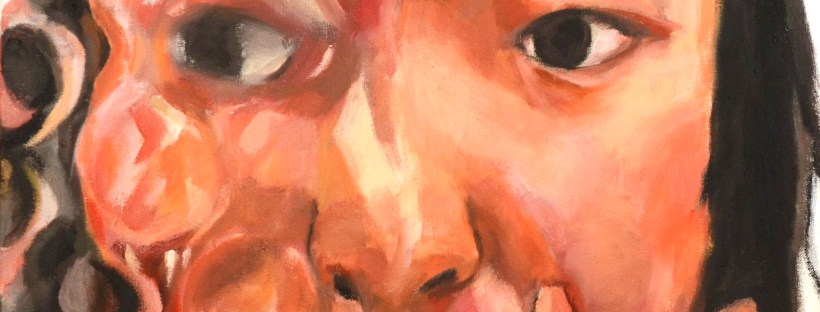
Artist Statement: In Flux was made during a time where I was questioning my identity and what I wanted to do in the future. I eventually realized its okay to change and have my interests shift with time.”


LIU_InFlux

In Flux, Oil Paint on canvas, 2017


CONNIE LIU is a junior currently who has been drawing ever since she could hold a pencil. In her free time she loves to teach art to children and hopes to have an art related career in the future. Previous publications include L’Ephemere Review and Cicada Magazine. She has been recognized by the Scholastic Art and Writing Awards, United Nations, and Philadelphia Classical Society.

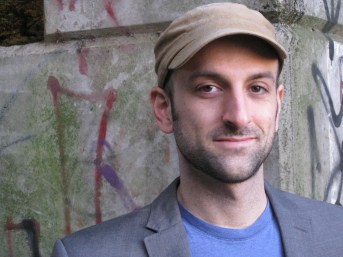
Interview with Dan Rosenberg

“It is a rare privilege to know Dan both as a poet and as a teacher. Nearly three years ago, I was placed in his poetry workshop at the Iowa Young Writers Studio. Our first assignment was to read Brigit Pegeen Kelly’s surprising poem, “Song.” And I still remember how reading it made me wonder if it had been written for me.  But that was the joy of being in Dan’s workshop. He brought us closer to poetry from all over. He introduced us to poems with a remarkable kindness, love and friendship. And every morning, as we would meditate on language and poetry, Dan made us see how poetry can, in fact, be the greatest love and joy. Dan helped me realize that language can be the light and poetry, its sustenance.”

-Devanshi Khetarpal, Editor-in-Chief


Inklette: How does writing poetry affect your life? Has it made you a better person?

Dan: I fear the long history of poetry doesn’t offer much evidence that writing it makes you a better person. I’ve never thought of it as an external force that can affect my life, really; it’s bred in the bones of my life. What I am. After Auden famously says that “poetry makes nothing happen,” he less famously says it is “A way of happening, a mouth.” That sounds right to me. When I was a child, I wrote for myself, mostly thinly-veiled autobiographical poems. Now that I’m an adult, I write autobiographical poems with veils of various thickness. But everyone does that. I think my poems that are not straightforwardly responding to some aspect of my life remain autobiographical because I have an expansive view of the self – politics are part of my life, faith and the lack thereof, strangers. Which is a way of saying that writing poetry can be a way of articulating empathy.

Inklette: What are the biggest challenges you’ve faced in the process of poetic composition? How do your other interests converge or diverge with your literary ones?

Dan: The boring answer here is time: Having a small child means that I no longer have the same huge swaths of time I once had to stare at the wall and argue with myself over line-breaks. But this happened to me recently: I had brought my son over to his friend’s house for a playdate, and I was talking with the friend’s dad. We’d apparently exhausted all natural conversation topics, because he asked me what I like to do besides work. And I froze. Do I not have hobbies? I spend my time being a father, a husband, a professor, a poet. I like watching TV and movies, but that’s not a hobby. I read all the time, but that’s technically part of my work. I laughed off my lack of response to him, and worried about it quietly for a week until I was going for a walk with a different friend. I told her I wanted to pick up a hobby because I didn’t have an answer to this guy’s question. She asked me if he was an artist, knowing that the answer was no. She reminded me that artists don’t have hobbies; we live our work, and everything we do is part of our work. I don’t know if that’s true, but it made me feel better. Also, I’m excited to get deep into gardening this spring. (“Verse” comes from Latin for a turn of the plow, a row or line.)

Inkette: Can you pinpoint a moment when you fell in love with poetry and writing? How has career impacted your conception of what you do throughout your life?

Dan: I’ve always been in love with reading and writing, and poetry has always been a part of that. It wasn’t until college, though, when I started studying poetry with Peter Richards, that it became something I considered having as part of my professional, public life, as opposed to just a thing I would always do on my own. He was the first person to read my poems critically, to tear them apart, really, and I thrived in his honesty. I had always been a grade-A nerd, and had never received much besides affirmation from my teachers. So there was something shocking and enlivening to bring five poems to Peter and watch him throw four of them into the recycle bin after a quick glance, and then dive deeply into what was working well in just three lines of the one remaining poem. I don’t think this approach would have been successful with everyone, and I’ve rarely felt comfortable approaching my own students’ work in this way, but it helped me immeasurably. That first class with Peter was a turning point, for me. At the same time, I had the chance to work as a TA in some other classes, to study pedagogy a bit, and those early tastes of teaching helped send me down the path I’m on now.

Inklette: How has your experience co-translating Miklavž Komelj’s Hippodrome changed your relationship to language both as a tool for communication and an artistic medium?

Dan: There is something tremendously liberating about translating, the way writing in a form, under strict constraints, is liberating. But unlike any other kind of constraint, working as a translator drives home the contingency of your language, the sense that your language is just one of many ways of construing and constructing the world.

For example, the very title of the collection posed a translation problem: In Slovene, hipodrom refers to a racetrack—where you could go and bet on the horses today—but also to the historical stadiums built by the Greeks and the Romans, the ruins that dot the modern landscape of the ancient world. There is no division in Slovene between the ancient thing and the modern thing. As an American, this notion of a continuous history is in some sense inconceivable. Trying to articulate the inconceivable: is that a definition of translation, or of poetry?


DanRosenbergDAN ROSENBERG is the author of cadabra (Carnegie Mellon UP, 2015) and The Crushing Organ (Dream Horse Press, 2012). He has also written two chapbooks, A Thread of Hands (Tilt Press, 2010) and Thigh’s Hollow (Omnidawn, 2015), and he co-translated Miklavž Komelj’s Hippodrome (Zephyr Press, 2016).

Rosenberg’s honors include a Presidential Fellowship from the University of Georgia, the 2011 American Poetry Journal Book Prize and the 2014 Omnidawn Chapbook Contest. His poems have appeared recently or are forthcoming in such magazines as Ploughshares, Colorado Review, Boston Review, Poetry International, and Conjunctions. 

Rosenberg is an Assistant Professor of English at Wells College, where he also coordinates the Visiting Writers Series and the annual Chapbook Contest. He also co-edits Transom, an independent online journal of poetry and translation.

How to get over your husband

Begin with an orange.
Give it teeth and a top hat.
Bring it to work and set it on your desk.
Say it’s your uncle
Uncle Orange
who won the California State Lottery,
put your kids through college,
and took you on a cruise to Barcelona.
They will be jealous
and wish they had an Uncle Orange
as colossal as yours.

They will prop apples and pears on their computers
and dress them in petticoats or tuxedos,
calling them Gramma Smith or Marjorie…
maybe Angus,
but it won’t be the same.
They’ll even try pineapples –
dressing the tall, leafy stalks with laurels, palms,
and their finest pearl necklaces.
But it still won’t compare
to your darling Uncle Orange
and the scent his body permeates
throughout the office.
He even smells good after a game of rugby,
unlike your husband.
Yes, they’ll be quite jealous of the smile
you arrive with every morning.

Even after your husband leaves
you will still smile,
clutching a one-way ticket to Barcelona,
feeling citrus-good and drunk
on fuzzy navels.


LISA MARIE BRODSKY is the author of poetry collections, “We Nod Our Dark Heads” (Parallel Press, 2008), and “Motherlung” (Salmon Poetry, 2014), which received an Outstanding Achievement Award from the Wisconsin Library Association. Her poetry has been published in The North American Review,  Mom Egg Review, The Peacock Journal, Diode Poetry Journal, Verse Wisconsin, SUSAN/The Journal, Poetry Quarterly, The Drowning Gull, Linden Avenue Literary Journal, Poetry South, Willawaw Journal, and has work forthcoming in Barrow Street, Wraith Infirmity Muses, Inklette, among others. As faculty member at All Writers’ Workplace & Workshop, Brodsky teaches classes on emotional healing through creative writing. Her web site can be found at: www.lisamariebrodsky.blogspot.com

1999 and later

I am in a backyard with a childhood friend. We are boys in 1999. We run without pattern until he slips on a patch of wood chips and cuts his hand. Instead of crying, he places his hand near an ant hill, holding it there until I lose attention and walk away, turning the afternoon into days later when he is still at the anthill. When I see him again, I ask what he is doing. He tells me he has engineered an ant to bite the cut until it heals. Engineered what? I ask. He wipes the leftover blood on his gym shorts and I go about my life and he goes about his. But he never leaves the yard, instead teaching the colony to heal his self-inflicted wounds until the ants go to him, enter through his nails and heal his cancer, his wrinkles, his gray hair. He heals others too with the trademarked skill and makes a life by it.

One day, the world has different yards, and there are too many people and not enough pools. I am one hundred years old when children launch themselves from unseen canons above the manufactured bend of cornfields into my neighbor’s pool. Some bodies splash against the sky, causing shadow and dripping blood. But most splash in the pool and emit secret yelps that nonetheless resound in a room’s enclosed space. Other children come from a hole cut in the sky, sand spilling from a steel skeleton holding up the floor above us. Sand still spills as they look around for grumpy pool owners and then drop a rope and slide down. But my neighbor, unseen, is waiting and watching. He realigns the rope to a hole he has cut in the ground. The children fall through into an icy tundra. He does not cover the hole after scaring the other children from his pool, so the glacial winds crust the hole’s outline with its otherworld. No one cares, and no one cared before, if the ice stays or goes. The children in the tundra below us will either die or learn to ski.


ISAAC LAURITSEN is a writer and poet based in Chicago, IL, where he works as a content writer. Forthcoming work is scheduled to appear in Adelaide Magazine and Habitat Magazine. He is currently working on a book-length poem and a number of themed chapbooks.