Period Dramas And Soul Food

BY SMRITI VERMA 

Recently, I was talking to a friend about how monotonous holidays can get at times, and she told me I needed “soul food,” and god knows what that even means, but I decided to heed to the advice and try to do things that would “feed my soul” on some foundational level I can’t fathom. Basically, I tried to be your unusual carpe diem Instagram aesthetic poster girl, delving into painting and journaling and nature photography and whatnot (none of this is to take that I’m somewhat criticizing or judging a particular way of living.) The happiness provided was fleeting, and I ended up focusing more on the watching good movies than most, and from movies I went to period dramas, and that reminded me of my long lost love for them.

There’s this shot in the little-known period drama called Bright Star wherein Fanny Brawne, the heroine, stares outside her window as in the wind blows in, the drapes rising and falling against the blinding sunlight. The shot is complimented with the tune of a violin, and as Fanny lays down on her bed, you can almost feel the dreaminess of the shot pervading through the screen, and the calm spreading over you. It’s beautiful, but not to a degree of hurting: just the right amount, the right music, the right shot, all of it coming together to create an effect so enrapturing and raw that you feel like you’re falling asleep.

I was around fourteen years old when I first saw Bright Star, still a starry-eyed teenager who indulged too much into Austen and those daydream fantasies for her own good. Period dramas can be way too fancy in their conception, cultivating the years-old adage of a hero and a heroine, both of them are oh so in love and are separated by the shackles of reality. The idea, of course, is to get you rooting for the couple – whether it’s through including scenes of Elizabeth and Mr. Darcy standing in the rain, fighting and throwing carefully constructed dialogues at each other faster than we, the casual commoner, can think them in the 2005 version, or the way too many smirks given by Henry Tilney to Catherine Morland in the television film. Some of these effects end up being charming, some not so much.

Yet the naturalistic atmosphere, the subtle romantic feel, the empire waistline gowns, the formal manner of speaking – all of these give these movies a feeling of being unreal and reinforce the fact that these dramas are so far cut off from reality that the difference is out of this world. Hence, the experience is completely immersive – rather, in the first few period dramas I’d watched, I spent more time trying to decipher the dialogues than anything else. I’d say these dramas take themselves too seriously sometimes, but for me as a teenager, watching these was perhaps like watching my daydreams come to life. That part compounded the satisfaction, and my natural gravitation towards them.

I’ve always felt period dramas as a work of art, knowing how elitist, or narrow they might be. There is something to say about the manner in which Keira Knightley walks in the beginning sequence of Pride and Prejudice, or the image of Ben Whishaw climbing and lying on the treetops as John Keats in Bright Star, or the famous Colin Firth scene where we see Mr. Darcy go swimming, seeing him in an entirely new light (if you know what I mean). They’ll always be my favourite way of wasting time away, and if that puts them in the category of soul food, then I guess I can’t argue.


150126426218111.gif

SMRITI VERMA grew up in Delhi, India. Her poetry and fiction have appeared in The Adroit Journal, Coldnoon, B O D Y, Cleaver Magazine, Word Riot, Open Road Review, Alexandria Quarterly, Yellow Chair Review, and The Four Quarters Magazine. She is the recipient of the 2015 Save The Earth Poetry Prize and enjoys working as a Poetry Editor for Inklette and Poetry Reader for The Blueshift Journal.

Here’s Why Art Is Never Easy

BY NILESH MONDAL

If you thought it was going to be easy, it’s not. It never was.

When musicians are complimented on their compositions, it’s not their talent alone you’re applauding. You’re cheering for their story, you’re cheering for all those moments they split their hand open on the strings of their instrument, bathing its wooden body in their blood. This ritual is what makes up their music.

How a pint of blood loses life, turns into a mess which must be doused in industrial solvent to be removed, becomes a stain which looks like spilling wine on ebony, while the instrument slowly takes a life of its own, screeches and screams and tugs at our hearts like a newborn come into this watching world, that’s how music is born.

Art always had its story.

Every photograph, Polaroid or digital, plastic or gigabytes of memories and moments, it all came from a story. The story of a woman standing in front of a bulldozing crowd, with beating heart that trembles but never runs.

The belief that what she stands for is worth standing for, even in the face of a stampede or reckless bullets striving to find target. The story of a toddler smiling, eyes wide, cheeks wrinkled, the first moment one realises our bodies aren’t bodies but a circus of human emotions, that they can flex their muscles and make someone laugh along, stretch their throat into producing cries which brings people running to attend to their needs.

Years later when the toddler would grow up, they’ll learn how easy it had been all along to stand on trembling legs in front of a lover walking through the ruins of their spirit, how it feels to become a roaming tongue stroking sparks into fire.

Every poem tells a story.

Every brush stroke on naked canvas talks to you. You’ve only got to listen.

If you thought it was going to be easy, it wasn’t.

Nothing is.

Our love is an apartment on fire and we run around in circles trying to find an exit hatch, or a room in the basement where we’ll be safe when the flames run out. Our lives are struggles, to bear witness, to speak out, to stand for something which we believe is worth standing for. If you thought it is easy, it isn’t. But easy, isn’t always beautiful.

The artists will tell you that.


150001269352842.gifNILESH MONDAL, 23, is an engineer by choice, and poet by chance. His works have been published in various magazines and e-journals like Bombay Literary Review, Café Dissensus, Muse India, Inklette, Kitaab, Coldnoon Travel Poetics, etc. He was one of the winners of Juggernaut’s Short Story Contest in 2016. He currently works as a writer for Terribly Tiny Tales and Thought Catalog, as prose editor for Moledro Magazine, and is an intern at Inklette Magazine. His first book of poetry, Degrees of Separation, (Writers Workshop), was released in June 2017 and debuted at #2 of the Amazon Bestseller list of Poetry.


Let’s Talk About Fan Fiction

BY MICHELLE WOSINSKI

Let’s talk about fan fiction:

It’s an uncomfortable topic when it comes to literature— because it’s not really considered as such. When anyone can publish anything online, using pre-existing characters for what most likely will be a short cliche romance story, it isn’t considered very impressive. Why should it be when most of it is eleven year old girls’ One Direction unedited slash fiction anyway?

But, consider this— it has existed as long as fiction has existed. Here’s some background for today’s fan fiction as we know it!

The term ‘fan fiction’ was coined in 1939, though the practice existed long before this. In 1967, Spockanalia the first Star Trek fanzine ever featured fan written works, and these were written by and for adults and sold at various science fiction conventions. It is also important to add that 80-90% of Star Trek’s fanbase was made up of women— because the series was aired during the day, when housewives would be home and thus expanded from there— contradicting the common stigma that sci-fi is made for and enjoyed by men. Fan fiction has always been a female-dominated community and there is a lot to be taken away from this fact, especially since Star Trek arguably was the first large fandom to exist that made fan fiction a more mainstream phenomenon.

Skip ahead to the internet, which transformed how people shared and consumed their fan works. Previously, small groups of people would mail each other their stories and pieces of art via post, never before fully open for the public. This changed everything!

Teenage girls are well known to be stereotyped as obsessive or fanatic when it comes to media— an obvious example being boy bands. This passion, especially if for tv-shows, books, or movies, can easily be put into creating fan works. If you really love the characters of a TV show and want to see more, why not create more yourself? You have complete control and can conjure scenes that you probably won’t see on screen because perhaps it doesn’t fit the genre or the significant plot being followed. Now with access to an online community of like-minded fans you can share your passion and works easily!

This can actually be a very helpful exercise for young writers, because they have the freedom to explore worlds without having to worry about building character first and get right to the plot or development or whatever they choose to focus on. However, this stereotype of young girls also presents them as irrational and very naive— they are belittled for enjoying things and thus the things they enjoy are considered ‘silly’ and immaterial, or not intellectual. Fan fiction is a good example of this.

This can be partially attributed to its reputation of being badly written sickly sweet slash fiction and not worth any real attention— to read it is even considered embarrassing, much less to write it!

Don’t get me wrong, some fan fiction is badly written. Some fics are 900 words of self-indulgent bad dialogue, and some are 120,000 words of messy and confusing plot lines. However, that is not the point. I could go on and on about how some works are genuinely well written and explore interesting themes and have amazing  character interaction and so much more, but I’m not going to. Because, more importantly, it should not matter if the content is good or not. Many of these writers are young— their creativity should be encouraged and they should be allowed to develop as writers.

Fan works are not like books, in that literally anyone can publish anything online. However, like books their quality also ranges. There is the notion that because something is published as a book it is inherently better compared to, for example, a fan fiction. “It has original characters and plot and was taken up by a publishing house!” I’ve read too many awful books to even consider this a reality anymore.

Also, think about this: 50 Shades of Grey was a Twilight fan fiction. Now after changing the names to Anastasia and Christian, it has multiple sequels and movies, and you know what? I don’t want to show too much bias here, but it’s a trash, terrible, horribly written book. What do I take away from this? Nothing means anything when it comes to fan fiction vs published books. Fan fiction can be bad, books can be bad, and bad fan fiction can become best-selling books/blockbuster movies.

Most of all, everything is up to reader’s interpretation and their taste.

You know what fan fiction has that books and other media don’t have, though? LGBT+ representation, and an abundance of it.

I’m not going to go down the rabbit hole of female fetishization of gay male pairings, that’s a discussion for another day. I’m going to focus on the the actual positive representation of gay relationships written by and for queer people— fan fiction is not only dominated by women, but queer women especially.

Growing up gay is a hard gig, I can tell you that. Even worse, though, is growing up being a gay bookworm. Media has little to nothing to offer outside of the few sad™ coming out books which get tiring very quickly. Fan fiction fills a hole that popular media refuses to. None of these books or TV shows you like have openly gay characters? Make. Them. Gay. You have the power to do that. Many people before you have, trust me. If you don’t want to write it, that’s fine, google it and you will find there probably is already lot of content out there, whatever you’re looking for.

You know what, I’ll admit it, I actually like sickly sweet slash fiction. I hate romantic comedy movies, always have, but it took me a long time to realize it wasn’t because I hate romance. It’s because I’m sick of seeing relationships I can’t and don’t relate to! I’m sick of seeing the same A-List straight actors fall in love. Fan fiction is the gay rom com I’ll never get to see and I love it. I like being able to get on AO3 and find the exact kind of domestic fluff I need at 1am on a Tuesday night, it’s not even a guilty pleasure. You shouldn’t have to be ashamed of the things you like!

I don’t want to give the impression that all fan fiction is soft romance, though. Just like books, there are different genres and you can pick and choose what you want to read— whether it’s mystery, horror, sci-fi, romance, angst, or literally anything else you can think of.

This is really just the tip of the ice-berg when it comes to this topic, there is so much to discuss, but the thing I think I would most like you to take away from all of this is: fan fiction is fun! Don’t take it too seriously, but don’t dismiss it either. Write what makes you happy, read what makes you happy, and don’t worry about the rest.


149894693398805.gif

MICHELLE WOSINSKI is an alumnus of the University of Virginia Young Writer’s Workshop. She was a member of the program’s fist class of Graphic Fiction and Nonfiction, which was also the first workshop of its kind in the country. In the fall, she will begin her further education at Loughborough University, for a foundation in Art and Design.


Letter from Art

BY SUDHANSHU CHOPRA

In Midnight in Paris, when Gil Pender, a present-day, successful but creatively unfulfilled Hollywood screenwriter, travels back to the 1920’s for the first time to a party for Jean Cocteau, I’m amused by the presence of Zelda and Scott Fitzgerald: my dear authors speaking as if they are writing: Zelda, “missing the bathtub gin,” is high on adjectives, and Scott, well he never misses out on a chance to say “old sport.”In the background, Cole Porter sings a Cole Porter song. Everyone looks neat and shiny; cigarette puffs punctuate sophisticated sips of wine. The person I’m looking for is not there.

Another scene, another bar, though plain and quieter, Gil meets Hemingway: unkempt hair and fairly under-dressed as compared to the people in the situation earlier described. I get hopeful. But later in the movie he, too, is shown getting drunk at what seems to be an invite-only party. He is also associated with a woman—a stunning fashion model conveniently out of an ordinary man’s reach (unless the man is an anti-hero, whose lack of sweeping ability only makes him all the more attractive, and who, of course, is not fictional.) With these steps, Hemingway bluntly walks out of the shadow I had initially thought he might be sitting comfortably in. He, too, turns out to be part of yet another literary circle: the circles capable of only producing revolution, and failing to open up to freedom and diversity (whichthey apparently advocate), mostly because of their closeness, their circularity.

I wonder if all this was being watched from a dark corner by someone like the anonymous master who wrote the very fine Sir Gawain and the Green Knight.Also, a ballad singer comes to mind, one having no idea of the privilege he could have achieved by asserting his ownership over the invaluable lyrics he so nonchalantly scattered at curbs going around towns. Maybe if by wearing a certain sort of trinket he had shone like radium, people would have thought of him as a finer man. He would have inspired awe—in place of homeliness—amongst his ragged listeners who would have spotted him from a distance, thus in a way bringing him closer to them than his words ever could.

I, Art, have always been the field of the elite. The part of me that has not been so is unknown, mainly because it could not fit the social construct of popularity.And I do not speak just of kings and nobles, but of every era that has been doing the same: a handful of erudite gathering in groups, leaving out millions whose stake in me is no lesser. A bird’s eye view would show separate, distant dots—formless on the body of time—rather than a uniform veneer that covers all nakedness.

Since my inception, perhaps even before—when my idea was being conceived in black holes—I was meant to be imbibed, not made. I had smooth, flexible ends, not the stiffness of unwritten rules and tacit protocols which were forced upon me by every movement no matter how much liberal and anti-establishment it called itself to be. And these limitations have not been so much in the works than in the interaction of people producing those works, because wherever humans are involved there is always preference and dislike, clash of thought, and intervention of ego.On these factors is decided what and who deserves tobe in the group—who is capable of being an artist. Therefore, every age has had its artists, and the commonplace folks—the ones who can’t comprehend me.

At this point, I’m inclined to wonder if I’ve always been just another societal norm, away from the universality I stand for. Sometimes they try to adapt, the non-artists— they spend evenings watching intense theatre, or standing in front of confusing brush strokes on canvas, and after getting home, try to convince themselves of the beauty of what they just witnessed.They are ready to change, rather than contribute with their originality. Would I ever be able to purge myself of promoting this pretence?

How would I know? I’m too old and fraught now to pine for a perfect past. I can only ask you to write prose poetry or poetry prose, or any third form that you can conjure, maybe even go directly to a fifth, or simply come back to the classic iambic pentameter couplet if that is your dark corner where you can sit secluded from ideology and relationship to the external, offering your blank mind to my once free, independent and all-pervading body.

It is then that I hope to find you, my elusive person. And I hope to find you before Liam Neeson does.

Best,
Art


149738016536773SUDHANSHU CHOPRA hails from India. He draws inspiration to write from observation, memories, subconscious, books he reads, movies he watches, and music he listens to. Sometimes a phrase or simply a word is enough. Some of his poetry has been published in In Between Hangovers, Anti Heroin Chic, Calamus Journal, Wordweavers, FIVE:2:ONE, and Right Hand Pointing. Some more of his poems/thoughts could be found on his blog, The Bard.

Five Reasons Why You Can’t Write Poetry Proven Wrong


When I tell people I like to write poetry (as in, I do it even though no creative writing teacher is forcing me to and that I want to have a career as a writer), I receive mixed reactions. Some people – and by “some people,” I mean members of Inklette – respond enthusiastically because they also want to be writers. Some people are only happy when they have something to read and thus understand how I feel from the perspective of a consumer, rather than of a creator, of the written word. Aside from this group of peers, most nod in mild interest and even let me occasionally ramble on about how much I love contemporary sonnets. These people usually have varying levels of appreciation for poetry, but some sort of appreciation nevertheless. Others, however, look at me with absolute horror.

There are several possible explanations for this. The most obvious would be that you’re more likely to sprout wings and start to fly everywhere instead of having to rely on public transit than you are to make a living writing poetry. Another reason would be that “poetry” is one of those weird words everybody uses but nobody actually has a solid definition for. People would therefore rather avoid the topic altogether so they don’t have to admit that they don’t know what they’re talking about. More on this later. The most commonly overlooked reason for people’s horror, I believe, is that people are scared. People are petrified to both read and write poetry. In an odd way, I understand. Words are terrifying. Ultimately, however, if we shied away from everything scary, nobody would have ever figured out software engineering and we wouldn’t have computers or whatever software engineering does (I feel it’s probably important). I believe that the fact something is scary typically only indicates that above all else we need to do it, not that it is something to avoid. Thus, here are five reasons why you can’t write poetry proven wrong.


  • I don’t want to.


It’s interesting you would say that when you are on a blog for a creative writing magazine. Now, you may be thinking of all sorts of excuses to rebut this. Maybe you’re a friend of a friend of a friend of somebody who shared this article on Facebook and this somehow came up when you were scrolling through your newsfeed. Maybe a friend forwarded it to you as a joke. Maybe you were doing something you would rather others not know about on your computer, such as reading SpongeBob SquarePants fanfiction (I don’t know what else you were thinking of), and you had to pull up something else quickly when your parent/younger sibling barged into your room without knocking. My point is this: none of that matters. You’re still here. Now, you might argue, that may be true, but it still doesn’t mean anything. Maybe you know somebody who knows a member of the Inklette team, or maybe you feel guilty for not voting to support the arts at the last school council meeting, and you felt that you had to click on this article in order to be polite. My point is this: nonsense. You have not left; you are still reading. Some part of you, conscious or unconscious, wants to know why you think you can’t write poetry. More importantly, however, that part of you wants to be proven wrong.    


  • I don’t know what poetry is.


Remember when I said that a fair number of people can’t define poetry and therefore don’t like to talk about it, much less try to write it? I’m going to tell you something that not a lot of people know or would assume about me. I can’t define poetry either. That’s saying something, as I’m in my second year of university and getting a degree in English Literature. Don’t get me wrong – I know what poetry is like. I know it’s usually, but not always, written in verse (not that I can really explain the difference between verse and prose), shapey and line-breaky on the page, and that Shakespeare wrote it. I can look at a text and usually be able to tell if it’s poetry of not. If somebody asked me to define poetry, however, the best I would be able to do would probably be to say that it’s unprose. If that somebody was an English professor and told me 25% of my final grade was on the line, I would probably be motivated to use all of my brain cells and elaborate, saying poetry is unprose that sometimes rhymes and usually deals with heightened emotional expression.

My point is this: the ancient Greeks developed philosophy before “philosophy” was even a word. Labels don’t matter. Write what comes to you. Poetry is intuitive, and so you will know that you writing poetry when you are writing poetry. You will know that you are reading poetry when you are reading poetry. Even if you write between the lines of prose and verse and don’t know how to classify your work, I assure you that somewhere out there is a venue looking for new experimental art forms you can find a home within. If not, feel free to start one.


  • I don’t have anything to write about.


William Carlos Williams wrote about peaches (“This is Just to Say”). Pablo Neruda wrote about socks. (“Ode to my Socks”). Margaret Atwood wrote about cancer cells (“Cell”). I once wrote a poem about how redundant it is to say “frozen icicle” when the word “icicle” can essentially be defined as “frozen water.” Granted, that poem was horrendous, but the point is this: you really can write poetry about anything. Write about gaming. Write about the fight you had with your parents. When in doubt, write about heartbreak. When in even more doubt, write fanfiction poetry. If you are really, really, really stuck, take a blank piece of paper and write “la la la” down as fast as you can until you accidentally write down something like “lady” or “lack,” and then out of nowhere you suddenly think “lady / green eyes and a sunlit dress,” and, there, you just wrote two lines of poetry. Poetry is hard, but it is never not with us.


  • I don’t have time.


I’m double majoring in Theatre and Performance alongside English and am also interested in acting. I thought about auditioning for a role in my university’s showcase last fall, but I decided not to because I knew I would also be taking an intense technical production course, looking for a winter co-op job, and living in a new building off campus, so I wouldn’t have time. I also thought about auditioning for a role in the winter showcase, but I decided not to because I would be working full-time at my co-op job and taking an online course. I saw some interesting local acting opportunities in March and April, but I decided not to pursue them because I was finishing up co-op and trying to prepare ahead for the upcoming transition back to school. I wanted to act, but it seemed that I was always just too busy.

My point is this: life is always busy. I wasn’t deciding not to go to auditions because I was too busy, but rather because I was using being busy as an excuse not to make time for what I wanted to do, yet was too scared to try and make happen. Sometimes life is genuinely busy, but my motto is this: if you have time to go grocery shopping, you have time to write. If you don’t have time to go grocery shopping, you are probably trying to function under an unhealthy amount of stress and need to make changes in your life.

If I get a fall co-op job near my university, I will be auditioning for the next showcase. Now, I know somebody out there is going to read this and inevitably hold me to it (thank you/I hate you in advance to whoever this person may be), so I’m going to put an asterisk beside that promise and say I have the right to withdraw this statement if I have a genuine conflict. However, I will promise the universe I will not pass up the next acting opportunity that comes my way out of fear that I won’t get a role. Writing poetry is like going to auditions. You just have to do it and knew that it might be horrible, and then force yourself to go back to it even if it is as horrible as you thought it would be, and keep going until one day you look back and realize you’re better than you thought you would have become.         


  • What if it’s bad?


Look, the first poem I ever tried to get published was about a worm. I was twelve years old. My grandpa had bought me a subscription to a creative writing magazine some time ago, and every issue would have a call for submissions under a certain theme. There came a day when I read an issue and the call for submissions was on the theme “stars.” In the ostentatiously determined manner of a twelve-year-old, I marched to the printer, grabbed a piece of printing paper, and eagerly started to write. You may want to pause this story and wonder why I didn’t a) write on lined paper, or b) type up my poem and print it out. The answer is that I have no clue. All I remember was I wrote about how people misjudged a worm for assuming she (not he, as I was determined to assert myself as a feminist carving out a space for females in literature even during the preteen years) couldn’t feel simply because she couldn’t see. Worms are blind. I had recently learned that in science and found the fact poetic, apparently. I can’t remember exactly what I wrote, but I’m pretty sure my first stanza went like this:

Just because I cannot see

People assume I cannot feel

So I tunnel to reach the stars.

Only imagine this in the childish scrawl of a twelve-year-old who never quite mastered printing or cursive.

I somehow convinced my parents to mail off my submission to this magazine (which will remain nameless even though I think I thoughtlessly let the slip somewhere else and you could probably find it if you searched hard enough). I remember I didn’t edit. To be fair to little childhood me, I didn’t really know what editing was. I was pretty sure I had spelled everything correctly, so I didn’t think there was anything more I could do. Needless to say, that poem was not published. I never heard back from the magazine. I like to think the submission was lost in the mail and torn to shreds by angry pigeons.

Let’s fast forward a few years. This is from a document titled “June 2013,” so I would have been in Gr. 10:

Surfaire

Nothing is old.

Jimmy was born yesterday

And he fell in love with life.

People around him cooed

Like he was some sort of _____.

Jimmy had never learned the word for ________

But he knew what it was

And he knew it was good

(He didn’t know what “good” was either

But his heart would beat faster and he felt like a butterfly in spring).

People are reborn.

Nothing is old.

What the fuck? Who is Jimmy? Who are these cooing people? What is a butterfly in spring supposed to feel like? What did I mean when I said that people are reborn and nothing is old? I have pondered these questions for days and still don’t have any of the answers.

Let’s fast-forward some more to 2015, when 17-year-old me had just started to apply to creative writing magazines geared towards teenage writers. I did start to write some good-ish poetry at this point (see “Dear Persephone” in Issue I of Inklette). I also wrote the following the summer before I started university:

layers of tomorrow

stand, pull apart the popsicle purple

layers of tomorrow

(onion-thin, i can taste them in my

open mouth, also purple)

they change what today is, already

faded in a haze of sun and shade

i slide in between and around,

like a dream

my mouth has been coloured

like a crayon; i am a child again

when the layers have all been

unravelled, the core of tomorrow

can be found inside what happened

as the sunlight changed

Ok, so, not terrible. Not as bad as the poem about Jimmy, at least. It’s undoubtedly awkwardly written and clunky, but I think there are some salvageable images.

Let’s fast forward again to February 2017, where I wrote a series of poems and submitted them for a university poetry contest. This is one of my poems from my submission for the English Society Creative Writing Award for Poetry, which I won:

The sonnet is about love.

The sonnet is about love. The scent of

lovers’ newfound bodies, gone. The memor

ies, here, always. The difference becomes

important, now that Trump is president.

I love you. The room is empty. I love

you anyways. Echoes of it all: noise

less. Four hundred years ago: Shakespeare, his

dark mistress. Fragments: so ugly. We want

the whole story. Who was she? It doesn’t

matter: this is America and she

has decided to love that glimmer we

see of ourselves on the dark TV screen

before it turns on. Not a mirror but

a lapse in time we thought would disappear.  

It’s an unrhymed sonnet. I left it in blank verse because I wanted to challenge the definition of the sonnet, and because I wanted to take the conventions of this art form and destroy them in order to explore the mindset of American nationalism in the aftermath of the recent American election. Call it pretentious (seriously, go ahead – I’m one of the most pretentious people I know and I’d probably take it as a compliment), but this is my work and I’m proud of it.

Anyway, my point is this: even though I periodically look back at my work and decide that everything I’ve ever written is terrible, I know that I’m constantly getting better. I’ve been writing for at least seven years (19-12 = 7 = see, I can do math), and it has only been within the past two years that I’ve classified some of what I’ve written as “sort of good.” As difficult as this may be to accept, in order to write good poetry, one first has to write “sort of good” poetry. In order to write “sort of good” poetry, one first has to write bad poetry. If I can find the courage (or stupidity) within myself to dig up the memories and the proof of the bad poetry I used to write, not to mention leave it floating around on the Internet where nothing ever disappears, then you can find the courage (or stupidity) within yourselves to write and know that it will probably be bad at first. Embrace the badness. My final point is this: I would rather read bad poetry than no poetry at all.  


149460297287447.gif

JOANNA CLEARY has been part of the Inklette team since 2015 and is pathetically in love with poetry. Her work has previously appeared in Cicada Magazine, Inklette Magazine, Glass Kite Anthology, Parallel Ink, Phosphene Literary Journal, HIV Here and Now, and On the Rusk. She is the 2017 recipient of the 2017 University of Waterloo Creative Writing Society Award for Poetry


How to Write a Good Break-Up Poem (or any Good Poem, really)

BY JOANNA CLEARY

Break-ups suck. Whether they are with a significant other, friend, or family member, the process of ending a relationship is never easy. However, if you are an aspiring writer, you may be wondering not so much as to whether you’ll ever find love again, but rather how to write a break up poem as scathing as Shakespeare’s “Sonnet 137” or as full of grief as Pablo Neruda’s “Tonight I Can Write the Saddest Lines.” Well, luckily for you, here are 25 easy (and by easy, I actually mean really, really hard) steps you can take to unlock the full potential of your heartbroken, angst-ridden, and appropriately melodramatic poetic voice:

  1. Write how you feel. Write as fast as you can without editing as you go. Don’t think. Don’t give yourself time to categorize your writing as verse or prose. Don’t criticize yourself for being too emotional. Don’t shy away from profanity or hysteria. Just write.
  2. Wait a week. Eat some chocolate.
  3. After the week has passed, read over what you wrote. Don’t edit anything out.
  4. Write objectively about what you observe around you. Choose an object in your room and write a description of it. Go to a public place and write about what you see. You can even write about the break-up itself, if you want. Once again, write as fast as you can without self-editing. Try and keep all emotion out of your writing; focus purely on the five senses: sight, sound, smell, taste, and touch.
  5. Wait a week. Eat some more chocolate.
  6. After the week has passed, read over everything you’ve written in the first and fourth steps.
  7. You’ve done a good job so far. Reward yourself by eating some chocolate.
  8. Take a break and buy yourself some more chocolate, as you’ve probably eaten your entire stash.
  9. Write a haiku to your former partner/friend/family member. Title it creatively (suggestion: “Fuck You, You Fuck”).
  10. Stash this poem away where nobody else will ever find it. This isn’t the break-up poem we’re building up to; this is a warm-up that you can look back on in a few months and titter to yourself while reading it.
  11. Edit what you wrote in the first and fourth steps. What are the differences between feeling and observing? What are the similarities? How does thinking tie them together?
  12. Everyone has a different process of writing. Some people sit down and force themselves to write, while others wait for inspiration to strike. Don’t panic if you try to start writing about your break-up (and I don’t mean a colourfully-titled haiku, I mean a serious, eloquent break-up poem) and find that you can’t. The intuitive place within you will let you know when you are ready to start writing. Feel free to repeat steps 1-11 as many times as is necessary in the meantime.
  13. Eventually, you will find yourself writing a break-up poem. Enjoy yourself. Beauty is beauty, even if, in this case, it is also pain. Don’t edit too much. Don’t worry about embarrassing yourself by sounding like a sixteen-year-old teenager devastated because you couldn’t find a date to prom. Just write. Write as little or as much as feels right to you. Trust yourself to know when you are done.
  14. Wait a week. Eat some chocolate.
  15. Read over the poem you wrote in step 13. You can edit if you feel like it, but you don’t have to. It actually doesn’t matter, at least not at this stage, as this still isn’t the break-up poem I’m guiding you towards.
  16. Rage. Cry. Heal.
  17. Repeat steps 13-16 as many times as you feel a calling to write.
  18. Wait some more. This may be the hardest step for many of you, as you’ll want tangible proof (i.e. a break-up poem you can proudly show to others) of all the effort you have put into writing. In fact, many of you might look at the poem(s) you have written and think that you don’t need to wait. You might think that they are the best you can do. I’m not saying that you’re entirely wrong – what you’ve written will be heartfelt, poignant, and personal. But it’s just the beginning. In order to truly capture the depth of your break-up experience, you need to be able to objectively examine your emotions. In other words, you need to wait until you have moved on from the break-up before you can look back at all you have written with the critical distance you need to maturely and honestly examine your work. This could be a matter of weeks, months, or even years. Keep repeating steps 13-16 in the meantime, and try your hardest not to become impatient. Eat lots of chocolate if you feel discouraged.
  19. Eventually, you’ll look back at what you’ve written and start thinking of all you want to change. Perhaps you have gained a deeper understanding of your ex and want to write them not only as the breaker of your heart, but also as a human. Perhaps you’ve found that you’re happier without your ex in your life and you want to add an undertone of hope to your poems. Perhaps you even want to thank your ex for making you a stronger person and you find yourself changing one of your poems into an ode for her/them/him. Repeat this step as many times as you feel is necessary until you think that you are finally, finally, finally capturing the full journey you completed in the course of recovering from the beak-up. Editing is never completely done, of course, but hopefully by now you will have gained a sense of what you want your final(-ish) draft(s) to look like.
  20. Write another poem. It doesn’t have to be your last poem on your break-up – in fact, it probably won’t be – but it should be a poem about finding closure.
  21. Put the first poem you wrote in step 13 and this poem side-by-side. Compare.
  22. Find the break-up haiku you wrote. Laugh.
  23. Fall in love again. Write good poetry if it’s requited. Write good poetry if it’s not.
  24. Repeat.
  25. Eat some chocolate. Share it with somebody you care about and who cares about you.

149460297287447.gif

JOANNA CLEARY has been part of the Inklette team since 2015 and is pathetically in love with poetry. Her work has previously appeared in Cicada Magazine, Inklette Magazine, Glass Kite Anthology, Parallel Ink, Phosphene Literary Journal, HIV Here and Now, and On the Rusk. She is the 2017 recipient of the 2017 University of Waterloo Creative Writing Society Award for Poetry

Artwork by Margaret Lu and William Higgins

Presenting artwork by Art and Photography Editors, Margaret Lu and William Higgins.


MARGARET LU

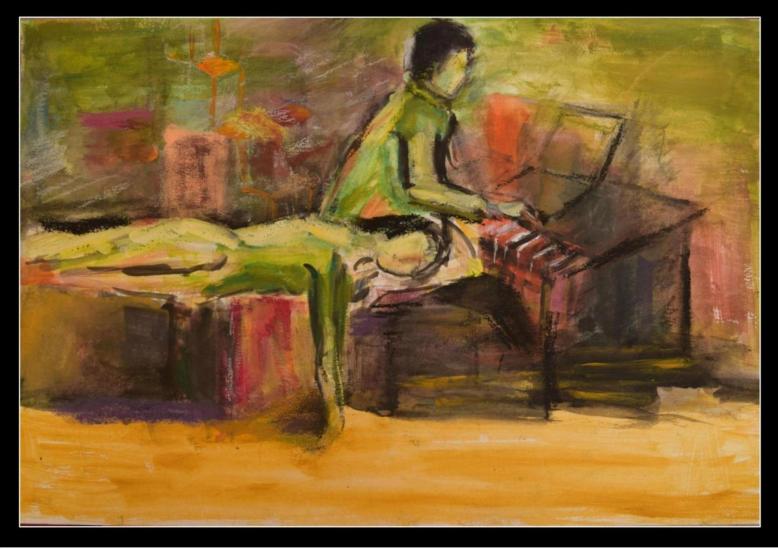
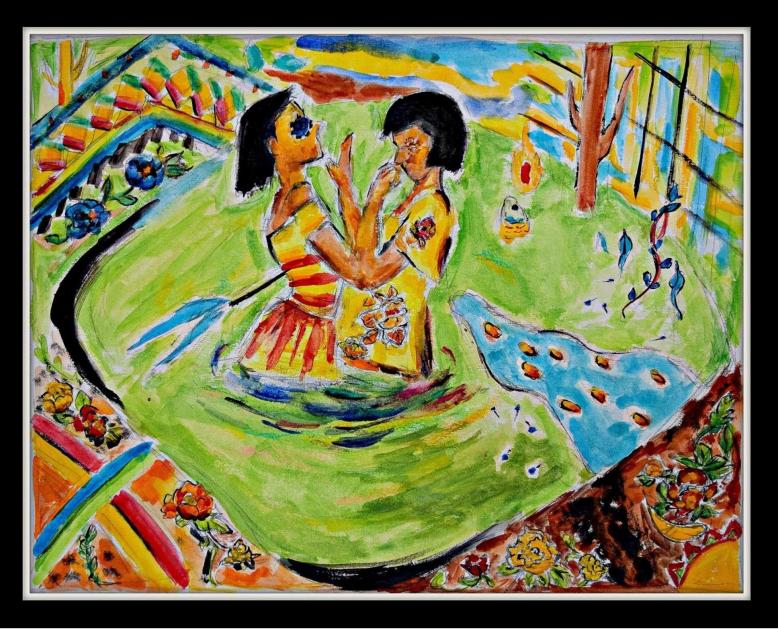
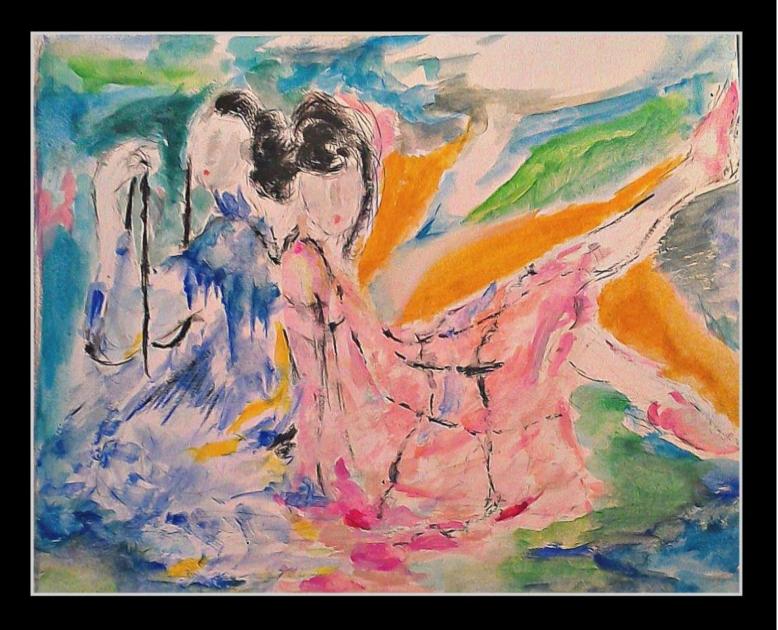
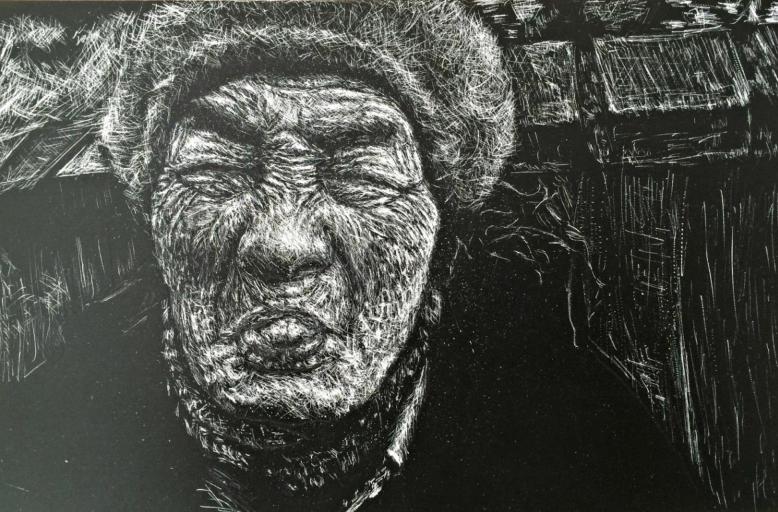
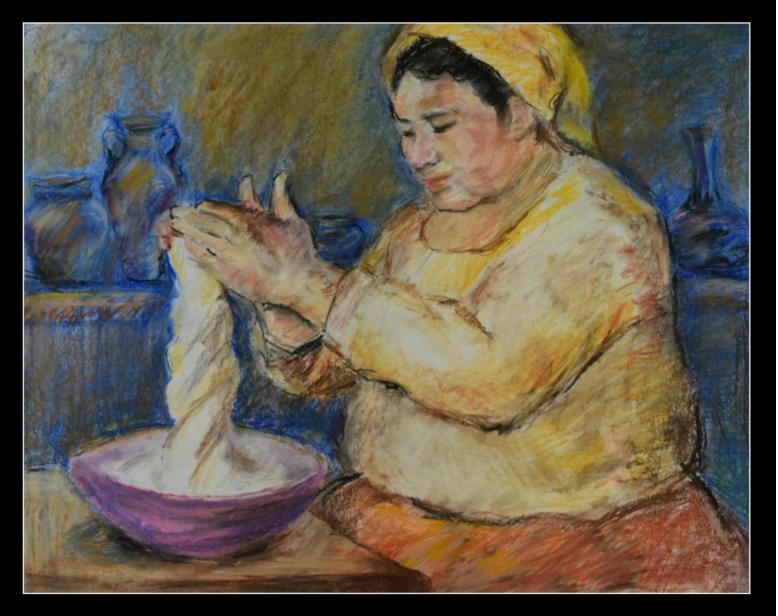
Artist Statement: “My art seeks to make the world soften around the edges- to become a liquid mirror onto which lights and colors bleed. The world becomes softly blurred, melting me right into it. It’s those sweet-sharp tidbits, the overlooked mirage of moments past. That is what exhilarates me the most: being enthralled by new ideas, being intoxicated by the romance of the unknown.”

Inklette (1).1-page-001.jpg

“Lackadaisical Euphoria”

Inklette (1).2-page-001.jpg

“Amazon Blues”

Inklette (1).3-page-001 (1).jpg

“Eclectic Ennui”

Inklette (1).3-page-001.jpg

“Whimsical Bliss”

Inklette (1).4-page-001.jpg

“Our Daily Bread”


William Higgins 

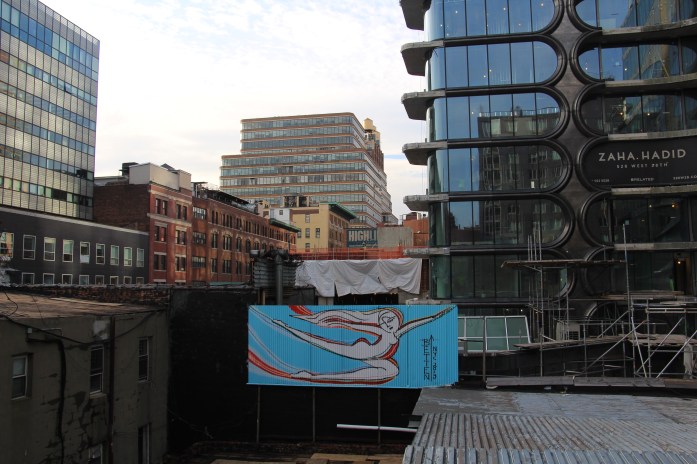
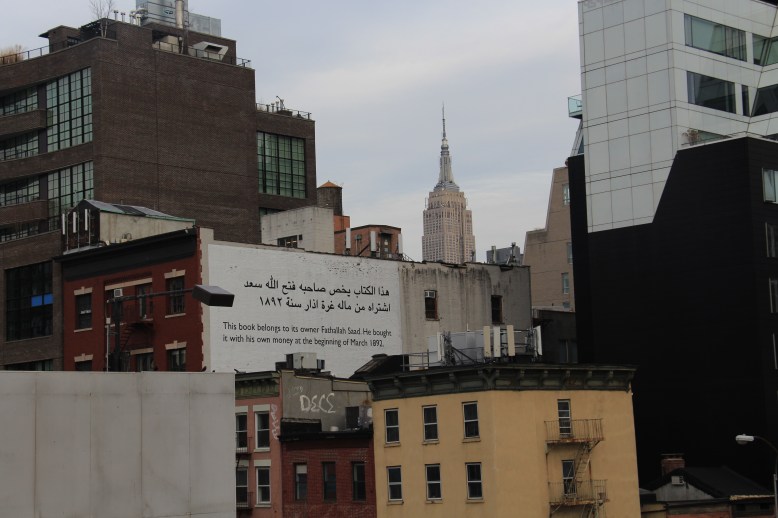
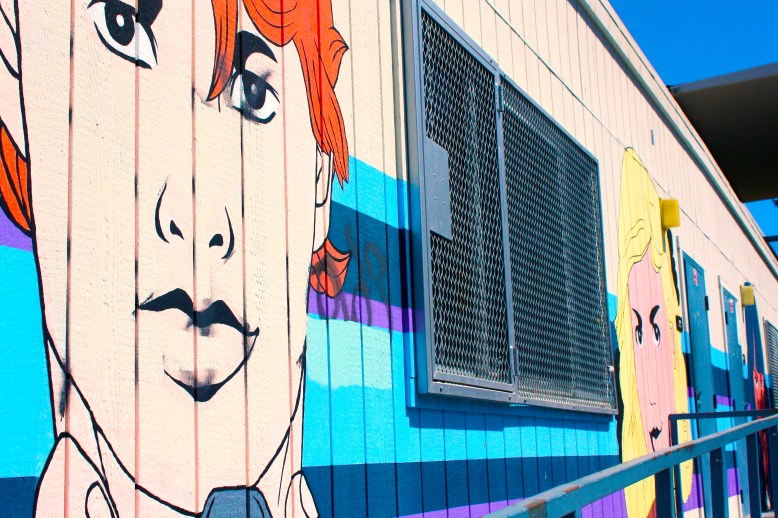
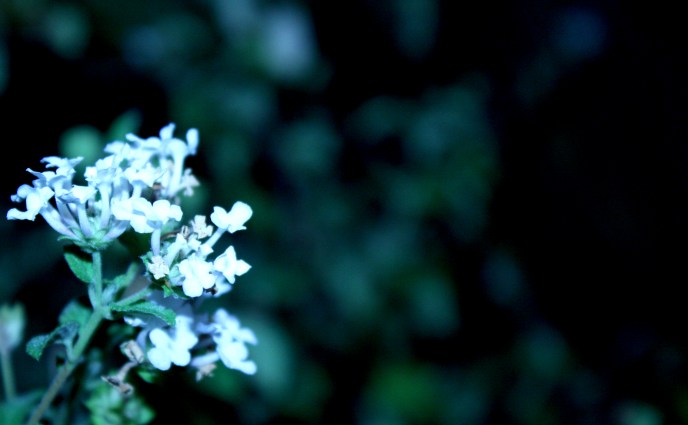
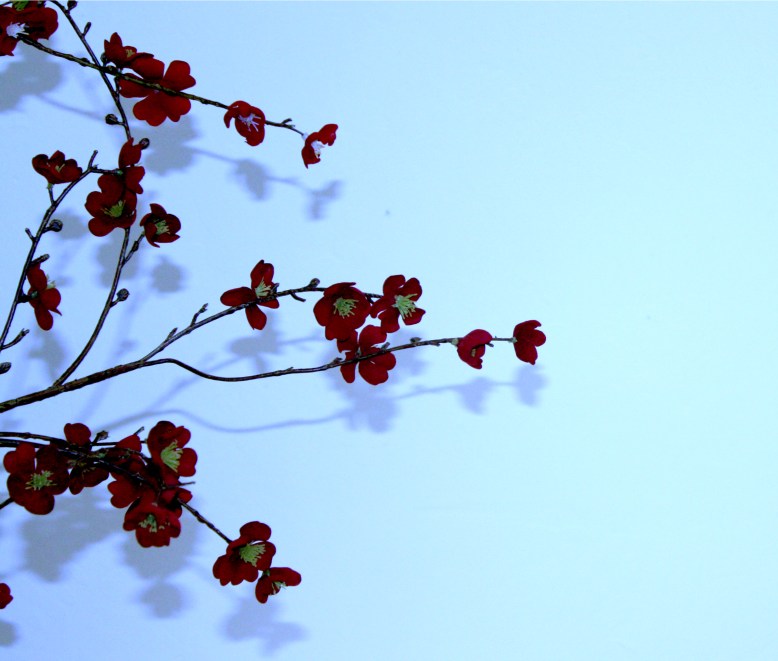
Artist Statement: “Three of these photos were taken in Los Angeles. The other two were taken in New York.

I’m mainly influenced by pop art and nature photography. These two blend better in LA than they do in New York. Comic book colors are everywhere all the time. The Southwestern U.S. sky is one of the sharpest blues there is. And then the city has this uneasy relationship with nature. It’s shocking to see skyscrapers against blurred mountains everyday. Suburbs bump up against parks and forests, both state and national. A combination of pop and nature fits the city.

            I also feel like focusing on smaller details in LA. The city doesn’t seem to fit together with itself the same way New York does. There’s a depth and unity in Manhattan’s cityscape that grounds it as an actual city. Shots have to be layered, you can’t dissect it piece by piece. LA doesn’thave a similar vista — except maybe the Hollywood sign — that unites the city the same way Manhattan does. Put in a bad analogy: New York is like an oil portrait,  LA is like a comic, paneled.”

IMG_0367.JPG

IMG_0393.JPG

IMG_0513ADJ.jpg

IMG_0618ADJ.jpg

IMG_0636ADJ.jpg


Maggie(2).png MARGARET LU is a rising junior at Waubonsie Valley High. Her art and writing have been recognized with gold, silver, and honorable mentions in the Scholastic Art & Writing Awards. In addition, she is a YoungArts finalist in creative non-fiction, has been recognized in the New York Times as a finalist for editorial cartooning, and writes for the Chicago Tribune’s teen division, The Mash. When not writing or painting, Maggie can be found obsessing over Studio Ghibli films, attempting to sing Spanish songs, or stargazing.

IMG_4965.JPG

WILLIAM HIGGINS is a writer and photographer. His work has been published by several magazines, including Glass Kite Anthology and Textploit. He previously attended the College of Creative Studies at the University of California, Santa Barbara, studying creative writing and literature. In the fall he will start at University College Dublin to study law and philosophy.