A Tale of Two Junkies and A Great Woman


Back in the day, he was walking down Lafayette Street in the East Village. Just another actor manchild.  You could tell because he was fit and, under his leather jacket, he wore a button down shirt with jeans and carried a battered leather shoulder bag. Although he wasn’t really pretty enough to fit the classic stereotype. His most distinctive feature was his luxurious and unruly shrubbery of curly light brown hair.  Because it was in fashion at the time, women would stop him on the street and ask where he’d gotten it permed. He enjoyed that a lot. Because he knew he wasn’t really pretty enough.

It was a dreary, grey March day on Lafayette Street. The cold, raw wind didn’t move the low hanging clouds that lazily spouted a light rain. The raindrops pelted the small piles of dirty snow and made nasty sodden blobs of the paper garbage and other crap on the pavement. As usual, he didn’t have an umbrella or a hat. With a practiced ease, he zig zagged down the street, simultaneously dodging pedestrians and cleaving to the shelter of the building overhangs and canopies. Walking between the raindrops, he called it. At the intersections and in the open spaces, he lowered his head and let his shaggy mane blunt the force of the wind and water.

He scurried along past Joe Papp’s Public Theatre. That soured him and painted the hint of scowl on his features.  Because he’d never worked there, just auditioned at Equity cattle calls.  He’d seen parts in “Backstage” casting calls there that he’d been perfect for. So many times he’d dutifully risen at 5 A.M. to wait in line to sign in. The line was, for all practical purposes, composed of two hundred people just like him.  Except that they were mostly prettier, but couldn’t boast as glorious a shrubbery of hair. But he would keep at it until the day he couldn’t stand being a begging supplicant anymore.

The rain quickened and he lowered his head, as the Public Theatre gave him no more shelter than affirmation. Only the crannies created by the building’s vertical supports offered cover. And the one he was approaching was occupied anyway. A gaunt black man, dressed in rags, huddled in it to avoid the rain. A homeless junkie, he reckoned. He’d been in New York for a few years now, so, while he couldn’t identify a single flower other than a rose or follow an animal trail in the woods, he could spot a junkie, pickpocket, or gangbanger at fifty yards. Not that he’d had any trouble—he was male, kinda big, and obviously poor. Anyway, it was raining harder still, and he was barely on time for his acting class. So he didn’t pay any attention to the nodding pile of humanity wedged into the cranny. Until that pile of rags came to life and spoke.

“Man, with hair like that, you don’t need no umbrella.”

They both laughed and their eyes connected for a moment before his quick pace carried him past the sheltering column. It was a nice moment. And, for some reason, it made his work better that day. He loved his coach—she was a theatre actress of great talent and integrity who also had an Oscar. Despite that, she was one of the least pretentious people he’d ever met, so much so that she often came to class dressed little better than the junkie in the cranny.

That could have been the end, but it wasn’t. Because an inviolable law of nature is that junkie stories don’t have happy endings.

He was headed for acting class again. But now he poured sweat and his skull felt suffocated underneath its thicket of hair on this hot, fetid, vilely humid Manhattan summer day. He still swiftly zig zagged down Lafayette Street, aching for the caress of the air conditioning in the studio. Now he bent his head down from the heat instead of the raw wind. Wafts of various stenches came off the pavement and assailed his nostrils. He was churning by the Public Theatre when he heard a rattle. He knew it wasn’t a rattlesnake, although stranger things have happened in New York.  It was a death rattle. Coming from that same cranny. But this junkie was white and not much older than he was. Still a little pudgy so this guy hadn’t been at it that long before this OD. As he watched, he heard the rattle once more, followed by a whistling sigh. Then the essence wooshed up out of the prone man. He swore he saw it. Then there was no man, only a body. He looked around—nobody else was near. Uncertainly, he stood there, what was he supposed to do?  Call a cop? He had a vision of passing a couple of hours talking to the police in the blistering heat.  Was that necessary?  He’d miss class. And the guy was obviously dead. Dead as a doornail, as they said in the sticks where he’d grown up. So he walked away. He wondered if that made him a shit.  But he did it just the same. Maybe he finally had his New York state of mind.

He couldn’t focus on the scenes presented in class, but his partner didn’t show so he didn’t have to work. Just as well. After the class, he and the coach and a few others adjourned, as they often did, to an unpretentious bar/restaurant nearby for burgers and beers. His coach was in a Broadway play, which they’d seen, so they teased her about cheating towards the audience because once she’d critiqued a Shakespeare scene in class by sweetly saying, “Where is the audience in your castle?”

She smiled indulgently at them, “You know, when Simone De Beauvoir was asked how she could live with Sartre after writing The Second Sex, she said, ‘That was philosophy; this is my life.’  Well, acting class is art, and Broadway is show business.” Then her face clouded and she sadly added, “Acting in New York is hard because you have to put up walls around your feelings just to walk the streets without going mad, but you have to let down all those defenses on stage.”

He felt like she was talking just to him, but of course, she wasn’t.  He didn’t say anything but it assuaged his lingering guilt for walking on. He felt full of affection as well as admiration for her in that moment.

That moment too consoled him. Right away. For the next day, right before her matinee, she stroked out and died.  She was only in her sixties.

There was a memorial for her in a Broadway theatre. He went. Stars of stage and screen eulogized her.  And they all described the same woman he knew from the master class. That struck him—he’d seen very few people who were exactly who they are. And most of them were junkies.


CHRISTOPHER HORTON‘s work has been published in the print anthology, Literary Pasadena, and online at Hollywood Dementia, Maudlin House, Page & Spine, and Shout Out UK. He lives and writes in Hollywood, which at least sounds romantic.
Brownie’s Lunch

I was afraid of him all my life. I think my sister hated him. Her children gave her one of those memory books with questions to answer about your life, but she left it empty because it contained a page called My Father. For me, it’s more complicated. I can’t eat a hot dog without thinking of him with a warm inner smile.

He was mean and loud and yelled a lot, especially at our mother. I wish I could talk to him about that, but he died 16 years ago, and even if he were still with us, I doubt he would listen. I tried once or twice when he was in his eighties, but he could never acknowledge how wrong he’d been, how bad the tension was in our home, or how scared we all were. The digestive problems my sister and I have struggled with all our lives surely stem back to our childhood at his table, where we were called down for scraping our forks or not eating everything on our plates and from the trauma of seeing blood in his mouth after he cut his tongue licking a knife.

Just often enough for me, there were special days, different ones, when he picked us up from St. Stan’s elementary school and took us to Brownie’s for Mexican Hots. At Brownie’s, he didn’t yell or lick a knife while eating a hot dog. And Mom wasn’t there for him to fight with.

He worked the second shift in the hours from four to midnight, at General Electric in Schenectady, 17 miles away, assembling and inspecting steam turbines for power plants. A big and husky man who loved to eat, he burned off many calories on the job, and after eight hours’ sleep, it was time for lunch.

He waited for Betty and me at the door of our school on Cornell Street and drove our black Chevy sedan down the steep hill behind the little complex of school, convent and church to East Main Street where the little restaurant called Brownie’s Lunch awaited the hungry.

Ours was a busy town in those postwar days, brimming with optimism. People like my parents had jobs and money to send kids to parochial school, and to build a little white house all their own.

But even in good times, my father’s temper flared, often when we least expected and mostly at home, with no one to see or hear it but his wife and daughters. In a public place like Brownie’s Lunch, we knew we were safe from his wrath.

Anticipation of hot dogs with sweet green relish filled the two or three minute drive downtown until he parked at the curb, our mouths already watering.

Mom never took us out for lunch. She worked the day shift in a sewing factory, and I just can’t imagine her liking Brownie’s Mexican Hots. At home in our kitchen, she boiled hot dogs in an aluminum pot on an electric stove, the smell of greasy water lingering as she served them on plain white rolls with ketchup.

I don’t remember either of my parents being affectionate with each other, or with us. But children will take what they can get, and forgive almost anything. At Brownie’s with my dad, I could enjoy what he enjoyed: a good working man’s lunch, a hot dog on a bun with special sauce. And I could see him happy.


LINDA C. WISNIEWSKI shares an empty nest with her sculptor husband in Bucks County, PA where she writes for a weekly newspaper and teaches memoir workshops. Her memoir, Off Kilter, was published in 2008 by Pearlsong Press, and the introduction, when first published in Mindprints, was nominated for a Pushcart Prize. Her work has appeared in places as diverse as The Quilter, the Christian Science Monitor, and Massage Magazine.

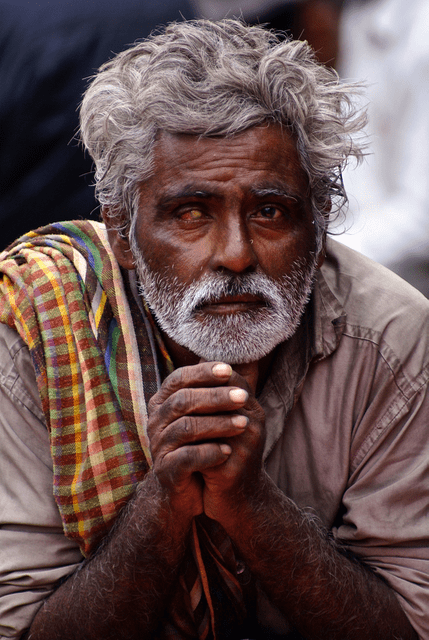
Agony

Artist Statement: “Presenting the ordinary things in extraordinary ways of non-verbal communication is what I live for. Being honest and crude helps me illustrate in a very intense manner, and being able to convey a message in a virtuous way gives me immense satisfaction. This bolstering skill and satisfaction of being able to capture the right moment, cheerful or doleful, stark or fuzzy, helps me create an attachment and sense of connection between the subject, artist and viewer. My work generally focuses on people, culture and community, primarily based in India.”


038f

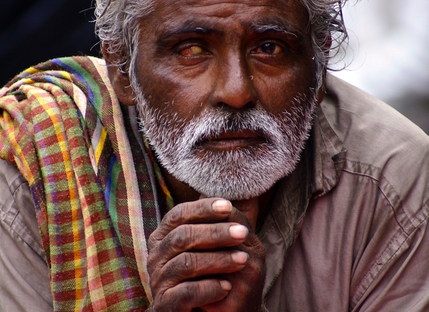
Agony by Vibhav Kapoor
Photography Ι 2592 × 3872 Ι 2014

VIBHAV KAPOOR is an amateur photographer whose interests lie in street and candid photography. He is a resident of Gurgaon, India. His full portfolio is available here.

Insight: Akhil Katyal

AKHIL KATYAL‘s poetry has one of the most eclectic audiences one can find—and a majority of it is virtual. If you trace the ‘shares’ on his posts on social media, you’ll find college professors, students, and often, the students’ parents too. His work evokes a sentiment of immense solidarity. The comments section reads like a classroom discussion, straddling observations, discourse, and impromptu collaborations. Fitting, one could say, considering his official role as an assistant professor at Shiv Nadar University. Indeed, Katyal’s work shadows his ability to teach. He never tells, but merely shows, highlighting subtexts and contexts that leave you wanting to explore more.

Harnidh Kaur, Poetry Editor


When Farida Khanum

sings now,

she does not hide the age
in her voice,


instead
she wraps it in paisleys,
and for a moment
holds it in both of her hands, before

she drowns it in our sky.When she sings now,
she knows

that at the end of that note
when her voice breaks
like a wishbone,

he will stay.


When I die

bury me

only in your eyes.


For someone who’ll read this

500 years from now

How are you?
I am sure a lot has changed

between my time and yours,
but we’re not very different,

you have only one thing on me –
hindsight.

I have all these questions for you:
Do cars fly now?

Is Mumbai still standing by the sea?
How do you folks manage without ozone?

Have the aliens come yet?
Who from my century is still remembered?

How long did India and Pakistan last?
When did Kashmir become free?

It must be surprising for you
looking at our time,

our things must seem so strange to you,
our wars so little,

our toilets for ‘men’ and ‘women’
must make you laugh

our cutting down of trees
would be listed in your ‘Early Causes’

our poetry in which the moon is still
a thing far away

must make you wonder, both for that moon
and for the poetry.

You must be baffled,
that we couldn’t even imagine

the things you now take for granted.
But let that be,

would you do me a favour,
for ‘old time’s sake’?

Would you go to the Humayun’s Tomb
in what used to be Delhi

and just as you’re climbing the front staircase,
near the fourth rung, I have cut into

the stone wall to your left –
‘Akhil loves Rohit’

Will you go and see it?
Just that, go see it.


जेनेरल साहब – Bertolt Brecht
tr. Bertolt Brecht’s ‘General, Dein Tank ist ein starker Wagen’

जेनेरल साहब,
आपका ये टैंक बड़ा ही शक्तिशाली है,
जंगलों को रौंद देता है
सौ-सौ आदमियों को कुचल देता है,
पर इसमें एक दोष है –
इसे एक ड्राइवर की जरूरत पड़ती है

जेनेरल साहब,
आपका ये बॉम्बर बड़ा ही शक्तिशाली है,
हाथी जितना बोझ लिए भी तूफ़ान से तेज़ उड़ता है,
पर इसमें भी एक दोष है –
इसे एक मैकैनिक की जरूरत पड़ती है

जेनेरल साहब,
इंसान बहुत काम की चीज़ है,
वो उड़ सकता है, वो मार भी सकता है,
पर उसमें एक दोष है –
वो सोच भी सकता है


This slideshow requires JavaScript.


Aligarh

Dr. Siras,
In those nights,
you must have felt loneliness like a drip.

The walls of your room
would’ve been held apart only by a faint song,

and memory must have sat by you all night
combing the hours.

In your Marathi poem, Dr. Siras, the one about the ‘beloved moon,’
the one in which you somehow eke dawn from the dark sky,
I read it last night on the terrace,
it held me, it held my hands,
it let grass grow under my feet.

In this house that I have lived in for three years in Delhi, Dr. Siras,
the windows open onto a Palash tree.

I was 27 when I had rented it,
and at 27, the landlord had not spent too much time on the word ‘bachelor’
he had only asked if I had ‘too many parties’,
I didn’t, and I had got the house.

But next time, Dr. Siras, when I will try and look for a place in this city,
I will be older and they will pause at “but marriage?”
and I will try to eke out respect from a right surname,
from saying ‘Teacher’
from telling my birth-place,
and will try and hide my feeling small under my feet.

What had you said, Dr. Siras,
when you looked for that house in Durga Wadi?
What had you said for the neighbourhood, ‘Teacher’, ‘Professor’,
‘Poet’?

What gives us this respect, Dr. Siras, this contract with water?

In those nights,
weighing this word in your hands,
you must have felt weak, like the sun at dusk,
you must have closed the window to keep out the evening,
you must have looked back, and hung the song in the air
between refusal and letting go.

(Thanks to Apurva M. Asrani and Ishani Bannerjee)


That night in Mumbai when Brandt asked ‘Are you good with speed?’ and I said ‘Yes’


it was as if
I pillion rode the moon
on the Western Express Highway,

and every mile we raced on his bike
we reclaimed from the sea,

the Goregaon high-rises passed us by
like longing measured on a Richter scale,

and the sky, window-lit at Malad, tripped
onto us,

at Kandivali, the fortieth floors spun out
into the night till the sky was only staircases,

and when he dropped me
by those black mountains of Borivali,
I realized I had held onto my seat
like the black holds onto basalt,
like the skin holds onto bones,
like Mumbai holds onto sea.


इंसान की कीमत कितनी कम लगाई जाती है – रोहित वेमुला
 

इंसान की कीमत
कितनी कम लगाई जाती है

बस एक छोटी सी पहचान दी जाती है
फिर जिसका जितना काम निकल आये –
कभी एक वोट,
कभी एक आंकड़ा,
कभी एक खोखली सी चीज़

कभी माना ही नहीं जाता कि इंसान
आखिर एक जीवंत मन है

एक अद्भुत सी चीज़ है
जिसे तारों की धूल से गढ़ा गया है

चाहे किताबों में देख लो, चाहे सड़कों पर,
चाहे उसे लड़ते हुए देख लो,
चाहे जीते-मरते हुए देख लो


चाहने से क्या नहीं मिलता

आकाश दो तिहाई ‘काश’ है
आसमां आधा ‘आस’ है


Q-A WITH AKHIL KATYAL

Inklette: What does the experience of being a contemporary Indian writer mean to you? What is it like to occupy this space?

Akhil: These are very, very strange times. Professor Gopal Guru who opened the lecture series on Nationalism recently at JNU, after the terrible sedition row, said the “benign, egalitarian state” has gone missing. Imagining it back into being seems such an uphill task. Think of this – a small university event on 9th February whose very name was the name of a poetry book, ‘The Country Without a Post-Office’, an event which raised legitimate concerns about the miscarriage of justice at the highest levels, an event which brought Kashmir – which has never known India as either ‘benign’ or ‘egalitarian’ – shattering back into the mainstream Delhi imagination, that one event, could kick-start a most unfortunate series of events which landed up three university students in jail and hundreds others finding themselves demonised in their own city. A false bogey of ‘anti-nationalism’ was raised to scuttle deep and searching questions this country needs to ask, that its writers and artists, its teachers and students are asking.  

Speaking on these series of events, in the same lecture series, journalist P. Sainath said to JNU students – ‘Welcome to the rest of India’. You’re only experiencing, he told them, what non-Delhi has been experiencing for decades, the repression, the arrests, the elusive bails, what Bastar or Jagatsinghpur feel in their marrows every day. What Kashmir could give all of us masterclasses in. Look at Hyderabad. Look at what is happening in the university, to its students and teachers, who are, against all odds, carrying out a most strident struggle for all of us. Look at the utter casteist and MHRD-backed forces at work against them.

It is important, and inspiring, to note that at the centre of both these rows, in JNU or HCU, is a boundless literary imagination, one that has shown the way to wed that which is ‘political’ with that which is ‘imaginative’ – there is no other way, there can be no other way. Rohith Vemula’s reaching for the stars in that gut-wrenching last letter which has become the fable of our times, and Agha Shahid Ali’s searing and sorrow-laden transcription of the horrors in 90s Kashmir in his book ‘The Country without a Post-Office’ are what we have at the centre of these debates. These documents anchor these debates, fuel them, and keep them alive. It tries to keep at bay a government that is afraid of its artists, teachers and poets – that pushed Vemula to his death, that was flummoxed by Ali’s metaphors. To be an Indian writer today is to recognize such power in the literary, in such urgent and poignant voices such as Vemula’s and Ali’s. To appreciate what conversations it can create, what old, rigid forces it can upset. To be a writer today is also to recognize the differences between literary folks working in different settings – of language, of caste position, of location. The anti-caste songs of the musicians and poets of the Kabir Kala Manch in Maharashtra landed them up in jail, whereas I largely write from the relative safety of Delhi, of a job, of a caste-position that shelters me, of cultural capital that has so far ensured nothing untoward happens.

At a recent event in Delhi University, where some of us were called to read poems on the occasion of Women’s Day, there was a threat that the BJP student wing ABVP would interrupt the event and cause trouble if any anti-Sangh sentiment was expressed at the event. They had done it in the past on many, many occasions. We noticed some of them were hovering around. This is our times. The space of the literary finds itself surrounded, sometimes vulnerable and sometimes strident, in this BJP-backed anti-intellectual, anti-artistic climate that is systematically being built one arrest after another, one denied bail after another, one sedition row after another. But my contemporaries – in and outside Delhi, writing in Hindi, in Marathi, or in Telugu – continue to write in situations million times more vitiated than mine. So what excuse do I have. I draw inspiration from them and get on and write.    

Inklette: We’ve heard you’re learning Urdu these days. Could you talk more about it? Also, as a translator, what is your relationship with language?

Akhil: You know it is incredible. One of my students, Abdur, is teaching me. He is walking me through a language that had always felt so intimate but never looked it. Now each letter is being caressed out of incomprehension. And brought into meaning. You know I learnt to write ‘dil’, ‘ab’, ‘aarzu’, ‘suno’ and other such short words in the last class. It was quite overwhelming when I could recognize the ‘gulon’ of Faiz’s ‘gulon mein rang bhare, baad-e-nau-bahaar chale’. As a translator, what do you want – you what to know how a language breathes, sits, dreams, gasps, orgasms. You want to make the dreams of one language be realized in another, you want one language touch the viscerality of another. Learning the Nastaliq at this late stage – I am 30 – not as someone who is learning it by rote but as one for whom each curve and nuktah is a thing of beauty, is a thing of surprise, I cannot thank Abdur enough who is helping me in this. He is opening the door and letting me enter a language. I am looking forward to the day – hopefully not too far – when I would write a letter, all right to left, all curves and dots, that would express the appreciation I feel. Also, to a translator, a third script means your world has just exploded open. New texts, new authors, new loves, new noise, new worlds to inhabit.

Inklette: You’ve written and spoken about sexuality on various platforms and occasions. Poetry has a body, a form, through which language flows. How would you compare this experience of poetry with the experience that is shared between the body and sexuality, at large?

Akhil: I know there are nights when to be able to write a poem is also to be able to sleep that night. That the poem produces that very visceral, that very physical response – of calm, of rest wrenched out of restlessness. Of the place which the body reaches with that ability to transcribe in words that precise thing which is happening inside and around you. I know that there is something somatic about what the poem does – when you write it, when you read it to yourself, when you share it with others. You know that feeling, when you’re reading something on stage, when you’re reading it among hundreds of listeners, you hurl your body into the audience as much as you hurl your words. Think of Habib Jalib reciting ‘Aise dastoor ko, subah be-noor ko, main nahin maanta, main nahin jaanta.’ Think of his body trembling at each word, think of each word finding a limb. That’s my ideal, I wish I was able to write and sing like that. For the very specific of your question, as far as the ‘body’ of the poem is concerned, its ‘form’ which allows language to flow through it and find meaning in it, and the connection of this with our own sexualness, I guess there is a quirky allegory there somewhere but I don’t know what it is.   

Inklette: Finally, we come to the toughest question: do you have any favourite poets or writers?

Akhil: It is not tough at all. Agha Shahid Ali for his searing embrace of sorrow, Dorothy Parker for her pathos and self-deprecation, Mangalesh Dabral for his gentle inventiveness and bringing alive mountains for me, Uday Prakash for his hope in the darkest of times and insight, Rene Sharanya Verma for her joy and resistance, Aditi Rao for her vulnerability, Anannya Dasgupta for letting pain know rhyme, Vikramaditya Sahai for wrapping words around heartbreak, Dushyant Kumar for letting me know what places of love Hindi can find, Gorakh Pandey for his imagism that is possible only in the welter of the political, Parveen Shakir, for letting me stake a claim on Urdu, and finally, Faiz Ahmed Faiz, for telling me that there is a vocabulary in which one’s desires can speak to the desires of one’s time.


AKHIL KATYAL is a writer and translator based in Delhi. His first book of poems Night Charge Extra was shortlisted for the Muse India Satish Verma Young Writers Award – 2015. In 2014, he was selected among the five best emerging writers in India by The Caravan Magazine and The Columbia University Global Centre in France. He translates widely between Hindi and English, including the works of Langston Hughes, Mangalesh Dabral, Amrita Pritam and Dorothy Parker.


Quare; colloq. slang


There’s a small town in Ireland where this word exists: Quare.

It can be used interchangeably, in several contexts, in order to narrate a disaster. The word was only invented so you wouldn’t have to go too far to tell a story.


Quare (pr. kwair, rhyming with square)

  1. Adverb, meaning ‘very’ or ‘especially’

It was quare (1) dark in there, the lights all off. I was walking by the house, right, and there was nobody on the porch for once. That was a quare (2) thing in itself. But you remember I always liked the girl, and I thought I might call in when her mam wasn’t around. I never liked the mother. So I walked on up to the door, and I was going to knock on it – though I wasn’t sure what to say if she answered. I was sort of building up the courage. I was in two minds. And I was arguing amongst myself when I heard a rattle inside. It wasn’t the door; it was farther away than that. It sounded like it was very loud somewhere within the house, but maybe out at the back or in the basement, and then was a bit faded when it echoed all the way out to the front. I thought it was a bit off, so I knocked and I knocked again. And then, funny enough, the door was unlocked so I slipped inside. Just a bit curious.

  1. Adjective, meaning ‘strange’ or ‘unsettling’

She’s a quare (2)  one, alright. Her mother is an odd one as well. Must be where she gets it. The mother sits in a chair by the door all day, and she knits. The funny thing is, she keeps knitting and knitting. She doesn’t ever finish anything. She could make a scarf, and then keep going until it’s a Doctor Who scarf – you know the one – and then keep going farther. She doesn’t realise what she’s doing.  I think she’s not all there. I think her daughter takes it off her and gets a new one started every once in a while, otherwise the whole porch would be grey with wool. But the daughter is another story. A bit more pleasant. A bit more there. She has a cat though, and she brings the cat everywhere; on her left shoulder. Can’t tell me that’s normal. I went into the shop the other day for a tub of butter and there she was behind the counter, cat on her shoulder. Health and safety, that’s all I’ll say. That deli counter is probably covered in cat-hair. I’ll go there for milk and butter and a paper since it’s only next door, but I won’t be buying meat in a hurry. Oh, they’re both quare (2) ones. Runs in the family. But do you remember, the father left. He never struck me as an oddball. Heard some shouts from the house once in a while, and then you might think someone was throwing things, but he always waved to me in the street. Fixed my gutter one time, too. That one Winter, you know the one where it rained all that.

  1. Verb, meaning ‘to cause a problem’

You know, that lad has been missing for a while now. Young Frankie. He was always a nice fella, gave me a lift home from the shop a few weeks back since I had so many bags with me. Very good, he was. You wouldn’t think he’d go missing like that. His mam is awful worried he’s quared something up (3) and got himself in trouble. Hardly seems the type now, he’d hardly touch a drink and he’s friendly with the whole team. No girlfriend, he’s often been eyeing up the young one from the quare house (2) but that’s about it. No, he should make an appearance some time soon. Sure, we haven’t had anyone go missing in donkey’s years. Not since yer man from the quare house (2) but then he left of his own accord, presumably. Here one day, gone the next. Sure, the mother in that house would drive anyone out the door with them knitting needles clinking all the live-long day.


ROSE FORTUNE is from a small village in Ireland, which has survived every attempt at modernization to date. She has been published in several issues of irregular literary publication The Runt, and anthologies such as Fishing for Change and Where Dreams and Visions Live. Her writing can also be found here.

Getting Off the Bus

I was first on, I sat in back where the blacks

once had to, but I wanted to, and I wanted

nothing, to be nothing, black in a black hole,

less than black, softer, animal eyes in a forest

of springs and stuffing. I learned to read

by parsing out the lawless arabesques

of graffiti markers, math I got from the phone

numbers scribbled in desperation on the backs

of seats – and politics, which was just the

scrawl of promise appearing above or below

those numbers. I learned art, current events,

there is little that escapes you when you

tune your ear to the whine above the motor,

anthropology, physics. I learned biology,

worm gut, frog leg, snake eye, pig butt.


This afternoon I watched a granny

step off the bus, and as we pulled away

she drew up by some iron gates

to look back over a meager shoulder,

and what she saw was that nothing

had changed, nothing had changed

but the face of the clock, she saw a bus

in time and space, a rising stream of cars

and trucks. Like nations, near yet isolate.

I watched through burning windows,

my eyes fumed with her afterimage,

but fading, some action somewhere else,

and I turned then like a valve, hard,

away from transport, walkways, her.

Traffic was heavy. I did not trust my eyes.


BRUCE SAGER won the 2014 William Matthews Poetry Prize, selected by Billy Collins. Past awards include the Harriss Poetry Prize, with Dick Allen serving as judge, and the Artscape Literary Arts Award in poetry, chosen by William Stafford. He is the recipient of Maryland State Arts Council Awards in both fiction and poetry. His third book of poetry, The Garden of Earthly Delights, is forthcoming from Hyperborea Publishing of Ontario in late 2016.

The Highest Shelf

Maria stretched her little fingers to the top of my desk, pawing over papers and picture frames until she caught hold of the leather strap and tugged my purse to the floor. I watched her dig into the unzipped pocket like a puppy as I crossed the room, straddling building blocks and five-year-olds.

“Maria, what are you doing?”

She looked up at me, big eyes bulging from her brown skin. She dropped the purse’s handle and darted to the reading corner where she plucked The Rainbow Fish from the shelf and dropped cross-legged onto the rug.

I sighed and zipped my purse—after checking that all my credit cards were present. This was happening too often. Her mother had assured me she would see to it. “It’s only a phase,” she’d said. “Maria thinks it’s a game.”

The game was becoming less fun for me.

While the kids were having naptime I called her mom—no answer. I tried the father. Between his thick, Mexican accent and the loud clanging in the background, I could barely understand him.

“I know Maria usually rides the bus, but do you think you could pick her up from school today?”

“I’ll come,” he said.

After naptime and alphabet and snack and drawing, the parents began to arrive. Maria didn’t seem to notice when she was the only one left. She sat in the corner with her book, running her fingers over the fish’s colorful scales. She couldn’t read yet, but she loved the pictures. I spoke to her several times, but she acted as though she couldn’t hear me until I gave up and started paperwork at my desk.

Her father came in smelling like fast food and burnt grease. Maria ran to him shouting, “Papá!,” and clung to his leg.

“Hello, señorita. Have a good day?”

I brought over her Dora the Explorer backpack. “Hi, I’m Mrs. Sally.”

“Rico,” he said, extending a hand. Maria leapt at his forearm like a grasshopper. “I’m sorry I’m so late. I had to leave work early.”

“That’s all right, I appreciate you doing that. I just wanted to talk about a little habit of Maria’s.” When the little girl heard her name and the tone in my voice, she sank behind her father’s leg. “She’s taken to stealing. I’ve caught her with other students’ lunch money, Game Boys, house keys. A few days ago my purse was turned over on the floor, and when I checked her pockets I found one of my credit cards. She grabbed my purse off my desk again today.”

The man’s thick brows furrowed. He knelt down to his daughter. “Maria, do you steal things?”

She shook her head.

“Maria…”

Mamá told me to.”

The girl raised her thumb to her lower lip. She didn’t suck it, but she wanted to. Her father put a hand on her little shoulder. “Qué Mamá te dijo?”

“She said I couldn’t come home.”

“You couldn’t come home? Por qué?”

“Without a prize.”

She wrapped her arms around her daddy’s neck. He flinched like it hurt.

“Your mamá told you to steal?”

She didn’t answer, but she had already been clear enough. Rico rose with his daughter still wrapped around his neck and the pink backpack slung over his arm. He shook his head. “I am so sorry. I will be talking about this with my wife.”

“I don’t mean to pry,” I said, “but do you know why your wife would have said such a thing?”

I didn’t need to ask. The answer was in the smell of cheap burgers clinging to his skin. It was in the exhaustion weighing down his eyes. It was in the small hole near the hem of his shirt. But I asked anyway. I needed him to say what I knew he would.

“I don’t know. She must have misunderstood something. Gracias, for calling.”

I nodded and watched him carry his daughter out the door. I stayed in the classroom an extra thirty minutes because I had plenty of work to finish—not because I wanted to pretend he got in a car and drove away, instead of walking to the trailer park across the street.

When my work was done, I walked to my Honda, purse tucked under my arm, keys jangling. I drove home and thought no more about Maria, did not wonder what she had to eat tonight. I had made the phone call. I had done my part. If they had truly needed help, her father could have told me, standing in the classroom between walls painted with giraffes and sunsets. I asked. I did all I could.

I will put my purse on a high shelf tomorrow.


VICTORIA GRIFFIN is an East Tennessee native, currently studying English and playing softball at Campbell University. She writes between study sessions, practices, and mouthfuls of peanut butter. Her short fiction has appeared recently in Synaesthesia Magazine and FLARE: The Flagler Review, among others. Find her here.