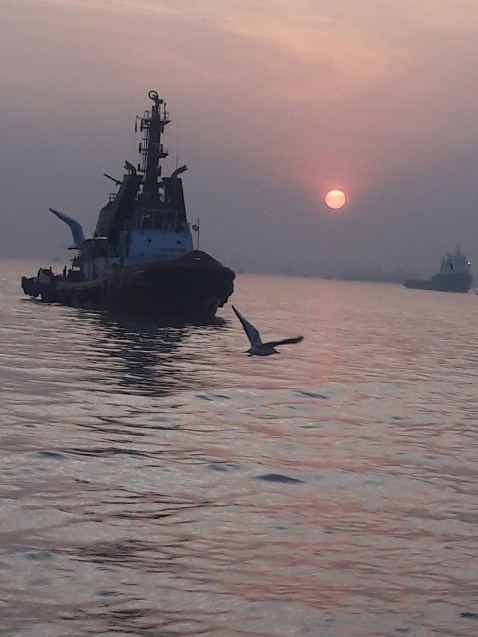
The Flying in the sea by ZUNERA shahab
Photography Ι 4128 X 3096 Ι 2015
ZUNERA SHAHAB is a student at St. Joseph’s Convent School, Bhopal, and currently lives in Bhopal.
ZUNERA SHAHAB is a student at St. Joseph’s Convent School, Bhopal, and currently lives in Bhopal.
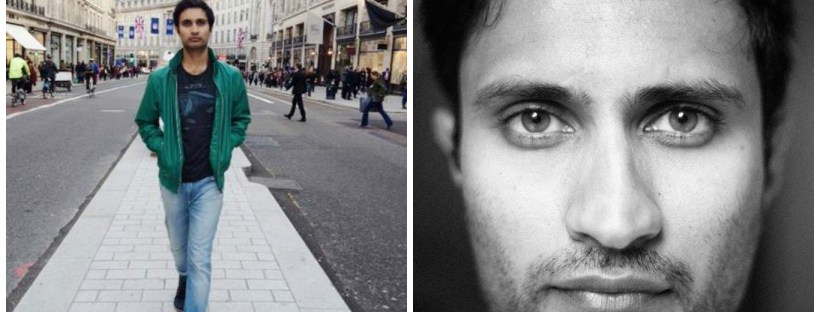
VIKRAM KUSHWAH’s photos reflect a longing for childhood dreams and fantasies, and for a world unsullied by modernity and the mundane; a simpler life, when ‘miracles were taken for granted’, as Vikram puts it. Similarly, through his corpus of work, Vikram strives to ‘challenge reality’ and rebel against the modern world through celebrating the romanticism and innocence of the ‘pure self’ of the child. The poignant symbols and images featured in his surreal and magical photos are a manifestation of this celebration and yearning.
In addition to being inspired by his childhood memories and his notions of romanticism, Vikram’s artistic influences are vast. While through his work one can see a direct link to childhood classics such as Alice in Wonderland and Peter Pan, Vikram also cites the works of Sigmund Freud and the photographer Guy Bourdin as having left a profound impression on him. As well, while pursuing his Master’s, he was particularly drawn to the work of the Surrealists, the Romantics, and the Pre-Raphaelites.
Inklette: The world that you create in your work is an individual, personal space. Yet, do you like to be defined by it or are you simply a part of the whole?
Vikram: I’m certainly a part of the whole as I am in that kind of space – at least in my head—even when I’m not producing work. It follows me. I follow it. So in that sense you could also say that I’m defined by it. Also because, while flipping through a magazine, people tend to recognise or distinguish my work from the rest. It’s some kind of a paradox.
Inklette: At the end of every project, how do you think you change from within?
Vikram: I don’t think I change from within at all. I have and always will be a daydreamer. I have always seen my work as a sort of rebellion against the modern times where violent acts of destruction are commonplace. That will not change. A friend recently wrote this after seeing one of my recent series, “Quite honestly I ‘d rather just look at some beautiful things than think about all the horrific stuff and quality of humans floating around in the universe!” That’s one of the ways I’d like to impact people.
Inklette: You’ve stated that you have been influenced by Surrealism and Romanticism. How do you converge that narrative into your own, as a contemporary photographer?
Vikram: I don’t take Surrealism and Romanticism as necessarily belonging to the art periods of the past. I think they’re states of the mind. Therefore past and contemporary do not apply. I dream of a simpler world, a place without rigid social rules – and that’s where the magic comes in my pictures. My daydreamer self lends itself to the surrealism of my work. Of course, I’ve studied the historical art periods and have taken inspiration from those as well.
Inklette: So, you teach high school students photography in the summer through the OxBridge Academic Programs. What do you hope they take away as artists and people?
Vikram: I hope they take away photography as an art form and not merely as a technical medium because art enables people, it elates and it excites – and more so with young minds. I hope they can be dreamers at some level.
Inklette: The elements in your work are characterized by a mix of wondrous synchronization and a gnawing sense of dream-like disintegration. Where does the origin of such inspiration lie, according to you?
Vikram: The inspiration at the very core, at the very heart is triggered by the imagination. With an imagination, anything can become inspirational, even the everyday and the seemingly mundane. The imagination helps perceive things differently and then conceive an idea. It’s the same with me—anything I see, hear, taste, smell can inspire or trigger an idea but it’s the imagination (read: daydreaming) that really helps construct it.
Inklette: In your work, there is a striking dimension where each event takes place in an unconscious space. Surprisingly, in your photographs, that dimension is more perceivable and tangible than distant. How would you explain this or how do you manage to do this?
Vikram: I can only think of one explanation. What you see in my pictures is what really happens when I press the button.
In 2010, VIKRAM KUSHWAH completed his masters in photography at University for the Creative Arts, Rochester. He has since been practicing his art in Britain and India, working for reputed publications such as Vogue and Harper’s Bazaar and showing his work in galleries in the UK, Europe and the USA. His collector base spans Europe, America and Asia. Vogue Italia featured him in their ‘New Talents’ section in 2012. The following year his work won a bronze at Cannes for an advertising campaign shot for a Singapore based agency.He currently lives in London. You can visit his website here.
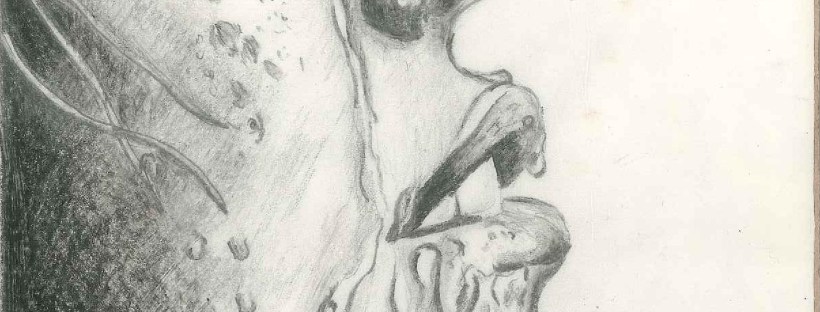
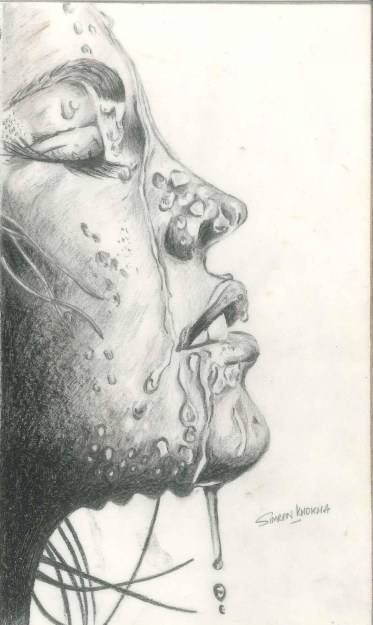
SIMRAN KHOKHA is an Engineering student at the University Of Delhi, India. She has been painting since she was four, having won many laurels in various art competitions. An active member of the Fine Art and Crafts Society of her college, Khokha enjoys working with water-colors and acrylics. Her favourite days are when she gets to splash paint and drink mojito.
Over the past few months, both of us have come to realize that home is more than a place where one belongs. It is an embodiment of the self, and its true nature surfaces only when one believes in it. This issue, in a way, brought us closer to ourselves, closer to home. It was going back home that made us believe and find strength in our vulnerability and imperfection.
***
When we started Inklette, we hoped to invite more people into this landscape. We knew that being a mere literary publication would not suffice. We wanted to be a community, an oasis for everyone who could see the desert.
We are ever so thankful to the masthead for the same. In the past four months, we have developed an even stronger sense of home. From reading submissions to editing the pieces you will read in this issue, we cultivated an even greater belief in being unafraid. In fact, we work, not as editors, but as a family. We admit to our insecurities, we anchor each other.
***
We are pleased to feature Akhil Katyal and Vikram Kushwah in this issue. Akhil Katyal’s revealing poetry on topics ranging from the vividly personal to the conspicuously collective, took us by surprise. Vikram Kushwah, on the other hand, courageously combines and portrays the dynamic nature of the human mind in his spell-binding photographs.
While Katyal’s poetry sharpens the conscious dimension of our mind, Kushwah’s photographs integrate that very space into an altogether movingly subconscious landscape. Both of them are accomplished artists, uniquely subtle with a remarkable body of work.
***
Needless to say, Issue II is bold and eclectic. During our submissions period, we received four times the number of submissions we received for our first issue, whereas the acceptance rate in every genre witnessed a significant decline. This amplified expectations, but we have tried our best to deliver what we believed we ought to.
Our contributors belong to several countries and come from different backgrounds. For some, it is their first publication! When you click to read different pieces, you will find yourself in varying landscapes, in the spirit of stunning identities and hopefully, at home.
***
Dear readers and contributors, you brought us here. You motivate us, the Inklette team, each day to make Inklette an experience, relying solely on true creation.
You are the energy that drives us and we, as usual, are infinitely thankful. We do hope you enjoy reading Issue II.
Trivarna Hariharan and Devanshi Khetarpal
Editors-in-Chief
Inklette Magazine
When a
mackerel
hit my line
the drag
sang like a baritone sax
in a dance band—
in five minutes
he was halfway
to Portugal
where the big boats come in—
but my son
reeled him back
from his long swim
in handcuffs
all the blood
in his body gone
like butter—
someone
tipped off the law
he said
over and over
again
in a movie
like when
a man
nervously
smokes a cigarette
before hanging
JOHN STUPP is the author of the 2007 Main Street Rag chapbook, The Blue Pacific, and the 2015 full-length collection, Advice from the Bed of a Friend, also by Main Street Rag. He has lived and worked in various states as a jazz musician, university instructor, taxi driver, radio news writer, waiter, auto factory laborer and paralegal.
For it was the middle of June and the sky was a murky grey; not the grey of silver linings but the grey of rain and winter, frost and decay. The city was dull and the people were harried; rushing, bustling, heads down, umbrellas up, don’t look don’t look, eyes on the ground. The red scarf around her neck was a noose and society the hangman – will he slacken? Or will he continue to pull tighter, tighter, choking, choking, like that day in autumn all those years ago; she could feel her brother’s hands still there, the purple bruising her neck, but no; no – that was over now.
The sidewalks watched with pleading eyes as they were crushed – their soul, their spirit – with the thousand marching feet to an unheard and unrecognised rhythm, the 9 o’clock drudgery. She walked from street to street, city block to city block, passing bus stops and parks, a green so garish it gouged her vision. The city may have been sprawling but to her it was a cage. The soaring surrounding buildings were the walls of her prison, the faceless windows the guards who kept her there. Are we not all prisoners? So was her mother’s excuse – stop, don’t go back there – but now her brother was one and she was too; they all were – her mother of drink and her brother of brutality and stone walls and iron bars, and she of the memory of a blustery autumn day beneath the tree by the river.
She tramped along in the middle of the crowd, being knocked on either side by strangers, as though they had a vendetta against her – you mustn’t take these things so personally, darling – but it was personal, mother; no rage can be that unfeeling, no malicious glee – a young boy’s specialty – can be that uncaring. The woman next to her wore a coat, and from the corner of her eye she noticed the colour, a blue so vibrant it stood out in all its vivaciousness and regality. The woman had a coffee in one hand and a handbag clutched tightly in the other. She looked at her watch, the weight of a deadline and office politics on her shoulders.
The crowd stopped as one before a pedestrian crossing, shifting from foot to foot, toes tapping, hurry up, hurry up. The scarlet blared and the traffic jolted to a stop on command, ordered by the flicker of a light to halt its momentum while life passed by in front of it. The bitumen crunched beneath her boots, she could hear it over the sound of traffic and horns and lives being lived without her. A man with a poppy-red rose in his lapel – why poppy? Those brave boys and stronger women wouldn’t be proud, the gutters are trenches strewn with rotted memories – the man walked past and glanced at her, fiddled with his rose – a canker bloom, a truth gone sour, a rose by any other name would still smell as bitter. He was gone. So was she.
She stepped onto the curb, tried to rid herself of the melancholia which had transmitted itself from stranger to stranger in that crowded mass, but it seeped into her pores, her very essence, all that she was and ever would be. She looked into the shop windows, the soothing therapy of materialism, but all she could see was a giant Rolex watch, trapped in a single everlasting moment. The mannequins in the window stared at her blankly – as blank as her mother’s face had been as she begged for her to understand, to listen, but instead she took one last drag of her cigarette, just as she would years later outside a courtroom surrounded by photographers – did she have a comment? An excuse for the despicable being she called a son? The question hung in the air like smog, or maybe it was just her disdain rising from the cigarette in tendrils, along with her health and whatever emotions she had left. However, she hurried along. She had somewhere to be.
The clock struck eleven. Chiming; chiming; chiming – would it ever end? It struck for an eternity, while life withered and time continued to take its victims, the ultimate executioner – tick tock, tick tock, tick tock. The past will cut short the future; cut it with the sharp blade of disappointment, an intake of breath like a dagger through the windpipe, the bottomless pit in her stomach a heavy emptiness. The words lapped against the inside of her lips; she wanted to shout them into the void but didn’t; no-one would hear or care.
She merely kept walking, no destination now – did she even have one before? She wandered aimlessly, losing track of time, putting one foot in front of the other, occasionally looking up only to look back down again when a stranger glared at her – how dare she raise her head? How dare she attempt to face the world? She couldn’t take it; she ran, and ran, and ran, eventually reaching a park bench just as the time reverberated through the city. Midday. Here she was, standing in a foreign land on the other side of the world; she was no-one and nothing and so everyone and everything.
SARAH RANDALL is a young writer from Melbourne, Australia. She completed her Honours degree in Literary Studies from Deakin University in 2015. Sarah also received her Bachelor of Arts in Professional and Creative Writing in 2014. She has previously been published in Imagine Journal, and was nominated for the Judith Rodriguez Prize. Sarah currently contributes to Avenoir Mag and Lip Mag.
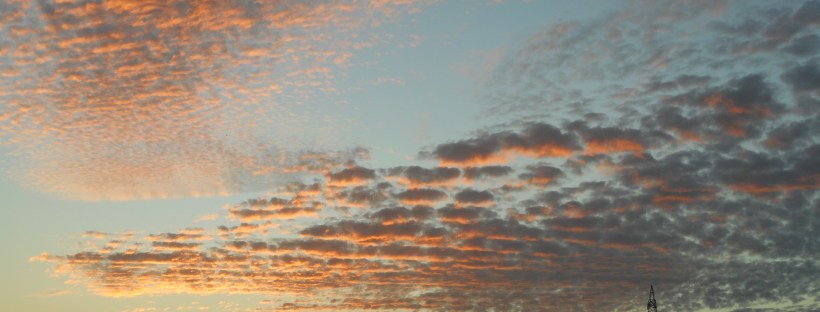
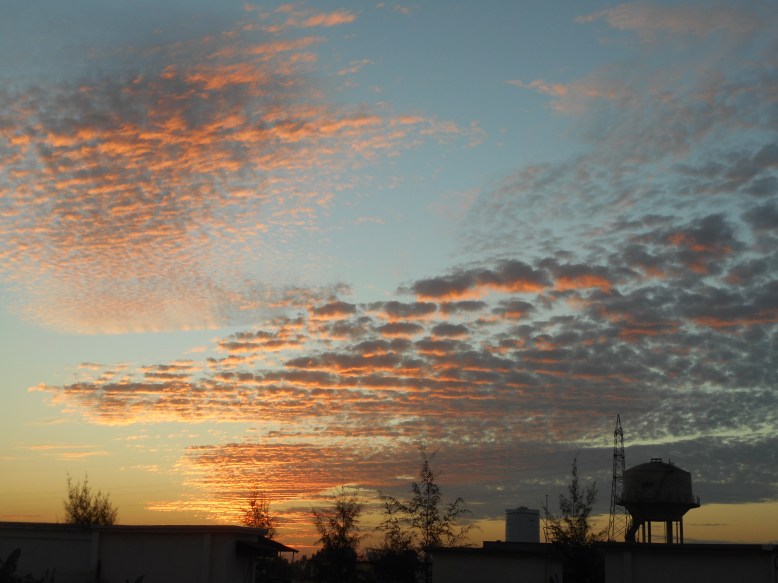
UJJWALA GOUR, in her final year of college as a Psychology major, is from India. She is a passionate writer and photographer.
 Inklette Magazine