Deep Thought The Walrus

So it was the average Saturday night, I was out for dinner. With the walrus. As always, the walrus was late. He was supposed to come in at 8:00 and he was already 26 minutes late.

After about half an hour of waiting, the restaurant door flung open, and in came the walrus. He was wearing a watch. You would expect him to not know of human norms such as wearing clothes, paying for food, wars, etc. but you would be wrong. The walrus was fully dressed. He had a certain stature to his walk. An intimidation. He would walk into a room and the crowd would be like, “Hey, whoa, what is that freight train of confidence?”

The walrus marched to my table and looked at me. He just stood there, and looked at me. He looked and said nothing. His ivory teeth were inches from my face. He blinked, and opened his mouth. He asked me, “Do you think I’m insane?”

I looked at him, dazed. What? What did he just ask me? But then it hit me. It was a fairly good question. The walrus was big. But it came off as small in the right conditions, and massive in others. He sometimes said things that were contradictory. He would say that things can’t appear and disappear out of nowhere. Then he would talk about how electrons disappear from one shell and suddenly appear in another. He would say things can’t be in 2 places at once, and then talk about some weird German cat. He would say that nothing is faster than light, and then talk about neutrinos. Sometimes, the walrus was just bonkers. He’d say that light travels in straight lines, and then talk about black hole photon sphere. He spent most of his time figuring out his relationship with philosophy the sea maverick. Sometimes he would say strange things. He’d say the sea maverick was his best friend, and then say that the two of them can’t agree on anything. The walrus was an atheist. He was a dreamer. But he was also a danger to himself and the people around him. A luring trap if I may. Countless had lost their lives to his tusks– Newton, Einstein, Tyson, Greene.

He had a split personality. Sometimes he was eerily sure of himself, an assumed paramountcy. At other times, he questioned his very viability, and felt entirely insignificant. He asked himself if he was just a fragment of imagination. No real substance. Tears would roll out of his eyes.

He was wild, often destructive, ever changing. Within days he would go from Einstein is a god to “he was wrong” and back again, like a finicky mistress trying to find where she belonged. The walrus was weary of his world, yet so dynamic and young. Hopping from one island to another, even two at once, his ship of the imagination would take him anywhere. Anywhere. Wherever he could imagine himself. He would jump and swim where he felt, and sometimes just sit by the fire trying to convince his fickle mind that his work here was done. But the mind wouldn’t listen. The mind wanted more, it was restless. It wanted to know how the world worked, because that gave him power.

The walrus wasn’t just one being. He was several. Constantly at war with each other, fighting, telling each other that they are better than them, that they are not insignificant feeding their own security. Running, scurrying, the rat race to a land called Right. They all simply wanted to be right. What the silly walri did not understand was that the island was big enough for everyone. But the walrus was immensely stupid and frivolous in spite of its wisdom.

The disequilibrium of the walrus’s self was incredible to watch. One could spend years trying to understand what the walrus was telling them, and not get a word. Scholars made it big in life by teaching others what the walrus spoke of. But the walrus didn’t really say anything. It just stood there. And stared at the island. The walrus was crazy. It was borderline mad. So when he asked if I thought he was insane, I could only think of one peculiarly interesting cat. Well, all cats are fairly interesting, but this one in particular was different. So as the walrus stared at me waiting for an answer, I looked into his eyes and whispered, “Yes and no.”

He remained unmoved. Just kept looking at me. Suddenly, he smiled and asked me, “Shall we start with some soup?”


DAKSH GUPTA is a high school freshmen from Noida, India, who was born in Houston, Texas, and raised in suburbs of the Indian capital, New Delhi. He bears an immense love for science, and a healthy disregard for the possible. He has been published in his school’s annual magazine, and maintains a fairly popular science blog, which he’s been updating every fortnight for almost a year, that can be found here. Gupta’s achievements include being able to type on a computer, and holding his breath for sixty seconds on a good day.

Shadeborn

Helia

Year 30 of King Rhiodri’s reign


K’vahl crept towards the edge of the cliff. His bare feet made no sound in the darkness. Below him, the great road was alight with rows of torches set into the dirt at measured intervals. If K’vahl peered to the right or left, he would see the torchlights shrinking into pinpricks, converging together on the horizon. He could only imagine how the great road would look to an owl flying above: a long, sinuous, fire-lit road winding its way throughout the entirety of the kingdom; a major vein connecting all twenty domains to the King’s hilltop city.

Along the stretch of road beneath him, a caravan from the I’lon Domain bearing wool and sheep’s cheese had camped for the night, having fortified themselves against the malevolence of the night with blessed prayer sheets sewn outside their tents. Nocturnal fire-bearers paced along the perimeter of the road, tending to their fire and watching over the sleeping I’lon nobles and their entourage. One of the fire-bearers yawned and batted at a moth that had flown too close to his face. The moth evaded the hand and fluttered back to the fire, dancing around it in little loops.

Settling himself more comfortably on the stone ledge, K’vahl tried to imagine his oldest friend, Torc, sitting beside him in the dark. Recently, all he could conjure was an adolescent boy with butter-yellow hair cut across his forehead in a horrendous bowl shape. He had the common brown eyes of the lower folk and a habit of touching people too freely. But K’vahl could not remember his face.

Why do moths fly at night when they seem to love the light so? he asked the faceless boy beside him.

This again? The boy shrugged. Maybe the fire’s only pretty when it’s dark.

An older Torc waggled his brows suggestively across a bonfire where rabbit meat sizzled on a spit. Maybe the moth thinks the fire is an attractive lady-moth and he’s dancing his little courtship dance?

That’s absurd, K’vahl thought.

A movement in the shadows of the camp caught K’vahl’s attention. He leaned forward, the image of Torc dissipating, and counted the fire-bearers guarding the occupied stretch of road. All were accounted for. That meant the figure creeping in the dark was one of the Lost, like K’vahl. No one from the I’lon caravan would dare to leave the safety of their tents, not even to relieve themselves – they had bladder skins and chamber pots for that.

K’vahl watched with interest as the small, dark figure snuck past the wagonload of wool without taking anything from it. What kind of scavenger is this? The image of Torc snickered beside him. The figure seemed female; wearing a long, straight dress, the skirt hitched up in one hand at the front. When she passed by the wagon K’vahl knew contained basketfuls of cheese wrapped in oil-paper – they had distributed some of it to the fire-bearers several hours ago – without pausing to take any, K’vahl knew that something strange was at hand.

As soon as the woman disappeared into the treeline, K’vahl crept away from the cliff’s edge and made haste back down into the forest, his eyes adjusting immediately to seeing in the dark. She seemed to be heading in the direction of the stream. K’vahl needed to cut her off before she came too near his cave and decided that the spot was worth fighting him for. K’vahl had met desperate, nearly feral, Lost before and that easy slope towards savagery had seemed to touch all of their kind equally.

Leaping lightly over a root, K’vahl nearly stepped on a flower bearing six bulbous petals and a gourd-like center. He jerked back, heart skipping a beat, then continued on, giving the flower a wide berth.

Arriving on silent feet halfway between the stream and the road, the point where he had estimated she would be by now, K’vahl tried to listen for the stranger’s presence and found nothing. He stilled and listened again. There it was, coming from behind the trunk of the gigantic silverbark: a muffled tread, as if the stranger had bound their feet in furs turned inside out.

K’vahl inched towards the tree, considering again how he ought to greet the stranger. Perhaps a warning of his presence would be more considerate? He broke a twig under his bare heel as he rounded the tree trunk, the crack sounding loud in the forest. “I mean you no harm, friend,” he said.

A young girl looked up at him with large, vaguely curious eyes. A fox lay at her feet, its eyes closed. She was bent over something at the base of the tree. When she straightened to face him, K’vahl saw that her hands were filled with a bouquet of six-petaled flowers, the centers rising into a gourd-like shape.

K’vahl stumbled back in horror. “Drop it! Drop it!” he cried.

The girl jumped and flinched but did not drop the poisonous flowers. She stared back at him vacantly. The fox at her feet did not stir from its slumber.

K’vahl looked between the girl, the fox, and the flowers in her hand. “Let the flowers go, little lady,” he said finally, taking in her attire. She wore the ankle-length dress of highborn, unmarried women; the shoulders gathered together with gleaming metal clasps. She seemed to be about twelve or thirteen; young enough to be a child, but old enough to wear a woman’s garment. A thin wire of gold encircled one bare arm, the shade of it just barely visible to K’vahl’s adaptive sight. She was not one of the Lost, but an I’lon noble.

When she did not respond, he stepped closer tentatively. “May I have your name?” he said. A faint touch at his shoulder stopped K’vahl from advancing further. He turned and found the image of his grandfather standing at his elbow, tall and straight-backed, his dark beard streaked silver. It is better not to know her name, his grandfather said. You know well that there is nothing you can do for her. The poison spores have already infected her blood.

K’vahl stared at the girl as she turned around and began to pluck flowers once more. The fox at her feet had not moved an inch since K’vahl had come upon them. It is dead, was his first thought, then: it looks at peace. Beside him, a tree branch swayed in the mild breeze, the tip of it brushing his shoulder.   

“What brings you here?” he asked, circling carefully around so that he was in her line of sight once more. “Will your family not come looking for you?”

She threw away a few withered flowers and moved to another spot.

“Are you not wary of the dark?” he asked again, not expecting an answer now, but he could not bring himself to leave. “The god of light is asleep; he cannot protect you from the spirits of the night. Or did your family not teach you such things?”

She paused and looked at him. “Will you harm me then, spirit?” she said

“What?” He stiffened.

She dropped her bundle of flowers and began to approach him. He backed away, step for step.

“Will you harm me, spirit?” she said again.

“I am no spirit,” he said, glancing back quickly to avoid tripping over a fallen branch.

“Are you not?” She looked him up and down, her eyes coming to life with a disconcerting mix of curiosity and delight.

K’vahl became conscious that he stood in a shaft of moonlight.

“You have one head, two arms, two legs, and your torso is very fine, however – “ She stopped abruptly and swayed.

“Sit down, little girl,” he said. “You must be tired.”

She sat down with a heavy thump, not once taking her eyes off of him. “However,” she repeated, “your hair shines white like an old man, even though the rest of you seems to be made of pretty youth.” She laughed suddenly behind her hand. “As pretty as the finest suitors my father can find!”

K’vahl felt torn between taking offense or being flattered. Pretty? “Did you have many suitors?” he asked.

“What brings you here, sir?” she said, echoing K’vahl’s earlier words. “It is dark. The god of light is asleep beyond the mountains.”

K’vahl stared at her for a long moment. Too many answers crowded his mind, waiting to be voiced. “I live in the dark,” he finally said. He swallowed, muscles tensing to run, but he stood where he was. “The god of light dislikes me.”

“Why would he?” she said. “I like you.” And then she could talk no more.

The image of Torc watched with him as she gasped soundlessly, opening her mouth like a caught fish thrown onto land. When she began to spasm, K’vahl turned and ran.

*

He jolted awake to the thunder of horse’s hooves outside his cave. The King’s Jackals? Heart racing, he scrambled off his bed of leaves to press an ear to the ground, the stone cool under his flushed skin. He closed his eyes and counted ten horses circling nearby. Ten meant a full company of vermin hunters combing the forest for signs of Lost. Why were they here now when they had just finished a routine check in K’vahl’s territory half a season ago and declared it clean?

You simply ran away last night without covering your tracks. Torc sat leaning against the cave wall across from him, one leg extended. I thought you were clever.

The I’lon girl! K’vahl thought. Her family must have gone in search of her around daybreak and found her body where K’vahl had left her. Some commoner versed in tracking game must have seen his tracks and known it for what it was. K’vahl had left foot marks instead of sandal marks; deeper imprints on the balls of the feet and a lack of stumbling must have indicated that he had been running and familiar with the lay of the land. Leaves and forest debris would have collected lightly on his tracks in the same amount they would have collected on the little girl’s body by the time they found her. Most of all, it would have been the lack of blood on his footprints that would have truly identified them as tracks made by one of the Lost. What other class of people developed calloused feet?

You should not have stayed to watch over a stranger’s death. His grandfather stood at the mouth of the cave, looking out at the rocks beyond. You would not have been so careless if you had not made yourself so distraught. You lost your head.

“There is no undoing what is done”, he muttered as he began to hear the soldiers themselves, exchanging muffled words to each other, getting closer and closer to his cave. He took up his only spear and rose to a crouch, listening intently. His heart slowed, and he took the long, steady breaths of a hunter. There was a reason he had chosen this shallow cave to spend the season in, beyond the comfort of being sheltered against wind, rain, and daylight in the lee of the jagged cliffside where thick moss grew in clumps and thorned vines partially covered the mouth.

The area used to be a channel where a small portion of the Kingsbath branched off westward into streams that eventually fed into a still existing pool underground that K’vahl had discovered some time ago. Now the channel was only filled with rocks and low-lying shrubbery, the incline towards the mouth of his cave descending steeply, filled with loose rocks of varying sizes. The treacherous footing meant that, should Jackals ever try to approach K’vahl in his home, they would be forced to dismount, tether their horses, and climb down slowly, leaving K’vahl enough time to scramble away through the rocks that he knew far better than they.

As long as they do not corner me in this deathtrap of a cave, he thought. Or let arrows fly from the high ground above. But Jackals never used bows, preferring the glamour of swords to utilizing a Commoner’s hunting tools. So here I am, awaiting the Jackals in what ought to be the least defensible place. All possible because they disdained the bow. K’vahl quirked his lips, feeling a strange humour take hold of him.

Of course, all strategy would be moot if they never climbed down into the dried channel to investigate. But from the way the hoofbeats had just fallen silent, K’vahl knew they were about to do so, leaving, if they had enough sense to think of it, at least one man mounted and ready to pursue. One man, he thought, hefting his spear and inching closer to the mouth of the cave, I can halt with a well-aimed throw.

And then he was staring into the eyes of a four-legged creature, its shape dark against the daylight outside. It seemed like the common fennec fox, with the same long, thin face, and dark, liquid eyes, but shorter of ear, and much, much larger. It stood at a height with K’vahl’s face as he crouched there, frozen in shock. A jackal. The King’s Jackals, employing their namesake to scent out the game the way commoners trained their foxes to do! He nearly choked on the hysterical laugh that bubbled up from his chest.

Blocking his only way out of the cave, the brindled animal opened its snout, seeming to smile at him, a long pink tongue lolling out briefly before it threw its head back and let out a high, whining call that sounded like a bard’s broken reed flute.

K’vahl broke out of his daze at the sound and rushed it, spear in hand, the shock and terror of being caught unawares flooding out all his previous calm. It snapped at him with long, sharp teeth, but K’vahl’s spear was already buried in its side, the force of his thrust propelling the jackal past the cave’s mouth.

Shouts rose up. K’vahl stared at his empty hand, realizing that he had gripped his spear like a dagger, all training forgotten, and lost his only weapon that way. Through the curtain of thorned vines, K’vahl saw the men of the company converging in haste towards his cave. For a moment he felt despair overtake him. With surprise on his side, he could have taken on a single man on a horse with a thrown spear, or two in close quarters. But all of them?

Do you see that space between you and them? Torc whispered in his ear. The image raised a brown-skinned hand to point outside. Nine Jackals advanced across the rocks towards K’vahl, clad in leather armor, naked swords gleaming in their hands. Two were closer than the others, converging on the cave mouth from either side. That space means. . .

I can still run! K’vahl thought as he burst out into blinding daylight with a shout. Let them chase this hare!


ELAINE LAY is a first-generation Canadian with a Filipino and Chinese background. She is studying Creative Writing at Vancouver Island University in Nanaimo, BC. and holds a Bachelor’s degree in English Literature from Dalhousie University. Her work has been published in Ricepaper Magazine and The Navigator. She is a recipient of the 2015 Arts Achievement Award, hosted by the Nanaimo Arts Council.


Watering the Graves

I hadn’t visited in years.

This cemetery where once I cowered

in a Brownie uniform,

covered my ears at those Memorial Day

cannon blast salutes.  Where

I come now with my son and my mother,

to water the graves.


Marc pumps to fill the jug,

sloshes water that stains the headstones dark,

careful so as not to drown

the geraniums and bleeding hearts.

My mother is glad this place does not allow

plastic flowers, or grave rubbings to dull the stones.


One set of grandparents at the left

another at the right, dates and names

so neatly bring closure

to what has not really ended, to what I feel

moving through my mother, through me, through my child—

all those swirling helixes.

We water, yet again.


My mother will not answer as to her preferences

for a final resting place—she will leave that, she says,

to her survivors.  She turns away, as if she finds the subject too morbid,

as if I have tread on forbidden ground.

Here in this place, where it would seem age should draw us closer

through our bones’ own longing to return to earth.

My mother  makes this pilgrimage  reluctantly, in duty, in sadness,

full with too many reminders of all that has been lost.


Only the young can come here to rejoice.

I remember how my brother and I would beg

to call upon our grandfather’s grave as if

the very marrow below the earth

spun into our own cells would summon us,

as it calls my child, who spins round as if tethered.

We too, came closer then, without fear,

to step into that dance.


MEG J. PETERSEN is a writer and a teacher of writing at Plymouth State University, where she directs the National Writing Project in New Hampshire. She is currently in Santo Domingo on a Fulbright scholarship working with Dominican teachers on teaching writing. Her poems have won prizes with the New England Association of Teachers of English and the Seacoast Writers Association. She was named as a feature poet by the New Hampshire Arts Council. Her poems have appeared in Concrete Wolf, Entelechy International: A Journal of Contemporary Ideas, Garden Lane, English Journal, The Leaflet, The International Journal for Teaching Writing and other publications.

The Lonely Between

I have always considered loneliness a childish pain, and that one should simply grow up and acknowledge the empty space between lives as a part of life itself. Only now that I’m no longer a child do I see its complexity. Only a man is capable of experiencing the higher order emotion. A child would not notice. A child would not care. A child would not cry over a shredded yellow hair ribbon the way I do now. I hold the splitting threads in my fingers, as fine as the strands of her hair, but I keep moving forward. I have to make camp by dark.

The pack weighs heavy on my back, and my breath comes out in thick bursts of fog, chalky white against the encroaching nightfall. The map flutters in the last of the day’s breath as I clench it tightly in my hand, too afraid to open it and get my bearings for fear it will fly away like a bird escaping the cage of my fingers. When the moon trades places with the sun, the breeze will be gone, but so will my light. Yonah would call it the balance of the earth. It gives to one need and takes from the other. I hear her voice even now and I fear I’m going mad, but I would be glad to see her ghost. To see her face once more would be peering through the gates of heaven.

She is certainly dead.

The dying wind heaves its death rattle, blowing my hair forward into my eyes. It has grown even longer since Yonah last tried to cut it, and it is this simple act of my hair in my eyes that brings me to tears. Everything that I am reminds me of her. Every hunt, every sip of water, every time I live through the night, I am reminded of her. She is everywhere, and she is nowhere. She is gone.

I walk on and try to put her from my mind, letting the passing hours take me away from my space of mourning.

Time is a lovely and awful thing. I once believed it to be a construct of man, but now I watch the rising of the moon, how the newborn stars circle above my head as the earth spins on its axis, and I realize this is not man’s invention. It cannot be stopped or frozen no matter how man tries. If I was the craftsman, I could master it, bend it to my will, but I cannot. It does not belong to me.

Time is infinite and finite. There will always be more but never enough. It is stolen from humanity only to be sold back under the guise of a gift and therefore, it is precious and coveted. If offered, one would jump at the chance to buy it back: ten more years or ten more minutes, it doesn’t matter.

Its very nature affords us a great opportunity but also rips it away. It exists to allow us experiences, but in its existing, it threatens not to exist at all. It is there that I miss her.

The Earth keeps turning and time keeps passing and I get further and further from those moments I cherished most, but no matter how I try, I cannot get back. I cannot get back to her, and instead I am stuck in the in-between place- the life I had and the life I will have, but I do not know what life is before me now.

If I learned anything from watching my roommate suffer it was that he suffered quickly. Once the symptoms emerged fully, he was gone within the week. The fever raged within him and his soul vanished before I could do anything about it. I was like a child then, and sometimes I still feel that I am- a child born and bound to the influences around me, influences that were named long before I was: expectation, norm, role, and responsibility. Now I am bound by nothing but earth and sky, a freedom I knew not until this day. No one holds me to the ground but the ground itself and nothing pulls me forward but the gravity of the moon, her light calling to me, tethered to my core and dragging me onward. I shuffle on for no other purpose but to find purpose.

A shudder rolls through me as I think of the borrowed time on which Yonah lived. How did I not recognize the signs? She was burning with fever and I never knew. I’m supposed to be a healer, further evidence the Medical Scholar recruiting system is ill-suited for finding the best and brightest. I had the best and brightest. I traveled with her for nearly two months. She helped me survive in a foreign place, and taught me to hunt, break camp, and bury ashes so we would not be tracked. She saved my life and I forced her to run off into the wilderness on a half-starved horse. At the time, I was trying to return the favor, giving her the best chance of survival, but that was days ago.

A prickling voice asks a dangerous question and I bat it away before it can take root in my heart. What if, it says, what if she’s alive?

I silence the creature in my head and keep pumping my legs forward, already hours off pace, I cannot afford to stop and entertain the possibility. It would cost too much to stop now. I can barely make out the high ground to which I am headed when the voice returns.

She is strong, it tells me. You know how strong she is.

“But she can’t hunt to feed herself or make shelter to stay warm. She could survive anything, but even she can’t overcome the elements if she’s sick. She either starved or frozen and that’s all there is.”

Why are you lying to yourself, Andy?

“I’m just being realistic.”

That’s also a lie. Why?

“Because it hurts too much to think of the truth.”

And what is the truth?

“I let her go. She could still be alive out there somewhere, cold, and struggling. What if she needs me, and I abandoned her?”

What would that say about you?

“I- I don’t know.”

Yes, you do. No one knows you like I do. What is it you’re afraid to say?

I don’t answer. I do not wish to hear the truth on my lips, so instead I drop the pack where I stand and retrace my steps as best I know how.

I run through the dark, pine forest, over stumps and rocks and through shallow riverbeds, splashing my last good pair of pants and only shoes through frigid water, kept unfrozen only by the forceful current running through it. The icy air pierces my lungs but I don’t stop. I have to find her. If there is any possibility she is still alive, I have to find her.

“Yonah!” I call out, even though I’m still miles away. We went in opposite directions over two days ago, and I have no way of knowing how far she made it.

If, the prickling voice haunts again. If she made it.

The voice has a name: Doubt. It exists for no other reason than to make me question my actions, not myself because it is myself. Whether my thoughts are pure or not, it questions them, bringing them into the glaring light for all to see, naked and ashamed. It is made up of the pieces of me I fear most, the wretched things that will be left when all else is stripped away. As I run to her, I chase and search for the only one who can build up the better parts of me so that I don’t have to see what’s really at my core. It is entirely selfish, I know this, but I am too afraid of what will become of me if I stop.

Without the weight of the pack, I nearly triple my distance in the same hour. The cold air has numbed my legs so I cannot feel the flesh being rubbed raw or the sores burning into the soles of my feet through my sodden hiking boots. At last, I begin to recognize the small patches of meadow and the grouping of trees where we found the horse. I pray the son of a bitch carried her as far as he could, died, gave her food, and provided shelter in his warm, hollow carcass.

My eyes blur as the chafing air blows into my eyes. I blink out the dust and dirt, but don’t stop, not even sure if I am on the right path, I call out and wait.

“Yonah!”

I stop and hold my heaving breath, listening with all my might for the slightest sound on the wind. I hear a low pitched note and turn with a leap in my chest but it’s just an owl.

“Yonah!” I call again, huffing and holding my breath. “Where are you?”

The dribbling currents are not far out of earshot, and I know she would not stray from water. I cut through the suffocating forest, ignoring the fire in my muscles. I break through the tree line and stare across a river ten feet wide, its current humming and strong. I check the creek bed, hoping to find her resting there, pulling off her boots or setting up camp for the night, but the voice returns.

You’re lying again. We both know you’re looking for her body. You’ll be lucky to find even that.

I take another look at the rushing current and open up my heart to Doubt swelling within me, growing louder by the second. As weak as she was, she could have been easily swept away or pulled under.

What are you even doing out here?

“Yonah, where are you?” I cry out one last time, but my words turn to sobs as I realize I have lost her forever.

I am forced to confront the terrible truth. I am not a good person. The man staring back at me in the surface of the river is a shameful being, filled with cowardice and regrets too many to name, a distorted reflection of a once respectable person. This mark on my soul weighs down upon me, pulling me into myself like a vanishing star until I cease to exist. How can I escape that which is myself? My own destruction?

The blade of punishment is accurate but not swift and I feel its lingering pain. This is the second death: separation. Eternal loneliness.


H.G. REED is an avid reader and writer of new adult fiction, and currently serves as co-founder and organizer of her local writing group. She was voted by her peers as a recipient of two creative writing awards for short stories, but also enjoys writing freelance articles through various forums. Her current novel is the product of day hikes, self exploration, and lots of caffeine. She resides in Macon, Georgia with her husband and dog, Max.


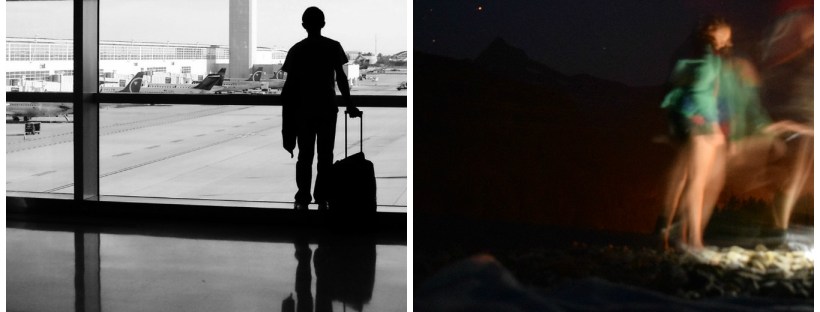
Two Photographs

This slideshow requires JavaScript.


DANIEL WU is a sophomore at the University of Michigan. He spends some of his free time taking photographs and he is excited that this is his first publication!

Alice’s Adventures in The Sky

The author of this story, David Benedictus, was featured in Inklette’s first issue. Click here to read his interview. 

Author Statement: This story is an abandoned attempt at a sequel to Alice’s Adventures in Wonderland and Through the Looking Glass by Lewis Carroll.”


Chapter One: Into the Clouds

It was a long time between lunch and tea, and there was nothing to do. The housemaid had been taken sick and there would probably be no scones for tea. Alice’s sister was in the hammock under the chestnut tree and seemingly asleep; at least when Alice called to her she failed to reply.

‘I don’t see much point in a sister,’ Alice thought, ‘if all she does is eat and sleep. She’ll get fat and people will laugh at her and serve her right! And we never finished our game of snakes and ladders and if she had been winning she would have insisted on finishing. But Alice had hidden the dice and her sister had grown bored with looking for it.

Alice sat down at the piano and began practising her exercise piece which was called: ‘Mevagissey: An Idyll’ but there were too many sharps and flats and her left hand seemed not to know what her right hand was doing so she left the piano and reopened the book where she had put the bookmark in, and read a sentence which she was sure she had read before. The book was about the Kings and Queens of England and was full of dates.

‘What’s the good of dates?’ wondered Alice and she must have wondered out loud because her question was answered in a croaky voice:

‘If there weren’t any dates you would never have been born and if you had never been born you would not be here to ask that question.’

Surprised as Alice was to have had her question answered (and, she could not help thinking, in rather a rude manner) she was even more startled  when she realised that the croaky voice emerged from the beak of a large bird – some kind of crow, she thought – and that the bird was perched on the arm of her chair with its sleek head on one side and a rather mean eye staring at her.

‘Well anyway,’ said Alice, ‘I don’t think that’s any way to start a conversation. We haven’t even been introduced.’

‘No time for all that now,’ the bird croaked, ‘not if we are to be there in time.’

‘Where? And in time for what?’

‘Too many questions,’ cackled the crow, ‘too many questions. Hop up!’

Before she knew it Alice found herself on the bird’s back, hanging on for dear life, as the bird sailed towards the clouds. One of these was in the shape of a castle with battlements and a drawbridge.

‘I do hope we’re not going to land there,’ Alice thought. ‘It doesn’t look at all prepossessing.’

But almost as if it could read her thoughts the bird altered course and made directly for the very darkest patch of cloud. There was an unexpected gust of wind and Alice’s hair blew across her face, stinging her eyes. There was a rumble of thunder.

‘If you can hear the thunder you are safe from the lightning,’ Alice thought, ‘or is it the other way about? If you hear the bark does that mean that the dog won’t bite? Oh really . . .’

But by then the crow and Alice were sailing through the darkness and being buffeted about in a quite shocking manner.

‘What’s your name?’ shouted Alice but before the bird could answer her question – if indeed it had heard it at all – a gust of wind caught them amidships and Alice found herself falling through the clouds which were becoming thicker all the time until they were almost solid like marshmallow or porridge with lumps in it, when suddenly she landed on one of the bumps with quite a jolt.

It was raining and so cold that Alice’s first thought was to try to find shelter, but all at once:

‘Come along! Come along!’ cried a Beadle – at least Alice thought he must be a Beadle because he was carrying an ornamental staff and that’s what Beadles did according to the A-Z book – ‘Everyone’s waiting for you’.

‘I didn’t think anyone knew I was here,’ said Alice, and then added: ‘Did you know that one of your mother-of-pearl buttons is missing? I could sew it on for you if you like.’

‘It’s gone,’ said the Beadle, who had long gingery whiskers which seemed to be growing longer all the time, ‘they peck them off, you know. You don’t have a spare, I suppose?’

‘I can’t answer questions when I’m so wretchedly cold and wet, and it isn’t really fair of you to ask them.’

‘You started it,’ said the Beadle. ‘Besides it isn’t really fair of you to keep everybody waiting.’

‘Why can’t they start without me?’

At this moment two storks landed, one either side of Alice. They were carrying between them a wicker basket from which they took the coronation regalia which consisted of: a heavy purple robe (rather creased) and a crown and sceptre (rather battered). As they removed Alice’s wet dress and replaced it with the robe they chattered to one another just as if Alice was not there.

‘She’s rather thin,’ said the first stork, whose name was Mangle. ‘They ought to have warned us.’

Worzel replied: ‘It’s too late now. We’ll just have to do the best we can. Hold still, child, so we can put on the coronation robes.’

‘I would be still,’ said Alice, ‘if you didn’t both keep messing me about. I’m not a doll you know. Ow!’

Mangle had been tugging at her hair which was in knots as a result of the buffeting it had received, and was having some difficulty affixing the crown. Eventually it was secured on the top of her head, although rather skew-whiff.

‘It’ll have to do,’ said Worzel, ‘there’s no more time.’

‘How can there be no more time?’ Alice wanted to know. ‘If there wasn’t any more time tomorrow would never come.’

‘No more it does,’ grunted the Beadle. ‘But it never goes neither.’

‘What about yesterday?’ Alice wanted to know.

‘Too many questions! Too many questions!’ cried the storks in unison. ‘Now come along. That’s quite enough flapping about.’

And with the Beadle strutting ahead of them, tossing his staff into the air, and (usually) catching it, the storks led Alice to a pair of very grand double doors painted gold and with ormolu handles.

‘It wasn’t me who was flapping about,’ thought Alice, ‘or should it be I? Leastways I wasn’t flapping as much as they were.’


Chapter Two: Time For a Coronation

The doors opened on a vast and noisy assembly of animals dressed as people and people dressed as animals. Indeed you had to look carefully to work out which was which. On the floor a carpet, divided into coloured squares, stretched as far as the eye could see. When Alice appeared the onlookers fell silent and a haughty-looking giraffe stepped forward and cleared its throat. It bent its neck to take a closer look at Alice and then murmured:

          ‘Well, well, well . . .’

Then it straightened its neck again.

          ‘This seems to be the body,’ it continued.

          ‘I beg your pardon,’ said Alice crossly. (‘Granted,’ muttered the giraffe). ‘But I would have you know that I am not a body and I would thank you to call me by my proper name, which is Alice.’

          ‘Alice by name and Alice by nature,’ muttered a short, fat man dressed as a porker. He had had to remove an apple from his mouth before he spoke.

          ‘And what does that mean?’ Alice demanded.

          ‘Nothing, dear,’ said the fat man, ‘things don’t have to mean anything unless they choose to.’

          ‘Well, they do when I say them,’ said Alice, adjusting her crown, which really needed several pins to keep it in place, but there were none. ‘For example if I were to say: Take Him Away! I would expect . . .’

Before she had finished the sentence several beetles dressed as ushers scuttled up and removed the porker, no matter that he oinked most piteously. Another beetle sidled up with his cap in his hand and said to Alice: ‘That will be half a crown.’

          ‘She doesn’t carry money,’ the giraffe explained, ‘it would be beneath her.’

          ‘And everything is beneath you, I suppose,’ said Alice.

Just then a few deep chords played on an organ resounded and everybody adjusted their position until they were in two rows with an aisle between them, and at the end of the aisle the giraffe holding a large black book with gold tooling .

‘Do you take this man?’ the giraffe inquired in a sonorous voice.

‘What man?’ Alice replied rather crossly.

‘Wrong page,’ said the giraffe. ‘But are you sure you don’t want to get married?’

‘Even if I did there isn’t a man and there isn’t a ring and I thought the storks said these were coronation robes.’

At this the organ stopped abruptly and the giraffe cleared its throat once more.

          ‘Quite right. Coronation it is then. The game is on. But if you ever feel like getting married. . .’

          ‘How ridiculous!’ Alice cried. ‘I’m sure Dinah will never believe me when I tell her about this. And you need some lozenges for that cough.’

          ‘I had some,’ said the giraffe sadly, ‘but they got lost half way down.’

          ‘And while we’re on the subject why hasn’t anyone given me anything to eat?’

          ‘Through there,’ said the usher, whose name was Dawkins, and pointed to a small green garden gate that was partially concealed by ivy and convolvulus. On the gate was painted a sign which read Open Me. Alice lifted the latch and the gate opened to reveal a fine mahogany door which also bore a sign – albeit an engraved copper one – saying Open Me. As Alice pushed this door a third one was revealed and then a fourth and indeed so many doors that Alice muttered ‘I’ve had quite enough of this.’

          ‘You have?’ inquired the next door, a blue and yellow slatted affair, the sort you might find on a bathing machine. ‘What about us?’ But when Alice pushed this one open she was confronted by a tall green ladder with red slats.

          ‘Well really,’ Alice thought, ‘everybody knows that red and green are clashing colours.’ Nonetheless she put her foot on the first rung and climbed and climbed until she found herself on a platform where a large table covered with a linen cloth had been laid in readiness.

Chapter Three: A Queer Sort of Meal

There was just the one chair at the table and Alice, who found herself to be uncommonly hungry, sat in it. In front of her there was a large dish and upon it a table napkin. Lifting it up Alice uncovered piles of shrimps with wedges of lemon and a large pepperpot.

‘Splendid!’ thought Alice but no sooner had she picked up a shrimp than it uttered a high-pitched squawk and the words: ‘Not me! That one!’ But when she tried the next one she received the same response. Soon enough there was a babble of shrill voices and all of the shrimps crying out: ‘Not me! That one! Not me!’ Worst of all they had begun shaking their little heads.

‘Well really,’ thought Alice, ‘this is the queerest thing. But I can hardly eat them after they have been talking to me.’ So giving up on the shrimps she helped herself to a slice of brown bead and butter from which the crusts had been elegantly removed.

‘I wouldn’t if I were you,’ said a gruff voice and for the first time Alice observed a large brown bear slumped in a deck chair.

‘Well you’re not, so there!’ said Alice, so hungry that she had quite forgotten her manners, and took a bite. Almost at once the crown tumbled off her head and her hair, which had been so buffeted by the wind, began to curl in tendrils around her head and even over her face.

‘Don’t say I didn’t warn you,’ said the bear.

‘I wasn’t going to,’ said Alice.

‘In any case,’ growled the bear, ‘it’s rude to speak with your mouth full and your hair is a fright!’

‘I wish I could control it,’ said Alice, ‘but it seems to have acquired a life of its own.’

‘Hair today, but not gone tomorrow,’ said the bear and cackled horribly. Bears are not good at laughing because they get few opportunities to practise. ‘If you want to stop it growing you have to recite a poing.’

‘I don’t know any poings. Poems, I mean. Not all the way through.’

‘Then make one up of course. I should have thought that was obvious,’ and all the shrimps joined it:

‘Make one up! Make one up for us! Oh do.’

Removing her hair from in front of her eyes and wishing that she had a kirby grip to keep it in place, Alice stood up and announced:

‘Mary, Mary, Quite Contrary.’

‘Know it!’ cried the shrimps, waving their antennae in the air.

‘Alright then,’ said Alice, ‘how about Little Bo Peep?’

‘Who couldn’t sleep and counted sheep,’ offered the bear.

‘No, no, that’s not right at all!’ Alice stamped her foot. ‘It would be easier if you didn’t all keep interrupting.’ And she did her best to empty her mind of all preconceptions then announced:

‘The Snake That Lost Its Tail 

          One morning in April the snake took a walk

                   From his garden in Ringamaree

          But the first thing he saw when he opened the door

                   Was the glittering sun on the sea.


          I would walk if I could down the path through the wood

                   But I’m pretty well certain to fail

          For no one would guess that a snake could progress

With a ring on the end of his tail.’

At this point in the poem when Alice was beginning to feel quite pleased with herself and thinking that she ought to write it down to give to her governess when she got back home that she was interrupted by the sound of sobbing. It was the shrimp who had spoken first, and whose name was Desmond. Through his sobs he managed to ask:

‘Was it a curtain ring or a wedding ring?’

‘How will he get by?’ another asked.

‘It could happen to any of us,’ said a third.

‘If we had tails.’

‘Don’t we?’

And rather grotesquely the shrimps wriggled around in the dish trying to see if they had tails or not.

‘Go on,’ growled the bear, ‘finish it! It’s very rude to leave a poem unfinished.’

‘Well it’s very rude of them’ Alice replied, ‘to keep on interrupting.’

‘Finish it! Finish it!’ squeaked the shrimps.

‘The bread or the poem?’

‘The bread, of course.’

‘Shan’t!’ said Alice, trying once more to control her hair.’

‘Then we will,’ said the shrimps and chanted together as if they were chanting their thrice times table: 

          ‘If a snake has no tail

          He will go out and buy one

Bring it home in a pail -’

The bear chimed in: ‘It is bigger than my one.’

The shrimps continued: ‘And when he gets home

                             He will try to attach it

                             With nails and some paste – ’

Again the bear came in with: ‘In case I might snatch it!

‘I have had quite enough of this foolishness,’ remarked Alice having to raise her voice to be heard, ‘and not nearly enough of the bread-and-butter. Where should I go to meet sensible folk?’

‘Doesn’t matter much which way you go,’ the bear growled, ‘because there aren’t any sensible folk.’

‘They passed a law against it, ‘said the shrimps.

‘Who did?’

‘The fools of course, but then they couldn’t find a seal to seal it with so they used a haddock instead. Which isn’t strictly legal.’

‘Such nonsense!’ cried Alice. ‘It comes, I suppose, of having your heads in the clouds. Well, I shall go in search of a hairdresser before my hair becomes entirely out of order.’

‘Through there,’ said the bear, ‘and follow the bouncing ball.’

‘I shall not be going through any more of those stupid doors, or my name is not Alice.’

The bear, whose name was Bruno by the way, (all bears are born with the name Bruno, or Bruin for short, although some of them forget) was pointing at a large rubber ball striped in purple and yellow.

‘Purple and yellow!’ thought Alice, ‘such colours they use up here; green and grey would have been far better,’ but she followed the ball nonetheless as it cheerfully bounced alongside a ditch first one side and then the other, so that Alice found herself straddling the ditch with her arms outstretched to help her keep her balance and hopping as if engaged in an elaborate dance.


Chapter Four: The Concert

As Alice followed the ball she could hear the sound of a mighty orchestra which grew ever louder as she approached.

          ‘That’s called a crescendo,’ she muttered, ‘and when it gets quieter it’s called a diminuendo, but I wonder what it’s called when it stays much the same.’

          ‘It’s called a racket,’ said a scarecrow.

          ‘That’s true enough,’ Alice replied.

The scarecrow had bony arms and legs and was wearing three hats, each of which was older and more battered than the others.

          ‘But can that be correct?’ Alice wondered, ‘they can’t all be the oldest.’

          ‘I don’t see why not,’ said the scarecrow in a high-pitched voice.

          ‘Were you reading my thoughts?’

          ‘Some of them. I’ve got three brothers and we’re all the youngest.’

          ‘But that can’t be correct,’ thought Alice (but this time out loud), ‘they can’t all be the youngest. It’s all rubbish.’

          ‘Indeed it is but then again that’s what we are. We’re half brothers, so four becomes two, and if you have two then one is younger than the other unless they are twins.’

          ‘If they are twins – if you are twins, I mean – they could hardly be half-brothers.’

          ‘Half and half, half and half,’ screeched the scarecrow, until the screech turned into a cackle or the sort of a caw which you might expect from an angry rook, and then it spun round on its post faster and faster until it disappeared into a hole in the ground from which a puff of greenish smoke wafted into the air and on the side of which a single hat remained. Picking it up and balancing it atop her burgeoning hair Alice said.

          ‘One can’t hold a proper conversation with anybody around here. I think it’s quite impolite of them and I shall tell them so.’

          ‘It’s impolite to steal hats,’ said the voice of the scarecrow, but no matter how hard Alice looked she could no longer see him.

                             *    *    *    *    *    *

By now the music had become very loud; indeed it sounded more as if the musicians were tuning up than playing real music. An officious woman dressed in a court uniform with buttons down the front grabbed Alice’s arm and pinched it.

          ‘Found you at last!’

          ‘I didn’t know you were looking for me. And there’s no need to pinch.’

          ‘You are Alice, are you?’

          ‘Tell me your name first.’

          ‘It’s Waldegrave,’ said the woman.

          ‘How do you do, Waldegrave? I’m Alice.’ And she held out the arm which had not been pinched.

          ‘It’s not how but when,’ was the reply, ‘and when is now,  so follow me.’

          ‘I was following the ball.’

          ‘You can’t have the ball until after the concert, and we can’t have the concert without a conductor, so hurry along now, please.’

The amphitheatre was set into a hillside – cradled thought Alice – and seated there was the most curious collection of animals – more curious than any she could have imagined. There were horses with harps and cats with clarinets and tapirs with trumpets (two to each, one to carry and one to blow) and pigs at pianos and moles with marimbas and a donkey with side drums, one for each hoof. Indeed every time Alice looked there appeared to be more and more musicians until the hillside was black with them.

A gnu stood up, put down his fiddle, and held out a hoof.

          ‘I’m the leader of the orchestra,’ he said, ‘and we are ready for our rehearsal, if you please, maestro.’

What a very polite animal, Alice thought. The gnu directed Alice to the podium and she climbed up three steps. A baton was awaiting her, and a music stand in front of a brass rail, so highly polished that Alice could see her face in it, howsoever it was slightly distorted and made her cheeks appear puffed out like a chipmunk.

          ‘We are to begin with the adagio,’ the gnu continued, ‘followed by the vivace, and then the tutti.’

          ‘You may begin with what you please,’ Alice remarked, and I might be able to conduct you better if I could see through all this hair. Immediately the gnu clapped his hoofs together and a buffalo lumbered up carrying in front of him two swordfish. Within less time than it takes to tell they had sliced off a good deal of Alice’s hair, leaving her with quite a neat fringe, as you can see in the picture. There was a smattering of applause from the musicians.

          ‘The adagio is in common time,’ said the gnu, ‘four beats to the bar.’

          ‘It will get as many as it deserves,’ said Alice, raising the baton. A hush descended on the amphitheatre, then, as she lowered the stick, such a concatenation of noise as can hardly be imagined.

          ‘Stop it! Stop it at once!’ cried Alice, covering her ears.’ That is quite awful.’

          ‘On the contrary it is the best we have ever done,’ said the gnu. ‘It is sublime.’

          ‘Then all I can say is that you ought to be ashamed of yourselves. You haven’t even tuned your instruments.’

          ‘Tuned them? Certainly not.’

At this the entire string section, comprising a good many of the smaller antelope family, rose to their feet, and, laying their instruments on the ground, advanced on Alice.

          ‘You’re not a conductor at all,’ some of them shouted.

          ‘You can’t even conduct yourselves properly without me,’ said Alice, and, using her baton to beat a way through the bushes, left the amphitheatre with more haste than was quite dignified. For a few minutes she fancied that she could hear them pursuing her, but then the cacophony of banging and blowing and scraping and plucking suggested that they had resumed what they were pleased to call their music-making without a conductor.

          ‘I hope you are proud of yourself,’ remarked Waldegrave stepping out from behind a lilac bush. ‘It will take me hours to quieten them down now, and some of them may refuse their supper.’

          ‘Which is nothing to me,’ said Alice firmly as she placed her right foot carefully on the first of a series of stepping stones over a fast-flowing stream. As she drew her second foot level with the first she was startled to find that the stone was not a stone at all. But the shell of a giant tortoise and that it was carrying her downstream.


Chapter Five: the Arithmetic Test

The river became broader and faster with white wavelets flapping at Alice’s ankles, and, since she had nothing to help her keep her balance she stretched her arms out as if walking the tightrope.

‘Can you not go a little more slowly?’ she asked the tortoise.

‘I go with the flow,’ said the tortoise poking his head briefly out of the water, ‘and there’s an end of it. Whoops!’

He had failed to see the waterfall until they were on the very edge of it. When he did:

‘Here we go!’ he cried.

As the two of them flew through the air Alice thought that the tortoise was more like a turtle because she remembered reading somewhere that turtles like water and tortoises do not. She was on the point of asking the tortoise (or turtle) whether he was a turtle (or tortoise) when the two of them disappeared into a maelstrom of foam and froth and numerous small fishes.

It was a few moments before Alice could catch her breath, and as soon as she could she found herself on a grassy bank where the giraffe was standing over her with a sheet of lined paper and a badly chewed pencil.

‘Oh, so it’s you again,’ said the giraffe, ‘but what happened to your hair?’

‘What didn’t happen?’ replied Alice.

‘There are a great many answers to that, such as it didn’t turn into spaghetti and it didn’t start talking in Swahili. But it doesn’t matter much because you’re just in time for the arithmetic test.’

‘I don’t want to take a test,’ said Alice, ‘and certainly not while I am dripping wet and even less -’ Here she stopped abruptly. ‘Do I win a prize?’ It occurred to Alice that since she was apparently the only person or animal to be taking the test, if there were a prize she would surely win it.

‘You get a booby prize if you come last and a first prize if you come first.’

‘Which is better?’ Alice asked.

‘First prize is a box of chocolates and booby prize is two boxes of chocolates.’

‘But that’s not fair!’ cried Alice.

‘It’s perfectly fair,’ said the giraffe. ‘You’d be pleased to win a box of chocolates, wouldn’t you?’

‘I would if they were peppermint creams.’

‘And you’d be doubly pleased if you won two.’

‘Well yes, I suppose I would.’

‘So that’s what mathematics is all about. Question 1.’

Alice raised her pencil and wrote down ‘1’.

‘What is one times two times three times four times five?’

‘I wish you would go a little more slowly, Giraffe. Everybody is in such a frightful hurry up here.’

‘Times six times seven times eight times nine times ten,’ the giraffe concluded.

‘Could you start again at the beginning?’

‘I could start again at the end. But I can’t remember how it all began.’

‘Well then,’ said Alice sticking out her tongue, ‘don’t bother!’

‘No bother,’ the giraffe continued. ‘Times twelve times eleven – ’  And on he droned until he was quite out of breath.

‘What’s question two?’ Alice asked. (But she was thinking: if all the questions are as hard as the first one I shall come last and get two boxes so that’s all right!)

‘Question two is the same as question one, except that it’s in French.’

‘And question three? Or is it trois?’

‘What’s nuppence of tuppence? And question four is substraction: what do you get if you take away seven chickens from six ducks?’

‘What about fractions?’ asked Alice who had been learning these at school and much preferred them to decimals.’

‘I think they’re vulgar,’ said the giraffe. ‘Last question: what is the price of a penny stamp?’

‘I can do that one,’ thought Alice and was just about to write down ‘One Penny’ when the giraffe added:

‘I want the answer in feet and inches please.’

‘I don’t think you know any mathematics at all,’ said Alice and, crumpling up her piece of paper in frustration, threw it at the giraffe, who caught it in its soft mouth, chewed it a few times, then swallowed it with evident pleasure.

‘Don’t you want the booby prize?’ the giraffe asked at length.

Alice admitted cautiously: ‘I do like prizes. I won one once.’

‘What was it for?’

‘It was for coming top of course.’

‘No “of course” about it. Top of what?’

‘I came top of the class and the class came top of the school and the school came top of the town but the town only came seventy-third in the country.’

‘Well here’s your prize then,’ said the giraffe and handed Alice a square box tied with a pink ribbon.

‘I do hope,’ thought Alice, ‘that it’s peppermint creams.’ But when she opened the wrapping inside all she could find was an empty box.

‘There’s nothing in it!’ she cried to the giraffe who was doing deep breathing exercises.

‘There is,’ said the giraffe as he strolled away covering the ground with surprising speed. ‘There’s peppermint creams minus peppermint creams!’

‘Well thank you very much,’ cried Alice sarcastically, ‘minus thank you very much!’

But the giraffe was nowhere to be seen.

Chapter Six: The Children of Mevagissey 

‘At least I’ve still got the ribbon,’ Alice said aloud, ‘and it will do very nicely to keep my hair in order if it gets wild again.’

But the ribbon kept wriggling in her hand until it finally got free and leapt onto the ground. The more Alice tried to grasp it the more elusive it became, until she found herself chasing it down a narrow, cobbled street.

          ‘Why,’ she thought to herself, ‘this is quite like Mevagissey.’

But at length she could run no more – it had been a most energetic day – and so she sat down on a water-barrel to recover.

          ‘Even if I can’t catch the ribbon I ought to be able to catch my breath!’

Coming up the street towards her was a crocodile of children and Alice was not at all surprised when they stopped in front of her. The boys were wearing sailor suits and the girls pink party frocks, their hair tied with pink ribbon.

          ‘We are from Meva,’ said the boys.

          ‘We are from Gissy,’ said the girls.

Then all the children formed a ring around Alice, and, swaying first to the left and then to the right, sang the following song:

          The sometime King of Normandy

          Whose hair was going grey

          Loved nothing much but butterscotch

          And crunched it every day.

          His queen said: ‘Darling, how I wish

          You’ld take a stick of liquorice,’

          But all the king replied was ‘Pish!

                   I wish you’ld go away.’

          The sometime King of Burgundy

          Who lived in Bantry Bay

          Loved nothing more than on the floor

          To sleep his life away.

          ‘My dear,’ his queen insists, ‘if this

          ‘Is what you really, really wish,

          Then take a stick of liquorice.’

          But all the King replied is ‘Pish!

          Why don’t you go away?’

          The present King of Timbuktu

          Whose cat is wont to stray

          Devised a rather pretty dish

          And filled it full of cream and fish

          But all the cat replied was: ‘Pish!’

          And slowly strolled away.

‘I feel rather sorry for the King of Timbuktu,’ said Alice. ‘He did all he could for the cat.’

‘He said he did,’ chanted the boys.

‘Probably not true,’ added the girls.

‘Well, I’m sure that Dinah would never treat me like that. Once she brought me a mouse as a present, but I told her off severely, and she never did it again.’

‘We think a mouse would be a grand present,’ said the boys who had very round faces and dimpled cheeks.

‘Have you brought us a present?’ inquired the girls. Alice now noticed that they were all wearing earrings that glistened in the sun. Now why had she not noticed that before?

‘I would have given you the ribbon if it had let me catch it.’

‘We’ve got ribbons,’ said the girls.

‘Haven’t you got anything else?’ asked the boys.

The girls said: ‘Something small would do,’ and one of them added: ‘Like a pomegranate.’

‘But a pomegranate isn’t small,’ said Alice.

‘A small one is,’ said the girl who had spoken before.

‘Or a Pomeranian,’ said a boy, whom Alice now noticed was wearing a kilt.

‘Or a possibility,’ somebody else suggested.

‘I don’t see how you could give someone a possibility,’ said Alice growing quite exasperated. ‘It’s not a thing at all!’

‘Of course it is!’ cried the girls. ‘Don’t you know anything?’

‘I expect the King of Timbuktu has got several,’ said a girl with especially large feet.

‘Because people kept giving them to him,’ said several of the children. ‘But not you, because you’re too mean.’

‘I think you’re all very rude,’ Alice exclaimed. ‘It’s rude to ask for presents, and it’s even ruder to complain when you don’t get any. I shall have nothing more to do with you!’  And with this remark Alice took hold of a corner of the grass lawn upon which they were standing, and gave it a hefty tug. This had the effect of sending them all tumbling into one another like skittles. ‘No less than what you deserve.’


DAVID BENEDICTUS’ work includes Return to the Hundred Acre Wood (2009), an autobiography titled Dropping Names (2005), The Fourth of June (1962) and You’re a Big Boy Now (1963) that was made into a film by Francis Ford Coppola. David Benedictus was educated at Eton College, University of Oxford and the University of Iowa. He has worked for the Royal Shakespeare Company and BBC Radio. He currently lives in Hove.
Greek Mythology

Hera blinded the old man

when he said women

enjoyed sex more than men.


Zeus made the old man

a prophet, a gift to balance

his wife’s rage.


And Hera doubled her

daughters’ pleasure

on the lover’s couch—


her gift in a world where

sorrow and pain were

blamed on one woman’s folly.


She was curious, brave

when she opened

the forbidden box.  Every evil


flew out, but every good

now had a name.  She wasn’t

evil but deserved to be


celebrated, her daughters

dancing for a woman

not a God.


WILLIAM “CHIP” MILLER is a poet and children’s author living in New Orleans. His poems have receently beeen accepted by Aji, Ank Sanh, Nebo, The Fredericksburg Literary Magazine, The Hollins Critic and Canyon Voices.