On Writing and Memory

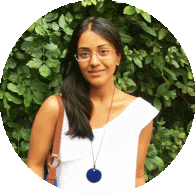
Our blog editors interviewed SMRITI VERMA, a poetry editor for Inklette about her relationship with memory, and its relationship to her writing. The interview traces the way we navigate writing from or about memory, and how we trust it if we do.


Blog Editors: When you write, do you rely on memories as sources of inspiration? What are your favourite memories to write about?

Smriti Verma: I feel that almost all art is embedded in memory and impressions – the kind of experiences we hold near to us generally come to bear on the kind of writing we do or its thematic concerns. There really is no escape from it, given that emotions are rooted in memory itself. I feel that mine have more or less commanded not only what I write, but also how I negotiate with these memories, whether these are traumatic or otherwise. I won’t say I have favourite memories to write about as such, because those are actually to write of, but I feel my childhood and experiences in university are some of the places I draw inspiration from.

BE: Likewise, what memories are hardest for you to write about?

SV: I feel trauma and joy are really these two binaries which are hard to articulate in words. The expression of extremes become silence, perhaps due to the mountain of effort required, or the simple inability to express what may be too deep (or powerful?) for words. It can be hard to really render a beautiful experience or a painful one onto a page when the writer isn’t able to separate his writer self from his emotional self in this regard.

BE: In your opinion, how do we know if what we remember is true? Do you think that we should use memory to write what it true, or do you think that truth and memory have a more complex relationship?   

SV: Definitely the latter. So much of contemporary literary output has and continues to probe at the illusory boundary between real and imaginary, about the act of remembering as an act of constant re-imagining of the past, and how fragile the concept of truth is. A lot of literature produced since the 20th century has shown how the very idea of an objective material truth might be suspect. I once read somewhere (possibly bad tabloid claim but I found it interesting anyhow) that every time we remember a past experience, we edit one detail in it. I feel that the realms of collective and personal memory are such rich reservoirs for writing, and exploring the subjectivity of truth, the multiplicity of truth or truths, so to say. I also feel this theme holds relevance for the current political crisis going on in different parts of the globe as different versions or interpretations of these truths come into contention.

BE: How do we trust the memories of others? Does it matter?

SV: This question really opens up another area, of trust and where it arises from and whether it has any validity if all of us really are as brutally lonely as we feel sometimes. I feel the nature of memory itself is not to be trusted, but trust also arises from sympathy and compassion, which can really be markers about how “true” (to use the word with certain suspicion) or untrue something is. But it matters. It definitely does. All of our memories constantly define and redefine us and respecting those identities is a major part of being in and with the world.

BE: As a writer, what do you want to be remembered for; what to you want your artistic legacy to say about you?

SV: I’m not sure exactly – not as of now, maybe because I’m too young and also because I haven’t given the idea of being remembered much thought. It is quite a big question, and if I had to think of an answer, I would say that I would want to be remembered for doing something that merges the areas of art and social change. I’ve started questioning perhaps the kind of places art comes from, whether these are sites of privilege, and if yes, then what can we do in our role as writers to redirect these art forms towards something helpful, something that connects.


150126426218111SMRITI VERMA grew up in Delhi, India. Her poetry and fiction have appeared in The Adroit Journal, B O D Y, Cleaver Magazine, Word Riot, Open Road Review, Alexandria Quarterly, and Yellow Chair Review. Further work is forthcoming in Construction Literary Magazine. She is the recipient of the 2015 Save The Earth Poetry Prize and enjoys working as a Poetry Reader for Inklette and Editorial Intern for The Blueshift Journal.

Interview with Anders Carlson-Wee

This interview was recorded on March 20, 2019, at a reading in the Writing Center of the Westminster Schools in Atlanta, Georgia. We would like to acknowledge the school, faculty members, English department, and Anders Carlson-Wee for their time and support.


Sarah Lao: What does your writing process look like? Where do you get inspiration?

Anders Carlson-Wee: I’m kind of a workhorse of a writer, meaning I’ll stubbornly sit down to write day after day even if I’m not feeling terribly inspired or like I’m not getting a good idea going. And I’m very comfortable, I think more than some people, drafting stuff that just isn’t good, at least in the beginning. So, if I’m on a good writing roll, I’ll just draft a fresh piece everyday. Most of those are terrible, and I throw them away, but once every couple weeks, something starts sticking, and I’m thinking “this piece might have some legs, and I might be able to grow it into something.” I’ll work on this piece for a while, and the process goes on. I’d say it takes me around a year and a half to finish a poem, and I go through a lot of different stages. I’ll show the piece to people who I trust as readers, I’ll go back to it and revise again and again, and I’ll just keep fine tuning it. Eventually, I’ll memorize it and start working on it in my head; I’ll walk around and keep doing the edits. It’s a long process, but in terms of inspiration, it’s hard to know where it all comes from. It’s really a bit of a mysterious process, but for me, I think a lot of it’s about noticing what gets me emotional and noticing what sort of things obsess my mind. Whether they’re stories or topics, I just find ways to write about it, and I’d say the majority of my attempts fail. But, I keep trying to find an angle in that will somehow bring it to life. And most of the pieces don’t work. And then finally some of them do, and I keep editing those. So, The Low Passions is a book of fifty-three poems. It took me more than ten years to write, and I probably drafted two thousand poems to get to the fifty-three.

SL: How did you get involved in poetry?

ACW: I’m dyslexic and when I was little, I didn’t really trust visuals. It took me a while to learn to read and to write, and I did what was called mirror writing which is where you write backwards, and then if you hold it up to a mirror, it looks correct. So it took me a while to learn those basic skills, and I depended a lot on the oral sounds and oral aspects of language. I would memorize long segments of dialogue, and then I was also being inundated with sermons because I was growing up in two churches with my parents. So I was around that a lot and didn’t really notice how much I was taking to it, but I think I really did have a kind of natural knack for memorizing language. But yeah I liked stories and everything but it didn’t really click as a life pursuit until I got to college. I was 21 when I started college, and I ended up in a class with a woman named Mary Cornish. She was such a good teacher, and she really brought poetry to life for me. A few weeks into that class, I was totally hooked, and I was ready to reshape my whole life to make poetry the center of it.

SL: Do you call yourself a poet?

ACW: No, I don’t really like saying I’m a poet when I’m meeting people. I think it’s mainly just the extra baggage of “poet” as a word instead of just saying “writer,” and that’s generally what I say if people ask me what I do. “Poet” seems a little loaded, and somehow it feels pretentious in a way to people—at least where I’m from. It’s a very practical culture in Minnesota. And I think my parents struggle with that as pastors, too. It makes you kind of outside of “normal” human daily life.

IMG_4238.jpg

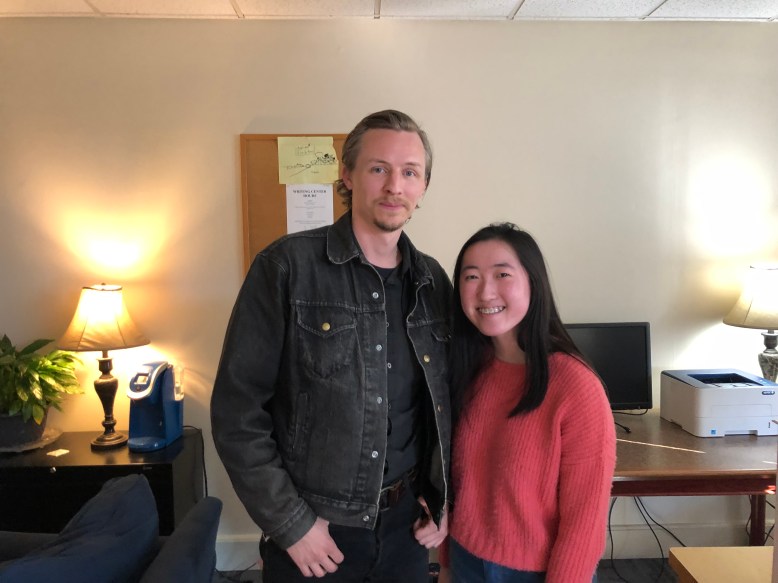
Anders Carlson-Wee (left) with our Social Media Manager, Sarah Lao (right).


SL: Can you tell us a little bit about your newest book, The Low Passions?

ACW: Yeah, this collection is sort of a sequence of adventure stories. On the one hand, there’s a lot about traveling by freight train and bicycle and hitchhiking all around the country. And those adventure stories are counterpointed by these meditations on family that’s happening from the distance of being on the road.

SL: So, what does the phrase “the Low Passions” mean, and why did you pick it as the title for your collection?

ACW: The Low Passions is an obscure term from Christianity. It means all things of the earth, all things tangible, all things of this physical world, and it’s usually used in a derogatory sense to mean the things that seduce us, the things that make us feel greed or lust. It’s a derogatory term as opposed to the high passions, which would be everything spiritual and of heaven. I’m a very tactile person, very physical, and very oriented toward my body. And I think part of the project of the book for me was a desire to craft something that was lifting up those “low passions” theoretically, and the book kind of turned the term on its head and gave it a little more spiritual heft toward something more positive. Being someone who’s deeply invested in the earth and everything tangible—the tactile and the human body—I really wanted that to be considered sacred. So for me, “the Low Passions” was a term I grabbed onto because it was used in a derogatory sense, and fuck that. I wanted to find a way to honor that. Though I’m not religious personally, since I haven’t quite found a form of faith that works for me, I do think the Christian story is incredible, and one of the things that I really value is the idea that God comes down and becomes physical in the form of Jesus. And in that story, that’s the way to know God: through the physical, through the body, through the earth. To me, that’s a powerful story.

SL: How do you put your books together? Is there a specific process you go through?

ACW:  Right. So there’s so many permutations for how you might construct poems into a book. It’s overwhelming. I did have a very long stage where I spread it all out on the floor, and I stood on tables to get an eagle’s eye view just to see everything and try to trick myself into defamiliarizing it for myself. But honestly, my editor at Norton played a big role in shaping the final order. There was a good handful of poems that did a total swap from the front to the back and vice versa, and I think that really helped make the book pop in its final form. I wouldn’t have ever seen that, so that was a moment where having an editor was a great blessing to me.

SL: With how much The Low Passions captures these often forgotten, yet haunting glimpses of destitution and decay in America, and in light of last year’s controversy with “How-To,” how do you think it’s possible to respectively give a voice to those unheard without eliciting offense? Where does the line between artistic freedom and offensive speech start?

ACW: Yeah. I think art is an ongoing sequence of attempts. Artists are always kind of trying things, and all art is a leap into the unknown because art’s not something that needs to be duplicated. Like if you’re building houses, it’s fine to just build the same house twice, more or less, right? Let’s just build the house again. But with writing and with art, you’re not trying to build the same thing that artists of the past have built. You’re trying to find something new and create art into a new space. And so I think art is an ongoing series of attempts. If the attempts don’t work or don’t help the culture in some way, they fall into obscurity. People don’t need to interact with them, and that’s fine. But, if other forms of art seem to help a culture in some way, then they’ll stick around and become part of the zeitgeist and people’s imaginations. And that’s great. I think that’s healthy and good for art. People try things. Some of them work, and some of them don’t.

SL: Do you have any favorite words? Some words that you just enjoy sonically?

ACW: For me, I tend to favor the Anglo-Saxon aspects of the English language: the kind of monosyllabic words like “lake” and “rock” and “crust” that are very consonant heavy. Those types of words are very physical as far as forcing you to slow down because the more consonants you say, the more your mouth needs to come to complete rests before starting the next word. One thing that is really beautiful about the English language is that it combines those kinds of Anglo-Saxon words with a ton of influence from other romantic languages. You can have sentences that have these strong, percussive kind of consonant-heavy sounds that can be almost gravelly and very intense, and then you can suddenly have a word like “beautiful” which has a lot of flow and spreads out across a few syllables. And so in English, you can combine those two types to make some really cool sentences.

SL: So, what’s next? What are you working on currently?

ACW: Well, right now while I’m on tour, I’m just doing all the readings, but I am working on another book. I would not dare give anything away about it yet, but I’m excited to get back to it.


155448716410359295.gifANDERS CARLSON-WEE is the author of The Low Passions (W.W. Norton, 2019). His work has appeared in BuzzFeed, Ploughshares, Virginia Quarterly Review, Poetry Daily, The Sun, and many other places. His debut chapbook, Dynamite, won the Frost Place Chapbook Prize. The recipient of fellowships from the National Endowment for the Arts, the McKnight Foundation, the Camargo Foundation, Bread Loaf, Sewanee, and the Napa Valley Writers’ Conference, he is the winner of the 2017 Poetry International Prize. His work has been translated into Chinese. Anders holds an MFA from Vanderbilt University and lives in Minneapolis.

155448712822039068SARAH LAO is a sophomore at the Westminster Schools in Atlanta, Georgia. She currently edits for Evolutions Magazine, reads for Polyphony Lit, and serves as the Social Media Manager for Inklette Magazine. Her work has been published or is forthcoming in Sooth Swarm Journal, Liminality and the Inflectionist Review, among others. When she is not writing, she enjoys eating scones, playing piano, and spending time with her dog.
Traveling in Italy as a Poet

BY DEVANSHI KHETARPAL

I spent the last semester in Florence, Italy, which seems like a long time ago. I returned to my hometown of Bhopal, India, in mid-December still confused about my time there. I thought that choosing to learn Italian or to choose Italian literature as one of my fields of study in college was an impulsive choice on my part. In hindsight, however, given the fact that I was reading works by Elena Ferrante, Italo Calvino, Jhumpa Lahiri and Antonio Tabucchi around the time, it doesn’t seem to be such an impulsive decision now. I don’t know why I decided to go to Italy though. I was happy in New York, a city where I think I truly belong. I didn’t want to leave New York and yet I passively wanted to spend some time in Italy.

My Italian was alright when I got there: I loved listening to Italian music, I could read some short poems in Italian and I could sustain small talk in the language. Yet I never imagined what it would be like to be surrounded by the Italian language, its differences and dialects. When I first arrived in Florence, I realized what it means for a world to be somehow written and formed by a language. Squares became piazzas, train became treno, and other words permeated from the landscape into my own imagination, on to my own tongue and memory. I recalled the world differently, I came to know its greetings differently; the lens through which I saw the world began to fade away and made way for a new one. Today, as I write this in New York, I find it difficult to go back to the way in which I used to look at the world. I have fleeting thoughts in Italian more often now. This afternoon, I had a small thought in Italian and immediately found myself scribbling it onto a piece of paper: Nel mio cuore, c’è un lago.

What does it mean to have a lake in one’s heart? I am not sure at all. My hometown of Bhopal has a lake that I think of when Bhopal emerges in my thoughts or dreams. It is strange that Italian is becoming the language that carries these thoughts of home to me. It is strange that Italian is becoming the language that can so succinctly and accurately describe almost instinctively what my heart is and consists of. How did I get here? Where did this language come from? And how did it become the language of my heart? I lack the most accurate answers to these questions but I think they don’t have accurate answers either. Maybe Italian will not be the only language of my heart and maybe there is another language that knows my heart better. For now, however, I am at peace with these thoughts I harbour in Italian. As a poet, I know that my relationship with language is an intimate one. It goes beyond the realm of love or romance; it exists within the realm of friendship. For so long, Italian and the experience of speaking or writing it and thinking in it, felt strange, foreign. But I have come to realize that like any other friendship, it is one that blossoms with time. Like any other friendship, you grow to be comfortable with it and like any other friendship, a language can make you feel less lonely.

In Italy, the Italian language became my friend. I didn’t have my closest friends with me in Florence and though I now think my childhood was very lonely, loneliness is now something I find painful and almost intolerable. But, on the other hand, I recognize that loneliness is a excruciating yet essential part of writing, and of being a writer. I feel lonely when I conceive a poem but not after I have delivered it. Once it’s on the page, I have something to look at, something to hold on to. In Italy, as I reflected on this practice of writing, I realized that the arrival of language into my mind and on the page is what truly dispels the darkness of this loneliness. With Italian as a third language, I had received another friend to populate the space of my mind, the depth of my heart. Even when I was travelling around Italy, my companion, who had a different temperament than mine, made me feel lonelier at times. It was then that I was forced to keep turning back to Italian, to language and words as way to continue living and thriving. Loneliness can be depressing and isolating and the lack of words usually makes it worse. But with another language, I feel as though I have a way to look at the world even when I am submerged in the depth of the lake that is in my heart.


155389164570624267DEVANSHI KHETARPAL is a sophomore at New York University, majoring in Comparative Literature with a minor in Creative Writing. She is from Bhopal, India, and currently lives in New York. She works as an application manager for The Speakeasy Project, poetry reader for Muzzle Magazine and an intern at Poets House. Her poetry collection, Small Talk, is forthcoming soon from Writers Workshop, Calcutta. She is a recipient of the David J. Travis Undergraduate Research Fund from NYU Florence and her work has been published in Best Indian Poetry 2018, Transom, Aainanagar, Vayavya, TRACK//FOUR and Souvenir among others. Website: www.devanshikhetarpal.co.
March: A Month Rich with Writers

BY JOANNA CLEARY

March: (sort of) spring, daylight savings, and St. Patrick’s Day. Even better, however, this month also happens to hold the birthdays of several talented writers, both famous and not. While the list goes on and on, spanning from Robert Frost to Henrik Ibsen to Dr. Seuss, here are six lesser known, but equally gifted, authors born in March:

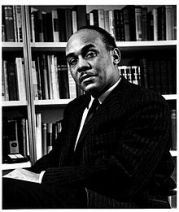
Ralph Ellison (March 1, 1914 – April 16, 1994)

“I am one of the most irresponsible beings that ever lived. Irresponsibility is part of my invisibility; any way you face it, it is a denial. But to whom can I be responsible, and why should I be, when you refuse to see me? And wait until I reveal how truly irresponsible I am. Responsibility rests upon recognition, and recognition is a form of agreement.”

-Ralph Ellison, Invisible Man

Ralph_Ellison_photo_portrait_seated

Best known for his novel Invisible Man (1952), which serves as a critical commentary on many of the social struggles African Americans faced in the early twentieth century, Ellison’s legacy lives on in the voice he carved for people of colour in a time where minority voices were suppressed even more than they are today.  

Fun Fact: Ellison’s father loved literature and hoped that his son would grow up to become a poet; ironically, Ellison never dabbled in verse throughout his writing career.  


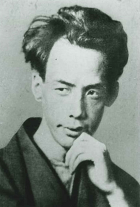
Ryūnosuke Akutagawa (March 1, 1892 – July 24, 1927)

“Green frog,

Is your body also

freshly painted?”

– Ryūnosuke Akutagawa, ‘Green Frog’

pasted image 0

Seen as “the father of the Japanese short story,” one of Japan’s most prestigious literary awards, the Akutagawa Prize, is named after this writer. 

Fun Fact: Akutagawa was named “Ryūnosuke” (which means “Son [of] Dragon”) because he was not only born in the Year of the Dragon, but also in the Month of the Dragon, on the Day of the Dragon, and at the Hour of the Dragon.


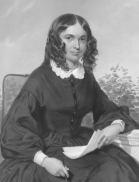
Elizabeth Barrett Browning (March 6, 1806 – June 29, 1861)

How do I love thee? Let me count the ways.

I love thee to the depth and breadth and height

My soul can reach, when feeling out of sight

For the ends of being and ideal grace.

I love thee to the level of every day’s

Most quiet need, by sun and candle-light.

I love thee freely, as men strive for right.

I love thee purely, as they turn from praise.

I love thee with the passion put to use

In my old griefs, and with my childhood’s faith.

I love thee with a love I seemed to lose

With my lost saints. I love thee with the breath,

Smiles, tears, of all my life; and, if God choose,

I shall but love thee better after death.

-Elizabeth Barrett Browning, ‘How Do I Love Thee?’

pasted image 0-2

Having begun to write poetry from the age of six, one of the works this English writer is best known for is her sonnet “How Do I Love Thee?”

Fun Fact: Browning’s father forbade his twelve children from ever marrying, prompting him to disown his daughter when she married her husband, Robert Browning, after a secret love affair.

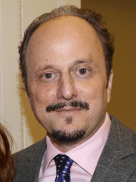
Jeffrey Eugenides (March 8, 1960 – Present)

“Emotions, in my experience, aren’t covered by single words. I don’t believe in ‘sadness,’ ‘joy,’ or ‘regret.’ Maybe the best proof that the language is patriarchal is that it oversimplifies feeling. I’d like to have at my disposal complicated hybrid emotions, Germanic train-car constructions like, say, ‘the happiness that attends disaster.’ Or: ‘the disappointment of sleeping with one’s fantasy.’ I’d like to show how ‘intimations of mortality brought on by aging family members’ connects with ‘the hatred of mirrors that begins in middle age.’ I’d like to have a word for ‘the sadness inspired by failing restaurants” as well as for “the excitement of getting a room with a minibar.’ I’ve never had the right words to describe my life, and now that I’ve entered my story, I need them more than ever.

 – Jeffrey Eugenides, Middlesex

pasted image 0-3This American novelist and short story writer’s novel Middlesex, a controversial work exploring an intersex protagonist’s coming-of-age story, won the 2003 Pulitzer Prize for Fiction; Eugenides is also well-known for his 1993 novel The Virgin Suicides.  
Fun Fact: In college, Eugenides took a year away from his studies to volunteer with Mother Teresa in Calcutta, India.  


Emily Pauline Johnson (March 10, 1861 – March 7, 1913)

And only where the forest fires have sped,

     Scorching relentlessly the cool north lands,

A sweet wild flower lifts its purple head,

And, like some gentle spirit sorrow-fed,

     It hides the scars with almost human hands.

And only to the heart that knows of grief,

     Of desolating fire, of human pain,

There comes some purifying sweet belief,

Some fellow-feeling beautiful, if brief,

     And life revives, and blossoms once again.

-Emily Pauline Johnson, “Fire-Flowers”

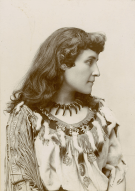
pasted image 0-4.pngBecause her father was a Mohawk chief and her mother was an English immigrant, Johnson’s poetry explores Indigenous and mixed race identity at a time when colonialism in Canada was at its peak.
Fun Fact: In addition to writing verse, Johnson also wrote and performed in amateur theatre productions throughout her life.  


Toni Cade Bambara (March 25, 1939 – December 9, 1995)

“Words are to be taken seriously. I try to take seriously acts of language. Words set things in motion. I’ve seen them doing it. Words set up atmospheres, electrical fields, charges. I’ve felt them doing it. Words conjure. I try not to be careless about what I utter, write, sing. I’m careful about what I give voice to.”

-Toni Cade Bambara

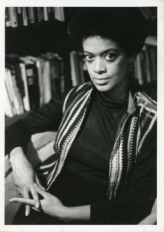
TCB-Part-1-Box-15-Photo-Toni-Cade-Bambara-SeatedA prominent writer in the 1960s Black Arts Movement, Bambara’s 1970 anthology The Black Woman is considered the first inherently feminist collection of writing to focus on African-American women.

Fun Fact: In 1970, this author changed her name to include the name of a West African ethnic group — Bambara — after finding the name written as part of a signature on a sketchbook that belonged to her great-grandmother.


149460297287447JOANNA CLEARY is an undergraduate student double majoring in English Literature and Theatre and Performance at the University of Waterloo. Her work has previously appeared or is forthcoming in The /tƐmz/ Review, The Hunger, Pulp Poets Press, Every Pigeon, Glass: A Journal of Poetry, andSubterranean Blue Poetry, among others.
 

Interview with Linda Ashok and Jamel Brinkley

Our blog editors, Maria Prudente and Joanna Cleary, were interested in interviewing writers about their obsessions and repulsions and how they influence writing. Scroll down to read their interviews with two writers we love, Linda Ashok and Jamel Brinkley.


LINDA ASHOK

Maria Prudente: I find that writers need to return to their obsessions in their work. Do you write about your obsessions and, is it challenging to find new ways to write about them?

Linda Ashok: I am not sure about what is implied by obsession. Are you referring to recurring motifs? The thing about my writing is that I never have to think too hard and I mostly go with the flow; writing is quite organic for me as I extract elements from my unsettling dreams. In this process, there are elements that appear quite frequently but they neither demand anything nor dictate. 

MP: Are you ever driven to write about what repulses you? How do you fight the urge to not write around it but through it?

LA: Like anybody else, I am repulsed by any kind of violence but I do write about it because it is therapeutic for me. It helps me to see the underlining of what we perceive as violence. It also builds familiarizes the readers to recognize violences they experience in their personal or public spaces.

Joanna Cleary: As a Communications and Branding professional as well as a writer, how do you think the increasing role of virtual reality and communication in our lives has affected your creativity and creative work? 

LA: Well, virtual reality has built and broken our lives in many ways. In my case, I leveraged virtual reality to expand my creative pursuit; I lived places before I literally travelled to those places. Imagining I am in a certain place, imagining the lives of people local to those places, helped me manifest my desire to live those places in real life through positive affirmations. I experienced their poetry, their struggle, their joys through virtual reality. So yes, it contributed a lot to my writing while also exposing me to a lot of toxicity that affected my mental health in several ways. That I am currently dealing with social anxiety is because of being overwhelmed by the duality of people as seen on social media vs real life. And of course when your life is affected, it does reflect in your work too.

JC: Can you speak to what inspired the title of your 2012 book of poetry, whorelight

LA: My book came out in 2017. I imagined a different name for it and that was whorefrost. But over the four years of its preparation, I found a mention of ‘whorefrost’ somewhere on the net and that really upset me. I wanted to have a unique name to my book. So I continued brainstorming until one day I coined ‘whorelight’ to define how light streams into our darkness, sleeps with it, and leaves everything illuminated. I feel it is akin to those sex-workers who somehow fill in a lot of void in the lives of their customers; and therefore ‘whorelight’ talks about many such moments and experiences that prostituted to fill the many spaces in my life forever inquisitive about meanings.

MP: I was so moved by your poem, ‘We Two Women Can Father A Child.’ Can you elaborate on how that particular piece came to be? 

LA: A certain phase of my childhood happened in the company of my biological mother and my step mother. My mother was too courageous to share her family space with my step mother and she did it to help my dad manage his finances better. In the wake of the world being more accomodating of non-binary relationship, that childhood experience of mine acted as a prop wherein I imagined my mothers discussing how they alone can father me without my dad being around. It is also a depiction of my queer sensibilities imagining two women fathering a child with more considerate human values.

JC: When I read “chew my tongue like a cannibal/ eating a red, fleshy berry” from your poem, ‘Tongue-Tied,’ I was  struck by the theatricality of language. Do you ever perform your work live?

LA: I do. But to myself. These poems are not for a listening audience as the kind of patience they have wouldn’t be enough to simulate the interior theatricality of the poem or poems as such. And even if I am given a very patient and perceptive audience, I would still refrain from performing it as these are very intimate pieces. 


JAMEL BRINKLEY

Maria Prudente: Writers seem to write a lot about their obsessions. Maybe that obsession is a place or a type of person. A writer I know constantly writes about going back inside her mother’s womb. Do you write about any of your obsessions?

Jamel Brinkley: I would say I do, but I’m usually not aware of that fact until after after I’ve written and I can retrospectively look at my work to truly see what I have done. For example, only in hindsight did I see that in my book I was writing about, and obsessed with, families, brotherhood and male friendship, masculinity, and love of various kinds.

MP: Are you driven to write about what repulses you? How do you face that challenge head on?

JB: I think I’m driven to write about what fascinates me, about what I have questions about, and perhaps that sometimes means writing about what repulses me. I think the challenge is making sure that what I’m writing about is interesting to me, so if feeling repulsed is the only response I have to a character or action, then I probably won’t write about it. Complicated or even contradictory emotion is key in driving and sustaining my interest in any story.

Joanna Cleary: According to your website’s description of your collection, A Lucky Man, the work “reflects the tenderness and vulnerability of black men and boys whose hopes sometimes betray them, especially in a world shaped by race, gender, and class—where luck may be the greatest fiction of all.” Can you speak to what luck means to you? Is it an obsession or a repulsion, or both? 

JB: I wouldn’t say that luck is a repulsion; maybe it’s something like an obsession. On the one hand, luck, or the idea of being lucky, is one that I mean to take seriously in the book. I hope that every story contains at least one moment of genuine joy or pleasure or grace for my characters, the kind of moment that makes one feel lucky to be alive. On the other hand, or at the same time, I do mean my invocation of luck to be seen with some irony. For the protagonist of my title story, for instance, luck comes to mean something painful. His life hasn’t turned out the way he expected. And the idea of being fortunate, of being blessed by fate, means that his sense of deserving good things in his life is a lie. What I’m talking about now isn’t unrelated to the myth of meritocracy, which, for some reason, so many people in this country believe in wholeheartedly.  

JC: According to your website, you have many literary events and workshops coming up. Can you speak to how you find that participating in these events influence your work as a writer?  

JB: It’s a real pleasure to meet with readers of my work and with those who are interested in reading my work, and it’s fun to meet with people who are devoted to the writing life. That said, there is a difference between being an author (a public figure) and a writer (a private figure), and participating in all these events has pulled me away from writing. I’ve felt less like an artist than a promoter of my own work. In response to that feeling, I’m learning to be a little less precious about the conditions I require. For example I’m learning how to write in the sterile environments of hotel rooms and, at times, even on airplanes, instead of always needing my apartment, my desk, my coffee mug.

JC: Can you tell us about your current writing fellowship at Stanford?

JB: The Stegner Fellowship is a two-year gift of time and money for which I am very grateful. I benefit from the amazing writing and insights of my peers, the other fiction fellows, when we meet for workshop every week. And we all benefit from working with the Stanford creative writing faculty, with incredible people like Elizabeth Tallent and Chang-rae Lee.


155245443168026013.gif

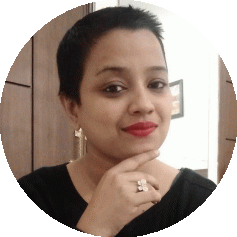
Author of whorelight, LINDA ASHOK is the 2017 Charles Wallace India Trust Fellow in Creative Writing (Poetry) at the University of Chichester, UK. She is the publisher of RLFPA Editions, Founder/President of RædLeaf Foundation for Poetry & Allied Arts that funds the annual RL Poetry Award (since 2013), and the founding editor of the Best Indian Poetry series. For features, press coverage, published works and more, visit lindaashok.com


155245443168026013-2

Photo credit: Arash Saedinia


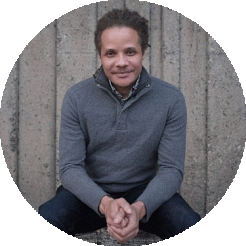
JAMEL BRINKLEY is a graduate of Columbia University and the Iowa Writers’ Workshop. He has received fellowships from Kimbilio Fiction, the Wisconsin Institute for Creative Writing, and Stanford University. A Lucky Man is his first book. He lives in California.

Interview with Jenn Givhan

In celebration of International Women’s Day, our blog editors, Joanna Cleary and Maria Prudente, interviewed poet and novelist Jenn Givhan for the Inklette blog. Read on to know more about the women writers who inspire her, writing about motherhood and lots more!


Maria Prudente:
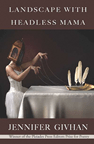
In your collection, Landscape with Headless Mama, you include the experiences of what you call “different mother-entities”. What compelled you to write about women through the collective experience and difference in motherhood?

Jenn Givhan: When I first tried having a baby, I experienced infertility and loss. Though I felt like a mother and mothered the unborns of my heart and imagination, I could not bring a living child into this world. At the time I was working on my Master’s degree in literature, focusing specifically on Latinx views and portrayals of motherhood, searching for mothers outside of the narrow definitions of birthmother that Western society put dataURI-1552097845512upon the lexicon, and found that in many other cultures (Latin American/Mexican, for instance) much of the mothering work is shared by tías, hermanas, abuelas, primas (i.e., female relatives) and I was taken, for instance, with Laura Esquivel’s novel Like Water for Chocolate and the role of Nacha, the abuela figure, the magical cook, an indigenous woman who is the primary caregiver of Tita as she grows up, and then later, adult Tita as the wet nurse of her sister’s baby, who becomes a Nacha-like figure to the girl, raising her in the kitchen. As I searched through the literature and began forming my own poetics, I asked questions of motherhood such as is the infertile woman the fertile woman’s doppelganger? Does she represent a fear of being without value in patriarchal society? This all helped me develop a poetics of motherhood outside of the patriarchy in my first collection and beyond, and I’m currently working on a lyric-hybrid memoir Quinceañera with Baby Fever that further delves into my experiences as a Latina growing up on the Mexicali border, examining the cultural stigmas toward childbearing and mothering in the Latina community filtered through my own experiences with teenage sexuality, contraceptives, abortion clinics, miscarriages, and violent relationships with machismo boys/men.  
MP: How does your identity as a Mexican-American women influence how and what you write?

JG: My identity as a Mexican-American woman is embedded in everything I write—even when I don’t explicitly examine my cultural heritage or reference it in my work—because it is linked to my worldview, my deepest belief system, how I view the world and myself. As I discussed before, my work tends to examine mothers at the center, all the variations and possibilities for what mother means, and my own Mexican-American mother is at the heart of this. Everything I write grapples with the complexities inherent in straddling cultures, roles, expectations. Where mainstream U.S. culture would ask me why on earth, for instance, I’d try having a baby while still a college student, why I’d adopt a baby in grad school, my Mexican family never once questioned my deep desire to be a mother, even so young. Now, I’m examining the changing perspectives in my culture and re-evaluating the expectations I felt so crucial, and I’m showing my daughter all the myriad choices she has—she’s eight years old, and we’re already planning for Harvard, which is where she says she will attend college, and which we’re visiting this summer after a book expo for my first novel. I love the Mexican-American woman role model I can be for her—she sees that I’m a mother, yes, but that’s just one aspect of who I am and the possibilities she can hold for herself, if she so desires. She is growing up to know her own strength, and that’s the most powerful aspect of our Latina badassery I can pass onto her.

“Alongside these forebears, I strive to weave together a multilayered song of endurance, survival, and, ultimately, celebration sung by the many women of color working together in the resistance.”

Joanna Cleary: Trinity Sight, your debut novel about a woman’s journey through a dystopian New Mexico, combines indigenous oral-historical traditions with modern apocalyptic fiction. What inspired you to do that? 

JG: I started out writing a story about a woman in New Mexico who loses her family and is on her own, and must find her own strength if she hopes to reunite with them, and perhaps more importantly, to see who she always was, with or without her family. The core of this story, then, is very close to my own heart, and speaks to my own greatest fear(s). Because my own family is from New Mexico on my great-grandmother’s side, and has roots to the Puebloan peoples, the stories that I was researching as I was reclaiming my own family history became enmeshed in protagonist’s search for strength and resilience. I didn’t necessarily set out to write a “post-apocalyptic” book, but the stories of the ancients here in the Southwest lend themselves to the cycles of destruction and rebirth that the indigenous peoples here have long known of and recorded in their sacred stories. I’m so grateful that my own inner journey connected with the ancients’—and that I’ve been able to glean a different perspective on dystopian fiction from a Latinx/indigenous perspective, centering us in our lands.

MP and JC: Which women writers have influenced you the most?

JG: My work follows the tradition of lucille clifton, who writes, “we have always loved us” and “come celebrate with me/that everyday/something has tried to kill me/and failed,” and Audre Lorde, who writes, “The master’s tools will never dismantle the master’s house.” My work follows my forebears Sandra Cisneros, Rosario Castellanos, Sor Juana Inéz de la Cruz, Toni Morrison, and Ana Castillo, and through paths tread clearer by contemporary poets Lisa D. Chavez, Natalie Diaz, Natasha Trethewey, Patricia Smith, and Margo Tamez. Alongside these forebears, I strive to weave together a multilayered song of endurance, survival, and, ultimately, celebration sung by the many women of color working together in the resistance.

MP and JC: What do you think is the most important message to share with emerging women writers?

JG: Believe in yourselves, beauties. Believe in yourselves so strong and resilient, so neverending, that no one, no one, can knock you down longer than it takes you to brush yourselves off and stand up, stronger, taller, braver than before, and to put your whole heart out there again and again and again. People will try to keep you down. And you will fall sometimes. And it will hurt. I wish I could say it won’t, but it will. You might not publish your first poem or story or even your tenth. You might have to send your book a hundred places. All the while you are putting your entire heart out for the world to see, keep learning. Keep growing. Keep shining. Stay open. When doors shut in your face, knock harder, knock louder. Knock the effing doors down. Climb up the fire escapes. Never, ever give up. Keep studying. Keep transforming. Keep shutting down the patriarchy. Shut that shit down every single time. And this all starts here: believe. In yourselves, in your truths, in your worth. As I believe in you. Together, we will change this whole world. ❤


15521042047946229.gifJENN GIVHAN, a National Endowment for the Arts and PEN/Rosenthal Emerging Voices fellow, is a Mexican-American writer and activist from the Southwestern desert. She is the author of four full-length collections: Landscape with Headless Mama (2015 Pleiades Editors’ Prize), Protection Spell (2016 Miller Williams Poetry Prize Series edited by Billy Collins), Girl with Death Mask (2017 Blue Light Books Prize chosen by Ross Gay), and Rosa’s Einstein (Camino Del Sol Poetry Series, forthcoming 2019), and the chapbooks: Lifeline (Glass Poetry Press) and The Daughter’s Curse (Yellow Flag Press). Her novels, Trinity Sight and Jubilee, are forthcoming from Blackstone Press. Her honors include the Frost Place Latinx Scholarship, a National Latinx Writers’ Conference Scholarship, the Lascaux Review Poetry Prize, Phoebe Journal’s Greg Grummer Poetry Prize chosen by Monica Youn, the Pinch Poetry Prize chosen by Ada Limón, the Joy Harjo Poetry Prize 2nd place chosen by Patricia Spears Jones, and fifteen Pushcart nominations. Her work has appeared in Best of the Net, Best New Poets, Poetry Daily, Verse Daily, Ploughshares, POETRY, TriQuarterly, Boston Review, AGNI, Crazyhorse, Witness, Southern Humanities Review, Missouri Review, and The Kenyon Review, among many others. Givhan holds a Master’s degree in English from California State University Fullerton and an MFA from Warren Wilson College, and she can be found discussing feminist motherhood at jennifergivhan.com as well as Facebook & Twitter @JennGivhan. 

Conversation between Joanna Cleary and Maria Prudente

Blog editors, Joanna Cleary and Maria Prudente, talk about their writing lives and its challenges, writers who inspire them, the importance of an artistic community, and, of course, blogging and their plans for the Inklette blog!


Maria Prudente: Hi, Joanna. I’m going to start us off here and begin with sharing a little about me. I grew up in the suburbs of a tiny university town in Charlottesville, Virginia, where I tacked up pictures of New York City behind my bed. I always knew I wanted to be an actress, so I moved a few weeks after I graduated high school to begin my conservatory program in musical theatre. It was super intense. I barely remember eating, sleeping or talking to people, really, but it helped me get started on my career at 19 and, I never looked back. When I was younger I made everything so romantic and that included how I viewed my life as a performer but being an actor is tough. Your dreams build and break within an instant. A couple of years ago, I found myself emotionally and creatively depleted. I wanted to create myself all over again. My brain was hungry and I longed to fulfill the academic in me. Now, I’m at Columbia in my second year studying Creative Writing. Before I go more into detail on that, I want to know about you and your life at the University of Waterloo where you are studying English and Theatre, correct?

Joanna Cleary: Correct! I grew up in Toronto, Ontario (that’s in Canada, eh) and, much like you always knew you wanted to act, I somehow always knew that I wanted to write. Even though I didn’t start to write creatively until I was a teenager, my childhood was consumed with books and visits to the library. I found there was a specific sense of peace within the worlds that the written word created, one which I couldn’t always find in real life. Because I spent multiple periods in my childhood struggling with anxiety, retreating to these worlds offered me a break from my own problems. I found that reading, and later, writing, helped me understand myself and the world around me more deeply. As I began to branch out into writing plays as well as poetry and the occasional rambling short story, I realized I want to create worlds that do for other people what the written word did for me growing up; I want to help people escape, reflect on who they are, and find the strength to return to reality more prepared to cope with it. This brings me to a question I have for you, Maria – how did you first get into writing?  

MP: I started writing as a kid. It offered me a sense of relief. You mentioned struggling with anxiety which I can completely identify with and it all began in my childhood. Growing up I could put on this face of being very normal and, you know, playing flashlight tag with the other kids in the neighborhood, but, I also felt like an outsider. I was the only kid with a single parent who also happened to be sick. I spent an unusual amount of time worrying. I was alone a lot. We didn’t have as much money as the other families. When you are a kid, your imagination is what keeps you company but, I found that writing was a more immediate way to express myself. I could create the worlds of other people and writing allowed me to consistently return to those worlds.

JC: I completely agree that your imagination keeps you company when you’re a child, but, especially as you grow up, writing can offer a more direct way to create the worlds you want to make real. Having always been an introvert, I also felt like a bit of an outsider many times during my childhood. I often felt as though there was something about other people that I didn’t quite understand, or that I was afraid of. Reading and writing helped me cope with this, as I didn’t need the people in books to understand me; I was happy just to co-exist in their worlds. Growing up, I often became extremely irritated when watching book-to-movie adaptations that didn’t create the exact world I had imagined for the book in question (which was most of the time, if not always). However, as I continued to grow older (and realized that I may have a slightly obsessive need for control), I realized that subjectivity is one of the most empowering aspects of art. Nobody can ever completely control how another person writes, as we all have unique writing styles, as well as writing ideas, that can’t ever be truly micromanaged by others. With this in mind, I began to delve into writing as a form of emotional expression that created the worlds I knew I imagined and nobody else did, at least not in the same way. Do you find writing to be an immediate form of expression for you as well?

MP: Absolutely. Today, it’s still a great relief to put a word to a feeling. The writing program at Columbia has challenged me in such a wonderful way. It’s humbling to sit in a workshop and listen to people read your work aloud without you, the writer, being able to explain it or justify your choices. I admit I am hypersensitive. I have all but cried when a piece gets gutted because one tiny moment in the story doesn’t click with them. I try not to sit and self-loathe. I’m getting better but some days can be harder than others. I do care a lot but I try to pick what’s necessary to think about for revision and what isn’t. I try to stay focused on improving content and less on perceptions of my work over all. Some things will resonate deeply with people and some things won’t. How do you deal with workshops and critiques of your work? How do you move forward?

JC: I can be extremely sensitive to feedback if I feel that my work is misinterpreted. For instance, if I write a piece that specifically intends to play with the conventions of typical narrative structure and people spend all their time talking about how they don’t understand the lack of a proper beginning/middle/end, I’ll struggle not to dismiss feedback as having missed the entire point of what I was trying to do. My childhood desire for control clearly has not diminished in the slightest. However, the creative writing and play development workshops I’ve participated in throughout my university education have taught me that everyone has something useful to say, even if I may not agree with it. For instance, comments made by people talking about the lack of a conventional narrative arc in a piece without a clearly defined beginning/middle/end may help me understand that I need to be clearer about my aesthetic intentions. As a creative writing professor once told me, we’re usually the most defensive about criticism we know is true. Hence, I always try to keep an open mind when listening to feedback, even if my gut reaction is to shut down. If I succeed, I often find that people offering feedback can help me as much as my initial sources of writing inspiration. Speaking of which, can you speak to which writers influence you?

MP:  When I was eleven, I stole “The Virgin Suicides” by Jeffrey Eugenides from my brother’s bookshelf and read it over and over. I became obsessed with that story the same way the boys in the book grow obsessed with the Lisbon sisters. I read the
“The Marriage Plot” on a trip to London and had to stop reading because I was irritated I hadn’t written it myself. I like the darkness to Eugenides’ work. I’m a massive fan of playwrights. After getting the chance to put their work into action, it’s hard not to feel creatively committed to them. From Shaw, Strindberg, and Chekhov to John Osborne, Ariel Dorfman, Mamet, Rabe, LaBute. I think Leslie Jamison should be required reading for nonfiction writers on how to master work that combines the personal with research. My list keeps growing as I keep learning. Who are you favorite writers?

JC: I love e.e. cummings, Toni Morrison, Margaret Atwood, Lucille Clifton, Sarah Kay, Lauren Groff, and Hanya Yanagihara (in no particular order). One of my favourite hobbies, however, is picking up a writing collection or visiting an online magazine, going to a random page, and reading what’s on there. I love discovering new artists as much as I love revisiting familiar ones. Becoming suddenly acquainted with the unique style of a contemporary artist I have never heard of before often inspires me to continue writing when I feel stuck. It’s important to remember what makes you want to write and what you want to write for. I often find simply being exposed to the sheer desire to write and the energy that the written word can have compels me to write for those moments and emotions in my own life that can’t be expressed in any other way. What about you – what you you write for/against? What compels you to write?

MP: I do feel this urgency to write about what repulses me. I had a professor encourage this notion to our small group of maybe six writers last summer. It’s tougher in non-fiction. In that particular class, I started writing about being a hypochondriac and having contamination OCD. I’d had some distance from it so I understood that I could imbue some humor into it because on some level it is funny. It also feels deeply selfish. I was a nervous wreck to share that with my class but they encouraged me to go even further. That same summer I had this assignment that I didn’t like. We had to do an art review and I was having a tough time picking one piece so, I ended up writing this ultra-cynical meta-critique on several paintings and simulations. It ended up being this dark-humor commentary on corporatized art in Chelsea. I had clearly made a mistake choosing Chelsea Galleries and yet it worked! I would say that I am like most non-fiction writers: I write to understand. I have to ask because we are co-editors for Inklette, do you have any prior experience writing blogs?

JC: Almost none! Aside from a writing a few Inklette blog posts over the past few years, blogging is a new medium for me. This is why, after having been a poetry reader/dditor ever since I joined Inklette, I wanted to try and form of writing with which I have less experience. I’ve always been interested in creative nonfiction and I love reading blogs because they are often intimately related with the idea of knowing writers as people. I believe that is essential to the empathetic interpersonal bonds that writing creates. However, I know that you have a blog because I’ve shamelessly stalked you on it. Tell me more about your blogging experience!    

MP: Oh gosh! Sometimes I forget that it’s out there and I suddenly feel naked. I didn’t know you posted for Inklette before, that’s so cool! My blog, Pink Moon, is a year old. It is a mixture of the political and the poetic. It’s not meant to be polished, it’s messy and honest. I insert my voice in the kinds of work I post there but, for Inklette, I think the work should primarily be about telling the stories of others and exploring shared conversations. Supporting other writers, learning about them and reading what they have to say is so important for our growth as writers.

JC: I agree – community is essential to the life of writing, which is why I’m thrilled to be working on the Inklette blog with you. As for everyone reading, we hope that you’ll stick around for more messiness, opinions, art, and random tidbits coming your way.

MP: Agreed! Stay tuned!


149460297287447JOANNA CLEARY is an undergraduate student double majoring in English Literature and Theatre and Performance at the University of Waterloo. Her work has previously appeared or is forthcoming in The /tƐmz/ Review, The Hunger, Pulp Poets Press, Every Pigeon, Glass: A Journal of Poetry, and Subterranean Blue Poetry, among others.

 

155113583331125364

MARIA PRUDENTE has written about feminist ethics for Manifest-Station and is featured in Grey Wolfe Publishing’s upcoming anthology of nonfiction short stories. Maria is a professional stage and film actress. She received her training from the Lee Strasberg Theatre & Film Institute and graduated from the American Musical & Dramatic Academy with a concentration in Musical Theatre performance. Maria is the Content Editor at CountrySkyline, LLC and proud member of Actor’s Equity Association. She lives in NYC where she studies Creative Writing at Columbia University.