The Peacock

A peacock had acquired 17th Street off Khayaban-e-Badban. While it wasn’t uncommon to see a peacock or two pecking away at the trunk of a gulmohar tree in one of the sprawling lawns of the Defence Housing Authority in Karachi, the appearance of this one was sudden and without warning. Rumors flew up and down the neighborhood about where he came from and why, but there was no way to know anything for sure. Probably after dispensing with his prior acquisitions, the peacock grew bored of wandering through empty lawn after lawn and decided to move on. The backstory isn’t important. He arrived, and we calibrated ourselves to the unwritten customs that govern peacock-human relationships.

We were forbidden from making conversation and eye contact with him, and we couldn’t directly acknowledge his presence even when he appraised us up close with his long neck turned sideways and quizzical. With some practice, I perfected the feint of seeing and not seeing at the same time, downcast eyes followed by a quick glance sideways. I’d catch a wash of green and gold to my left and on turning my head, a sunlit streak of cobalt blue to my right. Since the shape of the peacock was unusually elongated—the body of a giant chicken attached to six feet of iridescent tail feather—it was entirely possible for the top half of his body to be moving in a different direction from the lower half.

He was meticulous with his time and established a daily routine that took him up and down the neighborhood to evaluate whether it was well-suited to his needs. You don’t ask a peacock questions so it’s unclear what these needs were other than to maintain the social order by which he ruled his new kingdom and us, his subjects. The guard hired to protect the street from the usual riff raff on motorbikes and rickshaws woke from his decade-long slumber on the plastic chair at the end of the street and took to accompanying the peacock on his stately excursions. It was a sight to see, the slender blue neck bobbing back and forth and the guard marching in time to the peacock’s gait from a respectful distance with his gun tucked away beneath his belt. It always helps to have someone important living on your street and we all felt much safer than we had before. Meals were an affair. The peacock was served his breakfast of four gulab jamuns drenched in sheera on a silver platter in Lena aunty’s lawn, and his evening constitutionals brought him to my balcony where I presented him with high tea while avoiding eye contact. This wasn’t a job we could leave to the bumbling and fumbling of the servants. It had to be perfect. My high tea consisted of a delicate blend between east and west, pani puri, channa chaat, and cucumber and egg sandwiches, all of which the peacock pecked at with deadly precision, and a bowl of rosewater. The long hours of the afternoon he spent perched on adjacent roofs and balconies in deep contemplation of the wretchedness of all things in contrast to his own magnificence. I never discovered in whose lawn he found repose on the hottest days because he was excellent at vanishing when he didn’t wish to be seen.  

We, on the other hand, were always within the peacock’s line of sight as he enacted his rituals about the neighborhood day after day. We were aware of that kaleidoscopic presence at all times, that imperious beak considering all the options, paltry as they were. He’d stand on the tip of the highest roof, his tail feathers aflare in the breeze, and look out in the direction of the sea, far past our small neighborhood. What he saw out there we didn’t know, but in the authority of his gaze we understood that he knew his place in the world and in turn, we grew unsure of ours. We fought each other to gain his favor; if uncle Iqbal from across our house fed him mithai from Rehmat-e-Shireen, uncle Ahmad from down the street would appear with organic cottage cheese from Fresh Basket. The peacock had a discerning palate so we began looking up gourmet recipes that required the finest imported ingredients, each dish more elaborate than the previous. We sent our cooks back to the kitchen at all hours of day and night, and the sweeping women were forbidden from returning home in the evenings since the balconies and driveways required around-the-clock cleaning so the peacock’s feet wouldn’t encounter sharp pebbles or dirt on his walks. His leaps from one house to another were made cumbersome by the boundary walls, so we summoned the best contractors we knew and ordered expensive demolitions, the Housing Authority’s rules be damned. We knew they wouldn’t stop us, anyway. We had someone important living on our street. Front doors and balcony doors were left open so the peacock could peck at the contents of our homes at his leisure, and we took to sleeping on our bedroom floors because he expressed a clear preference for grooming himself at a height, and on the bedsheets. Shining trays of delicious treats were presented to him at all hours of the day and he evaluated our performance as we stood by sweaty and unnerved.

We were desperate for praise, for those moments of luminous symmetry in which swirling patterns of purple and teal fanned out before us and feathers quivered at a gold-flecked frequency no mortal could comprehend. He regarded us, then, not through one set of eyes but an iridescent hundred, each one telling us that we’d done well. It shook us to our cores and we bowed our heads and scurried off to the bathroom to empty our agitated bladders. In such moments, we were grateful at being spared his displeasure, which was a feral thing plucked from the deepest recesses of hell and lodged in his throat just waiting to blast off and demolish everything in its path. And when it finally came, that scream would reverberate through the walls, shatter anything made of glass, and deafen us for the rest of the day. We screamed at the maids to clean up the carnage while we hid behind curtains and wondered which neighbor’s effort was found worthless. We ignored the sweet jab of pleasure that it wasn’t us this time.

Time passed. It might have been months, it might have been more. I woke restless after Fajr one day right as the sun rose, and wandered out to the balcony. No one was ever awake at this hour except the drivers washing the cars and the crows making a ruckus overhead. The early morning light and the pollution mixed to create an anemic orange wash across the sky and I noticed the peacock walking past my house. He was slower than normal and I saw, along the nape of his neck, streaks of rust amidst cobalt blue for the first time, and crest feathers wilted like a plant hungry for sunlight. I watched his tail recede from view and wondered why the guard wasn’t following him up and down the street like he usually did.

I mentioned my morning observations to Lena aunty in passing and less than twenty-four hours later the whole neighborhood was talking in hushed whispers and casting quick glances in the peacock’s direction to confirm whether something was amiss. The more we looked, the more we saw. His appearance was lackluster. For many afternoons, we didn’t see him up on his favorite roof from where he’d observe the neighborhood and us. Even when he resumed his perch up there, he seemed a lesser version of himself and the radiance to which we were accustomed was replaced by a dull glow instead. The majestic stride slowed to a waddle because his stomach, previously sleek, looked as though he’d swallowed a small watermelon whole. The silhouette at sunset no longer inspired awe; it was suddenly round and awkward. Was it always so? Were we just rousing from a deep sleep? We were disturbed and uneasy at the thought. “It’s just not right,” Lena aunty huffed quietly after serving him the morning gulab jamuns. “Who does he think he is??” Uncle Iqbal muttered through clenched teeth as his masseuse worked on the ache made permanent in his lower back from the substandard sleeping arrangements.

We found tail feathers strewn everywhere we went now, the collective gaze of a hundred eyes suddenly diluted and forlorn. The guard at the end of the street had gone back to sleeping the day away and the peacock’s alert disposition had turned to a wandering listlessness. Our confusion gave way to resentment, and our eyes darkened at the thought of how small we’d become, how easily we’d succumbed to squatting in his shadow. It was as if a film was lifted from our eyes. “He thinks he’s better than us,” we said in angry whispers as we went through the motions of catering to his every need. “How dare he?” But the truth is, there is always a pecking order in the scheme of things and we knew he was at the top of it, especially at meal times when our heartbeats chased the tap of that proud beak against silver. But no. No. We wouldn’t be servants in our own houses anymore. We were more than what he’d reduced us to and we’d show him.

The changes happened slowly. At first, minor variations in the new clothes that came from the tailor’s. Bano aunty’s kameezes became more tight fitting than usual and in response, Lena aunty ordered her tailor to take in an additional two inches at the waist even though it meant she’d breathe like an asthmatic from now on. Elaborate sequin patterns twinkled on the borders of all kameezes on 17th street and the sleeves became longer and bell-shaped, set close at the upper arm but flaring out towards the bottom. A swirling fan shaped sleeve pattern in one house would prompt an accordian cuff pattern resembling bunched up feathers in another. Everywhere you looked, there were scalloped outlines in bright blue lace on pant legs that ended in frilly tassels. The men ordered their wives to procure an array of Mughal-style turbans to wrap around their heads, shiny velveteen bundles of purple and green with a jaunty feather on top. Their faces fermented in the blistering heat and rivulets of sweat ran down their temples, but they greeted each other on the street and exchanged pleasantries as though nothing were amiss. No man would be the first to take off his turban. One day when the electricity was gone and the generator had conked off, Lena aunty’s husband had to be rushed to the hospital for heat stroke but when their Prada returned home with him reclining in the front seat next to the driver, the turban was still firmly on his head.  

We were all ravenous like never before. Rehmat-e-Shireen opened a local branch in our neighborhood to accommodate our voluminous daily orders of gulab jamuns at sunrise and sunset. We grew small watermelons in our own stomachs and in the evenings, we swapped out tanker water for rosewater in our bathtubs and sunk into the fragrance, tired but delighted with our progress. Then suddenly, the colors of 17th street all changed. Grey was out, blue was in. Teal replaced turquoise, and mixtures of purple and green were everywhere. The painters came to 17th street in batches of six per house and stripped away the off-white exteriors. Velvety textures of bright blue blared from the walls of every house and the cars all had eyes on them. There were eyes everywhere now, eyes like mirrors watching each other and watching us, urging us on to greater heights.

All this the peacock observed in his usual silent way. One day, perhaps emboldened by our collective rebellion, I did something I never thought of doing before. After sullenly presenting him with a cucumber and egg sandwich on the balcony, I gathered my courage and my breath, and I looked straight into his eyes. The air was still as we stared at each other. I could never tell you what I saw in that unblinking obsidian gaze, only that it made me think of a room in darkness, of a child with its face to the wall, and shadows moving toward me, slow, like spilled ink. A pale plank of light split the dark in half and in it, I saw the peacock’s head illuminated. His neck was cocked sideways in that old way and in his slow considering gaze, I saw such amusement and contempt that I couldn’t breathe from the shame I felt. I just couldn’t breathe. I broke eye contact immediately and fled back inside the house.

We never saw the peacock again. We woke up one morning to the distinct sense that something was different, and we knew immediately that he was gone and wouldn’t be coming back. A deep silence fell over 17th street that day and the air was still. I spent hours on my balcony watching the crows circle overhead. Neighbors to the left and right of me wandered around like deflated wraiths in their gardens and ran their hands absently along their bright blue walls. The daily order of gulab jamuns was in but none of us had an appetite.


JAWZIYA ZAMAN is a writer and editor based in Karachi. She writes fiction and non-fiction, and her work has appeared in the Aleph Review, Dissent, Himal, Psychopomp, and Scribble Magazine, among others.

Shelter Number Twelve

We walked together. We travelled back and forth in time. Two madwomen just like each other. We laughed like little kids. We wore each other’s clothes. We exchanged our sandals. We cooked and visited each other’s dreams. We were chips drowned in jelly, we were the sound of turning pages and floating words, we were the crushed ice and colours, we were the salt on slugs, we were crooning bugs in the dark. We discovered a prehistoric cave full of rock shelters. The rock shelter number five had paintings in red ochre. It was vivid. Battle scenes, sticky figures, leaf-like sword and ribs, a hunter, a bull with bow and arrow, a dancing peacock, soldiers riding on horseback. The animals were sketched with greater details while human figures pinched merely in outlines.

In shelter number twelve, We discovered in the dark a three-metre-long bull ready to attack. We froze. You told me about the person who would have chiselled the rock, the bull, while others might have gone hunting or tied with babies, collected mushrooms, hauled meat back to camp. Your voice reverberated within the rocks and silence, and I couldn’t see your half face in the dark. You were slowly vanishing. You were saying something like “ We are yet to discover ourselves. We needed to come out of these daily hums, listen to ourselves, and sit like that person chiselling.” You stopped speaking and suddenly moved back. I tried to touch you but you disappeared, I started to look for you, and couldn’t find you.


OMI ANISH is a writer based in Ahmedabad, India. She is a reader at The Maine Review and an ELT trainer. A lover of all things surreal and abstract, Omi is increasingly drawn to the art of brevity while writing and intricate patterns while crocheting.

Professor Elder and the never-ending lecture

From His Notes: “The Henrytown Sanitarium for the Elderly and Infirm imagines itself an amalgamation of prestigious and beauteous Virginia colleges, combining the landscape of UVA, the brick and mortar of VPI, and the pillars of William & Mary, borrowed from torn-down plantation houses that had once speckled this Virginia landscape. The pillars, although beautiful, have not quite been assimilated enough into the architecture for one to forget the symbolic representations of a past built on the slave trade, cotton, and a tenuous economic past. It isn’t as if the Confederate flag is flying from a pole in front of the building, but history is present nevertheless.”

Professor Elder begins his lecture, simply enough, but, after his prefatory comments, changes his mind in mid-sentence and enters into a humorous story about how he cobbled together a published annotated bibliography from his rather lengthy dissertation manuscript on Southwestern Virginia History (particularly of a town named Salt), which had, in the end, amounted to no less than 1275 pages—“Two dissertations for the price of one,” he slings the joke to all within earshot and realizes such subtleties are better spent on appreciative graduate students. No one laughs, including his TA, Ms. Lenore Hayn, who doesn’t have much of sense of humor. Professor Elder harrumphs.

“The Henrytown Sanitarium is an allegorical construction for both waiting in the lobby and at death’s door,” the Professor lectures. “One thing is for certain: Henrytown Sanitarium,” Professor Elder notes, “is not the place to expect acknowledgement.” He looks unabashedly at Ms. Hayn who meets Professor Elder’s stern look and returns an implacable stare, which leaves Professor Elder sheepish and feeling naked and always prompts him to lecture more quickly.

Hayn, after all, is a no-nonsense gal, who has clawed her way up the graduate school flag pole one inch at a time, taking care to note each scratch and ding and scar. She is not to be taken lightly.

From His Notes: “For those of you who did not receive my email and have not brought to class the pages I sent, Ms. Hayn, my GA, will pass out copies. We have 25 of them, so please don’t take one if you have no need for it. While we wait for their distribution, and once in your possession, you might turn to ‘The Beginning’ and gaze into the picture of the Sanitarium circa 1883, trying, I might suggest, to imagine yourself at such a time in such a place as this.” [Broad sweep of hand.]

Professor Elder pauses for effect. Looking around, he finds his way back into Ms. Hayn’s eyes and says half-heartedly as if in refutation of the obvious, “The Sanitarium suffers decidedly from a lack of clocks—those measurements of decay.”

“No tic or click here, Professor Elder, and your timing is off,” she smiles. 

“That is the point, Ms. Hayn!”

He is not aware that his voice has shifted to a higher register until Ms. Hayn suggests he, “Tone it down.” She adds, “Conversations are all the rage, Professor Elder! You might give one a try sometime.”

Professor Elder wonders what it is that he has been doing all of these years if not “giving it a try.” Why, trying is exactly what he has all of his life been trying to do, and, at this moment, before the thought abandons him, he points a finger at Ms. Hayn, and, in front of all, announces that “having a conversation is right now what I am in the midst of trying to do!” Then, he hurumphs again.

 “Inside the Sanitarium,” he continues his lecture, “is a very square set up: four floors, very square rooms for the patients (cubbyholes located off the main hall), cut off at night by wooden doors, mostly unadorned, but with a few attempts, obviously by family members or loved ones, to cozy up the place.”

Professor Elder suddenly finds himself standing sheepishly in front of Harriet Baxter, the History Department’s pug-faced secretary, who is holding a boatload of forms in her thick- padded palms.

“Sign here and here and here and here, Professor Elder and do you want Ms. Hayn to go with?” Harriet Baxter says. 

“That, Ms. Baxter, is a question up with which I will not put.”

By virtue of impatient foot tapping, she tries to hurry his signature, whose swirls and whoops he still handles with precision and pride. “By God,” he says, “I have reached an age where I shouldn’t be compelled to hasten, Ms. Baxter!”

His hand finds an even, precise and extra-slow scrawl. “Slow and easy does it. That’s the right-proper ticket, Ms. Baxter.”

“Haste makes waste . . .” she cackles.

“I don’t understand you, Harriet, in the sense that your tone is too well understood and unappreciated. I will speak to the department chair, again, about the continuance of your position. Prepare a grievance as you will, because as the Bard said long ago, I am aggrieved.”

Harriet takes hold of Professor Elder’s hand in her own firm grip and helps him sign the rest of the forms. Her vise-like grip lets go only when she is finished with him.

Then, as if she is an apparition, Ms. Hayn bodily takes hold of his person and leads him down a long hallway, past doors where faculty give sudden inexplicable jolts as he passes, standing or sitting up most suddenly. Each looks at Professor Elder as if he has called them out for doodling instead of preparing their lectures.

“Outside the Sanitarium: a square courtyard with benches and squirrels.” He continues. “Inside: sing-alongs, bead work and crochet classes.”

Ms. Hayn guides him into the Cafeteria/Rec. Hall, a cavernous space filled with wobbly folding chairs of the kind for overflow in lecture halls. Soon after, numerous wheelchairs and walkers and canes follow shuffling feet.

From His Notes: “Write this down: I am using many quotations, not because I am lazy but because ladies and gentleman I am the opposite. I like CSPAN better than CNN. That’s my joke for the day if you get it but of course you don’t watch CSPAN! I continue then: ‘In his initial report about the Sanitarium, Dr. Dunham writes about the necessities that will help patients in their rehabilitation: recuperative sleep, never ending lectures from university professors and humor.’ See how I did that?”

Ms. Hayn leads Professor Elder up the Cafeteria/Rec. Hall’s uneven steps to a make-shift podium and leaves him there to appraise the room from above. A few of the more eager patients are already seated amongst the chairs in poses of sleep and misalignment, picking at their meals, which has been ground-up and looks wholly disagreeable but infinitely digestible. Many of the chairs are unaligned and empty.

Along with his signature, Professor Elder has always been meticulous about his lecture notes, and he seems momentarily confused that he doesn’t have any. This is decidedly a very bad day. His hand still hurts from Ms. Baxter’s tenuous grip and his lecture notes suddenly are missing.

He summons the very red-headed and red-faced young man, who stands holding up the entrance. Professor Elder gazes at the very red-headed and red-faced young man and thinks he might well benefit from advanced study on the under-utilization of quality reference guides and recommends to all of them [with sweeping hand]—“You all should proceed immediately after this lecture— and as quickly as possible— to the campus bookstore and splurge on one!”

“Red-headed young man,” he verily shouts from the podium, “please fetch another copy of my lecture notes. They can be found in a blue folder on the desk in my office. Cable Hall 157.” He adds with a sly smile, “I don’t know where my mind is these days. Please find them post-haste as in ‘with immediacy’ as in ‘he will go post haste to Professor’s Elder’s office in search of his missing lecture notes!’ Please put pep in your step,” and he adds “bring me some tea to sooth my parch.”  

Professor Elder clears his throat and greets the nearly empty room. “Hello. Test 1. Test 2. Test, Test,” he says. “Ha!” He inquires with those down-front why so few are in attendance, and after no reply says, “We will all just have to muddle through history with the missing.”  

No notes but the tea arrives. Too hot and some kind of weird blend with fruit and peppermint. He sips, feels his lips tingle, swallows, clears his throat again, and begins by memory no less. Nurses and orderlies can’t help but pause and take seats amongst those who slouch in various states of decay.

Professor Elder lectures about the perils of the Civil War in Salt. How important it was for the Union Army to disrupt the Confederacy’s supply lines, and, by eventually doing so, break its spirit through its stomach. “War,” he nearly shouts, “is not won by bullets or bravery nor even pamphlets!” Professor Elder has planned these theatrical outbursts and through pantomime pretends to distribute pamphlets, which, to those in attendance looks as if he is releasing from his fists a very sudden silence.

In the midst of the silence, comes a sing-a-long. “Oh Susanna, oh don’t you pray for me, cause I come from Virginee with a shotgun on me knee!”

 Attendees sit still, barely moving. “No singing in my classroom,” he roars. “We’ll do this like Socrates and exercise the muscle that is the mind. And no pneumonic devices.”

Professor Elder sweeps out his arm gesturing to the empty chairs and describes hilltop battles and sudden surging defeats, long ago burned cities and ancient indigenous civilizations.

From His Memory: “Salt’s Rebellion: The Union troops marched over the salt flats on route to its salt marshes, wet and reedy, and as folklore tells us kept walking across the water, buoyed by the salt, which suddenly opened up and swallowed them. And, the troops disappeared, and were left to boil later in salt kettles and to find solace amongst the clouds, which hung thick and heavy over the town.”   

Professor Elder drifts into the realization that although his students and colleagues and the administration, God forbid, have never been there for him, he has been there for his students and colleagues and the God-awful administration. Were he to take a straw poll, his students would undoubtedly have remarked that Professor Elder “had never let them down.” His colleagues would have remarked that his “lectures, although never-ending, provided unsettling reminders of things to which they should attend.” The God-awful administrators would with feint and with damning praise boldly state, “without his guidance those things to which we should have attended would have passed by without attention.” Sadly, however, and in reality, these “things” passed by anyway and then withered and dried up and died like a leaf-folded urn.

After Professor Elder completes the salt-kettle tale, he again finds himself adrift—or rather, too aware of himself in themiddle of it all. Without a clock positioned on the back wall to guide him, he lets silence become for each attendee and most importantly for himself, a reality.

Where the hell was the very red-faced young man? And he needs more tea! And, where is Lenore Hayn? Can anyone be counted on anymore for anything? Professor Elder looks out for his notes hoping they are projected against the back wall. But alas, No. . .

Professor Elder, here, near the end of it all, lets the worlds of possibility become for each attendee and most importantly for himself, a possibility.

Oralities’ denouement: “Go forth and trace the letters and assign them to history for that is where you will surely find them!”

The end comes quick and piercing—not exactly on point but near enough—then, the real denouement: the assignments, the reminders.

From His Memory: “The end, ladies and gentleman. Now let me take roll and forgive me if I mispronounce your names: Abington, Allison, Boyd, Davidson, Farmington, Fenner, Franklin, Henry, Jeffers, Jensen, Kent, Kensey, Lamont, Marlay, Mason, Nix, Nicer, Prose, Prudd, Remington, Simmons, Singleton, Smith, Trent, Trexall, and Wegman.”

 He looks at his watch and dismisses them—lets them go and most of them are all too happy to oblige. He believes it has been a good lecture. A successful lecture. He would have liked to ask about its potency but that would have been amateurish indeed. . . but, yes, there is the very red-faced and red-headed young man—waiting with the notes in hand. The red-faced young man is also perhaps waiting to ask questions—Professor Elder imagines, about the subtler points of his lecture.

This is, and he sweeps his arm out, what he loves so much, for better or worse, about this institution. He has built his career studying place: he has been exacting about it–slowed his mind down to a crawl, trying not to accomplish everything at once.

In these last few years, he realizes that he has been there for his students, even if he could not really be present for them. He supposes were he to take a straw poll, they would have said that Old Professor Elder had let them down. Each day provides unsettling reminders of those things to which he should have been attending that have passed on without his being in attendance. 

Together he and the red-headed young man find their way back to his office, talking about his lecture along the way—their shoes walking well-worn paths.

The very red-headed man asks if he needs anything more. Perhaps a bathroom break? All of the books he needs to find his way through the rest of the day? He tells the professor to push the button if he needs anything.

“Cause and effect, Dad” he says.

No sooner after the very red-headed young man has left him to his papers, Professor Elder recounts student’s names from memory to prove to himself he can.

“Abington, Allison, Boyd, Davidson, Farmington, Fenner, Franklin, Henry, Jeffers, Jensen, Kent, Kensey, Lamont, Marlay, Mason, Nix, Nicer, Prose, Prudd, Remington, Simmons, Singleton, Smith, Trent, Trexall, and Wegman.”

He realizes the red-headed young man has unwittingly helped him find his way back to the beginning, which he might conjure up as easily as the world over these many years he has helped to construct.

From his Notes: “The Henrytown Sanitarium for the Feeble and Infirmimagines itself an amalgamation of prestigious and beauteous Virginia colleges, combining the landscape of UVA, the brick and mortar of VPI, and the pillars of William & Mary, borrowed, some say, from torn-down plantation houses that once speckled the Southwestern Virginia landscape. . . . On the other hand, The Sanitarium is an allegorical construction for both waiting in the lobby and standing at death’s door.”


J. BRADLEY MINNICK is a writer, public radio host and producer, and an Associate Professor of English at the University of Arkansas at Little Rock. He has written, edited, and produced the one-minute spot “Facts About Fiction,” and Arts & Letters Radio, a show celebrating modern humanities with a concentration on Arkansas cultural and intellectual work and can be found at artsandlettersradio.org. He has published numerous journal articles and fiction in Toad Suck Review, Burningword, Literally Stories, Inklette Magazine, and Potato Soup Journal. Forthcoming work will be featured in The GroundUP, Southwest Review and Potato Soup Journal’s ‘Best of 2022’ anthology.

Leylah’s Pomegranate

I started peeling off my skin and laying it carefully on the table in front of the mirror. Just like how you peel a fruit, I started doing the same to my face. Picking it up from right below my eyes to the ear on the other end of my face, I tore apart the skin and it came off so easily as if it was patiently waiting for this day from a long time. Then, I started from my left cheek and took a quick turn over my nose to reach the deformed forehead.

Red juices started coming out from my face. I looked like a battered pomegranate. My face appeared as if someone had chewed on the fruit aggressively and threw the remains on the ground after it became unbearable to gulp it down. I felt its juices all over my face.

My face, the fruit, looked like a human brain, which has been beaten again and again to take a shape, which is not natural but depicts a violent submission. It was mocking me, reflecting me, and daring me to wipe the juices off my face. I raised my hands to my face and started crushing it further with my hands, feeling its seeds fighting against the skin of my palm and fingers. I wanted it to be shapeless, formless, and unidentifiable. I wanted people to look at it and feel nothing because its shape would be unknown to them. It was my rebellion against nature’s cruelty to give us a living form that’s incompatible with our desires.

I laid the peeled-off skin on the table and stared at my new fresh face for a solid minute. I had seen this face somewhere. I had seen someone peeling off their skin in the broad daylight. I had witnessed it right before my eyes and all I could feel was jealousy, pure unadulterated jealousy.

Her name was Leylah. I remember her name because it was a big deal to her. It was Persian. She used to give references to songs, movies, and legends to me so that I can understand the depth of her name better. All I ever wanted to tell her was that her name was the least of my concerns and it was painful to hear her ramblings all day. One day, she came up to me and gave me a half-hour lecture on the meaning of my name. I couldn’t care less but it was her face that made me keep my mouth closed. She was a beautiful woman, too beautiful. Sometimes, I just wanted to touch her skin to see if it was real. She used to do it all day to my face but I couldn’t bring myself to do it to hers. I would ruin it; I knew it. I don’t know why but I knew it. It came to me naturally, an instinct to not act on my foolish desires.

She also never kept her hair long. Again, I couldn’t care less but it was weird. She always wished for long hair but the day her hair used to get longer by a mere inch, she used to cut it, with her own hands. Then, she would bawl her eyes out in front of me and wish for long hair again. I used to laugh and every day, whenever I remember her, I laugh.

She was one weird little woman but aren’t all of us – women, I mean— weird and sad.

Leylah was not too religious but she wasn’t godless like me either. She had a ridiculous obsession with tying holy threads around my wrist and neck, the same places one would chain a person. I loved the way she tied them around my wrists and neck, knowing that the second she goes away, I would tear them as if my skin was on fire. It didn’t burn my skin but I felt like puking my guts out every time I looked at those hideous colorful threads around my fragile pale wrists. It was anomalous. It didn’t belong there.

Today, I remembered her after a long time. I don’t forget things easily but I tend to refrain from making use of my brain’s capacity to remember every person I have met. It’s a torture and a waste of energy so; I wonder why I can still recall each minute detail about Leylah.

While I was reminiscing my time together with her, I was still standing in front of the mirror. I had no regard for time but the weird sensation in my knees, and the shooting pain in my spine forced me to cry out and fall on the wooden floor. I fell awkwardly and all I could do was painfully grasp my abdomen so that it overpowers the ache in my spine.

I could feel the rage in my spine wanting to come out. It was impatient and thrashing against everything it came in contact with. Some days, it felt as if it came out and lay in front of me on the floor but it was just inside me, brutally caged by the flesh. I couldn’t do anything except reach for the drawer and consume ‘two painkillers of the day’. That’s the golden rule. Never take more than two painkillers in a day – one would not be enough to ease the pain and more than two of them would not kill you, but will result in other damned reactions in the future.

Once you raise the pill to your mouth, its revolting smell will reach your nose and you will know that it’s going to taste bad. Then, a lump will automatically form in your throat making it impossible for the pill to go down. It will come up in your mouth and release its atrocious insides there, right where you can taste them, making no mistakes.

Now, you are met with two choices. First, you can let your mouth suffer and gulp down some water, one time, two times! – helping you to drag the medicine down your throat. You might choke but that will not be enough to kill you. Second, you can vomit the medicine out. That would be simple, right? Not for me. Since I have fallen ill like this, I have never vomited the pill out. Even if I did, I used to pick it up and complete the ritual. I hated looking at my family’s faces, full of annoyance and worry at my childish tantrums. It took me a while but I concluded that no one should be at the receiving end of those faces.

Leylah never did look at me like that. She used to look at the discarded pill instead, with so much anger and hatred as if that pill should have been easier to swallow down. It wasn’t my fault; I never thought it was my fault. I house several incapabilities but not self-blaming. She knew that and never consoled me about it.

Sometimes, Leylah used to cover her head, and sometimes, she didn’t. Whenever she wore the hijab, it had random prints on it. She was inclined to eccentric clothing. Not that it concerned me, it was her body and nobody should ever dare to speak in the matters of someone else’s body but I had my favorite though, the pomegranate print one, it was lovely. On some days, she would come rocking a bob. It was a treat to watch her giving no attention to her fellows calling her a pseudo-Muslim, whatever that means.

I am proud that I never gave any attention to those people, screaming about Hollywood’s obsession with removing the hijab of Muslim women but not accepting a woman, who does so by choice. I was angry too but after some time, it became entertaining because it all boiled down to what Leylah wanted to do and she was remarkable at it.

Leylah was not a bubbly-happy woman, she was an angry one. She was not a band-aid to society’s sadness but the one that wouldn’t think twice before punching you in your face. Even, her favorite album was Radikal. She made me listen to that album every day. I loved it too, it was refreshing. One day, she was lying down on the grass while humming to one of her favorite songs and her hair started swaying with wind or the music, I couldn’t decide. She had cut her hair unevenly and I could see that she hadn’t washed it that day. It looked so pleasing to the eye – her hair flowing with the wind that barely graced us in summers, her sun burnt skin giving a suitable backdrop to her hair, her eyelashes were not curled but straight and you could only see their beauty up close, and her adorable crooked nose, which I loved from the depths of my heart.

Leylah also had freckles like me, the only thing we both shared.

I still remember the day I told her that I was going back to the place I came from. I had to go back to see if the reason for which I left still existed. She was neither emotional nor ecstatic about it. As usual, she was angry. She wanted to travel with me and see for herself the place, where I was born. I hated it when people wanted me to accompany them like an ever-smiling tour guide so that they could get an authentic stamp on their visit to Kashmir. I had told Leylah that I would never take her to visit my place but her stubborn little heart thought that I would change my mind soon and that didn’t happen.

It’s not that I am possessive or patriotic about my homeland, I never was. I just detest the foreigner’s gaze. The gaze, devoid of any compassion, understanding, and love towards others, who are trying to live, resist and fight against all odds. It fills my heart with so much bitterness. This is exactly how violence robs you of friendship, love, and trust and, wherever I go, this theft follows me.

I have been an object to the foreigner’s gaze several times in my life. I know the feeling very well. The humiliation when you are treated like a centerpiece on a table. The foreigner’s gaze is also present in my family, friend circle, and so-called community. It didn’t take the people of my community two seconds to escape and run into the warmth of their houses when I was being treated like filth. They will accept you as long as you worship their God, stay loyal to their ridiculous idea of religion, hate the ones who dare assert their identity and lick the boots of men who have pledged to protect the veiled virgin women of the valley.

I didn’t want Leylah to look at me like that. I am much more than these baseless questions and colonizer’s assessment. Violence might rob us of friendship, love, and trust but it can never overpower our individuality, our non-conformist desires, and our everlasting curse on the occupier’s trickery. As I lay on the cold wooden floor, waiting for the painkiller to work, I admitted that my illness might go away but the resentment would not. It has grown roots inside of me.

I stood up and neared my bed. I heard my mother’s voice from downstairs. ‘Have your dinner’, a simple call from her but it frightened me.

I knew that now, I would have to forcefully stuff my mouth and stomach with food.

I pushed my feet against the floor and ran downstairs. I could have walked but I ran to show my mother that I am hungry, to show her that I am like the other normal children she has, and to make her believe that I am recovering but the taste of painkiller in my mouth stated otherwise.

I prepared myself and thought, I would divide the food into small pieces and then, evaluate my chances of whether I could completely eat it or not.

She filled one plate with rice and placed it on the dastarkhaan. After some time, she gave me her lovely warm smile and pushed the rice filled plate towards me.

While I was looking at my mother’s face, I realized that she was once again eating the cold leftover rice. I didn’t ask her about it because I knew what the answer would be. She would have either said that she didn’t want to waste food or she would have thrown the soaring market prices of rice towards me. I once told her that we can all divide it and eat it together but she said that it will make us ill. Exactly, my concern.

My father on the other hand usually stayed quiet but that day, he decided to open his mouth and, one thing I knew for sure is that whenever he opens his mouth, nothing good comes out.

‘Why do you cook so much if nobody eats it?’ he asked my mother in his arrogant voice. That’s the thing about my mother; she doesn’t pay attention to him, she never has. She ignored him like she usually did and urged me with her eyebrows to eat. My father zeroed his gaze on me and I knew in that exact moment that I would not be able to eat anything from that plate.

Whenever my father looks at me like that, I know he will leave nothing to amend or aid, it’s going to be a complete massacre, and why not. I mock the religion he treasures so much, I am indifferent to the God he worships so much, I hate the community he loves so much and I live according to my own set of values that he detests so much. I am a living contradiction of him.

I looked at him and his eyes scared me. I wanted to vomit but I couldn’t. I needed an outlet – tears, words, screams, vomit – anything. His eyes reminded me of the foreigner’s gaze, one that is in constant search of fresh bodies so that they can be carved up and sold in the market at the highest price.

I ignored his gaze and focused on the food in front of me. In that second, my throat clogged up and cold sweat started breaking out on my skin. My mother’s voice became distant as the moments passed and my father started eating his food normally.

I looked to my side and saw my sisters crying silently and looking at each other for help. Why does he have to open his mouth? Why can’t he eat and go to sleep? Why does he always look at me as if I am the ugliest thing in this house? Why do we have to eat together?

Then, everything started coming back. Like an avalanche, it completely overtook my being under a dark opaque blanket of overwhelming sickness.

I looked down and saw a bunch of moths crawling out of the rice on my plate. After some time, they started flying toward me and rested right inside my throat. I started choking but nobody looked at me. Nobody dared to.

I stood up and ran upstairs to the warmth of my solitude. I heard my mother and sisters calling me but I couldn’t reply. The insects had started multiplying in my mouth while their wings were absorbed in the pomegranate juice. I could taste their bodies on my tongue as they kept on taking birth there. I started chewing their bodies and they oozed with the fruit’s liquids.

After chewing each of them, I spat them out. I looked at the dead insects on the floor. Only I could make out that they were moths just a few minutes ago and not something unknown. I glanced at their bodies and the lump starts to make its unwelcomed appearance.

I ran into the bathroom and vomited freely. I clutched my head in my hands because it felt like my head was going to roll back and fall on the floor anytime then. I could feel my thick hair wrapping itself around my fingers, squeezing them until they turned white, and gave up their resistance to keep my head intact. This is how it feels every time. I patiently waited for my heartbeat to rise and then calm my body down gradually with it.

‘You need to know what works for you and have some faith in your body; it will try its best to survive’. That’s what Leylah used to say to me. It was something that I learnt from her amongst all the other things. I follow it and recite it like a prayer every day. It works.

As I came back from another episode of my breakdown, I sat down on my bed and started recalling more details about my time with her.

I don’t regret my decision to come back here but on some days, I am uncertain about the choices that I made or we make in our youthful craze.

With this thought, I close my eyes with thoughts of Leylah still humming in my mind and I dance away to her sweet tune.


SABAHAT ALI WANI is a writer, researcher and artist from Kashmir. Her writings about Kashmiri women have been published by International Literature and Arts Festival (USA), South Asian Today, and Empower Magazine. She is also a mixed-media storytelling artist who aims to create a space for bold and critical statements through her art experiments. Her artwork has appeared in Club Plum Literary Journal, About Place Journal (Black Earth Institute), Long Con magazine, Maaje Zevwe, Blue Marble Review and Variant Literature.

Four Pieces

KEY QUESTION

I reached into my pocket for the keys to our apartment door, but my small daughter stopped me. She asked to be lifted so she could open the door, so I brought her up to the level of my chest.

She had a set of plastic keys from her doll’s house. The toy house held antique furniture, candelabras, dishware—all visible in rooms with cutaway ceilings. She didn’t know that metal keys were needed for our door, and not just any metal keys, but ones that had been cut, serrated, and notched to fit.

I held her as she stretched out and tried to insert her keys into the locks. “They’re not going to work,” I said.

She understood what I was saying but didn’t believe me. She kept working her keys against the slots, first in the top lock and then in the lower lock.

“Just hold me,” she said.

I held her with my fingers laced beneath her legs. She tried for what seemed a long time, pressing the plastic keys—each a different color—at various angles against the metal plates. She seemed to think the problem was with her technique, but I knew the problem was with the hardware. The toy keys were made for toy locks. Our apartment door had real locks, installed to keep burglars out. “They come in through the front door,” the locksmith had said to me when we moved in.

We were not trying to break and enter. We just wanted to release the bolts that kept the door shut. We didn’t need picks or power tools, but we did need real keys.

When we finally got into our apartment—with my keys—we saw none of the Victorian decorations that were in the doll’s house. Our furnishings were not high priced, and few items matched in color or design. But our ceiling, at least, had not been cut away. It was intact.


COUNTRY HOUSE

Two men who didn’t know each other well were staying in a country house—the older one owned the house; the younger one was his guest. They’d met at a mutual friend’s dinner party in the city. Soon after they’d arrived, the homeowner noticed the water pressure was low, but when he tried to fix it, he cut off all the electricity. The lack of power didn’t matter, at least not during the day. Sunlight came through the branches of the pine trees that surrounded the house. However, water would only trickle from the faucets.

The homeowner set a pot under an open tap. After a few minutes, the pot had collected some water, so he next tried to light the gas stove. He turned a knob and held a match next to a burner, and the gas puffed into a blue flame. He boiled the water and made two cups of tea.

Both men sat a low table and sipped the tea. “Why don’t we leave?” the guest asked.

“We should stay, at least for a while.”

As they sat with their tea, the daylight slowly faded.

“I’m going to pack my things and call a car,” the guest said.

“You can’t call a car here,” the homeowner said. “Anyway, we already have a ticket back.”

“What will we do here?”

“Well, I can fix things. I can put on my tool belt and take out my wrench.”

“I’m not into cosplay.”

The guest zipped his luggage and started to get his coat.

“Let me try the circuit breakers,” the homeowner said.

He went down to the basement with a flashlight. In a closet, he found a metal plate on a wall, unsnapped it, and examined two rows of double-pole switches. He couldn’t tell which ones were on and which were off. So he started flipping them randomly. As he worked through the rows, lights started to come on. He called upstairs, “Is anything working?”

“Yes, the refrigerator is on, and a clock is lit.”

When he threw the last switch, the rest of the lights in the house came on. That was good news, but he still didn’t know what to do about the low water pressure.

“I’m going to do some reading now,” the guest said. He went into his room then and shut the door.


GIGGLE SHIT

I was visiting a friend in Italy. My friend worked during the day, and when he came home in the evening, he brought out his hashish works. He had no pipe, so he used a pin stuck through a piece of cardboard. He placed a small chunk of hash on the point of the pin, set the cardboard on a table, and held a match to the pellet.

“What keeps the stuff together?” I asked.

“Camel dung,” my friend said.

We set a drinking glass upside down over the smoking dung and let the fumes collect in the glass. We sat on the floor, slid the glass to the table’s edge, put our lips to the space between the glass and the table, and sucked in the smoke. After I’d inhaled, I waited a minute before breathing out. Then I couldn’t get off the floor. I reached but couldn’t latch onto anything. I fell back, raised myself to a sitting position, fell back again.

“Are you buzzed?” my friend asked.

I rolled on the floor, laughing. “You know,” I said, “my father used to call me a giggle shit.”

“I think you’ve had enough,” my friend said. He took the blackened glass, along with the pin and cardboard, and “hid” the works on top of his refrigerator.

I chuckled to myself for a few minutes.

The next day, I was in the apartment alone when the housekeeper, named Picci, arrived. She spoke only Italian. I tried to avoid her, but she found me. She was carrying the hash glass. “Brutto,” she said.

She shoved the glass toward me. “Molto brutto,” she said.

I tried to ignore her, but in the evening I said to my friend, “Picci found our smoking glass and called it brutto. What does that mean?”

“It means ‘ugly,’ ” he said.

“She said it was molto brutto.”

“ ‘Very ugly.’ ”

Picci had disposed of our hash works, so we had to use a different glass. Fortunately, Picci hadn’t found the stash. There was a black chunk the size of a fist in a plastic bag in a drawer. The block was hard—the camel dung was like glue. We cut off small pieces for heating on the point of a new pin, under a clean glass. We got on the floor and sucked in the smoke.

I started to laugh silently, but I couldn’t keep the sound down. I put a hand on my stomach and hacked. Quickly, I sank to the floor lay there, fetus-like, laughing.

“You are a giggle shit,” my friend said.

The next morning, my friend talked to Picci before he left for work. During the day, I had nothing to do; I was on vacation. I planned to go out later to a cultural site, but before I left I saw Picci. I had thought she spoke no English, but when she caught my attention she said clearly, “Giggle shit.”


DEAR MR. CHALAMET,

I don’t know if I can call you Timothée, since we haven’t met, but Timothée seems easier, more comfortable, than Mr. Chalamet. After all, I’m much older than you. Still, I wouldn’t expect you to call me Mr. Rutkowski. Anyway, here, in this letter, I’ll most often call you “you” and myself “I.”

Although we haven’t met, I saw you once on the street. I didn’t notice you, because I didn’t know who you were. I wouldn’t have recognized you, even if you were standing next to me. But I was with my daughter, and we were walking up a street from a park. We’d been sitting on a bench, trying to have some time together but not saying much of anything. We were coming up the street, and we both saw a skinny young guy crossing in front of us. “That’s Timothée Chalamet,” my daughter said, but I didn’t know who she was talking about.

“We made eye contact,” she added.

By that point, you had crossed and were on the sidewalk heading west, and walking rather fast, at least compared to how I walk. I saw only the back of your head, but the hair was distinctive, as I later learned. My daughter followed you, and I followed her. She took a couple of photos of your back with her phone, presumably to post on social media. You didn’t turn around, and it was soon clear that we had no reason to keep following, so we stopped and went home. We lived only a couple of blocks away.

The idea here is our daughter and I had a shared purpose, even though it was short, less than a minute. While we had little to discuss when we were trying to talk in the park, now we had something. Almost instantly, I forgot your last name, but I remembered your first name, Timothée. That was enough to identify you. “We saw an actor on the street,” I said to my wife. “His name was Timothée something.”

“Oh,” she said, “you mean Timothée Chalamet?”

“Yes,” I said, and I started learning about you. You aren’t much older than our daughter. You went to an arts high school, where some of our daughter’s middle-school classmates went. They must have known you, or known who you were. Their brush with fame might have been like my experience in college, where I kept hearing about Christopher Reeve. I never saw him—he was a couple of years older than I was—but I knew where he’d lived on campus. It wasn’t far from where I lived. This made my college experience a little more exciting, knowing that Reeve had been there. Everyone knew who Reeve was; no one knew who I was. But maybe someday they would know me, because I’d lived close to where Reeve lived. Of course, that in itself was no reason to know who I was.

—T


THADDEUS RUTKOWSKI is the author of seven books, most recently Tricks of Light, a poetry collection. He teaches at Medgar Evers College and received a fiction writing fellowship from the New York Foundation for the Arts.
The Village Doctor

Disease had overrun the village and the village was dying.  I once thought that the village itself had failed us.  It was absurd thinking but my world was irrational and, in the context of an irrational world, every thought is valid, every notion is compelling and every premise is vested with some degree of truth.  We were very sick and, through twisted thinking, I came to believe that all aspects and features of our village – the dry soil, the dilapidated huts, the stalks that suffocated in the rabid heat, the harsh light, the palm trees, the hardened mound beds under which the dead lay quiet – were complicit.  And I blamed the palm trees most of all.   They seemed to flourish while all else suffered and perished.  I watched those leaves wave in the wind, high above the village common that shrank in concentric circles, smaller and smaller, as grasses dried and died around the epicenter, demarked by an abandoned hut, and I sensed an implicit arrogance in the way those palms flaunted the life that thrived within them.  They remained high above the fray and, somehow, they had been pardoned while the rest of us deteriorated.  Large leaves, oblong and creased, would outlive all of us by the power of some inexplicable governing force.  They simply existed while existence ran a sputtering course across the land below as people flailed and died.

Quite often, men and women would find their way to the common and it was there that they would fall upon the stiff grass stubble and pass away.  Bodies aligned in random patterns and it seemed like a conspiracy of sleeping corpses, a collaboration of the dead.  Dying became routine but now, looking back, I realize how unfair it was for me to blame anyone or anything – hapless palm trees or the village itself – for the advent of an apocalypse.  In any event, we became sick, most of us, and the village became an arena in which the stages of sickness played out like some tragic play presented upon the flat rock precipice of an ancient amphitheater, the final act known to all though the drama draws your attention, quite compelling because there is always a chance that the final act is not what you remember it to be.

  Certainly, palm trees were not to blame.  The fault was that of a doctor, the essential citizen of a village in the throes of collapse, and this is what I have come to believe:  our doctor, now dead, abetted the onslaught of the plague upon our village.  I wasn’t convinced at first but now I am certain.  In short, she chose to die and, through that choice, she ravaged a community.  She decimated us by her purposeful absence and, by choosing death, she hides in its shadow.  Her death was a relatively quick affair but she punishes us forever through her complicity in her own demise.

Her unfaithfulness, however, is not surprising to those who knew the doctor.  The sad truth is that she was despicable!  She was a hateful person and it’s quite clear that she despised us.  She made no attempt to hide her disdain.  When someone made the pilgrimage to her office, she would mouth the words “why have you come” in cold cadence and these words would permeate the air like a choking smoke.  She never blinked but animus prevented her from looking you in the eye.  Her demeanor was consistently grim.

She confronted those who relied upon her for help as if they were to blame for their own illness.  In essence, the patient was culpable for having invited disease into his or her own body.  For this reason, there were many who preferred to wait until they were practically comatose before requesting her care.  She would then berate the patient for having waited.  She became the victim, aggrieved that she had been left the task of unraveling mortality’s knot and her condemnation, explicitly stated or implicit in her eyes, was a censure as severe as some divine judgment.  The harshest aspect of her behavior was the way in which she infected us with her hatred, evidenced by the fact that, in time, we came to hate her.

On a day I can hardly remember, I was carried to the infirmary and placed upon the table.  Though my recollection of the episode is dim, I do recall her dull eyes and her grey skin as she leaned over me.  She drew together some foul-smelling tea that she required me to drink.  I retched the first time she administered that concoction but, eventually, I was able to drink it.   And that is when a miracle occurred:  my fever broke.  I immediately began to heal.  And so it was the case with everyone she treated.  Each of her patients survived and it seemed as if her touch was animated by God.

It made no sense to us but the truth is that she performed miracles.  She had a special gift and, incredibly, no one died under her watch.  Even before the advent of the plague, there were countless times that she saved people who walked the thin ridge of death.  She had saved babies and mothers tumbling through the trauma of problematic childbirth; she would receive the ancient, haggard parade of elderly women and men in the course of their last march and would subdue the rampage of age upon their bodies and minds.  She was remarkable in an emergency:  when no cure was available, she somehow devised an answer and if an answer eluded her, she would pray aloud to some unidentifiable deity and the injury would dissipate as if it had never occurred.  She was an artist in some dark religion; she had her finger tight upon the pulse of death and she knew it well.   She could sing its song, she could entice it, she could lull it, she could embrace it.  She was stronger than the plague.  If you were lucky enough to receive her treatment, you would live.  She was indispensable.

To thank her would cause her to sharpen her stare and rouse her mood to the level of a moderate rage.  It was often the case that she told you not to bother her again.  And this all occurred beneath the benevolent sway of large palm leaves dancing in the breeze, high above.  We reviled her for her success but we couldn’t escape the fact that her success meant our survival.  She was a necessary burden.  Her behavior was unbearable but we had no choice but to endure it.

There came a time at which the doctor became sick.  The plague had caught up with her but she refused medical care.  We called on doctors from neighboring villages and they rushed to her side.  As each doctor leaned down to examine her, each heard the same gravelly admonition:  “Leave me to myself, don’t even try to save me . . . you can’t help me .  .  . I refuse to be helped . . .  don’t waste your time.”  Gasping for breath, she spat these words at each of them:  “Carry me to the palms . . . and leave me there.  Today I will die.  The affliction .  .  . is mine .  .  .  .”

The doctor succumbed and we grew despondent.  The number of deaths due to plague rose exponentially and there was no one we could rely upon for help.   We were hopeless.  There came a day, however, upon which our luck seemingly changed for the better.  A new doctor came to the village.  He had not been summoned but miraculously appeared one bright morning.  He began his work immediately.

He is young and courteous with an earnest demeanor.  He has long, dark hair that flows across his head in even waves.  We were confounded at first:  how could someone so young take control of a disaster?  But we learned, in short order, that he is a skilled professional, a wonderful man and his presence is a refreshing and reassuring change.  He is respectful toward his patients and his compassion is apparent:  you can see it in his attentive eyes, the corners of which pulse in response to the sad details of our respective stories.  He has a comforting manner and listens patiently to the saga of devastation recited by those who are brought to him for treatment.

He wears a uniform intricately embroidered, much like a chasuble.  He rarely breaks from his work and he hardly sleeps.  His patients have faith in him:  they believe in his ability and they celebrate his success.  His voice is soft and he speaks in the slow cadence of a priest or mystic; his demeanor is certainly that of a healer.  He manages a collection of myriad tubes, hoses and syringes adroitly and wields his otoscope as if it were a holy scepter.  His kind eyes wander across the face of the sufferer and, with his eyes, he seems to absorb the pain and assume it as his own.  He goes to work:  he excises infection from the failing body.  He instills hope.

I must mention, however, that this doctor, as wonderful as he is, does not know the village, has only recently walked the grounds, has no knowledge of the mud or the warped wooden huts or the color of our leaves or the rhythm of the rain upon our roofs.  He has no knowledge of the path beyond the fields where cows once walked, now long gone, a memory that has begun to recede as we die out.  He understands much but he really doesn’t know us.

He has been successful in many of the cases he has handled but the unfortunate truth is that most of his cases are routine.  Despite his energy and attitude, it is apparent that his expertise is limited.  He fails when the situation is hopeless and, when it is hopeless, he losses hope and the patient is lost.  He is ineffective in contexts that are dire and, in terms of the plague, it must be said that his results have been mixed.  This is disturbing because, today, the plague is everything:  it is the overriding matter and tripwire of our existence.  Our new doctor, as good as he is, has saved very few of those afflicted with the disease that is killing us.  His predecessor, as horrid as she was, could practically lift a dying body from the ground and breathe life into it.  Some even believe that she could raise the dead.  It is true that our new doctor has just arrived, he is learning, he is doing his best – but none of that matters.  Time is running out.  We are well on the way to the end.  I expect that, should we survive, he will be renown for having saved us.  Today, however, our hope dissipates with each passing hour.


WALTER WEINSCHENK is an attorney, writer and musician. Until a few years ago, he wrote short stories exclusively but now divides his time equally between poetry and prose. Walter’s writing has appeared or is forthcoming in a number of literary publications including Lunch Ticket, The Carolina Quarterly, The Worcester Review, Sand Hills Literary Magazine, Meniscus Literary Journal and others. He is the author of The Death of Weinberg: Poems and Stories (Kelsay Books, 2023). More of Walter’s work can be found at walterweinschenk.com.

Lives Reimagined in Fiction: On The Revolution According to Raymundo Mata by Gina Apostol

by Hazel Ann Cesa

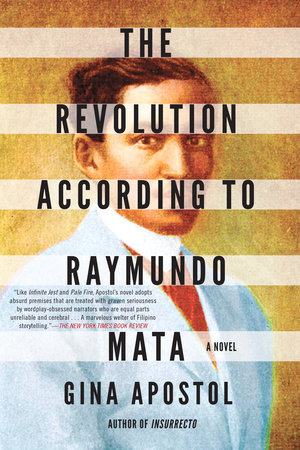
First published in 2009 and a recipient of the Philippine National Book Award, Gina Apostol’s The Revolution According to Raymundo Mata is at once an exploration of the Philippines’ revolutionary past, an evaluation of the challenges of translation and interpretation throughout the process of meaning-making, and an inquiry into the role of the intellectual1 in unveiling the politics of historical truth by countering the “authoritarian version of truth” with an “egalitarian version of truth.”2 In this story about a story, it is clear from the get-go that the author writes for the Filipino readers first, everyone else second. Gina Apostol masterfully entangles and unravels the skein of Philippine colonial history, presenting its messiness in all of its complexity. 


Bold, utterly chaotic, and at times hilarious, Apostol’s novel takes the form of a fictionalized memoir by a certain Raymundo Mata, a night-blind bookworm, freedom fighter, and a fan of Jose Rizal. Providing snippets of his childhood and accounts of his participation in the revolution, Raymundo Mata’s memoir consists of forty-six diary entries, which are all muddled by a present-day foreword, footnotes and an afterword from three feuding intellectuals: a pseudonymous translator, an American psychoanalyst critic, and a nationalist editor.

There is a palpable violence and madness to Apostol’s hyper metafiction—that of the Philippine revolution and language. Our translator extraordinaire who goes by the pseudonym Mimi C. Magsalin (magsalin means “to translate” in English), the person responsible for the translation of Raymundo’s diary entries, comments how difficult it was to calmly translate the memoir and declares it “linguistically deranged.” For even though Raymundo’s first language is a curious variant of Tagalog, his manuscript has scatterings of Spanish, Latin, some pidgin, and other major Philippine languages such as Waray, Cebuano, and Ilocano. Only the last diary entry is completely written in English. The first entry is nothing but gibberish, which Apostol’s fictional erudite scholars can only presume as some kind of Katipunan code, a secret form of communication of the Katipuneros.3

Dr Diwata Drake, an American psychoanalyst critic with Filipino roots from her mother’s side, writes an addendum and describes Mata’s manuscript as something filled with “the misconstructions of the ego and the malapropisms of time” and “classic psychopathologies of the tongue (typical of the Filipino, who has an irritating penchant for puns).” For Diwata Drake, Mata’s diary is also replete with suggestive instances of “frustration, aggressivity, regression—the triad of resistances that mark revolutionary pathology.”

This madness in Raymundo’s language is symptomatic of the oppression and violence of the war against the Spaniards in which he participated. It is metaphorical madness: as the ink bled on the sheets of Raymundo’s notebook, the blood of his fellow revolutionaries stained their birth soil. The Spanish had guns while the natives4 had slingshots and slippers. As for Mata’s revolutionary circle, the Katipuneros wielded a bolo5, the literal weapon and symbol of the fight for independence. In one of his diary entries penned at the start of the revolution, Mata reveals he witnessed the rather tragic end of Matandang Leon, the first katipunero whom he saw fall in battle.

Completing the fiercely quarrelsome modern-day intellectual trio in Apostol’s novel is the nationalist editor, Estrella Espejo. In the section where she writes her notes on Raymundo’s patrimony, Estrella mentions that Raymundo Mata was captured by the Americans and was in Bilibid jail for much of his remaining days. Here, Gina Apostol hints at the unreliability of our memoirist. In entry #42, Raymundo writes down the battle of Balara as the first of the many battles of the Philippine revolution. Estrella’s footnote disputes this, citing that various commentators of our history have already noted this error. It is Pasong Tamo that is more likely the first battle, not what Raymundo has written in his diary entry. Estrella goes on to say: “Why Raymundo persists in this error is obvious: he was losing his mind.” But in the editor’s preface, Estrella also writes of Raymundo: “That the storyteller is, I must admit, flawed, maybe mad, does not diminish my faith in his story. In fact, his madness amplifies its truth.”


Apostol touches on the veracity of memory and the truthfulness of historical records over personal narratives, a recurring theme in her work. The process of remembering is a dominant topic in her more straightforward novel, The Gun Dealer’s Daughter, and in Revolution, this becomes evident throughout the fracturing narrative as Mata’s accounts are questioned, corrected, and interpreted by the three academics. As such, Mata’s fictionalized memoir serves as a montage not only of his life as reimagined in fiction but also that of the whole country. Through the linguistic interactions of Mimi, Diwata, and Estrella in the margins of the text, the reader sees how Mata’s memoir becomes a portrayal of the ways in which individuals and groups remember their past on the basis of recollected memories, both personal and collective.


The push and pull between external forces, in this case the relentless annotations of Apostol’s intellectual trio, add to the maddening cacophony of voices remembering the past and the stories about stories being told. One voice writes and records, another one translates, while another one edits, and yet another one opines. This goes on and on as Apostol, with her asynchronous storytelling, takes the reader through the various threads in her novel.

In the footnotes of the three feuding intellectuals, Apostol leaves clues on how to approach, and what to expect from, the text: “[K]nowledge occurs by distortion—for a mirror is never truth, and yet for a while it relieves us of the burden of not knowing,” and “[T]he storyteller at one point indulges in infinite recapitulation to avoid decapitulation, a literal instalment.” The narrative spawns these infinities in the translation, interpretation, and retelling of Mata’s telling.

Where does the modern Filipino reader lie in this vast labyrinth? How does one reexamine the relationship between the past and the present and the manifold functions of cultural memories for the constitution of one’s identity? Gina Apostol does not provide clear-cut answers. Instead, through Raymundo’s accounts and the dizzying annotations of the intellectual trio, she shows that the rendering of cultural memories tells a lot more about the rememberer’s present than about actual past events. Their unquestioning acceptance or vehement denial is proof of the role of memory and the social dimension of dialectical truth6.

This layer to the novel leaves the present-day reader with a simultaneous sense of hope and dread. In the era of post-truth where historical revisionism runs deep in Philippine society, it is a revolutionary act to read Apostol’s novel. The victims of our country’s bloody history (whether they be 19th-century revolutionaries rebelling against colonial forces or the Desaparecidos of the Martial Law Era7) may remain just footnotes, their memories suspended over time, their stories negated by fascist narratives. In the case of Apostol’s protagonist, a freedom fighter once a footnote in history but granted his own footnoted memoir through historical fiction, there’s barely extant evidence in the manner of physical details to allow an effective tracing of his life. But we later see that dates and localizations are largely insignificant in the discourse of pain and violence. To borrow Diwata Drake’s words, “I have no wish to deny Raymundo’s story.”

Apostol’s novel does not deny historical truthfulness. It does, however, question historical accuracy. This is evident in the blending of the fictional with the factual. Raymundo Mata, with his initiation into the secret society, meets the founder of the Katipunan—Andres Bonifacio. In the teaching of our history, Andres has been inaccurately portrayed as the Great Plebeian, when in truth, he came from a middle-class family. Mata’s memoir depicts him as the well-read person that he actually was, a reader of novels like Victor Hugo’s Les Miserables and Jose Rizal’s Noli Me Tangere and El Filibusterismo. The annotations of the nationalist editor, Estrella Espejo, prove especially helpful, filling in the gaps in our history where Andres Bonifacio and other key players of the revolution are concerned.


One rather intriguing twist is a comparison between Mata’s fictionalized memoir and Dr Pio Valenzuela’s actual (and very controversial) autobiography. When news of poet-ophthalmologist Jose Rizal’s exile in Dapitan broke out, Andres Bonifacio commissioned Dr Valenzuela to seek Rizal’s advice. Would Rizal give the green light to rise against the Spanish authorities?8 As Raymundo is half-blind, Andres deemed him fit to accompany Pio to Dapitan. Any contact with the exiled Rizal would have been suspicious, so it was only fitting that Mata be introduced as Valenzuela’s patient and that their trip to Dapitan was only made in pursuit of Rizal’s medical opinion.

Our historians have long since noted the inconsistencies in Valenzuela’s version of events. And Apostol blends fiction with history to demonstrate this. In Raymundo’s thirty-first journal entry, we read about how Valenzuela travels under an assumed name, Procopio Bonifacio, and was accompanied by our night-blind bookworm, Raymundo Mata himself. Editor Estrella adds a footnote on the discrepancy in the two versions of Valenzuela’s memoirs. The first one states that Valenzuela was accompanied by Raymundo Mata and Rufino Magos, both residents of Binakayan, Kawit, Cavite. A later edition specifies that Valenzuela was with Mata the blind man and Magos as Mata’s young aide. Estrella notes: “The truth of Raymundo’s memoirs asserts Rufino Mago [not Magos] was an old man while he was the young patient. In addition, while they were both from Binakayan, Kawit, they were residents at the time of Manila: further proof of Valenzuela’s notoriously unreliable testimony.” In writing Raymundo’s fictionalized memoir, Apostol offers a counter-narrative where Valenzuela has written down misleading or inconsistent information.

In the novel’s last chapter titled “Epitaph”, Diwata Drake states that Raymundo’s memoir “seems cousin to other vibrant forgeries and textual ambiguities that have plagued this fervid democracy’s highly imaginative history.” A neo-Freudian psychoanalyst critic right through to the end, she maintains that the textual deceptions in the annals of our history “underline without a doubt the eternal trauma of the Philippines: like everyone else, it is a contingent being, born of words.”

The nationalist editor, Estrella Espejo, writes that “the Philippines may be the only country whose war of independence began with a novel (and a first novel at that)—Rizal’s Noli Me Tangere (‘Touch-Me-Not’). Our notion of freedom began with fiction, which may explain why it remains an illusion.” Before that statement, she writes: “The American revolution had farmers and dentists; the French revolution had a mob of lawyers. Our prime mover was a poet.”

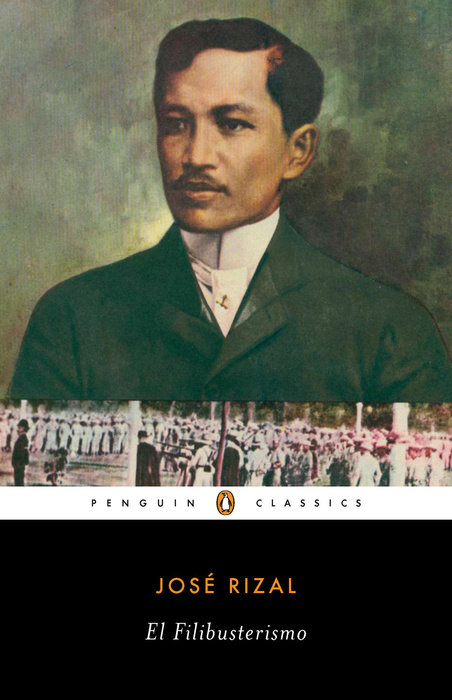
A longstanding debate is whether the national hero Jose Rizal was in favour of the revolution. It is said that Rizal believed a premature revolution would only set the country to failure, the blood of freedom fighters unnecessarily shed, their deaths unwarranted. There’s also the inconsistency in Pio Valenzuela’s memoirs, which simultaneously incriminates and vindicates Jose Rizal. For Valenzuela was never clear on what transpired during his meeting with Rizal in Dapitan. Gina Apostol’s gifts of insight enabled her to humanize Rizal, who has long been idealized by radical propagandists and the general public alike.

Before Raymundo Mata joined Pio Valenzuela to meet the exiled hero, he too put Rizal on a pedestal. We read in the thirtieth entry in his fictionalized memoir: “Despite my bravado, this is what I knew: I would be terrified to speak to the man. I was glad that I had not brought my copy of the Noli—no need to ask him then about an autograph and risk looking like an idiot.”

Apostol sets enough tension in the scene where Mata eavesdrops on the conversation between Pio Valenzuela and Jose Rizal. Raymundo notes his admiration towards Pio, fulfilling his mission as the Supremo’s secret messenger to seek Rizal’s signature, the sign that the hero has given the go-ahead. As things stand, there is only one right answer for the Katipunan. Raymundo then shifts his focus to Rizal, noting that the hero knew damned well what they were up to. Here, we read a moving epiphany from Mata: 

“It’s true. His bones did not matter. We wanted of him what was air and nothing, such as his name, a ghost louse-scratch. As for his novels, his words? Not futile but culpable. Blameless, but still: bloodstained. This pained him. I was shocked. This is what I got for my crime, arrant listener. Struck dumb: for this must be our Medusa, worse than a hero’s death was a hero’s truth.”

Through Mata’s eyes, we see Rizal in his humanity—a gifted polyglot, polymath, and patriot, who despite his knowledge of medicine, mathematics, and engineering, is stuck in a bind. To agree to a revolution or to warn against a premature one? In humanizing the national hero, Apostol provides a critique of the nation and nationalism.


And like a rabid member of the Rizalist cult, Raymundo Mata steals the manuscript of Jose Rizal’s third novel, Makamisa (a mix of Tagalog and Spanish, ‘after the mass’ in English). Apostol cleverly crafts the last entry in Raymundo Mata’s memoir as passages from the stolen manuscript. In the words of Diwata Drake, Mata’s conclusive memoir entry, written completely in English, interlaces with Rizal’s third novel. Our pseudonymous translator Mimi Magsalin adds that there is a resemblance between Rizal’s Spanish and Mata’s English. The novel’s anti-colonial sentiment shines here; the interlacing of Rizal’s Spanish and Mata’s English is symbolic of their motherland’s long colonial history. First, under the Spanish and later, the Americans9.

Gina Apostol takes the revolutionary fervour and psyche-searching of a historical novel and moulds it into a kaleidoscopic work of reflecting mirrors and looping intrigues. As per Raymundo Mata’s thirty-sixth entry, written in English and unpunctuated: “Like a novel revolution is never finished.” The statement could be interpreted as a subject-puzzle, as Mimi Magsalin suggests in her footnotes: “Like a novel revolution, [something] is never finished.” Another interpretation is conventional, using splice, “Like a novel, revolution is never finished.” Or perhaps it is none of these or all of these at once. In the end, the reader is left with an awareness that there is something beyond the intellectual exercise of writing, translating, and reading: something inexplicable, unfathomable, but still somehow understood.


Footnotes

1 Filipino poet, fiction writer and playwright Eric Gamalinda writes this blurb for Gina Apostol’s novel: “The role of the intellectual, according to Edward Said, is to present alternative narratives on history than those provided by ‘combatants’ who claim official entitlement to official memory and national identity–who propagate ‘heroic anthems sung in order to sweep all before them.’ In this fearlessly intellectual novel, Gina Apostol takes on the keepers of official memory and creates a new, atonal anthem that defies single ownership and, in fact, can only be performed by the many–by multiple voices in multiple readings. We may never look at ourselves and our history the same way again.”

Intellectuals, according to Antonio Gramsci, fall into two groups. Firstly, there are the “traditional” professional intellectuals, literary, scientific, and so on. In the second place are the “organic” intellectuals, distinguished less by their profession but are nevertheless the thinking and organizing element of a particular social class. For Gramsci, the intellectual has the responsibility of keeping society together and in harmony, creating a new consciousness for a social strata and bringing meaning and understanding to one’s role in life and society.

Gina Apostol’s novel asks the question: who are the intellectuals, what are their social functions, and are they even relevant in the modern world?

2 From Edward Said’s Representations of the Intellectual. Drawing upon Gramsci’s views of the roles of intellectuals in society, Said writes that the intellectual should critique power and authoritarianism of all kinds at any cost to ensure social stability. The critical concern for the intellectual, according to Said, is the search for the Truth, which would counter oppressive power structures and fascist narratives.

3 The members of the revolutionary secret society organized by the Supremo Andres Bonifacio, they launched the Filipino independence struggle in 1896.

4 Spanish colonists called the natives of the Philippines indios. Interestingly, the term Filipino did not exist then as we know it today. It was once synonymous with Insulares, the term used to call Spaniards born in the Philippine islands.In one of Magsalin’s notes on translation, we read: “Spanish caste terms are particularly troubling for a translator of nineteenth-century Filipino society.” Magsalin asks what a translator should do when met with the term indio when translating colonial era texts. Using such a denotative term would mean taking on the Spanish prejudice but using Filipino would mean translating the text inaccurately. She writes, “I took the path of least resistance and just footnoted.”

5 Only using traditional pre-colonial single-edged knives, Filipino freedom fighters had little chance of victory against the Spaniards armed with guns and cannons.

6  On Hegelian dialectics. Hegel postulates that Truth is correspondence. We uncover Truth in the idea of others, questioning them and revealing their myriad contradictions and convolutions.

7  During the Marcos dictatorship, over 1,600 people disappeared. None of them were ever found. The fate of the disappeared remains a question mark in our history.

8 Although Jose Rizal was not a member of the revolutionary secret society, the Katipunan revered him for his revolutionary novels and sought his advice on whether or not they should start a revolution.

Rizal thought otherwise as he believed the freedom fighters needed more sophisticated weapons and a more organized strategy to mobilize the masses into rising up against Spanish authority.

But in the end, a premature revolution broke out when the Spaniards learned about the secret rebel society.

As for Rizal, he was tried and convicted of sedition. The Spanish authorities believed his novels incited indios to rebel against them.

9 The Spanish-American war ended with the Treaty of Paris. Spain sold the Philippines to America for twenty million dollars.


Born and raised in the Philippines, HAZEL ANN fell in love with reading and writing at a young age and went on to pursue Literature as her area of study in university. Her writings have appeared in national and regional publications in the Philippines, including a now-defunct multilingual folio of performance poetry Bukambibig and an anthology project telling the struggles and joys of being a young Filipina, Inday-Inday. Her review of Gina Apostol’s The Revolution According to Raymundo Mata is her first work to be featured in an international literary magazine. She shares mini-book reviews and literary musings on her bookstagram, @literary.hazelnut.