Whispers In My Ear

In September, Andre told me there was something going on with him “down there.”

“I think it’s a yeast infection,” he said.

“Men get yeast infections?”

We were on the phone. He paused as if annoyed and said, with the curt of someone who has had to explain this before, “Yes, men get yeast infections.”

Another pause. I scratched my head. Did I have a yeast infection? I didn’t think so.

“But I mean also,” Andre’s voice got low on the phone. I bent my knees, as if leaning down so he could whisper in my ear. “I know I haven’t slept with anyone, but have you?”

“No,” I whispered back. My knees were still bent when I realized it was a lie.

I slept with my ex in April, which was only two months after Andre and I met. Two months after the ex and I had ended. In April, it had seemed irrelevant to Andre. It was probably still irrelevant to a yeast infection in September. Mostly though, I wondered why it was so hard to admit that I had just lied. The lie had only been alive for seconds, already it seemed impossible to figure out how to make it die.

I didn’t know if it was a yeast infection or not. Andre and I didn’t have sex.  I bought Monistat, shot it inside of myself. If I had a yeast infection, it went away. Andre and I didn’t have sex. There was nothing for him to shoot. He said his symptoms stayed. Andre and I didn’t have sex.

“With a condom, maybe,” he said. He was naked, kneeling on my bed. He held his penis in his hand, said, “You don’t see that?” He pulled his penis from side to side, up and down. “See? Dots? Those little red dots. They’re everywhere.”

I was lying on the bed. My face inches from his penis. I loved the shape of him. I really wanted to have sex. I tried hard to see the red dots.

“Maybe,” I said.

“They’re everywhere! You don’t see that?! They’re everywhere?!”

I was starting to think this was all in his head, that the red dots were about something else.

I sat up on my elbows and watched him. He was still holding his penis, examining it. “Are you sure you haven’t been with someone else?” I said.

He fell onto the bed, looked at the wall. Was I thinking about April? Did I just want to get mad?

“It’s okay,” I said. “I won’t be mad.” It was a trap. Of course, I would get mad. He looked at me. His eyebrows are thick and black. The hairs on his right eyebrow combed upwards and splayed out. He bit his lip, looked back at the ceiling.

 “The last time I remember was.” He bit his lip again. “…August, I guess.”

A part of me knew this already. I thought of a friend who used to lie for his best friend. The best friend and his wife cheated on each other so often it seemed like it was just a way for them to pass the time. My friend put hotel rooms on his credit card for the husband. I said, “Why don’t they just get divorced already?”

My friend looked appalled. “They love each other, Emily!”

I said, “Why aren’t they just in an open relationship then?”

My friend looked at me like I was a child and asked if I really didn’t understand? The fantasy was half the thing.

“We fall in love with the lie,” he said.

 I asked Andre, “What does the last time you remember mean?”

“Last time I remember is what it means.” He stared at the wall. His arm was bent at the elbow, his fingers pressing into the sides of his head. He had just gotten his haircut and said the woman had cut it too short. He kept touching his hairline as if wishing something that was gone was still there.

“What if I said, last time I remember, what would you think?” I wanted to touch his hair, trace the outline of what had been. He smiled and the dimple on his right cheek came out. Andre is beautiful to me. I don’t if I feel close to him because he is beautiful or he is beautiful because I feel close to him. I didn’t want to feel close to him then so I pressed my hands to the sheets instead.

 “I would think you were blackout drunk is what I would think.” His hand moved from his hairline to the bed. They inched towards me, within reaching distance before they stopped, spread out, then pulled the sheets in like he was grasping for something there. I couldn’t figure out if this was an admission or not.

I pulled my hands back, turned away from him, and said what I thought I was supposed to say. “I think you should leave.”

And so, he did, and I was left wondering why it is we say we long for connection and then choose moral superiority?

The nurse at the STD clinic was in her mid to late 50s. She had thin lips, a stoic, narrow face, a grey bob, and thick-rimmed, gold-frame glasses. Her scrubs had Care Bears dancing on them. She didn’t smile or ask me how my day was. She sat down at her computer station and sighed.

“Any active symptoms?” she said.

“No,” I said. She did not take her eyes from the screen. I stared at a green Care Bear tripping down her spine. I wondered why I would lie.

 “I don’t have symptoms, but my boyfriend says he does.”

I realized it was just easier to say boyfriend sometimes.

The nurse stared at the screen, lowered her glasses to the bridge of her nose. Her fingers readied on the keyboard. “What are his symptoms?”

I went into a long explanation. I had strep throat. Maybe I had a yeast infection. Maybe the antibiotics gave me one and then I gave it to him. I took medicine, he didn’t. I don’t have symptoms, he says he does still.

She turned her body towards me. She didn’t smile. She held a finger in the air. It was long and thin and wrinkled. There were no rings. “Oh!” she said. “He has to take the pill. Men have to take the pill for yeast infections, but they have to get it prescribed. Tell him that!”

She still didn’t smile, but her eyes were active suggesting solving something was a thrill.

I almost left. I thought maybe she believed the answer was that easy. I wanted to believe the answer was that easy.

The walls of the room were mustard yellow. They looked smooth, but they weren’t. If you looked closer, there were little bumps and blisters everywhere.  

I stared at them at when I said, “He also slept with someone else.”

The wall didn’t make me think about STDs. It made me think of a man I had gone on a date with before Andre. A very nice man who gave me the sensation that I was stuck at the bottom of some well and his body was my only way out, but his body was completely smooth. There were no crevices or holes to dig into, no bumps or lesions to hoist myself out.

I looked at the wall in the clinic. I thought of meeting Andre. I thought of how quickly I wanted to dig my fingers into his skin. I touched the paper sheet on the clinic bed. It slipped beneath my fingers, and I felt the terror of tears I didn’t know were there.

“What a bitch,” the nurse said.

I cut my eyes back to her.

 “Sorry,” she said and then she turned back to the computer and started typing things again.

When she drew my blood, I stared at the wall again. I tried to think of STDs. I tried to be angry. The needle didn’t hurt, but I felt the tears welling up again.

“All done,” the nurse said. I wiped my eyes. She put the sample away, stood in front of me and pulled a pair of blue scissors from her front pocket. She snipped them once in the air and said, “If you need these.”

I laughed while I cried.

“Men,” she said and rolled her eyes. I felt righteous. I felt wronged. It was a lie. I didn’t want to be in love with a lie.

“I slept with someone else too,” I said. The nurse put a finger to her lips. “Sh,” she said and shook her head.

I once had a therapist who was in her 80s. Her office was inside of her apartment on the Upper West Side with a view of Riverside Park. There were framed glamour shots of herself from different ages and times on her windowsill. When she was young and a famous soap opera star in Mexico. Herself then, ballroom dancing beneath a chandelier, a bouquet of roses and a kneeling man, staring down at her glittering stilettos. Sometimes she said things like, “When Carlos and I were together,” and you were supposed to already know she meant Castaneda. When I was still seeing her, I cheated on a boyfriend. I told him I had done it. I thought the admission absolved me of something.

 “Why would you do that?” my therapist said. I thought she meant the cheating. “Why would you tell him?” she said.

I said I felt guilty. She rolled her eyes, said guilt was a fake emotion, just something we say to make ourselves feel better about doing something we think is bad, but are going to do anyways.

It was true. The cheating wasn’t an accident. It was a clear-headed decision. The boyfriend never made me cum. Our sex felt like he had mistaken my vagina for his hand. I had started to think maybe that’s all my vagina was after all. I cheated the first time someone made me remember how absurd it was to think that way.

Looking back, I don’t think I told him I cheated because I felt guilty. I think I told him because I wanted him to know my vagina wasn’t his hand. I had told the therapist this. She told me not to tell him that, to fake an orgasm instead. She said, “Men need to believe silly things like that.”

Sometimes I wonder what would have happened if I’d just told the truth, the original truth, instead.

It is two months later. There was no STD. I don’t know if there was a yeast infection or o it was just guilt in his head. Andre said he was sorry for sleeping with someone else, said he was drunk, said he didn’t know how to tell me. I said it wasn’t that, the sleeping, it was the unprovoked lie. It was his voice getting low on the phone, me bending my knees on the other end, him whispering in my ear, “I know I haven’t slept with anyone else, but have you?”

He doesn’t have an excuse for that. 

“I just didn’t know how to take it back,” he says.

I hear this, think about April and the ex, tell my friends about his unprovoked lie. “Oh yeah, that’s bad,” they all say. I stay righteous and smooth on the outside. I tell my best friend. She says, “He was hoping you would say yes, you had slept with someone else, so if it was an STD, it could be your fault instead of his.”

“I know!” I say. I touch the smoothness of my skin. Her voice goes low on the phone. I bend my knees again. “I mean, I’ve been on both sides.”

“I know,” I say, softer this time. “Me too.”

On the inside, I am alone and cold at the bottom of that well. It is the feeling of moral superiority based on a lie.

I call Andre.

 “You can come get your stuff if you want,” he says.

“You didn’t throw it away?”

“No,” I say, thinking about when I did and then felt bad and pulled it out of the trash. “Of course, I didn’t.”  

“When should I come?” he says.

I fold a pair of his jeans, the knees are facing me. The knees have gone white. I stick my nail into the fabric until right before it tears. “You can come now,” I say.

I am in the kitchen watching him as he stands on my porch, fixing his hair, straightening his shirt, pushing his lips inwards and outwards. He is ducking to look at himself. It is a stance that reminds me of a time we went to Myrtle Beach and we paid 20 dollars each to try to find our way through a maze of mirrors and smoke screens. I gave up. I couldn’t figure out how to tell what was a mirror and what was a door. I wanted to crawl back to the beginning and out. He took my hand and I let him. He kept ducking, said he was looking for the reflection of his feet.

“If I see myself, it isn’t a door.”

It was such an obvious thing.

A problem between us: I believe myself to be smarter than him. I don’t know why such an obvious thing hadn’t occurred to me.

On the porch, he stands straight. He is about to ring the doorbell. I don’t know why I have been hiding, acting as if I haven’t seen him. I don’t know why it is so tempting to act as though I am standing on a perch, righteous and smooth, looking down at him, acting as if I could never do something that he did.

I open the door before he rings the bell. There’s a glass door still between us. I don’t know why it is so hard to say I am stuck in the bottom of the well, wanting to crawl out.

I open the glass door.

“Hey,” he says. We stand for a second, as if there is still a pane of glass between us. He takes a step forward. I don’t take a step back. We don’t hug as much as place our chests next to each other. I place my hand on his back. His skin feels like crevices I can sink my fingers into and I wonder why it is so hard to forgive, to tell the truth, to say that we are the same, and let go of an idea of moral superiority. I don’t know why it is so hard to swim to the other side of the lies we cover ourselves with.

He puts his hand to my back and we say nothing, but we drop our heads, close enough that if one of us whispered, the other could hear.


EMILY MATHIS is a second-year MFA candidate in fiction at UNCG. Her work was a finalist for the Ron Rash Awards and the Chester B. Himes Award and was shortlisted for the 2020 Bridport Prize. Her fiction and nonfiction have appeared, or are forthcoming, in Epiphany, Broad River Review, 5×5, FLARE: The Flagler Review, Cathexis Northwest Press and others. She is working on an auto-fiction project and is on Instagram@twaggamyster.
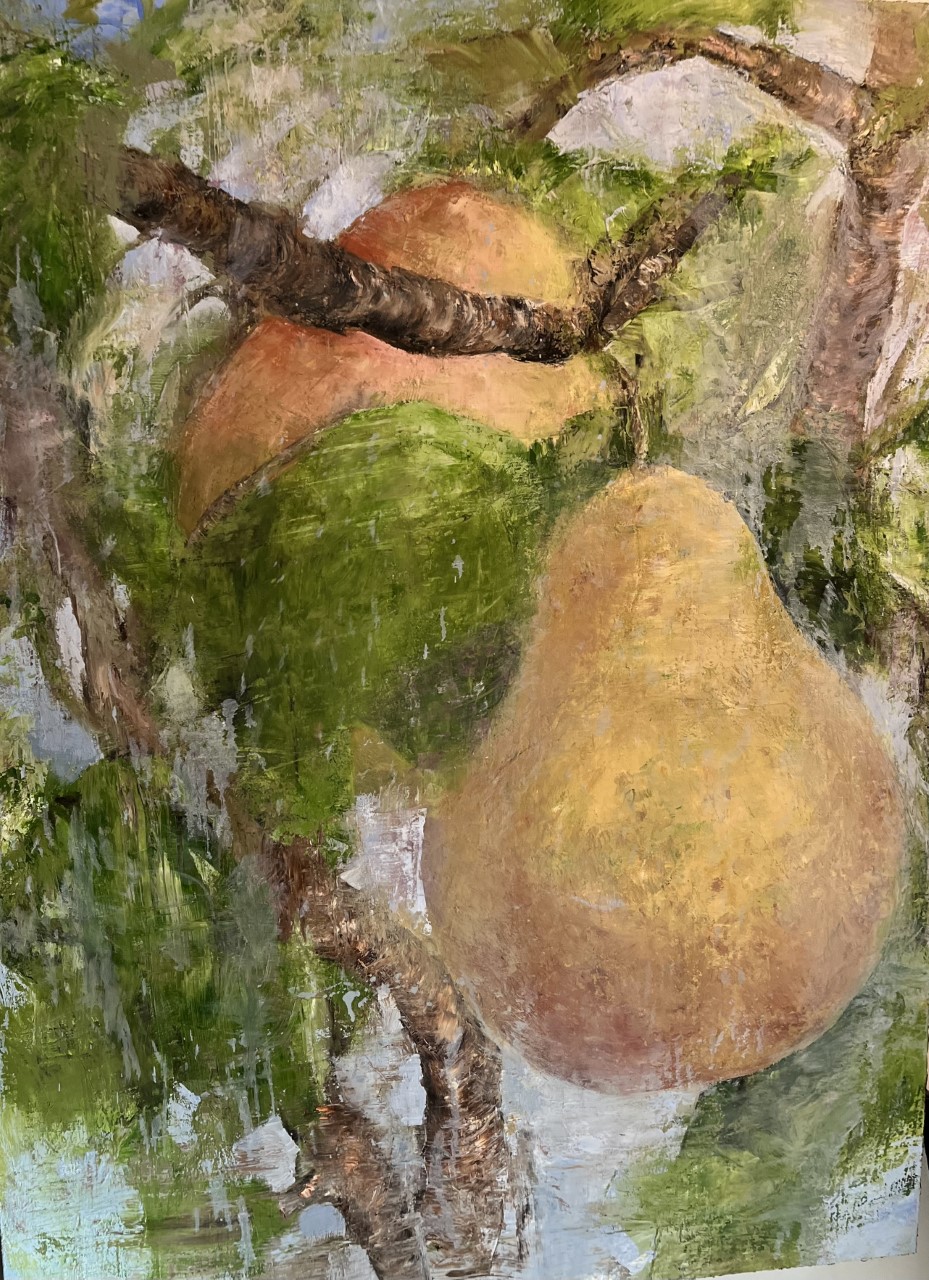
The Fruits That Do Grow

Artist Statement

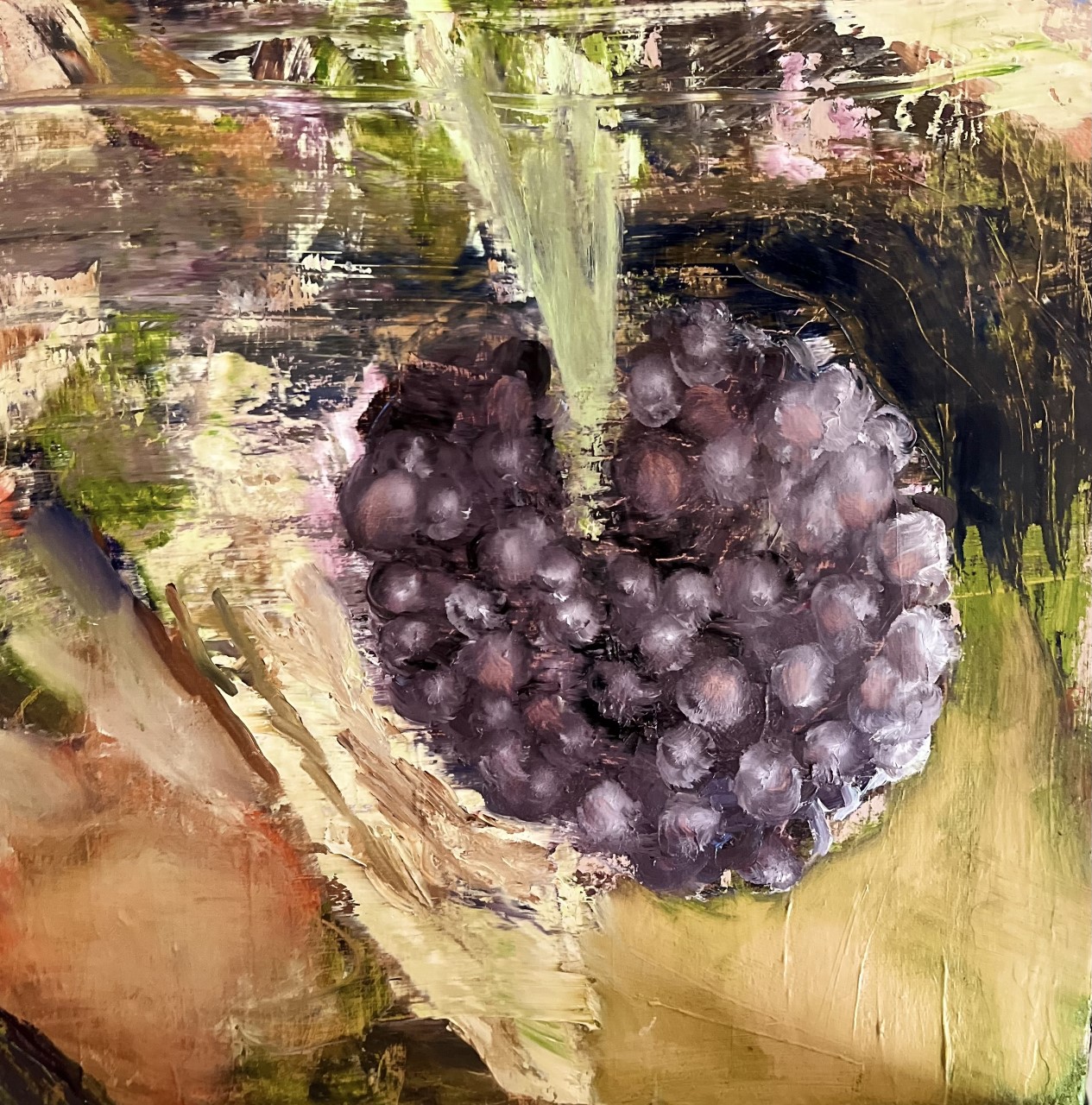
My family has planted a forest garden in coastal B.C. The trees grow hazelnuts, walnuts, cherries, apples, pears, figs, plums, apricots, and sea buckthorn.  There are blueberry, raspberry, gogi and gooseberry along with grapes, and wildflowers on a lawn of clover.

Climate change has been a challenge with freak weather and unseasonal temperatures, the drought last summer and the floods this one.

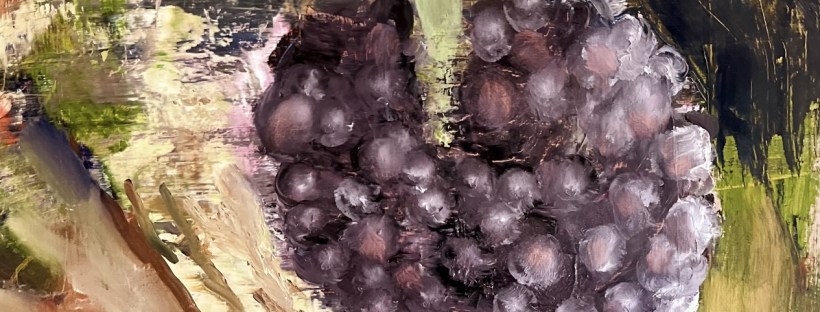
I’ve been painting the fruits that do grow.  Portraits of apples and plums, with as much attention paid to their individuality as I pay to my figure works.

Painting in a garden in a time of shifting ecologies is a celebration of resilience shadowed by knowledge.  When Dutch painters in the 17th century painted fruit, they were in contemplation of the transience of human life, firm in the conviction that the eternal seasons would continue to unfold even as the eyes looking at the painting would turn to dust.  To paint fruit now is to think about the ephemeral nature of all things, including the ecosystem. There is a qualitative difference in the sadnesses beneath the lustrous surfaces of historical and contemporary fruit paintings, with the later propelling one towards an immediate engagement with the luminous life force shimmering in the present moment.


ANN-MARIE BROWN is a Canadian artist currently working out of a studio on the far west coast of British Columbia on a thin slice of land between the forest and the ocean.

Words about Music: Powerful Music Memoirs (Part 1)

By Stephanie Gemmell

Musicians seem to be storytellers by nature, conveying complex feelings and ideas through song. Unsurprisingly, musicians and songwriters can also be talented authors, narrating their own life stories to share their experiences with their fans and other artists.

While there are countless great music memoirs, a few excellent books stand out for their artistry and candor. In no particular order, I chose to highlight 10 music memoirs for their openness, honesty, and skillful storytelling. These books also reflect their authors’ unique wisdom about music, artistry, and life, all conveyed through each artist’s distinctive voice.

In originally setting out to write about music memoirs, I was confident that I would find gems of wisdom, artistic insights, and memorably descriptive scenes in these books—and I was eager to share them with friends and other readers. But I did not anticipate how the sheer depth of inspiration and unrelenting honesty in these books would convey powerful and overarching truths about music, art, and life that greatly surpass any single individual’s life story.

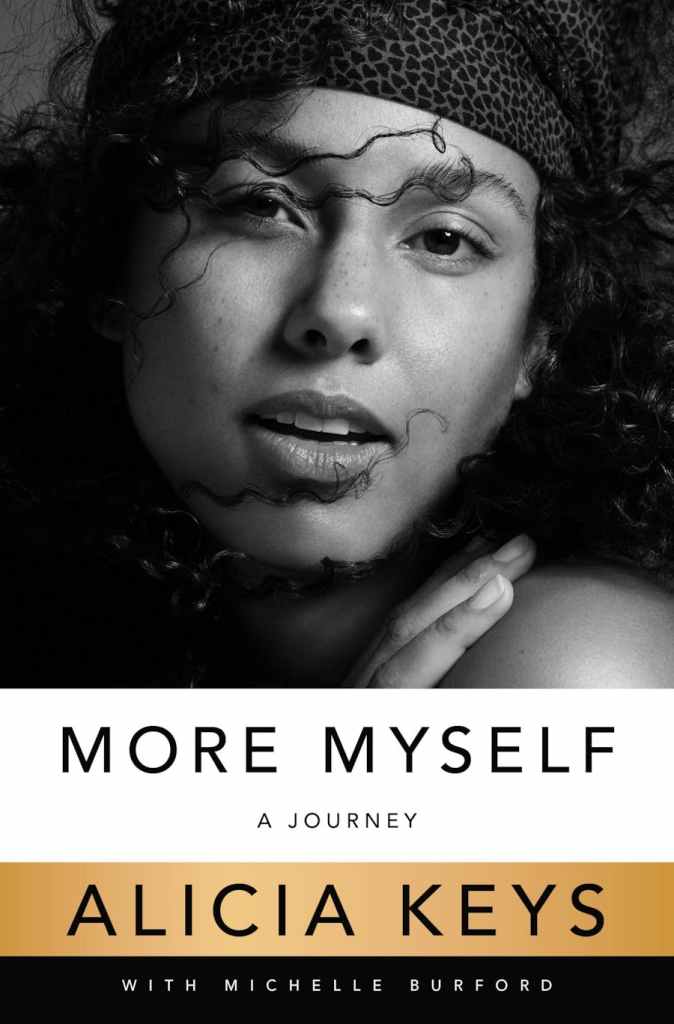
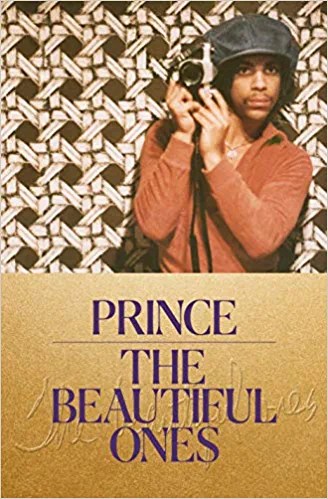
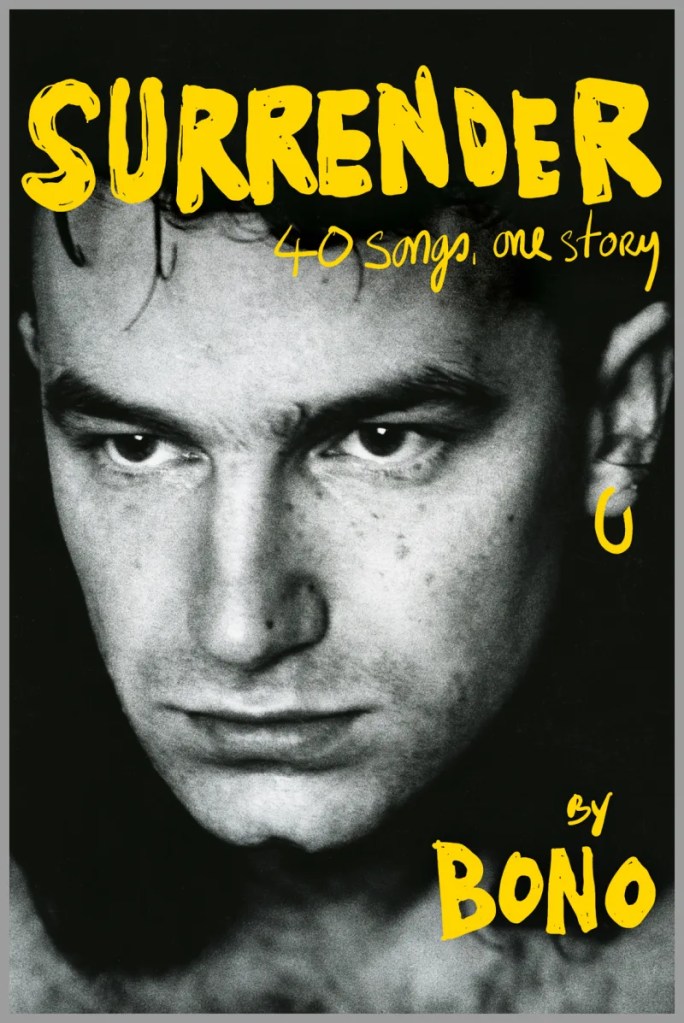
In no particular order, the first five books I selected are Sting’s Broken Music, More Myself by Alicia Keys, Not Dead Yet by Phil Collins, Prince’s The Beautiful Ones, and Bono’s recently published Surrender. In a future article, I will focus on Billy Idol’s Dancing with Myself, The Seekers by The Doors’ John Densmore, Kim Gordon’s seminal Girl in a Band, Possibilities by Herbie Hancock, and Mo’ Meta Blues by Questlove.

In their own unique ways, these books leave you with a knowledge that creating music—or creating any form of art—is an ongoing journey that coincides with the journey of your own life. For this reason, each thing we create is somehow in pursuit of what we ourselves are seeking, and each individual piece of art or music becomes a little fragment of our journey—beautiful and unfinished.

I realize that these may be lofty ideas, but I set out to write a neat little listicle on music memoirs and instead found myself thinking about life and creativity in brand new ways. I hope these books can be as impactful and empowering for you as they ended up being for me.


Broken Music by Sting

Sting’s memoir, published in 2004, benefits from the same insightful and artistic command of language that permeates his songwriting. The book begins with vividly detailed anecdotes from his childhood and effectively recounts his creative evolution as a musician as a young adult. Sting’s depictions of his earliest gigging experiences, playing jazz with more seasoned musicians, and his beginnings as a songwriter especially reflect his self-awareness and humility. Sting is also adept at descriptive writing, depicting the scenes of his life from childhood onward and offering dynamic portrayals of his relationships with friends, relatives, and collaborators. He is particularly humble and self-effacing in describing his musical ambitions as a young adult and the formation of The Police as a punk rock trio in London. Notably, Broken Music centers on Sting’s musical path and the experiences that defined his early career, rather than focusing on The Police’s major international success.

This book captures a musician’s journey—inwardly and outwardly—reflecting real doubt and uncertainty at some moments, and artistic discovery, innovation, and confidence at others. Sometimes, like Sting’s music, his writing manages to balance all of these feelings, all at once. Sting’s memoir ultimately conveys his deep and evolving love of music and its impact on his life. Broken Music is an engaging, sincere, and artful book from beginning to end, representing Sting as a singular musician and artist.

“The Police set begins at ten to eleven and is finished on the stroke of the hour. It blisters along at such a pace—no gaps between the songs, defying the audience to be critical or appreciative, as if we don’t give a fuck either way, and then we’re off before they know what’s hit them. When we burst into the dressing room we’re all laughing as if we’ve just pulled off a successful bank raid.” — Sting, describing an early gig with The Police in Wales


More Myself by Alicia Keys

Alicia Keys’ memoir, published in 2020, builds on the artistic vulnerability expressed through her songwriting style and her 2004 poetry collection Tears for Water. In a somewhat unconventional style for memoir, More Myself synthesizes Keys’ own autobiographical narratives with contributions from other individuals in her life. This structure ultimately serves the book well in terms of content, pairing Keys’ self-aware observations with commentary from her family members, mentors, and collaborators. Keys’ narrative style is direct and she uses a format similar to a braided essay to present specific, momentous anecdotes from throughout her life. 

In discussing her creative process, her internal doubts, and the development of her artistic identity, Keys’ narrative voice remains humble and approachable. Keys balances her trademark authentic tone with an unmistakably deep love of music and true reverence for the artists that inspire her. Alicia Keys’ passion for music and her gratitude for her path as an artist remains palpable from the beginning of her memoir to her last word.

“When you’ve chosen the right path for yourself, you usually know it immediately. The choice just sits right in your spirit. You’re not second-guessing your decision or thinking about turning back. You realize there are challenges ahead, but you’re not looking over your shoulder, wishing you’d gone left instead of right at the last fork in the road.”  — Alicia Keys, recalling the moment she changed labels early in her career


Not Dead Yet by Phil Collins

In his 2016 memoir, Phil Collins is blunt about the roots of his career as a drummer in London before joining Genesis as drummer. Collins synthesizes an attention to detail in recounting his memories with a casual wit that makes his narration especially welcoming, to the extent that it’s easy to forget you’re reading the memoir of a legendary artist. Collins’ internal monologue is especially vivid in describing his gradual, hesitant shift to singing following Peter Gabriel’s departure from the band. The specific anecdotes of performances, especially his early concerts as vocalist, vividly integrate Collins’ own perceptions of himself as a performer with the perceived perspective of audience members. 

One of the most powerful and unexpected turning points in the book comes as Collins bluntly details his near-death struggle with alcoholism in his 50s and the grueling path to recover. For all of his successes as a songwriter and frontman, Phil Collins still describes himself as simply “a drummer,” and he expresses his gratitude for artists who cite him as an inspirationand there are many.

“Peter, Mike and Tony’s background is a world away from mine. Our schooling, class, family—on paper, we couldn’t be farther apart. For all of early Genesis’ gigging and recording experience, they’ve been somewhat cloistered. I’ve been schooled in the rough and tumble life of a gigging performer and musician. I’ve been on the stage in London’s West End, a regular down the front at the Marquee, the drummer for an almost comically diverse array of groups, bands and combos. I have ducked and dived through swinging sixties Soho, and I have the energy, momentum and enthusiasm to prove it.” — Peter Gabriel describing his origins in becoming drummer for Genesis


The Beautiful Ones by Prince

Published posthumously in 2019, Prince’s The Beautiful Ones includes the memoir the artist had begun to write prior to his passing in 2016, along with a scrapbook of images Prince began to collect when he was nineteen, and his original treatment for Purple Rain. In his introduction to the book, editor Dan Piepenbring recounts his first interactions with Princethe artist’s assessment of the state of the music industry, his tangible hope of eradicating racism, and his excitement about writing a book that would tell his story in his own words. Piepenbring also describes the decision-making process with respect to the book’s assembly following Prince’s death, and his careful consideration of Prince’s original intent and goals for the book. 

The Beautiful Ones includes Prince’s handwritten notes for his memoir, opening with his vivid memories of his parents, his first kiss while playing “house” with his childhood friend Laura, and his appreciation for the uniqueness of his name from the time he first learned to write it in kindergarten. Prince’s narrative voice is artful yet casual, intentional yet authentically unguarded. He tells his own origin story, with ownership and wisdom. “Music is healing,” Prince writes. “Some secrets r so dark they have 2 b turned in2 song 1st b4 one can even begin 2 unpack them.”

“Many artists fall down the rabbit holes of their own imaginations & never return. There have been many who decry this as self-destruction, but 👁 prefer the term FREE WILL. Life is better lived. What path one takes is what sets us apart from the rest. Those considered ‘different’ R the ones most interesting 2 us. A vibrant imagination is where the best songs R found. Make-believe characters wearing make-believe clothes all 2gether creating memories & calling it Life.” — Prince, in his handwritten opening for The Beautiful Ones


Surrender: 40 Songs, One Story by Bono

In this much-anticipated new release, Bono explores the narrative of his life and the evolution of U2 through the lens of 40 songs written and released by the band. Surrender is one of the few books I have made the effort to purchase on its release date, and I was glad that I did. Each chapter invites you into a specific, tangible moment from the beginning. Bono’s writing throughout the book, unsurprisingly, conveys a sense of rhythm and melodic movement, offering the same quality of honest storytelling present in his songwriting. The hand-drawn sketches that accompany each chapter also offer another lens into Bono’s internal creative impetussomewhat raw, inspired from all directions, constantly in pursuit of something immaterial. Bono’s descriptions of his thoughts and dreams, even during childhood, stand out just as vividly as the scenes and interactions he depicts. The evolution and strengthening of his relationship with his wife, Ali, is a particularly powerful thread woven artfully throughout the book, as through Bono’s life.

Through each of the many narratives Bono shares—ranging from moments recording and performing with the band, to his first time meeting David Bowie, to his early experiences getting involved in the activism that continues to define his career—his words convey a sense of responsibility, an unflinching passion for his art, and immense respect for the power of music. Even at 550 pages, Surrender reflects that Bono still has more to experience and discover, and much more to write and sing. The “one story” at the core of Surrender is far from over, and Bono seems to leave us with the feeling that we are writing it with him.


“We wanted to fuse with our audience in the way no punk band had been able to. And as the singer, I had to create that fusion, to make a chemistry set of the crowd, by rubbishing the very idea they were a crowd. This was not just a nucleus of unstable atoms banging into each other; this was a gathering of sentient beings who for those few hours every night played the most important role in the drama, transporting the band and therefore themselves to some place neither had been before. Finding some moment that none of us had occupied before, or would ever again.” — Bono, describing U2’s early goals with respect to forming community with their fans through the collective experience of their concerts


STEPHANIE GEMMELL is a writer and composer currently living in Pennsylvania. Her writing has been featured in Just Place ChapbookCapitol LettersThe Ekphrastic ReviewThe Rival GW, and in the poetry anthology Falling Leaves published by Day Eight. She also attended the 2021 Glen Workshop as a poetry and songwriting fellow. She recently graduated summa cum laude from George Washington University with a BA in Religious Studies and minors in Journalism and Psychology. Her work is motivated by the unique power of art to ask meaningful questions and inspire authenticity.

Book Review: Lady Director by Joyce Chopra

by Stephanie Gemmell

John Grierson famously defined documentary filmmaking as “the creative treatment of actuality,” concisely capturing the purportedly objective aims of documentary in relationship with the artistic decision-making inherent to the filmmaking process. Nonfiction writing could be viewed in a similar vein, sharing the goal of telling a story with impartiality but also requiring the author to make countless creative choices about its presentation. In the case of memoir writing, these creative choices become infinitely more personal, making the task of writing an honest and engaging memoir a uniquely complex challenge for any artist.

Given the intrinsic similarities between documentary and memoir, it should come as no surprise that a seasoned documentary filmmaker—whose earliest film also happened to be autobiographical—would pen an excellent memoir.

Joyce Chopra’s memoir Lady Director offers powerful and personal insights into the life and creative development of a seminal documentary and feature filmmaker. Forthcoming from San Francisco’s City Lights Publishers in November, Chopra’s book is the rare type of memoir that synthesizes vivid narrative, self-awareness, and authorial humility to create a truly meaningful and impactful book.

While Lady Director could be classified as a written form of cinéma-vérité, Chopra’s storytelling also invites the reader into her memories in an intentional way. This balance between clear chronological biography and artful narrative makes this memoir a valuable artifact of nonfiction that is also an engaging read from beginning to end.


Chopra’s strength and acquired decisiveness as an artist enables her to vividly describe experiences, interactions, thoughts, and ideas, welcoming the reader into the different settings of her life. One of the early narrative strengths of Lady Director involves Chopra’s detail in recounting her life as a young woman in Boston, opening and operating Club 47 with her friend Paula. In discussing this period of her life as a young adult, Chopra is particularly frank about her self-doubts and creative insecurity, a move that quickly establishes Chopra’s approachable and inviting narrative voice. She also expertly conveys the evolution of her own artistic career aspirations in conjunction with her life and career experiences as a young woman.

Chopra sought to establish herself as a filmmaker at a time when the field was not only male-dominated, but male-exclusive. In several instances, reading the details of the professional injustices and disrespect directed at Chopra by powerful (male) collaborators at varying stages in her career (including demeaning interactions with such figures as Harvey Weinstein) will likely provoke readers’ frustration and indignation on Chopra’s behalf. Notably, Chopra is candid in describing her emotions in response to such challenging experiences in both her professional life as well as her personal life, accentuating her credibility as a memoirist. But even in the face of denigration and outright sexism, Chopra repeatedly refused to be outdone and persisted in establishing herself as a talented filmmaker.

At its core, Lady Director is a sincere book about a woman creating her own path in the world, building her artistic and professional trajectory in an industry undeniably hostile to her presence.

Joyce Chopra’s narratives in Lady Director struck me much more personally than I had expected, particularly as she describes her initial projects as a young filmmaker and the increasing intensity of challenges she faced even while building momentum in her career and establishing her professional reputation. For me, as a woman working toward a creative career in a creative industry with less than 3 percent of content produced by women, the experience of reading Lady Director was especially impactful.

Chopra directly references being asked by young women about how she maintained her determination and resilience despite the hostility she faced throughout her career, especially given a lack of female representation or role models when Chopra entered the film industry. Not only does this memoir provide valuable insights into Chopra’s own motivation and creative tenacity, but it demonstrates—without platitudes or vague cliches—how an individual can envision and fulfill her own goals.

For these reasons, Lady Director will likely hold a unique value for young individuals setting out to establish themselves as professionals in industries that may be less than inviting. Moreover, this memoir should assume its rightful place among core texts in film studies, based on the significant insights Chopra’s perspective provides regarding the evolution of the film industry and documentary filmmaking in particular.

While Joyce Chopra’s humility remains palpable throughout her narration, there is no denying that this memoir tells the story of a trailblazer. Chopra’s lived experiences could easily evoke notions of “being what you want to see in the world” or becoming your own role model, and elements of these ideas do naturally emanate from many of Chopra’s anecdotes.

However, the specificity and candor of Chopra’s writing enables her to illustrate that creating a new path for yourself, little by little, is not an easy or painless experience. It demands grit, determination, resilience, and boldness. And it requires a belief—even a faint belief—that whatever dream you’re pursuing is achievable. Joyce Chopra would probably tell you that it is.


STEPHANIE GEMMELL is a writer and composer currently living in Pennsylvania. Her writing has been featured in Just Place ChapbookCapitol LettersThe Ekphrastic ReviewThe Rival GW, and in the poetry anthology Falling Leaves published by Day Eight. She also attended the 2021 Glen Workshop as a poetry and songwriting fellow. She recently graduated summa cum laude from George Washington University with a BA in Religious Studies and minors in Journalism and Psychology. Her work is motivated by the unique power of art to ask meaningful questions and inspire authenticity.

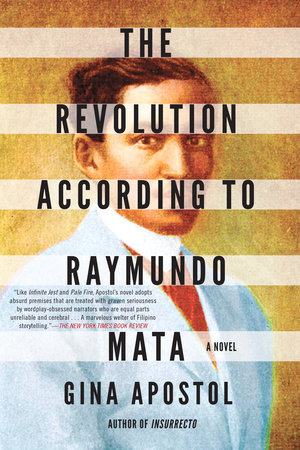
Lives Reimagined in Fiction: On The Revolution According to Raymundo Mata by Gina Apostol

by Hazel Ann Cesa

First published in 2009 and a recipient of the Philippine National Book Award, Gina Apostol’s The Revolution According to Raymundo Mata is at once an exploration of the Philippines’ revolutionary past, an evaluation of the challenges of translation and interpretation throughout the process of meaning-making, and an inquiry into the role of the intellectual1 in unveiling the politics of historical truth by countering the “authoritarian version of truth” with an “egalitarian version of truth.”2 In this story about a story, it is clear from the get-go that the author writes for the Filipino readers first, everyone else second. Gina Apostol masterfully entangles and unravels the skein of Philippine colonial history, presenting its messiness in all of its complexity. 


Bold, utterly chaotic, and at times hilarious, Apostol’s novel takes the form of a fictionalized memoir by a certain Raymundo Mata, a night-blind bookworm, freedom fighter, and a fan of Jose Rizal. Providing snippets of his childhood and accounts of his participation in the revolution, Raymundo Mata’s memoir consists of forty-six diary entries, which are all muddled by a present-day foreword, footnotes and an afterword from three feuding intellectuals: a pseudonymous translator, an American psychoanalyst critic, and a nationalist editor.

There is a palpable violence and madness to Apostol’s hyper metafiction—that of the Philippine revolution and language. Our translator extraordinaire who goes by the pseudonym Mimi C. Magsalin (magsalin means “to translate” in English), the person responsible for the translation of Raymundo’s diary entries, comments how difficult it was to calmly translate the memoir and declares it “linguistically deranged.” For even though Raymundo’s first language is a curious variant of Tagalog, his manuscript has scatterings of Spanish, Latin, some pidgin, and other major Philippine languages such as Waray, Cebuano, and Ilocano. Only the last diary entry is completely written in English. The first entry is nothing but gibberish, which Apostol’s fictional erudite scholars can only presume as some kind of Katipunan code, a secret form of communication of the Katipuneros.3

Dr Diwata Drake, an American psychoanalyst critic with Filipino roots from her mother’s side, writes an addendum and describes Mata’s manuscript as something filled with “the misconstructions of the ego and the malapropisms of time” and “classic psychopathologies of the tongue (typical of the Filipino, who has an irritating penchant for puns).” For Diwata Drake, Mata’s diary is also replete with suggestive instances of “frustration, aggressivity, regression—the triad of resistances that mark revolutionary pathology.”

This madness in Raymundo’s language is symptomatic of the oppression and violence of the war against the Spaniards in which he participated. It is metaphorical madness: as the ink bled on the sheets of Raymundo’s notebook, the blood of his fellow revolutionaries stained their birth soil. The Spanish had guns while the natives4 had slingshots and slippers. As for Mata’s revolutionary circle, the Katipuneros wielded a bolo5, the literal weapon and symbol of the fight for independence. In one of his diary entries penned at the start of the revolution, Mata reveals he witnessed the rather tragic end of Matandang Leon, the first katipunero whom he saw fall in battle.

Completing the fiercely quarrelsome modern-day intellectual trio in Apostol’s novel is the nationalist editor, Estrella Espejo. In the section where she writes her notes on Raymundo’s patrimony, Estrella mentions that Raymundo Mata was captured by the Americans and was in Bilibid jail for much of his remaining days. Here, Gina Apostol hints at the unreliability of our memoirist. In entry #42, Raymundo writes down the battle of Balara as the first of the many battles of the Philippine revolution. Estrella’s footnote disputes this, citing that various commentators of our history have already noted this error. It is Pasong Tamo that is more likely the first battle, not what Raymundo has written in his diary entry. Estrella goes on to say: “Why Raymundo persists in this error is obvious: he was losing his mind.” But in the editor’s preface, Estrella also writes of Raymundo: “That the storyteller is, I must admit, flawed, maybe mad, does not diminish my faith in his story. In fact, his madness amplifies its truth.”


Apostol touches on the veracity of memory and the truthfulness of historical records over personal narratives, a recurring theme in her work. The process of remembering is a dominant topic in her more straightforward novel, The Gun Dealer’s Daughter, and in Revolution, this becomes evident throughout the fracturing narrative as Mata’s accounts are questioned, corrected, and interpreted by the three academics. As such, Mata’s fictionalized memoir serves as a montage not only of his life as reimagined in fiction but also that of the whole country. Through the linguistic interactions of Mimi, Diwata, and Estrella in the margins of the text, the reader sees how Mata’s memoir becomes a portrayal of the ways in which individuals and groups remember their past on the basis of recollected memories, both personal and collective.


The push and pull between external forces, in this case the relentless annotations of Apostol’s intellectual trio, add to the maddening cacophony of voices remembering the past and the stories about stories being told. One voice writes and records, another one translates, while another one edits, and yet another one opines. This goes on and on as Apostol, with her asynchronous storytelling, takes the reader through the various threads in her novel.

In the footnotes of the three feuding intellectuals, Apostol leaves clues on how to approach, and what to expect from, the text: “[K]nowledge occurs by distortion—for a mirror is never truth, and yet for a while it relieves us of the burden of not knowing,” and “[T]he storyteller at one point indulges in infinite recapitulation to avoid decapitulation, a literal instalment.” The narrative spawns these infinities in the translation, interpretation, and retelling of Mata’s telling.

Where does the modern Filipino reader lie in this vast labyrinth? How does one reexamine the relationship between the past and the present and the manifold functions of cultural memories for the constitution of one’s identity? Gina Apostol does not provide clear-cut answers. Instead, through Raymundo’s accounts and the dizzying annotations of the intellectual trio, she shows that the rendering of cultural memories tells a lot more about the rememberer’s present than about actual past events. Their unquestioning acceptance or vehement denial is proof of the role of memory and the social dimension of dialectical truth6.

This layer to the novel leaves the present-day reader with a simultaneous sense of hope and dread. In the era of post-truth where historical revisionism runs deep in Philippine society, it is a revolutionary act to read Apostol’s novel. The victims of our country’s bloody history (whether they be 19th-century revolutionaries rebelling against colonial forces or the Desaparecidos of the Martial Law Era7) may remain just footnotes, their memories suspended over time, their stories negated by fascist narratives. In the case of Apostol’s protagonist, a freedom fighter once a footnote in history but granted his own footnoted memoir through historical fiction, there’s barely extant evidence in the manner of physical details to allow an effective tracing of his life. But we later see that dates and localizations are largely insignificant in the discourse of pain and violence. To borrow Diwata Drake’s words, “I have no wish to deny Raymundo’s story.”

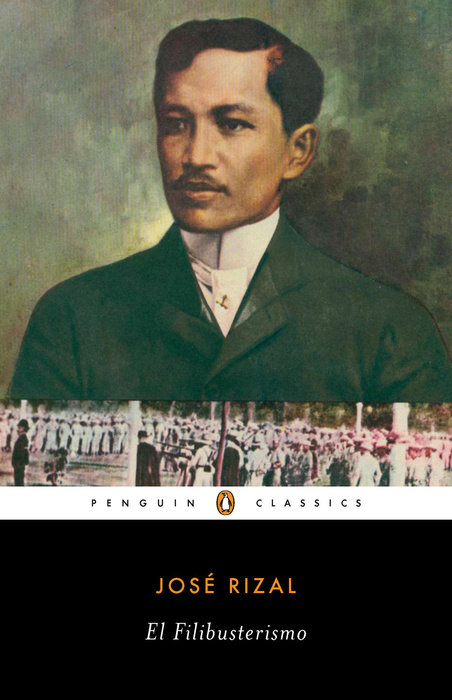
Apostol’s novel does not deny historical truthfulness. It does, however, question historical accuracy. This is evident in the blending of the fictional with the factual. Raymundo Mata, with his initiation into the secret society, meets the founder of the Katipunan—Andres Bonifacio. In the teaching of our history, Andres has been inaccurately portrayed as the Great Plebeian, when in truth, he came from a middle-class family. Mata’s memoir depicts him as the well-read person that he actually was, a reader of novels like Victor Hugo’s Les Miserables and Jose Rizal’s Noli Me Tangere and El Filibusterismo. The annotations of the nationalist editor, Estrella Espejo, prove especially helpful, filling in the gaps in our history where Andres Bonifacio and other key players of the revolution are concerned.


One rather intriguing twist is a comparison between Mata’s fictionalized memoir and Dr Pio Valenzuela’s actual (and very controversial) autobiography. When news of poet-ophthalmologist Jose Rizal’s exile in Dapitan broke out, Andres Bonifacio commissioned Dr Valenzuela to seek Rizal’s advice. Would Rizal give the green light to rise against the Spanish authorities?8 As Raymundo is half-blind, Andres deemed him fit to accompany Pio to Dapitan. Any contact with the exiled Rizal would have been suspicious, so it was only fitting that Mata be introduced as Valenzuela’s patient and that their trip to Dapitan was only made in pursuit of Rizal’s medical opinion.

Our historians have long since noted the inconsistencies in Valenzuela’s version of events. And Apostol blends fiction with history to demonstrate this. In Raymundo’s thirty-first journal entry, we read about how Valenzuela travels under an assumed name, Procopio Bonifacio, and was accompanied by our night-blind bookworm, Raymundo Mata himself. Editor Estrella adds a footnote on the discrepancy in the two versions of Valenzuela’s memoirs. The first one states that Valenzuela was accompanied by Raymundo Mata and Rufino Magos, both residents of Binakayan, Kawit, Cavite. A later edition specifies that Valenzuela was with Mata the blind man and Magos as Mata’s young aide. Estrella notes: “The truth of Raymundo’s memoirs asserts Rufino Mago [not Magos] was an old man while he was the young patient. In addition, while they were both from Binakayan, Kawit, they were residents at the time of Manila: further proof of Valenzuela’s notoriously unreliable testimony.” In writing Raymundo’s fictionalized memoir, Apostol offers a counter-narrative where Valenzuela has written down misleading or inconsistent information.

In the novel’s last chapter titled “Epitaph”, Diwata Drake states that Raymundo’s memoir “seems cousin to other vibrant forgeries and textual ambiguities that have plagued this fervid democracy’s highly imaginative history.” A neo-Freudian psychoanalyst critic right through to the end, she maintains that the textual deceptions in the annals of our history “underline without a doubt the eternal trauma of the Philippines: like everyone else, it is a contingent being, born of words.”

The nationalist editor, Estrella Espejo, writes that “the Philippines may be the only country whose war of independence began with a novel (and a first novel at that)—Rizal’s Noli Me Tangere (‘Touch-Me-Not’). Our notion of freedom began with fiction, which may explain why it remains an illusion.” Before that statement, she writes: “The American revolution had farmers and dentists; the French revolution had a mob of lawyers. Our prime mover was a poet.”

A longstanding debate is whether the national hero Jose Rizal was in favour of the revolution. It is said that Rizal believed a premature revolution would only set the country to failure, the blood of freedom fighters unnecessarily shed, their deaths unwarranted. There’s also the inconsistency in Pio Valenzuela’s memoirs, which simultaneously incriminates and vindicates Jose Rizal. For Valenzuela was never clear on what transpired during his meeting with Rizal in Dapitan. Gina Apostol’s gifts of insight enabled her to humanize Rizal, who has long been idealized by radical propagandists and the general public alike.

Before Raymundo Mata joined Pio Valenzuela to meet the exiled hero, he too put Rizal on a pedestal. We read in the thirtieth entry in his fictionalized memoir: “Despite my bravado, this is what I knew: I would be terrified to speak to the man. I was glad that I had not brought my copy of the Noli—no need to ask him then about an autograph and risk looking like an idiot.”

Apostol sets enough tension in the scene where Mata eavesdrops on the conversation between Pio Valenzuela and Jose Rizal. Raymundo notes his admiration towards Pio, fulfilling his mission as the Supremo’s secret messenger to seek Rizal’s signature, the sign that the hero has given the go-ahead. As things stand, there is only one right answer for the Katipunan. Raymundo then shifts his focus to Rizal, noting that the hero knew damned well what they were up to. Here, we read a moving epiphany from Mata: 

“It’s true. His bones did not matter. We wanted of him what was air and nothing, such as his name, a ghost louse-scratch. As for his novels, his words? Not futile but culpable. Blameless, but still: bloodstained. This pained him. I was shocked. This is what I got for my crime, arrant listener. Struck dumb: for this must be our Medusa, worse than a hero’s death was a hero’s truth.”

Through Mata’s eyes, we see Rizal in his humanity—a gifted polyglot, polymath, and patriot, who despite his knowledge of medicine, mathematics, and engineering, is stuck in a bind. To agree to a revolution or to warn against a premature one? In humanizing the national hero, Apostol provides a critique of the nation and nationalism.


And like a rabid member of the Rizalist cult, Raymundo Mata steals the manuscript of Jose Rizal’s third novel, Makamisa (a mix of Tagalog and Spanish, ‘after the mass’ in English). Apostol cleverly crafts the last entry in Raymundo Mata’s memoir as passages from the stolen manuscript. In the words of Diwata Drake, Mata’s conclusive memoir entry, written completely in English, interlaces with Rizal’s third novel. Our pseudonymous translator Mimi Magsalin adds that there is a resemblance between Rizal’s Spanish and Mata’s English. The novel’s anti-colonial sentiment shines here; the interlacing of Rizal’s Spanish and Mata’s English is symbolic of their motherland’s long colonial history. First, under the Spanish and later, the Americans9.

Gina Apostol takes the revolutionary fervour and psyche-searching of a historical novel and moulds it into a kaleidoscopic work of reflecting mirrors and looping intrigues. As per Raymundo Mata’s thirty-sixth entry, written in English and unpunctuated: “Like a novel revolution is never finished.” The statement could be interpreted as a subject-puzzle, as Mimi Magsalin suggests in her footnotes: “Like a novel revolution, [something] is never finished.” Another interpretation is conventional, using splice, “Like a novel, revolution is never finished.” Or perhaps it is none of these or all of these at once. In the end, the reader is left with an awareness that there is something beyond the intellectual exercise of writing, translating, and reading: something inexplicable, unfathomable, but still somehow understood.


Footnotes

1 Filipino poet, fiction writer and playwright Eric Gamalinda writes this blurb for Gina Apostol’s novel: “The role of the intellectual, according to Edward Said, is to present alternative narratives on history than those provided by ‘combatants’ who claim official entitlement to official memory and national identity–who propagate ‘heroic anthems sung in order to sweep all before them.’ In this fearlessly intellectual novel, Gina Apostol takes on the keepers of official memory and creates a new, atonal anthem that defies single ownership and, in fact, can only be performed by the many–by multiple voices in multiple readings. We may never look at ourselves and our history the same way again.”

Intellectuals, according to Antonio Gramsci, fall into two groups. Firstly, there are the “traditional” professional intellectuals, literary, scientific, and so on. In the second place are the “organic” intellectuals, distinguished less by their profession but are nevertheless the thinking and organizing element of a particular social class. For Gramsci, the intellectual has the responsibility of keeping society together and in harmony, creating a new consciousness for a social strata and bringing meaning and understanding to one’s role in life and society.

Gina Apostol’s novel asks the question: who are the intellectuals, what are their social functions, and are they even relevant in the modern world?

2 From Edward Said’s Representations of the Intellectual. Drawing upon Gramsci’s views of the roles of intellectuals in society, Said writes that the intellectual should critique power and authoritarianism of all kinds at any cost to ensure social stability. The critical concern for the intellectual, according to Said, is the search for the Truth, which would counter oppressive power structures and fascist narratives.

3 The members of the revolutionary secret society organized by the Supremo Andres Bonifacio, they launched the Filipino independence struggle in 1896.

4 Spanish colonists called the natives of the Philippines indios. Interestingly, the term Filipino did not exist then as we know it today. It was once synonymous with Insulares, the term used to call Spaniards born in the Philippine islands.In one of Magsalin’s notes on translation, we read: “Spanish caste terms are particularly troubling for a translator of nineteenth-century Filipino society.” Magsalin asks what a translator should do when met with the term indio when translating colonial era texts. Using such a denotative term would mean taking on the Spanish prejudice but using Filipino would mean translating the text inaccurately. She writes, “I took the path of least resistance and just footnoted.”

5 Only using traditional pre-colonial single-edged knives, Filipino freedom fighters had little chance of victory against the Spaniards armed with guns and cannons.

6  On Hegelian dialectics. Hegel postulates that Truth is correspondence. We uncover Truth in the idea of others, questioning them and revealing their myriad contradictions and convolutions.

7  During the Marcos dictatorship, over 1,600 people disappeared. None of them were ever found. The fate of the disappeared remains a question mark in our history.

8 Although Jose Rizal was not a member of the revolutionary secret society, the Katipunan revered him for his revolutionary novels and sought his advice on whether or not they should start a revolution.

Rizal thought otherwise as he believed the freedom fighters needed more sophisticated weapons and a more organized strategy to mobilize the masses into rising up against Spanish authority.

But in the end, a premature revolution broke out when the Spaniards learned about the secret rebel society.

As for Rizal, he was tried and convicted of sedition. The Spanish authorities believed his novels incited indios to rebel against them.

9 The Spanish-American war ended with the Treaty of Paris. Spain sold the Philippines to America for twenty million dollars.


Born and raised in the Philippines, HAZEL ANN fell in love with reading and writing at a young age and went on to pursue Literature as her area of study in university. Her writings have appeared in national and regional publications in the Philippines, including a now-defunct multilingual folio of performance poetry Bukambibig and an anthology project telling the struggles and joys of being a young Filipina, Inday-Inday. Her review of Gina Apostol’s The Revolution According to Raymundo Mata is her first work to be featured in an international literary magazine. She shares mini-book reviews and literary musings on her bookstagram, @literary.hazelnut.

The Things We Know: Finding Comfort and Fire in Disability Knowledge During a Global Pandemic

BY CHARLOTT SCHÖNWETTER

“The virus is not so bad, it is only really concerning for the old or people with pre-existing conditions,” is a sentence I heard loud and clear too often to count at the beginning of a still ongoing pandemic now spanning more than two and a half years. I have heard it in different iterations ever since. Disabled and chronically ill people have been forced into prolonged isolation as covid continues to rage. In some cases, even that is the privileged form of dealing with the pandemic; others do not have the option.  Just like they have been warning since early 2020, disabled people have been either “forgotten” or easily dismissed. Eugenicist logic is voiced by politicians and media without sustained and visible pushback. Disabled people did realize early on that this pandemic has the potential to become a mass disabling event if careful measures were not put into place. But as is so often the case, their analyses were not taken seriously.

In January 2019, the Black queer disability activist, writer, actress and model Imani Barbarin created the hashtag #ThingsDisabledPeopleKnow on Twitter. As a direct response to critiques on Barbarin’s take on disability representation in Hollywood, but also in general to the constant dismissal and ignorance of knowledge disabled people hold, disabled people shared their experiences and nuggets of knowledge under this hashtag. There is so much disabled people, especially those living at the cross-section of several marginalisations, know. This knowledge—which, of course, is also shaped by different experiences depending on the kind of disability or chronic illness the person lives with, if the person has moved through this world disabled right from birth or acquires it later in life and other factors—might include an on-point analysis of societal structures which add to people being disabled, nuanced critiques of capitalism but also information on how to keep things sanitized as well as possible.  

In the midst of the daily onslaught of ableism provided by people negating Covid, I found myself drawn to books written by disabled and chronically ill writers, especially non-fiction that engaged with our possibilities to live and to create lives worthy for all. I was hungry for the wisdom, humour, poetic phrases and biting commentary of fellow chronically ill and disabled people to counter a world in which our very right to existence is daily debated. I longed to see disability and chronic illness as a well of possibility, a lens which enables inclusive thinking.


The first time I felt truly seen in my experiences of pain, was when I read Sonia Huber’s essay collection, Pain Woman Takes Your Keys, in 2017. One of the essays is titled “Welcome to the Kingdom of the Sick” and I felt that embrace while I leafed through the pages. In the book, Huber writes about her experiences as a white woman with chronic illness and pain, looks at the (US) health system, analyses common discourses on health/ illness, and asks what pain actually is/ means/ does. This might sound dire but this book made me full-on belly-laugh, especially while reading Huber’s take on the pain scale. Even if you are not chronically ill/ disabled, you might have been asked by a doctor to judge your pain on a scale from 1 to 10. And while other more complex and accurate pain scales do exist, this is still the most common one employed in a medical setting. 

I have my own devastating experience with this scale as I was asked to name a number a few years back in an ambulance on the way to an ER after not one, but two trains were stalled as the conductor—seeing the amount of pain I was in—did not feel well leaving me at the train station without knowing that the ambulance had arrived. In the ambulance, I named a fairly high number for the pain I had just experienced though I already felt better. The ambulance driver ridiculed me and replied that this number was only appropriate for a woman if she was giving birth. Without unpacking the gendered (and surely cis-normative) assumptions, the full irony is that when I was finally diagnosed a few months and many ER visits later, I found out that a lot of people who had the same illness and had given birth compared the pain levels and judged birth to be less painful. But even if taken seriously, a privilege many chronically ill and disabled people—especially multiply marginalized ones—never have, one sole reply to the pain scale as a single data point seems so utterly useless. Huber’s tongue-in-cheek “alternative pain scale” instead is practical, relatable, and more importantly, funny. Her steps include: “4. Couch. All I want is my couch and Netflix”, “8. Do you still love me? Someone tell me they love me because I worry you hate me when I am in pain. Am I irritating? Is it hard to love a near-invalid?”, “13. I can’t read. The sentences are too hard. Remember when books?” and “20. Am I going to puke? Would I feel better if I puked?”.

The tone within the collection changes from lyrical to outright snarky, the form from essay to open letters to lists. The writing and stylistic choices themselves are an echo of living in constant pain. It is not just the content but the form as well which changes, adapts, and makes room for new approaches. A lot of the texts are fairly short. Some of the texts do not have long paragraphs but are written in a sort of poetic staccato: sentence, sentence, sentence. This way of writing reminds me of how my mind works under the stress of pain and the accompanying brain fog. It takes a lot to even formulate one coherent thought in one sentence as the concentration span is often incredibly short. Another lesson here: The specifics of your disability/ chronic illness does not only affect your perspective on things but also the ways you will be able to convey the knowledge you have.


I will admit that it is not always easy to truly embrace such lessons. While I nod reading and agree with what feels like my entire being, there is a lifetime of ableism lying like heavy sediment on all my muscles. It’s difficult to shake that off. It’s hard to divorce oneself from societal values and expectations around health, productivity, and what makes a good life. Eli Clare takes the metaphor of a mountain and runs (stumbles, moves carefully?) with it in their 1999 essay collection, Exile and Pride. Disability, Queerness, and Liberation. They ask how many marginalized people have tried to get up the mountain and how many marginalized people measure their lives assessing how close they get to ascend the mountain. Clare writes: “We’ve hit our heads on glass ceilings, tried to climb the class ladder, lost fights against assimilation, scrambled toward that phantom called normality.” They go on to explain that all our lives we are told the summit is worth it and the only reason for us not making it is that we are lacking in one way or another.

But the thing is, this mountain and its paths up were never meant to enable everyone who wishes to make the journey: the paths are not accessible for wheelchairs, the signs are only ever in one language, the necessary gear is too expensive for many, and the knowledge of how to use the gear is not widely shared. But even knowing all of this, it is hard to not want to even try for capitalism also tells us that if we don’t even attempt to achieve the arbitrarily set goals in this society, we are losers. 

Reading Clare’s beautiful descriptions of this struggle helped me partially reassess my priorities. During the pandemic, I found myself sicker than I had ever been before. When I was diagnosed, my body was ready to shut down. I was told that I could fall into a coma at any given point. I was given the choice that either the specialist doctor in whose office I sat would call an ambulance and send me to the hospital or I could go home to monitor my situation and come to the doctor’s office every day in the mornings for check-ups. I chose the latter and was told that if I were just five minutes late, they would call an ambulance to my home as they would suspect that I am in a coma or dead. 

In 2019, I would have chosen the safety of the hospital without a doubt but in February 2021, I was afraid I might contract Covid in the hospital. On top of everything, that would be the last straw. I was also afraid of not being able to keep in touch with anyone. I of course didn’t even have a phone charger on me. As you read these words on your screen, you will have already rightfully concluded that in the end, I made it through. I did not die and I also did not fall into a coma. But even after this harrowing experience, for a couple months more, I tried to run up that mountain. 

I would like to say that I returned again to Clare’s words immediately—or similar words by other fantastic disabled writers—let them speak to me, and found the strength to do the necessary cuts in my life. But even if all this knowledge is out there and we can consume it, sometimes it still needs therapy, weeks of crying, and a full breakdown in the middle of the night to not only intellectually get the message but actually feel it and act on it accordingly. A few weeks after I committed to a very difficult decision in order to make my life more livable, I fell ill with a rare, but often curable, disease on top of the chronic illnesses and issues I already carry. Now, one year later, I still wait to hear the words: “You are healed from that disease.”


The first book I read about disability which also touched upon the Covid pandemic was Shayda Kafai’s Crip Kinship: The Disability Justice & Art Activism of Sins Invalid. As the title shows, this is not a book about the pandemic as such, but how could you write a book within the pandemic about disability justice and not refer to the ongoing onslaught on disabled people? Sins Valid, founded in 2005, is a performance project rooted in Disability Justice and centers, in particular, disabled BIPOC and LGBTQ artists. In Crip Kinship, Kafai documents the history and praxis of Sins Invalid and analyses how the project tackles or relates to topics such as community, storytelling and art-making, education, the titular crip kinship, sex and pleasure, beauty, and manifesting futures. The book is an incredible source detailing not only the work of Sins Invalid but it also deepens one’s understanding of Disability Justice as a concept and as praxis. 

Kafai’s words deeply resonated with me when she describes how living through this pandemic, the climate catastrophe, and just the day-to-day of this world has affected her in the past few years. She writes: “I used to have expectations for humans that I don’t anymore. It’s sobering to experience a pandemic and see how difficult change is for people. It’s sobering to see how much pain the ocean can be in and how few fucks humans can give. It’s painfully sobering. I’ve had to do some serious expectation management of our species. You can only get heartbroken so many times before you recognize the nature of the beast.” I have read this paragraph so many times. It has fueled my anger but it has also soothed something in me. To see a person outside of myself give voice to these ideas actually ignited brief sparks of euphoria as in the middle of the often isolating experience of living during Covid, I felt deeply connected to others who are experiencing the same things as me.

As a result, Crip Kinship is not a sad book but a hopeful one. Shayda Kafai celebrates the knowledge production and inventive praxes of disabled, chronically ill and Mad people. She refers to the archives they carry and the intergenerational memory banks which exist, the stories which are told and retold and the effect this can have, especially when the perspectives of “radical disabled, queer of color contemporaries, elders, and ancestors” are centered. This knowledge could enable us to dissect white supremacy in all its forms and layers for colonialism, capitalism, racism, ableism, hatred towards trans and queer people and other forms of suppression are interlinked in their roots and effects. Kafai sees disabled people crafting themselves new routes to follow, the routes which will hopefully show us all how to circumnavigate the metaphorical mountain once and for all.

Disability knowledge–or whatever term you might find for it–is so rich but, thanks to ableism, it is all too often disregarded. Disability knowledge is about how we observe the world, how we understand and make sense of the world, how we move through the world, and how we make our own existence possible. Disability knowledge spans from vast and complex theories to the exchange of information on the nitty-gritty of navigating everyday life. One writer, artist and activist who exemplifies this is Leah Lakshmi Piepzna‑Samarasinha and during the last two years I found myself re-reading two of her books I had at hand: Care Work: Dreaming Disability Justice (2018) and Tonguebreaker: Poems and Performance Texts (2019). 


In the former, Piepzna-Samarasinha writes about the history of disability justice and their justified fear of this movement being co-opted, about rethinking care and access, suicidal ideation, new models of survivorhood, so called call-out culture, and making space for disabled/ chronically ill elders. Again centering the experiences and knowledge of disabled/ sick/ Mad QTPoC, especially femmes, Piepzna-Samarasinha documents activist history (which is (made to be) forgotten or over-written), offers practical tips (for example in her essay “Chronically Ill Touring Artist Pro Tipps”), and discusses conceptual work like “care webs”, which describe ideas of collective care outside the medical industrial complex. The content and context of creation is also reflected in the different text forms: there are essays, lists, and conversations with other artists and activists. 

Tonguebreaker takes up a lot of similar themes but sees them reflected in poetry and other kinds of performance texts. The variety of forms Piepzna-Samarasinha employs throughout her works offer access points for different kinds of people but it also might speak to different parts of one and the same person. The texts help me to think through specific problems but also lead me to my emotions. In Tonguebreaker, they describe disability as “adaptive, interconnected, tenacious, voracious, slutty, silent, raging, life giving”. It is this contradictory truth which many abled people seem not to grasp at all but which is also often difficult for disabled and chronically ill people to access as we too have to wade through ableist thoughts and teachings. Still, for us to be able to think about disability in such a way is a lifeline.

This essay was due months ago, and then again a month ago, and then again yesterday. In my early twenties, I prided myself on making deadlines work, on being reliable, and pushing through. I still often make plans as if my body with all its realities wasn’t mine to handle. But in the last month, I had to suppress my immune system to treat one illness (a special joy in an ongoing pandemic which many treat as if it’s over) and the domino effects of medication led to me having to inject myself four times a day for a totally different illness. I have been struggling with extreme fatigue, not making it through a day without sleeping. I have been constantly in heightened pain. There have been changes in medication again and again. There are new tests scheduled.  This is draining.

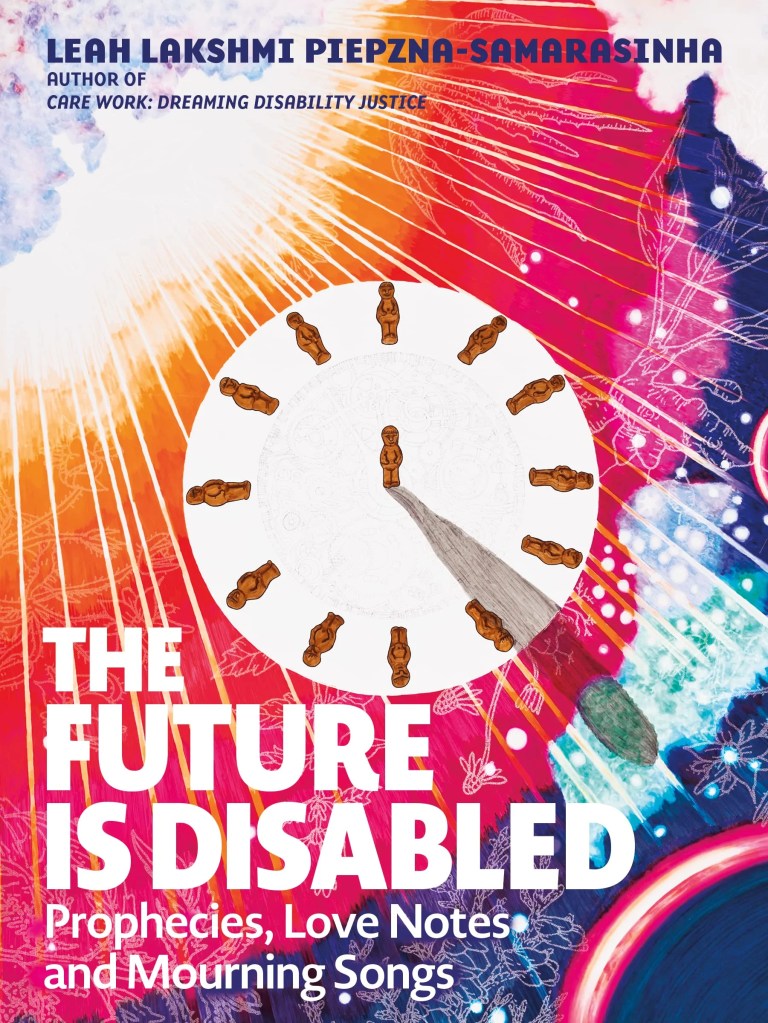
Living with chronic illnesses and disabilities often means to balance feelings of “more of the same” and “wow, not another drastic change”. It means ongoing adaptation. It means grieving a version of yourself which you will never be (again)–often not only once, but again and again and again. Dealing with it in the middle of a global pandemic often is  more heartbreaking than usual as everything we know to be true about our ableist societies seems even more acute, dangerous, and damning. And while books are not the only source to disabled knowledge–and books and longer written texts are not accessible for everyone—they are one important source. Picking up non-fiction books by disabled and chronically ill authors allows us to feel connected, allows us to dream up better futures and to find some tools which help to manifest such a future. In October, Leah Lakshmi Piepzna‑Samarasinha’s latest book will be published. It is aptly titled The Future Is Disabled: Prophecies, Love Notes and Mourning Songs and I, for one, cannot wait to take another step towards a new world which includes us all.


When CHARLOTT SCHÖNWETTER was ill as a child, her parents always gifted her reading material. Now as a chronically ill/ disabled adult she feels she always has the perfect excuse to get herself new books. Her writing on pop culture and literature has been published mostly in German language publications such as an.schläge, ak analyse&kritik and WASD – Bookazine für Gameskultur. In English, she shares her thoughts on books, culture, and politics regularly on Instagram (@half_book_and_co) and less frequently but more in depth in her literary newsletter Have You Read…? (https://tinyletter.com/haveyouread).

Madness and the Inadequacy of Language in Swadesh Deepak’s ‘I Have Not Seen Mandu’

by Abheet Srivastav

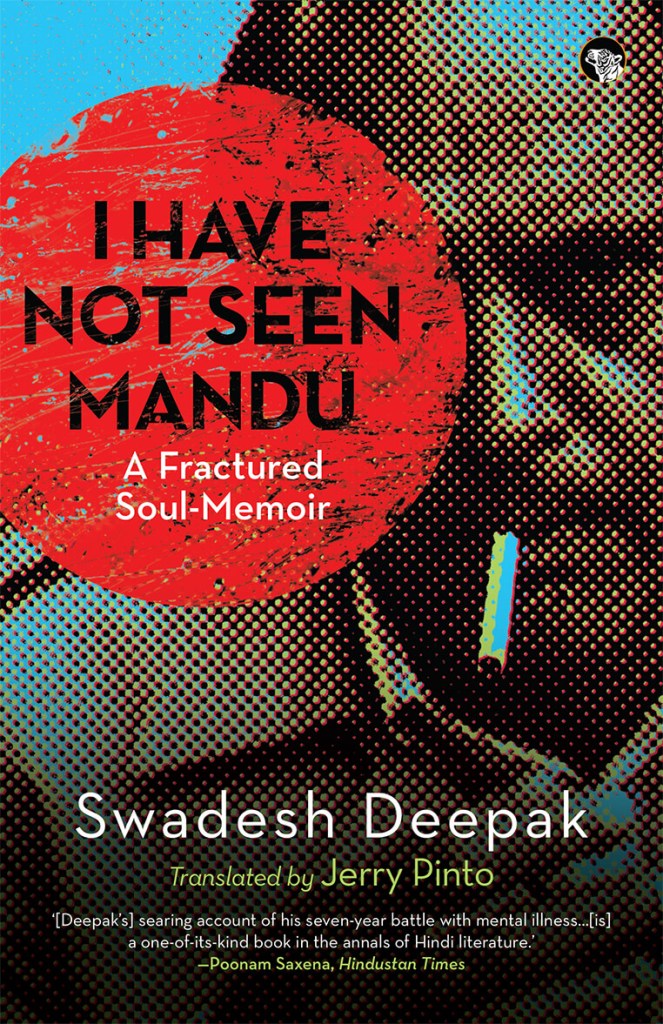
‘I Have Not Seen Mandu: A Fractured Soul-Memoir’ by Swadesh Deepak, trans. Jerry Pinto (Speaking Tiger Books, 2021)

“The rest is silence.”
-William Shakespeare

In the beginning of summer, when I read I Have Not Seen Mandu, I thought of this line from Shakespeare that Swadesh Deepak quotes in his book. Mandu is a book of loud silences. I wonder if this is one of the few books that chronicles the life of an individual with bipolar disorder in India, written by the individual themselves. Deepak is telling us that there is no language to communicate his experience. Beyond all that is written on page, the rest is silence. His is an attempt to breach the silence, an attempt to leave us with more of it.

In 2006, Swadesh Deepak went out for a walk in his hometown Ambala and never returned. This was the last book he wrote where he tried to present a collage of his seven years of mental illness. Jerry Pinto has translated the title from मैने मांडू नही देखा: खंडित जीवन का कोलाज, into I Have Not Seen Mandu: A Fractured Soul-Memoir. The second half of the title is not a literal translation, but it sums up an important aspect of the book by highlighting that this is a broken memoir of the soul. The body, which Deepak tried to abandon three times, does not have memories. It is the soul which transcends time, which remembers the dream that the body inhabited for seven long years, which felt the memories that are relayed in this memoir. Deepak himself puts it thus: “Memory lives in the soul and therefore the soul is immortal.” It was, and still remains, the assertion of that immortal soul. 

The question worth pondering, for me, was how do I begin to understand this fractured memoir? How do I inhabit this language, which is borne out of a lack, a madness whose central theme is its failure to be articulated? At the beginning of the book, Jerry Pinto, puts a caveat for the reader, “Where you think fit, add the word ‘perhaps’. For some unsettled memories are fractured.” Hence, we begin with mistrust, or maybe a warning of the fantastical events that will subsequently transpire. Against Swadesh Deepak’s gun with which we hunted his characters, all we have is a ‘perhaps’, rendering the space between language and truth infertile. 

The reader is presented with an interesting choice from the get go, which is absent in the original Hindi version. They are  provided with the ability to approach the book with suspended faith, as a clinical examiner would, adding ‘perhaps’ wherever necessary and thus staying within the bounds of sanity, separating the mad from the lucid, the dreams from reality and, in an extended metaphysical way, the realm of Swadesh Deepak’s body from his soul. This ‘perhaps’ supplied to us by Jerry Pinto adds an entire dimension which not just questions or saves us, but also opens up a whole new world for us–to interpret something that we don’t understand yet, to add a hint of indecision and remind us to not be too certain about our realities, to say that just like Swadesh Deepak, as we try to understand these fractured memories, we can add the word ‘perhaps’ where we see fit.

In a Hamlet inspired sentence, Swadesh Deepak writes, “There is no method in this madness.” As I begin to delve into this fractured memoir, the paradoxical need to understand the absurdity of the structure becomes the central tenet. Despite the lack of method, we need a spatial and temporal “method” to understand both internal and external events. Events which are fractured in time jump forth as isolated memories strung together with a thin thread. They offer the reader the challenge to allocate them in neatly defined temporal slots in order to make sense of it all. 

Spatially, the terrain of the narrative itself jumps between reality and dream. The lines between internal and external drama are often blurred. We move from the internal chaos to an external stasis. The temporal and the spatial tie into each other, as we jump between time and space, or are stuck in an elongated moment that refuses to pass. Often time flows linearly, with him stuck in his hospital bed. People keep arriving and leaving. While, at other times, time abruptly stops in the middle of a sentence and we are transported to different places and different realities. As we search for a “method”, this narrative style offers an insight into both the fractures in thought, and often thought itself.  It gives us, not an objective truth but an attempt to retrospectively reconstruct the thought process of a particular time. 

The other challenge in developing a method to understand this memoir lay in building a shared narrative with Deepak. In an intensely personal work, we share the truth offered to us. However, in a memoir of his meandering thoughts, we are not privy to all the details of the paths we tread with him. The reality we build around him is formless. He sits at a party and wanders off into his dreamland. The parking lot gives way to a fever dream of a stranger prophesying his death. Symbols present themselves in disjointed realities, with varying meanings. It hints at a broader theme, where Deepak is a reader of his own experience. 

While he tries to write a memoir true to his fragmented thoughts, he has to build within it a method with which it can be understood, not just by the reader but by himself. When he writes “But there, I was back from my frightening dreamworld. From dreams, in which I change form, change form endlessly, dreams which do not end or break or fracture until someone drops the curtain…” there is a need to drop the curtain to extend beyond this frightening dream world. The only method that we develop is to approach the fragmented reality on its own terms and when the curtains drop, to introspect about the frightening dream world that he has offered to us.

We are invited to take part in this fragmented reality, which is not just fragmented at a singular level of identity, but at multiple levels, which does not necessarily form a hierarchical structure or move in a fixed direction from outwards to inwards or vice versa. They form a chaotic jarring state that Swadesh Deepak is able to bring out through an honest account of his words. The fragmentation is visible at the outset with his body being a shared inhabitant of both the Psychiatric and Burns Wards. It enters into a linguistic relativity with him being torn between Hindi and English–the two languages he switches between, his multitudinal feelings for the Seductress who visits him constantly, and him dangling between life and death. His dreams are formless and his identity takes various forms in them. Sometimes he is a tiger, sometimes a hunter, sometimes the hunted, sometimes a bird in a cage, sometimes a wolf, and in certain moments of lucidity, a patient tied to his bed robbed of time.

The language of this fragmentation, of this divide that Swadesh Deepak feels within himself, is a space to meditate on the symbology of his language and to form a bridge to the internal psychological state of a person which is both limited and enabled by this language. Throughout the book, we get glimpses into the strained relationship of a writer with his own language and words. He calls English the language of lies, and yet in his most vulnerable moments of breakthrough, he switches to English. There is a threatening quality to English offered throughout the memoir. The language offers alienation and disdain, and yet demands reverence. It is when Deepak switches to English that everyone cowers down and listens to him and yet everyone, from the boy next to his hospital bed to his wife Gita, asks him to never use the damned language. Deepak himself reprimands his children when they show a disregard for Hindi and use English, and yet goes on to quote English authors to transmit some of his most honest emotions. 

The constant tussle between the two languages is present even in his play, Court Martial, where English is given an aristocratic, alien quality, that implies a disregard for the lived reality of the people of the country and yet some of the most sublime moments in the play is when English itself is employed against the colonial and aristocratic heritage it defends. 

Deepak complains of having lost his words and how his illness has not just taken them but his hands with which he held his pen. His break from reality, and its relationship with language comes forth: “When it is an incurable disease, we generally forget even the mother tongue, for one lives in a land of forbidden memories. That’s when we withdraw to a foreign dream world.” In this foreign dream world, the tether to one’s own language is broken. One has to inhabit a foreign language to emote and communicate. The untethered desires and memories need to be translated into a foreign language–the “language of the mad”, as he calls it–to be transmitted to the world. The manifestation of the disease, the Seductress, does not exist in Hindi. “Hindi has no seductress. The only way to talk about Mayavini is in English.” In this confusing relationship with the two languages, I wonder if the disease of alienation from oneself drew him to English more and, at the same time, made him hate it. The use of language by a writer could be a statement in itself, a way to communicate how it feels to be stuck in a self that feels untethered.Yet, we cannot be sure if this is the exchange of one language for another or a hatred of the limited nature of language itself. All language eludes him. He confesses to Giridhar Rathi, when asked to write about his illness, “I don’t want to write about my illness. I don’t remember the events in any order.” Lost in time, there is no language for the spaces he inhabits: “We are international citizens. We have no language.” His distance and unease with literature is also filled with duality. He talks about writers and artists extensively, and then goes on to lambast them. He quotes everyone from Plath, Shakespeare and Eliott to Nirmal Verma, Soumitra Mohan and Faiz, and then writes, “Now I will not sin by reading. Wisdom destroys.” Perhaps, in one of his lucid moments, when asked to talk about his illness, he acutely sums it up: “What do I say? What do I tell you? Words have become enemies. They punish me.” With dreams that cannot be translated, he has to rely on the words of others and a foreign language.

In the foreign dreamland, there are ominous signs of an impending disease. This dream reality carries meaning. Symbology of his dreams comes forth in various forms. He is always looking for signs. Just like the reader’s attempt to establish a method to this madness, these disparate symbols are also an attempt to emote something of value to us. He is enraptured by a Seductress, who he first finds after the premiere of his play Court Martial, in Calcutta. She asks him if he would come to Mandu with him, and he insults her in return. Thus starts the fall, the revenge of the Seductress on Swadesh Deepak. The Seductress appears with three parrots. 

When he meets Arun Kamal at an art exhibition and watches the paintings, he recounts looking at a particular painting. “When I asked Arun Kamal about it, he said: Swadesh, I don’t know much about painting. In our folk tales and fairy tales, we always have parrots. They are never female. For the epitome of beauty is always masculine, never feminine; and a female character always wants to bring a beautiful male character into her control. And if she can’t find a man then at least a symbol, the parrot in a cage, will do.” I wonder if each of those parrots is a life offered to Deepak. Having tried to kill himself thrice, he tries to fly away but is captured again and again.

 It is often difficult to decipher if the Seductress is a metaphor for his bipolar disorder or if he was literally haunted by a seductress. I carry both interpretations in parallel as they both together offer a richer view into his inner life than either in isolation. The Seductress becomes a common recurring symbol, which prompts us to ask various questions. Why is the Seductress a woman? Why is the Seductress intermixed with symbology of animals, with birds and leopards? What is the relationship of the Seductress with his impending death? What is the significance of Mandu? When we approach the text, with all these questions in our mind, several symbols jump forth. With most of Swadesh Deepak’s literature filled with violent, male-dominated, testosterone-filled characters, the presence of a woman as both an object of disdain and desire, offers us an avenue to investigate this dialectical relationship. 

In his conversations with the Seductress, he alludes to the trope of the femme fatale, recounting the tale of Helen of Troy and Draupadi. He is misogynistic, and yet finds himself surrendering and belonging to the seductress. He often gives into his lust for the seductress, and finds books on tantric sex in her bookshelves. He is often torn between his immense desire and hatred for the same thing, where he both longs for her to arrive and yet knows that her arrival means his demise. His lust for her often rises to a spiritual sense of oneness and yet shows a lack of religiosity in his life. In his conversations with Nirmal Verma and his repeated allusions to disenchanted Gods, I wonder, if in all his disillusion, he did search for a broader faith that he could hold on to rather than this dangling, constantly oscillating desire. 

It makes sense, even when I extend this to a metaphor for mental illness, where mental illness manifests itself as a mystical being—a being he could not make sense of properly and yet he engaged with it in an integral and complex relationship which lies beyond words. The seductress, at the same time, also occupies the complex terrain between life and death in which Swadesh Deepak finds himself. On some days, the seductress wears a white sari and sings a dirge in his name, whereas on other days, she appears as a three-breasted deity, which might be an allusion to Meenakshi, the three-breasted goddess of fertility. She plots revenge on him and then cradles him in her arms and offers the only tether to belong in this world. 

The symbology of the seductress also hints at the fragility of the machismo he inhabits. This space between life and death is not just inhabited by the seductress, but also premonitions and prophecies. Most premonitions offer a feminine character to the impending doom. When he meets Faiz, he is told, “You will suffer at the hands of women. But why fear? Mirza too suffered much. May Allah protect you. But you are fated to suffer.”, while Amritlal Nagarji tells him, “Swadesh, beauty can often be dangerous….you will be destroyed. Be careful. Be watchful.” In yet another conversation when he travels to Madhya Pradesh, Malay diagnoses his illness as a fear of his machismo being shattered by the non-Hindi speaking audiences of Calcutta, at the first screening of his play Court Martial. In most of his plays, the characters are violent and loud. He is touted to chase his characters with a gun. In the language of his illness, those characters return, seeking revenge for their death. There are limited moments of tenderness, in a disease that has an immense requirement of it. Rather, all tenderness is suspicious. The moments of tenderness are also displayed as distant, acts of sympathy or through self absorption. 

I am never sure if the misogyny and the fragile masculinity is a quality of Deepak himself, or a disease that negates all classically feminine traits, until they arise from the disease itself. However, it does hint at the deeper malaise of the ingrained machismo and the inability to ask for help when brought up in a deeply patriarchal setting. This violent machismo also appears in his description of the Seductress, where he oscillates between conquering her or being destroyed by her. It is in his moments when his machismo falters, that he lets her cradle him and ask him to come with her. And yet, later, in his moments of rage he detests his supposed weakness. In a lot of ways, it opens up a conversation about mental illness in men, and how patriarchy can make it an incredibly violent struggle, both physically and psychologically.

However, the symbology extends beyond the seductress, where premonitions and prophecies abound. A strange man meets him on a lonely night, and tells him first in English, and then in Hindi, that he will die. The wind knocks against his window and whispers to him. He moves in pictures, and the pictures talk to him. The sparrows and the Jungle Babbler, arrive in groups of seven to narrate his death to him. He is warned by the likes of Faiz, Amritlal Nagarji, Ranjit Kapoor and Abrahim Elkazi about his future. Death is represented in all his dreams. He travels to the space between life and death, where tigers abound and recite the poetry of Nirala, and W.B. Yeats makes friends with him in heaven. Leopards arrive along with the Seductress, and he chases them in his dreams, and is chased by them. He is both the hunter and the hunted. He sees horsemen in his dreams, which might be an allusion to the Four Horsemen of the Apocalypse.

In chaos that exists in his mind, there are still moments of lucidity. There are moments when Swadesh Deepak, the English professor, the radical playwright with his sharp critique on social issues, and the gifted writer is on display. He talks to his son Sukant and opens up to him about his mental illness. There are moments where he realises his own lack of power with his debilitating condition. The subject of the societal treatment of the mentally ill, though scarcely addressed, also presents itself in a conversation with his doctor who talks about how no one understands the illness properly and there is no language to talk about it in India. In another instance as Deepak sits in his home, an unemployed man working on his next book, we are shown his existence as a non-entity. It is a depiction of the resources and the respect that the mentally ill lack in our society.  Perhaps, that is why he could not find the right words, the right metaphors, in his own mother tongue to talk about his state. Maybe our mother tongue still lacks the accurate vocabulary to talk of mental illness, to discuss it with our close ones. That is why his attempt to create literature out of his experience becomes even more significant. 

I am reminded of a line of Soumitra Mohan he quotes, “भाग्य कहीं थमा हुआ है। (My destiny is stuck somewhere).” Swadesh Deepak offers us an insight into the complex life of an equally complex man. All I have is to offer theories and methods to understand a part of his experience but beyond all these analyses, all the literature he left behind for us, he teaches us empathy. He leaves us with an intensely human experience, creating a place where we can suspend our belief and exist in contradictions. A place where we can try to open conversation not just about mental illness but the nature of reality in itself and how the imagery processed by the human mind can create such a unique piece of work.


ABHEET SRIVASTAV is an analyst working in the field of Artificial Intelligence, and an avid reader. Always curious, he likes to learn about everything ranging from philosophy to science, and is always tinkering with both ideas and products to create something of value. His work has appeared in The Medley, an anthology of short stories, and various online platforms.  His writings can be found on his Instagram account @abheet_srivastav, and also his monthly Substack newsletter Figuring.