My Adolescence in Google Searches (Please Erase When I Die)

I am nine years old when my misery forces me to Google: “ways 2 not wear a bra”

Something is on Dad’s mind. I know this because of the way his hand hovers over the key in its ignition, the hesitation that keeps his lips apart. His expression is a mix between thought and discomfort, where his eyebrows meet the wrinkle that is smack-dab in the middle of his forehead. “Your mom told me you have to start wearing bras,” he announces, with an air of authority that he is not sure he possesses in this moment.

The color drains from my face. I’m haunted by the training bras that Mom bought for me, all of which are some variation of a neutral color. “Crazy colors will just show through your shirts. You don’t want anyone seeing that,” she tells me. They sit in the corner of my room in a department store bag, untouched, save for the one I wore for a half-day before declaring my contempt for my cotton prison.

Ushering in the bra means boys talk to me more and stare longer. My best friend, Kayla, declares her jealousy and talks endlessly about how she can’t wait to get a bra – a pink one, with lace, just like the one her big sister wears.

My chest aches when I run in gym class and my transition into puberty is obvious when the room is a bit drafty. I’m painfully aware that I’m the only girl in my class who has developed so quickly, so young. I walk with my arms crossed unnaturally over the mosquito bites I call my breasts, my own bra made out of flesh and bone.

“It’s just something you have to do when…” he takes his sunglasses off, stows them in a compartment above his head. He is not looking directly at me, and I’m grateful for that. “…Well, when it’s time. You don’t want boys noticing things they shouldn’t notice.” He sounds just like Mom. I wonder if mentioning that will amuse him.

I don’t want people to notice that I’m not wearing a bra as much as I don’t want them to notice I am wearing a bra. It’s the point of no return; if I made bra-wearing more routine, what’s next? Will I have to do my taxes and sit at a desk and find a husband? Will I have to kiss him and share a bed even if he takes up all the space? Will we get divorced? Will there be a custody battle? Will he have them “every other weekend”? I’m not ready for what I think is the inevitable fate of every person coming into adulthood.

Dad asks me if I would please promise him that I will do as Mom asks so she can get off his back. They haven’t been married for seven years now and are blindly feeling their way through “co-parenting.” Sometimes they talk on the phone, but when things are strained, they send passive aggressive emails that they think I don’t read when I’m allowed to have my allotted thirty-minutes-a-day on the computer.

I pick at a scab on my ankle and, in desperation for an end to the conversation, promise him. His wrinkle disappears. “Good, good,” he chants. “That’s very good.”

We retreat inside where I watch Cartoon Network. Dad makes me a root beer float. A peace offering. Or a mutual agreement of silence on the matter. I can live with both.

I am ten when my eagerness prompts me to Google: “when will I get my period??????”

I notice something curious when I pull down my pants to use the restroom: a quarter sized spot, brownish-red in color, like rust. Oh, no, I think, fumbling out of my underwear and tossing them down the laundry chute. Mom is going to be so mad at me. 

Only five minutes after I discard my shame, Mom is standing in the doorway of the room I share with my twin sister, Morgan. The incriminating evidence – white with multi-colored stars and that damned copper crotch stain –  dangles from two fingers. She looks like a detective who is keen on finding the culprit.

I am scared shitless.

“Whose are these?” She has her Mom Voice on, which translates into meaning business, and there’s no good cop to bail me out.

I think of a lie becauseI do not want to admit to Mom that I lapsed on the hard work she put into potty-training me. Ten-year-olds don’t have accidents, I reason, because we are practically adults now. “Not mine,” I tell her. Her focus then turns to Morgan. I effectively damn my sister to interrogation, and it feels good.

Mom pulls her to the restroom. Morgan, confused, maintains her innocence.

“Do you know what’s happening?” I overhear Mom ask, her voice making those hitch-pitched squeaks that it does when she’s stressed.  When I’m mad at her, I mimic those squeaks to myself, reenacting an argument in my favor. “You got your period.”

Oh.

That changes everything. I’ve read the coming of age books – the ones where the protagonists develop those sacred mounds of confusingly erotic fat on their chest and get the guy – with the same reverence that some read the Bible. I often wish for my period and no longer reject bras. Now, I’m wearing real ones with padding even though Mom thinks I’m too young for them, but is too exhausted to argue against it. I want to be like the sophisticated, beautiful women I see on the television. I want to feel womanly, whatever that means, and escape my lanky, awkward body. I want to shave my legs like Mom does, and I puff my chest out when I walk to make my breasts appear bigger, and I want to put on makeup, and style my hair, and say things like “whoopsy, it’s that time of the month” or “this wine is a good vintage, isn’t it?” and “let’s do brunch!”

I’m positive my period is the first step to being womanly. And makeup. And brunches. And C-cup breasts.

My head pokes through the doorway. Morgan is sitting on the toilet and mortification stains her cheeks an apple-red. A small, cotton torpedo is in Mom’s hand while she reads some paper instructions aloud, pointing at the illustrations as she goes along.

Time to come clean, to confess my crime. I clear my throat and put on a deeper, more impressive woman’s voice.

“Mom? I actually think that underwear is mine.”

Despite my tenuous confidence, the end of my sentence ends in a high-pitched squeak.

I am fourteen and desperate when I Google: “how to get boys to like you”

When the teachers wheel in the television stand for students to watch the coveted Bill Nye Science Guy, or when there is in-class group work, there is a game that 8th graders play. My assigned seat is with three boys, and the one that sits directly next to me – Eric, who almost exclusively wears shirts that are too big for him – likes to play this game with me. He rests his hand on my knee and, slowly, always slowly, approaches my upper thigh.

The boys will contend that I Am Not Like The Other Girls, not stuck-up or prude or annoying.  I laugh at their “your mom” jokes and the drawings of anatomically incorrect penises. I listen attentively to their stories about smoking weed with an older cousin, or the chick that lets you touch her breasts underneath some school stairs (she insists on not taking off her bra, which is, apparently, a really big bummer).

I pray Eric doesn’t go much farther than what he usually does, that he doesn’t become too bold, because I know I won’t stop him. A confident piece of myself wants to let Eric know how uncomfortable it makes me. But I have no voice, and I am not there yet – I Am Not Like The Other Girls, and the Girl Unlike Other Girls knows that it’s just a game, nothing serious, lighten up.

When class is dismissed, the game is done, and the skin on my thigh is red-hot and dirty. I am relieved that it never goes too far, but this is the price that you have to pay to be Not Like The Other Girls.

I am willing to pay it in full.

I am fifteen and terrified of hellfire when I ask Google: “Will I go to hell if I have sex?”

Mrs. Nguyen sits crossed-legged on the floor, beaming at my Church youth group. She is the mother of an outgoing girl named Grace who sports a band t-shirt of religious music that I don’t listen to. Once, I joked that I am always able to tell the difference between secular and non-secular music within five seconds. In return, Grace said that I was so funny, but the skin around her eyes didn’t crinkle when she smiled, and I didn’t feel so funny.

Mrs. Nguyentucks her pin-straight dark hair behind her ear before she starts to talk about relationships.

“Your purity is the best gift you can give your future husband,” Her demeanor changes into grave seriousness. “You can’t just give it away to anyone; a woman’s virginity is special from God.”

She makes eye contact with every single one of us, and I’m pretty sure she is reading my mind. Does she know about my curious Google searches? The responsibility of where those internet queries take me are replaying in my head: pictures and videos that were the source of a virus on my brothers’ computer years ago. Shame creeps into my face and burns like hellfire.

“If you’re reckless with your gift, what will you be worth to your partner? Don’t you want to give your special gift to him, and not someone who doesn’t value you as a woman of God?”

God terrifies me. I think I love Him, but it is the kind of love that is born from obligation. During worship, when I observe my friends shaking and crying about their relationship with Him, anxiety creeps inside the bottom of my stomach and rises like bile, paints my taste buds with acid. I close my eyes and pray hard during the songs that praise Him. I want to cry. I want to experience God the way my friends experience God, but I can’t.

God is all around me, but not in the way Mrs. Nguyen tells me He is. He doesn’t come to me in dreams or burning bushes. I see Him when Mom creeps in, late at night, when she wakes up five a.m. to get us ready for school and to go to work, only to return at 10 p.m. from night classes, to eat a bowl of cereal and to do it all again tomorrow. I feel Him when Dad grabs my hands and guides me across the grocery store parking lot and his callouses and the rough, dead skin of his hands rub against the smoothness of my own and I am reminded of his twelve-hour shifts at Honda and the online classes and how he goes out himself to chop the wood for his fireplace.

God is the electric buzz that runs from my heart to my inner thighs when my first kiss touches the small of my back. It is the taste of victory when an older boy wants me. God is the thump thump thump of my heartbeat in my throat when I’m alone and begin to get to know my body.

He is the shameful excitement of doing something that wrong. He is the kiss on my forehead when I fall asleep watching television. He is shaking legs and fingers clutching pillowcases. He is baked mac-and-cheese and canned pears for dinner. He is delicious shame.

When Mrs. Nguyen leaves, we all sit in silence, still digesting what she said.

I go home and contort my body around Mom’s handheld mirror. I wonder: if God’s most precious gift is in-between my legs, couldn’t he have made it look prettier?

I am sixteen when I search: “losing your virginity”

My friends have told me horror stories about losing their virginities. There is Laurie, at the age of thirteen, to a boy who was eighteen on a football field. A last hurrah, he contends, before he goes off to college. He promises he loves her. He swears he will visit every weekend that he is not studying or doing the things that mature, collegiate guys do. She says the stadium lights were still on but the bleachers had been deserted for a couple hours, only candy wrappers and soda cans left behind. She says she bled a lot, she says he never did call.

Then there is Britany at sixteen. Britany tells me it was so uncomfortable that she could not stop crying even though, at the time, she insisted she was fine.

“It was like someone was inside of me, banging around my insides,” she cringes with the type of shudder that overtakes her whole face and I think she may be there again before she snaps her bright blue eyes open.

“Wasn’t someone, technically? Banging around your insides?” I ask, genuinely confused. She glares at me. I inwardly chastise myself and further avoid satiating my inquisitiveness.

I do not hear good stories, justa plethora of inexperienced hands applying inexpert pressures in unintelligible places, a dash of the hurried covering of exposed body parts at the sound of a garage door, and the occasional “oh shit, oh shit, oh shit” followed with an “I’m so sorry, that doesn’t usually happen, we can try again in fifteen minutes?”

No, I do not hear good stories, but I know they exist. They must exist. I despise the notion that there is no toe-curling, no laughing because you’re comfortable and minimally embarrassed, no accepting that your satisfaction rests in impossibly incapable hands without reciprocation, and that is just how things are. It reinforces that Mrs. Nyugen is right, and in the past couple years, I’ve realized that I desperately want her to be wrong. She still insists that sex is inherently shameful. Sex is inherently bad. Sex is only beautiful when it’s in the marital bed, between a man and a woman, when they are exchanging their “pure gifts” as a testament for God’s love.

I’m not entirely sure why, but I desperately want her to be wrong.

Romanticism is the only thing that gives me faith in sex, in spite of my own virginity. It’s one part a desperate feeling that sex might actually be pleasant, and another part fear. Fear of porn. I am no longer curious-for-curiosity’s-sake about it. I avoid it when I can, circumvent tempting keywords when I spend my time on my family’s computer.

Maybe because it makes me self-conscious: I am short, not long-limbed, with frizzy curls, not bleached blonde extensions, and I am on medicine for acne (that I, for some reason, had to sign a waiver at the Dermatologists stating that I won’t sue if I get pregnant and my baby has physical deformities as a side-effect) and do not have their smooth, poreless skin.

But wait, no, that’s not it – that’s not it at all.

I’m starting to think my faith in Good Sex has a lot to do with the fact that I’m different. I do not want to assign myself to these unsatisfying intimate moments. Maybe that’s why I avoid porn. Because as much as I’m looking at the men, I’m looking at the girls, too. And I don’t think Mrs. Nyugen will approve of that very much.

I am seventeen when I get my own laptop and put in the Google search bar: “bisexuality”.

I lay in Caroline’s bed and watch her get dressed. She’s not the first person I am intimate with, after a year of self-struggling, but she is the first woman. She is a little older, pretty with long hair and full lips and skin that tans easily. She brings me a glass of water and watches me lift the glass to my lips.

“Everything okay?” Caroline asks.

Her bed is not a proper bed: if you fold it, it transforms into a futon. If you concentrate, you can feel the metal bars through the mattress. But I don’t mind. She’s a freshman in a college, and I will be in a couple months, too. I’m ready to leave my hometown, and I hope to feel the metal bars of my own shitty bed, too, because I know it’ll be mine, backache and all.

I shrug. “I don’t feel any different.”

She raises a brow, leaning forward. “How did you think you’d feel?”

I blink, taken aback. I haven’t considered that, not really. Sex was never painful for me, and this time was no exception to that. I don’t regret my first time with Caroline. In fact, I hope this isn’t the last time we get to spend time together. She is kind, and thoughtful. She is polite to my friends when they invite her out for dinner and she makes conversation between the dinner rolls and salads that are 25% lettuce and 75% Caesar dressing. To top it off, she used to be the only openly queer person in my school, a gay goddess when I was a junior and she was a senior, making me wrestle with the dichotomy of wanting to be her or deciding if I wanted to be with her.

“I don’t know,” and it’s the truth. “I don’t know if I should be in pain, or if I just bought my one-way ticket to hell, or if I should feel…” The words swam unguided in my brain.

“Should feel, what?”

“Feel bad, I guess.”

Caroline frowns. She puts her arm around me, her palm rubbing circular motions into my upper arm.  My mother does the same thing when she knows I’m upset. “Do you feel bad?”

“No,” I say. “No, I don’t.”


KASEY RENEE SHAW is in her final semester at Ohio University and is pursuing a B.A. in English. She has been previously published in Sphere Literary Magazine.


Period Dramas And Soul Food

BY SMRITI VERMA 

Recently, I was talking to a friend about how monotonous holidays can get at times, and she told me I needed “soul food,” and god knows what that even means, but I decided to heed to the advice and try to do things that would “feed my soul” on some foundational level I can’t fathom. Basically, I tried to be your unusual carpe diem Instagram aesthetic poster girl, delving into painting and journaling and nature photography and whatnot (none of this is to take that I’m somewhat criticizing or judging a particular way of living.) The happiness provided was fleeting, and I ended up focusing more on the watching good movies than most, and from movies I went to period dramas, and that reminded me of my long lost love for them.

There’s this shot in the little-known period drama called Bright Star wherein Fanny Brawne, the heroine, stares outside her window as in the wind blows in, the drapes rising and falling against the blinding sunlight. The shot is complimented with the tune of a violin, and as Fanny lays down on her bed, you can almost feel the dreaminess of the shot pervading through the screen, and the calm spreading over you. It’s beautiful, but not to a degree of hurting: just the right amount, the right music, the right shot, all of it coming together to create an effect so enrapturing and raw that you feel like you’re falling asleep.

I was around fourteen years old when I first saw Bright Star, still a starry-eyed teenager who indulged too much into Austen and those daydream fantasies for her own good. Period dramas can be way too fancy in their conception, cultivating the years-old adage of a hero and a heroine, both of them are oh so in love and are separated by the shackles of reality. The idea, of course, is to get you rooting for the couple – whether it’s through including scenes of Elizabeth and Mr. Darcy standing in the rain, fighting and throwing carefully constructed dialogues at each other faster than we, the casual commoner, can think them in the 2005 version, or the way too many smirks given by Henry Tilney to Catherine Morland in the television film. Some of these effects end up being charming, some not so much.

Yet the naturalistic atmosphere, the subtle romantic feel, the empire waistline gowns, the formal manner of speaking – all of these give these movies a feeling of being unreal and reinforce the fact that these dramas are so far cut off from reality that the difference is out of this world. Hence, the experience is completely immersive – rather, in the first few period dramas I’d watched, I spent more time trying to decipher the dialogues than anything else. I’d say these dramas take themselves too seriously sometimes, but for me as a teenager, watching these was perhaps like watching my daydreams come to life. That part compounded the satisfaction, and my natural gravitation towards them.

I’ve always felt period dramas as a work of art, knowing how elitist, or narrow they might be. There is something to say about the manner in which Keira Knightley walks in the beginning sequence of Pride and Prejudice, or the image of Ben Whishaw climbing and lying on the treetops as John Keats in Bright Star, or the famous Colin Firth scene where we see Mr. Darcy go swimming, seeing him in an entirely new light (if you know what I mean). They’ll always be my favourite way of wasting time away, and if that puts them in the category of soul food, then I guess I can’t argue.


150126426218111.gif

SMRITI VERMA grew up in Delhi, India. Her poetry and fiction have appeared in The Adroit Journal, Coldnoon, B O D Y, Cleaver Magazine, Word Riot, Open Road Review, Alexandria Quarterly, Yellow Chair Review, and The Four Quarters Magazine. She is the recipient of the 2015 Save The Earth Poetry Prize and enjoys working as a Poetry Editor for Inklette and Poetry Reader for The Blueshift Journal.

Here’s Why Art Is Never Easy

BY NILESH MONDAL

If you thought it was going to be easy, it’s not. It never was.

When musicians are complimented on their compositions, it’s not their talent alone you’re applauding. You’re cheering for their story, you’re cheering for all those moments they split their hand open on the strings of their instrument, bathing its wooden body in their blood. This ritual is what makes up their music.

How a pint of blood loses life, turns into a mess which must be doused in industrial solvent to be removed, becomes a stain which looks like spilling wine on ebony, while the instrument slowly takes a life of its own, screeches and screams and tugs at our hearts like a newborn come into this watching world, that’s how music is born.

Art always had its story.

Every photograph, Polaroid or digital, plastic or gigabytes of memories and moments, it all came from a story. The story of a woman standing in front of a bulldozing crowd, with beating heart that trembles but never runs.

The belief that what she stands for is worth standing for, even in the face of a stampede or reckless bullets striving to find target. The story of a toddler smiling, eyes wide, cheeks wrinkled, the first moment one realises our bodies aren’t bodies but a circus of human emotions, that they can flex their muscles and make someone laugh along, stretch their throat into producing cries which brings people running to attend to their needs.

Years later when the toddler would grow up, they’ll learn how easy it had been all along to stand on trembling legs in front of a lover walking through the ruins of their spirit, how it feels to become a roaming tongue stroking sparks into fire.

Every poem tells a story.

Every brush stroke on naked canvas talks to you. You’ve only got to listen.

If you thought it was going to be easy, it wasn’t.

Nothing is.

Our love is an apartment on fire and we run around in circles trying to find an exit hatch, or a room in the basement where we’ll be safe when the flames run out. Our lives are struggles, to bear witness, to speak out, to stand for something which we believe is worth standing for. If you thought it is easy, it isn’t. But easy, isn’t always beautiful.

The artists will tell you that.


150001269352842.gifNILESH MONDAL, 23, is an engineer by choice, and poet by chance. His works have been published in various magazines and e-journals like Bombay Literary Review, Café Dissensus, Muse India, Inklette, Kitaab, Coldnoon Travel Poetics, etc. He was one of the winners of Juggernaut’s Short Story Contest in 2016. He currently works as a writer for Terribly Tiny Tales and Thought Catalog, as prose editor for Moledro Magazine, and is an intern at Inklette Magazine. His first book of poetry, Degrees of Separation, (Writers Workshop), was released in June 2017 and debuted at #2 of the Amazon Bestseller list of Poetry.

 

The Rainbow Faucet

“Daddy’s home!” my brothers and I screamed every night at the sound of his car door slamming shut. We never let him walk more than two steps into the house before we nearly tackled him to the ground. We hugged him, of course, but we had ulterior motives. My dad used to smuggle our favorite candies in his pockets and it was our top priority to find them as soon as he came home.

Every night he played the same trick: “Oh, sorry guys, I forgot your candy,” he said with a smack to his forehead, and then we shouted in unison, “No you didn’t!” We then searched all of his pockets to find our candy and squealed when we felt the plastic slip between our fingers.

We developed tactics for the most efficient pat-downs to find our treasures that put any cop to shame, and these were perhaps the only moments we worked best as a team. Each of us was responsible for one pocket: Ryan and I handled the pants since we were the shortest, and Billy and Markie ransacked the jacket because they were taller. My parents laughed as we attacked him and threw our candy into the air after the excitement of a successful hunt. My brothers got Kit-Kats, Snickers, and Reese’s, while I had a love affair with M&M’s. It didn’t matter if Dad tried to spice the game up by placing our candies where the other siblings would find it. We always swapped so everyone had their favorite. These battles dated all the way back to when I was three years old, and they are the earliest and fondest memories I can recall from my childhood.

My mom constantly complained, “You’ll spoil their dinner,” but he never did. My stomach was bottomless whenever I ate M&M’s. To me, my dad was just a really tall, strong kid who liked watching Spongebob and singing “Video Killed the Radio Star” in the car with me. On weekends when we didn’t have the anticipation of him returning with our goodies after work, he sometimes took me out to run errands then rewarded me with a little pack of M&M’s. One of my least favorite errands was going to the Sear’s Auto Center with its noxious rubbery fumes when my dad went to get his car serviced. That didn’t stop me, though, from memorizing where the vending machine was located. All he had to do when he noticed my patience diminishing was slip a dollar bill into my tiny claw when we held hands and I’d immediately take off. Whenever we went grocery shopping, my eyes became lasers that I trained to sort through the vast stacks of candies in the checkout line and target the M&M’s with inhuman speed and accuracy. I’d stealthily throw a pack onto our pile of food, thinking my dad never noticed, despite the big smile on his face.

Sometimes I ate my M&M’s by color, starting with the reds and moving until only the brown ones were left since they were the most boring. Other times I ate them slowly, one at a time, giddily savoring the cracking between my teeth as I tasted the sugary contents inside. At my most charming, I’d eat a huge handful and let my mouth crunch louder than my shoes when I walked on gravel. To this day, my favorite way to eat M&M’s is by putting them in my mouth one at a time and sucking until their shell melts, leaving me to relish the chocolatey goodness.

One fateful day when I was three, I came up with a brilliant idea for a new way to enjoy M&M’s. It was a Saturday, which meant I spent the whole day running errands with Dad in exchange for some M&M’s. After a long day of driving across town, he parked at a gas pump to fill up the car. I thought that if my mouth liked M&M’s so much, then why wouldn’t other parts of my body enjoy their company, too? Once I heard the gas sloshing into the car, I shoved several  mini M&M’s up my nose. I sat for a minute, waiting for them to melt and reveal their chocolatey contents so my body could enjoy it, but nothing happened. Life as I had come to know it ceased to exist after I realized the M&M’s were stuck in my nose. In those few minutes of perhaps the biggest betrayal of my life, I went from being carefree to realizing I was probably going to die. The feeling of having one of my airways cut off made me forget completely that I had a mouth to breathe from. I felt the foreign objects poison my body. Picking my nose in an attempt to dig them out only pushed them further up. With each inhalation, my lungs ballooned in preparation for the strain as I tried to launch them from my nostrils. With each exhalation, I realized how much trouble I was in when the M&M’s refused to budge. I listened to my dad talking to someone outside and I had no clue what I should tell him when he came back in the car. I could wait and see if he noticed, but that came with the risk of him getting mad at me, or I could avoid his glance and keep this secret stowed inside me forever. The dilemma was too tricky for a toddler to handle, so I sat with my companions lodged up my nose and banged my head against the seat in frustration as I waited for him to come back. I wanted to gauge his mood to determine if I should confess or not. The door opened, and I looked up at him, helplessly strapped in my car seat.

“Nicole?” He erupted with laughter. Suddenly I moved to the defensive.

“What, Dad!” I barked.

He angled the rear view mirror to where I could see my reflection and I gasped. Hues of brown, red, yellow, orange, green, and blue leaked out of my nostrils from a self-inflicted rainbow faucet. I joined him in his laughter for a moment and then remembered the gravity of the situation.

“I’m dying, Daddy.”

“Oh, Coley, no you’re not,” he said between laughs. He grabbed a tissue and started rubbing my face. He pinched one of my nostrils and told me to blow. I was half free. He pinched my other nostril and told me to blow again. At last my nose unplugged. I sat in awe of his ability to save my life on his first try. I viewed my dad as the most powerful superhero, and he probably thought of me as his damsel always in distress. “Well, now mom is definitely going to know I gave you candy when she told me not to,” he said as we admired the artistry of my newly stained skin.

Two years after this incident, I broke my leg in the middle of playing a hardcore game of stuck in the mud. I jumped off a ten-foot-tall jungle gym platform in order to escape being tagged “it.” I was the last person standing, and no way was I about to let some boy get in the way of that. After tragically learning that I could not fly, and, worse, that I was not indestructible, I had to change a lot of my priorities in life, like refraining from leaping off of tall things when boys approach me, something that has proven quite difficult as an adult. On the bright side, after I got my purple cast molded to my leg and was informed that I would be the most popular girl in school since everyone would want to sign my leg, instead of receiving the standard lollipop, the doctor gave me M&M’s that my dad most likely slipped into his white lab coat when I wasn’t looking.

Instead of feeling crippled during my weeks of hobbling, Dad let me feel like the superhero. Every day he scooped me up and walked around while I dangled from his shoulders so I could soar six feet in the air. My food upgrade made my flights much better than the time I flew to Disney World. Instead of receiving withered peanuts, my flight attendant knew better and handed me my favorite chocolate snack. As part of our game, Dad pretended he lost me, even though my aggressively purple cast hung right in his face and my stubby fingers yanked his wavy brown hair.

“Coley, where are you?” he hollered. I answered with shrieks of laughter as he spun wildly searching for the source of the cries, but still being careful not to drop me.

“Oh no, I think she’s gone!” he said to make me erupt into more laughter at his feigned cluelessness. After a few minutes of hysterics, I decided to show him mercy and reveal myself by shoving an M&M into his mouth.

“What! Did this fall from the sky?” he shouted, still oblivious to my presence. “Oh, Coley! I’m so glad I found you!” he said after he finally looked up.

“Daddy, I was on your shoulders the whole time!”

“You’re right,” he said. “Do you want to stay up there?”

“Yeah!”

“Just don’t let me forget that you’re up there again.”

“Okay,” I said, crossing my fingers behind my back.


NICOLE MELCHIONDA is a recent graduate of Stetson University where she majored in English with a minor in creative writing. There, she worked closely with award-winning poet, Terri Witek, and journalist,  Andy Dehnart. In February, she is moving to China to teach English.

Interview with Rachel Yoder


Since the theme of our fourth issue is ‘Growing Up,’ we wondered if there was an experience you had growing up that you feel greatly influenced your writing?

RY: Stories were a big deal in my family. I grew up Mennonite, with a large extended family, so stories from the Bible as well as stories that chronicled our family history were always held up as very important—for passing along culture and values, for reminding us of who we were and where we came from, for creating a family culture of sharing and togetherness.

My parents also read. A LOT. Magazines and books were ubiquitous in our household and, through this, I learned to value words.

I was also a vociferous reader growing up. Since we lived at the dead end of a dirt road, I had to come up with my own entertainment often. I remember spending entire afternoons—hours and hours at a time—reading. It was normal for me to finish two to three books a week when I was in elementary school and junior high. Thinking back on those days is delicious now. I wish I could spend an entire sunny afternoon reading Catcher in The Rye for the first time again.

Oh! And how could I forget the detail that my mom was a librarian? My second home for most of my childhood was the public library. My best friends literally were books. So it only seems reasonable that I grew up to be a writer.

Also, do you think where you grew up influenced your writing?

RY: I grew up in a Mennonite commune in the Appalachian foothills of eastern Ohio. Because of this, I was always traveling between worlds and trying to figure out how to navigate wildly different value systems successfully. I studied the people and places around me. I wanted to figure out the rules so that I could master them and excel. Because I was always outside looking in, I was in the role of outsider, which is a familiar place for writers to find themselves. For most of my life up until my adulthood, I always—absolutely always—felt like an outsider: in school, in the small town where I lived, within the conservative Mennonite culture of my extended family, then in college and the elite, moneyed circles I found myself in there. So this outside status has definitely situated my voice as a writer and also dictated to an extent my aesthetic approach to my writing. I always try to push toward the edges of genre and form. I don’t want my stuff to be usual. I want it to be as challenging and strange as it can be while also connecting with readers in an essential way.

Do you write in different genres/forms? How do you shift from one to another? Does that change your creative process?

RY: I definitely write in different genres and forms. My mainstays are short stories and short essays. Usually the subject matter of a particular piece dictates my approach to it. If I want to think something through, if I want a piece to be able to “talk about” or “think about” an idea, I look to the athleticism of the essayistic form. If I just want to take you on an experience, if I want you to come along as a friend but I don’t really have a point in mind, a story is a better approach. Honestly, though, most of the stuff I write is hard to categorize. It can work as either a story or an essay, depending on your mood.

What is the first thing you typically comprehend upon waking up?

RY: How I want to keep sleeping! Since having a baby (who is now nearly 3) my waking-up has drastically changed. I used to be a big time sleeper-inner, but now my schedule is run by a tiny tyrant who insists I “play trains” with him at 6:30 in the morning. The first word in my head when I wake up is almost always “coffee.”

In your essay “Why Writers Need Unicorns,” you tackle the topic of rediscovering the Muse–as you matured as a writer and person, did inspiration and the way it came to you evolve/change?

RY: Oh man. Yes! When I had unlimited time to write, and was single without a husband or a family, I felt my way through my writing. Whatever great sadness or loneliness or love I was experiencing or dwelling on became the thing I needed to work through and examine. I also thought about the past a lot. Ah, what to do with endless time? I was forever in my head.

Now, I have almost no time, much less time to dwell on trifles such as feelings or the past. So these days my writing feels more planned and calculated. I think a lot about what I want to write before I do and am not compelled solely by my feelings. I think: what would be a project that’s interesting both content-wise and form-wise? To what do I want to dedicate my very limited time? What sort of project would other people like to read? I have to be smarter and more efficient in how I approach my writing time, so there’s more thinking through a project before I start it.

Which authors or pieces have helped you become a better writer? And which aspects of those pieces struck you the most?

RY: Mary Ruefle’s book The Most Of It opened up a new door in my brain. I saw that writing could be both playful and dead smart. I didn’t have to be so serious, so life-or-death with my writing. It could both skip along and sing as well as kick ass and take names, so to speak.

I’ve also been deeply influenced by Joe Wilkins’ beautiful essay and memoir “Out West” published in Orion Magazine. It showed me that a single piece of writing can successfully and brilliantly flow from breathless storytelling to researched reportage to passages of tear-inducing poetry. It’s such an astonishing piece of writing and the sort of work that I aspire to. It had a real-world point to it, but it’s also deeply personal and also would be beautiful if read aloud.

I also tend to really love things that I have no idea how to categorize, because I feel as though they’re forging new neural pathways in my head and they give me this weird, perplexed and elated sensation as I read them. Some examples: Duplex by Kathryn Davis, Grief is The Thing With Feathers by Max Porter, the aforementioned Mary Ruefle book, Big Kids by Michael DeForge, and anything by Gina Wynbrandt (a graphic artist out of Chicago. Go find her books NOW.).  Also, I think Rachel Cusk is a genius and probably the smartest, most talented author currently writing, but if I were in high school, I wouldn’t be interested in her work. Read her when you’re 30?

In your writing, you use some very unique metaphors–are there specific inspirations for how you develop these?

RY: I don’t know if this is okay to say, but while I was writing The Hard Problem, I was going through a phase where I smoked a fair amount of pot. This is pertinent because the pot definitely loosened something up in my head and made what happened in this book possible. It allowed me to loft from idea to idea in a way I wouldn’t otherwise. (To be clear, I never wrote while stoned, but there was a residue leftover when I sat down to write, like all the doors in my mind had been unlocked.) I am NOT condoning or promoting pot use. What I am promoting is experimentation with breaking the bonds of your usual thinking. How can you irrationalize yourself? How can you move outside your usual ways of thinking and seeing? That is so much of the work of writing for me. How can I move into a space where my brain is firing in ways that are surprising even to me? If I am able to let go and allow the writing to show me the way, it leads me to the right places. If I’m trying to impose ideas I have on the writing, if I’m consciously trying to make it strange, it usually winds up sounding bad.

What legacy do you hope your writing leaves behind?

RY: I guess I’d just like it to show what it was like to be Rachel Yoder. I want it be writing that’s so idiosyncratic and specific, you can’t mistake it for work by someone else. I am trying to map my brain for other people. I am trying to give you an experience of my inner worlds. If I wind up sounding like someone else, I’ve failed, at least in my estimation.


rachel-web

RACHEL YODER grew up in a Mennonite community in the Appalachian foothills of eastern Ohio. She now lives in Iowa City with her husband and son. Her debut short story collection, Infinite Things All At Once, is forthcoming from Curbside Splendor Publishing in August 2017. The Hard Problem, coming out in 2018 from Curbside Splendor, is an experimental essay collection and will contain pieces such as “Why Writers Need Unicorns.”

You can buy Rachel’s books from Curbside Splendor’s website here. Links to her work can also be found on her website here.

draft_logotransp-small

She and Mary Polanzak are the founding editors of draft: the journal of processa literary journal. draft features first and final drafts of stories, poems, and essays, along with author interviews about the creative process.

failsafelogo

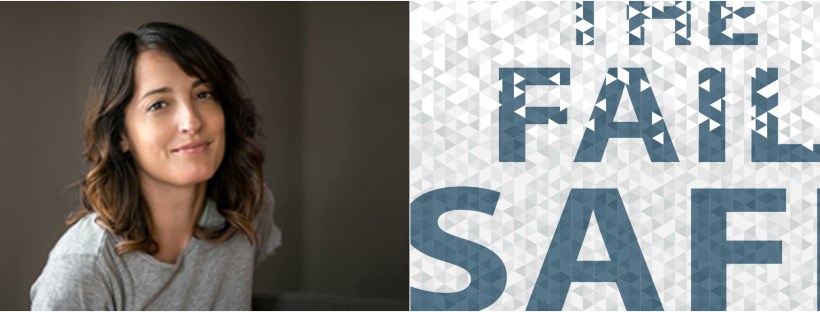
Rachel hosts The Fail Safe, an interview podcast that explores how today’s most successful writers grapple and learn from creative failure.

Links to published work, suggested by Rachel, that might be of particular interest to Inklette readers are: The Mindfuck (The Normal School), Fart Mart (Guernica/PEN American Flash Fiction Series), Four Short Essays from The Hard Problem (The American Reader),  Three Short Essays from The Hard Problem (The Rumpus),  Symbols (Hobart). 

Brinjals

14963086_10209317440046218_865084039_n

Illustration by Ashwin Pandya

Mrs. Kaul was one of those neighbours that made you hate the whole lot. She had quick eyes and a heavy face. She wore a lot of gold, and talked in a loud way about things.  Or maybe it was just that loud statements, when lacking substance, have a tendency to somehow end up even louder than intended. She had once been a hot shot in the media world and was the prime dolled up face that promptly gave the six o’clock news  some twenty thirty years ago. As was the way of things, her male co-anchor got promoted and she got a neat receipt of the expiry date of her shelf life. The following week she was replaced by a young just-out-of-college-something with a beauty mark on her jaw and some really bad pronunciations. The entire incident, I believe, was starched, ironed, folded and then neatly stacked up in the towering pile of wrongdoings that the world had done to Mrs. Kaul. The stack, in exchange, bred the tiny revenges she took from the world with her quick tongue, crafting tailor fitted slits of words, that knifed her audience where she knew they were their weakest. She hated all things young and hated all women who she thought were pretty. She loved saying that NEWS stood for knowing everything about the north, east, west and the south. Home of course, was always conveniently left out.

She had a husband. Had him. Like a handbag. He was there and she was there and  both of them knew they were far too old to be looking for the people they thought they would fall in love with. But more than age, it was the realization that they had each become some contorted version of their actual selves that blockaded their paths to domestic bliss.

He was a quiet sort of man. He had once worked in the government administrations but now channelled all his wrinkled energy in tending to his cottage garden. Brinjal plants ivied the floors and potato stems stood like stout little soldiers. Occasional chillies popped up like diseases and sunflowers burst with a neon roar. He spent hours in the garden, sowing, examining, trimming , evening out the trimming, cherry picking tomato seeds, and avoiding entering his own house. The reluctance to go sat like fat dew drops on each petal of each plant.  His suicide hardly came as a surprise. The maid found him hanging from the ceiling one morning.

Mrs Kaul became even more bitter over the next few months. She would come over to our house and her words hung in the air like wet vomit. Silence became the loudest response she got and yet sympathy was slapped over her like facial cream; she didn’t really resist. She went around her life like luggage on the moving belt that nobody had claimed. She left the house a few years ago. A family of five came after them. With a neat set of parents and three children that looked fresh out of a milk advertisement. The garden was occupying far too much space for the blow up balloon pool, so they mowed it. And besides, who grows brinjals?


MEHAR HALEEM is a seventeen year old student who writes for the editorial board of her school . She is a curator for Efiction India and her works have been published or are going to be published in the forthcoming issues of Alexandria Quarterly, The Noisy Island, Sprout, The Bombay Review, Melancholy Hyperbole, Inklette and elsewhere . She currently lives in New Delhi , India.

ASHWIN PANDYA is a sketch-artist and illustrator, whose work has graced many book-covers. Acknowledged for his digital art as well as musical compositions, Ashwin Pandya can sketch given any situation, description or character. You can visit his website here.

Burgundy

We were in a garden, in a mall. A garden of crimson and fuchsia bullets. Bullets spread neatly over the shelves of counters, under the label of LIPSTICK TESTERS.  I hovered over the bullets, taking my pick while Ann went to the bronzer counter. The salesgirl had judged us to be too rich, thanks to the accent we pulled off and my cold command to the staff, asking for a French moisturiser that was not available in the country. The coast was clear.

By then I had picked my shade. A deep cool toned wine color with a matte finish. Finalizing my choice, I signalled the salesgirl. She left the preteens she was watching over and approached me with a placid face.

“I need an an eyeshadow to go with this color,” I said, showing her a tangerine lipstick that was far too warm toned for pale face to handle.

“Sure ma’am,” she said with the mechanised promptness of a vending machine.

She turned. I scanned the store with a sweeping gaze, picked up my beautiful burgundy and slid it in the right pocket of my jeans.

I stood there, waiting for the feeling to dawn upon me like a landing plane. Nope, nothing. My conscience stayed true to its pledge of silence.

She returned with some baked, coral eye shadow that I obviously had to dismiss. I would have bought it if I hadn’t shoplifted.

I called Ann out, whose pockets and bra must have been brimming with highlighters and mascaras.  She then proceeded to play last move – buying a hot pink lip balm that tasted of strawberry.

Ann had a whole drawer full of strawberry lip balms back home.

Her polishing touch to remove any traces of suspicion. Or guilt.

We sat and ate Crimson rolls in the food court; the distinct aroma of freshly brewed coffee seeping through the still air conditioning with the ease of the infusion of a steeping teabag. She drank her hazelnut frappuccino with a straw, I chugged my Caffe misto.

The barista rolled his eyes at the high schoolers who were evidently here only for the free wifi; their eyes transfixed on their iPhones.

“We can’t do it here,” Ann pointed out, after taking in the surroundings.

“The bar’s always there.” I said dryly.

We went to the bar and gushed into the smoking zone with the urgency of a fever. Two boys stood there, with glass red eyes, one wearing a black pink Floyd T-shirt, the other wearing a cloth poster of Jim Morrison. Ann was always really put off by stoners, but I harboured a great love for their playlists.

We cornered a corner and sat down on the cold ground, leaning our heads against the glass walls, panting more out of thrill than exhaustion. Ann started the ceremony.

One steal at a time, we laid out our shoplifted jewels on the floor, neatly in a line. An avocado moisturiser, a Dior lip-gloss, double ended mascara, a pale baby pink highlighter and a burgundy lipstick.

We divided the treasure in a neat fifty – fifty, with alternating turns at the mascara.

“Ann,” I said, looking at her angular face that was carved out for a high fashion shoot.

“I don’t feel guilty,” my voice now gaunt  .

She smiled a wry smile, eyes still lit up. “That’s all right”.


MEHAR HALEEM is a seventeen year old student who writes for the editorial board of her school. She has previously won several creative writing competitions. This is her first publication. She currently lives in New Delhi, India.