Lotus Breath


We said ‘coming home’ without fealty to space or

love, hearts hidden in our shoes left muddy by the

door. Ma gathered us together at the table, sweet

flowers swept into her arms by a river tide at dusk.

Our fingers laced together as we gave thanks for

our blessings; she had to stretch over an empty

chair to reach us. These were the unhurried

evenings when she could relish in an instance of

being held, her hand a petal on my brother’s

lilypad palm. To think we were once buds, floating

in her milk belly now rumpled by scars. The more

we learned how to conceive ourselves, her touch

seemed to peel from our stained skin. Summer, the

season of unfolding, was upon us. This was all we

could do to keep from letting go, a ripple of prayer

bidding the spirit to remain in the distance

blossoming between us.


CAMILLE ROSAS is a member of the student organizations UP Writers Club and UP Esoterica, and the creative collective SARI. Her interests include alternative literary production, mysticism, and, for someone exceptionally bad at using basic technology, science fiction.

Sign Language


He knows because my hands

cradle his head, my fingers 

travel in packs across his arms 

and his chest, palm his chin, 

direct his smile toward mine.


Sometimes I rub through 

the short hair on the back 

of his head the way one does 

to a pup who’s been a very 


good boy, or swim under his 

elbows and over his shoulders 

to latch onto him like a warm 

marsupial in mother-worship. 


There needn’t be fireworks or 

pink hearts escaping overhead 

or even a mild molecular ripple 

in the air. I have decided 


I like being too old to anticipate 

the Earth shattering. What shatters 

is how everything gets to stay 

this way, exactly where it seems 

we will it to be.


RISA PAPPAS is an award-winning short filmmaker, published poet, and freelance writer/editor. Punky by nature. Fan of professional wrestling, feminism, and cartoon cheeseburgers. Editor at Tolsun Books. She lives in the Delaware Valley with a cat and too many houseplants.

Ode to the Whale I Keep In My Mouth

You sloping-blue, lonely song

swimming in the deep of me.


You body of cerulean wishes 

that stick close as water. 


I keep fishing in the midnight sea black of me 

for ways to tell people about

the thoughts you slide inside my throat. 


But all I come up with 

are dinner-party-shallow lines

stuck like hooks in my smile.


Who taught the secret longing in you

to sing like that–

so that no person 

with the world firm under their feet 

could ever hope to hear it?


Are you lonely in there,

frequently dreaming of acceptance 

in a language located on your own frequency?


Do your eyes grow tired of watching 

for lighthouse hearts like yours?


Do they spit salt tears at the moon

whenever your worst memories surface?


Or does the sky rock your soul in ocean waves

until you can sleep with your mistakes wrapped around you,

and is that company enough?


If you answer me, will I even know you have done so?


Or will I keep babbling, keep bubbling up 

this cheap-champagne laugh,

until I drown out all the music you are trying to make of me?


MORGAN NIKOLA-WREN began writing poetry for various literary periodicals in 2013. She is a winner of the Pangaea Worldwide Poetry Slam, 2016, and has published four books of poetry. Her debut book, Magic with Skin On, received a Goodreads Choice nomination for Best Poetry Book of 2017.

Morgan ran away with her husband’s circus for a year, but now works at a school library, which is not all that different. She is perpetually searching for new favorite words, more black clothing, and the perfect design for her next tattoo.

Find her on Facebook at www.facebook.com/morgannikolawren, follow @morgannikolawren on Instagram, or visit www.morgannikolawren.com.

thorns


her smile is bloody from thorns pinning it in place

the rose of her long since dead, but


the thorns stayed behind in memoriam, jagged

headstones that look happy in the lowlight —


that dusk effect, blurry edge, deepened haze

that ghosts call alarm clock;


roses look so lovely at dusk, all those velvet layers

in velvet light, switchblades thinly sheathed in dim green;


roses have no use for subtlety,

and thorns never forget anything,


and ghosts know better than to

disturb something bleeding;


EMILY DOLAN is an American poet currently living in Seville, Spain. Her work has been previously published in The Mangrove Review, and when she isn’t writing or playing professional soccer, she can be found trying to befriend feral alley cats with cans of tuna and honest conversation.

One Last Look At The Cathedral Pines, 1989


I.


I need you to do exactly what I say. Take your seatbelts off. Get down 

on the floor in front of your seat. Hold your head over your knees. We’re ok. 

We’re going to be fine. Just stay right there. Don’t lift your heads. 

The cows are going the other way. They’ll be fine. I will tell you when it’s ok 


to sit up again. I brought my girls with me on photo shoots.

I didn’t let them beyond the fence, but they watched

from the other side, handing me a different lens, a camera bag

hanging from their small shoulders. The sky wasn’t right this time. 


I yelled at them to get away from the fence, to get inside 

my station wagon. Go. I’m coming. Get in the car, girls, close the door. 


II.


We are 42 acres. We are old-growth white pine. We are 

hemlock. We are centuries. We were purchased in 1883 

to prevent logging. That day destroyed us. We became 

a study sight for ecological restoration. We protected you 

all those years.


III. 


I remember thinking those trees went on and up  

forever and that they didn’t have tops. I remember us, 

in your Dad’s ’47 baby blue Citroen convertible, on our way 

to the West Cornwall Village Memorial Day Parade, our hair wild 

around us. Or at night, in your mom’s carpool car,

headlights like lanterns moving through the night together.

How it must have looked from out by the white church 

and the open stretch of road.


SARAH ANDERSON holds an MFA in poetry from the Warren Wilson Program for Writers. She has 15 years of high school teaching experience. With her husband, she owns and operates The Word Barn in Exeter, NH, a gathering space for literary and musical events, where she runs a reading series as well as writing workshops. Her poems have appeared in various journals, including December Magazine, The Café Review, North American Review, and Raleigh Review.

Interview with Ryan Black

Naomi Day: Your poems invoke many numbers: dates, measurements of time and space, etc. Does this represent anything personal for you? Is this intentional? 

Ryan Black: I don’t know if it represents anything personal other than my want of documenting the histories of these spaces. And by histories I mean the constructed histories, both personal and public. And there’s so much I’ll get wrong, so I can at least get the numbers right. Mostly.


Death+of+a+Nativist+cover.jpg

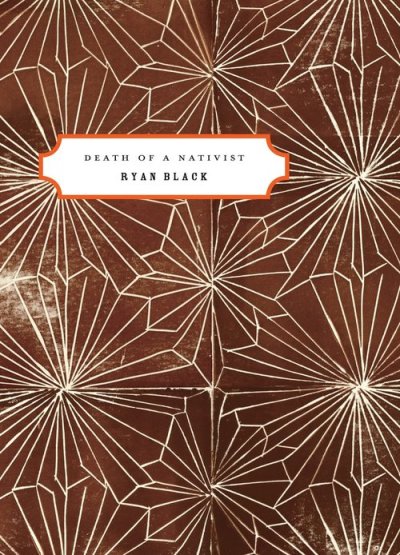
Death of a Nativist by Ryan Black (Poetry Society of America, 2016). Click here to learn more and purchase a copy.


ND: You track time in fascinating ways in your poems. You do it with different speakers, points of view, different times, etc. Does this reflect how you experience time yourself or is it the way you process in writing? Do your poems come out in this fashion or is the timed structure set up later, during the editing process?

RB: You’re right. Time is, perhaps, the recurring preoccupation of the book. It loops. It overlaps. It runs ahead and trails behind. It’s an experience of time as a kind of simultaneity, a past that “is not even past,” as Faulkner says, or something like that. I think of many of the poems as reckonings with history and place. If Queens is a model of where our nation is heading demographically, which has been long been argued, then an honest interrogation of its past feels paramount to me. Honesty has never been our national inheritance.

Joanna Cleary: Your poems drastically differ in form, from couplets in “Skip to My Lou” to less traditional aesthetic styles in “Why Bother” and “Not Once.” Do you have a poetic style that most resonates with you? How do you go about determining the way in which a poem should be written?

RB: The book’s longer poems are mostly written in tercets. I feel most comfortable in that form. I think tercets allow for the weaving of time I mentioned earlier. Or at least it feels that way to me. They look back as they move forward. They’re discursive, open to digressions. And they braid time like a fabric. A textile.

The couplets in “Skip To My Lou”were the form I found for a sequence of ballads spaced throughout the book. Each poem in the sequence takes for its title a different traditional American song. I was interested in how the folk tradition, with its narratives of misogyny, racial strife, class struggle, and sudden, inexplicable violence, might be adapted to contextualize hyperbolic and fetishized representations of Queens within an America steeped in sensationalism. The material for these poems is stories of petty crime (the hustler in “Skip To My Lou”), or murder (the racial violence of “Stagger Lee,” the misogyny of “Ommie Wise” and “In the Pines,”) or failed responses to natural disaster (the disrepair of post-Hurricane Sandy in “Home By the Sea”). If we pay attention to consistencies in the representation of urban spaces, we might recognize these as rhetorical spaces, that is: spaces made by rather than creating modes of representation.

Forgive me. I didn’t answer your question about the couplets. I’m not sure why couplets other than that tercets weren’t quite right.


JC: Regardless of the extent to which your poems are autobiographical, you write about extremely vivid characters, such as Bobby in “Not Once.” Who are your muses?

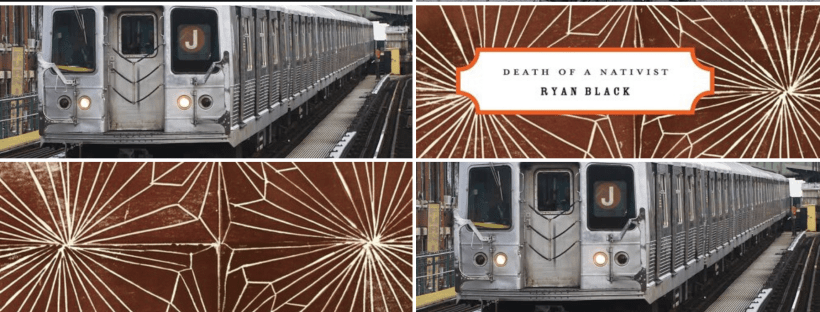
RB: Bobby is a muse, for sure. The people I would see everyday as a kid living in South Queens. The places in New York City I’ve known intimately. And trains. Elevated trains. The J train is the elevated muse of “Not Once.” It’s my favorite train in the city.

ND: You mentioned constructed histories and interrogations of the past, and many of your poems explore those themes by looking at what’s already happened. Do you ever write forward, with an eye to envisioning what the future might look like based on these past experiences, or do you find the honest exploration of bygone events more impactful?

RB: I would love to write poems that envision potential futures. I would love to write speculative poems like Cathy Park Hong or Eve Ewing. I’m just not there yet. I’m still mining the past for truthful ways to talk about the now. The closest I’ve come to writing “what the future might look like” is the final poem in the book, “A Gun to the Heart of the City,” which imagines an alternative past, one in which a planned protest—a protest that never actually occurred—of the 1964-65 World’s Fair in Queens did in fact happen. A stall-in that disrupted opening day, forcing the city to confront its continued racist practices.

black_ryan_comp-380x554

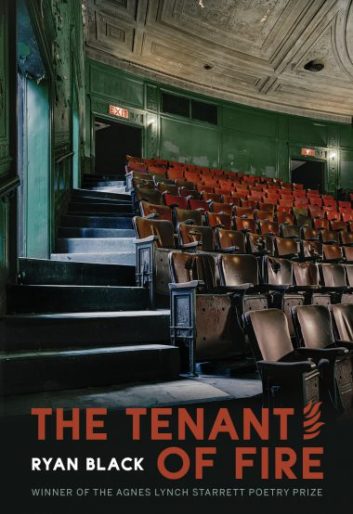
The Tenant of Fire by Ryan Black (University of Pittsburgh Press, 2019). Click here to learn more and purchase a copy.


ND: Your poems often have an unidentified “we”. Is this intended to pull the reader into actively occupying the space you’ve set up, or do you have a specific “we” in mind — or is it something else entirely?

RB: I think I often have a specific “we” in mind, or a “you,” at least. Many of the poems come out of an epistolary tradition. The intimacy and logic of letter writing seemed right for the kind of work I wanted to do in the book. I worry about writing out of a “we”, of speaking for someone else. I certainly don’t want to adopt an Olympian tone, but sometimes “we” just felt necessary.


157777871438027382.pngRYAN BLACK is the author of The Tenant of Fire (University of Pittsburgh Press, 2019), winner of the 2018 Agnes Lynch Starrett Prize, and Death of a Nativist, selected by Linda Gregerson for a Poetry Society of America Chapbook Fellowship. He has published previously in AGNI, Blackbird, Ploughshares, The Southern Review, Virginia Quarterly, and elsewhere, and has received fellowships and scholarships from the Adirondack Center for Writing, The Millay Colony for the Arts, PLAYA, the Sewanee Writers’ Conference, the Queens Council on the Arts, and the T. S. Eliot House. He is an Assistant Professor of English at Queens College of the City University of New York.
 

What We Love(d) and Want(ed) More of as Young Writers

The young writers’ community is an ever-growing one and while great resources, networks and programs for young writers do exist, they are not always accessible to everyone. As a magazine run primarily by young writers, we decided to ask Inklette’s staff members what they love(d) and want(ed) more of as young writers and for young writers. 


What We Love(d) As Young Writers

For me, my experience at Iowa was the best experience I had as a young writer. I felt that the schedule of our workshop was conducive to exploring the city and culture of Iowa City. We had some writing jam sessions in the morning and workshops or seminars that would end in the afternoon, leaving us a great deal of time to write, eat and explore or attend readings in Iowa City bookstores and the University of Iowa campus. But apart from that, the readings were very different from the ones I have encountered in other workshops. There were more translated works, more works by writers and writing published by small, independent publishers.

-Devanshi Khetarpal, Editor-in-Chief

I also attended the Iowa Young Writers Workshop, and was captivated by the space and the feeling that there were real people who did what I wanted to do in real life, as opposed to on the side of whatever they did to make real money. I also loved the professors, family members, friends, and occasional random strangers who validated what I was doing with my free time. I find writing as a full-time profession is often looked down upon by others, so having folks around who constantly said “Yes, you are absolutely allowed to spend all your free time creating these wonderful imaginary worlds” did wonders for my passion for creative spaces. Additionally, spaces like PANK magazine that welcomes submissions from folks no matter their age range or backgrounds helped me understand that I didn’t have to have the credentials I saw so many others with — I just had to have my passion for writing!

-Naomi Day, Blog Editor 

I completely agree with Devanshi’s and Naomi’s description of Iowa, so I won’t add much more to that, but I was lucky enough to also participate in the Adroit Journal Summer Mentorship Program in the same summer. In Adroit, I loved the close one-on-one relationship I had with my mentor, the support of all my fellow mentees, and the flexibility of the program. Between traveling and attending other conventions, I was relieved to know the community at Adroit was never more than a text or email away. Throughout the entire month of the program, I thoroughly enjoyed the specially curated reading list and writing prompts my mentor had organized, but I also distinctly remember loving the final project: creating a final portfolio of your work and sharing with another mentee! In reading the collection of another’s work, I felt I had truly understood not only his work, but who he, as a person, stood for. Now, more than anything, I am so so grateful for this little writing community that still keeps in touch.

-Sarah Lao, Social Media Manager 

When I was around 12-13 and had just developed an interest in creative writing, I spent a lot of time reading and posting on Cicada Magazine’s The Slam, an online forum where readers could post their own work. Not only did I have an outlet for my developing prose and poetry, but I was also able to make several long-distance creative friendships. While I never met any of these fellow young writers in person, I still think of them often and am immensely grateful for the love and trust we had when sharing work with each other. 

-Joanna Cleary, Blog Editor

I loved attending writing programs when I was in high school. The summer before my junior year I was accepted into the Missouri Scholars Academy, and while its not strictly writing centered, the classes that I took were. Being around people who were writing and creating because they loved it and not because it was assigned in a classroom was so refreshing and wonderful, and I was so inspired while I was there. I also rediscovered my love of poetry as an added bonus! 

The following summer I attended the Young Women’s Writers Workshop at Smith College and had an incredible time. I made so many friends and discovered so many incredible female writers that I would never have some across in one of my classes in high school, even in the creative writing and advanced placement english classes I had been taking since my freshman year. I very much doubt that I would have gone on to create my own arts centered major in college if I hadn’t had the privilege of surrounding myself with other creative spirits so early on. 

-Savannah Summerlin, Blog Editor

What We Want(ed) More Of As Young Writers

I wish there were more workshops, programs, avenues for literary translations and learning of regional languages and local dialects, and literatures written in those languages and dialects. My education was a product of colonialism and encouraged a more colonial attitude towards regional languages, dialects and even Hindi. I wish we could break apart and disintegrate the hegemony and glorification of the kind of literacy and literature that privileges colonialism and the process of colonizing today.

-Devanshi Khetarpal , Editor-in-Chief 

I wish there had been more community around the genres I was interested in writing: I did a lot of fantasy writing (think farms with talking wolves and cities with magic stones) but never shared them because I didn’t think young people wrote fantasy like that. Having a greater sense of community and space to share and receive feedback would have helped my sense of belonging.

-Naomi Day, Blog Editor 

Having always suffered from a drastic drop in creative productivity once the school year hit, I think I would want something that could hold me more accountable. I’m not exactly sure what that would look like, but certainly, I think a long-term program during the school year would help. In other words, I’m hoping the stress of a series of deadlines would encourage me to break through any writer’s block.

-Sarah Lao, Social Media Manager 

I wish there were more online workshops. It’s expensive and not practical to travel. Most people can’t take large chunks of time off from school or work, and others (like me who is 40 years old) have children who depend on us for care. Even when a retreat or workshop offers daycare options, that only works if one’s child(ren) are not school-age. When I was in high school, I would have loved to have taken a creative writing course or belonged to a creative writing club. Some high schools offer such courses, but mine did not, even years later when I returned to teach at the school. 

-Lisa Stice, Poetry Editor

To learn more about our staff and read their bios, visit our Masthead page by clicking here.