The sixteenth issue of Inklette Magazine is here. Publishing these issues makes me feel like I am retelling the contributors’ story not to you, but to myself. There is something comforting in writing to you— the reader— as if I am with you. I like writing in this epistolary mode more, perhaps more than I should. There is something about my apostrophe to you that helps me locate myself in the present. Outside of this relation, without the listener or the other, it is hard to know or sense oneself in the present.
In her editorial note to our last issue, our prose editor, Anouck, wrote about the other. It struck me as strange since I thought, going through this issue over the past few weeks, that all the writers and artists here have someone in mind, even if they are not necessarily the ‘other.’ What is the form of those others— their presence or their absence?
In ‘Shelter Number Twelve‘ by Omi Anish, the ‘we’ breaks down into a ‘you’ and an ‘I.’ Oliver J. Brooks starts his poem by asking us to pause: “Let me stop you right there—see how my love revolves around you?” In Susan Rich’s poem, the narrator admits that like so many of us, “I’ve always desired a different life than the one I am living.” I’ve wondered what it takes to write these relations into sentences that seem to be drawing inside their own bodies, between I and oneself, between oneself and the world.
With this issue, I thought of pairing some of the artwork with each piece. I was resistant to imposing the artwork on the writing, uncomfortable with the idea of ‘making’ two things speak to each other. But language, I know, is all about making, forcing, wrenching. So often I dream of a language that is a collage rather than a legible portrait. So often I wonder if I can ever write about or as someone else, not merely from the depths of another’s perspective or language, but from the negation or loss of it. If these pieces speak to each other, or to others we’ve published, I shall let them. And if you find yourself, too, in the company of these pieces, wondering about intimacies and distances between speaking, writing, and relating one voice to the other, I hope you won’t say, “I didn’t notice you, because I didn’t know who you were.”
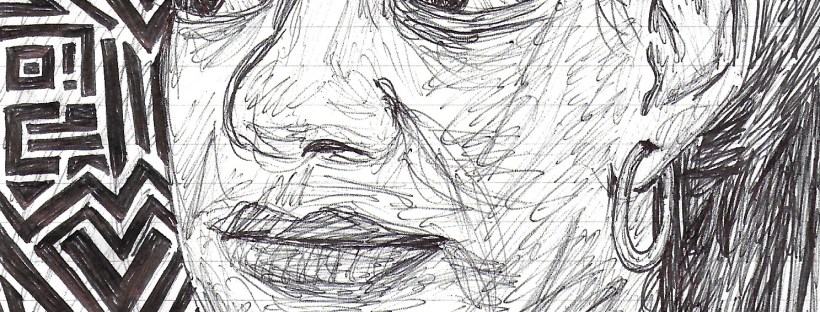
ALIX KLINGENBERG is a poet, artist, and Unitarian Universalist spiritual director. Her forthcoming collection Bread Sex Trees will be published with Central Avenue Publishing in October of 2023. Alix lives near Boston, MA with her family. She is queer and polyamorous and writes on themes of love & loss, sex & commitment, healing and family dynamics.
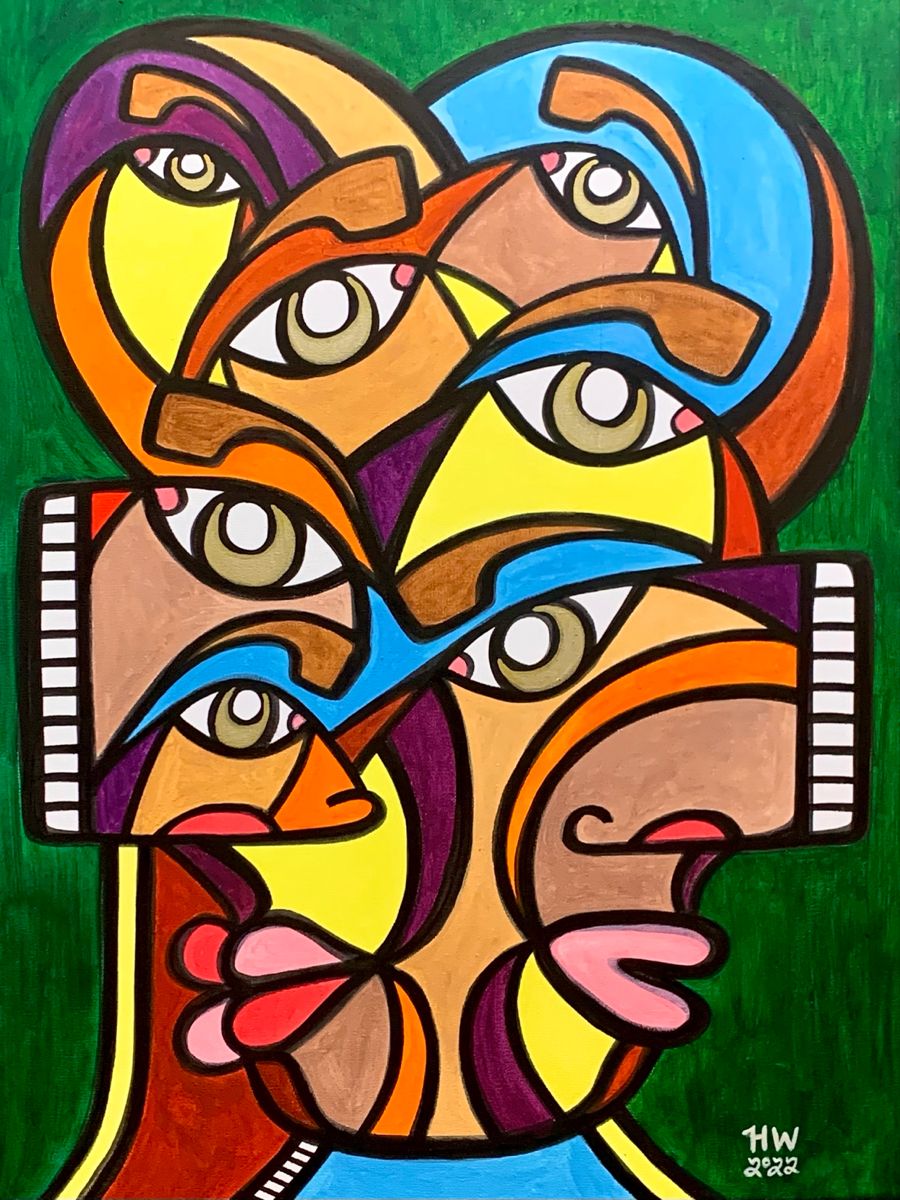
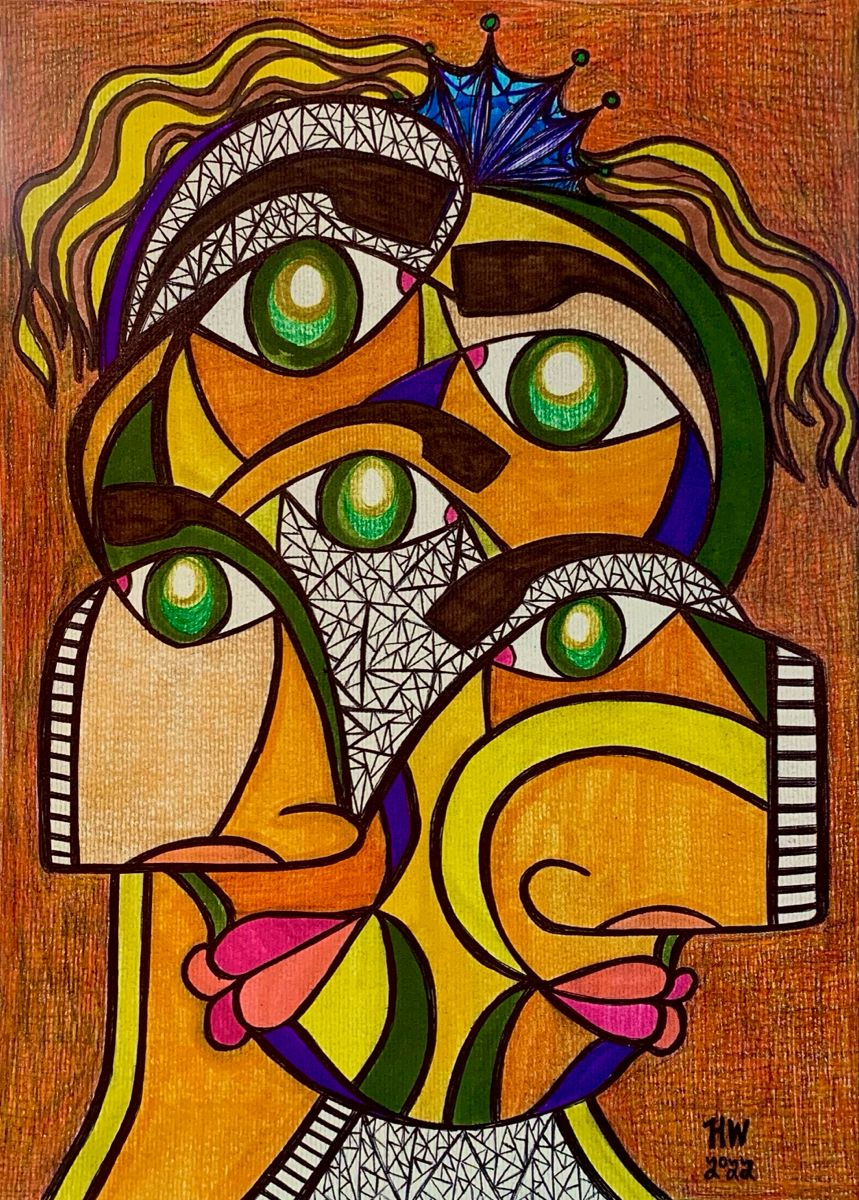
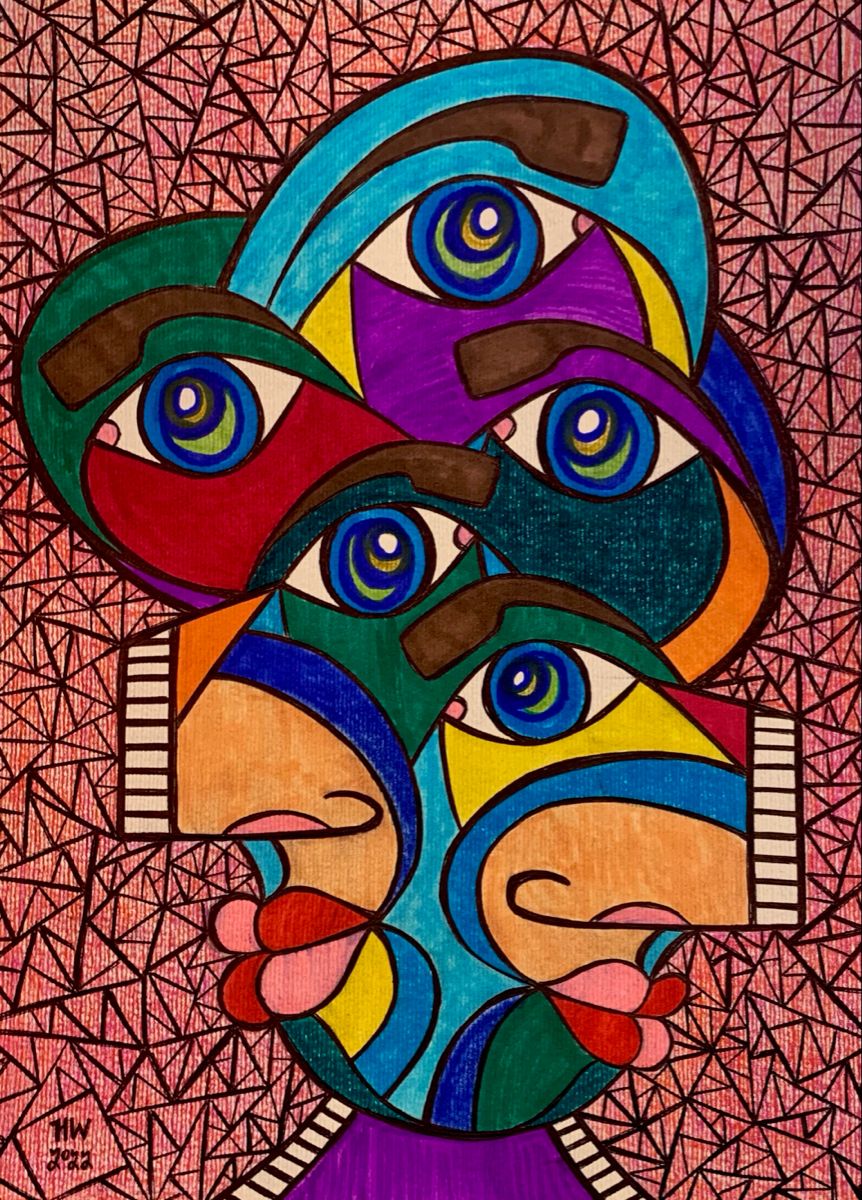
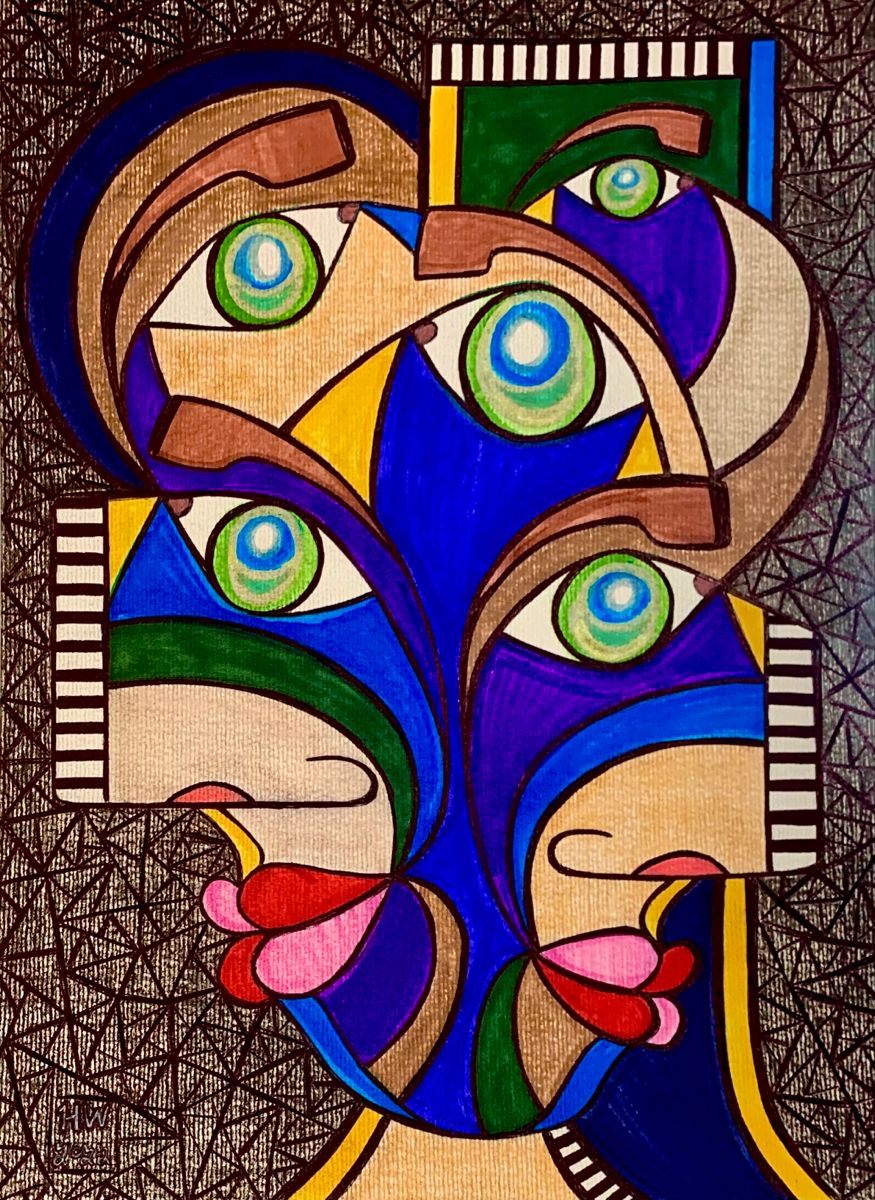
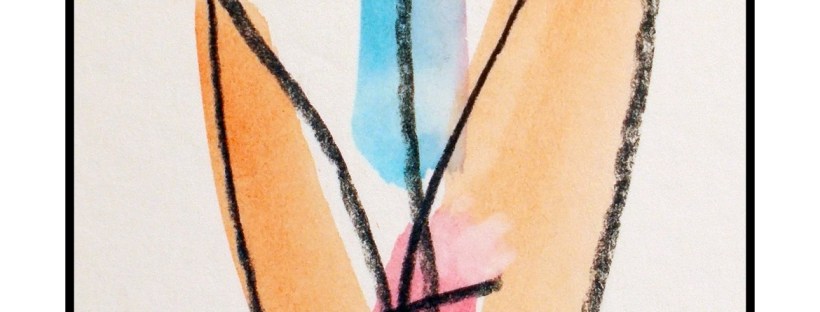
My artwork addresses the mute expression and range of heart-felt emotions experienced by the human race. Art is something people should be able to relate to. Art is a visceral experience that can be accessed by all regardless of race, socioeconomic status, gender, religion, or identity.
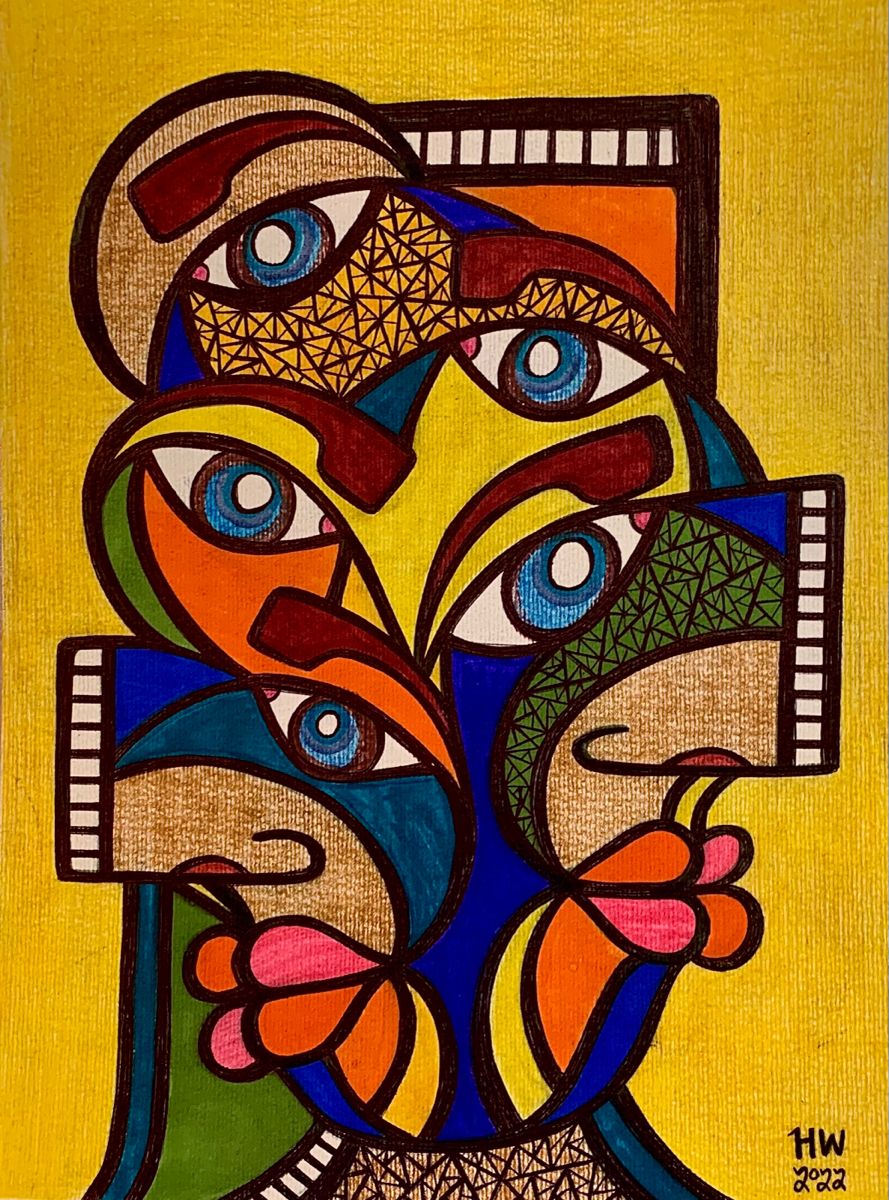
Ink and Colored Pencil on Watercolor Paper, 2022
Ink and Colored Pencil on Watercolor Paper, 2022
Ink and Colored Pencil on Watercolor Paper, 2022
Ink and Colored Pencil on Watercolor Paper, 2022
Ink and Colored Pencil on Watercolor Paper, 2022
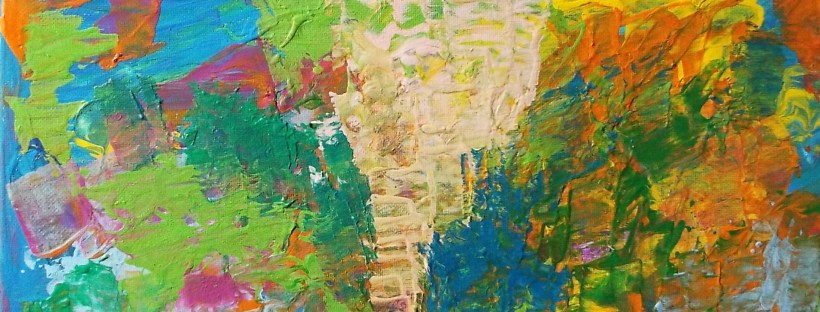
HANNA MARIE DEAN WRIGHT is a self-taught folk artist residing in Keavy, Kentucky. She uses her experiences from growing up in rural South-Eastern Kentucky, teaching special education classes, and living with obsessive compulsive disorder to inspire her unique works of art. Hanna Wright uses bold lines and bright colors to create abstract figures with relatable and at times deeply emotional expressions. Hanna was born in Barbourville, Kenucky on April 15th, 1993. Hanna graduated from the University of the Cumberlands in 2015 with degrees in Special Education Behavioral Disabilities and Elementary Education.
Hanna Wright’s mamaw, Geraldine Scalf, has had a great impact on Hanna’s art career and works as a fellow folk artist residing in Barbourville, Kentucky. Hanna was adopted at the age of 4 and moved from Barbourville to Keavy, Kentucky. She now teaches special education in the Laurel County School District and spends most of her free time creating unique works of art on paper, canvas, wood, and reclaimed scrap materials. Hanna most enjoys drawing her expressive “Starmen” and painting abstract figures and faces on reclaimed wooden panels.
Hanna Wright’s collection of art contains over 2000 works of art on paper and over 400 paintings of all sizes. Hanna’s artwork has been gaining popularity on the internet since 2015 and her artwork has been sought after by art galleries on a global scale. Hanna has had opportunities to display her artwork in galleries from Australia to New Mexico.
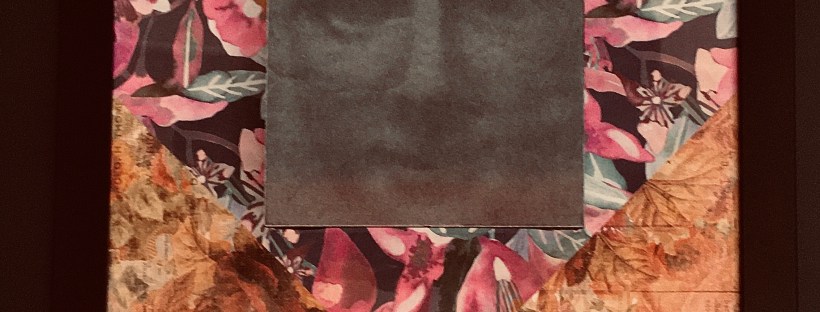
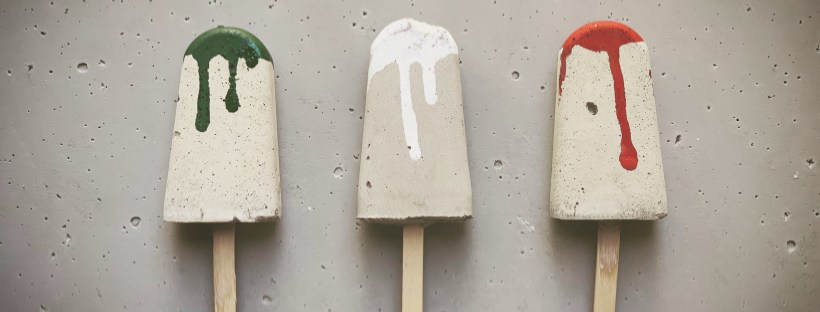
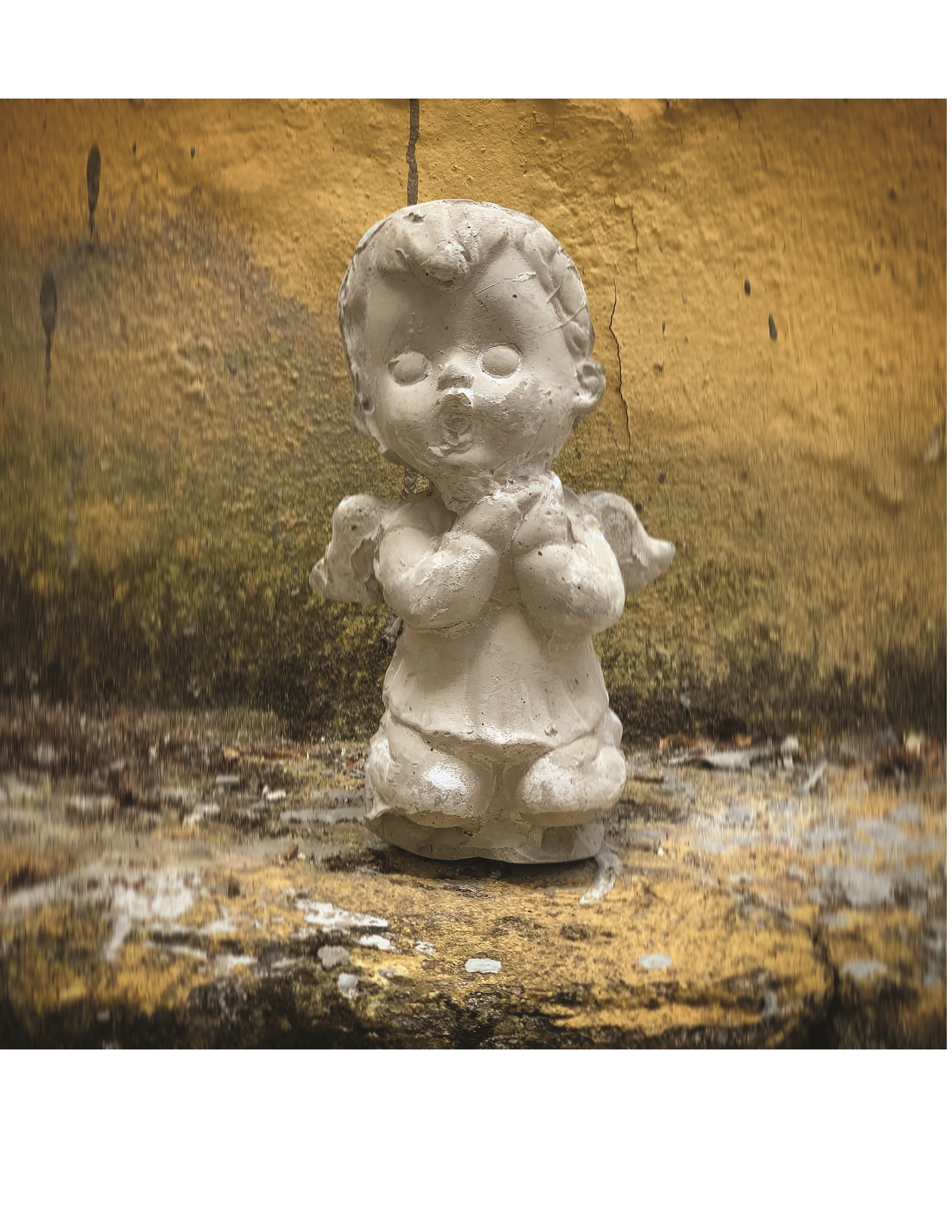
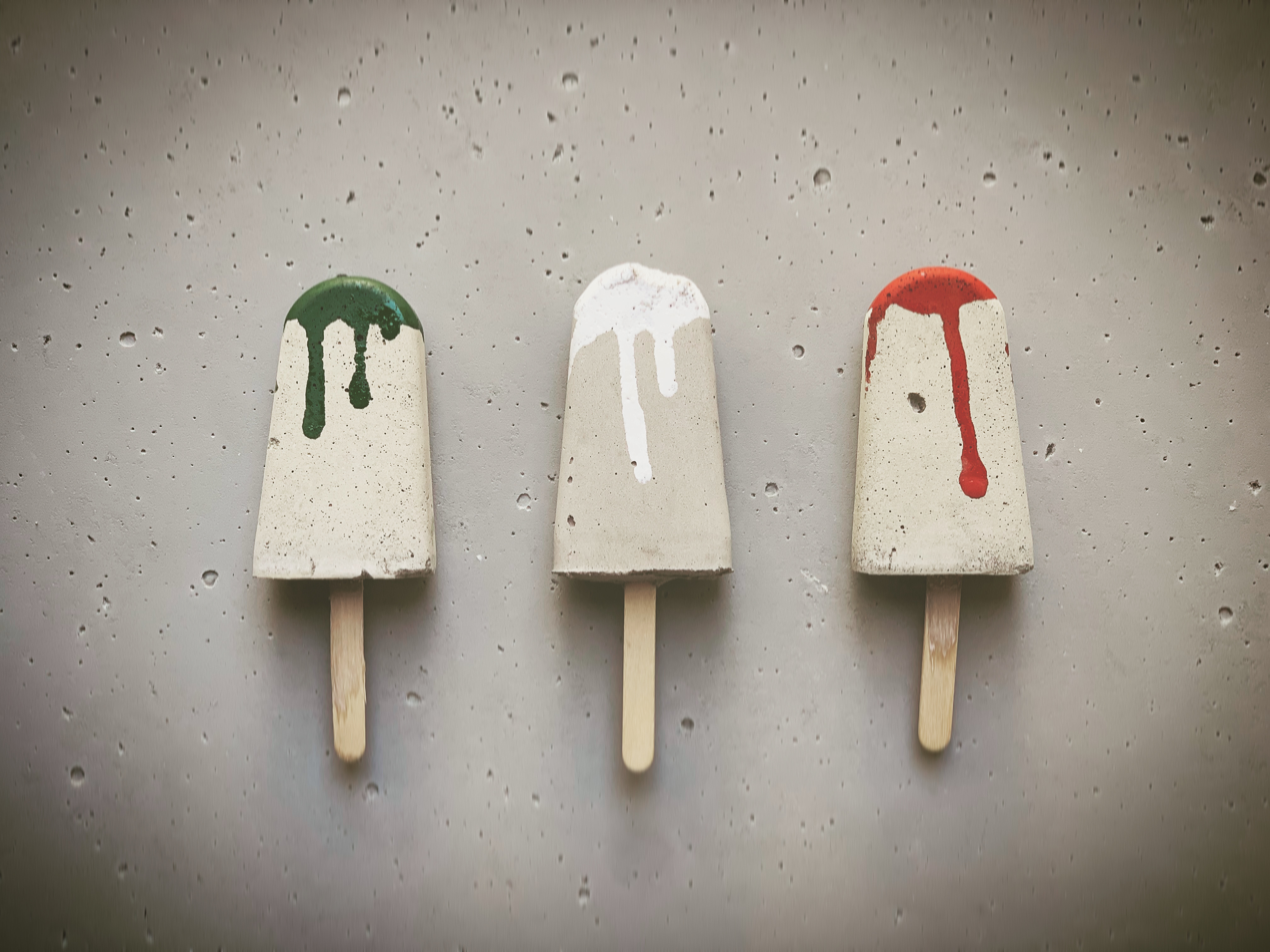
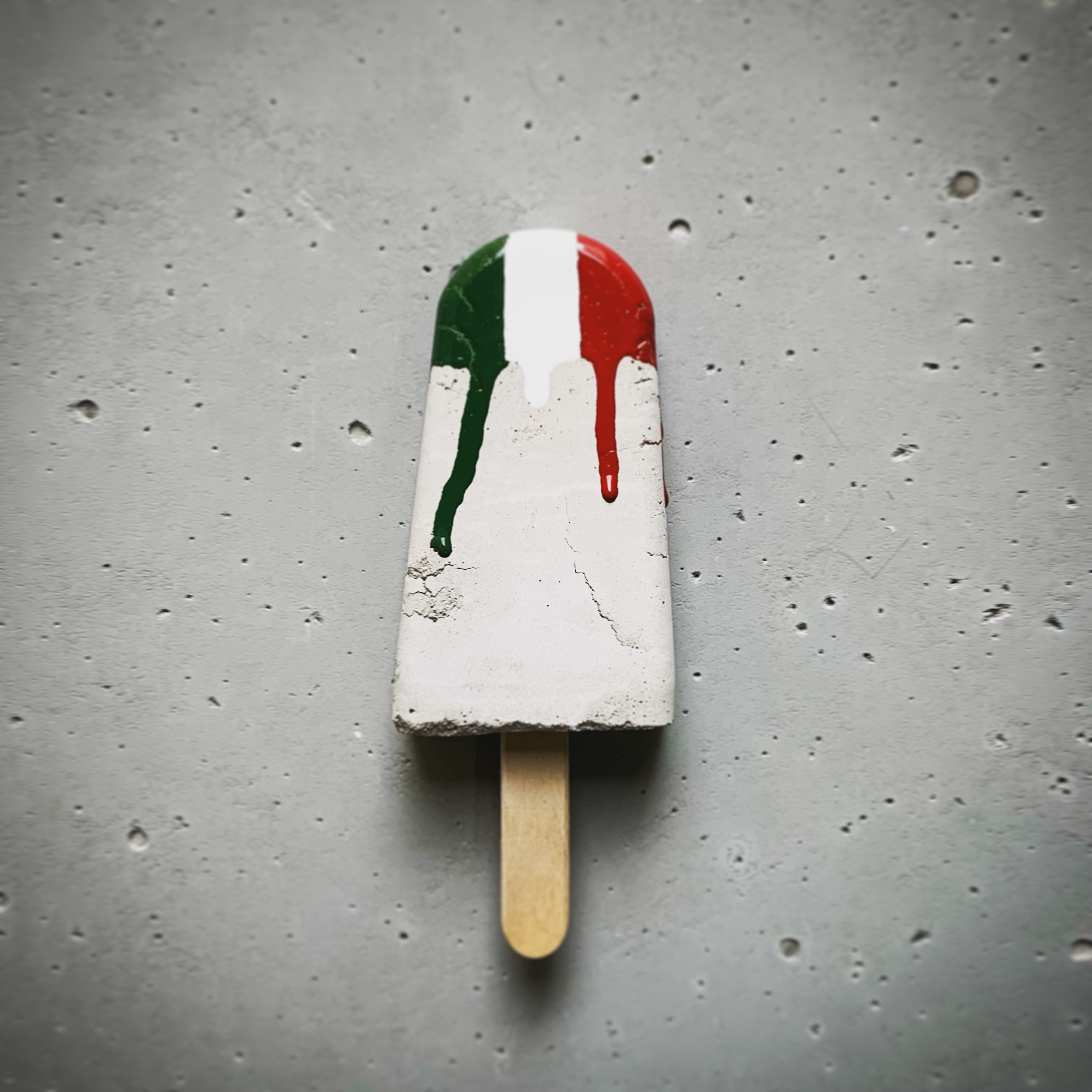
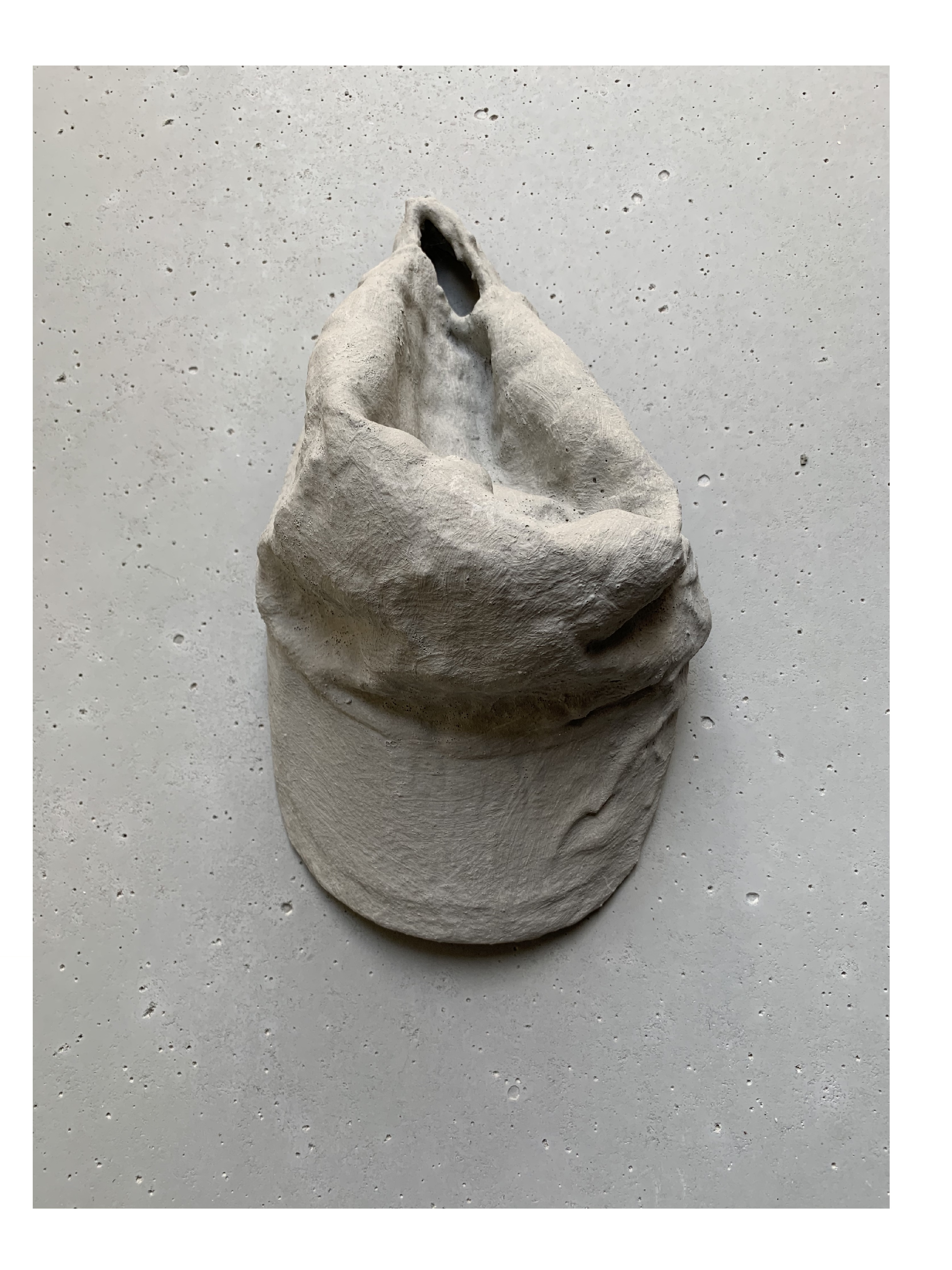
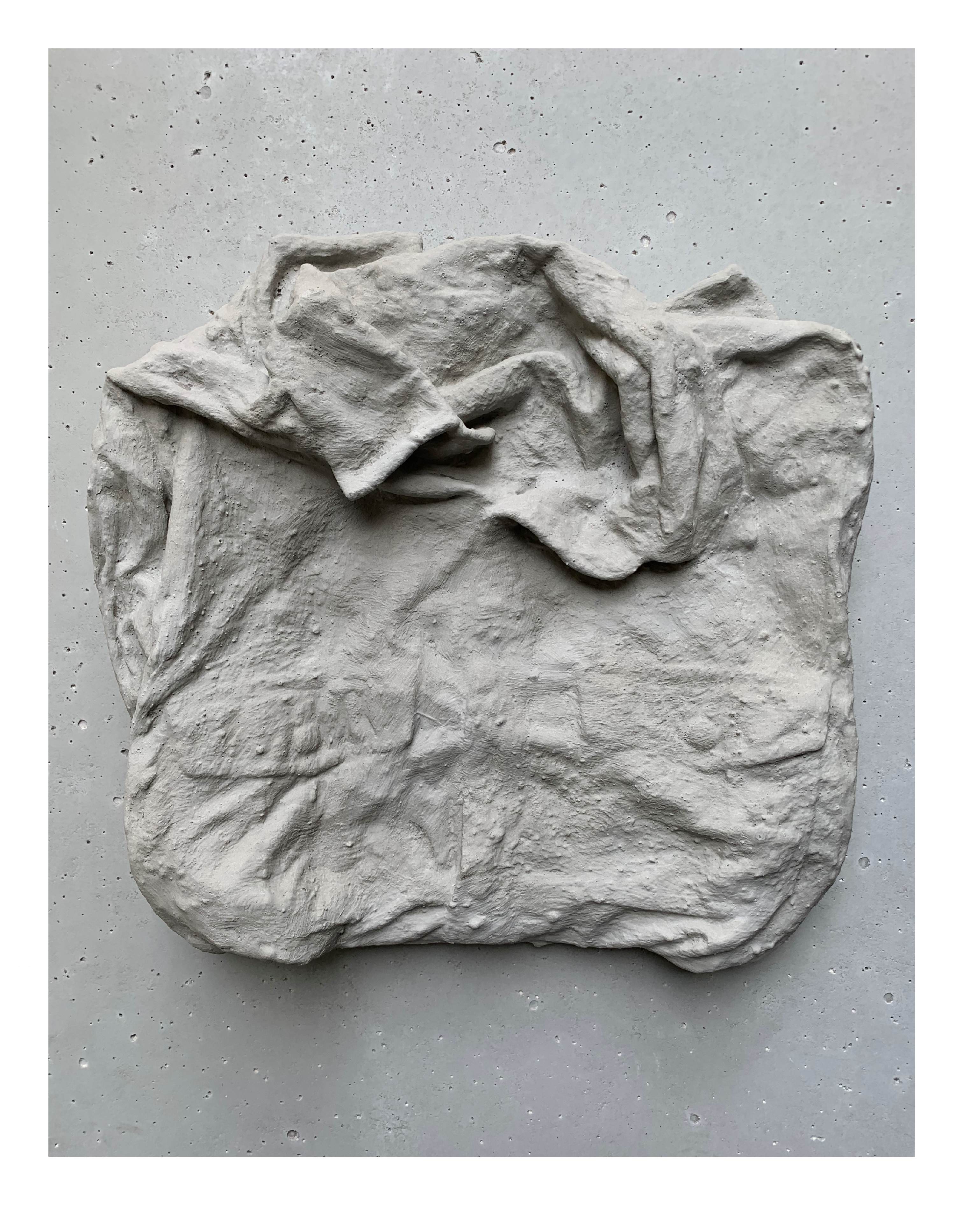
Painting is MARIO LOPRETE‘s first love. An important, pure love. The foundation of his painting lies in creating , starting from the spasmodic research of a concept through which he wants to transmit his message. Sculpture is his lover— his artistic betrayal to painting— Avoluptuous and sensual lover that inspires different emotions which strike forbidden chords.
For his concrete sculptures, he use his personal clothing. In his artistic practice, he uses plaster, resin and cement, and transforms articles of clothing into artworks that can be hung. His DNA and his memory remain inside the concrete, so that the person who looks at these sculptures is transformed into a type of postmodern archaeologist, studying his work as urban artifacts.
He likes to think that those who look at his sculptures, created in 2020 ,will be able to perceive the anguish, the vulnerability, the fear that each of us has felt in front of that planetary problem that was COVID-19. Under a layer of cement are the clothes in which he lived through that nefarious period.
The clothes that survived COVID-19 are likened to what survived after the 2,000-year-old catastrophic eruption of Pompeii, which recounts man’s inability to face the tragedy of broken lives and destroyed economies.
Disease had overrun the village and the village was dying. I once thought that the village itself had failed us. It was absurd thinking but my world was irrational and, in the context of an irrational world, every thought is valid, every notion is compelling and every premise is vested with some degree of truth. We were very sick and, through twisted thinking, I came to believe that all aspects and features of our village – the dry soil, the dilapidated huts, the stalks that suffocated in the rabid heat, the harsh light, the palm trees, the hardened mound beds under which the dead lay quiet – were complicit. And I blamed the palm trees most of all. They seemed to flourish while all else suffered and perished. I watched those leaves wave in the wind, high above the village common that shrank in concentric circles, smaller and smaller, as grasses dried and died around the epicenter, demarked by an abandoned hut, and I sensed an implicit arrogance in the way those palms flaunted the life that thrived within them. They remained high above the fray and, somehow, they had been pardoned while the rest of us deteriorated. Large leaves, oblong and creased, would outlive all of us by the power of some inexplicable governing force. They simply existed while existence ran a sputtering course across the land below as people flailed and died.
Quite often, men and women would find their way to the common and it was there that they would fall upon the stiff grass stubble and pass away. Bodies aligned in random patterns and it seemed like a conspiracy of sleeping corpses, a collaboration of the dead. Dying became routine but now, looking back, I realize how unfair it was for me to blame anyone or anything – hapless palm trees or the village itself – for the advent of an apocalypse. In any event, we became sick, most of us, and the village became an arena in which the stages of sickness played out like some tragic play presented upon the flat rock precipice of an ancient amphitheater, the final act known to all though the drama draws your attention, quite compelling because there is always a chance that the final act is not what you remember it to be.
Certainly, palm trees were not to blame. The fault was that of a doctor, the essential citizen of a village in the throes of collapse, and this is what I have come to believe: our doctor, now dead, abetted the onslaught of the plague upon our village. I wasn’t convinced at first but now I am certain. In short, she chose to die and, through that choice, she ravaged a community. She decimated us by her purposeful absence and, by choosing death, she hides in its shadow. Her death was a relatively quick affair but she punishes us forever through her complicity in her own demise.
Her unfaithfulness, however, is not surprising to those who knew the doctor. The sad truth is that she was despicable! She was a hateful person and it’s quite clear that she despised us. She made no attempt to hide her disdain. When someone made the pilgrimage to her office, she would mouth the words “why have you come” in cold cadence and these words would permeate the air like a choking smoke. She never blinked but animus prevented her from looking you in the eye. Her demeanor was consistently grim.
She confronted those who relied upon her for help as if they were to blame for their own illness. In essence, the patient was culpable for having invited disease into his or her own body. For this reason, there were many who preferred to wait until they were practically comatose before requesting her care. She would then berate the patient for having waited. She became the victim, aggrieved that she had been left the task of unraveling mortality’s knot and her condemnation, explicitly stated or implicit in her eyes, was a censure as severe as some divine judgment. The harshest aspect of her behavior was the way in which she infected us with her hatred, evidenced by the fact that, in time, we came to hate her.
On a day I can hardly remember, I was carried to the infirmary and placed upon the table. Though my recollection of the episode is dim, I do recall her dull eyes and her grey skin as she leaned over me. She drew together some foul-smelling tea that she required me to drink. I retched the first time she administered that concoction but, eventually, I was able to drink it. And that is when a miracle occurred: my fever broke. I immediately began to heal. And so it was the case with everyone she treated. Each of her patients survived and it seemed as if her touch was animated by God.
It made no sense to us but the truth is that she performed miracles. She had a special gift and, incredibly, no one died under her watch. Even before the advent of the plague, there were countless times that she saved people who walked the thin ridge of death. She had saved babies and mothers tumbling through the trauma of problematic childbirth; she would receive the ancient, haggard parade of elderly women and men in the course of their last march and would subdue the rampage of age upon their bodies and minds. She was remarkable in an emergency: when no cure was available, she somehow devised an answer and if an answer eluded her, she would pray aloud to some unidentifiable deity and the injury would dissipate as if it had never occurred. She was an artist in some dark religion; she had her finger tight upon the pulse of death and she knew it well. She could sing its song, she could entice it, she could lull it, she could embrace it. She was stronger than the plague. If you were lucky enough to receive her treatment, you would live. She was indispensable.
To thank her would cause her to sharpen her stare and rouse her mood to the level of a moderate rage. It was often the case that she told you not to bother her again. And this all occurred beneath the benevolent sway of large palm leaves dancing in the breeze, high above. We reviled her for her success but we couldn’t escape the fact that her success meant our survival. She was a necessary burden. Her behavior was unbearable but we had no choice but to endure it.
There came a time at which the doctor became sick. The plague had caught up with her but she refused medical care. We called on doctors from neighboring villages and they rushed to her side. As each doctor leaned down to examine her, each heard the same gravelly admonition: “Leave me to myself, don’t even try to save me . . . you can’t help me . . . I refuse to be helped . . . don’t waste your time.” Gasping for breath, she spat these words at each of them: “Carry me to the palms . . . and leave me there. Today I will die. The affliction . . . is mine . . . .”
The doctor succumbed and we grew despondent. The number of deaths due to plague rose exponentially and there was no one we could rely upon for help. We were hopeless. There came a day, however, upon which our luck seemingly changed for the better. A new doctor came to the village. He had not been summoned but miraculously appeared one bright morning. He began his work immediately.
He is young and courteous with an earnest demeanor. He has long, dark hair that flows across his head in even waves. We were confounded at first: how could someone so young take control of a disaster? But we learned, in short order, that he is a skilled professional, a wonderful man and his presence is a refreshing and reassuring change. He is respectful toward his patients and his compassion is apparent: you can see it in his attentive eyes, the corners of which pulse in response to the sad details of our respective stories. He has a comforting manner and listens patiently to the saga of devastation recited by those who are brought to him for treatment.
He wears a uniform intricately embroidered, much like a chasuble. He rarely breaks from his work and he hardly sleeps. His patients have faith in him: they believe in his ability and they celebrate his success. His voice is soft and he speaks in the slow cadence of a priest or mystic; his demeanor is certainly that of a healer. He manages a collection of myriad tubes, hoses and syringes adroitly and wields his otoscope as if it were a holy scepter. His kind eyes wander across the face of the sufferer and, with his eyes, he seems to absorb the pain and assume it as his own. He goes to work: he excises infection from the failing body. He instills hope.
I must mention, however, that this doctor, as wonderful as he is, does not know the village, has only recently walked the grounds, has no knowledge of the mud or the warped wooden huts or the color of our leaves or the rhythm of the rain upon our roofs. He has no knowledge of the path beyond the fields where cows once walked, now long gone, a memory that has begun to recede as we die out. He understands much but he really doesn’t know us.
He has been successful in many of the cases he has handled but the unfortunate truth is that most of his cases are routine. Despite his energy and attitude, it is apparent that his expertise is limited. He fails when the situation is hopeless and, when it is hopeless, he losses hope and the patient is lost. He is ineffective in contexts that are dire and, in terms of the plague, it must be said that his results have been mixed. This is disturbing because, today, the plague is everything: it is the overriding matter and tripwire of our existence. Our new doctor, as good as he is, has saved very few of those afflicted with the disease that is killing us. His predecessor, as horrid as she was, could practically lift a dying body from the ground and breathe life into it. Some even believe that she could raise the dead. It is true that our new doctor has just arrived, he is learning, he is doing his best – but none of that matters. Time is running out. We are well on the way to the end. I expect that, should we survive, he will be renown for having saved us. Today, however, our hope dissipates with each passing hour.
WALTER WEINSCHENK is an attorney, writer and musician. Until a few years ago, he wrote short stories exclusively but now divides his time equally between poetry and prose. Walter’s writing has appeared or is forthcoming in a number of literary publications including Lunch Ticket, The Carolina Quarterly, The Worcester Review, Sand Hills Literary Magazine, Meniscus Literary Journal and others. He is the author of The Death of Weinberg: Poems and Stories (Kelsay Books, 2023). More of Walter’s work can be found at walterweinschenk.com.
Let me stop you right there—see how my love revolves around you?
This is the day of the bird, & I always bring birdsong on a warship.
Hear the worship twittering in the eaves:
Now is the time for all good men to come to the aid of their country.
No, it’s time for all good men to come to the foot of the family.
Let the warriors come home unarmed.
Let the worriers come home unharmed.
May the lessons of the colonel not harden your heart.
May I lessen the kernel of doubt in your heart?
I learned my son was born across the prime meridian.
Learn that my love is like the sun: primordial, quotidian.
You were born from war, riots; your first cries were a protest.
You always wore my chin & nose as a birthright; don’t protest.
Stop right there, let my love absolve you.
OLIVER J. BROOKS is studying creative writing at Florida State University and is the current poetry editor of The Kudzu Review. His work has appeared in Antithesis Journal, Beyond Thought Journal, Cantilevers Journal of the Arts, and elsewhere. Find him at oliverbrooks.weebly.com or @OBrooksBooks on Twitter.
after Divyasri Krishnan’s ‘Girl as an animal of regret’
in a perfect world, i am ageless.
chrysanthemums stay in bloom.
chai leaves swirl down as spring
rain. milky mists rise from the earth,
frothing. in the mornings, my father
wishes me a good day, his hand on my
mother’s far shoulder as i leave. his
hand still normal. his irises not
bleeding. his brain not bleeding.
but in this real world, red poppies
fill the garden. fill the yard. fill his
mouth. when he speaks, scarlet petals
peel off his tongue like a scab. bandaids
don’t heal wounds. i am disheartened
and unlearning hope the way a shovel
conceals graves. and in this real world,
he is in that grave, and i am the shovel,
spilling my regrets from the lips,
down the walls, onto a glorified box.
i can live because he died.
in the mornings, i drink tea by myself,
reminded of how now weeds grow
in place of my body. how the air
stinks of 1 part guilt, 1 part shame.
i will die eventually, just like my father,
alone with my thoughts, answering to
an unrelenting gust of bitter leaves falling
into stained cups like my childhood dreams.
remind me again of the everlasting chrysanthemums.
remind me again why i dream at all
k.p.fen (she/her) is a Filipina-American who resides in New Jersey with her loving husband and cat. She tries not to define herself by occupation or her mental illness, but recognizes they continue to shape her life. Her poems appear or are forthcoming in The Post Grad Journal, In Her Space Journal, and New Note Poetry. You can find her reading at open mics throughout the state and on Instagram at @inkdroplets.
 Inklette Magazine