Three Pieces

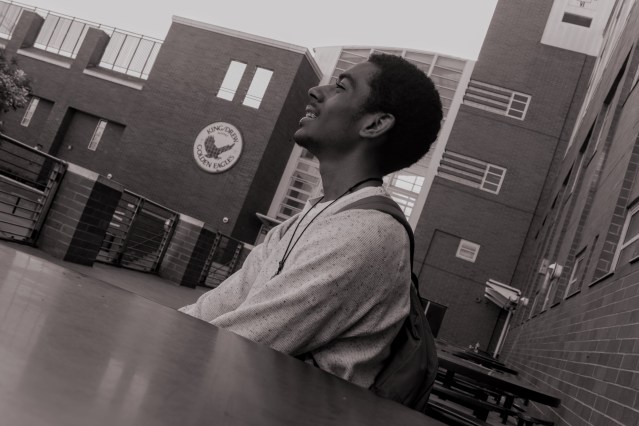
IMG_8944.CR2.jpg

‘Sincere,’ Photography, 2017

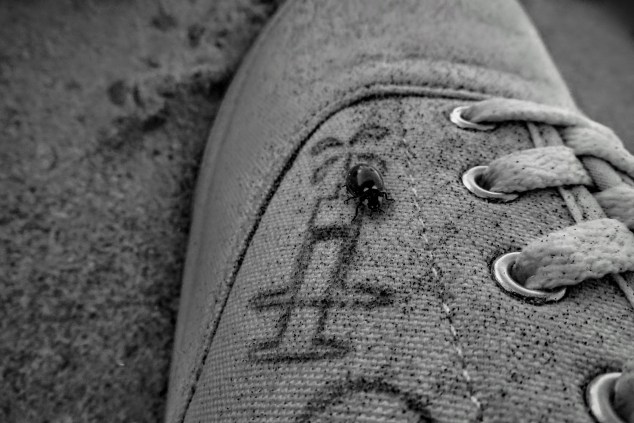
IMG_9130.JPG

‘Simplicity,’ Photography, 2017

IMG_9039.CR2 (1).jpg

‘Curiosity,’ Photography, 2017


RAINA LEE is a high school student attending King Drew Medical/Magnet HS. She enjoys photographing family members and fellow peers, and though she would love to spread her horizon of models, her teachers aren’t too compliant. Ms. Lee found a passion for photography during her summer of eighth grade, while getting to playing with a friend’s camera during summer camp. Though she is young and an amateur, she hopes to continue growing in her passion and continue exposing herself to different forms of photography. Raina Lee’s only goal is to share her passion with others through her production of photographs.

Interview with Steve Klepetar

Read Steve Klepetar’s poems here. 


Inklette: What do you call ‘home?’ Has poetry helped you find the answer

Steve: I was born in Shanghai, China, the son of Holocaust survivors and refugees, so I’ve always had a vexed notion of home. My parents brought me to the U.S. when I was an infant, and I grew up in New York City, but I’ve spent most of my adult life in Saint Cloud, Minnesota, where I taught at the local state university for over thirty years. I’ve lived in many places, including Chicago; Northumberland, England; Atlanta; Tucson; and Western Australia. I suppose in a sense I’m like a turtle, carrying my home with me as an emotional state, which helps me adjust quickly to new environments.

Inklette: What do you think about the politics of home in context of the current political scenario?

Steve:  Ugh! I am obsessed with following the news and every day I read The Guardian American edition and The New Yorker Daily, as well as most of the articles on the CNN web site. That probably accounts for my cheery disposition! I am appalled by the state of American politics, especially the self-serving and cavalier disregard for the environment and the climate crisis, and by the way the president has tacitly approved of white supremacists and neo-Nazis.

Inklette: Do you believe poetry and politics converge?

Steve: Yes, but for me it is almost always complicated. I have written some explicitly political poems. In fact, I recently published a chapbook called How Fascism Comes to America. But most of the time, politics leaks into my work in odd and indirect ways. That is true even of most of the poems in that very political chapbook. The poems I’m talking about express the deep sense of unease I’ve been feeling for the past year or so, a darkening of the political landscape, but these tend to work with the inner life rather than naming particular events or people.

Inklette: What drew you towards poetry when you first started writing it? What draws you towards writing poems now?

Steve: I was drawn to poetry, to rhyme especially, almost as soon as I could read and write. My teachers always kind of made me the poet laureate of the class, though all I could really do was keep a rhythm and make rhymes. I loved to draw, but I was terrible at it, so I found poetry a satisfying way to fill that need to create something. I really love writing, and I try (and fail) to do it every day. I actually get a pleasant physical sensation when I break through and the poem starts to flow. Another aspect of poetry writing involves the community of poets, something the Internet has helped to expand. I am in contact with quite a few poets, whose work I get to read and who read mine, and that has been a great pleasure for the past few years.

Inklette: Has poetry changed you?

Steve: I don’t know, I hope so. Maybe writing poetry has made me more attentive and more imaginative. Writing poetry has been an important part of my life for so long now that it’s hard for me to trace changes over time.

Inklette: Finally, which poems keep calling you back? 

Steve: There are so many great poems. Emily Dickinson’s “Wild Nights” won’t leave my head, and I go back to Yeats’ “Sailing to Byzantium” again and again. I love Blake’s Songs of Innocence and Experience, and maybe his odd little poem “The Little Vagabond” is my odd choice, since that one doesn’t get anthologized very often. But if I had to choose one poem that I go back to again and again, it’s Wallace Stevens’ “The Snow Man.” I’ve been living in Minnesota so long that I guess I have a mind of winter.


STEVE KLEPETAR‘s work has appeared widely and has received several nominations for Best of the Net and the Pushcart Prize, including four in 2016. His most recent collections are Family Reunion, A Landscape in Hell, and How Fascism Comes to America.

Faded Memories Meld Together

Faded_Memories.jpg

‘Faded Memories Meld Together,’ Acryllic and House Paint on Canvas, 2017


Born in Caracas, Venezuela in 1994, AMANDA JONES was encouraged in her artistic pursuits from an early age. For four years she studied a classical approach to oil painting before being attending Florida School for the Arts and then on to Flagler College in Florida. She has spent the past year working at the Plum Gallery in St. Augustine, Fl. and will be finishing up her final year with a Bachelor’s in Arts. She intends to further her artistic education both under instruction and on her own.

Lower East Side

This slideshow requires JavaScript.


Almost two decades ago, SETH experienced a high-impact car accident. He started exploring art as a way to deal with chronic pain from the accident. With a background in IT, and a previous career in finance, many of Seth’s pieces are influenced by the idea of finding solutions. Seth does not communicate the intentions of individual pieces — he prefers to think of each work of art as a mystery, defined and solved by the viewer. 

After experimenting with painting, photography, and music, Seth found that digital media allowed him the greatest level of control with which to materialize his intentions. Seth uses his art to question how things make sense within a larger context. How are we influenced by shapes? How are different moving parts related to each other? How do we find solutions to help us navigate these moving parts? How do we project meaning onto all of the moving parts we experience in life? What, in the end, is the sum of all of these moving parts, and how does that affect our lives? Seth wants the viewer to experience the pieces through their own individual lenses. To Seth, art is a refuge in which has saved him from the madness of the world. To Seth, a piece of art is complete when he feels everything is in its “right place”, which is the culmination of many small decisions, which lead to a whole which is greater than the sum of its parts.

Website: wandersman.com

White for Mourning

His eyes only ever looked that color when he was lying or when she was on speed. He told her that she was sober when it last happened, he swears. Lie.

He’d rub her knuckles when the earth scorched and cracked into dust — whisper something into her ear that made the corners of her mouth lift until her stomach ached. When the moon no longer glowed in technicolor and their pupils contracted, he felt her palms and told her that nothing about this routine screamed “destructive.” The corners of her mouth would lift again and she’d throw her hair onto his shoulder. Lie.

Her mother couldn’t know enough about her if she ever had to identify her daughter on the table at the morgue. She never had to. A shock. Her daughter’s features were always shifting, broadening, elongating. It was a shame that she came out looking more like her father because how was she supposed to recognize a face that she forgot so often to remember.

When he finally broke it off with her, he promised that he, too, would never cross paths with her mother’s habits and forget her. His eyes glassed over. The drugs.

When her pottu¹ was nothing more than a smear, all the women of the temple shaved their heads and lit an incense to mourn the loss of her innocence. White robes are for death, for the rebirth and renaissance of a wilted soul². White skin is a prize, a reimbursement free of the tallies of sin and covet.

 Her dinner was simple: peas, rice, a dialect, lentils. Ragi roti. Potatoes. White is for innocence, white robes are for death.

Her dinner was pink chicken, juice, cheese. Crunchy rice. Black is for death. Black is for funeral. They asked her, “What did you even see in that boy?” with oiled tongues. They should have asked, “Was it worth all this?” because that would have given the same answer.

They opened his casket, his face sallow and sunken until the hollows of his cheeks were plastic. She covered her mauve lips with her brown hand and was hit in her brown stomach with a blue sleeve and a white arm when she tried to leap across the burgundy rope into the black casket and hug the boy in the navy suit with purple veins and gray skin. Maybe if he had some color in his cheeks he would breathe again.

They prayed for her “death” just like his. It was only fair, as the balance tipped in greater favor of her tragedy over his. Her mother used up all seven of the prayers she had prided herself in memorizing into asking for her daughter’s forgiveness, but all her daughter wanted was for her to pray that she could forgive him.

She pandered to his parents by baking more White sweets and entering their White house without a dot between her feathery eyebrows and saying her own name with two syllables instead of three. And his mother sobbed and dabbed her eyes and yet could only ask her about things she found exotic. Some leopard or iguana dated her deceased son and was sitting in her living room, thick hair messy for her own rebellion. How did it know so much? Did it have time to read something of weight and matter in its garden that it called a house, or did it only learn how to cook with clove and ginger? How did it speak so well? Was it allowed to speak so much? Did it really want to speak so little? How much dirt did it remove from its clothes before slipping under its sticky covers at night? Did it really breathe? What was it doing dating her son? Did it give her a thrill?

Her mother was a botanist. She lectured yuppie young adults about fauna and its properties and came home to adorn her daughter’s hair with leaves. There. Don’t cry. She bawled louder. Did crying mark the end of adolescence into adulthood? Fuck his mother. What did she know. She sprinted up the stairs, plowing through the barricade her small mother tried to make with her arms, stumbling over the last crooked step, locking herself into the bathroom, and reaching for the sharp end of the scissors in the cup with such a speed that it left a scar on her palm. But it didn’t hurt at all. Not as much as seeing petals and strands of black hair drop around her in a ring. There. She stared at a her jagged creation in the mirror for less than a minute before dropping to the floor on a pile of hair and wet stems.

She was never serious throughout the drama, when he stopped their relationship with more of his fallacies nor when he stopped his heart with drugs. She had stretched her lips into a smile so thin that they were White and had forgotten how to pronounce “regret” in her mother language. She had drank the bitter and drank milk in reconciliation in the face of worship. She had cracked her lips and curdled her stomach and bleached her skin and dried her eyes until she had no more left to she give.

Fuck him. Fuck his mother. Fuck what he’d made her do. Fuck what he’d done to her.

She pulled on molten rattlesnake skin. She opened her mouth and watched her tongue fork like a lizard. Her skin grew mahogany; her skin grew fur and her eyes spun until they were slanted like a goats and under her scalp she could feel with her scarred palm the base of her horns. Smooth, smooth over. She could measure her menses in gallons and her heart would no longer murmur when she was screaming. She drew further from the questions and their beholders because her ancestry drew answers, and she fed from them, she clung to them so. And after she lost eight of her nine lives she promised herself that she was still human, that the bumps under her hair weren’t the sign of the devil and that she would live to see the next morning and the next morning and the next mourning.


¹Pottu – a word in South Indian languages to mean a forehead dot/bindi

²In many South Asian cultures and even religious practices, women wear white instead of black after a death.


VRIDDHI VINAY is a writer and social activist born in 2000 and living in Pennsylvania. A South Indian femme, they write fiction, nonfiction, and poetry surrounding topics of feminism, LGBTQIP, mental illness, leftism, and the Asian-American identity. They are also a staff writer for Affinity Magazine and has been featured in publications like Rookie Magazine. More of their work can be found at vriddhivinay.wordpress.com for published writing, and feel free to follow any of their social media accounts: Twitter (@scaryammu), Instagram (@scaryammu), and personal Tumblr (@criesincurry.tumblr.com). https://medium.com/@Vriddhi.Vinay. Want Vriddhi to write for you? Contact them via their email: vriddhi.vinay@gmail.com!

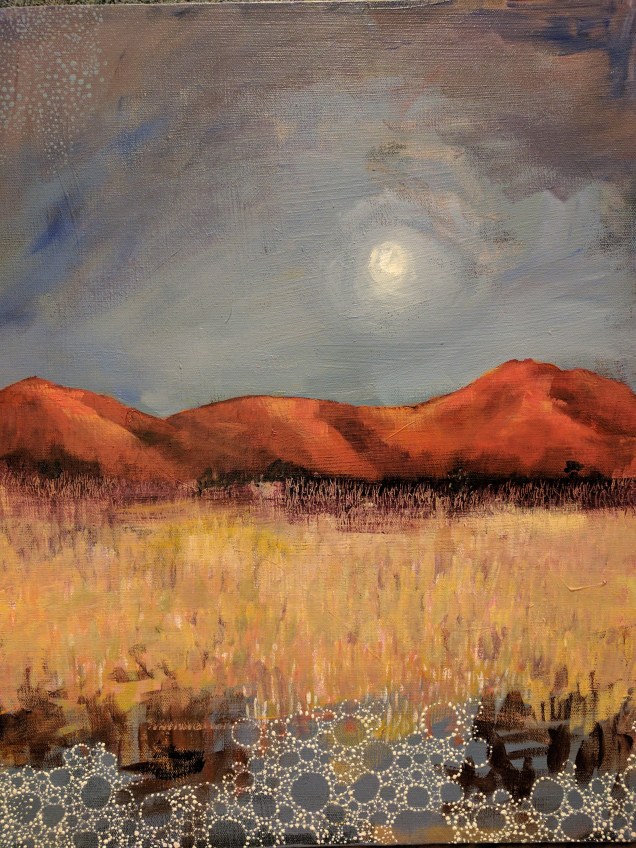
Untitled

Untitled_4.jpg

“Untitled,” Acrylic on Canvas, 2017


NIA SMALLS is full-time student studying Painting at the Savannah College of Art and Design in Savannah, Georgia. Through her fine art studies, this New York native works in immersive, experiential art. She uses painting within her practice as a sketch for the greater digital works, which she creates using projected footage of abstracted landscapes.

My Parrot And I

My parrot practices his hellos
inside his cage, but in my fantasies
he makes complete sentences,
subject-verb-object, the whole shebang.

On mornings I feel
particularly adventurous
I imagine him—on my behalf—
making paragraphs, too, nuanced
and soft on the edges, paragraphs
you read in Flaubert,
one of those that stretch the page,
a love affair gone awry and good
once more. In time, he’ll understand
the limits of his grammar,
compromise, maybe sing the blues.
That’s easy for the both of us;
for so many nights we’ve listened
to Lonnie Johnson calling small explosions

in the state of Alabama,
Bessie Smith mocking lovers
on Georgia’s terraces. Alone,
we’ve known weeping and betrayal,
the waiting for a call, the scarlet girls
going forth into the dark.
In secret sometimes my parrot and I
conspire to make a novel,
yet somehow—even when I let him
free—he falls against the window,
unsatisfied. I smooth his feathers
and tell him be still, holy, in this quiet
of saying goodnight to each other.
We know these syllables well.


CARL BOON lives in Izmir, Turkey, where he teaches courses in American culture and literature at 9 Eylül University. His poems appear in dozens of magazines, most recently Lime Hawk and The Lullwater Review. Forthcoming work is scheduled to appear in The Maine Review and The Hawaii Review. He was also a 2016 Pushcart Prize nominee.