Four Poets Reflect on ‘Home’

TISHANI DOSHI

“I wrote “Homecoming” on one of those many return journeys I’ve made to Madras. One of the things I always find when I come back home is the level at which life plays out, and after the tsunami in 2004, when I wrote this poem, I remember thinking how strange it was that this usually brash city was suddenly holding its breath.

My relationship to the city is very complicated. Similar to how Bruce Chatwin felt about Russia. “Whenever I’ve been to Russia,” he wrote, “I can’t wait to get away. Then I can’t wait to go back.” That’s how I feel about Madras-Chennai.

This essay I wrote says it all.”

Homecoming 

I forgot how Madras loves noise —

loves neighbours and pregnant women

and Gods and babies


and Brahmins who rise

like fire hymns to sear the air

with habitual earthquakes.


How funeral processions clatter

down streets with drums and rose-petals,

dancing death into deafness.


How vendors and cats make noises

of love on bedroom walls and alleyways

of night, operatic and dark.


How cars in reverse sing Jingle Bells

and scooters have larynxes of lorries.

How even colour can never be quiet.


How fisherwomen in screaming red —

with skirts and incandescent third eyes

and bangles like rasping planets


and Tamil women on their morning walks

in saris and jasmine and trainers

can shred the day and all its skinny silences.


I forgot how a man dying under the body

of a tattered boat could ask for promises;

how they could be as soundless as the sea


on a wounded day,  altering the ground

of the earth as simply as the sun filtering through —

the monsoon rain dividing everything.

 
(Published in Countries of the Body)


IMG_2216.png

TISHANI DOSHI is an award-winning poet, novelist and dancer. She has published five books of poetry and fiction. In 2006, her debut collection Countries of the Body won the Forward Poetry Prize for best first collection. She is also the recipient of an Eric Gregory Award and winner of the All-India Poetry Competition. Girls Are Coming Out of the Woods (poems), will be published by HarperCollins in 2017.


LYDIA HAVENS

I spent most of my childhood incredibly unhappy with what I was calling “home”. As I grew older, though, I started to love my hometown of Tucson, Arizona a lot more. But in March 2016, I traveled to Boise, Idaho for the first time to feature at a poetry slam, and I met some of the most incredible people that very quickly became my best friends. All throughout my life, I had really only ever had 2 best friends, so the fact that I was able to find at least half a dozen people I clicked with so easily still sort of astounds me. However, this taught me that sometimes home really isn’t a physical setting–it can be the love you find in that physical setting. I officially moved to Boise in September 2016, and I still can’t believe how lucky I am to have this place (and these people) to call home.”

This slideshow requires JavaScript.

I Constantly Thank God for Sad Songs & My Best Friends

Kate always sings that song about finding, her voice

echoing down every hallway like a formal gown

made entirely of need. Before I knew her,


she was in a band, and on rainy days she writes

music about cities we’ve never been to, and

the pills that aren’t totally working yet. Emily has


a tattoo on her leg dedicated to the punk rock ballad

we’ve screamed out her car window so many times.

It’s dark red  and constant on her skin. We all still have


some teeth trailing down the highway. Alex kissed me

at my first concert—we were playing Spin the Bottle

with some crushed Dasani plastic a stranger


fished out of his backpack. When that fickle compass

pointed itself at me, they cupped my jaw

in both their hands, and suddenly I was every song


ever written about your friends carrying you home.

We all first met before we performed in a poetry house show.

We crammed ourselves into Kate’s kitchen to make


a playlist and eat curly fries. By the time the show started

in the next room, the playlist was almost 9 hours long.

That was the night I started calling myself Lucky again—


it’s been over a year, and that is still a name I carry

every night we are together. We’ve danced together

in so many different living rooms. Most of them


are not ours anymore, but the music still is. We share

mirrors and lipsticks. We play songs using only

two chords. We get rashes on the backs of our thighs

from sitting in the grass for hours and talking.

I have not prayed in years, but I still constantly

thank whatever God is here with me for leading me

to this city, and that porch, and these three hearts

that love me more viciously than anyone else ever has.

I thank Them for all those love songs I listened to


as a child that were once about a boy that didn’t

actually exist, and are now about how my best friends

have made this world a beautiful, tough place


I never thought I would adore the way I do now.


IMG_5431H.pngLYDIA HAVENS is a poet, editor, and teaching artist currently living in Boise, Idaho. Her work has previously been published in Winter Tangerine, Voicemail Poems, and Drunk in a Midnight Choir, among other places. She was the Women of the World Poetry Slam Youth Champion in 2015, and her first full-length collection, Survive Like the Water, was published by Rising Phoenix Press in 2017. You can find out more at http://www.lydiahavens.com/


TRIVARNA HARIHARAN

“Surprisingly, the word ‘home’ does not bring forth a concrete, definitive image to my mind. It is in this ambiguity that my idea of it is rooted. I do not think of it as a linear state of being, but a conglomerate assemblage of various people, places, sounds, sights and smells.

Architecture can only make up for as much as one would like it to. But that which transpires in the empty spaces defines our ability to transcend geography. The voice of the wind, the face of a bird as it appears from an old window. The silence of what evanesces to stay, to linger.

I’m actually reminded of the title of one of Mahmoud Darwish’s books, “In The Presence of Absence.” It is a state of presence-like absence. That which is there, yet not. Perhaps home isn’t a constant unto perpetuity. It is an ephemerality that extends into infinity.”

Far Away

There is
a birch veiled

in

the sun’s
weaninglight.

In
the dark,

its leaves
rustle like

old anklets
that laugh

even after
they have stopped

being worn.


Picture3(2).pngTRIVARNA HARIHARAN is an undergraduate student of English Literature. She has authored The Necessity of Geography (Flutter Press), Home and Other Places (Nivasini Publishers), Letters Never Sent (Writers Workshop, Kolkata). Her poems appear or are forthcoming from Alexandria Quarterly, Allegro, Birds Piled Loosely, Random Sample Review, Sweet Tree Review, Open Road Review, TXTOBJX, Red Bird Chapbooks, Fourth & Sycamore, Eunoia Review and others. She has served as the editor in chief at Inklette,poetry editor at Moledro and Goodwill Ambassador for Postcards for Peace. She is the poetry editor for Corner Club Press. Besides writing, she learns the Electronic Keyboard, and has completed her 4th Grade in the instrument from Trinity College of Music, London.


DERRICK WESTON BROWN

Home

is still home
though the buildings
are bigger

the city’s faster

than i remember
the trotting I left

has since sped to a gallop.

Still

The dirts’ red clay
crickets still singing
Nana still frying fish
moving slower with 90 years
tapping her on the shoulder

Momma’s glad I’m home
the city still smells like
honeysuckle fresh cut grass
wild onion

this is the only place
i still answer to “boy”
and “son” cause i know the
mouths it falls from

still say “yes M’aam”
to any woman

older than my Momma

but ain’t my  Momma

yeah the city has changed
and so have I

left with a loping gait
returned with a straight
back  swagger

but still get a lump in
my throat and a smile
when I get to the door
of my Momma’s house

and the key still works.


derrickonmicbwDERRICK WESTON BROWN holds an MFA in Creative Writing from American University. He is the founding Poet-In-Residence of Busboys and Poets. He is a graduate of the Cave Canem and VONA summer workshops. His work has been published and featured in such print journals and online publications as, The This Mag,  JoINT, Colorlines and The Tidal Basin Review. His debut collection of poetry, Wisdom Teeth was released in 2011 through PM Press. He resides in Mount Rainier, MD. You can follow him on social media on Facebook, Instagram- @theoriginalDerrickWeston Brown or through the PM Press website.


Blog by Devanshi Khetarpal

headshot aa.pngDEVANSHI KHETARPAL lives in Bhopal, India. She is the editor-in-chief of Inklette Magazine, a poetry reader for The Blueshift Journal and a co-managing editor for Sprout, and previously served as a poetry editor for Moledro Magazine and Phosphene Literary Journal. Her poems have been published or are forthcoming in Disquiet: Murmurs From The Faultlines, Indian Literature, Vayavya, TRACK//FOUR, Drunk In A Midnight Choir, and Souvenir among others. Khetarpal is an alumna of the Iowa Young Writers’ Studio 2015 and the UVA Young Writers Workshop 2016. Her work has been recognized by Hollins University and Columbia College Chicago. This summer, Devanshi will be a participant of the nonfiction workshop at the AAL Writers’ Retreat in Siglufjörður, Iceland. She will start college at New York University this fall.

Reflections On A Failed Writing Experiment

BY JOHN S. OSLER III

I had this idea that, over spring break, I would structure my day so that everything but four hours (one for running, three free hours) would be for writing. In my first draft of this post I had this elaborate and painfully academic explanation for why I was doing it, something to do with the American Dream and the Protestant work ethic and The Autobiography of Benjamin Franklin. But really it was much simpler than that. It all came from finals season last semester, when I was putting the finishing touches on a paper after ten uninterrupted hours of work, when I though You know, if I spent as much time over summer break working on writing fiction as I do during the school year on school work, I’d have published a novel by now.

That’s all I really wanted. To see the name John S. Osler III on the cover of a book on the shelf of a bookstore, preferably underneath some cool cover art and laudatory quotes from top critics. To know that, even if I was hit by a car and died tomorrow, at least I’d have a novel to my name, at least I would have accomplished something with more staying power than memories.

If committing myself to my writing like it’s a real job (God willing some day it will be) was the price I had to pay to accomplish that, then so be it.

My original plan was to write the blog post as a sort of journal, explaining what I had accomplished and how I was feeling each day of my writing regiment. That plan fell apart instantly, since I failed to keep with the schedule for a single day.

There were a couple factors that accounted for my immediate failure. I was bone tired when I got home, and after a week of mid-semester exams I was sick of the written word in all its forms. Moreover, I was with my family for the first time in two months, and I wasn’t ready to spend all the time I could be spending with them locked in my room reading, writing, and editing.

But more than anything else, life got in the way. Sometimes it was mundane: my brother wanted me to play The Legend of Zelda: Ocarina of Time with him or my mom insisted I go get a haircut, but sometimes something more important than writing got in the way. The first day that I had planned to implement the schedule, my dad called me up and asked me to take the bus into the city to meet with a non-violent first time offender who he had helped petition for clemency and the journalist who connected the two of them. I spent the afternoon hearing about the ex-prisoner’s life, how he had joined the Latin King’s pee-wee division when he was eleven years old, how he had gone through with the drug deal that would eventually lead to his arrest when he knew he was being followed, how he had read his first book while in prison and had used reading to deal with the horrors of solitary confinement.

My first impulse was that learning about this life so different from my own would make me a more well rounded writer, that maybe I could even use some elements from his life as inspiration for a story someday. In retrospect, thinking about everything in how it relates to me and my writing is a pretty warped outlook on the world. Hearing about what this guy had gone through, the life my dad had worked so hard to bring back into society, that’s important in its own right.

That explains half of why my experiment failed: I assumed that I could write without taking time to live life. The other half is really just a variation on that; I assumed my writing could exist without life.

There’s this riddle or paradox I’ve heard used to describe seven or eight different phenomena (and as a plot point in the movie Ex-Machina). There is a woman who knows everything there is to know about color, how the eye takes in electromagnetic wavelengths, transmits them to the brain, and interprets them as color. But she understands it only in theory, she herself lives in a black and white room (or, in other versions, lives in total darkness). The question is, does she learn anything when she steps out into the world and sees color for the first time?

You can become a master statistician understanding it only in theory, or a master biologist or a master chemist. I’d even go so far as to say a master musician (although someone who actually knows something about music would probably disagree). But you can’t be a writer spending your whole life in a library. If there’s no experience, then you’re just reusing what you’ve read, maybe combining the old but never really making something new, something based on what you’ve personally felt. That’s what I felt like I was doing on the one day I actually stuck to the schedule, putting words together in the same way I’d put numbers together when solving a math problem. Frustrated and bored, I gave up and looked through something I’d written in ninth grade instead. The prose was terrible (when I could understand it through all the spelling errors), the dialogue didn’t sound like anything an actual human person would say, and the plot was simultaneously ludicrous and dull. But under all that was a memory, simple and pure, of waiting around for a cross country meet to start, being worried but at the same time at ease because I was surrounded by friends and even if I failed I would be participating in something larger than myself, and that in itself was rewarding. That authenticity, it was something as important as character or plot or effective language, and it was what I had missed.

I’m all for treating writing like a real job, and maybe some day when it is, scheduling my day around it will make sense. But in my rush to make myself a better writer I forgot that life sustains writing, and that life is important in and of itself. And, even with my half-assed attempt to get my literary work done, I still did pretty well for myself. I finished a 14,000 word short story, started editing a novella and a play, read all the submissions for Inklette thus far, and got through two novels. Maybe not a monumental achievement, but I’m happy with it for now.


12003007_1001022556622760_6551224101653223437_n-2jj.png

JOHN S. OSLER III is a freshman at Grinnell College. He has written over two hundred satirical articles for his underground newspaper The Southern View, and a few for his high school’s legitimate newspaper, Zephyrus, on the side. He has published short stories in the Grinnell Underground Magazine, Sprout Magazine, The Phosphene Journal, Moledro Magazine, and Random Sample Review.

How To Find Inspiration To Write

by Laurelann Easton 

As a writer, and having known many writers, one of the biggest truths and hardships about writing is finding and keeping inspiration. The most common idea is “writer’s block,” or “artist’s block” for anyone who doesn’t write but still has an issue getting the creative juices flowing.

Something to recognize is that everything that crosses your path, every situation you find yourself in is a potential story, even if it’s just something that you relay back to your friends later after it happens.

However, if these stories really spark something inside of you, you’ve got to hang on to it! My biggest fear as a writer is that I will somehow lose my ideas. With phones being a prevalent part of almost everyone’s lives, they’re the quickest and easiest tool to have on hand no matter where you are to save whatever inspiration hits you.

Some of the best advice I ever heard was to keep a yellow folder (it doesn’t have to be yellow, but this is what this particular person used). It can be a physical folder that you keep on your desk or your bookbag, or it can be a single folder on your computer that you use for one thing only. That would be for storing ideas, even little snippets of ideas. It can be a piece of dialogue, a philosophical idea, a lyric—literally anything!

The important thing here is the folder, physical or otherwise, or even the list of notes growing in your phone. Save all of these ideas for the rainy, wall-filled days that refuse to let you get any writing done.

Recently I went through the airport to visit my family a couple states over, and I swear that airports are hotspots for inspiration! Someone walked by me with their phone up to their ear, and for some reason it looked to me like he was impossibly holding a gun in the airport. And now I have a story idea about how someone reacts to being unexpectedly held at gunpoint.

At places like airports where there are a lot of people, there are a million different opportunities for inspiration. Of course, you can’t always be in an airport unless you travel frequently, so cafes or restaurants are also stories waiting to be told.

An interesting exercise in writing that I did a few years ago for a class assignment is called “portrait of a stranger.” For this, what you do is go out in a public setting and follow someone around. The goal is to write about that person in the third-person perspective and to add as much detail as possible so that it seems like you know the person.

This sounds really creepy—it’s not supposed to be. Don’t make yourself seem like a stalker. I achieved this by sitting in a café downtown and watching how the barista interacted with customers. The writing itself doesn’t have to be anything long; it can be only a couple pages or so. If anything, this will give you something to focus on and freedom to write because you’re not forced to create anything new.

For creative nonfiction writers, this is a fantastic exercise. Strictly fiction writers should remember, though, that real life holds a lot for inspiration because it leaves a lot of room for embellishment (creativity). Maybe the barista isn’t really a human but is instead a dragon who roasts his own beans!

Keeping a folder of ideas like this are great if you’re looking for something new to start, short story or novel or whatever it is you’re interested in writing!

Sometimes starting a story is the easy part, especially when you’ve got your trove of ideas saved up. Say you do get this great idea about a dragon barista, and you get the conflict and plot started. Then the walls come up. Your mind blanks. Where do you go next? How do you keep going?

If I’m looking for inspiration to keep going, I turn to art and music. I have this ancient DeviantART account, and I’ll scroll through the main pages of it viewing different art from popular artists. For music, I have go-to playlists that inspire me and I know many writers who have certain types of music they listen to. Sometimes I go to Pandora for Halo-themed music for epic action scenes, or YouTube for hours of fantasy music for the more magical stories I write. If I need something steady that won’t distract me, I play Radiohead because of how seamless it runs in the background.

What music do you listen to when you write? Or do you have to have a quiet room? If you prefer quiet, maybe viewing art can be a good what you go to for inspiration.

One of the last tools to consider for keeping your walls at bay is plotting. Everybody knows Freytag’s Pyramid or something similar to it, and it’s a good generalized way to consider your plot if you’re not one for knowing every detail of your story before it comes.

If you’re like me and love plotting, then something more detailed might help. This could be breaking down each chapter into scenes before you write them. I ended up doing this after I finished a full rough draft of my novel, and it helped to give direction to it all. I wrote a general goal for how it propels the conflict or plot of the story, and then broke down the scenes to see if it actually contributes to the goal I set. (This can be helpful if you’re looking for motivation or a point in the right direction for editing!)

Having the outline of a plot can be helpful to refer to because sometimes writer’s block can be fueled by not remembering where your story is taking your characters.

Here’s to the defeat of writer’s block and the success of creative endeavors!


16649393_1226865780684357_4326104954904165115_n1.pngLAURELANN EASTON is a creative writing major and will be completing the MFA program at Southern New Hampshire University in 2019 with a Teaching Assistantship. She loves reading the weird yet real stories of life that no one tends to shed light on. Alongside writing and editing, she runs an Etsy shop for wire-wrapped jewelry and metal-working. To de-stress from everything, she goes for hikes in the White Mountains, practices yoga in her living room, and cuddles her dog, Calypso.
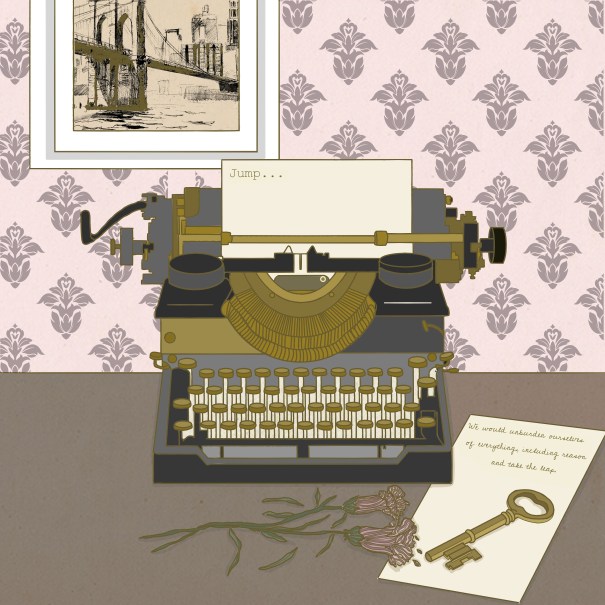
Jump

Illustration by Priyanka Paul

Illustration by Priyanka Paul

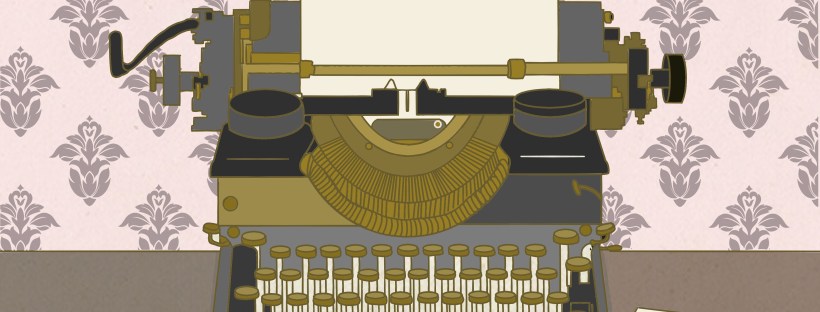
A set of keys, a typewriter with a letter in it and a photo collage; a forced elongation of happiness. Symbols that commemorate a state of consciousness that could never be accurately reproduced. We didn’t buy gifts to each other that year, the shared experience of jumping off a bridge into the Corinth canal was enough. We would unburden ourselves of everything, including reason, and take the leap. What would take a few more weeks to acknowledge is that we plunged into nothingness alone. Before the ropes broke our fall we felt free, alone. When they signaled me I wasn’t ready to be pulled up for I’d lose that which made me dive, head first, into the unknown. The keys adorn the coffee table, the ring has been removed. The letter has been folded and stored inside a book whose words have swallowed it whole. But as I write these words on the old typewriter, my eyes drawn to the empty frame on the wall, I know we did ourselves proud; we let ourselves jump, despite the fall.


ELENI CHELIOTI was awarded her PhD in English Literature hours before she received her stethoscope, as a doctor should. She is currently living and working in Athens, Greece. She’s only ever written about the things she cannot utter. Her short stories ‘Stealing Time’ and ‘Only Lust’ were recently published in The Rusty Nail and Heart & Mind Zine respectively. She also has a blog:  http://darkcaffeinematter.blogspot.com


PRIYANKA PAUL is a humanities student at St. Xavier’s College, Mumbai. She’s a self taught artist and loves to experiment with different mediums. She also writes and most of her written work is accompanied by her illustrations. Her art is highly influenced by social issues, gender studies and a basic liberal outlook of the world.

Into The Night

The wooden slats of the timeworn, dilapidated porch groaned underneath my feet as I stepped to the edge and looked up into the vastness. The Georgia night sky was as dark as I’d ever seen it. With heavy eyes I contemplated the black, hypnotized by the millions of miniscule specks that danced and flickered against the velvet backdrop. “I don’t remember there ever being so many,” I whispered into the cool air, knowing there was no one there to hear me. Grief ripping through my heart, I closed my eyes against the pain and began to sway, allowing the breeze to swirl around and wrap me in its tranquil embrace. Instinctively, I reached up and rubbed my palms against my bare shoulders to fend off the chill causing the soft hairs on my arms to rise.  The gust continued its twirling path down and around my body, ruffling the bottom of my loose, black dress. Filling with a sense of contentment, I sighed and thanked the night for its attempt at consoling.

 I opened my eyes and breathed in, pulling the air through my nose and allowing it to expand into my lungs until they were tight with pressure. The sweet smell of magnolias embedded in the breeze triggered my senses to come alive, sending my mind reeling back to a time of pure innocence. Wrapping my arms around myself, I stared into the shadows and allowed the memories come flooding into my consciousness.

“Watch Momma!” I shouted from the middle of an overgrown field with my arms outstretched to the sky above me, my tiny hand clutching tight a glass Mason jar. My five-year-old self was running and jumping into the air causing my long dark curls to trail in my wake.  Dusk was setting in and the sky layered on its bedtime ensemble. Deep blue folds pressed down from above causing the brilliance of the sun to succumb to its power. As the yellow melted into the earth, it hissed its flames into the dark only to be extinguished by the inevitably swelling black.

“I see you baby! You be careful now.” Momma stood watching from our old but sturdy farmhouse. The once white, two-story structure sat in the middle of a forty-acre farm worked by my father from dawn to dark. The expansive wrap around porch provided the house a look of refinement though many of the railing spindles were loose or altogether missing. The wood slats of the floor were always swept and clean and a two person swing hung at the far end, just past the front door.

Hearing my mother’s voice, I turned to see her leaning on the support post, hip resting against the railing. In the fading light of day, I could just make out the expression on her face. A soft smile rested on her lips as she looked at me with adoration. Her dress, though simple and plain, fell flatteringly over her slim figure and accentuated the curves of her waist. Her Italian heritage had gifted her with smooth, olive-colored skin that radiated vibrancy and youth. We shared the same dark, flowing curls though hers were kept shorter with the coils lightly dusting her shoulders. I thought her to be the most beautiful woman in the world.

“Momma!” I cried out again. “I got four of ‘em. See!” I held up the jar with my hand now pressed over the opening. Inside, four insects flitted about, lighting up in unsynchronized choreography. I ran towards the porch as graceful as my little legs could carry me, grinning with absolute pride and satisfaction. I dashed up the steps and rounded the corner to show off my prize. “Look Momma,” I said in between gasps of breath. “Look how pretty they are.” I stood on tiptoes, pushing the thick glass up as close to her face as I could so she might gaze upon my treasure.

“Yes, they certainly are beautiful.”

“I want to keep ‘em inside by my bed so I can look at ‘em every night,” I whispered to her as we both watched the glowing lights with fascination.

“If you do that honey, they’re gonna die.  You don’t want that now do you?”  She smiled down at me and ran a loving hand over my head, smoothing my tousled curls.

“I don’t wanna let ‘em go.” Large drops filled my eyes and my voice caught as I started to cry. “But I don’t want ‘em to die neither.” I looked up at my mother, searching for an answer in her face. She knelt down bringing our eyes level and reached out a hand to wipe away the tears streaming down my cheeks.

“Sweetheart,” she began in her gentle Georgian lilt that always managed to calm even my most heart wrenching moments. “You should let ‘em go. I know you wanna keep ‘em but you should set ‘em free so they can fly off and light up the sky for everyone, not just us. You want other people to see how pretty they are, don’t you?”

“Ye…eh Mom…ma,” I choked out, my sobs hampering my ability to speak clearly.

“Shhhh baby. Don’t cry,” she soothed, pulling me into her warm embrace. Craving the comfort of her love, I pulled my hand from atop the jar and threw my arms around her neck to bury my face in her hair. The light smells of jasmine and lavender swirled around my nose, filling me with the solace I was seeking. She pulled back to place a gentle kiss on the tip of my nose, making me laugh.

“I think they’re gonna fly back to their families now, Momma,” I said focusing back on the jar in my hand. The bugs had climbed their way to the top but sat just inside the rim, not making any attempt to escape. “See Momma. They don’t wanna leave. They wanna stay with us.”

“No, baby.  They’re just waitin’ for you to say good-bye.”

Sniffling, I ran my forearm across my nose and took a deep breath. Taking hold of the jar with both hands, I pulled it in close to my body so I could peer down into it. The anxious insects paced along the ridges of the glass lip but still did not take flight. “Okay,” I whispered quietly to the bugs. “It’s time for you to go on home now.” The bugs halted their movement as if they were listening. “Go on now,” I said again, giving the jar a gentle shake. In unity, they flew out and circled my head. Their tiny bodies illuminated the darkness and danced in the air between my mother and me. I squealed with delight as I watched them rise higher into the sky until they were out of sight. That night I dreamed of fireflies and ballerinas.

That had been my first lesson in saying good-bye. The childhood memory didn’t diminish this new, still raw pain, but it did ease the ache. As I dragged my consciousness back to where I remained rooted, standing on that very same porch, I looked out onto the open field to see hundreds of fireflies dancing in the darkness. My heart yearned for things to be as easy as they had been back then, when it was all so simple and everyone was full of love and happiness.

Another sigh escaped my lips as the breeze took a sudden, bitter turn and snapped an icy switch across my bare legs. The sharp gusts whipped my long curls with violent thrashes and my body released an involuntary shiver causing me to wrap my arms tighter around my shoulders. I hadn’t felt this cold since…since the day I revealed the truth and watched as my mother’s heart froze over right before my very eyes. Though a reaction had been expected, one so severe had been like a slicing slap across an already tender cheek. Her adamant refusal to speak with me, to discuss further what had taken me so long to divulge, caused a piece of me to wither and die the instant I had seen the rejection in her eyes. As the flashes jabbed at my tender soul, once again my mind went plunging back.

“Momma, please,” I had begged. I remembered that fateful afternoon from so long ago as though it was only yesterday. “Please let me explain.”

“No,” she spat. “I won’t hear of this. You will not come into this house and say these things to me and expect me to understand.” Her dark eyes hardened and her lips drew pencil thin.  My heart screamed out to beg her forgiveness, but I knew she would grant no such relief. “Be glad your daddy isn’t here to watch you throw your life away!” She had always known how to drive the knife straight into the heart, though never before had I been on the receiving end. With my father’s passing just a few years prior, I still hadn’t quite adjusted to his absence. She had known this and used the barb to wound me as she knew of no other way to redirect the anguish she was feeling.

I walked away from her that day with the hope that time would soften her resolve, open her heart to me, and forgive what she believed to be my indiscretions. That time never came. For ten years I waited. For ten years I fought back the tears and the anger, yearning and hoping she could again see me as that five-year-old catching lightning bugs in the summer night air.

Now, a decade later, I had received the phone call deep in the night. It was one I had known would come sooner or later. My brother was on the line, pleading for me to come, assuring me I needed to be there. So I conceded, and drove the distance to a house I no longer called home.  Upon my arrival, I had climbed the wooden steps, sadness stinging me as I noticed how they were now covered with layers of dirt and dehydrated leaves. I passed through the doorway and into the kitchen, lit by only the dim yellow bulb over the stove. The air was tranquil and stale yet still held the faint smell of Momma’s secret recipe pasta sauce. Was I supposed to be sad? Relieved? Angry? Was it possible for me to feel them all at once? Finally, it was sorrow that won out as I passed through the hall and into my parents’ bedroom.

Not taking my eyes from the far corner of the room, I inched my way towards the quiet hum of medical equipment. I reached my destination of the old, sunken rocker sitting next to the queen size bed. I eased into it with a quiet whoosh, doing all I could not to pierce the awkward stillness. The figure that lay in the center, under the blankets, was barely recognizable to me.  Gone were the wisps of shiny dark curls and unblemished, tanned skin. They had been replaced with dry, grey stands of worn out yarn and thin, pallor skin that made my fingertips tingle at the thought of touching it. A haggard, raspy sound escaped from her lips, then rattled away. I shot a look across the bed to where my brother stood, his arm curled tightly around his wife. “I didn’t know she was this bad.  Why didn’t you tell me?” I said with an edge.

“She made me promise not to,” he said, his eyes shifting to the ground in shame. Tears ran across his face and dripped from the tip of his nose. “I thought we’d have more time,” came in a whisper from his hoarse throat.

I shook my head in disappointment and returned my gaze to the woman dying before me.  “Does she know we’re here?” I asked, not looking back at my brother.

“Doctor says no. The morphine is keeping her under, but he says she’d probably be unconscious anyway by now.”

“God, Momma,” I whispered. I took hold of her frail hand and wrapped my fingers carefully around hers.  It was the first time I had touched her in years. For an instant, I felt light from the connection. I leaned over and pressed my lips to the bony knuckles and held them there as the grief swelled inside my chest, threatening to burst through and shatter my ribs. The breaths that seeped from her dry, cracked lips were garbled and it became obvious she didn’t have many more left.

A vice began tightening against my lungs and my heart echoed in my ears with a thud so resounding I could no longer piece together a coherent thought. I knew I couldn’t stay, couldn’t remain until the end. I hadn’t the strength. I eased my way to standing, keeping the gnarled fingers still intertwined with mine. Using my free hand I smoothed the top of her unruly hair and bent to place a kiss on her temple. I rested my forehead against her clammy brow and searched for the last words I would ever say to her. A thickness formed in the back of my throat as I struggled to keep the tears at bay. A strangled sound emerged from my lips when I tried to speak. I paused, and then began again, driving down the building anger and regret. “I can forgive,” fell from my lips in a hush so low I barely heard it myself. Large drops now streamed freely down my cheeks. I made no attempt to wipe them away as I bent closer to whisper in her ear.  “Go dance with the fireflies, Momma.”  I gave her hand one final squeeze and let the gnarled fingers float back towards the sheet.  Stifling the cry forcing its way through my lips, I covered my trembling mouth and rushed from the room.

Three days had passed since that night and today we lowered the casket into the ground to remain there for eternity.  Still standing in the night air, I blinked away the tears and inhaled with a quiet gasp as I realized time had slipped away from me while I had tumbled through painful memories all the while remaining fixed to the old porch of my childhood home. The winds had all but ceased and my dress now hung limply, occasionally brushing back and forth across the tops of my knees. The sounds of the crickets had disappeared as the cool of the night swept in and silenced the remnants of evening. The quiet enveloped me as I continued to sway ever so slightly. Everything seemed surreal and I could feel the loneliness start to edge its way into me.  It nibbled at my fingertips and crawled its way up my arms, seeping into my chest in an attempt to smother my heart.

I was about to relent and let it consume me when the creak, smack of the wooden screen door sounded behind me.  Light footsteps sauntered up and a slight smile flickered across my lips.  Long, warm arms wrapped around me from behind, pulling me close to the body to which they belonged.

“How are you?” a quiet voice whispered into my right ear.

“I’m not sure.  Still trying to believe she’s really gone.” Though the loneliness had fled at the sound of the door, the dull ache still radiated through me.

“Is there anything I can do?” Warm, sweet breath danced across my cheek.

“No, love.  You being here is enough.” I smiled and ran my hands along the arms encircling my waist. My fingertips skimmed across tender flesh to the long slender fingers interlocked in front of me. I pulled the hands apart so I could turn. My heart flooded with emotion when I stared back into eyes of bright blue reflecting the love I had known for ten years.  I reached up to float my touch along the soft curves of a face filled with devotion, across full lips that smirked back at me, and up into long, silky hair that shimmered between my fingers. The smirk melted into a smile as she tilted her head down to kiss me.


CHRIS EVANS currently resides in Lebanon, Ohio with her wife and three children. She works full time as a supply chain planner for a large plastics company. Chris holds a Bachelors of Arts degree in English from Southern New Hampshire University and is currently pursing her graduate degree in English-Creative Writing with an emphasis in fiction.

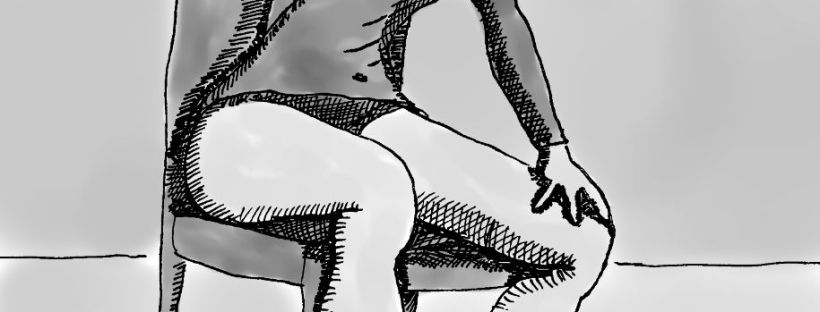
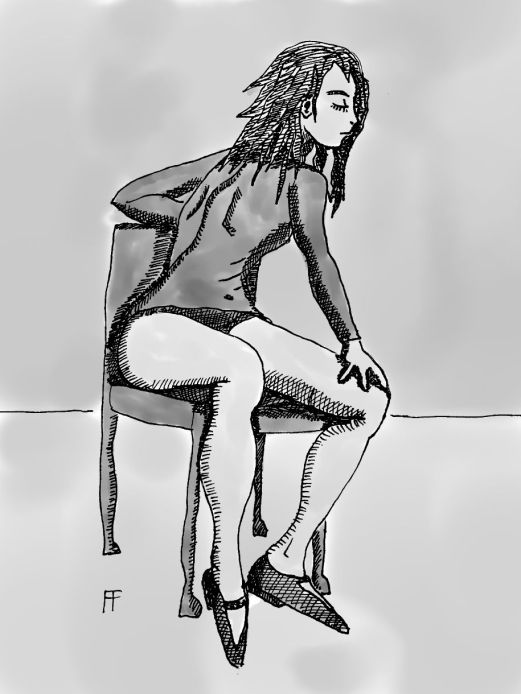
Everyone Has Sad Stories

EveryoneHasSadStories_12x9_grayscale_310_dpi_web.jpg

Illustration by Allen Forrest


A doctor explains to you in very large words the effect of trauma, of traumatization. You want to tell him you don’t know what he means by that, what he means by “Those who have experienced trauma.” Doesn’t that mean everyone? You want to ask. Isn’t the world just one big scar? But you don’t ask him that, it might only be more evidence of your traumatized mind.

“We define trauma,” he says, “as an experience that impairs the person’s proper functioning of their stress-response system, making it more reactive or sensitive.” He also says, “An infant who is neglected or abused develops a different neural framework. They might begin to dissociate and withdraw from everyday life. Because they are outwardly quiet and compliant they are often seen as okay and ignored…” You wonder why he says “they” when what he really means is “you.”

This whole thing happened because of one “triggering event.” You’d been quietly managing through everyday life. Wake up. Bed check. Try to get the last of the Fruit Loops. Walk to school. Sit in school. Walk around. Back to the group house. Eat. Bed check. Sleep. Sure, sometimes you lost whole days, sometimes it turned out to be Friday when it was supposed to be Wednesday, but didn’t that happen to everyone? Teachers ignored you, students (mostly) ignored you, you never caused problems. While the other kids at the group home smashed things and got in fights and stole alcohol or pills, you just sat there. So why are you here?

They say they found you in the middle of the street, they say you were trying to kill yourself, but it didn’t happen that way. You just happened to stop walking, to stop, to stay still, like they were always telling you to do, be a good little girl, don’t make noise. You didn’t make noise, you were silent, still. So what’s the problem? You closed your eyes, and felt the wind of the cars fly by you. And then there was the screeching of tires, and horns and yelling. You covered your ears with your hands, because it was too much noise. You heard the sirens, but there were often sirens. Later you felt the air of someone speaking to you, close to your face, but you didn’t open your eyes. He started to shake you but you kept your hands up against your ears, kept your eyes closed. They must have pulled you away, must have put you in handcuffs (for your safety), must have covered your head as they pushed you, gently, into the back of the car.

In a room at the station it was quiet, so you opened your eyes. There was a woman sitting there. “Why’d you try to kill yourself?” she asked. You didn’t answer because she wasn’t talking to you. She got frustrated, you saw it in her face, and closed your eyes again.

Eventually, they brought you back to the group home but they didn’t make you go to school the next day. And then finally someone brought you here, to this man with the gray beard and glasses, and corduroy pants. He is sitting on the ground, which seems very strange for a grown-up to do, but you try not to think about it because you don’t like strange.

He’s still talking. “People who have experienced trauma, especially children, need to be able to control how and when they tell their stories. Only the child knows what the proper time and method of revisiting trauma is.” You think he’s talking about you again but he’s using all the wrong words. He calls you a child, but you figure you probably haven’t been a child for fifteen years. Although you also know they’ll call you that for the next three, when you turn from “child” to “no one.” He also tells you, “You can control when and how to tell your story,” but what he really means is “tell me now.” And he waits.

You know what he wants you to say. You know he’s read your chart, he knows your story, and he is almost whispering the words, willing you to say them because that will prove that he is right and you are “traumatized” but he can and will fix you. Triumph. He wants you to say it so bad and you don’t want to disappoint him so you begin to speak.

“Dawn Almarez died during childbirth. She was only 14 and didn’t go to the hospital. Her mother lived with a boyfriend, he bred pitbulls to fight. The grandmother was 30 years old. She was addicted to methamphetamines. The grandmother’s boyfriend was arrested for abusing his dogs in public. They found drugs on him. They raided the house and found a two year old infant in a dog kennel in an empty room. They took the infant to CPS and it was placed in a foster home.”

You stop speaking because the man is looking at you in a strange way.

He speaks. “You were the infant.” You feel guilty, like he’s caught you in some way, like you told the story all wrong, and he’s disappointed anyway.

Obediently you say, “Yes, I was the infant.” You feel your heart begin to race you don’t want to be in this room anymore.

“You weren’t even crying,” he says. “But that’s not unusual. You had evidence of abuse. Infants can not fight or flee from a perceived threat. Their impulse is to cry for an adult. However, most likely whenever you cried for an adult, you were abused. So you stopped crying.”

He is proud of this understanding, and you nod because you don’t want to take that from him.

That was the story he wants you to tell, so you tell it, you have it memorized, but none of it is from your memory. It is only words on a page, a history that may or may not have existed. Everyone has sad stories.

“What about growing up?” he asks you.

You don’t answer him, even though you want to, because you don’t know what he means. Growing up. You did grow, up- once you were small, now you are five feet two inches. You wonder if that’s what he means, if he wants you to tell your height but you doubt that he does. And the doctors tell you you’re too small anyway, only 95 pounds they say, always disappointed, so you don’t want to bring that up, he’s already disappointed in you.

“Foster care? The group homes?” He is trying to prompt you, like you’ve forgotten your lines and he wants you to remember.

You remember being five years old and climbing onto the kitchen counter in the middle of the night. You remember finding a can of tuna and stabbing it with scissors until it opened enough to eat it. They had forgotten to feed you again. When the teacher asked about the cuts on your hands, you just shrugged, you’d never noticed them before.

You wondered if that’s the kind of story he’d like to hear, but you don’t have the energy to tell it.

You stay silent and he continues to watch you, waiting. Your heart beats faster and you begin to sweat. It’s hard to breathe.

He looks away. He sighs. “A traumatized child can recover. But it takes time. And patience. The most important thing is to get the child connected to something- family, community, friends, school….” You want to ask him how you can connect to something you don’t have.

He smiles and puts a hand on your shoulder that feels like it’s a million pounds and burns like fire. You close your eyes and tell yourself not to flinch, you tell your lungs not to close.

As he says goodbye to you in the doorway, he gives a smile like he is full of hope for you. You want to cry, because you know he’s wrong, and there is no hope for you. But you don’t cry, because good little girls don’t cry.

So you turn from the door although turning feels like it takes all of the energy you have. You tell your feet to move.

You walk into the street.


KRISTEN POITRAS is a graduate of San Francisco State University with a BA in Creative Writing. She has had a lifelong love of writing and working with/helping others. She currently lives in the Napa Valley in Northern California enjoying the grapes and working as an education coordinator at an alternative middle and high school. She previously worked for two years as a high school English teacher at a traditional school combining her love of literature and working with youth. She plans to attend graduate school for a Masters in School Psychology Counseling and Education. In the future, she will continue writing while also devoting her time and effort to youth in need.

ALLEN FORREST has created cover art and illustrations for literary publications and books, is the winner of the Leslie Jacoby Honor for Art at San Jose State University’s Reed Magazine and his Bel Red painting series is part of the Bellevue College Foundation’s permanent art collection. Forrest’s expressive drawing and painting style is a mix of avant-garde expressionism and post-Impressionist elements, creating emotion on canvas.

The Rainbow Faucet

“Daddy’s home!” my brothers and I screamed every night at the sound of his car door slamming shut. We never let him walk more than two steps into the house before we nearly tackled him to the ground. We hugged him, of course, but we had ulterior motives. My dad used to smuggle our favorite candies in his pockets and it was our top priority to find them as soon as he came home.

Every night he played the same trick: “Oh, sorry guys, I forgot your candy,” he said with a smack to his forehead, and then we shouted in unison, “No you didn’t!” We then searched all of his pockets to find our candy and squealed when we felt the plastic slip between our fingers.

We developed tactics for the most efficient pat-downs to find our treasures that put any cop to shame, and these were perhaps the only moments we worked best as a team. Each of us was responsible for one pocket: Ryan and I handled the pants since we were the shortest, and Billy and Markie ransacked the jacket because they were taller. My parents laughed as we attacked him and threw our candy into the air after the excitement of a successful hunt. My brothers got Kit-Kats, Snickers, and Reese’s, while I had a love affair with M&M’s. It didn’t matter if Dad tried to spice the game up by placing our candies where the other siblings would find it. We always swapped so everyone had their favorite. These battles dated all the way back to when I was three years old, and they are the earliest and fondest memories I can recall from my childhood.

My mom constantly complained, “You’ll spoil their dinner,” but he never did. My stomach was bottomless whenever I ate M&M’s. To me, my dad was just a really tall, strong kid who liked watching Spongebob and singing “Video Killed the Radio Star” in the car with me. On weekends when we didn’t have the anticipation of him returning with our goodies after work, he sometimes took me out to run errands then rewarded me with a little pack of M&M’s. One of my least favorite errands was going to the Sear’s Auto Center with its noxious rubbery fumes when my dad went to get his car serviced. That didn’t stop me, though, from memorizing where the vending machine was located. All he had to do when he noticed my patience diminishing was slip a dollar bill into my tiny claw when we held hands and I’d immediately take off. Whenever we went grocery shopping, my eyes became lasers that I trained to sort through the vast stacks of candies in the checkout line and target the M&M’s with inhuman speed and accuracy. I’d stealthily throw a pack onto our pile of food, thinking my dad never noticed, despite the big smile on his face.

Sometimes I ate my M&M’s by color, starting with the reds and moving until only the brown ones were left since they were the most boring. Other times I ate them slowly, one at a time, giddily savoring the cracking between my teeth as I tasted the sugary contents inside. At my most charming, I’d eat a huge handful and let my mouth crunch louder than my shoes when I walked on gravel. To this day, my favorite way to eat M&M’s is by putting them in my mouth one at a time and sucking until their shell melts, leaving me to relish the chocolatey goodness.

One fateful day when I was three, I came up with a brilliant idea for a new way to enjoy M&M’s. It was a Saturday, which meant I spent the whole day running errands with Dad in exchange for some M&M’s. After a long day of driving across town, he parked at a gas pump to fill up the car. I thought that if my mouth liked M&M’s so much, then why wouldn’t other parts of my body enjoy their company, too? Once I heard the gas sloshing into the car, I shoved several  mini M&M’s up my nose. I sat for a minute, waiting for them to melt and reveal their chocolatey contents so my body could enjoy it, but nothing happened. Life as I had come to know it ceased to exist after I realized the M&M’s were stuck in my nose. In those few minutes of perhaps the biggest betrayal of my life, I went from being carefree to realizing I was probably going to die. The feeling of having one of my airways cut off made me forget completely that I had a mouth to breathe from. I felt the foreign objects poison my body. Picking my nose in an attempt to dig them out only pushed them further up. With each inhalation, my lungs ballooned in preparation for the strain as I tried to launch them from my nostrils. With each exhalation, I realized how much trouble I was in when the M&M’s refused to budge. I listened to my dad talking to someone outside and I had no clue what I should tell him when he came back in the car. I could wait and see if he noticed, but that came with the risk of him getting mad at me, or I could avoid his glance and keep this secret stowed inside me forever. The dilemma was too tricky for a toddler to handle, so I sat with my companions lodged up my nose and banged my head against the seat in frustration as I waited for him to come back. I wanted to gauge his mood to determine if I should confess or not. The door opened, and I looked up at him, helplessly strapped in my car seat.

“Nicole?” He erupted with laughter. Suddenly I moved to the defensive.

“What, Dad!” I barked.

He angled the rear view mirror to where I could see my reflection and I gasped. Hues of brown, red, yellow, orange, green, and blue leaked out of my nostrils from a self-inflicted rainbow faucet. I joined him in his laughter for a moment and then remembered the gravity of the situation.

“I’m dying, Daddy.”

“Oh, Coley, no you’re not,” he said between laughs. He grabbed a tissue and started rubbing my face. He pinched one of my nostrils and told me to blow. I was half free. He pinched my other nostril and told me to blow again. At last my nose unplugged. I sat in awe of his ability to save my life on his first try. I viewed my dad as the most powerful superhero, and he probably thought of me as his damsel always in distress. “Well, now mom is definitely going to know I gave you candy when she told me not to,” he said as we admired the artistry of my newly stained skin.

Two years after this incident, I broke my leg in the middle of playing a hardcore game of stuck in the mud. I jumped off a ten-foot-tall jungle gym platform in order to escape being tagged “it.” I was the last person standing, and no way was I about to let some boy get in the way of that. After tragically learning that I could not fly, and, worse, that I was not indestructible, I had to change a lot of my priorities in life, like refraining from leaping off of tall things when boys approach me, something that has proven quite difficult as an adult. On the bright side, after I got my purple cast molded to my leg and was informed that I would be the most popular girl in school since everyone would want to sign my leg, instead of receiving the standard lollipop, the doctor gave me M&M’s that my dad most likely slipped into his white lab coat when I wasn’t looking.

Instead of feeling crippled during my weeks of hobbling, Dad let me feel like the superhero. Every day he scooped me up and walked around while I dangled from his shoulders so I could soar six feet in the air. My food upgrade made my flights much better than the time I flew to Disney World. Instead of receiving withered peanuts, my flight attendant knew better and handed me my favorite chocolate snack. As part of our game, Dad pretended he lost me, even though my aggressively purple cast hung right in his face and my stubby fingers yanked his wavy brown hair.

“Coley, where are you?” he hollered. I answered with shrieks of laughter as he spun wildly searching for the source of the cries, but still being careful not to drop me.

“Oh no, I think she’s gone!” he said to make me erupt into more laughter at his feigned cluelessness. After a few minutes of hysterics, I decided to show him mercy and reveal myself by shoving an M&M into his mouth.

“What! Did this fall from the sky?” he shouted, still oblivious to my presence. “Oh, Coley! I’m so glad I found you!” he said after he finally looked up.

“Daddy, I was on your shoulders the whole time!”

“You’re right,” he said. “Do you want to stay up there?”

“Yeah!”

“Just don’t let me forget that you’re up there again.”

“Okay,” I said, crossing my fingers behind my back.


NICOLE MELCHIONDA is a recent graduate of Stetson University where she majored in English with a minor in creative writing. There, she worked closely with award-winning poet, Terri Witek, and journalist,  Andy Dehnart. In February, she is moving to China to teach English.