Relics


Sebastian, you are with me again,
lodging in the cool warrens of my mind.
I heard your voice in the mouth of a classmate
who leaned over and whispered,

Do you see them? Three deer,
sapling legs flickering among bare shrubs,
their bodies carved lean and stark by winter.
Blue shadows on the dimpled snow, it is easy
for them to pass through briers.
Pliant ears, pelt stretched
over haunches unscathed.
It was never easy for you,
to be slashed by tangled branches,
geometric like cracked glass.

You asked questions like a deer
starting to run. One hoof, then a clumsy
pitch into a two-beat gallop

hurtling forward despite
my refusal to meet
your soft eyes, avoiding
the taut fear that was like glimpsing
my own terrible reflection.
You plucked the hunter’s
arrows from your flank and asked me
why I looked so mean. I hid
a quiver behind my back.

Sebastian, when I want good luck,
I still tap the antlers mounted on my wall.


RACHEL HERTZBERG is a rising sophomore at Bryn Mawr College. Her poetry can also be found in Parallax Online, Words Dance, and The Rusty Nail. In her spare time she likes to explore and write letters. She is originally from Minneapolis.

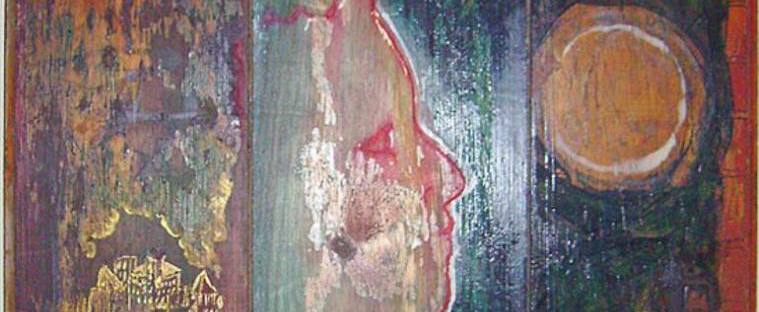
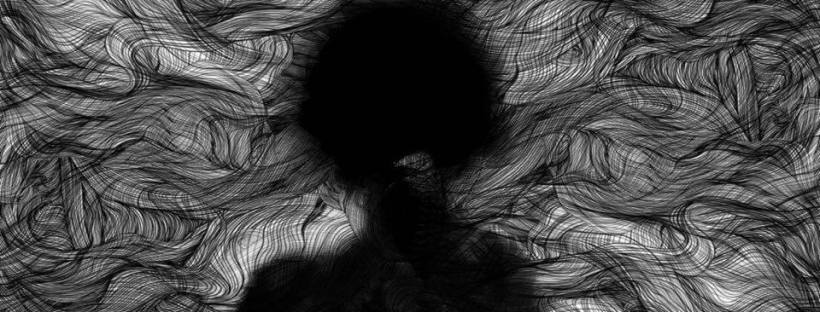
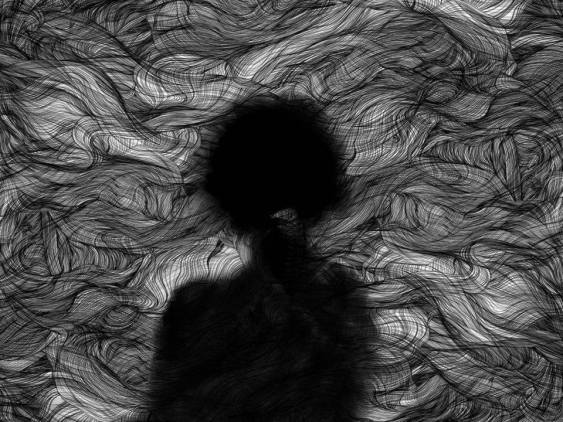
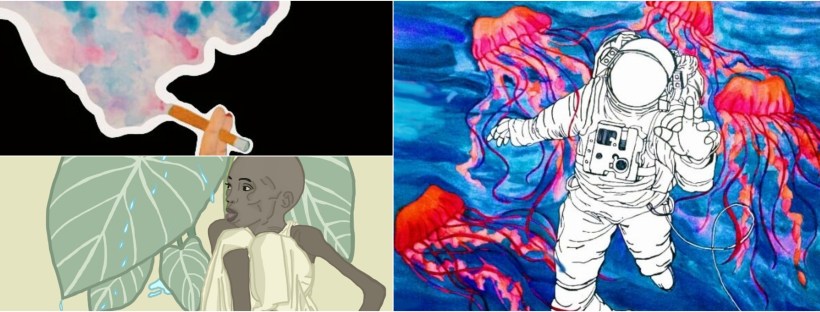
Three Pieces

Artist Statement: “My art tries to explore various facets of myself and the world that I live in. I want my art to strive beyond the limitations of feelings that art is supposed to portray. I want to be ‘ARTraged rather than outraged.”


This slideshow requires JavaScript.


PRIYANKA PAUL is a humanities student at St. Xavier’s College, Mumbai. She’s a self taught artist and loves to experiment with different mediums. She also writes and most of her written work is accompanied by her illustrations. Her art is highly influenced by social issues, gender studies and a basic liberal outlook of the world.

And They Lived

Neither of them can believe they let themselves be persuaded to come out tonight. It is winter in Boston or New York or Toronto. They both have exams to study for. Graduate degrees to get. Student loans to justify taking out. But someone pleaded and someone else insisted and somehow they have found themselves here. The room is an odd mix of dark wood and plastic. They try to remember how to be social. He sits down next to her at the bar. She glances at him. He notices that they have the same eyes. Piercing blue or liquid black or stormy gray. Both of their faces are chapped from the wind blowing off Lake Michigan or the Thames. She pulls a tube of balm out of her pocket. Uncaps it. Smoothes it over her lips. He pretends not to watch. She pretends not to notice that he is watching. He asks her what she’s drinking. Winces at how stupid his voice sounds. She grimaces sympathetically and thinks to herself that he has a nice face. Sees his sweatshirt. Realizes that they went to the same university in New Brunswick or Ann Arbor or Montreal for undergrad. She tells him this and offers to buy him a cider or a beer. He accepts. They talk about school and Shakespeare and faraway places they want to visit someday. They discuss war and death and politics. They talk about parents. He likes his. She likes her mother, not her father. A song they both like starts to play. Then a bad song comes on. Then another. And another. She wants to leave. He wants to go with her. They pay for their drinks in euros or dollars or pounds. They decide to go to his place since his roommate is out. They get into a taxi. The snow is swirling on Seventh Avenue. The Vienna State Opera House is lit up against the night. The hands on Big Ben strike eleven. She reaches for his cold hand with her gloved one. The cab lets them out at his apartment. They go upstairs. They kiss. They undress each other. They fall onto his bed. His last thought before he sleeps is that if the condom broke and she becomes pregnant, their child will have beautiful eyes. They wake up early in the morning and eat bagels or croissants or pan dulce for breakfast. They smile cautiously. They do not want to seem clingy or desperate, but something fits. There is a comfortable ease in the way they eat and speak. They both have classes to get to but agree to spend the next day together. They meet at the riverbank and hold hands as they walk along the Danube. They go to the Met and look at the suits of armor and the hieroglyphs in the Egyptian wing. They eat goulash in small restaurants on the winding streets of Prague. He meets her friends. She meets his parents in the suburbs. The days are getting longer. They like kissing the most in the late afternoon, when the world glows soft purple and they can imagine they are the only ones in it. They decide to move in together. They pool their belongings and buy an apartment to put their mismatched sheets and plates in. They adopt a cat. They cook spaghetti and coq au vin and tortilla de espana in their tiny kitchen. He finishes grad school. Starts working as a lawyer or a professor. She still has one year left. Starts sending out resumes. Her sweaters are threadbare and all her jeans have holes. Weeks pass. She gets a letter. Reads it once. Reads it again. Reads it so many times that the paper warps beneath her sweating fingers. She bites her lip until it bleeds. He can taste it when he kisses her. Something is wrong. She is crying. He sees the letter. Reaches for it. As he reads she tells him that there is a job somewhere far away, a different country, at a magazine in Paris or a fashion company in Milan or a lab in Sydney. It is ridiculously perfect, she says, the opportunity of a lifetime, a childhood dream come true, every incredible cliche she can think of. She didn’t think she was going to get it. He looks at her. Realizes that she is not crying at the prospect of making an agonizing choice. She is crying because she has already decided. He briefly considers what their life could be like in this new place. Stops himself. He has a life here. He cannot give up his job in this economy. He cannot give up his entire family, he tells her. Maybe she nods. Perhaps she understands. Perhaps they fight and call each other selfish. Maybe their yelling sends the cat dashing for the fire escape. It doesn’t matter. She moves out at the end of the month. She takes half of the plates, the books, the clothing. He keeps the cat. A year passes. They often unknowingly get drunk at the same time, despite the difference in time zones. Two years. They both love their jobs. Three. He thinks he sees her on the subway but can’t be sure. Four. She gets engaged and breaks it off within a month. Five. He buys a ring he can’t bring himself to put on his girlfriend’s finger. Six. The cat dies. Seven. There was a car crash. A lightning bolt. A razor blade. He hears the news from a friend of a friend. A Facebook update. An announcement in the paper. Her name floats before him on a screen. He can see the truck skidding on black ice. The flash in a field soaked by sheets of rain. Blood trickling down white bathroom tiles.  It is winter and the streets are dark. The bar where they met went out of business years ago. He goes to one that has just opened. Orders a cider or a beer. Bad music is playing. He hears a voice call his name. Turns and sees his sister’s friend. She is wearing a lot of makeup or no makeup at all. He does not notice if she is pretty. He buys her a drink. They talk about work or an article one of them saw online. After an hour they go out to the parking lot and press against each other. She is his best friend’s mother or his brother’s ex or possibly his cousin. It doesn’t matter to him because in this tiny moment held between their lips someone else is not cold and dead in the ground but alive, alive, alive.


SOPHIE PANZER splits her time between her hometown in New Jersey and Montreal, Quebec, where she studies history at McGill University. She attended the 2014 Kenyon Review Young Writers Workshop and received a national medal for journalism from the Scholastic Art and Writing Awards. Her work has appeared in the Young Adult Review Network, Teen Ink, The Veg, and Yiara Magazine.

On Such Little Things Happiness Depends


You say, Stop singing, lean your head

on my shoulder, begin your own lullaby—


secret system of your voice like bubbling water,

divine manipulation of threads


woven through wind and kissed by stars,

secret pieces of news divulged to the night.


The black-crowned heron builds

his nest out of music by moonlight.


Coyotes march from great distances,

the door-keepers and sentries of the dark.


Magnolia blossoms as big as the cold

crystal moon lean down their sweet scent


and listen while the moth spreads

her brown wings and flies like a shadow


silent through the trees. Night after night

you sing your story to the stars


until you drop down exhausted on your bed

and your little dog lies down at your feet.


Some words borrowed and rearranged from “The Nightingale and the Rose,” Stories for Children,” by Oscar Wilde (original words verbatim as they appear in order in the story: “nest,” “on what little things does happiness depend,” “secrets of philosophy are mine” “night after night I have told his story to the stars,” “silent,” “spread her brown wings,” “passed through the grove like a shadow,” “built out of music by moonlight,” “voice like water bubbling,” “and the cold crystal moon leaned down and listened”) and from “The Use of Spies,” The Art of War, by Sun Tzu (original words verbatim as they appear in order in the chapter:   “marching them great distances,” “drop down exhausted in the highways,” “secret system,” “divine manipulation of the threads,” “cannot make certain of the truth,” “secret piece of news divulged,” “door-keepers and sentries”)


LISA STICE received a BA in English literature from Mesa State College (now Colorado Mesa University) and an MFA in creative writing and literary arts from the University of Alaska Anchorage. She is a military wife who lives in North Carolina with her husband, daughter and dog. She is the author of a full-length poetry collection, Uniform (Aldrich Press, 2016). You can find out more about her and her publications on her website and on Facebook.

Two Poems


[Memory: like dew]


Memory: like dew

(of you   my son)

on spider’s silk,

on roses.


The leaving of sun

for moonlight

on the pond’s surface.


The still waters.


The stillness of my memory

drips

on you

for you  my son.


Fatherhood


break birds’ flight

to moss on stone


examine the simplicity of their makeup:


watch the water drip down the back;


look at the moss drink the dew;


wind blows through the thousand canyons

of its feathers

as easily as it does

through the green silk.


but the complexity in the Woven Child

brings you to divine (un)certainty.


How do feathers breed gasps of air?

How does moss anchor to stone?


CARSON SAWYER is a poet and short story writer living in Omaha, Nebraska. He has been published in Common Ground Review and is a gradate of the University of Iowa’s Young Writers’ Workshop.

Ek(phras)is

One of the most beautiful things about art is how it appears in seemingly infinite forms. A poem. A sketch. The way the sky looks at sunrise. Your brother’s dimpled smile. Every facet of our world just brims with art. Often times, its many shapes overlap and interconnect in ways we might not even realize. For Inklette’s third issue, we, in the prose department, wanted to do a feature reflective of this phenomemon.

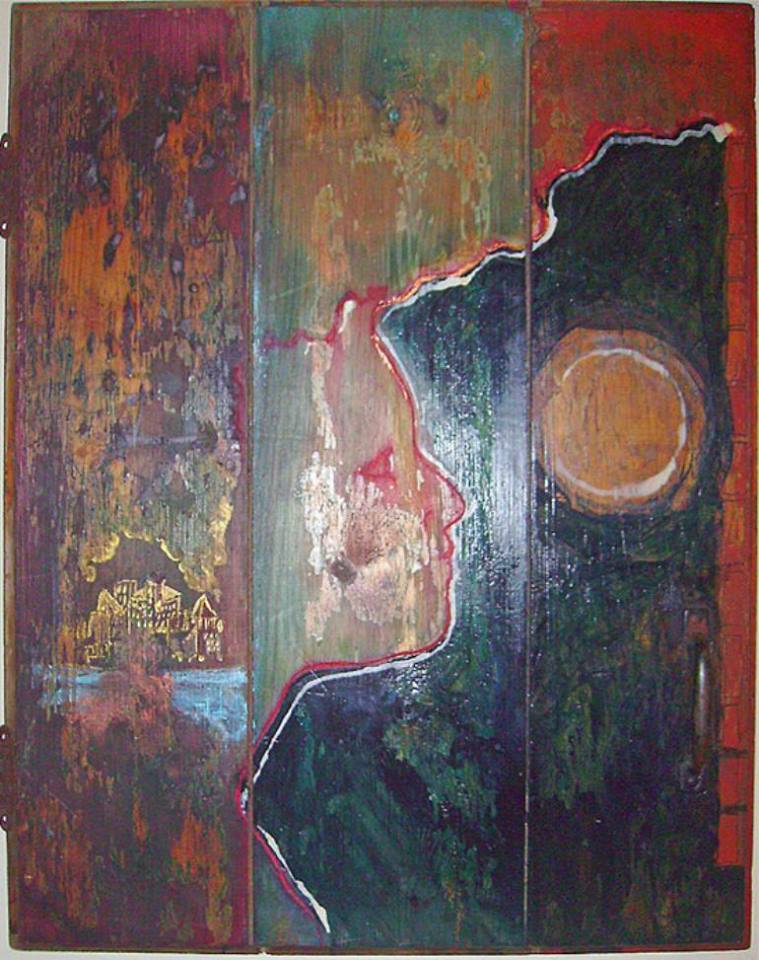
Together, prose and visual artwork have connected in a way that is truly captivating. Artist Alexandria Heather’s piece, painted on a wooden cupboard with whorls of blues, reds, and yellows, is the stunning inspiration for a dark flash fiction about “girlhood, sociopathic freindships and an escalting series of dares” by Brynne Rebele-Henry, and a riveting piece by Nilesh Mondal that surprisingly converges Hindu mythology into an unexpected narrative.

This “mashup” of sorts is an experience that lovers of art–and all its forms–can appreciate.

Thank you, and enjoy.

—Prose Staff, Inklette Magazine

13330486_849713318492052_1291731506_n

Seeker on door by Alexandria Heather

MIXED MEDIA ON FOUND CUPBOARD DOOR Ι 24″ X 32″ Ι 2010


The Sugar Experiment 

by Brynne Rebele-Henry 


After everything with Julia I decided to become pure sugar: something impossible to deflate, a mass of a body so sweet that nothing bad could ever happen to it, that illness could only be absorbed inside its syrup.

When Julia shaved her head she looked new again, like a fucking just born baby bird, its bones not even formed yet. Those nights, we’d paint our nails black, catching polish on the outskirts of our fingers so our hands looked tarred and feathered. We’d eat melted ice cream until we got sick, then we’d go running for hours, try to get the saccharine sick out of us, make our bodies clean again. Julia wanted to be a model, before everything, so we would clip out pictures of the girls in Elle and Vogue, study their small bodies like we were researching insects. Often, Julia would stand in front of a mirror with a Sharpie, marking the parts of her body that could be improved, she’d slash black lines over her ribcage. The day before she got sent away, she’d called me and suggested we try an at-home-lipo procedure and, like I always did with Julia, I agreed.

Before she got sent away, Julia would flick an opened cigarette lighter over her fingers,
just to see if she would burn. She’d only eat red foods: meat nubby and raw, half-cooked
hot dogs. Said they reminded her of skin, something she always craved. We’d sit on her
porch and consume bloody deli slices and red velvet cake with crimson oozing frosting
mixed together, see who’d puke first. She’d dare me to cut a sliver of my finger off, or to
burn the inside of my thigh with a heated-up branding fork, to not eat for a week and
then consume frozen meat and try not to vomit. But Julia always won these bets, could
brand herself with a burning spoon and not blink, never got sick, until the hospital, at
least.
My friend said she killed her stepmom’s Chihuahua, which makes sense, given how much
she hated it, how she’d always lock it in her dresser on the weeks her parents went away.
Once tried to poison it, but the dog wouldn’t consume the liver pâté mixed with bleach
and laundry detergent.
The last night that I saw her, she was hunched over her bed, trying to pry the toenails of
her right foot off with a pair of tweezers. After she’d completed this task, she turned to
me, and for a moment it was like her face was gone, replaced with blank light in the shape
of a girl, something both human and not.


      NAMAH

      by Nilesh Mondal


//He’s Shiva, of purani Dilli. While his namesake could dance tandaav and burn worlds with one glance, Shiva from Dilli is just an ordinary coolie, a gamcha tied on head as he ferries heavy bags without complaints from one end of the market to another.

Shiva’s choice of addiction is marijuana, and he knows all street peddlers in Purani Dilli who sell him his wares. It was the only time Shiva felt close to the God his mother had named him for, chillum in hand, head buried in a cloud of smoke, eyes closed as the world around him ceased to spin.

One year, Shiva had participated in a mythical play organised by the coolie and hawker unions on Navratri, and almost as a divine joke, he had got Lord Shiva’s role. That evening, dressed in blue paint and smeared in ash, a cardboard and rice light halo behind his false wig of mountainous hair, Shiva had let the smoke of the chillum spread like fog with each breath.

He doesn’t remember much from the play, except a few bits and pieces of dialogue and how euphoric he had felt on stage. Yet he remembers how the lady from the government colony beside the market, fair and beautiful and recently married, had looked at him awestruck, her lips glistening with sweat and gloss, and almost as if he had a third eye, Shiva had seen a halo behind her head as well//


Photo Shape Editor: https://www.tuxpi.com/photo-effects/shape-tool 

ALEXANDRIA HEATHER is mostly water.

Photo Shape Editor: https://www.tuxpi.com/photo-effects/shape-toolBRYNNE REBELE-HENRY’s fiction, nonfiction, and poetry have appeared or are forthcoming in such journals as The Volta, So to Speak, The Offending Adam, Adroit, Denver Quarterly, Prairie Schooner, Fiction International and Rookie, among other places. She’s a founding editor of Fissure, a magazine dedicated to furthering the voices of young LGBT+ writers and artists. Her book Fleshgraphs is forthcoming from Nightboat Books in September 2016. She was born in 1999 and currently lives in Richmond, Virginia.

Photo Shape Editor: https://www.tuxpi.com/photo-effects/shape-toolNILESH MONDAL, 22, is an undergrad in engineering by choice and writer by chance. His works have been published, or are forthcoming, in magazines like The Bombay Review, Muse India, Coldnoon Travel Poetics, Cafe Dissensus, Kitaab, etc. His first book of poetry, Degrees of Separation (Writers Workshop), is slated for a 2017 release.
The History of the Path of Thorns

13713249_10208448952534573_1894860691_n.jpg

Illustration by Ashwin Pandya

In every new frontier the devil never goes hungry.

Always,

the villain who believes himself

to be the hero of the story:

                   & He was looking at himself & He was looking

like a movie.     He had

a pleasant elevation & He was moving

                                                             in all dimensions.


Back when the firmament was drying under

a newborn sun.            Back when one-celled organisms

swam the seas dreaming legs & wings & slither;

                                                                     & animated clay

with no blueprint soon walking into every trouble there was

                                                 like a prayer

with a safety-pin stuck in its lip.                 A beached whale

drowning on dry land.


The innocence of a child like moonshine filling the spaces

between the fear & hate.       Like blind faith that starts with

roll back the stone that seals the sepulchre.


Starts with

be patient . . . waiting is

the only time a gnat is still is when it is asking for death.   

The man who wore the long black coat &

spit-shined boots.

                                                                          A dark angel

glowing trustworthy the color of plastic & power

once came to my school & he did not talk like a creep or

look like a “perv,” & he smelled like global-I-zation.


Heard tell of preaching blue-eyed Jesus wept & democracy

over the Iron Curtain of the Cold War

                                                            until MLK

interrupted the broadcast

with homegrown acts of outside agitation: he spoke of

a Dream,

but it was the most real thing we ever felt,

like a bridge collapsing under the weight of an ultimatum,

                                             so aroused by its own power

it became dangerous as

                                        the ease of changed our mind.

Back before our devastating hope fell in love with our rage.


henry 7. reneau, jr. writes words in fire to wake the world ablaze: free verse illuminated by courage that empathizes with all the awful moments, launching a freight train warning that blazes from the heart, like a chambered bullet exploding inadvertently. His poetry collection, freedomland blues (Transcendent Zero Press, 2014), was released in September, 2014. He also has an e-chapbook, entitled physiography of the fittest (Kind of a Hurricane Press, 2014), which was released in December, 2014. Additionally, he has self-published a chapbook entitled 13hirteen Levels of Resistance, and is currently working on a book of connected short stories. He is a Pushcart Prize nominee.

ASHWIN PANDYA is a sketch-artist and illustrator, whose work has graced many book-covers. Acknowledged for his digital art as well as musical compositions, Ashwin Pandya can sketch given any situation, description or character. You can visit his website here.