Robot #3 (Malfunction)


Fluid must enter the cavities in the dark/ in the quiet quiet dark/ tunnel through dirt/ until the boom churn/ ping /the machine /becomes ____/check/ check tally /identify mark/highlight/ repeat/the sparking never stops/longing to rotate to a higher power/connect/heal the cords,wires/master plan/master of none/doesn’t add up/ the slab is cold/ run its course /run away/ please/ fast/er the mass of mon/ster circuits the siz/zling panel the mis/sing mother board/looking for the tiniest micros/children indent my /fingertips /find the errors/ in us/ no mishap though/ all systems go/ the burning iodine/ blurred body parts/ring heat waves/the sunlight erased by the flood of schedule/no one knows/ the answer /the robot is asleep the whole time


46 Assembly,

Eye 0011 Assembly,

PCB Eye LED 1

Eye, Front 1 CRY155

Eye, Back 1 CAB703

Eye, Ring 1 BKT664

Reflector 1

BKT714 Screw, 3.0 by 8


AA Glue


JENNIFER MacBAIN-STEPHENS went to NYU’s Tisch School of the Arts and now lives in the DC area. She is the author of two full length poetry collections (forthcoming). Her chapbook, Clown Machine, is forthcoming from Grey Book Press this summer. Recent work can be seen or is forthcoming at Jet Fuel Review, Freezeray, The Birds We Piled Loosely, Queen Mob’s Teahouse, Inter/rupture, Poor Claudia, and decomP. Visit her website here.

Cairo, Illinois

He walked into the diner and there she was, looking as though she’d been expecting him. Her eyes flitted across his face, then back to the empty table before her. He studied her down-turned face, hair mussed up but not too much, makeup there but less than what he was used to seeing. Then he glanced at the smudgy windows and scuffed floor, and the brown stains on the tables, and he walked over and sat down.

The waitress came and asked if he wanted anything, like she was already certain he didn’t.

“Coffee,” he said. “And you got ice cream?”

“Just vanilla.”

“That’s fine. Vanilla’s fine.”

The waitress left and he turned to the girl and thought about telling a joke before he remembered she’d said he wasn’t funny. So instead he said, “‘Fraid I was gonna have to go all the way to Tennessee.”

She glanced at him but didn’t say what she wanted to. He tried to let his face tell her she could talk to him, but he’d never been good at that and couldn’t start now.

“Thought I saw your car outside Springfield,” he said. “Almost put the flasher out and pulled them over until I got close enough to read the license plate. Saved myself a good deal of embarrassment.”

The waitress brought his order and he drank the coffee black and ate a small scoop of ice cream. Almost as bland as one could get, but it’d been a sweltering few days and he’d been using the air-conditioning as little as possible to conserve gas. He hadn’t known a man his age had that much sweat in him. Thought it all would’ve leaked out over the previous decades. But maybe he wasn’t as old as he felt. He couldn’t always remember anymore because it didn’t matter.

He said, “He leave you, then?”

She met his eyes for the first time. Empty but hard, like she’d fought herself into a corner and didn’t have any fight left in her but still refused to accept defeat. He knew he was in some way responsible for that, and nothing he could say or do would ever untie the knot coiling in his stomach. Can’t change who you are, or who you’ve made those around you.

“Three days ago,” she said. Her voice a dulled knife blade. “Some town smaller’n this one.”

“You don’t seem too wrecked by it.”

“We’d been fighting a while. Got tired of it.” The closest she would ever come to admitting he’d been right.

“Hattie,” he said, but his mouth went dry and even another scoop of ice cream couldn’t coax the words out. He knew he looked a fool, sitting there chewing ice cream when he should be asking about the most important question a father could ask. He figured this must be how she’d seen him for a long time, and his cheeks flushed and he took another bite but it didn’t help.

“I’m fine,” she said, and now he was the one who couldn’t meet her eyes. “We’re both fine.”

He nodded, still looking down. “Okay. Well. Good.”

“Really?”

“Yeah.”

A semi rumbled by outside, causing the windows to rattle. He turned to watch it pass. Remembered a few years ago he’d pulled over a similar rig and as he was walking up to it he had some sort of premonition, like a brilliant flash went off in his head, and he was already reaching for his pistol when the door opened and the driver stepped out with the crowbar. All hopped up on energy drinks and PCP, didn’t even notice when he fell and twisted an ankle, wasn’t any pain, barely even a limp. Kept on coming and swinging that crowbar until his own momentum spun him around and a few solid whacks with the pistol butt against the back of his skull took him down.

That was the closest he’d ever come to dying on the job and he’d never told anyone outside the office. Hattie had been too young, just ten, and her mother was six months in the ground. Who else was there to tell? To admit that he’d been scared shitless, that he’d seen that crowbar arch within an inch of his face and the metal was so rusted and dirty the sun didn’t even reflect off it, and he’d been certain his death would be brutal and dull without even the glint of polished steel. He would get a star on some wall and his daughter would be shipped off to her grandparents and maybe there would be a nice obituary in his hometown paper, if they still even had one. That wasn’t supposed to be enough. There had been more to it once, he thought.

But he couldn’t say it now anymore than he could then, and she still wasn’t old enough to understand. So he watched the truck go by while she watched him and eventually she said, “I knew you’d find me.”

He glanced at her but couldn’t tell if that was praise or resignation. He’d known he would, too, because all her life she’d been inclined to follow a straight line. She may occasionally divert on a tangent—that damned boy, for example, whom he was relieved to see was gone and not missed—but she kept on the new path until something else knocked her off it. She thought he didn’t listen to her but he did in his own way, her mother had understood that. He’d heard her talk about Nashville, how she had the talent to make it there. And maybe she did, too, but she wasn’t even out of school yet and if that failed, then what? And in her condition, too, which was a hell of a way to think about it, but he couldn’t see it any other way despite how much he’d tried.

“I’m glad I did,” he said, the words sounding flat even though he meant it and she knew he did.

She gestured southward. “Would you have been able to come after me if I’d crossed the river?”

Come after me. Like she was running from him as opposed to something. Like he didn’t have her best intentions at heart. Like he was the enemy. Which he could see how in her eyes he might be, but he didn’t like to think she’d see him that way. He hoped she knew better deep down.

He said, “I took some time off. Jurisdiction don’t matter right now.”

“You kept the gun.”

“I did.”

She held his eyes a moment, thinking why he’d kept the gun. Already made up her opinion why, even though truthfully he’d kept it out of habit and duty. Probably should have left it behind. Sent the wrong message. But he’d been wearing it almost twenty years now. What did she know about habits at her age?

There was a grease-stained clock above the restrooms that told him the hottest part of the afternoon was encroaching, and he felt no desire to get out in it, but the diner wasn’t much cooler. His ice cream had melted and he stirred the soupy remains with his spoon. He wanted to tip the bowl up to his lips and drink it, but he wouldn’t do such a thing even in private.

“Can I ask you a question?” she said.

He swallowed and looked up. “Of course.”

“What would Mom have thought of all this?”

He looked into her eyes and saw that this was the crux of the matter for her, proof that he didn’t understand her because he didn’t understand women in general, to an extent that was almost criminal. And it wasn’t as though he could deny this fundamental flaw in his makeup. He had no more insight into the workings of her mind that he had her mother’s, except for occasional glimpses that only furthered to confuse him. How he had even gotten married in the first place was a mystery to him, maybe the most beautiful and painful mystery of all. He had just taken for granted that his life was going where it was supposed to go, good or bad, except he had never envisioned it leading him to a rundown diner at the southernmost tip of the state, and if he had maybe he would’ve realized sooner how precarious a situation he was in, how apt he was to lose what mattered most to him.

Any answer he gave would be the wrong one, so he said, “She would have loved you and supported you,” which was true enough. But as to what she would’ve thought? Would she have been angry, disappointed, joyous? Jealous, even, because she’d wanted another child and he hadn’t? He didn’t know. She’d been gone too long, which wasn’t really an excuse but it was what he had.

Across the booth Hattie gave a small huff that seemed weighted with disappointment. Or maybe she was just as tired as she looked. He thought maybe this, more than the fighting or the baby, had driven her to stop here off the main highway and wait for him. She was just beginning to understand how weary life could be.

“I can’t make you come back with me,” he said. “I guess legally I could ’cause you’re still a minor, but I won’t.” He paused. “I want you to, though. To come back.”

She stared at him for a bit and he could see her turning it over, looking for a way out, but there wasn’t one so she nodded and said, “‘Kay.”

He left too much money and outside she told him she had a few things at a motel and he said he needed to get gas, and they could meet for dinner a few hours down the road, he’d call her. He watched her pull out of the lot and chose to trust that she would follow him. If she didn’t then he wouldn’t know for a while, but at least he’d have had a chance to see her, see that she was all right. He would have something to take away from this no matter what happened.

He filled up his tank and headed back north but fifteen minutes later the truck started shaking and he pulled off to the side of the highway before it could give out altogether. He climbed out and checked under the hood but couldn’t find anything obviously wrong. A bad batch of gas, then. He climbed inside and let the cool air caress his face, the truck sputtering a little.  After a while her car sped by. He thought he saw her turn her head to look at him, but she didn’t stop. He watched her until she merged with the horizon, a slow fade that seemed to drain something from him. Instead of calling for assistance, he just sat there staring ahead, trying to decide if he had the strength to go after her a second time.


DANIEL DAVIS is the Nonfiction Editor of The Prompt Literary Magazine. His own work has appeared in various online and print journals. You can find him on Facebook, or on Twitter.

He Has Gone To Be In His Own Bed

13902120_884940411636009_1934409682_o

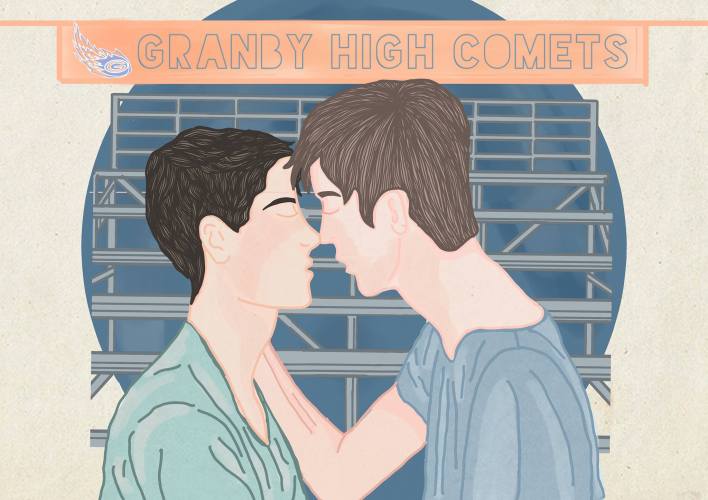
Illustration by Priyanka Paul

I was on my knees wearing only my underwear with the tube of Troye’s cock in my mouth when his father opened the door. He didn’t say a word to either at us, not at first. He smelt of cake batter and icing. His eyes, red in the whites, pretended to express sorrow. I felt dirty and wrong. I put on my shirt, then my pants and stood behind Troye. He walked up to his father with his hand held out in front of him.

    Dad, said Troye, I am so sorry.

    His father said nothing. He covered his face with his hands and took a deep breath.

    Troye touched his father’s shoulder, and repeated himself, Dad, I am so sorry.

    There was a moment of silence from both of them, and then his father showed his face again. He looked the opposite as my father did when he first saw me intimate with another man. His face was wrinkled and mad, his look of scorn directed at me.

    Who do you think you are? he asked me.

    I reached for my shoes and tried to think of a good response. Troye was my closest friend. We had that respect to listen and try to understand one another, to not judge and attempt to change our perceptions and beliefs. It had been four months since Troye told me how he felt toward men and me. We were sitting under an overpass, listening to the train leave town for Richmond. I can’t really explain things completely, he had said, but I’m happy when I see you. Then he kissed me for the first time.

    Can you promise me something? he asked me after his lips left mine.

    What is it?

    I need you to promise not to tell everyone else about this. Not until I say so.

    I promise, I said, nourishing that special loyalty between us, and agreeing to keep what we had behind closed doors—either at my house on the weekends, or at his house right after school when his father would be away at work. Today, though, we met later than usual. I had went home when classes were done. I took an hour nap and then woke up to a text from Troye that read: Dad is running an hour or two late running deliveries. Want to come over for a quick bit and say hey? I told myself on the way home that I would rest and then do my homework for Chemistry II and fill out the forms for junior year photos, but I responded to Troy with delight. I said I would be over in a few minutes after I grabbed a quick snack.

    I couldn’t help myself. It sucked going a day without seeing him face-to-face. Only I should have gotten over myself and stuck to our agreement. I should have told him no and reminded him about the risk of not knowing exactly when his father would be pulling up into the driveway.

    Troye’s father pointed at me. He demanded of me, Answer me, faggot!

    Dad, please stop.

    His father punched him in jaw, knocking him against the wall behind me. The photos of Troye with his parents fell from their nails and off the dresser. Troye down against the wall and onto the carpet floor. I helped him up, and the two of us pushed past his father as he tried to swing and grab us. We ran out of the house. Troye’s cheeks, normally the color of paste, were swollen and turning into the color of an over-ripened plum.

    We ran for a couple of blocks. The dust and dirt on the sidewalk we raised up fizzled and dissolved in the heat radiating up from the concrete. We passed by rows of house, all old and vinyl with dish satellites attached to their roofs. Each was one of a handful of colors: mint green, coral, white, or sky blue. We turned into a cul-de-sac and sat on a sidewalk bench. Troye rested his head on my shoulder and cried, while I stroked his hair and wiped the blood from off of his face with the sleeve of my shirt. Flies snarled and buzzed around our heads in the hot air. I bent over and gave him my shoes. I worried his feet may have blistered and ached. I told him everything would be okay and that I would help him in any way he needed.

*

    A little more than a year later, two days before Christmas break, Troye and I met on the visiting-team bleachers of our high school’s football field. Our meeting was a favor he had asked of me. Since the deal with his father, and school getting foster care involved, we had taken a break from things. We were still friends, but friends that only kissed each other in the bathroom when no one was looking, and who cut class together every so often to grab a late breakfast together at Waffle House.

    My dad tried to see me, again yesterday said Troye.

    Do what my mamma told me to tell you, and tell whoever is in charge that you don’t want him near you.

    It doesn’t matter. I think I’ll be moving in with my grandparents soon.

    That sounds nice. Now you can have your own room again.

    I smiled at him, but he didn’t smile back. I felt concern mixed with anger lift inside me as he remained silent and I realized that my comment had only brought more grief to Troye’s situation, that there was something else he had to tell me about moving in with his grandparents that would upset me.

    He rolled a stone that was underneath his hands against the cold bleacher. They live pretty far. In Oklahoma. A thirteen-hour drive if you don’t stop to piss or get gas.

    I chewed on my bottom lip and took his hands. He turned away from me and bowed his head. I asked him if there was a relative that lived closer that could take him in. But there were none that were accepting of what his father had told them. So I asked him about telling his grandparents that he would rather not live with them since he was so close to being done with school and didn’t want to say goodbye to his friends.

    If they would only be so reluctant, he said.

    Then what else is there? There has to be some way to keep you here. God damnit, why wouldn’t they cut you some slack? After all the hell you’ve been through?

    Troye lifted his head. I stared at his hazel eyes then rubbed my nose against his and leaned in, leading his lips to mine. When we finally pulled away, I looked at the scar on his right cheek and ran my thumb across it. I thought about that day and said, I hope you never have to deal with that again.

    I won’t.

    He gave me a peck on the cheek as our rides home pulled up in the school parking lot. We grabbed our backpacks and walked together, hand in hand. As we approached my car, he told me in my ear, Call me tonight.

    When?

    Just some time before you go to bed.

    Is there a time you plan on turning in specifically? I don’t want to wake you.

    You’re such a silly goose. He hugged me and walked away from me as I grabbed the door handle. Just text me if you’re that worried.

*

    I waited until after dinner was over to call. There was no answer. He responded with a phone call around midnight. We spoke for only a few minutes. He told me that he got busy working on something and that his phone had died. I trusted him. I thought for sure that whatever he had been doing related to his grandparents and thinking about earlier. To make up for things, he asked me out for coffee in the morning at the coffee shop next to school. I told him that I was looking forward to it, and he promised me that he would call me if he ended up arriving their first or started running late.

    But In the morning, I ordered my coffee from the barista without Troye, without any call or text. Steam lifted from the small sip hole of my cup. The sun was just over the parking garage across the street, and the sky was red with low, dark gray clouds. A flock of geese passed over my head, as a couple, a guy and girl, stepped outside, arm in arm, sharing a glazed doughnut with sprinkles. I took a sip from my coffee and burned my tongue. I spat what was in my mouth on to the ground and wiped my lips. Annoyed, I tried calling Troye. There was no answer. So, then I texted him—Where are you?

    I waited five minutes after finishing my drink before zipping up my jacket and walking to school. I sat through class like I normally did and didn’t reach out to anyone about him. When I got picked up at the end of the day, I drew a picture of Troye and I in my math notebook and sent him a picture of it. What I had sent looked like crap and nothing like either one of us, but in the picture Troye was sitting on a rock overlooking a cliff and the ocean. I was sitting beside him with my legs crossed and my hand not far from his on the grass.

    When I got home, I had dinner with my parents, then sat outside with my Mamma on the back porch. She smoked a cigarette and finished drinking a bottle of lime Smirnoff.

    Haven’t heard from Troye today, I said.

    Have you called and checked on him?

    I did earlier, but not since.

    She took another drag and flicked her ashes in the empty bottle between us. Doesn’t seem like him. You see him at school?

    No.

    Well, maybe something important came up and he had to miss today. I wouldn’t sweat it, honey.

    I leaned back and looked at the acorns and leaves of the trees all covered in ice that sparkled like gemstones and diamonds in the light from the porch. The sky was empty and dark, the air still and cold.

    Weird how it’s almost a new year, isn’t it? I wish it were summer. Would be nice to go swimming. Troye enjoys going to Virginia Beach and Whitehurst.

    Dear, we got at least two more months of this cold before it’s even spring. Not that I mind. I like when it’s cold and I get to wear my sweaters and coats.

    Maybe I’ll wear that red cardigan you got me for Christmas last year and go see Troye tomorrow if he doesn’t say anything to me tonight.

    You do that, son, said Mamma, but don’t go off pestering the boy if you get there tomorrow and he’s not in the mood to be all social. Give him space. Give him time to come to you. He’s got a lot on his plate.

    My phone vibrated in my pocket. Troye had left a text. It read: Babe, getting to have you in my life has been such a blessing. You make me laugh all the time, and I have always counted on you to have my back. I will never forget when you took me to your house after my dad walked in on us in my room. You cleaned my face and put that silly Hello Kitty band aid on it. I’m sorry that I have no luck and have such a screwed-up life. I got a lot to make sense of right now, and you don’t need to be with someone who doesn’t know himself no more than he knows a stranger on the streets. I love you, and I’m sorry I’ve put you through all this.

    I put down my phone not knowing if I should cry or scream. I thought of how there was nothing directly stated that said I wouldn’t be seeing Troye for a very long time, but I figured that Troye had probably made up his mind about moving away, and he was happy and open to the possibility of a fresh start after being hurt so badly. I imagined how life would have gone had I stayed home that day. This would have been the point in our relationship where we understand each other, completely, and we are beginning to map out rooming together in college. I pictured us beside one another, in our own house, sharing the same bed and looking back on our childhood as older men. But it was clear Troye didn’t want that anymore, and as much as I wanted to respond with something hateful from the shock of his message, I didn’t. I tried to be fine with that last moment of us together, on the bleachers, just talking as best friends.

    My Mamma finished her cigarette and rubbed the side of my arm.

    You ready to go inside, hun? It’s starting to get late.

    I chuckled. I’m not sure why. I suddenly realized how cold it was. I leaned forward and slid my hands beneath me. The wood of the porch was warm from my body. I sucked on my upper teeth till my gums bled. Mamma put her arm around me.

    Dear, you alright?

    Sure, Mamma. You bet.


DEXTER BENJAMIN GORE is a native to Aynor, SC but has spent the past year traveling the Deep South and working on his MFA in Creative Writing at Old Dominion University in Norfolk, VA. He is currently working on his first novel. Dexter‘s stories have appeared in The Dead Mule School of Southern Literature, TEMPO Magazine, Archarios, KY Lavender Bluegrass: LGBT Writers on the South, and Deep South Magazine.

PRIYANKA PAUL is a humanities student at St. Xavier’s College, Mumbai. She’s a self taught artist and loves to experiment with different mediums. She also writes and most of her written work is accompanied by her illustrations. Her art is highly influenced by social issues, gender studies and a basic liberal outlook of the world.

Feathers

Dædlus tortures himself with questions. What went wrong? Was one feather out of place? A handful of down slathered in wax instead of a flight feather? One plume shaken loose by the force of the wind? Or was it simply the heat of the sun?

* * *

She sat at the window in her parents’ bedroom, rested her back on her father’s bedside table. The Chapstick she held belonged to her father. She smacked its waxy scent onto her lips, used the twisty end of the tube to trace the lines of the book in her lap—an endless book of Greek mythology, the story of Dædlus and Icarus. She read this particular story from beginning to end, end to beginning, over and over and over. What would it be like, she wondered, to feel the ground fall out from under her feet, to ride the currents of the wind up and down, then up, up, up into the sun?

Dædlus had been commissioned by King Minos to build a labyrinth to house the Minotaur. Such a noble cause. A holy cause. Icarus, she imagined, was as proud of his father as she was of her own. Her father had been called by God to preach the Gospel, to pastor a church, to battle the darkness of the world. A holy cause. But she wondered if Icarus felt trapped within that world, the way she sometimes felt in her own. She dog-eared a page and set the book down, gazed out the window. She traced the movement of the wind, the shadows trembling over the gravel driveway. The leaves of the towering elm, ruffled by the breeze, transformed into a thousand tiny feathers. Sunlight poured through the window. She felt its warmth wash over her, wax melting down her arms. She closed her eyes and imagined her own ascent into the sun.

* * *

The wind whoomps the underside of his wings and he is in the air. Icarus extends his arms, allows the wind to carry him before he tilts to explore its contours. He twists one wing and catches a current that carries him down. His toe skips off the crest of a wave. Twisting the other direction, he spirals upward. He casts a glance down the center of the invisible vortex carrying the weight of his body, sees his father—feet submerged in sand, eyes straining, lips forming words that are lost to the wind as Icarus tastes the clouds. Higher. Higher. Icarus flies too close to the sun and plummets to his watery death.

Or so the story goes.

* * *

The magic hour. Every evening, her father settled in the recliner. Her little brother always beat her to the coveted seat on their father’s lap, so she sat on the arm of the chair, leaned on her father’s shoulder. He pulled out a book and read aloud—worlds opened before them, invited them into their adventure, horror, wonder. The Lion, the Witch, and the Wardrobe. Treasure Island. The Jungle Book. The Hobbit. He loved British writers and Tolkien was a favorite. If you like this one, he told them, we can read the other three. That particular evening, the motley band of dwarves and their burglar hobbit were rescued from gnashing wolves and goblins by the Eagles: : Over them swooped the eagles; the dark rush of their beating wings smote them to the floor or drove them far away; their talons tore at goblin faces.

* * *

Six months after their escape from the labyrinth, they are still trapped on the island. The wings are ready. Dædlus tests them out first. He follows the wind’s lead, leans into his run down the beach to set the wings parallel to the current. His feet leave the ground. He takes his lessons from the seagulls—tilt the wings this way and bank to the left, a slight twist to rise or fall. When his feet finally land back on the hot sand he pulls the wings off his arms and watches as three feathers slip out of their waxen beds. The sun had begun to melt the wax. Dædlus warns Icarus not to fly too high for too long. Icarus pulls the wings over his arms, lets their hollow weight rest on his young, broadening shoulders. A gentle breeze draws the wings back and they spread into the air. Icarus steps back to keep his balance and Daedlus reaches out. Father and son, arm-locked, eyes locked. Dædlus tells his son how to gain altitude, how to hover closer to the waves.

Whatever you do, don’t fly too close to the sun.

Icarus turns around, back to the wind, and runs headlong down the beach.

* * *

Her love for Tolkien, she inherited from her father. And Lewis and Longfellow and Austen. Her dream to ride a train through England, to hike the rocky coasts of Ireland, to walk the Scottish moors—all from him. Her penchant for writing, also from him—her earliest memory of the sheer delight to be found in writing words on a blank page was scented with his Chapstick (she’d stolen it from his bedside table). Her obsessive need to keep the peace, never rock the boat, to bloom where she’s planted—also his. She had his knees, his eyes, his slow metabolism. It had all come from him—difficult to say what hadn’t been passed down from him to her. She read books and wrote stories, dreamt of the day she’d finally travel the British Isles. When her parents argued, she tried to mediate.When the old ladies in the church complained about her ratty shoes, she tried to remember to wear her nicer ones the next Sunday. She walked miles every day and went on a low-fat diet to shed the extra pounds she saw in the mirror. She did all of these things and more, waited for her father to notice. When he did, she felt complete. When he didn’t, she just tried harder.

* * *

For months after their escape from the labyrinth, Icarus wanders the beach, hour after hour, day after day, seagulls soaring overhead. He picks up every stray feather he can find. Picks them up by the quill and writes in the air with invisible ink, dreams of freedom. One feather at a time. He tucks them into his leather satchel, brings them back to his father. Dædlus works hour after hour in the shadow of an old tree, gathers branches and ties them together in the shape of a seagull’s wing. He melts wax over a fire and drip drip drips it over the quill of a feather. He holds it in place until the wax hardens. One feather at a time. After months of this work, did all the feathers start to look alike? How did Dædlus know which feathers were which and which feathers to put where?

* * *

One day, she stopped going to church. She slipped out the front door on a blustery autumn Sunday, walked down the flagstone path she’d walked countless times on her way to church. Instead of continuing down the path she climbed into her car, jammed the key into the ignition. She felt every rotation of the tires on her drive across town. To a coffee shop. She stepped out of the wind, ordered a house coffee and pushed a wrinkled dollar bill across the counter. She sat at a table near the sun-warmed window and brought the steaming cup to her chapped lips. The wind swept across the parking lot, escaped her notice. Her eyes traced lines through a thin volume of poetry: A lost arrival is wandering.

* * *

After their escape from the labyrinth, Dædlus and Icarus breathe deeply the island air and dig their toes into the hot sand. No longer lost in corridors, trapped by countless walls, suffocating in relentless darkness. Removed from the constant danger of being discovered by the minotaur, father and son relish their newfound freedom. Icarus turns his face to the sky. A seagull soars overhead like a phoenix, wings ablaze in sunlight. Days go by. The sun is no longer the source of blessed light; it is relentless, ravaging heat. Their feet are rubbed raw by the sand, and a walk on the beach brings nothing but searing pain; then their feet become calloused, no longer sensitive to the pleasant warmth of the sand between their toes. The cries of the gulls overhead become tiresome. The island becomes a prison of its own. It is time to escape. Again.

* * *

One summer, she drank her first beer—a Sam Adams’ Summer Ale. The bottle clinked against the metal edge of the opener in her hand. It hissed when she pried the cap. She sniffed at the faint mist that danced over the glass, pleased to find the aroma floral and sweet, different from the smell of the men who frequented her father’s church—grizzled men with wobbling steps and glazed eyes. The beer was cold on her lips and snapped at her tongue, warmed her throat all the way down. She sat across the bonfire from a friend who opened a bottle for himself. Her father’s voice returned to her: alcohol is dangerous, the first step toward ultimate destruction. She swallowed her fear with another sip from the bottle.

* * *

She seldom speaks to her father these days. She doesn’t call him as often as she feels she should. But he doesn’t call her either. Her mother tells her that he feels like he failed his daughter — that he tortures himself with questions. What went wrong? Should he have made her read her that he often? Did he set a bad example? What could he have done differently?


BARBARA LANE lives her life between Flagstaff, Arizona and her home state of New Mexico. She earned her MFA at Northern Arizona University and served as the 2015-2016 nonfiction editor for Thin Air Magazine. She hikes a lot, she reads even more, and she habitually burns her toast. Her work has also appeared at Art House America and Queen Mobs Teahouse.

The Wild Air

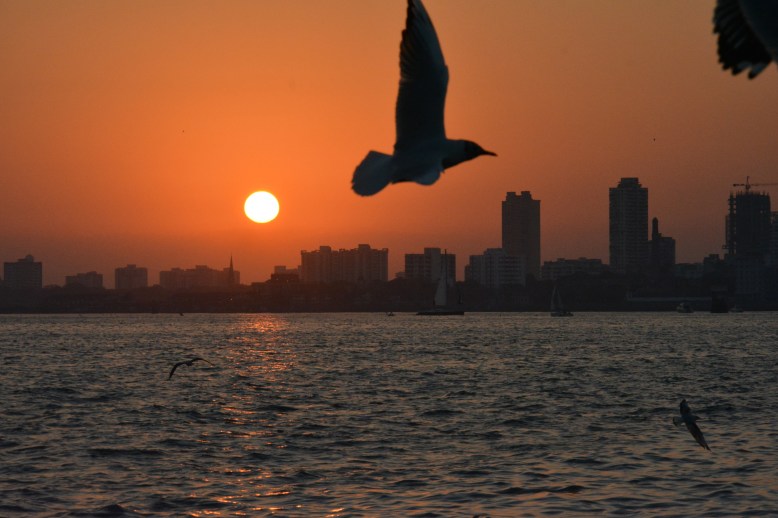
Artist Statement: While strolling on the shore, I breathed the sea that brought breaking waves.  The sea was full of life with hundreds of boats, thousands of birds and millions of fishes. With sand between my toes, I touched the sea gently. That restless shore and the wild air made me realize that great things can happen at the sea. I am now a young soul full of ‘Vitamin Sea.'”


NIKITA_KOTHARI-The_Wild_Air.jpg

The Wild Air by Nikita Kothari
Photography Ι 6000 X 4000 Ι 2016

NIKITA KOTHARI is a young and aspiring artist from Bhopal. Living the life of an explorer, Nikita loves to travel, click photographs and find stories in everything she observes. She practices freelance photography and videography in Bhopal and conducts basic photography workshops for local enthusiasts. She has published her photographic work with Society for Tiger and Conservation, and Jagran Lakecity University. She is also a travel blogger with MP Travelogue.com. She curates photography exhibitions, most recently, the VIFA Climate Change Photography Exhibition with Vihaan Drama Works and Dainik Bhaskar held at Bharat Bhavan, Bhopal in December 2015. She is currently working as a Media Officer at Bhopal Hub of Global Shapers Community.

New Moon

While traveling across sky

the slice of moon

spoons its darkened round

while the yellow dog

and black pup pair

in sleep by the stove.

Plates rattle in the kitchen.

Bruce drops hard noodles

into the boil of stove-water,

bubble and sputter, we chatter:

the absence of the addled boss,

the subtraction of our daughter,

the cold, lingering sun.

A kitchen silenced:

a constellation of family,

a darkened galaxy

whispering stars and dust in orbit,

distant, without a sound.

Here we are,

forks full of noodles.

Stories tumble around us,  

take shape in their telling.

This one a star; another a pair

of sleeping dogs; still another

a hollowed crescent bowl.


KERSTEN CHRISTIANSON is a raven-watching, moon-gazing, high school English-teaching Alaskan. Currently she is pursuing her MFA in Creative Writing/Poetry through the University of Alaska Anchorage and will earn her degree in July 2016. Her recent work has appeared in Cirque, Tidal Echoes, The Fredericksburg Literary & Art Review, We’Moon and Heartbeat: A Literary Journal. Kersten co-edits the quarterly journal, Alaska Women Speak. She lives in Sitka, Alaska.

Pack

May 21, 1908


Spliced together early this morning, Frank,

the world’s first two-headed dog,


owes much to the scientific resourcefulness

of a Doctor Charles Claude Guthrie.


Guthrie says he implanted the newest edition

upside down, so the two could look at each other


and share intimacies only two heads can.

Frank lived for approximately seven hours.


Proof of life was the single tear produced by one head,

and the lapping of it by the other’s tongue.


Doctor Guthrie was shocked to later learn this experiment

would cost him the Nobel, said next time, he’d use purebreds.


BRYANNA LICCIARDI has received her MFA in poetry and is currently pursuing a PhD in Literacy Studies. Her work appears in such journals as Poetry Quarterly, Blazevox, 491 Magazine, Dos Passos Review, Cleaver Magazine, and Adirondack Review. Please visit her website to learn more.