The Editors-in-Chief of Inklette, Trivarna Hariharan and Devanshi Khetarpal, were recently interviewed by Jim Harrington.
Read the full interview here.
Thanks to Jim and best wishes for his blog.
The Editors-in-Chief of Inklette, Trivarna Hariharan and Devanshi Khetarpal, were recently interviewed by Jim Harrington.
Read the full interview here.
Thanks to Jim and best wishes for his blog.
Melissa, from LitBridge, recently interviewed the Editors-in-chief of Inklette, Trivarna Hariharan and Devanshi Khetarpal.
We sincerely thank LitBridge for supporting us. Read the full interview here.
Recently, Inklette had the privilege to interview the three head editors of Textploit, an online magazine dedicated to displaying the works of young writers and artists of all sorts.
Inklette: Could each of you introduce yourselves?
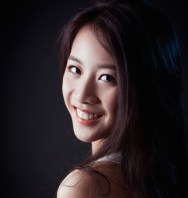
Siqi Liu: I am a freshman at Harvard College, and I’ve been writing ever since I could remember. I love stories and daydreaming, so fiction has always been my sanctuary. My first real writing project happened when I was in seventh grade; I wrote a 300-page novel about princesses and dragons, and from then on I’ve retired to mostly short stories and poetry. In high school, I was a reader and executive editor for Polyphony H.S. My work has appeared in publications such as Imagine Magazine, Polyphony H.S., Dialogue Humanities, and Suddenly Lost in Words.
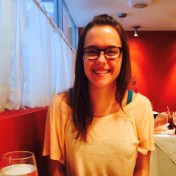
Ella Bartlett: I am a freshman at Barnard College, and I have been writing since the age of 9. When my English teacher named Mr. Brekke told me I had enough potential to submit to a contest in 10th grade, I think that’s when writing was solidified as the art form in my life that would never disappear. I have won two national medals in the Scholastic Writing Awards, and you can find me in the Cadaverine, Necessary Fiction, Crashtest, and Polyphony HS.
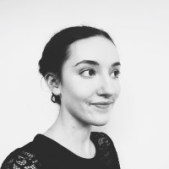
Natasha Lasky: I have written all my life and I started to make movies when I was twelve. I started writing because I love books and words; I started making movies because I saw Blade Runner. I’m from the bay area, and I’m a freshman at Harvard with Siqi.
Inklette: How would you describe Textploit to someone who had never heard of it?
Natasha Lasky: Textploit is an online magazine by and for teens. Above all we try to be honest to the teen experience, which for us means publishing things things that are raw, unique, and funny–things that other literary magazines wouldn’t touch. We feature all forms of art– photo essays, diary pages, road trip playlists, reviews, DIY guides.
Inklette: What makes Textploit different from other literary magazines?
Ella Bartlett: Two main things I think make us different from other magazines out there. One being that we consider any type of art that can be put on a website. Be it film, multimedia, haikus, original music compositions– we don’t discriminate based on form. Write six thousand words or six words: we publish anything that we consider good art. Second, is that we value the teenage experience. We think that a good story written about a high school relationship is equally “artful” as a story written about a relationship between two middle-aged people. We want teens to have a space to write what is close to their hearts and not feel like they have to write an “adult” story to write a good story.
Siqi Liu: There’s a strong visual component to our magazine because we pair art with every piece of writing we publish, which is rarely seen in other literary magazines. We also publish every other day instead of, say, once or twice a year, so we generate a larger volume of published pieces than most other magazines.
Natasha Lasky: I think calling Textploit a literary magazine is a little bit a misnomer. I feel like “literary” often becomes kind of a euphemism for elitism and pretension, and in this way I think our spirit is definitely more zine than literary magazine. We want to publish work that is risky and unpolished, that is serious but doesn’t take itself too seriously, by people who have never published anything before and who wouldn’t think of publishing themselves in literary magazines.
Inklette: Who had the idea for Textploit, and what was it like making that idea into a reality?
Ella Bartlett: Natasha, Siqi, and I met at the Iowa Young Writers’ Studio in 2013, and we managed to stay in touch. When Natasha said to me last year, “Hey, I got this really cool idea,” I jumped right in. It was so cool that we could take our love for writing and our love for each other and create a project like Textploit.
Natasha Lasky: To expand on Ella’s answer, I think we were all a little bit dissatisfied with the landscape of teen publishing, as it felt either infantilizing or pretentious. When I thought of the idea I came to Siqi and Ella immediately, as they are both ambitious, talented writers who also happen to be two of my favorite people of all time. Developing Textploit was a collaborative process, and it is as much theirs as it is mine.
Inklette: So Textploit publishes in a wide variety of literary formats, ranging from poetry to videos to playlists to instructions for DIY Friendship Earrings. Did you try to cultivate this diversity of mediums or did it just happen?
Siqi Liu: We definitely had the diversity of mediums in mind when we were coming up with the initial concept. We knew we didn’t want to be a writing-only magazine. We thought something exciting would happen if we start mixing mediums, and it did.
Ella Bartlett: It kind of just happened, honestly, but we also wanted it. Apparently, teens want to be able to express their ideas without limits, and if this is the best way teens can do it, we will publish it.
Natasha Lasky: From the very beginning we wanted to have as much diversity in mediums as possible. One of the benefits of being an online magazine is that you’re not limited to publishing poetry, prose, and art — you can publish music and video as well. I think this is more true to the way teens express themselves, as most people haven’t picked what kind of artist they are by the time they’re twenty. At least in my case, even though I write, I also make movies and do collages and compose terrible angsty songs on the guitar. I feel like I know a lot of people like that.
Inklette: How do you think your web page redesign will change things?
Ella Bartlett: The only change to the new format is that we are publishing Monday, Wednesday, and Friday instead of every single day of the week. This really enables every artist to be valued and to bask in the space that we allow them to take up. The issues will also be every two months, instead of every month.
Natasha Lasky: I think the redesign will less change Textploit’s vision, but rather refine it. As I’m sure you’re experiencing with Inklette, as a relatively new magazine we are still trying to fine-tune our voice and our publishing process, and the redesign will help us with that.
Inklette: What’s your favorite piece that you’ve published to date?
Siqi Liu: It’s so hard for me to answer this question! I am a huge fan of all of our regular contributors, such as Inara Baker who adds a lot of quirk and diversity to Textploit with her DIY columns (How To Make A Secret Compartment Book is a personal favorite ) and Tad Cochrane (who recently became our music editor) who is always daring and honest in his personal essay columns. I also love Rachel Tse’s photography.
Ella Bartlett: That’s a very hard question. Rachel Lin’s film, Punk in 5 Parts, is so honest and so well done, and to be honest, film isn’t a form of art I have taken much time to appreciate before I saw Rachel’s. That being said, we’ve gotten some fantastic music (My Soul Side Journey has written some amazing pieces) and poetry- so much amazing poetry. Check it out.
Natasha Lasky: This was way back in the first issue we ever published, but I’m a big fan of Liam Brooks’ Facebook Official. It captured the voice of a horny seventh-grade boy in such a funny way! Also every story by Lucy Silbaugh is an absolute gem.
Credits: John S. Osler III (Prose Editor)
December 4, 2015
This November, we asked a few of our Issue 1 contributors to send us videos of them reading their work. Here is Warren Read reading from his novel excerpt, On the Edge of Black Lake.
December 4, 2015
When I was in ninth grade, I had a really great English teacher. At some point during the school year, she gave us a test. The test had really small boxes for our answers. The entire class struggled to fit the answers in the boxes. When we turned in the tests, she asked why no one had written outside of the box. There had been a lot of room on the margins outside of the box, and she had never told us that we had to write just in the box. But most of the students in my class saw this box, and saw it as a limit. They literally stayed inside the box.
In the college program I am enrolled in, there are often no “boxes”. I have few tests and many, many papers, which is something most students hate. But I love it. I can constantly voice my opinions and learn through making decisions on my point of view.
One of the tests I had this semester was a test that had some open-ended question and some multiple choice. My professor had a multiple choice question with options a, b, c, and d. It said to choose one answer. I was really frustrated with the question because none of the answers was adequate in my opinion. I told my professor and she told me to circle whatever answers I thought could apply and write why. And for some reason, this made me so incredibly happy.
When children are growing up, in my experience, there are way too many “boxes” and too little room for exploration, questioning, and expression. Children are praised for sitting in their seats, for answering things how they are taught to, and for being quiet. But if we let young people voice what they had to say, I’m sure we would learn just as much as they learn from adults.
Being a writer, I have the opportunity to say everything I want to in whatever form or manner I want to. Even when I am given a prompt or a specific way in which to write something, in my experience, art is a field in which people are commended on changing things up.
In elementary school, I submitted a poem for an essay contest and ended up winning. In middle school, I entered an essay contest that had strict guidelines to write in “FCAT” style (one opening paragraph, three middle, and one end—each paragraph with its own strict guidelines). Instead I submitted an essay I wrote completely neglecting the guidelines and ended up winning. Being praised for exploring alternate routes and completely ignoring the rules was something that shaped me into who I am today. Children should be taught to break the rules so that they can have their own thoughts and opinions.
By breaking the rules, I don’t mean stealing and vandalizing. I don’t mean being a class disruption. I mean that children should be allowed to explore their creativity and individuality. Everyone communicates their ideas and thoughts best in their own way. Everyone learns differently than the next person.
Young students in the recent years are being too limited. They don’t get as much recess or time exploring the arts in school. They get so much homework. They have to fill in literal boxes for standardized tests. They are often times taught a standardized curriculum in a specific instruction that teachers have no choice in.
Not every child will be good at everything. If twenty children were told to write a poem, a small fraction of them would probably actually enjoy it. But I think it is important to expose children to different things, to different forms of art and expression. I think when we are young, it is important to let children know the importance of having a voice and individuality.
December 21, 2015
We’re missing our dear ol’ Issue 1 again! And while we wait for Issue 2, let’s rewind to Ghost Story, a wonderful poem by featured poet, Ian Burnette. Watch him read his poem right here:
January 8, 2016
A week ago, the Inklette Team was asked to explain what they learned from being a part of Inklette in 2015.
2015 was a great year for Inklette, a year that included the first online issue in November. Together, the team has grown and so has Inklette, and there is much more to come in 2016!
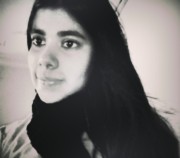
Trivarna Hariharan, Editor-in-chief
Embarking on this journey with Devanshi Khetarpal has been extremely enriching. I feel honored to be working alongside such talented teammates, from each of whom there is so much to learn. Inklette is one of the best literary experiences I’ve ever had. It has given me the opportunity to understand diverse kinds of literature and arts; and taught me how a magazine really operates. It has made me much kinder with younger authors. It has made me realize the importance of an effective editorial process. I hope Inklette grows by leaps and bounds, and makes us all proud in the years to come!

Devanshi Khetarpal, Editor-in-chief and Founder
When I started Inklette as a six-page newsletter, it was impossible for me to visualize it as an online, literary magazine. Trivarna, my Kindred Spirit, and I embarked on a journey with little hope or expectation. Today, Inklette surprises me every step of the way. Each day I witness the community that Inklette has created. With the first issue itself, Inklette displayed its remarkable potential and energy. We have published both emerging and established writers. Our careful editorial process has helped us to create a long-lasting bond with all our contributors. As the Editor-in-Chief, I feel fortunate to be working with so many talented artists and writers from all over the world. Working for Inklette constantly helps me see what other writers today are aiming towards. Inklette is a passion, a world, a creation but above all, it is something I am grateful for.

John S. Osler III, Prose Editor
Discovering Inklette this year has shown me how great collaborative writing can be. Up until this summer, when I discovered Inklette at the Iowa Young Writer’s Studio, writing was mostly something I did alone, behind closed doors. Inklette showed me how rewarding it can be to work with someone else to hone their work and make something greater.

Nathalia Baum, Prose Editor
One of the only other passions of mine that comes close to writing itself is helping other writers. There’s just something magical about actively engaging with a piece of work and its author. From working as a consultant in my school’s writing center to being a TA for Creative Writing, I’ve always loved figuring out ways to make a writer’s already beautiful thoughts even more beautiful. This past summer, I had the incredible opportunity to attend the Iowa Young Writers’ Studio. There, I met so many amazing writers–including Devanshi Khetarpal, one of the wonderful Editors-in-Chief of Inklette. Each time I see a new submission for Inklette, I’m immensely grateful she and Trivarna Hariharan gave me a chance to expand my passion even more.

Scott Stevens, Poetry Editor
This publication is the first publication I’ve had the pleasure to work with. It has a spirited staff, a superb influx of work from around the world, and a dedication to finding the best styles of poetry and prose from both new and experienced writers. This large volume of writing gives me hope that there will always be people from Mumbai to London to North Dakota, writing and ready to share their work.
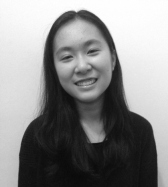
Liana Fu, Prose Editor
I’ve only been a prose reader for Inklette for a few months, but it feels like I’ve been here much longer. I love the sense of community and meaningful interactions about writing. It’s great to share a passion with other people who are just as enthusiastic as I am and eager to create amazing art.

Smriti Verma, Poetry Reader
Inklette is, perhaps, one of the first magazines that I’ve worked for in a proper way, and it’s been great to be part of a literary community where you can communicate with others of your age and where the editors are friendly and welcoming and trust your opinion. Perhaps one of the best parts of being a reader for Inklette has been actively forming and debating the merits of a piece and seeing it from other perspectives. In this sense, Inklette is about evolution of both the editor and the author. Apart from this, there is obviously something beautiful of being part of a community where young people collaborate and simply strive to make good art.

Joanna Cleary, Poetry Reader
I recently joined Inklette as a Poetry Reader and have thoroughly enjoyed reading the submissions for our second issue. Inklette has not only introduced me to fellow poetry lovers, but it has also exposed me to various writing styles, genres, and techniques from poets around the world. This has helped me understand what poetry means to others, which, in turn, has helped me redefine what poetry means to me. 2015 was a great year for Inklette. I have a feeling that 2016 will be even better. As we continue to create and share new art forms, I hope that we will encourage our readers to see the world through multiple perspectives and foster a love of all things creative.

Archita Mittra, Intern
Inklette has offered me the chance to interact and actively work with a vibrant community of incredibly talented young writers and artists. Moreover, it has introduced me to a wide range of literary styles and influences, and given me a perspective on how writing and art is published and perceived today. Ultimately, Inklette goes on to prove that writers need not work in isolation, and that great art is more than often, collaborative. As an intern, I’m immensely grateful to be a part of this wonderful magazine and I wish Inklette success in all its endeavors.
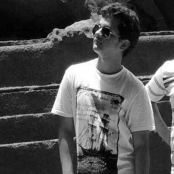
Divyam Sharma, Social Media Manager
I have been a Social Media Manager for Inklette since its inception in 2015. It has been a spectacular experience so far. Day to day analysis of data, and the responsibilities of content curation along with constant monitoring has made it so much more exciting. The exposure to established poets and authors from around the globe has proved to be a boon for my urge to read, also the teammates in the visual arts department have always left me wondering if the world is so much more colorful than what I can see around me. As the journey continues in 2016, I hope our upcoming issues strike more and more number of clicks and every other time we publish, we do it with an increased vigor and a greater commitment for the cause of spreading love for art.
Blog Credits: Haley Zilberberg (Intern)
 Inklette Magazine