Click Here to Begin Your Ascent

And how I keep it in, keep it in when all it wants to do is fly up and away until it is lover well met and lover well spent, tongue hanging out, briny palms, sweaty forehead in the joy that wants to romp and play and laugh a little, laugh a lot, weep arm in arm with St. Francis walking down the winding cobblestone streets circa now circa always with frayed ropes for belts, and how hard it is to keep it in day after day, year after year through the calendar of days and the counting of days that exist only as figures while inside I feel it turning and churning like foam in the bubble line of the river and how to enjoy the world and every fruit and nut of it and one day offer my own skin and bones to the river or cairn of stones and would you dopple me, would you motorolla and turn me inside out and upside down so that the brook trout colors can shine like dawn light and raiment of sky streaked with clouds and for this we were made, you and I, to rise as smoke to be one with the firmament and one with the lilacs who take their cues from the constellations and we will sing and we will dance and not have to keep it in anymore, oh, the moon will bathe our nakedness in pools of its own and we will love so much we will come back only as rain to water the fields and valleys and the little old Mennonite woman’s garden that is already blessed because she poured her whole life into it and the deaths of her children, her favorite cat Ivan as her one blind eye stares without seeing though somehow recognizing the roundness of our drops as we fall.

Note: The line “the blissful responsibility to enjoy the world” is taken from Clarence Brown’s introduction to Nadazhda Mandelstam’s book Hope Against Hope.  


Robert Vivian‘s next book will be a collection of dervish essays (prose poems) called Mystery My Country, which will be published next year along with another book co-written with the poet Richard Jackson called Traversings. 

The Supermarket Artist

“What would you like?”

“Uh, whatever you want. You got these windows so a vampire, or mummy, or anything really. Have you never done this before?”

“I have. Some people ask for specific things.”

“Ok, holler if you need anything.”

Jorg set about taping the windows beginning with the words. He lied. Nobody’s asked for anything ever. Besides liking bunnies for Easter and a pot o’ gold for St. Patrick’, it was Jorg’s job to read the mind of the calendar. He pinned for new subject matter. His talent as a draftsman, however, paralleled his imaginativelessness as an inceptor. He was a commission artist and needed a subject assigned to begin.

Jorg’s mind went for a stroll and it returned, lo, its signature read “Hollow Halloween”. Eh, “Happy” seemed antithetical for all the wrong reasons. Hmm, since Jorg had already botched, why not go all the way?

“What is that?!”

“It’s Saturn Devouring his Child.”

“Saturn?”

“Ya. You know Zeus? That’s his dad.”

“I don’t care whose dad it is! What’s it doing on the window?”

“This is a painting by Goya, the most Halloween artist there is. People in the know will eat this shit up. Everyone else will merely find it scary.”

“It’s too scary.”

“Trust me.”

The store manager shook his head but sighed in acquiescence.

“Ok, ok, everybody gather in. Several of you have had inquiries about the window art so I’m going to give you a quick rundown. Saturn Devouring his Child is by the Spanish painter Francesco Goya born 1746-1828. Goya painted Saturn during his Black Paintings period; you can tell customers it’s appropriate we’d have Saturn on our window since Goya hung the picture in his dining room and ate in front it. He was the court painter for a brief period, but fate turned against him, striking him deaf from a fever…”

“Deaf from God probably. If I saw a dude paint that, I’d curse him too.”

“Do we really have to know this?”

“Yes! If a customer has a question I want it answered.”

“They can just look it up.”

“I know they can look it up. What I want is service. Ok, I’d like to talk briefly about the Napoleonic Wars…”

Jorg was right. He received a call from the management saying that they’d received many compliments on the Goya, and would he be interested in being the store’s resident window artist?

Thanksgiving. He knew he should do a damn Rockwell turkey, but resisted so. Pilgrim art, too, would be difficult without a metaphorical germ sneaking in. He decided on impulse to do Pieter Bruegel the Elder’s Peasant Wedding. He thought that sales in pie crusts and puddings would ensue, but he was wrong.

BEABON KNOLL PRESS

Letter to Green Apple Management,

Dear Green Apple Management,

 We on the hill are thrilled upon seeing the prolific Saturn Devouring His Child on your window for October, it was widely admired by all. But I regret to inform you that the enthusiasm for Saturn is twice-fold negative for your current Peasant Wedding, and the reasons for indignation are thus:

It seems very suspicious that the artist has chosen to turn their back on the subject of November, that of Thanksgiving. Does the painter wish to circumvent the holiday with this 16th century Flemish wedding? If an artist sends anti-Thanksgiving messages on the walls of a store that sells Thanksgiving commodities, who’s in turn the hypocrite? Us, the store, the painter, or the painting?

Who are these peasants? It is the opinion of many that it is we. This malign thought hits different classes of the neighborhood differently, but all Beabonites are unanimous in finding it distastefully puzzling. Rather than the gratitude and reflection of Thanksgiving we are given this un-American (Thanksgiving it seems is second in patriotism after the 4th) proto-Marxist icon of Flemish art? Social criticism like such is better transformed into action i.e. donation bins and can drives. But Bruegel? Green Apple employees have commented that patrons arriving in Bentley’s have been seen driving off.

The fiercest complaints we at the press have received were naturally from the Catholic community whose church isn’t half a block away from the painting. They take any advertisement of protestant iconography as a subliminal attack on their beliefs. “One cannot buy bread,” I quote one letter, “without thinking, ‘these people not only decapitated statues but kept them around’.”

It’s not difficult to imagine the artist’s obduracy towards turkeys and pilgrims in a neighborhood that galvanizes vegetarian alternatives as well as respect for the image usage of Native Americans. Why the artist did not settle for a still life, is what’s so nettlesome. An autumnal Constable would have sufficed easily.

We, therefore, ask you to take down your display and give us something we can be thankful for.

-The Editor

Jorg scrapped away the mural late at night and assumed he was all but through. A few days before December he received a call from Green Apple Management.

“Are you still going to paint December?”

“Even after that scathing editorial?”

“Hell, it only got us more business.” Jorg heed and hawed. “Don’t you see you’re turning a whole community onto something they’d otherwise not have much interest in? You can’t stop now.”

“What should I do?”

“Whatever you want?”

To sidestep the scared and focus on what’s secular is to imbue the stand-in referent with untapped spiritual energy. Representations of the secular are imbued with the sacred made all the more palpable by its censored exterior. Are not Christmas lights in the distance orbs of Chanukah candles glowing? Do we not see in Santa the natural aging of Jesus the Christ?

In a bold move Jorg settled on Caravaggio’s Adoration of the Shepard’s but decide to replace the characters with their irreligious counterparts. He turned the shepherds into Mr. Frost and two elves, Santa as Joseph, and Mrs. Clause holding a Cabbage Patch doll like the motherly Mary; an umber Rudolph in the background, a dab of carmine for the unlit beacon.

Jorg didn’t want to hear the reaction this time. He got a new phone and unsubscribed from the Beabon Hill mailing list. Secretly he was banking on the demographic of dudes. It was only by inadvertently eavesdropping on strangers sitting in front of him on the bus that he heard his only review:

“It was like, totally crazy. So, I was one my way to Gina’s house, and I was walking by the Green Apple and like, there was this crowd outside the store, and apparently the guy who painted that monster for Halloween, you know, he’d been using famous paintings, and so for Christmas he did some religious piece and used Santa and his friends. And there were their two guys and one was saying, ‘Don’t you see, it’s the Virgin Mary as Mrs. Clause, her husband Santa as Joseph, with Christ as the ultimate gift.’ And then the other guy’s like, ‘Man, that ain’t a baby let alone our savior, it’s a doll, everybody knows Santa’s sterile. So what do they do? Adopt the worlds’ children and spend a year making each one a present.’ it wasn’t till St. Nickolas was penned that the Son finally returned via a poem.’ ‘What about naughty kids?’ ‘They get fuel for winter ‘cause where they’re living is poorly heated.’ And then this other guy’s like, ‘Shit like this shouldn’t even be in the public sphere! First he paints us as peasants then he…’ But then I was too far away so I couldn’t hear. He was pretty drunk though.  But when I got to Gina’s house she had the radio on and they said that someone had smashed the window…” They got off.

The Newspaper’s account concurred with Gina’s friends’ story! His much prided Caravaggio was raptured to smithereens by rowdy grocers. The cause of the riot was unstated, but many think it was the inflammatory window art.

Jorg was relieved and surprised when commissions started rolling in from all over town. A guitar shop asked for a Watteau, a hair salon commissioned, not three, but four Pre-Raphaelites (Jorge found these pictures of long haired women in a barber shop ironic. “It’s called layering. Just paint the window.”) a bridal shop needed an obligatory Chagall, even Tar-get asked for a Jasper Johns. But what shocked him most was to learn that his Green Apple contract still stood.

Jorg felt like hot shit when his pastiche mechanism suddenly faltered. He yelled at a bowl of cereal, “January’s just fireworks!”

And true to Goggle Image’s testimony, January begins and ends after the 1st. Jorg had no heart for fireworks. He’d done them before; they look like connect-the-dot streamers. His mind’s eye ogled Bronzino’s, Venus, Cupid, Folly, and Time, but its creepy mannerism would make shoppers self-conscious about their purchasing habits. He kept time as his theme and settled on Holbein’s The Ambassadors. To lend it community he’d use two of the grocers for the models. For the mise-en-scène display he’d showcase some of the sales of the month, for the anamorphic skull, a green apple.

Jorg was rather jazzed about the piece when he got a call from management requesting a cartoon. Jorg found the demand a bit audacious. He was then summoned to a meeting where he quickly perceived his fall from favor. The chairman of the panel said, “We have the cartoon you submitted and we all think it would be a serious misstep and probably lead to another riot. Jorg, we’d like to give you a month or two off and let you gather yourself. We thank you for pointing out to us the potential of window design but now we need to better manage the application of such a volatile force.”

A few days later Jorg-in disguise went to buy some eggs and saw his replacement putting up the next installation: Magritte’s Son of Man with a friggin’ bite out of it. He heard the window artist telling a shopper, “The place is called Green Apple and the guy hadn’t done the most famous Granny Smith of all time? Sheesh, I’d riot too.”

Jorg fell out of fashion once word spread that the grocers had turned him out. He scrapped by making moldy Warhol’s for banana bread packaging and other base gigs.

His door made that knocking sound and two Italians juggernauts in black suits said,

“You Jorg?”

“I am he.”

“We heard you used a picture of Caravaggio for your own gain, eh?” The other punched Jorg in the stomach. “Nobody uses Michelangelo pictures without our consent. Nobody!”

“We’re showing you our benevolence because the Bruegel boys were looking for you too, and we told them we were going take care of you.”

Through the shutter of slugging arms, Jorg looked at the sunlight in the trees.

Jorg never covered a masterpiece again, but his legacy got a notable nod when a renowned art critic said he’s stopped by Beabon Hill and was astounded at the visual literacy he encountered. He claimed to have overheard a group of skateboarders discussing The Labyrinth with the conversation taking a turn toward Albrecht Durer, Bosch, and how the success of the movie lay in its heavy-handed referencing of the rich history of devils in Germanic and Dutch art. “Once they heard I was an art critic,” he said in an interview, “the whole neighborhood turned out to ask me questions. I was amazed.”


Gabriel Congdon lives in Seattle where he is one of the creators of the web-series &@. His work is work is forthcoming from No Extra Words Podcast and his play The Biz can be found on A Pocketful of Plays.

 

Ghost Story

The objects we live in and with and around have as vibrant an internal life and a language more complex than ours. This is a first attempt at trying to talk it out with the other half. 


for Anna 

 It was when you said something

about the tombstones behind Quarry Chapel

looking like animals standing still in the dark

that I thought of the man in Kansas

who used a trinity of flashlights

to speak with the ghosts of his parents.

He didn’t know the phantom  effect

was a fluke of science, the incantatory

breath of a metal contact beneath the bulb

rising and falling and rising again.

He didn’t know sister light

had unlocked his heart like an old car

and sewn the leather of hope inside,

that his mother and father were in fact

gone from the farmhouse where he grew up.

Walking in the dark near midnight,

it’s easiest to get the sense

this sort of thing is happening to us

all the time. We are not the only mad

masters of ourselves. No object

can survive void of entropy. Like we give

the knife its blade we give each grave a name,

until these endless white houses lining

the road are nothing but wooden ghosts, until

there’s barely room enough left to live.


Ian Burnette graduated from the South Carolina Governor’s School for the Arts and Humanities with a certificate in Creative Writing. He is an associate at The Kenyon Review, a contributing writer for the college section of The Huffington Post and a student in Kenyon College where he studies economics. His poems have been published or are forthcoming in Best New Poets 2015, The Adroit Journal, plain china: Best Undergraduate Writing 2014 and Kenyon Review. He is a winner of the Adroit Prize in Poetry, Propper Prize in Poetry, Bennington Young Writers Award, Leonard L. Milberg Prize, Patricia Grodd Poetry Prize and the Foyle Young Poets Award. 

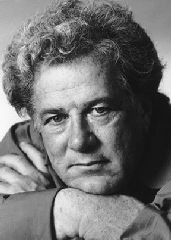
An Interview with David Benedictus

Our Prose Editors, Nathalia Baum and John S. Osler III, interviewed David Benedictus. David Benedictus is an accomplished writer with many publications to his credit. In this interview, he talks about his work and shares advice for young writers. 


  1. One of your books, You’re a Big Boy Now, was brought to celluloid by Francis Ford Coppola.  What was it like to see your story adapted and reimagined by someone else?

It was astonishing to have a film made out of my second novel. But Coppola was unknown and much the same age as I was so I didn’t expect anything to happen. I spent the summer with the film people in the streets of New York. I thought my novel was much darker than the movie but Francis said he wanted to make something cheerful.

  1. The Fourth of June was banned for its depiction of bullying and violence. If you could do it over again, would you have changed it before publishing, or do you suppose the work’s honesty is more important than its reach?

The novel wasn’t banned – except at the school bookshop and the (modest) scandal attaching to it was great fun.

  1. What’s the most interesting project you’ve ever had to abandon?

All my life I have had projects that have never quite made it. I started writing The Happy Hypocrite, a musical based on a story by Max Beerbohm, in 1953, and I’m still awaiting a full production. Also I have been promoting a TV series based on Amnesty International case stories for many years and it hasn’t happened yet.

  1. You seem to be pretty interested in new additions to classic stories, seeing as one of your more famous books is Return to the Hundred Acre Woods and your story that’s about to be featured in Inklette is  Alice in Wonderland. What draws you to expand on other people’s stories and how do you continue that narrative?

Return to the Hundred Acre Wood is a collection of short stories. I just liked the idea of more stories about Pooh and his friends. Ditto Alice, but that proved much more difficult and remains unfinished.

  1. Going off of that, a lot of young writers start out with fan fiction these days. What do you think of this practice? Do you think adding onto out with other stories is a good place for new writers to start?

Not really. Be original.

  1. What was your own writing journey like? To what do you attribute your lifelong success?

Lifelong success? Huh. I’ve had my share of failures, but some of them turned out OK.

  1. Overall, what tips would you give to young and emerging writers?

Take risks. Write to please yourself. Don’t be discouraged. Work to a routine. 


David Benedictus’ work includes Return to the Hundred Acre Wood (2009), an autobiography titled Dropping Names (2005), The Fourth of June (1962) and You’re a Big Boy Now (1963) that was made into a film by Francis Ford Coppola. David Benedictus was educated at Eton College, University of Oxford and the University of Iowa. He has worked for the Royal Shakespeare Company and BBC Radio. He currently lives in Hove. 

Editors’ Letter

There is nothing more to say than that Inklette hopes to give someplace to reside and something to believe. As writers and artists, we may even have found those spaces and beliefs yet we are on the lookout. However, both of us have found that space and belief in Inklette. Before we took on the task to expand Inklette from being a tiny newsletter to an online literary magazine, our worlds were smaller. Our worlds were isolated. Now, we have found a better place to inhabit. We have found an orbit, an axis: all of which is composed of the brilliant community Inklette seems to have created.

This wouldn’t have been possible without our unbelievably talented team. Throughout the submissions period till the editorial rounds, our team worked in accordance with Inklette’s ideals and settled for nothing but the best. Their efforts, energy and charisma gave life to this issue. Their commitment and professionalism astounded and inspired us and never, in the past month, have we gone to bed without being impressed and equally thankful. The publication of the first issue does bring a sense of achievement and pride but more so, it fills us with gratitude. When we say they are ‘unbelievably talented’, we certainly do mean it. Keeping this in mind, we are pleased to announce John S. Osler III as the ‘Inkletter of the Month.’ John’s attitude, enthusiasm and talent strengthened ours. (Also, Josler’s ‘Ad Blitz: The Good Kind, Not the Political Fear-Mongering Kid,’ is a novel advertising concept. Everything said and done, Josler’s awesome).

Inspired by our own coincidental and enduring friendship, we asked more Friends to join us. Our friends include literary magazines, writing cum mentorship programs and other initiatives for young and emerging artists and writers. Through the Friend Network, we hope to collaborate in the future and promote each other to create a greater sense of community.

In this issue, we are glad to publish both emerging and established artists and writers from all across the globe. Soon after sending the acceptance letters, some writers told us that this was going to be their FIRST publication. It would perhaps be an understatement to say that we were overjoyed. Deepti Chadha’s piece, Partition, gives a poignant and personal account of one of the most tragic events in history. Jerrod Schwarz’s dark poems completely took us away. Lisa Stice’s poem, In Training, uncovers absence and belonging. Reflections by Aashna Sharma has gives us clarity and foothold. These are just a few of the wonderful pieces that you will stumble upon.

We are glad to be featuring accomplished writers like Ian Burnette, Katharine Ogle and Anya Groner, and David Benedictus in this issue. We are truly thankful to have had the pleasure.

We hope you find what you’re looking for in this issue. We hope this gives you a habitat or help you steer through the day or make you see the same things in a fresh way. This issue will perhaps stir you in explicable ways. You might have big tears rolling down your eyes, just like we did. The horizon is huge. We occupy a microcosmic space. But we must occupy it fully. We hope this issue is successful in inking your heart all the way.

Most importantly, Thank You!

-Trivarna H. and Devanshi K.

Editors-in-Chief

Inklette

I’m in Hell and I Have No Idea how to Come Back

“I think it would be a good idea to pick you up on Thursday instead of Friday since it’s going to rain on Friday and that will make it a pain to move out of your dorm,” said my Dad through the other end of the phone, making plans for the end of the Spring 2014 Semester.

The idea jabbed me. It wasn’t about being selfish. The thought of packing and moving out of my dorm was overwhelming because a sense of urgency existed about my Dad wanting to pick me up one day early. It was just one of those ideas I couldn’t fully articulate in words even if an uneasy feeling lurked in the back of my mind.

“We also have to focus on keeping her comfortable,” he added.

With every passing second after my phone call with my Dad, the red flag got brighter since focusing on comfort indicated a shift instead of general conversation about how my Mom was doing.

I might not know everything. But when I get an intuitive instinct I know I can’t run away from it even if I don’t like it. Not only did my Mom stop chemo after one last attempt on my first day back home from college, but also, “comfort” is the main goal of hospice.

***

It was Friday May 23, 2014.

I had been home from Fairleigh Dickinson University for over a week, and my Dad and I sat in chairs in my Mom’s hospital room at the moment.

Her latest visit to hell was due to a combination of factors related to her declining health. For example, low blood pressure was one of the problems.

A woman in a white lab coat shuffled into the room, and I knew who it was immediately.

After a minute or two of general conversation about how my Mom felt that day, it was time for my Mom’s oncologist to have “the talk.”

“I think it’s time to stop treatment,” she said. “You’re getting all of the nasty side effects of the chemo but none of the benefits. It’s time to focus on getting you home and having hospice.”

There was no denying it. It was almost as if I had been shot in the stomach as I was left gasping for air.

I suppressed the urge to burst out into a hysterical fit of sobs even if there was no shame in crying because it would be mortifying if I lost it right then and there.

The most tragic aspect about what my Mom’s oncologist said was that I wasn’t surprised even if I was absent for a lot of the daily details of my Mom’s struggle with Lymphoma since I was away at college a lot. My intuition still tugged at me tighter than any game of tug a war though because the feeling of doom never escaped my mind.

Her eyes remained focused on my Mom. “I have no regrets. We gave it the Big Augusta.”

It was true. My Mom fought her Lymphoma with 1000 percent since she battled it on and off for the last 18 months in addition to her oncologist exhausting every possible treatment.

Her oncologist turned to face me before zipping out of the room. “Your parents are so proud of you.”

Her words wouldn’t take away the suffocated feeling of agony that swept through my entire body at that point. However, even the smallest actions expose human nature since she could have left the room without a word to me. But she didn’t. She cared about providing me with some form of comfort.

And she didn’t just say it once, as my Mom’s oncologist uttered that sentiment to me several times before my Mom left the hospital.

***

I strutted into the TV room (which was now my Mom’s bedroom) as I went to go say goodnight to my Mom one night while she was on hospice at home.

I leaned in as she gave me a hug while a lump formed in my throat. There was no escaping it. I wasn’t an idiot. There was nothing I could do to change her prognosis. But the thought of finding out she passed away when I first went to greet her in the morning plagued my thoughts because there was something morbid about knowing a person would never wake up.

Knowing my Mom was going to die wasn’t even the worst part of this hell. It was the fact I felt like I was watching a car crash before it happened that stung the most.

By having a relative that is terminally ill, you are forced into a devastating situation because you have no choice but to watch since a person sees the inevitable creeping closer.

That’s the nature of decline. The situation plummets until there is nowhere left to go. But the feeling of being part of a situation that would someday have nowhere left to go was terrifying because it wouldn’t help me, or my parents.

I hated that the clock was still ticking.

But I had numerous positive memories with my Mom, and that was one thing cancer couldn’t ruin even if I would never have enough time with her.

The clock was still there. Maybe, just maybe, it would click a little less loudly someday. Although if I were being honest, this wouldn’t bring me closer to religion as making someone live the majority of life without having a Mom surpassed cruel. People aren’t dolls to be played with only to add as many stressors as possible to see how much can be endured until the breaking point is reached. And the argument that tragedy is part of God’s plan didn’t matter since it would never make my Mom’s impending absence from the rest of my life okay.

            ***

July 4, 2014.

I stood in the shower as the water flowed out, splashing onto my body like the comfort of a breeze on a summer day. Then it hit me. This eerie feeling that was death. It just hung there.

I finished dressing myself twenty minutes later before plowing out of the bathroom.

The door to the TV room opened, revealing my Dad.

Red flashed across his face. “I think she might have died.”

Wow. I couldn’t believe it. My intuitive feeling during my shower was right despite the lack of a logical basis for it.

My Father explained to me that my Mom had been unresponsive for some time, and we rushed into the TV room before hovering on each side of her bed.

Opaque blobs trickled down his face. “Come on Donna. We love you. Wake up.”

I just stood there.

He shot me a glance a moment later. “Say something to your Mom.”

A scorching sensation twisted through my stomach. “I love you Mom.”

My dad expelled more sobs. “Come on Donna. Wake up.”

I continued to just stand there, as there was nothing to prepare me for the “actual” moment even if I knew my Mom was going to die.

More tears crashed down his face. “There’s a big place in Heaven for you Donna.”

The hospice nurse arrived at my house over an hour later.

I shot her a gaze after she undid her stethoscope. “So, just to be clear, my Mom is dead?”

She nodded. “Yes. She’s dead.”

A local funeral home took away my Mom in a body bag an hour or two later, leaving my Dad and I to sift through the emotional rubble.

***

 It has now been over a year since my Mom died.

I fake productivity, fake moving on, exercise on occasion, write, go to class. A makeshift hopeful ending to a period in my life I would never be able to forget.

The truth is, I’m still in hell and I have no idea how to come back.

My Mom and I will never see each other again. Never talk, share stories late at night. Those nights, towards the end, when I heard her aching and didn’t know how to help haunt my every waking moment. I could only think to look at her, a look of desperation across my face and apologize. Maybe offer her some morphine the hospice provided just in case.

But even though the mantra “life isn’t fair” might be true, it doesn’t make it right, as no nineteen-year-old should ever have to see his or her parent being carried away in a body bag.

The biggest catch of all is I might not want to forget about my Mom, but if I think about her that almost guarantees sadness because we were just getting past the turbulent teen years before cancer stole her from me.

So yeah, I’m still a little haunted. Might improve someday. Just not today.


Chris Bedell’s essays have been published in the online magazine,Thought Catalog. He has also had several stories published in online literary magazines, which include ‘Surface Tension’ on Crab Fat Literary Magazine, ‘A Little Accident’ and ‘The House That Never Was’ on Quail Bell Magazine, and ‘The Wrong Murder’ and ‘Game Over’ on Short-story.me. Furthermore, Pidgeonholes Magazine will publish one of his stories in December.

Urb Ex-Jungle

Another artifact of the Skraelings’

implacable xenophobia the wall

crosses the ocean on decadent runes


and ends in a concrete outlet pipe

under chain-link bent in as if giants

used it for football practice or dump trucks


took a wrong turn off this stretch of pot holes

while the guard hid underneath a smart phone

studying repetitive pornography


and bolt cutters timed to incoming trains

announced a new freedom, access for all

to relics of industrial majesty


broken and paintless as the Parthenon,

but here, now, with a few retired workers

to sing sad songs of our own Golden Age.


M. A. Schaffner has had poems published in Shenandoah, Prairie Schooner, Agni, Poetry Ireland, Poetry Wales, and elsewhere. Other writings include the poetry collection, The Good Opinion of Squirrels, and the novel, War Boys. Schaffner spends most days in Arlington, Virginia or the 19th century.