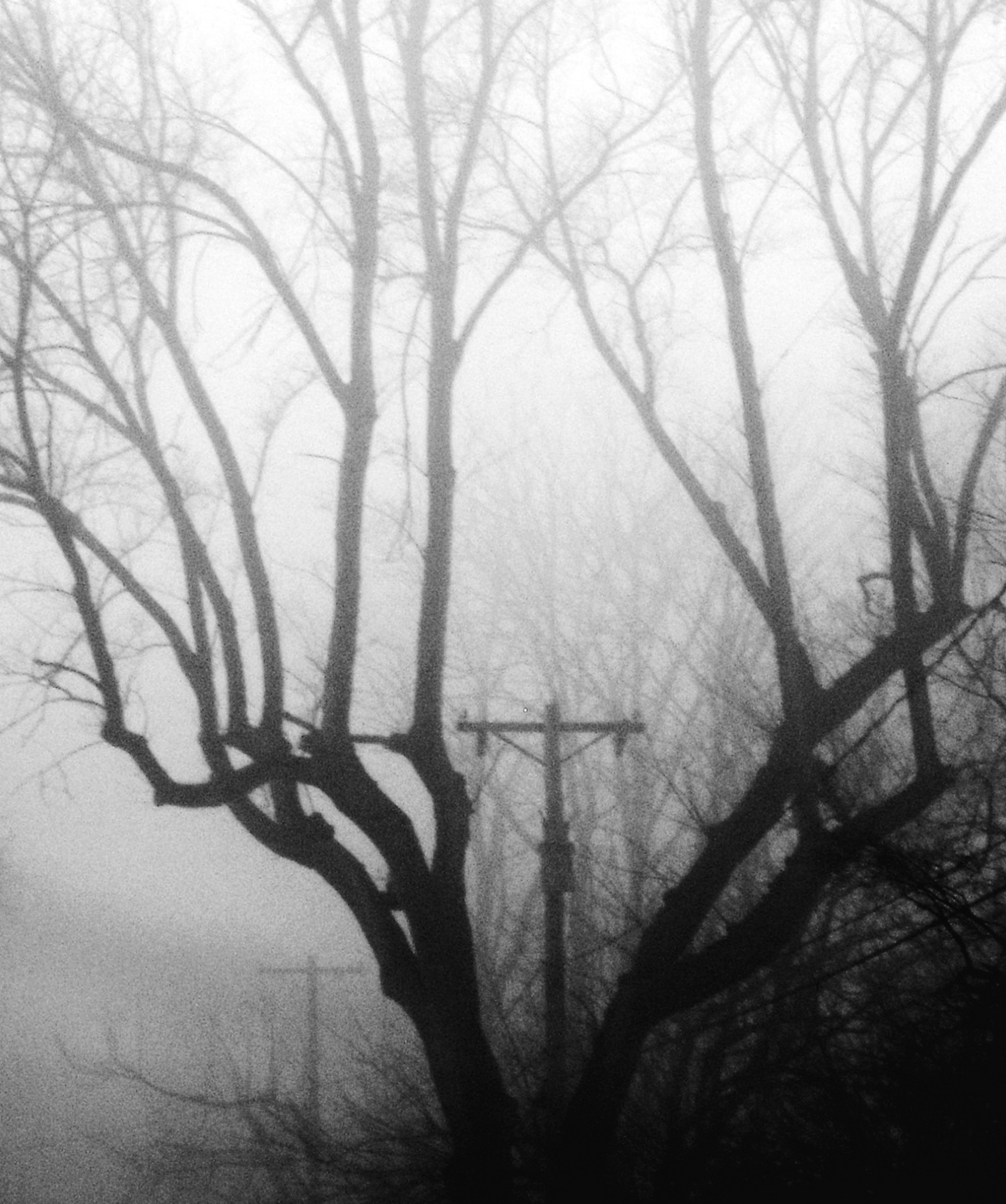
Two Pieces

Specks of Nothingness

When I was growing up, I would stare at the ceiling. I must have been eight years old when I started to do this. I would tilt my head up, focus on one spot, and stare. My eyes would begin to water as I tried not to blink. And I would wait. After a couple of minutes, little specks and shapes began to dance before me. I’ve seen television screens turn to static when there’s a power fuse. The white noise would crash into the room and the black and white fuzz would be enough to drive anyone crazy. That’s what I saw.

I would stare at the off white ceiling of my living room and watch the static of nothingness jump in front of my eyes. I would follow each small pigment until bursts of white would start flashing like fireworks. They were rare but I looked at them with wonder.

Now, when I think back to those days, I understand that my eyes were playing tricks on me after being pried open so wide but back then, I didn’t know what it was or if anyone else could see it. Since I was a shy kid, I never mentioned it to anyone in my family. I was the youngest, the baby, and didn’t want to be laughed at. And so, I continued on quietly. Usually at night when everyone else was asleep.

Some of my most prominent memories from childhood begin in the dark. My bedroom would be as silent as it could be. My sheets crisp. My pillow soft. I would listen to the soft snores of my older sister sleeping in the bed next to mine. Sometimes I peaked outside the window to make sure robbers weren’t trying to break in. Mostly, I would stare at the ceiling.

In the near blackness, the leaping particles would appear faster and louder. I would watch them and try to fall asleep. Counting sheep never worked for me, so I counted spots. When my eyes started to doze, I would catch that spurt of white and my eyes would jolt open and look for it again. “What was that?” I asked myself. I would question whether it was real or my imagination. I would wait to see if it would return. When it didn’t, which was most times, my eyes relaxed again. But while my eyes were tired, my mind was not. I could not stop picturing the moving specks from the ceiling. Did the ceiling mind that they were there? Did it welcome them? And then I would remember that the ceiling didn’t feel. The ceiling was the ceiling. The bed was the bed. The alarm clock was the alarm clock. These objects were real but they were simply objects. Before I knew it, the tall walls started to crawl into themselves and shrink in on me. I would take a deep breath. Then another. And another.

Breathe. Breathe.

I was breathing but the stuffed whale next to me was not. And one day, I wouldn’t. I would cease to breathe. And so would my snoring sister and my sleeping brother and my loving parents and all my friends. I was eight. I should have been dreaming about new dolls or thinking about the play date with the best friend of that year. I should have been but I wasn’t. Instead, I let my breathing get heavier, My arms were now tingling deeply with nerves. There was sweat gathering on the back of my neck that I did my best to ignore.

People say that one day, it will all be gone. The material items that we so desire will be meaningless and the forced family dinners will no longer exist. But as I lay in bed, I realized that I was being lied to. It wouldn’t be gone. I would.

Who would wrap themselves in my favorite blanket? Who would wear my clothes? Who would live in my house? Or would it crumble to pieces after we were all gone? Were the beating hearts of my family the very foundation that our house stood on? I didn’t know. I didn’t know what would happen to any of it. I have never felt the thud of my heart more vigorously than in my eight year old body. Like a

prisoner trying to break free, it would pound fiercely in my chest. It was like it knew that one day it would stop. It was pumping. It was pumping. I was alive. Right now. This moment.

I’ve heard it said again and again that kids believe that they are invincible. That they can surpass injury and do whatever they please. I was the opposite. I grew up so keenly aware of death that it made shutting my eyes hard. If the world would one day be black, why miss the opportunity to look at it now? I would stare at blank space for the sake of staring. I would feel myself sink into my bed and wonder how it would feel to no longer feel.

When we’re gone, we can’t speak and those who loved us can’t ask us out to dinner or which movie we preferred. When the ones we love leave, we can’t hold them in our arms or tell them a joke. It’s the law of life. But what are the laws of death?

My young self refused to believe that it all came to a halt. There had to be a world that allowed the dead to miss the living. There had to be a place where the long gone could laugh and dream. I refused to believe these kinds of places didn’t exist. But it didn’t stop me from thinking the unthinkable: what if they didn’t. I began to feel so hard when that thought crossed my mind. I would try to feel everything at once just to feel. I would breathe in such heaps that I would choke.

I can feel her blue bathrobe against my cheek. I can feel how unconvinced I was at her kind words of false reassurance. I can feel.

When I was growing up, I would stare at the off white ceilings of my house and watch scraps of nothing hiccup around me. And every so often, I noticed small white flickers of the unknown appear and disappear so fast that a blink meant missing it. I would lay in bed and let the whispers of death crawl into my ears.

Now, I am twenty-two years old, and so much of me is still that little girl who was afraid. The little girl who would hold on to belief. The little girl who would lay in bed wide awake while the rest of the world slept. The little girl who was grounded in reality while everyone else floated in dreams. The little girl who told herself that those white glimmers were messages from a world that could only be reached by death. Our little secret.

But so much of me is not that girl anymore. And while I still lay in bed at night with my eyes staring up at the ceiling, I don’t think of death. I think of life.

I breathe.


SIDE EFFECTS

Elliot,

I had to write to you and tell you about the dream that came to me last night. I actually began to write it down as soon as I woke up. Impressed? How many mornings did we spend over coffee (no milk with three sugars and heavy on the milk with no sugar), trying to remember our dreams? How many mornings did we curse ourselves for only remembering details like “a squirrel with a top hat” or “the clouds above me turned deep red?” But this one jolted me awake the way unexpected thunder does. It had me reaching blindly for a piece of paper and pen, both of which, luckily, I have been keeping close to me since I arrived here.

I was in a hallway. I have no idea where. The walls were annoyingly off-white and there were no windows or paintings. In what felt like four steps, I was walking through an open door and entering an elevator. It was carpeted with ugly floral and had handsome wood panels for walls. There were no buttons. No up or down, no 1, 2, 3. This didn’t bother me.

I stood in the center and let the doors close automatically. I took a deep breath. I took a shallow breath. I went on breathing. It was a matter of seconds before I realized I was falling. The elevator kept going on and on. Startled. I think that’s the first feeling that came to me. I didn’t know where I was going and I held my breath in anticipation. The elevator stopped. It came to a halt so fast that my neck whipped forward and back. The way it does when you slam on the brakes at the sight of a bunny crossing the street. When I collected myself, I let out a breath of relief. And then I was falling again. For as long as I breathed, the elevator would fall. It was as if my existence was the button that allowed the gears to turn. I went on for miles. Or so it seemed. And then the very floor I stood on, covered in hideous flowers, turned to glass. My feet felt the transition, slick and fast. Out of painful curiosity, I looked down. Below me, maybe two hundred feet away, was concrete. Solid concrete. And I could do nothing to stop it. Unless I could cut off my own breathing, that is.

We spend the majority of our time imagining our futures. Endlessly frustrated that we can’t know for sure what’s going to happen next.

Well, I knew. My future was that concrete getting closer and closer with each unsure breath. I could finally see what was ahead of me and what was ahead of me was the end. I closed my eyes. I could feel the skin fold over and try and save me. I opened them. Felt my lids lift with hesitation. I wanted to see but what was there to see? Dark wood straight ahead, grey concrete below me. My eyes shut themselves once more. There were only a few more feet.

I saw you. I saw your ginger beard that tickled my cheeks. I saw those green eyes that I compared to creek water. I saw those ripped up shoes that you refused to let go. I saw the smile of a fox. I saw you getting smaller and smaller as the escalator took me up. The promise of revisiting “us” upon my return lingering between us as I waited for you to walk away. But I was off and moving before I could see if you ever did. I have a feeling you didn’t.

I saw you, Elliot.

And then I woke up.

Side effects include: vivid dreams.

It’s on the label of the pill bottle. The anti-malaria ones. Riding in the car with you after picking up the prescription. Laughing at our made up side effects all the way home.

This one is real.

I hope all is well. I’ll see you soon,

   Lizzy


Leanne Carman is a graduate from the State University of New York at New Paltz. It is there, in that vibrant town, that she earned her Bachelor’s Degree in Creative Writing. She loves words, spring air, and a perfectly cooked egg. Her work has been published in On the Rusk.
Crease

I asked Mama how to draw an upside-down man, and she said to just draw a man and turn the paper the other way round so that he was upside down.

“He does not look like he is falling,” I said. “He is supposed to look like he is falling.”

“Well, then, he is not falling,” Mama said.

“He looks like someone tied a rope around his ankles and is dangling him from the ceiling,” I said.

“I don’t know,” she said.

I went away in the fall, to live with Dad, and Jeanie went to live with Mama. They tossed us back and forth, so that I was with Mama all summer and Dad the rest of the time. Jeanie had to be with Mama, they said, because Jeanie was younger and she needed Mama. And Jeanie didn’t need me.

Dad had gotten a new girlfriend that summer and she was very tall and very tan and she called everyone “honey.”

I asked her how to draw an upside-down man and she smiled and said men aren’t supposed to be upside down, honey.

That year in Mr. Kessler’s English class, we were supposed to draw pictures for the reports on the book we were reading, and Dad said in the car that he would help me. But after dinner, he went into his room with his girlfriend and I drew the pictures myself and stuck them all on the board upside down.

Danny who sat two seats away laughed and asked if I was stupid. I said I wasn’t. Mr. Kessler gave me a C+.

Mama got older every summer that I went to see her and I guess Jeanie did, too. I didn’t really see her. I knew she had started to wear black underwear when I found a pair in my suitcase when I was going back to Dad’s. Mama said I grew, too, every year until I was not seven anymore but seventeen and too small for my hands.

Dad married his girlfriend and she said to just call her Lou, honey. Only Dad called her Louise.

Lou was always fixing. She fixed me snacks when I got home, she fixed my bangs when they were getting too long, she fixed Dad’s shirt and his flat tire. She always said she was fixing to open a shop of her own.

Dad asked me if I was still making my little drawings when he saw the dog-eared sketchbook on my desk.

“Can I see?” He reached for it.

I watched him look at the drawings of Mama and the one of Jeanie after she had just gotten out of the shower and her hair was a dripping net on her back.

“Your sister’s gotten big,” he commented, carefully flipping past a sketch of Mama, bent over the kitchen sink as she washed the dishes.

“Yes.”

“Is she taller than you, now?”

“Maybe. Almost. I don’t know. Maybe.”

He said okay and left. He looked maybe like he wanted to say something more, but he didn’t.

I went to school and I sat by myself during lunch because Lacy who usually sat with me was sick that day.

“I’m going to be sick tomorrow,” she had said.

“Okay.”

“I’ve got a big test tomorrow, so I’m going to be sick.”

So Lacy was sick and I didn’t know what to draw because I usually drew Lacy.

“Why are you alone?” A boy came to sit next to me. I knew him, he sat diagonal from me in math class. He had a big chin, he always stared at the board with his chin in his hand.

“Lacy is sick today,” I said.

“Cool.”

“She has a test today, so she’s sick,” I explained. I couldn’t think of anything else to say. I didn’t want him to think I was stupid.

He laughed. “So what are you drawing today?”

“Nothing.”

“Can I see?” He moved over so that his arm was touching mine.

I showed him the blank page. “Nothing today.”

“Well, why don’t you draw me?”

I looked at him, and I saw his nose, which was big, but not as big as his chin, and his eyes, which weren’t big.

“I can’t right now,” I said. “You’re too close.”

“Why don’t you meet me today after school?” he said. “I’ll see you in the parking lot. We can go somewhere and you can think about how to draw me then.”

I knew Dad was going to be helping Lou. He always seemed to be helping her with something, so I said, “Okay.”

I stood by the curb after school, and the boy drove his truck up to me. It was a tired truck that smelled like rust and sex, but I was only guessing, because I didn’t know what sex smelled like.

I told him that and he laughed. “The rust is there for sure,” he said. “This is an old car.” He rubbed his hands along the steering wheel.

“And the sex?”

We drove and we drove until I didn’t quite recognize where we were anymore. Sometimes he would hit his palm against the radio because it stuttered.

“Where are we going?” I asked.

“Here.”

He pulled up across the street from a very nice-looking house where I imagined nice-looking people lived. It had a trim lawn and dark brown doors and white windowsills.

“Do you live here?”

“My mom does.”

“Oh.”

“Have you thought about how to draw me?” he asked, looking at the house.

“Not really.”

“Well, get out your sketchbook, and you can think about it as you draw.”

He was still looking at the house. I dug out my sketchbook and a pencil and wondered if I should draw the house, or the people who probably lived in the house.

He leaned in very close, so that I could smell his cafeteria meatloaf breath, and said, “You’re a very beautiful girl.”

“Not really,” I said. “My sister Jeanie, she’s beautiful.”

“You’re beautiful,” he said. “You’re the kind of girl who’s most beautiful without clothes, you know?”

I didn’t.

“It’s really hot in here,” he said. “You should take off your jacket.”

And then he tugged on my sleeve, and I tried to shake him off, but he was clinging onto my jacket, so I shook off my jacket.

“That’s a good girl,” he said.

“I think I want to go home,” I said, and tried the door, but he had locked it.

“I’ll drive you home,” he said. “But you should pick up your pencil first.”

I had dropped it when he had grabbed my arm, and it was now under his seat. I reached over to pick up the pencil, and he put his hand on my head and pushed me down.

And so I was sprawled on the floor and his fingers were knotted in my hair and he pulled me up so that my head rested between his knees.

“I’ll drive you home,” he said, “but you haven’t drawn me yet.”

With some difficulty, he worked his zipper down and all the while I was stuck so tightly I could hear his knees in my ears.

He held my head with one hand, his nails piercing my scalp, and used his other hand to force himself into my mouth.

I was crying, or maybe I wasn’t, maybe I was just choking, but I couldn’t breathe, and I couldn’t move, and I couldn’t do anything but beat uselessly against his legs with my hands, and the hairy expanse of him clogged my screams in my throat.

I heard him say “bitch” and I heard him groan and I heard him say “bitch” again, but I couldn’t be sure, because I could mostly only hear my own heart slapping the walls of my chest.

So instead I looked up, at his chin, at his big, big chin, and it was all I saw.

When he was finished, he let go of me and watched me clamber back up onto the seat.

“You don’t tell anybody,” he said, “or I’ll kill you. I’ll kill you, and I’ll kill your sister.”

I could still feel the weight of him crushing my throat and my head and my ears, so I just nodded.

“Besides,” he said, “who would believe a freak like you?”

I didn’t say anything on the way back to school. I didn’t think I’d ever say anything again.

“Clean yourself up,” he instructed, before he drove away. I stood alone in the parking lot for a long while, for long after the sun had set, before I called Dad.

“What happened to your hair?” Dad asked. I hadn’t combed out all the knots.

“Nothing.”

“Is that blood?” He leaned over and I flinched away.

“No.”

“Next time you want to try something with your hair, ask Lou for help,” he said, smiling. “Then maybe you won’t hurt yourself.”

I went home and I thought about how to draw him, and then I drew him with the bitter taste of him in my mouth, and I started with his big chin, and I drew the rest of his face and his body, and when I finished, it looked like a picture of him standing up from the point of view of someone lying below him.

Then I turned it upside down, and it looked like he was falling, falling headfirst.

Falling.


Lisa Liu is a senior at The Harker School in San Jose, California. Her poetry and prose have been featured in Textploit and Phosphene. She is a graduate of the Iowa Young Writers’ Studio.

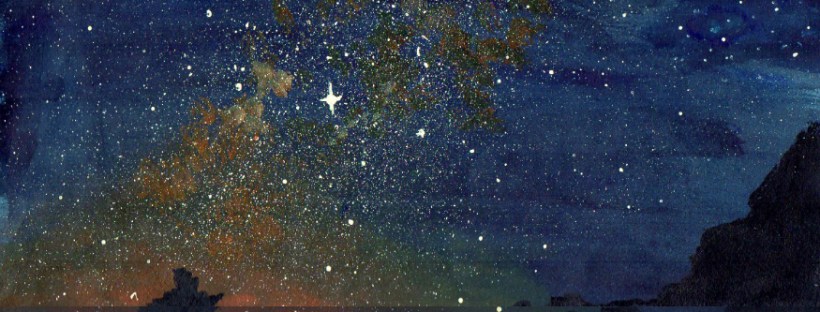
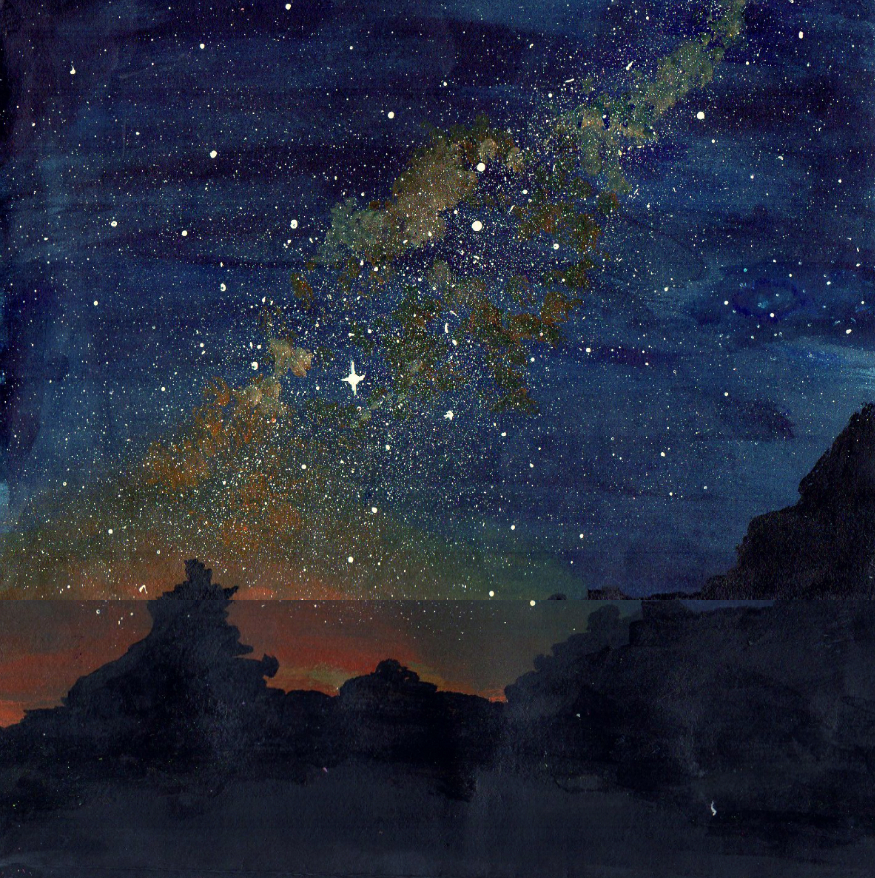
Starlore

 This piece was inspired by the artist’s fascination about astronomy and science. In her words, she could not have explained such better than through art. ‘Starlore’ represents one of the spiral arms of the milky way, that can usually be seen from the Earth. It is a representation of how near yet far stars are. 


Amisha_Das-VA_Starlore

Starlore by Amisha Victoria Das


Amisha Victoria Das is a high school student from India. She enjoys astronomy and astrophysics alongside art, music, literature, photography and traveling. 

Reflections

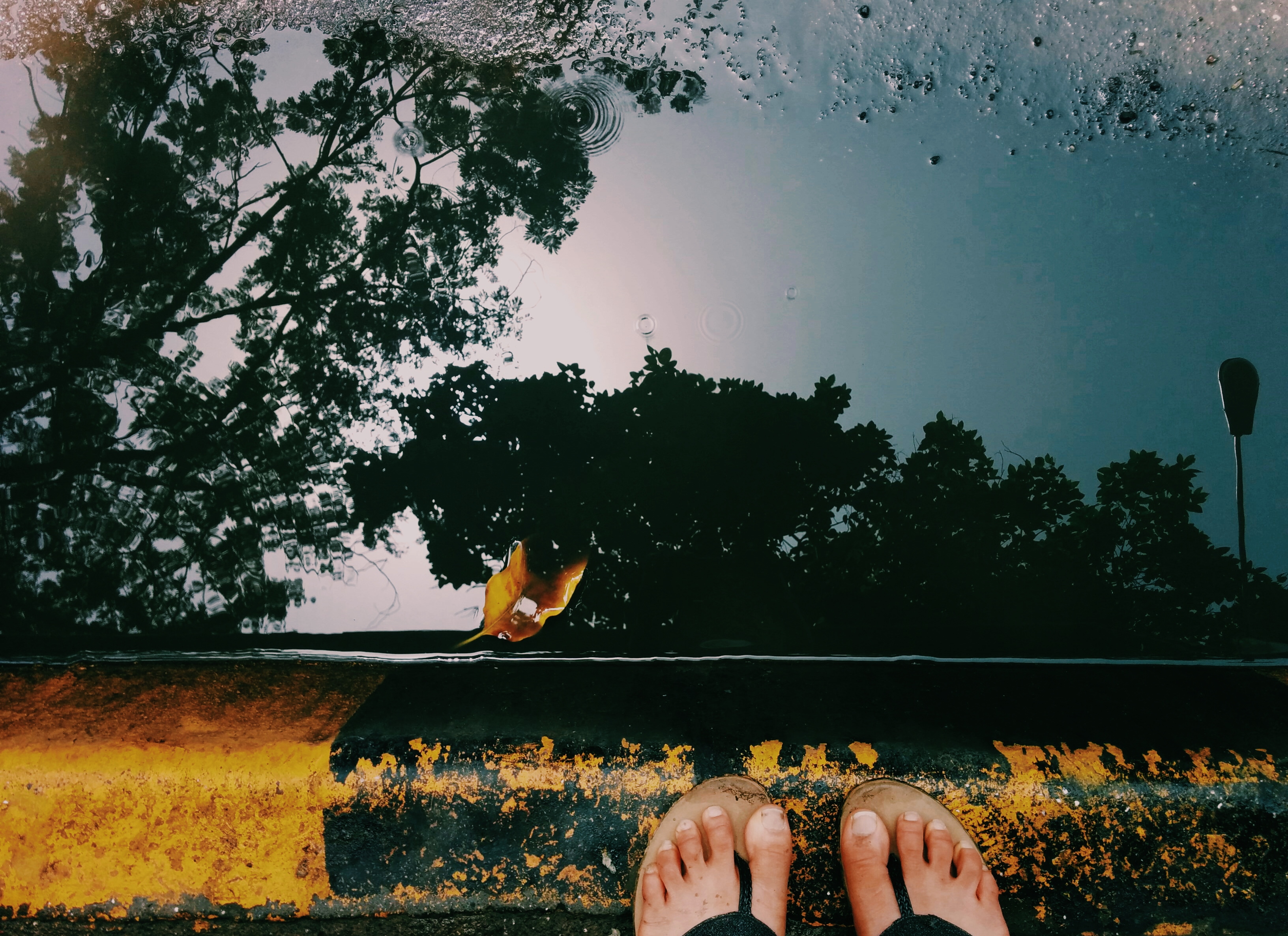
 The way we view the world is an assimilation of all the things we’ve experienced up to that a certain point. But we end up losing ourselves in the maze of our own paradigms. That’s why it is important to shake things up a bit. By stepping out of our comfort zones, letting someone else take the reins, relinquish control, we can experience a whole new side to the world. 


Processed with VSCOcam with c1 preset

Reflections by Aashna Sharma


Aashna Sharma is an eighteen-year-old college freshman from Mumbai, with a recently discovered penchant for photography. 

Brotherly Love

It started with a simple enough gesture, a wink. Winks are harmless when cast by the right eye. And, at the time, he never thought anything of it; the way she looked at him from the other side of the dinner table, the way she held their embraces just a few seconds longer than expected. Thinking about it now makes him want to vomit, and he does. The anxiety spills out in a pathetic splat onto the concrete. The street is silent and empty, but to Tom it feels like the whole world just watched him upheave.

Tom never wanted to commit murder; in fact, he never really meant to hurt anybody. He was the victim here, dammit. Not this dead guy. But they had pushed him.

Justice, right?

Staring into the pile of vomit on the sidewalk beside a freshly mangled body, he thinks fondly on the kind of person he is, the kind of guy who pays his taxes three months in advance,signals for other drivers, and spends time with his mother every weekend. Every single action he made was done with a tremendous sense of family. “We are all in this together.” Sure, he ate fried food, stayed out late, drank, even smoked on occasion; he did those things, but hurting people certainly never crossed his mind. Until now.

We find Tom with a serious problem on his hands: my blood. It was never his plan to push me out in front of the Riverfront Parking Shuttle, but something went terribly wrong with Tom. Maybe it was when she winked at me in between sips of Cabernet from across the dining room table at Christmas? Now I look upward, without the ability to even blink, let alone wink,dead look in the eye and a cemented air of disdain forever on my face. 

My name is Colin, and I’m pretty heavy to carry. I’m also Tom’s brother, and he can tell just by picking me up that several of my ribs are broken. They shift and slide in his grasp,making it almost impossible to keep a firm hold on my lifeless corpse as he half-drags, half-carries me down the street. We’re in the middle of a busy city, just down the road from an intersection that sits at the bulkhead of a nearby river. At the moment the roads are void of life.No cars. No people. Just us. Just me and my brother.

Lifting his shirtsleeve to his face to wipe away the strained asparagus now mixing with the ruby red liquid slowly dripping from my neck, nose and mouth, Tom sniffs his nose and looks around.

No one but the bus driver has seen him, and even that he can’t be sure of. His car is parked only a block away and the decision to transport the body, my body, is made.

A soft orange light hues our progress from the streetlamps above as we strafe along the cracked crags and once-complete sidewalk slabs toward the crossing. Tom keeps an eye to the roads, every so often glancing down at me to see if maybe it was just an act; worried I might leap to my feet and take off running. But I know.

As we move I try to bleed as much as possible. There’s a noticeable trail flowing out behind us like liquid breadcrumbs, and I can tell Tom notices. I bought him the shirt he’swearing. That was three years ago. Maybe I can bleed even more profusely to completely ruin it,I begin to wonder. It’s the first time I’ve ever seen Tom wear it. He casts furtive glances and a frenzied grimace back at the damp concrete now laced with my DNA. And then his eyes return and take to the streets.

Although nothing is around and no one is near, the night welcomes us like a petulant child. I can feel his heart pounding in his chest as we approach the intersection. His car sits lonely only half a block down the alley. A quick, right turn and Tom is home free. I can almost feel the rising sense of liberation in his stride. The closer we get, the faster we move.

Something in the bushes suddenly catches his attention and he nearly drops me onto the asphalt.

“Who’s that?” He calls out. But no one answers.

He looks down at me to find the smile I died with. My eyes are closed, and there’s an odd sort of calm about me, especially for a person that was thrown in front of a bus no more than 10 minutes prior.

Tom looks at his watch, but it’s stopped ticking-right around the same time the clock stopped ticking for me. I bought him that watch. It matches the one I own. It’s the first time I’ve ever seen him wear it.

I would never go so far as to say she wasn’t the love of my life, but she was my wife and I could tell Tom fancied her. Tom always fancied everything I owned. It had been that way ever since we were kids. I bought a car; Tom had to have the newer and better model in a flashier color. I was the first in my family to go to college; Tom got into a private school and graduated with honors at the top of his class. He had money, he had success, but what he didn’t have was Erika. And I did.

The whinny of a supped-up engine roars in the distance and spooks my brother as we turn down the brick-road alley. He nearly drops me, and my legs scrape the concrete as we make the turn. The walls of the buildings surrounding us blend in with the red-stone on the street in the iridescent orange glow. If it wasn’t for the sky, we’d have no way of knowing which way was out. 

Up ahead in the near distance, Tom spies his car sitting next to a sign that says No Parking. There’s a fresh ticket sticking out from under his passenger-side window wiper and he curses into the night sky. The uneven brick makes it hard for him to keep his balance with my body sitting as awkwardly as it is in his arms. My plan to bleed out was a success and now it has accumulated on my clothing so thick I’m one giant, slippery mess. Tom hangs on long enough to make it to the rear of his vehicle and then drops my body like a bag of dirty laundry onto the road with sickening thump.

He pauses for a moment after he has me propped up to catch his breath and eyes me over.I can see frightened tears welling in his eyes that glisten momentarily in the light from an overhanging flood lamp, which he quickly wipes away and conceals with a deep breath.

And then I feel the car move, and my soaked-through shirt nearly causes me to slide right off the bumper.

A large pool of blood is forming in my lap. Although I can’t smell it, I know the metallic stain of blood is heavy upon the thick, summer air. It’s the smell of death, a smell this alley has probably known all too well.

Tom has taken a seat on the hood of his car and is staring off toward the crossroads. He sits there for several minutes and does not move. He’s just sitting there and sitting there, and all the while I’m just lying here and lying here. The ground is cold and wet and I suddenly wish to know what that is like.

Then I hear a soft chatter. Tom is on his cellphone speaking rapidly but in a low tone.The phone call is brief and soon there is only silence again, and the soft din of traffic.

I begin to think of what my wife must have felt when I shot her. Could it have been like the smack of the bus against my unsuspecting body; the bullet that tore through her forehead carrying the same impact as a 15-ton public bus speeding down a deserted city street? A thick spray of blood splattered a couple of photographs hanging on the far wall as the bullet exited the back of her head. They were pictures of us, when we were happy. She had lied about Tom, and I had caught them in the act. He got away. She was not so lucky.

Now Tom’s face is in his hands and a few hard sobs can be heard over the low commotion of the distant traffic. We’re waiting for something, but I’m not sure what. Tom checks his watch a couple times and then gets up from the hood of the car and begins to pace back and forth, back and forth, back and forth. He stops periodically to wipe his eyes or scratch at his forehead, but continues to pace.

He’s thinking of a plan!

But what on Earth could he be thinking ? I wonder. Doesn’t he know he’s a dead man?

They’ll fry him for this. I’m sure of it.

No more than a few seconds after I began entertaining Tom’s trial does a low rumble rise and echo and fill the street. It’s the unmistakable growl of a Harley Davidson, and the owner drives with purpose. Soon enough, an all-black bike with chrome finish pulls up in front of the Volkswagen. Tom is the picture of casual surprise.

A scrawny, unassuming man wearing cheap sunglasses and an old bandana hops off the bike. His features are hard and worn.

Tom immediately walks over to the man and shakes his hand.

They say a few quiet words to each other and look back at the car every now and then.

Another noise suddenly fills my ears, sirens.

Tom and Harley take note of the noise immediately and it appears to stir motivation in both men.

Their conversation turns violent and I can hear them arguing with one another.The Harley suddenly roars up again and begins idling, but not for long. Soon, Tom and the stranger are fading noise in the early morning twilight. But the space between us abruptly stops. The sirens are close now; very close. I hear a few shots ring out across the intersection. A man on a megaphone announces something authoritative, but the shots continue. Soon more shots ring out and the once idle and deserted streets become alive with gunfire and wailing sirens. Reds and blues illuminate the back alley; the colors flashing in specific and maintained order. Bright white follows each pop. There are more of them now than before, and create an electric light show.

The sound of the motorcycle fires up again, and I can hear its roar approaching. 

Moments later, Tom returns on the Harley. The stranger is nowhere to be found. 

When he dismounts, Tom’s chest is heaving and sweat rolls in thick droplets down his forehead. He’s also wearing more blood than when I last saw him, but the same panic and terror wells in his eyes.He moves runs over to where I’m propped up against the back end of his car. He grips his head and whines as his eyes search every square inch of the alley. Something isn’t right. The police haven’t given chase. The sirens in the street remain the same frequency and pitch,although a new slew of sirens can be heard rising from the west.

My skin is now a pale shade of what it used to be and my lips are turning blue. One of my eyes has rolled back, leaving only the whites visible.

About a month before, I had approached Tom about sleeping with my wife. I suspected something going on between them about a year beforehand, but couldn’t bring myself to say anything. I instantly recognized Tom’s car parked next to my wife’s in the driveway when she was supposedly out with friends. They didn’t even try to hide it. At first I just sat in my car with the engine on and the lights off pondering whether or not I should burst through the door and put them both out of their misery or just walk away and never return. I eventually chose to just peak through the window, and sure enough, there was Erika sitting on top of Tom with her bare legs wrapped around his waist.

Two minutes later, the bastard begged and pleaded for forgiveness like a small child might for a toy after having it taken away. He cries now, as he cried then.

As he approaches, my brother slips momentarily on the puddle of blood around me. For a second it looks as if he is bending down to pick me up. When he regains his balance, he does.His efforts, however, are slowed due to my sopping clothes. Tom can’t get a right handle on me. His hands slide and slip all over my cold, wet frame. I begin to wonder if this is how my wife felt.

“God dammit, Colin!”

He grunts and groans with each attempt to pick my corpse up off the ground. The plan she has for me, I know not, but his efforts are highly amusing and grow more frantic as the wailing in the west begins to catch up with us.

“Come on, come on! Son of a bitch!”

Through gritted teeth and a nostril symphony of breath he begins pulling at my legs. My head hits the redbrick hard as I slide down the back of his car, which reveals a long, red streak smeared across the bumper, and a fresh pool begins to form where my head now rests.

Everything is saturated by the humidity in the air. The cold smell of death lingers on the wet atmosphere like soup in a damp cloth. It’s electric, and I can almost see it fuse with Tom’s fear.

The sirens are now only a few blocks away, but I’m not budging.The trunk is open and ready for loading, his keys are in the ignition and the engine is running. The only piece of the puzzle missing in his daring escape is my swollen and bled-out body lying lump in the back of his car. But then he hears a call cut through the night.

“This is Detective Robert Rein,” a voice orders in uniform tone from the far end of the alley. Tom looks over his shoulder to find a man with a shotgun.

“Put your hands in the air where I can see them and keep them there!”

Tom hesitates and the man calls out again in a much more declarative manner.“Do it now!” 

I can’t see either one of them, but I can hear them both moving. Tom has moved away from my body, away from the car, and is hiding behind the lamppost. The man at the end of the alley begins to move forward. Hard, Italian shoes scuff the pavement with every step. I,meanwhile, stare blankly up at the sky with my one good eye. The moon has just peeked out from behind a large patch of clouds and a few stars dance vibrantly nearby. Perhaps the stars are shining brighter than usual due to my current state? I somehow feel more connected with them,and everything around me. I hear Tom breathing, I feel the river flowing. It’s as though I have a heart, though I haven’t felt mine beating in quite some time.

And then a very funny image comes to mind. It’s my junior year of college, and I’m about four months from graduation. I’ve been hospitalized for a nervous breakdown. I tried to kill myself. Tom was the only one in our family who came to visit me. While in the hospital, he promised he’d always look after me.

Perhaps, in the case of Erika, he looked after me a little too well. And tonight he threw me in front of a bus.

Road Rage

They were spared the details of their son’s rituals.

How the latest raccoon had been found, belly up,

at his girlfriend’s door, its mouth around a red snapdragon.

As a child he dipped leaves in gasoline

to watch their edges ruby & curl.

In Bali, the dead are buried

and then lifted & mourned into fire,

along to the next life.

Always grieving season where he lived.

They remembered, then, how he’d once

swirled his toes into crimson coals,

lips open like a banshee,

& asked where his soul had gone.


Meggie Royer is a writer and photographer from the Midwest who is currently majoring in Psychology at Macalester College. Her poems have previously appeared in Words Dance Magazine, The Harpoon Review and Melancholy Hyperbole among others. She has won national medals for her poetry and a writing portfolio in the Scholastic Art and Writing Awards, and was the Macalester Honorable Mention recipient of the 2015 Academy of American Poets Student Poetry Prize. 

Two Photographs

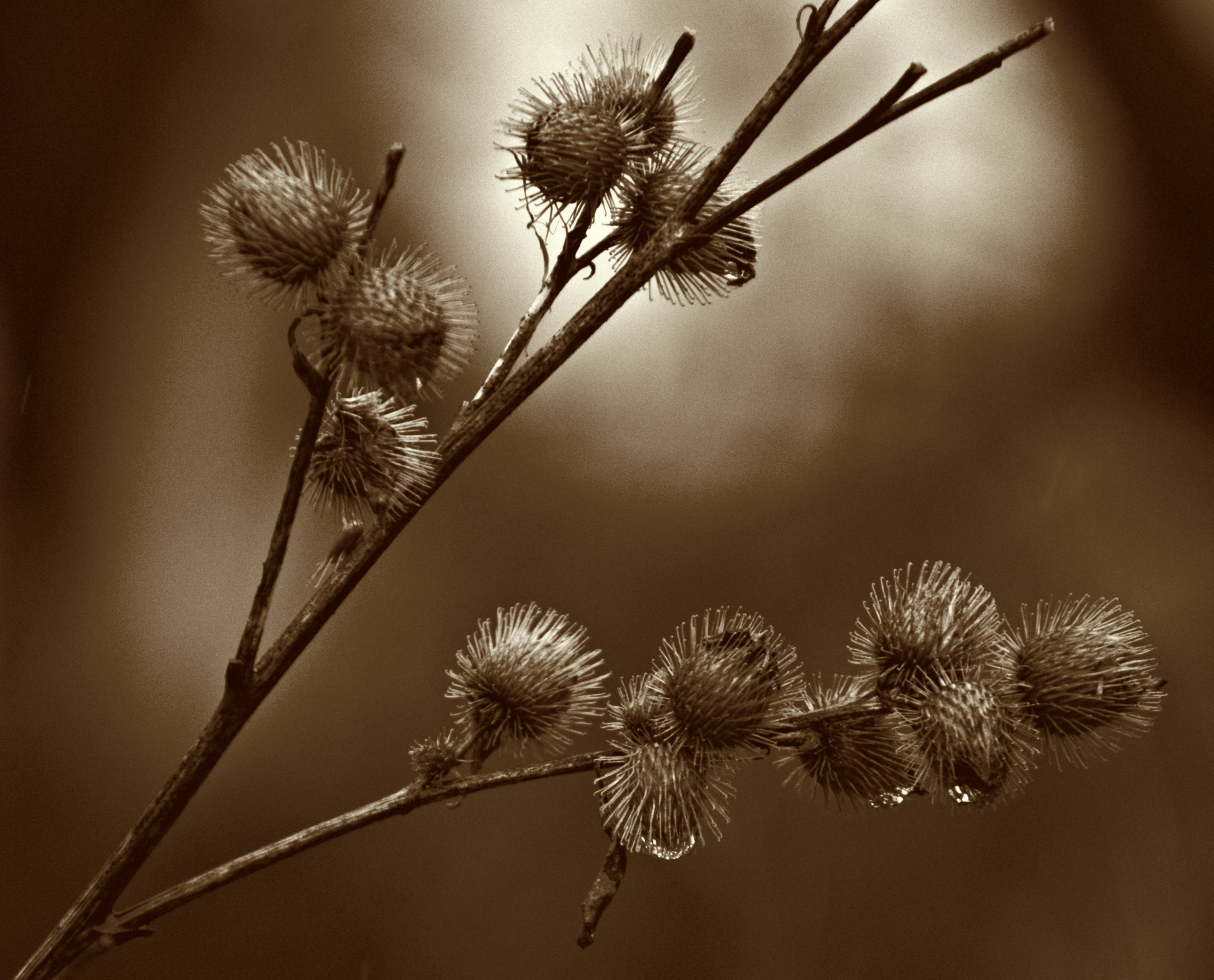
Both Cling and Beyond blur the lines between the abstract and the real. These pieces not only startle the eyes but liberate them from all that is outside the world of these painting. With great focus and detail, as well as the opposite, Staeble has presented two wonderful photographs that took us in the very minute we laid our eyes on them.


Cling Cling

 Cling by Louis Staeble


bEYOND

Beyond

Beyond by Louis Staeble


Louis Staeble lives in Bowling Green, Ohio. His photographs have appeared in Agave, Blinders Journal, Blue Hour, Digital Papercut, Driftwood, Fifth Wednesday Journal, Four Ties Literary Review, Iron Gall, Microfiction Monday, On The Rusk, Paper Tape Magazine, Revolution John, Sonder Review, Timber Journal, Up The Staircase Quarterly and Your Impossible Voice. His web page can be viewed here.