ai Lon died two years ago, four years after the month we lived together, rose early, drank coffee, drained beerlao in the hotel’s shiny lobby, hauled plastic bags of mangosteen and longan to temples. we hadn’t talked in a while, and then he was gone. i don’t know how to be funny when my friends die. not yet, at least. i remember my uncle joked about the corpse of my grandmother as we carried her casket to the altar. i laughed, because what else?
iv. what is terrible is easy to endure
when i left laos, i cried every day.
i cried over the same two poems.
i looked at pictures and cried.
i stood in walmart and cried.
i rented an apartment, got a nice job,
reunited with a woman i loved, and cried.
autumn descended, a season missed
like a lost appendage, and i cried.
winter was a brick through the window:
cried. cried in phoenix, new york,
new haven, minneapolis, cried on pizza
and into beer, good beer, beer i’d craved!
one june day, i drove up to maine
in my cousin’s car. ate lobster rolls,
bowled, laughed. peeped lighthouses
hammered into the jagged stone coast.
took a candid photo on the beach, sand whipped
my winterwhite face pink. gulls squealed
sharp into a preposterous distance.
BRENDAN WALSH has lived and taught in South Korea, Laos, and South Florida. His work has appeared in Rattle, Glass Poetry, American Literary Review, Maine Review, The American Journal of Poetry, and other journals. He is the author of 6 collections, including Buddha vs. Bonobo (Sutra Press) and fort lauderdale (Grey Book Press). His latest collection,concussion fragment, winner of the 2020 elsewhere chapbook contest, was released in February 2022. He is co-host of theFat Guy, Jacked Guy podcast with Stef Rubino.
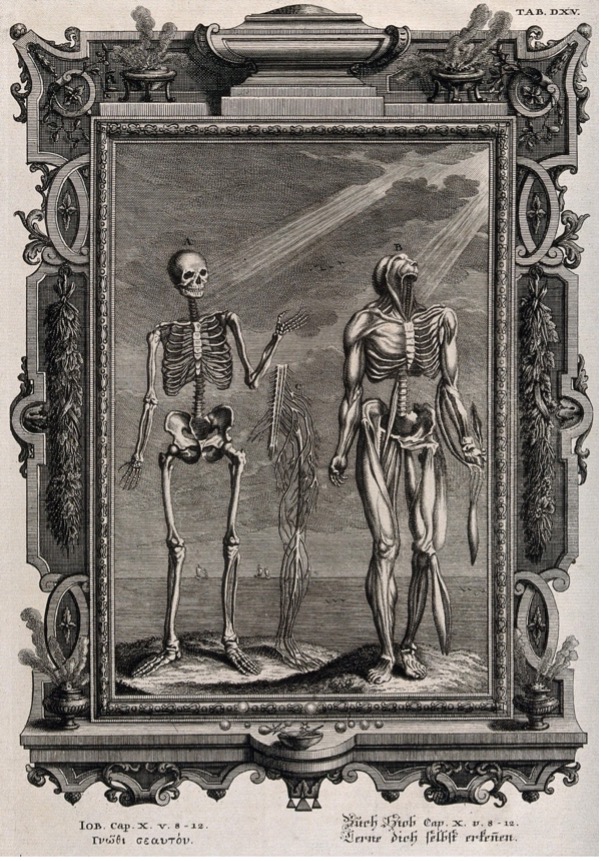
Figure 1. “Anatomical figures on a cliff by the sea, their heads illuminated by light. Line engraving and etching by B. Probst.” 1735. Wellcome Museum.
The light in the room is a dim, dark blue. Shadowy people crowd around the bed where I am lying naked on my side, but they are without definition: a busy, blurry hoard.
I don’t feel my skin. I’m not aware that I am crying, though I have been almost continuously since the morning before, when my midwife said that if I went home, my baby would die.
Raising the mask to my mouth, I try hard to fill my lungs even as my body involuntarily compresses and tightens. Then, I have to let the mask fall away since the rubber around its edges only allows air to pass into my body, not out.
Raise to inhale, lower to exhale. Repeat and repeat and repeat. But there’s no change. The pain of the tide rippling through me — electric, uncontrolled — doesn’t recede with the inhalation of the gas. My work becomes still heavier: in addition to the waves engulfing me, I can’t quite catch my breath.
I get my movements mixed up and exhale into the mask and it is as though I am trying to add air to an already full chamber — it goes nowhere, or backwards down my throat. It cannot leave my mouth. In those moments I’m drowning and, though the medium is my own breath, I feel I’m deep in black water.
There are stories so ordinary and widespread that they quietly permeate every human life. They are tales we learn passively, through mention and missive, of water and floods, fire and disaster, of disease and illness and death.
The stories’ cultural commonality makes fear of what they portend rarer than it probably should be, until one or more of their subjects comes into lived life and reinstructs in human smallness.
Wildfire in Northern California is one such teacher, as, every year now, we must live through fire season with bags packed, always ready to evacuate. Flooded streets and subways, buildings that give way in the night — these happenings remind us that we are not in control. That technology and systems fail. That safety is an illusion.
Childbirth, too, can renew this old human awareness of frailty, of our passing nature. I know this from recent experience.
2 / Cyclical Torrent: thirteen months earlier
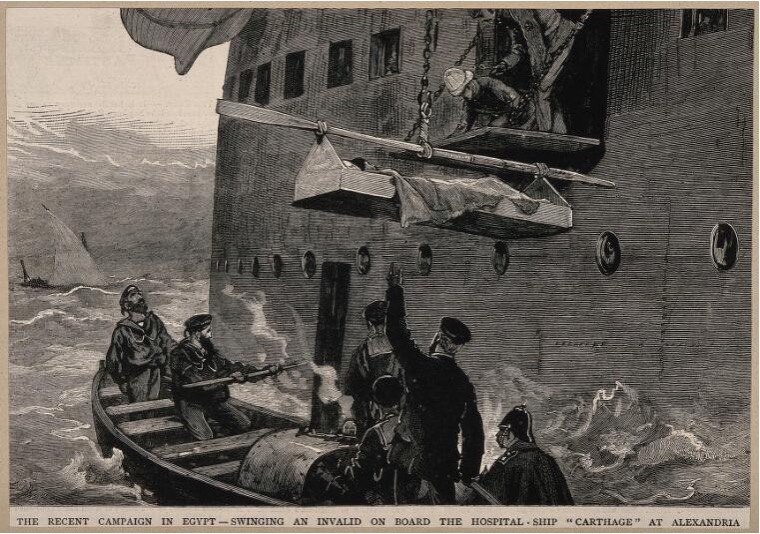
Figure 2. “The War in Egypt: hoisting invalids on board a hospital ship. Wood engraving.” Date unknown. Wellcome Museum.
In May of 2020, my grandmother — my last living grandparent — died. When my spouse, David, and I showed up at her assisted living complex in Troy, Michigan, there was still snow on the ground. The cold loss I felt came from more than just my grandmother’s absence. The Detroit suburb itself felt bereft — the streets wide and slick, the landscape brown and untended. If I had been from there, I probably would have recognized this as spring, but it was bleaker than any California winter I’d experienced.
Stepping inside her apartment, we found half a cup of coffee, the shower full of cheap shampoos, the fridge still stocked with Tupperware containers of food that no one was going to eat. Our task was to sort through the small mountains of paper and dollar-store jewelry that she had accumulated during her eight decades.
Our work began right away. We sifted through her belongings, placing most things into black garbage bags to be donated, and saving some others — old photos and letters, a notebook containing simple accounting of her monthly bills calculated randomly across its pages, and hand-embroidered handkerchiefs.
Grief and the sorting of her possessions tired us. When we went to prepare for bed that first night, David pulled down the left side of the covers and found that someone — probably my cousin or uncle — had pulled the blanket up over a large brown spot on the sheets. A strong body smell — of perfume, stale laundry, excrement — wafted up from the bed.
This must have been where she had had her stroke and soiled the sheets before falling to the floor. I felt my throat close, and my eyes burn as they filled. She had been alone for hours.
We searched for but couldn’t find replacement sheets. Even if we had found them, the problem would have remained: the stain had soaked through to the mattress. There was nothing to be done, and nowhere else to sleep. David covered the stain back over with the blanket and, pulling me into his side, told me he would sleep there.
That moment conjured the old realization: now she’s gone, my time for knowing her has run out. But the writer and physician Atul Gawande suggests that we ask questions of our dead. That there is more to be discovered, even when the person can no longer physically answer back. Though he means the questions to be asked in the form of autopsy, postmortem inquiry can also be extended to the emotional and ethereal, to things we cannot see.
So, I asked questions of my grandmother’s life there, as we sifted through the remnants of it, and I continued to query after returning home, as I was forced to add others to the group of addressees.
My dead haven’t all died. In the months after my grandmother’s rainy funeral, my birth family fell apart. Fights erupted over differences that had long been there, unconfronted: views on Trump, Black Lives Matter, vaccines, and the pandemic. Siblings blocked other siblings on social media. My mother stopped speaking to me. Though I’m the middle of nine children, and this should mean always being part of a group, I found myself quite suddenly and shockingly alone. It was the final razing of an already shaky structure.
Querying my grandmother and her life brought a still resolve about my future that I hadn’t previously had. Though she had dealt with the alcoholism, abuse, and neglect of family members, worked in a factory for years, and lost my grandfather a decade and a half before her own death, my grandmother had always been ready with a quick, unoffending joke. She regularly drove her friends and grandchildren around town. When she dressed up for her Bingo group’s Halloween party, she chose a cow costume and won the contest. In short, she didn’t wait for others to change before living and loving her life. I didn’t want to wait anymore either. The point, I began to see as the losses accumulated behind me, was to make the choice to take a chance.
So, back home in California, with the awareness of my gutted family life ever present, I made an appointment with my obstetrician to get my IUD removed. Two days after my doctor pulled out the little copper T and set it, still a little bloody, on the blue-papered tray, I got pregnant.
3 / The Present Flood
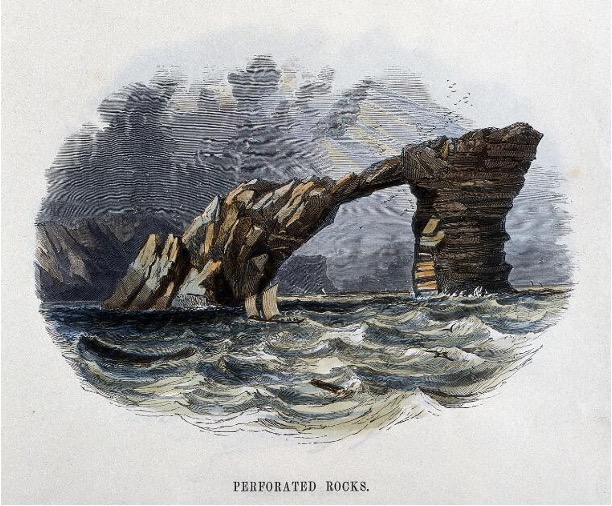
Figure 3. “Geography: eroded rocks in the sea. Coloured wood engraving.” C. Whymper. Wellcome Collection.
Just after my child was born, I thought that the sadness I was experiencing was due to the way the birth had gone. Low amniotic fluid. Fetal intolerance of labor. Stress and stress and stress. My baby was taken out of my body with a knife and swept to a see-through bassinet for inspection. It was a full ten minutes before I saw my child’s face. When they* were finally placed on my chest, I was too shaky from the drugs flowing into my system through the epidural catheter in my spine to hold on to their tiny body.
I don’t remember being taken back to the room where I would have given birth, and I don’t remember breastfeeding them there for the first time, though there is a photo with a timestamp showing that this happened. This forgetting is a common source of sadness after C-section, and for a while it was mine, too.
At home, my body healed both too quickly and too slowly. My belly was gone and too soon, to the outside world, I must have looked quite like the person I’d been before.
But the line where I was cut open still stood up red and shiny right beneath the place where I zipped my pants. The adhesive from the tape that had held catheters, monitors, and IV in place sat in persistent patches across my body, blackened with lint from my sweats and t-shirts.
Each day in the shower, my grief was Homer’s wine-dark sea, spreading to the limits of the bathroom.
During my first attempts to pick open the knot of my sadness, I thought these quick bodily changes and my absence of memories of our birth were the reasons my heart was broken, despite my healthy baby. But as I gathered up the days between my various presents and the static, murky “then,” my understanding of exactly what I felt I had lost was changed. My child’s difficult birth drew out the many other deaths in my life — the many people and relationships that I couldn’t resurrect. It brought to my awareness the very small amount of control I had over the family I had brought into existence by creating my child. I could not mend my first family with the birth of a second. I had not bought myself safety, but greater than ever vulnerability.
With them napping on my chest, their head close to mine, their tongue working inside their mouth and smiles flashing across their dreaming face, I realize again and again that they will die. That this is the reality of what I have made — that they are something that will live briefly, hopefully beyond the span of my own life, and then die, as we all will.
If I tried to protect my child from all risk, they would grow up fearful, and I knew from experience that fear inhibits love and the ability to engage with the world in joy. We are not safer when we are afraid. The fear itself offers no protection.
4 / Coda: Without Inventing a Life Preserver
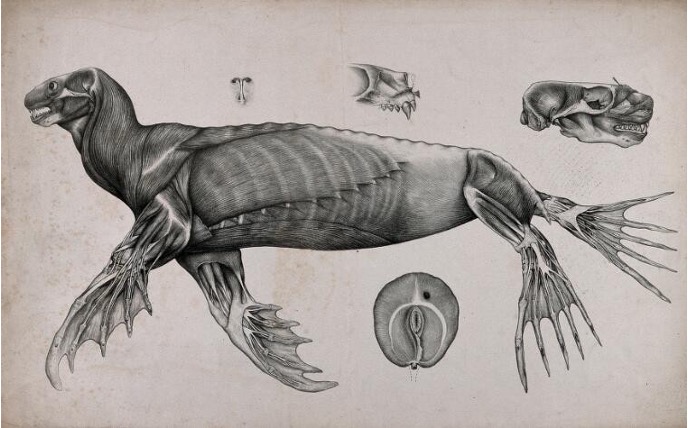
Figure 4. “An écorché seal: five figures showing the musculature of the body, with details of the muscles of the face.” Lithograph by C. Berjeau, 1872. Wellcome Collection.
In her poem, “Diving into the Wreck,” Adrienne Rich has her speaker intone: “there is no one / to tell me when the ocean / will begin.” When I first read this poem aloud to myself sometime in 2016 while taking a poetry class just because, I hadn’t yet lost my brother-in-law to overdose, my graduate school mentor to heart attack, my grandmother to stroke. My family, though troublesome to me, still felt like a coherent whole. And so, I didn’t quite understand what “the wreck” might be, or why an experienced diver would need someone else to tell them where their medium of travel — the water — began.
I know now that the water is engulfing sadness. The boat ladder from which the speaker must descend is the bridge between the “normal” world, calm and unaware of that which lies beneath, and the other. The wreck is the thing lost — the source of grief — drawing the mind like a circling explorer, again and again. The equipment is insufficient because you can never, no matter how many times you’ve made the trip, be prepared for what you’ll find below.
I was lucky: My expedition wasn’t doomed from the start as some birth adventurers find theirs to be. But there is still no one to tell me when the next ocean will rise up and swallow me whole. You might call it postpartum depression. But that doesn’t help me understand what this period of life is or means.
Grief is one of the skeletal structures of life, always there but not felt until something breaks. As I labored that late spring night, I wore my grandmother’s earrings. In that dark passage, I met her— myself engaged in birthing and she in dying — both of us knowing that this was the end of life as we had known it.
It is not a hormonal condition to grapple with the glimmering mortality of love and life.
My story is not the one I thought I would tell, of pushing my baby out and pulling them up onto my chest. I never had control over the process. That was taken the moment I learned my baby might not survive. But I know, even before that, I had only the illusion of it. That is one point of the common tales of destruction and loss — to remind of frailty and vulnerability. Another is just to tell of the endings that visit us all. I am grateful to share a beginning, though difficult, with my child.
I birthed my baby as ports birth ships — with the help of a large crew. We don’t know yet the voyage we’ve begun, though that horizon, always, looms.
*My spouse and I refer to our child using they/them pronouns.
SARAH HOENICKE FLORES studied creative writing (BA) at Mills College in Oakland, California, and journalism (MJ) at UC Berkeley. They are now working on their PhD in Comparative Literature at UC Irvine. They write about many different subjects — from inequities in the maternal healthcare system to Jesus Christ’s Instagram account — for a range of publications, including the New York Times, Literary Hub, and many others.
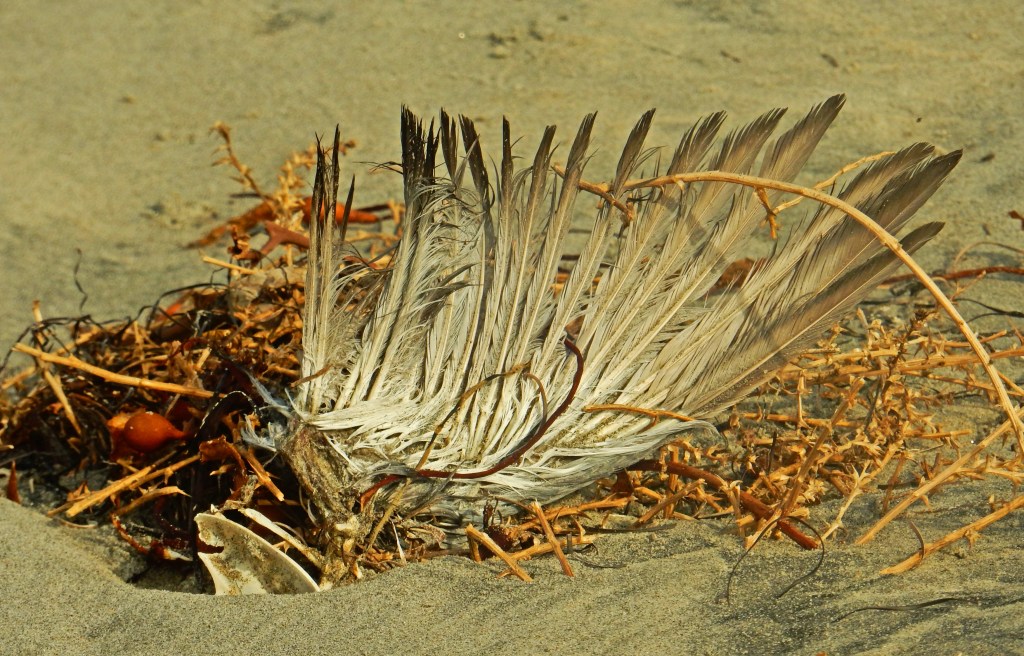
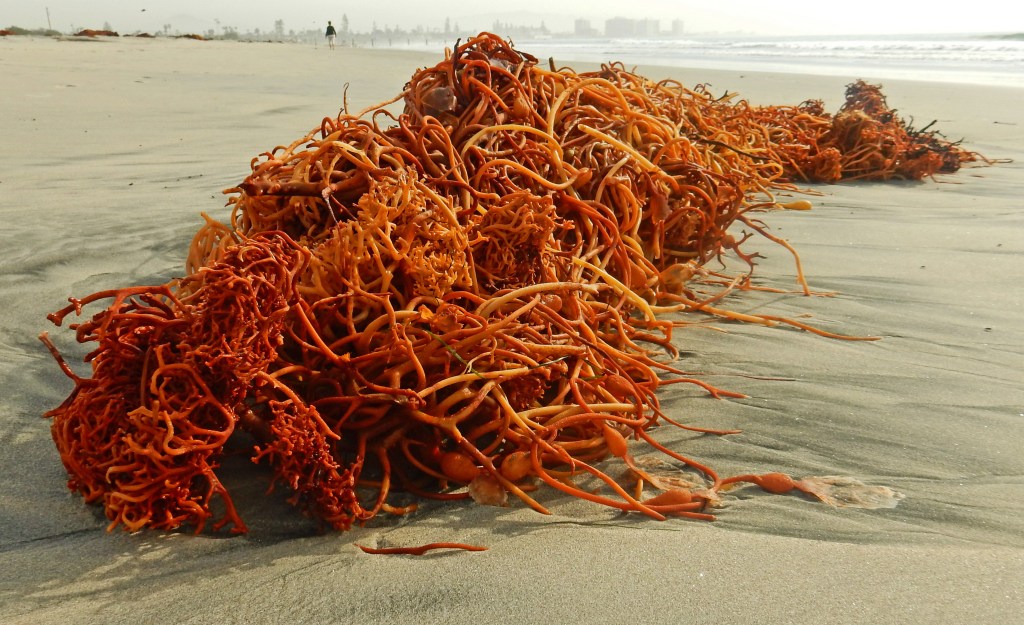
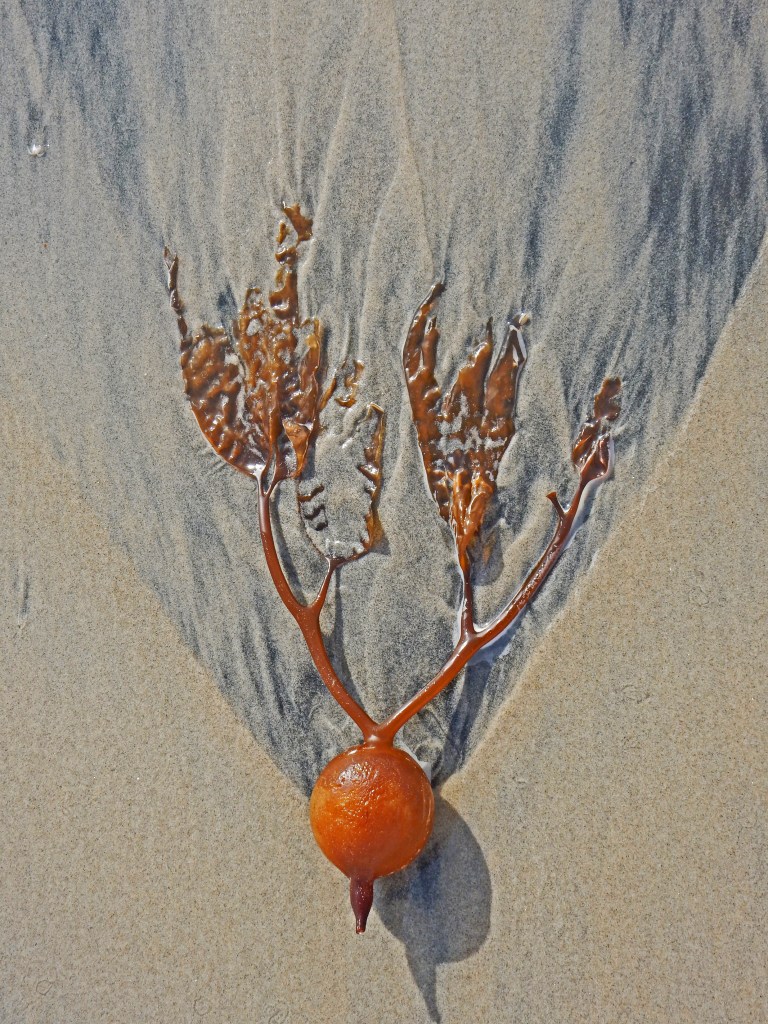
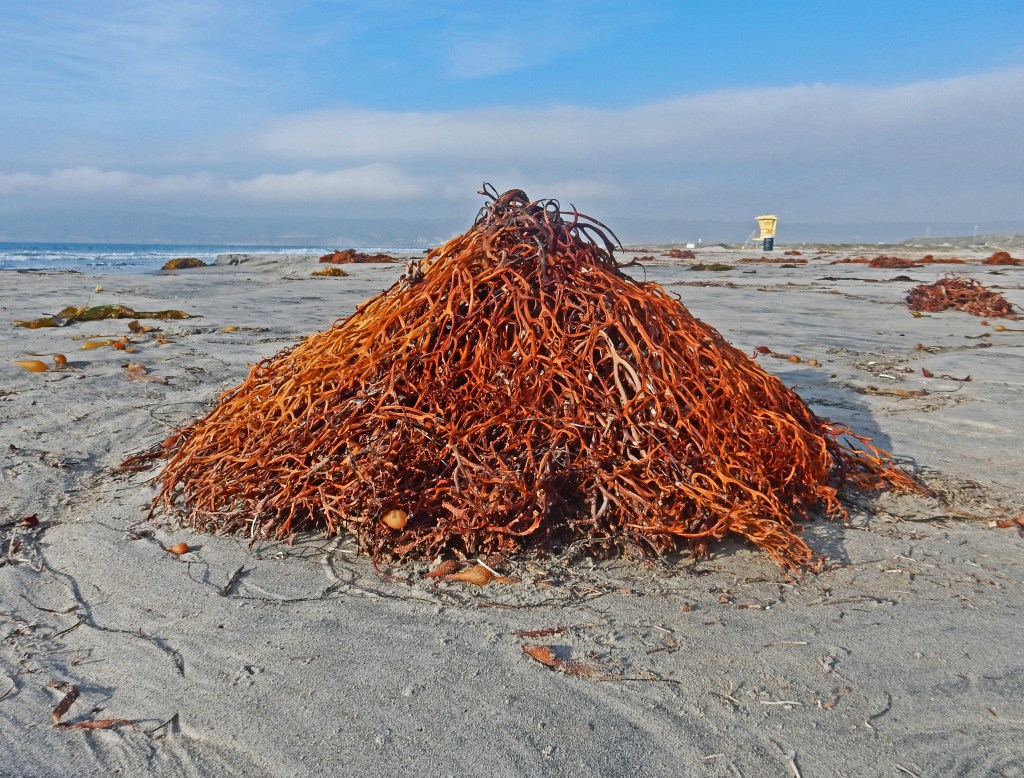
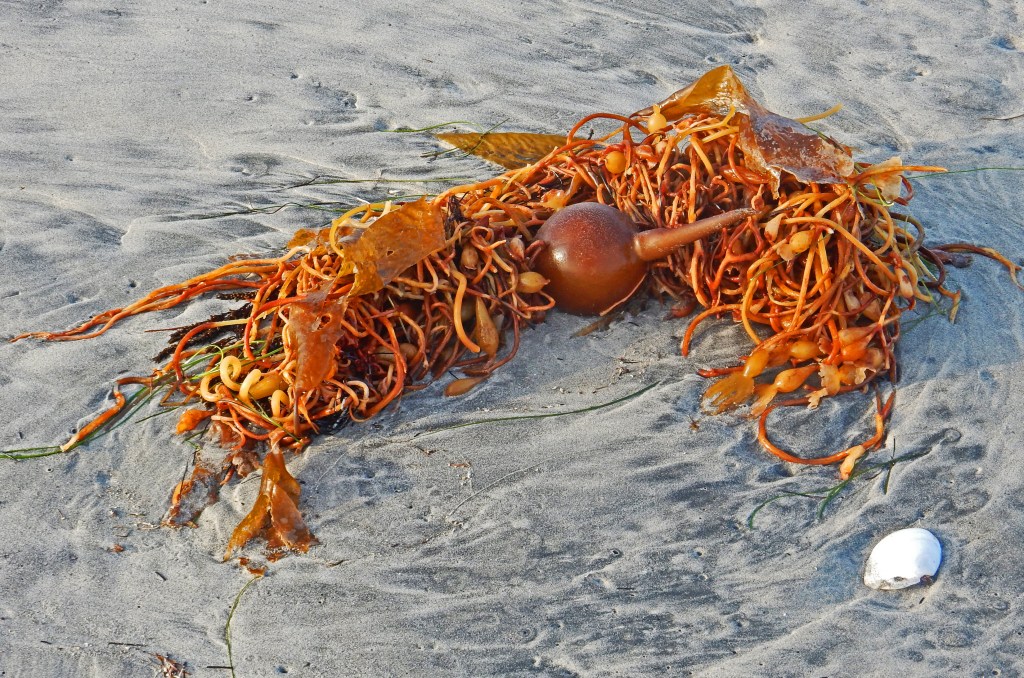
Artist Statement: I try to capture moments of transition, knowing that such moments often occur in stillness.
Digital Photography, North Island (California), December 2015
JIM ROSS jumped into creative pursuits in 2015 after a rewarding career in public health research. With a graduate degree from Howard University, in seven years he’s published nonfiction, fiction, poetry, photography, and hybrid in over 175 journals and anthologies on five continents. Photo publications include Bombay Gin, Burningword, Camas, Columbia Journal, Feral, Friends Journal, Manchester Review, Stonecoast, and Typehouse. Recently-published photo essays include Barren, DASH, Kestrel, Ilanot Review, Litro, New World Writing, Sweet, So It Goes, and Wordpeace, with Typehouse forthcoming. Jim and his wife—parents of two health professionals and grandparents of five little ones—split their time between city and mountains.
JESSICA HERON’s work appears or is forthcoming in The Horror Zine, Hole In the Head Review, Angel Rust Magazine, Anti-Heroin Chic, and others. She is a poetry reader for Catatonic Daughters. You can find out more about her including a full list of publications at jessicaheronpoetry.com.
I watch light slice through pale flesh with the softest crunch
sharp as steel
pips scatter carelessly
out of character
she’ll swipe them off the tabletop once she’d finished
sticky sweetness washed off calloused fingers
but for now there’s hope in each of them
shiny brown and full of hidden life that’ll never blossom
I smile to the child in our rented kitchen
letting little moons slip from my hands
for her to run away with
for me to never leave
MON MALANOVICH-GALLAGHER (they/them) is a non-binary queer poet, inclusion speaker and mental health activist. Their work appeared in a variety of chapbooks, anthologies and magazines including Queer Writing for the Brave New World, Beyond Words, Aurora and is forthcoming in a number of other publications, both online and in print. You can connect with Mon on Instagram: @mxmongmg
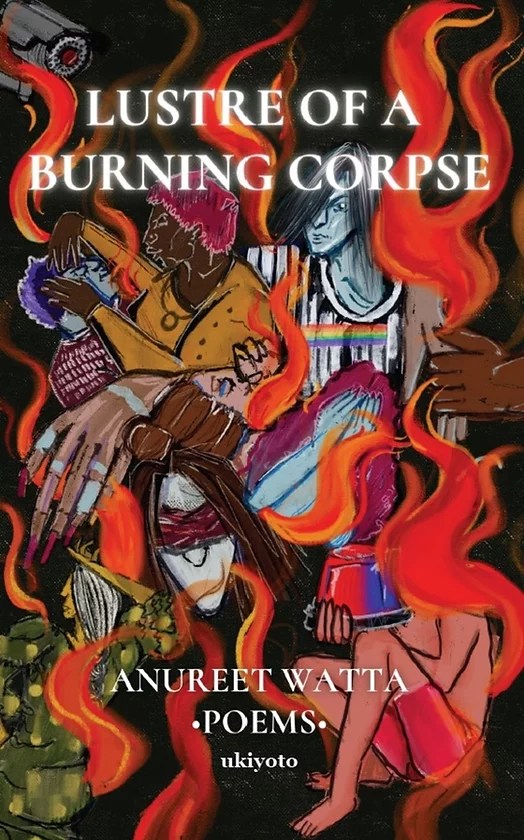
Queerness is a lesson in knowing that survival is both an act of violence and a form of self-love. In Sexualness by akshay khanna queer lives are described as “bare life of bodies” where they emphasize the untranslabitlity of being human and its fragile condition. Anureet Watta’s debut poetry collection The Lustre of a Burning Corpse, examines these bare lives of bodies that are subjected to the violence of existing, carrying grief and hope simultaneously.
Audre Lorde, in her seminal essay, “Eye to Eye: Black Women, Hatred and Anger,” distinguishes suffering from pain. Suffering is unscrutinized pain that festers like a wound. Pain is recognizing the festering wound of suffering and providing it with language. In the poem, “Where do you put down the scream?” Watta names pain as “holy agony” and asks, “What would/I be when I do not have this holy/agony to keep me company?” because “It keeps me company, the way a pebble/in a shoe, an itch you cannot reach/does.” There is an intimacy with the “holy agony” of knowing pain and carrying it like a scream. Pain often looks like anger, like a scream. After all, it is much easier to be angry than to be hurting.
The agony further stems from violence that is both personal and political. Watta writes, in “The Government has it Under Control”: “the postcard I write to my lover,/the prime minister licks the stamps for me,/the home minister checks for grammar”. These lines keenly emphasize the discomfort of being aware of the voyeuristic gaze of the state. The power vested in it is so deep that its presence is felt in the innermost sanctum of our love and the language we use to communicate. They further write, “Who wore it better, lets find out:/The prime minister’s sherwani/threaded with blood,/or the home minister’s boot,/caked with graveyard mud?” in the ironically titled, “Country of Non-Violence.” Watta’s poetry stems from the acute awareness of autocratic power and the violence it wields. The imagery presented is vivid, driving home a brutal point about the relationship of despotic power with bloodshed.
The collection is a roadmap of violence in its various grotesque and benign forms. There is the unending violence of the state masquerading as security, obsessed with safeguarding honour and mitigating shame. There is the violence of constantly finding oneself erased and invisibilized. How do we then survive, live, and bear witness to our lived experiences? In “We Swallow the Sun to keep from Stuttering” Watta writes,
“You have never longed to be understood
just acknowledged,
under kinder skies and with undoubtful eyes
but until then,
I’m here, and I’m not really a hug person,
but I think we can both use one.”
There is also a quiet form of violence that queer people reserve for themselves, like an arsenal for emergency use, in case they momentarily forget the normalized threshold of violence that constitutes their lives. It is discernible in the lines, “You have never longed to be understood/ just acknowledged.” To be understood and acknowledged is to belong so here is an attempt to belong in the face of the intrinsic violence of erasure.
Poetry carries the crucial burden of witnessing. It carries the weight of testimony. The act of witnessing is fraught with the power dynamics of the one who suffers and the one who witnesses. This act is exploitative at its core when suffering is performed for the benefit of the observer. It becomes sacred when there is surrender and the binary of the witness and the witnessed collapses. As Watta says, “We are, after all,/ the truest reporters of ourselves.” The self they behold is always on the verge of being consumed and at the brink of this annihilation is the voice of their poetry.
Watta stands witness to the lives they have lived as a queer person as well as the lives they couldn’t live or weren’t allowed to, holding themselves, all their selves, with tenderness and mercy. In “Poet as a Tragedy,” Watta pens one of the most powerful lines in this collection, “I learn the necessity of consuming yourself,/in exchange for an allegory.” They further say, “Mostly, I write, in fleeting moments of power I do not kill/myself/Mostly, I self-sabotage and wait for the poem./This must be how it works.” Poetry has always remained the domain of cis-het white men who are still taught in classrooms as canons. Poetry is fraught with romanticisation of tragedy, usually accompanied by the image of a brooding poet, taking long walks. This element of tragedy is rarely a lived experience. “Poet as a Tragedy” is a masterful subversion of this imagery where tragedy is not a convenient trope but rather varying shades of lived experience guised as a poem. Poetry then is a barter with life, which arrives in moments of self-sabotage, an attempt to live where moments of power are rare and fleeting.
Watta’s poetry brings to us the redemptive power of language. In “Body Without a Border,” Watta writes, “To commit something to memory is to protect it from the/filth of touch.” The private shrine of memory is sacred. Watta tests language to measure queerness and mocks its inadequacy to map the terrains of desire and intimacy etched in memory and shrouded in silence. “Our imaginations are so revolutionary,/I refuse to sell then to authenticity,” they write in “Cinematic Imagination.” Language as a tool belongs to the powerful who determine the narrative that dominates public imagination. Queer lives, in this power structure, are written about as subjects of interrogation and curiosity. Our lived experiences constitute educational awareness material meant to convince people of our existence. Watta supplants this usage of language from a patriarchal, heteronomative gaze which showcases “realities.” Dry witted, they write, “No, I do not want to know about the part where/the lesbian commits suicide,/I was there when she did it.” They directly challenge the gaze that curates queer realities for an audience where valorisation of death is the only option. The narrative where queer lives are reduced to a shadow, and eventually a dead body, is an old misguided, even malicious, trope that long lost its charm. Instead, Watta draws our attention to queer joy and the horizons of imagination that contain possibilities of revolution. Carmen Maria Machado in In the Dream House writes, “When the historian of queer experience attempts to document a queer past, there is often a gatekeeper, representing a straight present.” In Watta’s poetry I meet that historian who is documenting a queer past, living a queer present, and imagining queer futures. This documentation is unlike the history of victories and conquests. It is a meticulous collection of intimacies, with one’s self as well as with lovers and beloveds. I often witness the gatekeeper and the straight present, it lingers in this collection too, but Watta grazes against it in anger and humour. The voice of a poet drives poetry. It is what remains like a resounding echo long after the words have been read. After the last page is turned, Watta’s voice lingers in all its anger and tenderness.
PRIYANKA CHAKRABARTY is a neuroqueer person and law student based in Bangalore. She aspires to be a human rights lawyer and is an avid reader of fiction, non-fiction, and poetry. She has been writing in the genre of creative non-fiction and is a literary contributor with TheChakkar. Her works have been published with Phosphene Magazine, Inklette Magazine and The Chakkar. She is a bookstgrammer and regularly documents her reading journey on Instagram: @exisitingquietly.
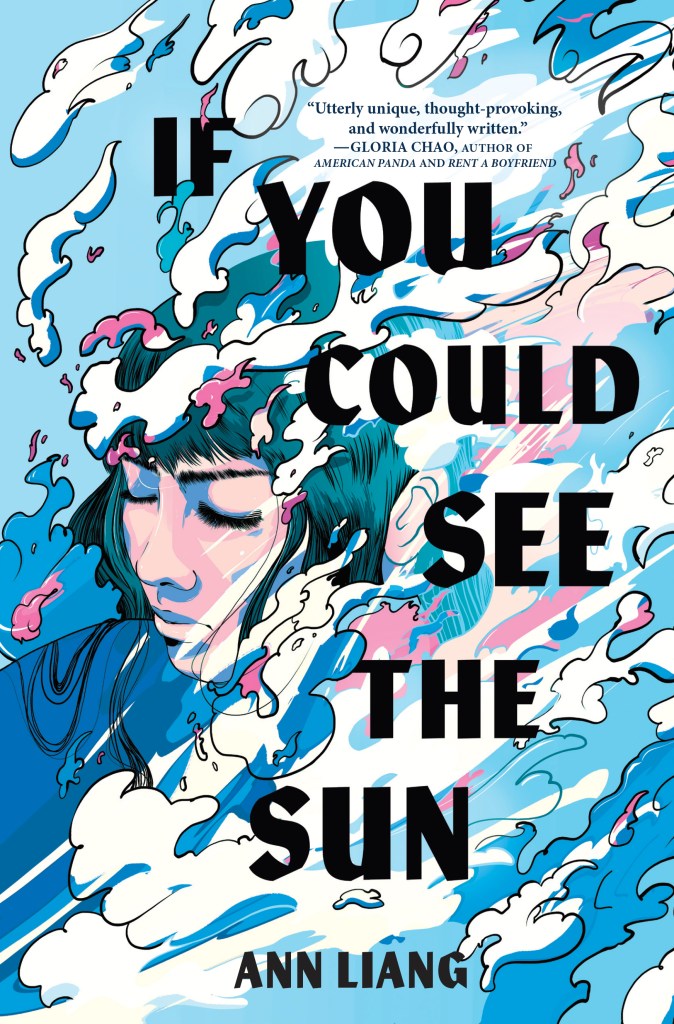
If You Could See the Sun by Ann Liang (Inkyard, 2022)
Big thank you to Inkyard Press for providing me with an ARC of this wonderful piece! This book doesn’t come out until October, but I personally think everyone needs to put it on their to-read and preorder it as soon as humanly possible, because… wow. This book blew me away.
If You Could See The Sun follows Alice Sun, a young, gifted girl who attends an elite prep school in Beijing. However, when her family drops the news that they will not be able to send her there anymore, Alice discovers she has the ability to turn invisible. By accident. Capitalizing on her newfound power, she teams up with her academic rival who she hates very, very much, Henry Li, to dish out her classmates’ secrets in exchange for money.
It’s very rare I click request on an eARC as fast as I did for this one, but my mouse moved astronomically quick when I saw the stunning cover paired with dark academia, magical realism, and academic rivals to lovers set in somewhere that wasn’t England or the east coast United States. There was no way I was taking no for an answer. And I’m so glad I didn’t; this book checked every box for me. The romance was a perfect slow burn, every character was so fun and wonderful, and the cast was diverse and so, so real. The magical realism was beautifully executed and added a touch of symbolism to the story.
I also would like to mention how much I adore Henry.
What stood out to me as I read this is that everyone came from different backgrounds, and the book urges you not to judge anyone by their outward appearance. Alice, our narrator, comes from a very different background from many others at her school, but she learns more about her classmates and it reminds us as readers that there is always more to someone than meets the eye. Whether rich, poor, beautiful, privileged, etc, each character is fundamentally different and challenges the reader to look beyond external perception. Young adult novels in academic settings, in particular, can fall into a trap of stereotyping characters. If You Could See the Sun doesn’t do this at all. Instead, it challenges preconceived notions Alice may have about her classmates she didn’t know that well to begin with, and presents a different story for every single person that crosses the page.
Did I mention I love Henry?
Alice is also a lovely protagonist and is about everything readers dream of in a badass, independent female protagonist. She doesn’t distinguish herself as “different from other girls” or put herself above any of her peers, but she is humble yet headstrong and brilliantly feisty. She also has the best one-liners (my favorite: “I’m greeted at my aunt’s door by Buddha. Not the Buddha himself—though it certainly wouldn’t be the strangest thing to happen to me this week.”). Her voice is strong and inspirational and certainly provides a voice to those of us who were mega-overachievers in school (I know I was). I wish I could hand this book to a 16-year old me—Alice might’ve inspired me to slow down a little!
Now to expand on Henry (as I’ve been wanting to do this whole time). Admittedly, I almost always hate love interests. I was thrilled to see that this book subverted my preconceived opinions once again. Henry first comes across as this perfect, smug, beautiful man who Alice feels frustrated she cannot live up to. They are competitive, and he has a way of pushing Alice’s buttons like no one ever has. However, when they end up partnering to create the app together, Alice learns more about him and that his life wasn’t all big money and studying like she originally thought. He grows just as much as Alice during the novel and is much, much more than a pretty face. He is easily my favorite character in the whole book (shocking for you all to hear, I know).
Aside from the main two, every side character is well-developed and easy to remember. The number of characters introduced is not overwhelming, yet not so small that the school feels entirely empty. The teachers, especially, provide some insight into the story and serve as mentors who push Alice into making better decisions for herself and not devalue her own worth despite the differences between her and her classmates.
Without giving too much away, I also commend the fact that this was a young adult novel without an ending where everyone wins. Often when I read young adult novels, the characters are not held accountable for their mistakes. It’s frustrating, and it makes the endings very weak. Liang cleverly challenges this by creating a favorable outcome for her characters, but not a perfect one. Alice’s problems don’t magically go away with a flick of the wrist but rather, she uses the bad situation as well as her intelligence to her advantage. The characters are held accountable for their actions, and while things ultimately end well, they don’t end with the problems dissipating into thin air. Typically the endings of novels are like a walk through the mud for me, but this one left me pleasantly surprised! If You Could See the Sun is a delightful read, packed with drama, a wonderful romance, and a spark of hope for young people that may not yet know what they want to do with their lives or understand how much they’re worth. Absolutely unputdownable, with an exceptionally strong protagonist and a compelling story, this is a debut packed with elements that will delight readers of any age. Thanks again to Inkyard Press for a free eARC, and I am on my knees begging anyone who has read this far to wishlist this book immediately!
ANNE CAYWOOD is a junior at Arizona State University, pursuing a career in English. She is also a full-time barista at a locally owned coffee shop, and in turn, is a bit of a coffee snob and loves promoting local businesses. When she is not working or writing, you can find her reading every dark academic novel she can get her hands on, watching cat videos on YouTube, and playing video games. She is also a volunteer intern for the literary magazine Sepia Quarterly.

 Inklette Magazine