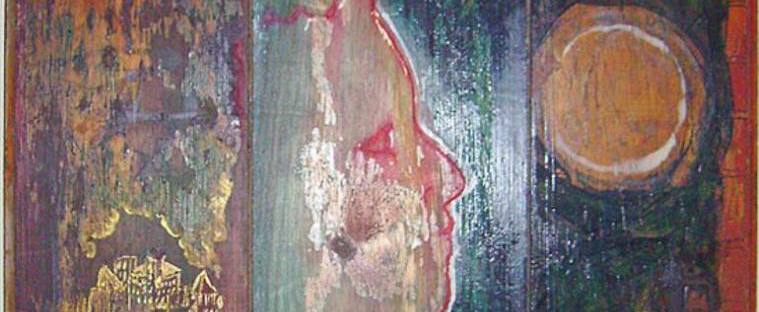
How To Find Inspiration To Write

by Laurelann Easton 

As a writer, and having known many writers, one of the biggest truths and hardships about writing is finding and keeping inspiration. The most common idea is “writer’s block,” or “artist’s block” for anyone who doesn’t write but still has an issue getting the creative juices flowing.

Something to recognize is that everything that crosses your path, every situation you find yourself in is a potential story, even if it’s just something that you relay back to your friends later after it happens.

However, if these stories really spark something inside of you, you’ve got to hang on to it! My biggest fear as a writer is that I will somehow lose my ideas. With phones being a prevalent part of almost everyone’s lives, they’re the quickest and easiest tool to have on hand no matter where you are to save whatever inspiration hits you.

Some of the best advice I ever heard was to keep a yellow folder (it doesn’t have to be yellow, but this is what this particular person used). It can be a physical folder that you keep on your desk or your bookbag, or it can be a single folder on your computer that you use for one thing only. That would be for storing ideas, even little snippets of ideas. It can be a piece of dialogue, a philosophical idea, a lyric—literally anything!

The important thing here is the folder, physical or otherwise, or even the list of notes growing in your phone. Save all of these ideas for the rainy, wall-filled days that refuse to let you get any writing done.

Recently I went through the airport to visit my family a couple states over, and I swear that airports are hotspots for inspiration! Someone walked by me with their phone up to their ear, and for some reason it looked to me like he was impossibly holding a gun in the airport. And now I have a story idea about how someone reacts to being unexpectedly held at gunpoint.

At places like airports where there are a lot of people, there are a million different opportunities for inspiration. Of course, you can’t always be in an airport unless you travel frequently, so cafes or restaurants are also stories waiting to be told.

An interesting exercise in writing that I did a few years ago for a class assignment is called “portrait of a stranger.” For this, what you do is go out in a public setting and follow someone around. The goal is to write about that person in the third-person perspective and to add as much detail as possible so that it seems like you know the person.

This sounds really creepy—it’s not supposed to be. Don’t make yourself seem like a stalker. I achieved this by sitting in a café downtown and watching how the barista interacted with customers. The writing itself doesn’t have to be anything long; it can be only a couple pages or so. If anything, this will give you something to focus on and freedom to write because you’re not forced to create anything new.

For creative nonfiction writers, this is a fantastic exercise. Strictly fiction writers should remember, though, that real life holds a lot for inspiration because it leaves a lot of room for embellishment (creativity). Maybe the barista isn’t really a human but is instead a dragon who roasts his own beans!

Keeping a folder of ideas like this are great if you’re looking for something new to start, short story or novel or whatever it is you’re interested in writing!

Sometimes starting a story is the easy part, especially when you’ve got your trove of ideas saved up. Say you do get this great idea about a dragon barista, and you get the conflict and plot started. Then the walls come up. Your mind blanks. Where do you go next? How do you keep going?

If I’m looking for inspiration to keep going, I turn to art and music. I have this ancient DeviantART account, and I’ll scroll through the main pages of it viewing different art from popular artists. For music, I have go-to playlists that inspire me and I know many writers who have certain types of music they listen to. Sometimes I go to Pandora for Halo-themed music for epic action scenes, or YouTube for hours of fantasy music for the more magical stories I write. If I need something steady that won’t distract me, I play Radiohead because of how seamless it runs in the background.

What music do you listen to when you write? Or do you have to have a quiet room? If you prefer quiet, maybe viewing art can be a good what you go to for inspiration.

One of the last tools to consider for keeping your walls at bay is plotting. Everybody knows Freytag’s Pyramid or something similar to it, and it’s a good generalized way to consider your plot if you’re not one for knowing every detail of your story before it comes.

If you’re like me and love plotting, then something more detailed might help. This could be breaking down each chapter into scenes before you write them. I ended up doing this after I finished a full rough draft of my novel, and it helped to give direction to it all. I wrote a general goal for how it propels the conflict or plot of the story, and then broke down the scenes to see if it actually contributes to the goal I set. (This can be helpful if you’re looking for motivation or a point in the right direction for editing!)

Having the outline of a plot can be helpful to refer to because sometimes writer’s block can be fueled by not remembering where your story is taking your characters.

Here’s to the defeat of writer’s block and the success of creative endeavors!


16649393_1226865780684357_4326104954904165115_n1.pngLAURELANN EASTON is a creative writing major and will be completing the MFA program at Southern New Hampshire University in 2019 with a Teaching Assistantship. She loves reading the weird yet real stories of life that no one tends to shed light on. Alongside writing and editing, she runs an Etsy shop for wire-wrapped jewelry and metal-working. To de-stress from everything, she goes for hikes in the White Mountains, practices yoga in her living room, and cuddles her dog, Calypso.

Interview with Kazim Ali

“If one has to look into Kazim Ali’s work, what is most evident in his poetry is the feeling of homeliness and how answers arise out of the most mundane of situations. There’s a beauty echoing in the simple verse, the way the words come together to dance and quiver on the page. This search for homes gives us poetry which is diverse and rich, both in terms of language and the cultural experiences it seeks to pull together for the reader – and how all of this comes together to define Kazim Ali as a writer singularly unique for his time. Given the fact that Kazim Ali grew up in UK, to Muslim parents of Indian descent, these themes of his writing are not surprising. Equipped with this legacy, his work brims with a raw urgency that calls to readers belonging to all ages, time and place, and feeds the fire in all of us.”

Smriti Verma, Poetry Editor


How did you seek to assimilate your diverse heritage, and the experiences it provided you, in your work? What kind of effect did it have on your writing?

KA: My writing has always been driven by twin notions of sense and sound and the way they treat and overlap and diverge from one another. These come deeply from my twin South Asian lineage of Islam and Yoga. The devotions and scriptures of the Kasmiri Shaivites have been as important to me as the Islamic philosophy and art of my South Indian family. It’s a family that has since been scattered– to Hyderabad, Telangana, to Karachi, to England, Canada and America. Very few of my family remain behind in our ancestral homes (in Vellore and Chennai) yet India feels an inextricable part of my life and my writing.

The forms I choose, the way abstraction interacts with the concrete, the roles that vowels and sound play in my poems– all these come from devotional music of India and Islamic concepts of art and architecture. I also studied sacred chanting and nada-yoga as part of my yoga training. PUT_CHARACTERS_HERE

What are the fundamental differences between prose and poetry, according to you? If there are any, what different approaches due you adopt to writing each?

PUT_CHARACTERS_HERE
KA: Prose and poetry both follow the rhythm of language, breath and the body. In prose you rely more on syntactical and grammatical rules of the language you are working in but even these can be bent or transformed or done away with. The sentence is usually meant as a complete thought but can com in a fragment too. I do not always know the difference between an essay or a poem as it begins. Not until the thought starts to spin our does a form present itself. And sometimes (like in my books, Bright Felon and Wind Instrument) the text actually quivers between poetry and prose and does not choose. PUT_CHARACTERS_HERE

Since our theme for this issue is ‘Growing Up,’ we’d like to know what influenced you the most growing up.

PUT_CHARACTERS_HERE
KA: I grew up in a lot of different places. I was born in the UK where my parents had migrated, but I spent a lot of my early childhood in Vellore. Then I was raised in Canada and finally the United States. So I don’t really feel like I have a single origin or “home.” Or more accurately I have had many different homes and I can’t always choose between them. This maybe gave me access to multiplicity as a broader context in which to live my life. Different languages, different cultural experiences– I don’t feel defined by a single culture or language. This is an “American” experience but it is also an “Indian” experience. I am sad beyond measure that in both America and India there are political forces who are seeking to define in singular (and narrow) terms what it means to be “American” or “Hindustani” for example. PUT_CHARACTERS_HERE

You’ve said previously that ‘everyone knows how much easier it is to write a poem in form and meter’. Would you still stand by it?

PUT_CHARACTERS_HERE

KA: I believe this because form and meter give you rules to work with. They also make the music of a poem much easier to achieve and make it easier to construct an architecture and a mood. But having said that, I do not necessary believe that one starts out with an intention to work in a particular form. I think the relationship to form in a poem has to be organic, meaning it is uncovered during the writing process. One reason to read a lot of poetry in form is that you then learn the patterns of sound and thought and the emotional valences of (for example) a pantoum vs a sestina vs a sonnet vs a ghazal. Once, when I was a young writer I took one specific episode from Islamic history (the attempted arrest of Imam Zayn by the troops of Yazid immediately following the battle of Karbala) and wrote a poem about it in 22 different forms and meters. I wanted to know what the forms itself brought to the episode and what various forms and metrical patterns would bring out of the episode itself.

PUT_CHARACTERS_HERE

You’ve experimented with the couplet very often, in many ways. How does it, as a style, manifest in your thinking process?

PUT_CHARACTERS_HERE
KA: I’ve tried and tried to get away from it, with limited success! My newest book, which is coming out at the beginning of 2018, has a greater variety of stanzaic patterns. But the couplet has a deep attraction, in terms of a “call and response” but not necessarily between a writer and his audience but a writer and himself. A thought answers a thought and not always logically or completely. Often the response contradicts or redefines the original thought. This is an attractive pattern for me, who is a restless thinker.

There is an explosion of poets of colour, especially, writing in blank verse. Does a lack of structure lend to a certain democratisation of poetry?

KA: I think it is a wonderful thing to have a broader range of people from differing educational, economic and social backgrounds writing and creating poetry. Poetry is meant to communicate human experience, all of it. There are a number of registers and ways to approach a poem that do not always involved the received and historic forms. But I do believe that thinking about language, its qualities, the sound of a poem, the way it resonates and echoes–these all build and make beautiful the utterance of the poem. Rhyming meter, blank verse, free verse, and even chaotic outburst– all these can make a powerful and incisive poetry. But as a writer I think it was good for me to practice and explore as wide a range of poetries as I could in order to find my own path in language and literature.


cassisprofileKAZIM ALI is a poet, essayist, fiction writer and translator.

His books include several volumes of poetry, including Sky Ward, winner of the Ohioana Book Award in Poetry; The Far Mosque, winner of Alice James Books’ New England/New York Award; The Fortieth DayAll One’s Blue; and the cross-genre text Bright Felon: Autobiography and Cities. He has also published a translation of Abahn Sabana David by Marguerite Duras, Water’s Footfall by Sohrab Sepehri, Oasis of Now: Selected Poems by Sohrab Sepehri, and (with Libby Murphy) L’amour by Marguerite Duras. His novels include Quinn’s Passage, named one of “The Best Books of 2005” by Chronogram magazine,and The Disappearance of Seth. His books of essays include Orange Alert: Essays on Poetry, Art and the Architecture of Silence and Fasting for Ramadan. In addition to co-editing Jean Valentine: This-World Company, he is a contributing editor forAWP Writers Chronicle and associate editor of the literary magazine FIELD and founding editor of the small press Nightboat Books. He is the series co-editor for both Poets on Poetry and Under Discussion, from the University of Michigan Press.

Ali’s forthcoming titles include: Uncle Sharif’s Life in Music, a collection of short stories; The Secret Room: A String Quartet, a novel; and Anais Nin: An Unprofessional Study, a new book of essays.  Ali is an associate professor of Creative Writing and Comparative Literature at Oberlin College.

Interview with Rachel Yoder


Since the theme of our fourth issue is ‘Growing Up,’ we wondered if there was an experience you had growing up that you feel greatly influenced your writing?

RY: Stories were a big deal in my family. I grew up Mennonite, with a large extended family, so stories from the Bible as well as stories that chronicled our family history were always held up as very important—for passing along culture and values, for reminding us of who we were and where we came from, for creating a family culture of sharing and togetherness.

My parents also read. A LOT. Magazines and books were ubiquitous in our household and, through this, I learned to value words.

I was also a vociferous reader growing up. Since we lived at the dead end of a dirt road, I had to come up with my own entertainment often. I remember spending entire afternoons—hours and hours at a time—reading. It was normal for me to finish two to three books a week when I was in elementary school and junior high. Thinking back on those days is delicious now. I wish I could spend an entire sunny afternoon reading Catcher in The Rye for the first time again.

Oh! And how could I forget the detail that my mom was a librarian? My second home for most of my childhood was the public library. My best friends literally were books. So it only seems reasonable that I grew up to be a writer.

Also, do you think where you grew up influenced your writing?

RY: I grew up in a Mennonite commune in the Appalachian foothills of eastern Ohio. Because of this, I was always traveling between worlds and trying to figure out how to navigate wildly different value systems successfully. I studied the people and places around me. I wanted to figure out the rules so that I could master them and excel. Because I was always outside looking in, I was in the role of outsider, which is a familiar place for writers to find themselves. For most of my life up until my adulthood, I always—absolutely always—felt like an outsider: in school, in the small town where I lived, within the conservative Mennonite culture of my extended family, then in college and the elite, moneyed circles I found myself in there. So this outside status has definitely situated my voice as a writer and also dictated to an extent my aesthetic approach to my writing. I always try to push toward the edges of genre and form. I don’t want my stuff to be usual. I want it to be as challenging and strange as it can be while also connecting with readers in an essential way.

Do you write in different genres/forms? How do you shift from one to another? Does that change your creative process?

RY: I definitely write in different genres and forms. My mainstays are short stories and short essays. Usually the subject matter of a particular piece dictates my approach to it. If I want to think something through, if I want a piece to be able to “talk about” or “think about” an idea, I look to the athleticism of the essayistic form. If I just want to take you on an experience, if I want you to come along as a friend but I don’t really have a point in mind, a story is a better approach. Honestly, though, most of the stuff I write is hard to categorize. It can work as either a story or an essay, depending on your mood.

What is the first thing you typically comprehend upon waking up?

RY: How I want to keep sleeping! Since having a baby (who is now nearly 3) my waking-up has drastically changed. I used to be a big time sleeper-inner, but now my schedule is run by a tiny tyrant who insists I “play trains” with him at 6:30 in the morning. The first word in my head when I wake up is almost always “coffee.”

In your essay “Why Writers Need Unicorns,” you tackle the topic of rediscovering the Muse–as you matured as a writer and person, did inspiration and the way it came to you evolve/change?

RY: Oh man. Yes! When I had unlimited time to write, and was single without a husband or a family, I felt my way through my writing. Whatever great sadness or loneliness or love I was experiencing or dwelling on became the thing I needed to work through and examine. I also thought about the past a lot. Ah, what to do with endless time? I was forever in my head.

Now, I have almost no time, much less time to dwell on trifles such as feelings or the past. So these days my writing feels more planned and calculated. I think a lot about what I want to write before I do and am not compelled solely by my feelings. I think: what would be a project that’s interesting both content-wise and form-wise? To what do I want to dedicate my very limited time? What sort of project would other people like to read? I have to be smarter and more efficient in how I approach my writing time, so there’s more thinking through a project before I start it.

Which authors or pieces have helped you become a better writer? And which aspects of those pieces struck you the most?

RY: Mary Ruefle’s book The Most Of It opened up a new door in my brain. I saw that writing could be both playful and dead smart. I didn’t have to be so serious, so life-or-death with my writing. It could both skip along and sing as well as kick ass and take names, so to speak.

I’ve also been deeply influenced by Joe Wilkins’ beautiful essay and memoir “Out West” published in Orion Magazine. It showed me that a single piece of writing can successfully and brilliantly flow from breathless storytelling to researched reportage to passages of tear-inducing poetry. It’s such an astonishing piece of writing and the sort of work that I aspire to. It had a real-world point to it, but it’s also deeply personal and also would be beautiful if read aloud.

I also tend to really love things that I have no idea how to categorize, because I feel as though they’re forging new neural pathways in my head and they give me this weird, perplexed and elated sensation as I read them. Some examples: Duplex by Kathryn Davis, Grief is The Thing With Feathers by Max Porter, the aforementioned Mary Ruefle book, Big Kids by Michael DeForge, and anything by Gina Wynbrandt (a graphic artist out of Chicago. Go find her books NOW.).  Also, I think Rachel Cusk is a genius and probably the smartest, most talented author currently writing, but if I were in high school, I wouldn’t be interested in her work. Read her when you’re 30?

In your writing, you use some very unique metaphors–are there specific inspirations for how you develop these?

RY: I don’t know if this is okay to say, but while I was writing The Hard Problem, I was going through a phase where I smoked a fair amount of pot. This is pertinent because the pot definitely loosened something up in my head and made what happened in this book possible. It allowed me to loft from idea to idea in a way I wouldn’t otherwise. (To be clear, I never wrote while stoned, but there was a residue leftover when I sat down to write, like all the doors in my mind had been unlocked.) I am NOT condoning or promoting pot use. What I am promoting is experimentation with breaking the bonds of your usual thinking. How can you irrationalize yourself? How can you move outside your usual ways of thinking and seeing? That is so much of the work of writing for me. How can I move into a space where my brain is firing in ways that are surprising even to me? If I am able to let go and allow the writing to show me the way, it leads me to the right places. If I’m trying to impose ideas I have on the writing, if I’m consciously trying to make it strange, it usually winds up sounding bad.

What legacy do you hope your writing leaves behind?

RY: I guess I’d just like it to show what it was like to be Rachel Yoder. I want it be writing that’s so idiosyncratic and specific, you can’t mistake it for work by someone else. I am trying to map my brain for other people. I am trying to give you an experience of my inner worlds. If I wind up sounding like someone else, I’ve failed, at least in my estimation.


rachel-web

RACHEL YODER grew up in a Mennonite community in the Appalachian foothills of eastern Ohio. She now lives in Iowa City with her husband and son. Her debut short story collection, Infinite Things All At Once, is forthcoming from Curbside Splendor Publishing in August 2017. The Hard Problem, coming out in 2018 from Curbside Splendor, is an experimental essay collection and will contain pieces such as “Why Writers Need Unicorns.”

You can buy Rachel’s books from Curbside Splendor’s website here. Links to her work can also be found on her website here.

draft_logotransp-small

She and Mary Polanzak are the founding editors of draft: the journal of processa literary journal. draft features first and final drafts of stories, poems, and essays, along with author interviews about the creative process.

failsafelogo

Rachel hosts The Fail Safe, an interview podcast that explores how today’s most successful writers grapple and learn from creative failure.

Links to published work, suggested by Rachel, that might be of particular interest to Inklette readers are: The Mindfuck (The Normal School), Fart Mart (Guernica/PEN American Flash Fiction Series), Four Short Essays from The Hard Problem (The American Reader),  Three Short Essays from The Hard Problem (The Rumpus),  Symbols (Hobart). 

Editors’ Note

“I don’t know a single writer who doesn’t get more rejections than acceptances. I submit less often than most, but even I know the feeling of getting a form rejection email and wondering, “Did you guys even read this?” To spend hours writing and re-writing 5,000 words, and getting a little under a hundred in response, it’s terrible, it’s just terrible.

The thing is, I’m on the other side of the equation too, so I know we read the stories. I know because I have all 127 submissions, printed on Grinnell’s dime (if I’m going to pay tuition, I might as well get my money’s worth) in the drawer of the desk where I sit as I write this.

My introduction to English Literature class last semester was subtitled “Literature as Equipment for Living.” The thesis of the class was that literature is more than some abstract study, that narratives are what sustain us as a civilization. Even if the class didn’t always deliver on that lofty concept, I think it still has merit. I think that because, on the deserted fourth floor of the library, on days when I had an absurd amount of work to get through, I’d take a break from reading some long dead literary critic’s supremely confusing argument that knitting is a form of masterburation and read a submission. And it revitalized me in a way nothing else could have.

We sent out a lot of rejection emails this issue. If you got one of them, I want to let you know that your story got me through the nightmarish parts of my first semester of college. And even now, sometimes I get out of bed at night to open my drawer and pull out the stack of submissions. I have to go through them with a tiny flashlight to avoid waking up my roommate. Once I find the one I want, I go through it, line by line, until I find the sentence I dreamt about, the sentence so beautifully constructed I just had to read it. And, more often than not, it comes from a rejected submission.

It’s terrible, I know, but if it’s any help, know that your story isn’t forgotten.”

– John S. Osler III, Prose Editor


“I’m absolutely, madly in love with Regina Spektor and have loved this song since I started listening to her music. This song is not only about growing up, but it has been with me as I grew up. I listened to it a lot when editing and reading submissions. This, I suppose, is part of what growing up is to me, and is partially how I conceptualized the theme of this issue.”

– Joanna Cleary, Poetry Editor 


“If I’d had to talk about something iconic that represents the concept of “growing up” for me, it would definitely have to be Taylor Swift for me. Taylor, despite whatever conspiracy boyfriends and/or transitions from humble country to mainstream pop music, has always been there. At least, her music has. And I just feel that’s how music works – at one point, it’s not even about the lyrics or the person singing them or the whole history associated with it, it’s just the tune and the rhythm that is so appealing to the soul you sort of lose yourself in it. So when “Red” came out and Taylor completely left her old roots of country music, it didn’t bother me one bit. I still stayed up all night to listen to the album because each of the songs were gems in some way, and at that point it was not about what the music was about, it was about experiencing it.

And this might be a long shot, but that’s how I feel all poetry works – you don’t have to understand all metaphors or analyze the poem. That’s never the point. The point of reading a poem is to experience it, to submerge yourself in the poem so much that you just become full of feeling. And much like Taylor Swift’s music, that’s how I’d describe all the pieces in this issue – each of them are gems in their own right, because they’re all so different and yet so same. Whether it’s the raw narrative of “Fleeting” or the subtle beauty in the last lines of “Valencia Rain,” it’s the experience these poems will give you while reading them, something to cherish.”

– Smriti Verma, Poetry Editor


“I always thought growing up is a linear process that involves magically learning how to sustain human relationships and gaining soufflé-making abilities overnight. There’s a certain ease ten-year-old me saw in the adults around me. A comfortable, almost languid movement that managed to flow through their bodies. It didn’t scream, but confidently stated its presence, and they seemed to have a sureness of their place in their own skin. I thought that’s something you learn as you grow up, but apparently, there’s a couple of more important lessons that come first. Growing up is often realising how young you actually are. It’s about accepting inabilities and limitations, and finding ways to work with, not through, or around them. But the most growing up I’ve done, I think, is learning how to read poetry without feeling jealous. That’s growing up. I don’t know if I’d ever manage to cultivate that grace I always admired, but some day, I hope I’m sturdy enough to be a solid grown up for some ten-year-old watching me.”

-Harnidh Kaur, Poetry Editor 


16830328_1419454141459845_972470202_n-1

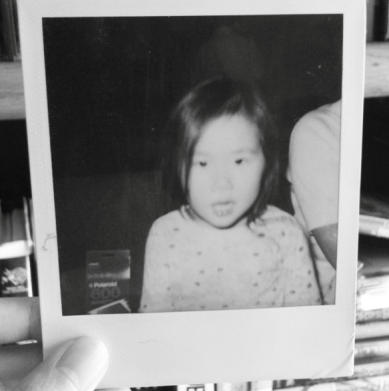
 “Here’s a picture of me in my prime. I’m not sure how old I was, but I’m sure that I didn’t know what growing up would mean for me. I think I had a general vision of who I wanted to be when I grew up—someone collected, poised, and unapologetically true to herself. Growing up has been trying to become that person I created in my head. I thought it would be easy—I didn’t anticipate the obstacles I would have to face to reach that vision. I’m still growing, trying to become the person I’ve always wanted to be and more.”

-Liana Fu, Prose Editor 


“Growing up, music always was a big part of how I got by. When I first got into listening to music, it was bands like Paramore, Fall Out Boy, and Breaking Benjamin – all the angsty teen stuff. Since then I’ve delved into many more genres that define me now, but as I find myself on the verge of another change toward being an adult, I’m returning to these old favorites. It brings back a sense of nostalgia that has carried me through the last few months, but this angst and change has been defining for me with this issue.”

-Laurelann Heather Easton, Prose Editor 


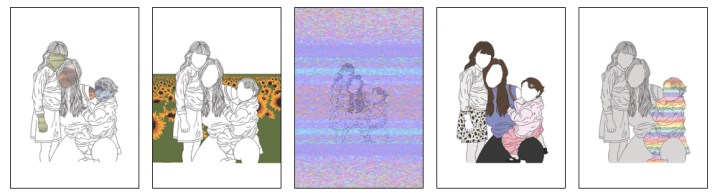
“These are five different manipulations of an illustration I made of an old family photo, (from left to right) my sister, my mother, and me. Each represent a different aspect of my memory of my childhood and reflecting on it.”

16805273_886170931525854_1948760853_o

-Michelle Wosinski, Graphic Fiction Editor 


“As I read submissions for this issue, I revisited some cornerstones of my literary experience — from Hans Christian Anderson fairytales to The Jungle Book — and saw the same richness in mythology in them as I did in the work written for this issue. Work about, for, and reflecting on childhood is uniquely evocative, largely because of the nature of memory. Seemingly random experiences have been magnified and stored away in perfect clarity for decades, while years can blur away, only defined by a single emotion or relationship. This memory-warp lends itself especially well to poetry, itself a confusing blend of truth and mythology. The prevalence in creation was especially fitting for this issue: two poems, “How Wrinkles Were Invented” and “How Catholic School Was Invented”, invented fascinating histories both remarkably similar and radically different. And from reflecting on the present with help of the past, as in Samara Golabuk’s “Once”, to a full immersion in memory, found in Bayley Van’s “Valencia Rain”, the work in this feature took me both to the past and the future of all our selves. I hope you enjoy this issue. Let it blend into your own experiences, and find its homes in your fictions of infancy and beyond.”

-Shereen Lee, Poetry Editor


“Even though I’m still a freshman and Keegan wrote this for commencement, it embodies that pivotal change of growing up while still recognizing that getting older isn’t a path towards an ending.”

Link to article: The Opposite of Loneliness by Marina Keegan (Yale News)

-Nathalia Baum, Prose Editor 


“Truth be told, ‘Growing Up’ isn’t my favorite theme. It is, in some ways, an idea I am afraid of. If I could have anything in the world, I would like to be right here— 17 (okay, maybe 18), snuggled up with a cup of French press, reading Milan Kundera. But, as a voice inside me keeps saying, that ain’t happening.

Growing up in small-town India, one of the first lessons I learnt at school and at home was learning how to respect elders, or ‘grown-ups.’ For a young girl like me, my mother-tongue, Hindi, was puzzling. It had far too many words, far too many suffixes, and far too many names one had to remember while referring to grown-ups, respectfully. I recall asking my mother, “If I drink a glass of milk everyday, will I become a didi?” My mother would nod. And with a beaming smile, I would take her for her word.

However, much to my five-year-old self’s disappointment, the didi I have become is an uncanny, naive soul. It’s a person I love as much as I loathe. Since we started working on this issue, a lot has changed in my life. And a lot will change. In six months, I’ll be starting college in the maze that is New York city. I’ll be leaving friends and loved ones behind, the ones who’ve sustained me through the years. It is difficult to say at this juncture if I will be able to preserve the child in me. If the journey of life was about moving on instead of growing up, it would have been easier.”

Devanshi Khetarpal, Editor-in-Chief 


“‘Growing Up’, I guess for the most part, is learning to fence with a double-edged sword and cutting yourself, sometimes too deeply, in the process. I find the phrase terrifying- the present tense signals some kind of a Sisyphean prison I’m desperately and impatiently trying to escape, the opposite is alluring with the promise of a Peter Pan-esque utopia, the meaning suggests I have to leave a part of my self, my skin, to cross over. I’m 20 and what scares me is that perhaps I haven’t grown up in all the ways that matter. And that’s not, won’t, be okay. This is the way I see it, if ‘growing up’ were a smell, it would be that of a dying person- losing hope, giving up, tasting bitterness, acid, stale hospital linen. It’s a surrendering to the fact that there are some things you can never change, some fragrant places you can never return to, some faces in the mirror you can never see. Yet, living in the present tense has its charms: I know where I’m going, but I haven’t gotten there yet.

-Archita Mittra, Prose Editor 

Pushcart Nominations

Inklette Magazine is thrilled to announce its Pushcart nominees! Read on to know more about them and what inspired their work.


POETRY 


‘Pack’ by Bryanna Licciardi  (ISSUE III)

Inspiration behind Pack: When I first came across the story of Dr. Guthrie, what struck me most was how heroic he was depicted, and that his experiments were seen as inspirational. Not once did it mention, anywhere in this story, the pain and panic those dogs must have felt while being mutilated in the name of science. It struck me that Dr. Guthrie’s name has gone down in history, and yet those dogs have been left nameless. I figured they deserved a name. I figured I could give them that much.

BRYANNA LICCIARDI has received her MFA in poetry and is currently pursuing a PhD in Literacy Studies. Her work appears in such journals as Poetry Quarterly, BlazeVOX, 491 Magazine, Dos Passos, Adirondack Review and Cleaver Magazine. You can visit her profile on P&W or www.bryannalicciardi.com for more about her work.


‘Stillborn’ by Meghan Bliss (ISSUE II)

Inspiration behind Stillborn: Stillborn was not inspired by personal events and therefore happened somewhat by accident. However, I’ve known a few women who have dealt with miscarriages, and the poem evolved from the overall experience of loss that pervades every life, whether it’s the loss of a child, a friend, a marriage, a dream, good health, or even innocence. The writing process itself was simple. The opening line happened when I wasn’t looking for it, so I let it take me from there. I don’t think I can write about the loss of a child accurately, as I haven’t experienced it myself. But I wanted to provide whatever voice I could on behalf of every woman who has ever lost a child, and therefore feels like she has lost part of herself.

MEGHAN BLISS is a freelance writer, editor, and blogger from New Bern, North Carolina. Her poetry and nonfiction have been published in Rust+Moth, Naugatuck River Review, A Poetry Congeries, and Mary Jane’s Farm, among others. Her chapbook, The Little Universe, was published by dancing girl press in 2015. She is currently writing two novels and offering weekly writing, editing, and publishing tips to women at TheLadyinRead.com. She, her handsome husband, and their fur-child, Black Sabbath the cat, are expecting their first human child next summer.


FICTION 


Feathers‘ by Barbara Lane (Issue III)

Inspiration behind Feathers: Feathers was inspired by some of my favorite childhood memories, the many great stories my Dad gave to me, and a lot of blood and sweat. Much of the non-mythological narrative is true, but the mythology itself has a way of breathing life into the nonfiction. I’ve been drawn to the story of Dædlus and Icarus for as long as I can remember; when I started to work on my MFA thesis, I decided to figure out why. The writing process was beautiful and agonizing—as it should be. A lot of fantastically generous friends and colleagues read it way too many times and shared their honest thoughts. Draft after draft after draft. Eventually, I wrote my way into the realization that my Dad gave me so much as a child and that all of those “feathers” had led me to a life far removed from the labyrinthine faith of my childhood—which, in the essay, takes the shape of Icarus’ perceived death. First, the essay was a 12-page essay for a workshop class. Then it became a 7-page essay for the Narrow Chimney Reading Series in Flagstaff, AZ. Next, it was a three-page essay for another workshop. And now it is what it is. I’ve read it many times since it was published at Inklette, frustrated with the many ways that I could still revise it, but I suppose those are good ideas for new essays.

BARBARA LANE lives in Flagstaff, Arizona, where she teaches English, enjoys local craft beer, writes about feathers, and hikes a lot. She earned her MFA at Northern Arizona University in 2016 and served as the 2015-2016 nonfiction editor for Thin Air Magazine. Her work has also appeared at Art House America and Queen Mobs Teahouse.


‘And They Lived’  by Sophie Panzer  (Issue III)

Inspiration behind And They LivedI started writing the piece that turned into And They Lived as a response to Don Delillo’s short story, Coming Sun. Mon. Tues. I loved the idea of varying setting and small sensory details in order to convey how different events could have the same emotional resonance. It was like a choose-your-own-adventure story where all the choices ultimately led to the same place but also provided room to explore different possibilities. Using this technique to tell the story of a millennial couple was my attempt to both mock and celebrate some aspects of contemporary young adulthood.

SOPHIE PANZER is a history major at McGill University. She attended the Kenyon Review Young Writers Workshop and won a national medal in journalism from the Scholastic Art and Writing Awards. Her work has appeared in carte blanche, Germ Magazine, and YARN (Young Adult Review Network). She enjoys long walks with dogs, friendly arguments, and reading aloud.


‘Lovers Haunt’ by S. Winters (Issue II)

Inspiration behind Lovers Haunt:  Lovers Haunt was written in response to my own experiences as well as a few women close to me. Initially it had been intended as an explanation, but ended up a convoluted riddle of truths. Skye resides in the Hub City of Vancouver Island. 

S. WINTERS, pulled by the motion still symbols evoke, can usually be found among the old growth giants of Vancouver Island working on her novel. Her work can be found in The Portal, Vancouver Island University’s literary magazine.


Other Nominations 


FICTION 
‘…And it seems I’ve just woken up’ by Thomas Singer (Issue II)

Interview with Michelle Wosinski

Recently, Art and Photography Editor, Shweta Pathare, interviewed Graphic Fiction Editor and Contributor, Michelle Wosinski, for Inklette’s blog. Read this informal interview to know more about ‘Mitch’ and view her work! 

Inklette is now accepting Graphic Fiction submissions


MW: Hey I’m here!

SP: Oh great, then. Let’s start! Can you please tell us something about yourself? Anything, really! Just so I can know you better.

MW: Okay sure! Well, I’m Michelle, obviously. For some reason, in creative environments, I prefer to be called Mitch. Well, not really a preference but I just got used to it and I kind of like it; both are really fine. It started because last year when I went to UVA’s Young Writers Workshop. We had ‘Drag Day,’ so I needed a ‘boy’ name. I chose Mitch and it stuck, even all the teachers knew me as it afterwards. Besides that, some simple facts I guess I could share are: I was born and raised in Luxembourg but I’m Mexican American (with a Polish last name in the mix), I’m bad at introductions, and I love gluten free banana bread?

SP: Oh! I love vanilla flavoured bread, haha. That was a great introduction, really! It is great to know about you.

MW: Thanks! You too I’m glad we’re doing this (: (also vanilla is very underrated i love it)


This slideshow requires JavaScript.


SP: So, Tell us something about your work, as in what inspired you to make them?

MW: Hm, well, in terms of why I started graphic fiction in general that’s a bit of a long boring story but I’ll keep it snappy. Basically I wanted to go to a writing camp (wow this again) and I found YWW, so I wanted to apply for fiction writing, but I ended up getting accepted for graphic fiction and nonfiction. I really loved comics and cartoons and it seemed like just the right combination of art and writing (two things I love to do) for me. Little did I know how much more it was than just a combination of the two, honestly it’s an amazing medium of storytelling and reading graphic fiction offers an experience unique from all other writing forms that I feel is grossly underappreciated. Anyway, that’s how I found my love for it, and ever since I’ve been obsessed with it.

mitch_single_sv

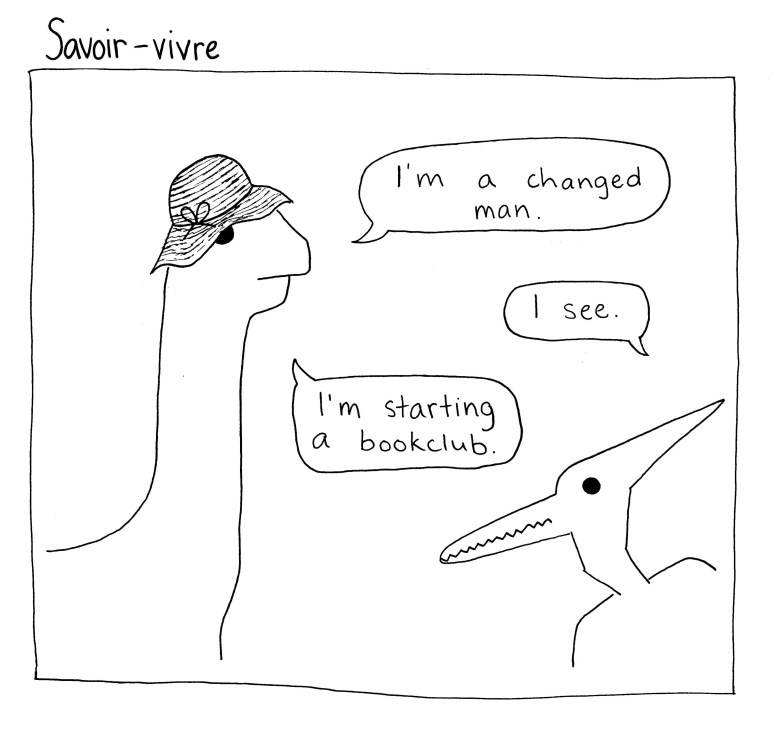
‘Savoir-vivre’


SP: That’s great in my opinion! Combining your interests is a great thing to do. What kind of themes do you include in your work? What kind of topics do you try putting into the pieces you make and that you would want to include in your future work?

MW: I’m not sure if you can really tell from my work you’ve seen, but I think a lot of my stuff revolves around, I don’t want to say ‘human interaction’ because I draw dinosaurs and I wouldn’t want to limit myself, but yeah, interactions between people. I think dialogue has always been my strong point, and that’s partially why I love doing graphic. Showing a relationship and everything behind it and trying to condense it into a small moment of interaction, all the implications behind things people say. The biggest compliment anyone can give me is when they say, “their voices sounded so real, like actual people.’ I hope that makes sense? I guess I’ve never had to word this before. Relationships are so interesting, not just long term ones like romantic and friends and family, but even the short lived ones between you and that guy that you made 7 second eye contact with at the grocery line. Anyway, besides that I like to explore weird stuff like the first comic i ever made was about a dude who got stuck in limbo and was mostly just chilling there in the white space, dealing with coping with a brand new reality around him and the new people he met there. When I think of the sort of writing that I aim for, I think dream of dreams I’d want to be described as a combination of David Wong, Joseph Fink, and Lemony Snicket (even if those are all fiction writers, still working on building up my graphic fiction repertoire).

Shit, interviews are hard.
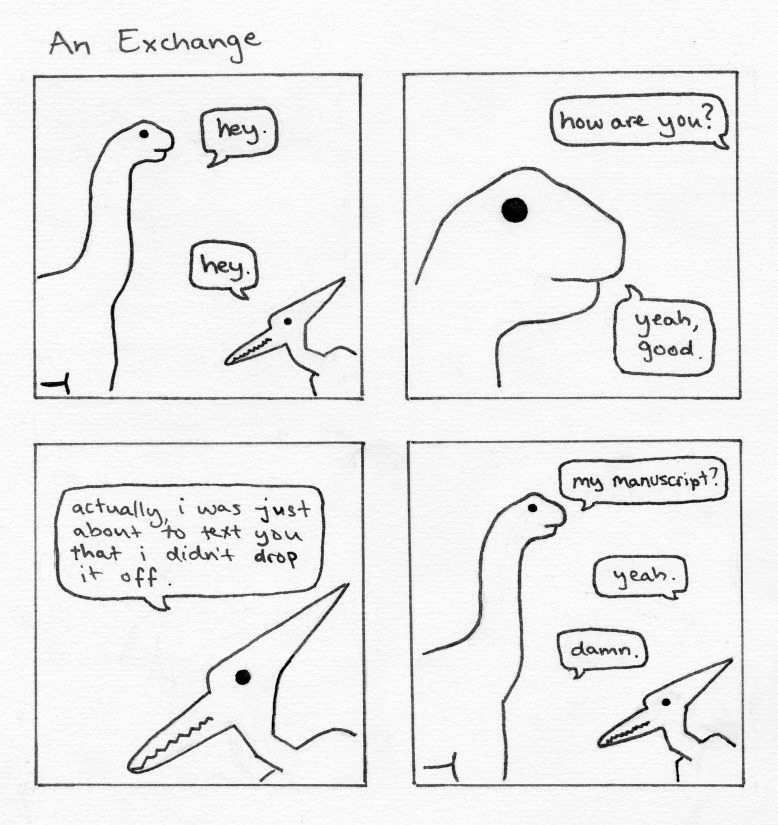

an-exchange

‘An Exchange’


SP: Wonderful, being inspired by real life situations and putting them into a comic form really catches my interest! So, um, could you tell us about the form of comics that you have selected, they seem to be fun and doodle-like, refined drawing rather than realistic renders. Is it because you want add an element of humour to them, even while you take up topics which might be a little sensitive?

MW: Oh, I can actually answer this one! Okay, well, first of all I’m not gonna lie, there is an element of artistic ability. Don’t get me wrong I sit down for an hour and draw a realistic face, but

  1. I am not gonna spend that much time on every frame that’s just a blocker and time waster, and
  2. That’s not the point of comics! (at least not all of them)

There are so many beautiful graphic novels with AMAZING illustration, but that doesn’t have to everyone’s style, and not everything you make has to be an artistic masterpiece. It depends on the focus of the comic. Look at Chris Ware, an amazing cartoonist. If you look up his sketches they are incredible in technique and realisticness, but his actually cartoons are very… well cartoonish (they still are amazing drawings though). Comics are flexible as well, you don’t have to even be ‘good at drawing’ to make one or even to excel at making them, that’s a myth.

Also, yes I do think that the way that I draw has somewhat to do with humor. Every detail put into my comics are a choice. I think you can even see most of my comics aren’t even the complete same drawing style. My dinosaur comics are a great example, the first three frames of An Exchange was actual real life dialogue I heard in a library said by two women, I could have drawn anything I wanted to to pair it with, but I chose dinosaurs. Why? Because it just felt right; absurd but still made enough sense to not distract too much from the dialogue. It took a pretty bland, regular moment and shifted the context to make it interesting, not to the characters, but to the reader. I love that, the characters just living their boring ass lives obliviously, while we eat that shit up. Writing the manuscript line was the very last thing I did, I just thought the thought of a brontosaurus writing a manuscript was funny.

Okay, that’s long sorry oops.
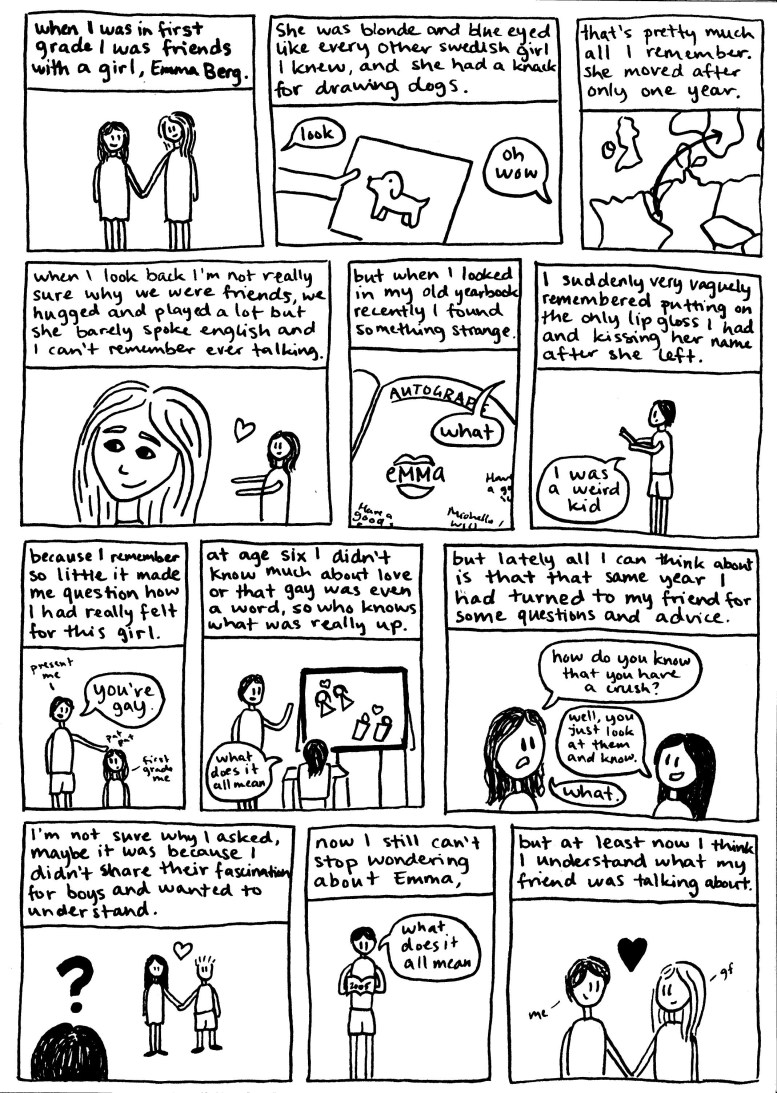

mitch-memory007

‘Mitch Memory’


SP: Don’t be sorry for that, it was good to know the thoughts you put in! Oh, and when I first saw ‘An Exchange’ I found it funny, because it was the dinosaur’s manuscript (brontosaurus) and that thought of him writing the manuscript was funny to me since he cannot really write a manuscript. Since you have spoken about ‘An Exchange,’ I wanted to ask you about another piece of yours that I found really interesting, ‘Mitch Memory.’ Could you please tell us about the thought process behind it and why did you select a gay topic for the comic?

MW: That was actually an exercise from my summer workshop, I made it in about an hour. The exercise was to make a list of people you lost contact with and write everything you could remember about them, then choose one, change their name, and make a comic. I chose to do ‘Emma Berg’ because I thought it was a weird memory worth making a comic about, at least more so than the other people in my list. So yeah, if you didn’t know that is a completely true story from my childhood, I even showed it to my friend from the last few frames who gave me that ‘great advice.’ I think it’s funny because her first grade boyfriend actually turned out to be gay, ha, I didn’t put that in the comic, though, because it wasn’t really relevant. It was sort of refreshing to make an autobiographical comic because I’d never thought of doing it before, and I feel like this comic is very, very different from the style and tone of the rest of my work, but I decided to embrace it. The process of making it was very raw and I sort of loved it, making it so quickly and not overthinking it. Regarding choosing a gay topic, I didn’t really choose it I don’t think, it just sort of happened. I’m not hesitant to talk about being gay and I embrace (crave) any form of queer fiction to read so why not contribute. To be honest, I think writing about being gay and my childhood actually unconsciously inspired the style of the piece: the blocks of narrative writing above each frame. It’s more writing than I would ever usually do, and I think I was really channeling Alison Bechdel there, the lesbian queen of comics (look up her work you’ll see what I mean by her style, especially in her novel Fun Home). Anyway, childhood is weird and kids do weird shit, I’m more embarrassed about the lipgloss yearbook incident than anything else.


mitch-page


SP: I think that is great, being confident about yourself and exhibiting it in your work. Gives me inspiration. This makes me want to ask you, What do you like about your own work? Anything in particular that you would never change about your work no matter what? It could be the way it personally connects to you or maybe the way you come up with them or anything.

MW: Oh, wow, huh. I guess I tend to be very self-critical so I don’t think about this much, but I guess if I had to choose something I wouldn’t want to change about my work it would be its authenticity. I hope that doesn’t sound pretentious or anything, but I just mean all my work come from a place of pure joy of creating comics. Whenever I make something that doesn’t come from ‘the heart,’ I guess, I just HATE it. I need to feel like it’s authentic to me, that I’m not doing anything for any other reason that because I love it. Even if I don’t love how a comic turned out, how it’s drawn or something just isn’t as good as it could be, if I can look back at it and remember making it and everything I put into it, I can’t not love it. And by ‘everything I put into it,’ I don’t necessarily mean hours of thought or work, but the intention behind it even if it’s a crappy doodle I made in a few minutes. Not gonna lie, even writing this I’m getting excited like I want to go grab a pen and draw something right now, like let’s fucking go. I don’t mean to give the wrong impression that making comics is all rainbows and butterflies (even though it kind of is), it’s annoyingly time consuming and frustrating as any other artform. I have stayed up hours and stressed cried over making a piece, and writer’s block is just as much of a thing. Worth it, though.


mitch final023.jpg

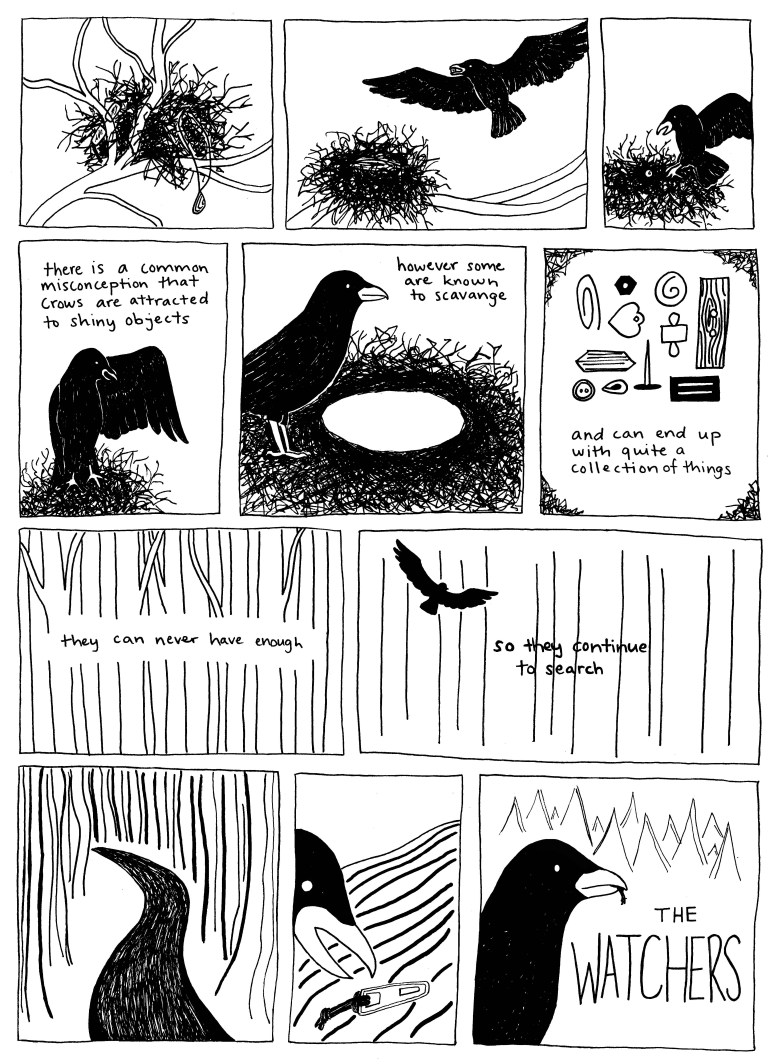
‘The Watchers: Prologue’


SP: You are very very VERY enthusiastic! Wow! Maybe 1 or 2 more questions, if you don’t mind. Can you tell us something about the way you make your pieces, as in the tools or maybe materials needed and how you prepare the final images?

MW: Every person is different, but the way I make my comics mostly goes like this: After gaining some sort of inspiration or idea, whether it be from real life or out of nowhere. I start with either dialogue or drawings, depending on what inspired me, it doesn’t matter a whole lot. I doodle for a while, I like to sketch the characters several times with little text next to them of things I think they might say to gain a better sense of their character and voice. Then I make thumbprints and more sketches, exploring all sorts of factors like the framing and angles and everything, before moving on to drawing the final piece. I draw it really big on A3 sketch paper no matter what the comic is, so that when I scan it no matter what size it is on the computer it will never show up blurry. I use a photo-blue pencil (which appears invisible on the computer when you scan black and white) and then ink over it with pens. I’m a pretty bad inker, I make a lot of mistakes, so then after scanning the final inked piece I clean everything up on photoshop. That’s basically it.


page-2-mitch-final008

‘The Watchers: Page One’


SP: That is a pretty good and tedious process. So for my final question, how do you hope to take this further in the future? Do you want to continue making them as they are or would you like to use this method and create such pieces for something specific?

MW: I would love to continue making comics regularly for as long as I can, and it’s something of a dream of mine to write a graphic novel, that would be amazing. Although, I think I need a hell of a lot more practice and experience as of now. I would also like to at some point make a series of strip comics or webcomics, possibly something to do with my dinosaurs, we’ll see. In terms of how else I could apply comics, I plan on going to university for animation (at least that’s the plan right now), which obviously is very similar in many ways. Making comics will definitely be useful for getting into animation, but I hope that I can gain something from making animations that will benefit my comics as well.

SP: Yes, as things proceed, you will have a clearer picture. 🙂 Thank you so much Michelle for these wonderful answers! I loved interviewing you 😀 And please keep sharing your work with us.

MW: Thank you! I also really enjoyed this, your questions were really great and I loved answering them, thanks for doing this.

147612717979760-1MICHELLE WOSINSKI is an alumnus of the University of Virginia Young Writers Workshop. She was a member of the program’s first class of Graphic Fiction and Nonfiction, which was also the first workshop of its kind in the country. Though german screamo music from the streets of Luxembourg can be heard at all hours through her bathroom window, which is as distracting as it sounds, she continues to work on her comics and art.

147612717979760.gif

SHWETA PATHARE is an anime enthusiast who loves everything about her cats, family and friends. She believes that she will turn her imagination to reality with the power of her impeccable illustrations skills and her inquisitiveness.
Ek(phras)is

One of the most beautiful things about art is how it appears in seemingly infinite forms. A poem. A sketch. The way the sky looks at sunrise. Your brother’s dimpled smile. Every facet of our world just brims with art. Often times, its many shapes overlap and interconnect in ways we might not even realize. For Inklette’s third issue, we, in the prose department, wanted to do a feature reflective of this phenomemon.

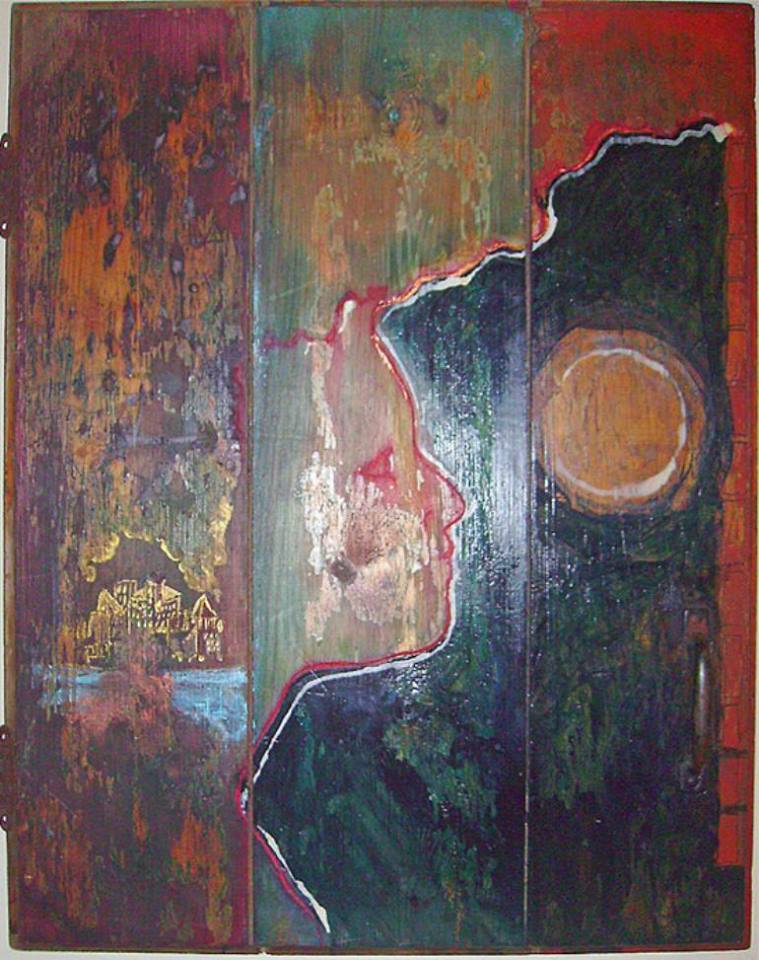
Together, prose and visual artwork have connected in a way that is truly captivating. Artist Alexandria Heather’s piece, painted on a wooden cupboard with whorls of blues, reds, and yellows, is the stunning inspiration for a dark flash fiction about “girlhood, sociopathic freindships and an escalting series of dares” by Brynne Rebele-Henry, and a riveting piece by Nilesh Mondal that surprisingly converges Hindu mythology into an unexpected narrative.

This “mashup” of sorts is an experience that lovers of art–and all its forms–can appreciate.

Thank you, and enjoy.

—Prose Staff, Inklette Magazine


13330486_849713318492052_1291731506_n

Seeker on door by Alexandria Heather

MIXED MEDIA ON FOUND CUPBOARD DOOR Ι 24″ X 32″ Ι 2010


The Sugar Experiment 

by Brynne Rebele-Henry 


After everything with Julia I decided to become pure sugar: something impossible to deflate, a mass of a body so sweet that nothing bad could ever happen to it, that illness could only be absorbed inside its syrup.

When Julia shaved her head she looked new again, like a fucking just born baby bird, its bones not even formed yet. Those nights, we’d paint our nails black, catching polish on the outskirts of our fingers so our hands looked tarred and feathered. We’d eat melted ice cream until we got sick, then we’d go running for hours, try to get the saccharine sick out of us, make our bodies clean again. Julia wanted to be a model, before everything, so we would clip out pictures of the girls in Elle and Vogue, study their small bodies like we were researching insects. Often, Julia would stand in front of a mirror with a Sharpie, marking the parts of her body that could be improved, she’d slash black lines over her ribcage. The day before she got sent away, she’d called me and suggested we try an at-home-lipo procedure and, like I always did with Julia, I agreed.

Before she got sent away, Julia would flick an opened cigarette lighter over her fingers,
just to see if she would burn. She’d only eat red foods: meat nubby and raw, half-cooked
hot dogs. Said they reminded her of skin, something she always craved. We’d sit on her
porch and consume bloody deli slices and red velvet cake with crimson oozing frosting
mixed together, see who’d puke first. She’d dare me to cut a sliver of my finger off, or to
burn the inside of my thigh with a heated-up branding fork, to not eat for a week and
then consume frozen meat and try not to vomit. But Julia always won these bets, could
brand herself with a burning spoon and not blink, never got sick, until the hospital, at
least.
My friend said she killed her stepmom’s Chihuahua, which makes sense, given how much
she hated it, how she’d always lock it in her dresser on the weeks her parents went away.
Once tried to poison it, but the dog wouldn’t consume the liver pâté mixed with bleach
and laundry detergent.
The last night that I saw her, she was hunched over her bed, trying to pry the toenails of
her right foot off with a pair of tweezers. After she’d completed this task, she turned to
me, and for a moment it was like her face was gone, replaced with blank light in the shape
of a girl, something both human and not.


      NAMAH

      by Nilesh Mondal


//He’s Shiva, of purani Dilli. While his namesake could dance tandaav and burn worlds with one glance, Shiva from Dilli is just an ordinary coolie, a gamcha tied on head as he ferries heavy bags without complaints from one end of the market to another.

Shiva’s choice of addiction is marijuana, and he knows all street peddlers in Purani Dilli who sell him his wares. It was the only time Shiva felt close to the God his mother had named him for, chillum in hand, head buried in a cloud of smoke, eyes closed as the world around him ceased to spin.

One year, Shiva had participated in a mythical play organised by the coolie and hawker unions on Navratri, and almost as a divine joke, he had got Lord Shiva’s role. That evening, dressed in blue paint and smeared in ash, a cardboard and rice light halo behind his false wig of mountainous hair, Shiva had let the smoke of the chillum spread like fog with each breath.

He doesn’t remember much from the play, except a few bits and pieces of dialogue and how euphoric he had felt on stage. Yet he remembers how the lady from the government colony beside the market, fair and beautiful and recently married, had looked at him awestruck, her lips glistening with sweat and gloss, and almost as if he had a third eye, Shiva had seen a halo behind her head as well//


Photo Shape Editor: https://www.tuxpi.com/photo-effects/shape-tool 

ALEXANDRIA HEATHER is mostly water.

Photo Shape Editor: https://www.tuxpi.com/photo-effects/shape-toolBRYNNE REBELE-HENRY’s fiction, nonfiction, and poetry have appeared or are forthcoming in such journals as The Volta, So to Speak, The Offending Adam, Adroit, Denver Quarterly, Prairie Schooner, Fiction International and Rookie, among other places. She’s a founding editor of Fissure, a magazine dedicated to furthering the voices of young LGBT+ writers and artists. Her book Fleshgraphs is forthcoming from Nightboat Books in September 2016. She was born in 1999 and currently lives in Richmond, Virginia.

Photo Shape Editor: https://www.tuxpi.com/photo-effects/shape-toolNILESH MONDAL, 22, is an undergrad in engineering by choice and writer by chance. His works have been published, or are forthcoming, in magazines like The Bombay Review, Muse India, Coldnoon Travel Poetics, Cafe Dissensus, Kitaab, etc. His first book of poetry, Degrees of Separation (Writers Workshop), is slated for a 2017 release.