Literary Playlist

The world of music and language, literature, poetry, books share intimate connections. In the process of reading and writing, we can often be reminded of music and songs. Exploring these connections, we have compiled for you a literary playlist consisting of a few songs that remind us of writers, of their works, and add to our own experiences as readers and writers. Take a look and give these a listen!


Shalott by Emilie Autumn

I love how the song retells Tennyson’s famous poem from the point-of-view of the Lady of the tower herself, and how it gives back some semblance of agency to her– as though she’s talking back to the poet, the poem and the Victorian tradition and her reply is her only form of rebellion.

– ARCHITA MITTRA, Prose EDITOR

Queen of Peace by Florence + The Machine

Although this song is about a king who goes mad with suffering after his only son is lost in a battle, it has always reminded me of King Lear. The tale of grief making a king realize that he’s just a man paints a vivid picture of Lear reuniting with Cordelia, only to be parted from her once again.

– JOANNA CLEARY, BLOG EDITOR

AAJ JANE KI ZID NA KARO by Farida Khanum 

The song was originally a nazm written by Fayyaz Hashmi, a Pakistani poet. And in Farida Khanum’s voice, of course, there is a different texture, a different poetics I find at work. For some reason, I think that this song to be has always expressed the journey or passage of time, age, history in romantic, personal, political, philosophical ways with a remarkable simplicity. I love this version by Coke Studio Pakistan the most, and it always reminds me not just of this link between music and language and the changing, different bodies of the two, but also the beautiful poem by Akhil Katyal that we published in Inklette too, where he writes about Farida Khanum: “she does not hide the age / in her voice.” This makes me tear up, and I think his poem is a perfect afterword for the song itself. 

– DEVANSHI KHETARPAL, EDITOR-IN-CHIEF

The Latin One by 10,000 Maniacs 

This is directly inspired by Wilfred Owen’s Dolce et Decorum Est. It changes some of the words, but still captures the horrific and more complicated aspects of war.

Lucy by the The Divine Comedy

Lucy by The Divine Comedy is an awesome musical version of William Wordsworth’s poem of the same name.

Meet Me at the Cemetery by The Smiths

And to go along with my moody theme, I have always loved Meet Me at the Cemetery Gates by the Smiths. I love the literary references, and I think Oscar Wilde would approve of it.

– LISA STICE, POETRY EDITOR

RIVERMAN by Nick Drake 

It’s pure poetry strummed over the guitar in an odd 5/4 time signature. It has been suggested by Drake’s friends from Cambridge University that William Wordsworth’s lyrical poem, Idiot Boy served as his source of inspiration. For me, the song underscores an existential dread: “Betty said she prayed today / For the sky to blow away / Or maybe stay / She wasn’t sure.” It transports me to a grassy meadow somewhere in Virginia, sitting under a tree and reading poetry by A. E. Housman, John Keats and, of course, Wordsworth. I think the words of Nick Drake should be read and listened to under trees, too.

– Maria Prudente, BLOG EDITOR

To read staff bios, check out our Masthead page here.

Favorite Reading Food and Drinks

Summer’s almost here, and hopefully, that means having some time to relax, read, and munch on your favourite snacks. We asked the Inklette team what they like to eat and/or drink while reading, and their answers do not disappoint. Read some delicious bits below:


Hot Chocolate + Cheese  

Hot chocolate requires no explanation, as it’s so delicious it can be consumed under any circumstances. Cheese is tasty, filling, and, unlike chips, it doesn’t run the risk of making my fingers greasy as I turn the pages of my book.  

Joanna Cleary, Blog Editor


Tea (usually Earl Grey with milk and sugar) + dark chocolate

Both have floral scents and flavors that wake up my brain and send me into a dreamy state.

Lisa Stice, Poetry Editor


Black Coffee

I like my coffee like I like my reading life– dark and bitter. When I’m reading, I like to drink black coffee, no matter how stereotypically “writerly” it is. Coffee helps keep me focused as I read long poetry collections, stopping for a sip between each poem. The roughness of the bitter black coffee stirs the imagination, keeps the body and mind robust, and brings whatever I’m reading to back to life.

Angela Gabrielle Fabunan, Poetry Editor


Iced Tea

I recently learned how to make iced tea because of the heat wave going on in Delhi and after many tries (too many than I wish to admit), I’m happy to have perfected it. Nothing goes so well with a good book as a glass literally full of sugar and lemon juice and tea.

Smriti Verma, Poetry Editor


San Pellegrino Mineral Water + prosciutto-wrapped melon

Summer reading is a smack of something sweet and salty and dancing bubbles inside a glass with ice and the bottle nearby. Sticky fingers on pages? That’s what the Pellegrino is for!

Maria Prudente, Blog Editor


Cappuccino + Chicken Empanada or Black and Red Cherry Danish

I was never really fond of cappuccinos before going to Italy. But after having lived in Florence for five months, where I had some of the best cappuccinos at the Oblate and at Le Murate, my views have changed. Back at home, in New York, I love sitting down with a cappuccino and some chicken empanadas or danishes in my neighborhood coffee shop. A cappuccino is rich, and so are chicken empanadas and danishes. They are all warm and much like literature, they enrich my mind, my soul, my mind and, certainly, my stomach.

Devanshi Khetarpal, Editor-in-Chief


Milk Tea + Chocolate Croissant

I’ve swapped out my coffee addiction for milk tea, and I’m currently trying out a dozen or so different instant brands. My favorites have a slight earthiness with the hints of black tea, but the milk and sugar make it a perfect light drink for reading. If I want something to munch on, I’ll go for chocolate croissants. Buttery, flaky, and best of all, the chocolate is left neatly within its folds.

Sarah Lao, Social Media Manager


Cold Coffee with Ice Cream

I’m sort of addicted to coffee and milkshakes, and having a nice cold drink while I read a page-turning epic fantasy is absolutely glorious- be it a homemade delicacy or a fancy drink at a cafe, with dollops of whipped cream. I might add some chocolate truffles or cookies, from time to time. I’m also mildly lactose intolerant, but when has that stopped anyone?

Archita Mittra, Prose Editor


To learn more about our staff and read staff bios, visit our Masthead page here.

The Met Gala & Our Notes on Camp


Notes by Maria Prudente

How do we apply language and meaning to an aesthetic? Can we be precise? Susan Sontag attempts precision in 58 paragraphs by listing in detail the sensibility of “camp” for those who are unaware. “The essence of camp” she begins, “is the love of the unnatural: of artifice and exaggeration.”

I’d read Sontag’s essay last summer and by the end of it felt I’d need to remember all of it. Highlight number 5 and number 6 oh and number 7, too. Read up on Henry James and Oscar Wilde for good measure. What does Greta Garbo look like again? Oh, I love this word epicene- so precise! Sontag grasped an idea I understood very well but couldn’t explain myself. Camp is better seen and felt. How did Sontag manage to describe taste, style, and convention while simultaneously debunking all three and making it clear and knowable? My answer is research! If you’re thinking this a quick read on some idle Tuesday night, behold, open your google browser and cancel your morning workout.

The 2019 Met Gala gave people who’d never read Sontag’s work or given thought to taste as a sensibility: good and downright awful, nothing in between. On Monday night I feverishly hashtagged metgala and received minute-to-minute updates (yes, this was during finals) of the looks from the evening. On the red carpet, most celebrities shrugged and gritted their teeth when asked of their thoughts on the night’s theme. For me, Kim Kardashian was the complete embodiment of camp as an aesthetic. Kardashian represents a feeling in our country- she doesn’t have any extraordinary talents in the entertainment industry, but she has a famous lineage which has made her popular. Popularity is an aesthetic in the United States. Her choice to work with Thierry Mugler of House of Mugler was a smart choice- Kardashian clearly understood the aesthetic because she is aesthetic. Inspired by Sophia Loren drenched in water in the film Boy On A Dolphin, Kardashian arrived dripped in wet in diamond with a tan that matched her dress. She was a walking photograph- a walking sensibility- Kim Kardashian wearing Mugler was “camp.”

The exhibition takes you from 17th-century fashion to modern day. If only Sontag were alive today I wonder if she would add or cross-off anything to her precise list of “camp” and it’s imprecision. One line I keep with me because it’s easy to remember: “the ultimate camp statement: it’s good because it’s awful…Of course, one can’t always say that.”


Notes by Devanshi Khetarpal

It was my last day in New York before I went home for the summer. I wondered if I had the time, in between packing or resting and going to my favorite diner, to go to the Met and visit the exhibit on “Camp,” the theme for this year’s Met Gala. I wasn’t sure if fashion, or couture, specifically, is something I understand, something I “get.” Thankfully, “Notes on Camp” by Susan Sontag was #trending, and inevitably came to my attention the day after the Met Gala. I read it thoroughly, and enjoyed every bit of it just as I have always enjoyed Sontag’s writing, and thought that maybe this time, after I visit an exhibit on Islamic and Pahari art that interested me, I might as well go to the gallery and have a look at dresses, jewelry, whatever they may have there. I had no idea what to expect, what the displays would be like. Should I be using “Camp” as an adjective at all? Is it one? These are just some of the questions that passed my mind.

I finally made the decision to go to the exhibit and thought I’d just skim through everything I needed to see in order to understand. I didn’t have too many questions, I didn’t want too many answers. But as soon as I saw the pink wall (…“is this millennial pink?” I asked myself) with “CAMP” written on it, I was taken aback by surprise because the first thing I noticed was the abundance of text. Old books and manuscripts were kept open behind the glass, sometimes next to shoes or dresses or miniature sculptures that looked like paperweights, the kind no one uses now. As I kept making my way through the exhibit, I saw familiar names: William Shakespeare, Oscar Wilde, Christopher Isherwood, Susan Sontag, among others. I saw brand names, too, of course: Gucci, Louis Vutton, fashion houses I have not heard of and whose names I cannot pronounce but whose clothes, I am certain, are beyond what I can ever imagine affording. I realise that fashion is everything I love and loathe, perhaps like writing in some ways.

But the textuality of the exhibit was unexpected. I didn’t expect to see the world of fashion, the fashion industry, take such an initiative to reflect on its language, the history of its language and to use it as a method to innovate, create, critique, expand. I have been obsessed with the sartorial choices of my favorite writers. I think of Tishani Doshi in Georgia Hardinge’s “sculptural dresses,” I often think of Arundhati Roy draping a saree with her deliciously curly, short hair. I have always wanted to steal their wardrobes; when I was growing up, I wanted to dress up as a writer, like the people I have seen at literary festivals across the country: unapologetically Indian, apparently comfortable, truly colorful and invariably and individually stylish. I had no clue how they did it and through the years, I have been trying to develop my own “sensibility” rather than style. I put myself together deliberately, slowly, cautiously before any poetry reading or public lecture. And even though I am not too well acquainted with the artifice, extravagance and how they must be effectively constructed, or amalgamated into one’s identity, donned as one’s outfit, I do know that camp is a different kind of textuality and intertextuality, one that’s atmospheric too.

I realized this as I walked through the exhibit: the text was pasted onto the glass and the specimens were behind the text. The text became the foreground and retained its textuality, while the specimens became not just evidence of the text but also became the subtext, the background, even in the event of the text merely describing the specimen. This three-dimensional presentation is something intriguing. Was I supposed to treat the text as something that brings out the real of the specimen? Am I supposed to treat the text rather than the specimen as the interface of the textual and the embodied, the real, the exhibited? Or am I supposed to treat the text as hyper-real, something with the capability to break free from the specimen and emerge embodied? I might never know. But while I saw Sontag’s notes on Camp (note the capital ‘C’), I recalled the phrases I had been seeing: “akimbo pose,” “queer attitudes,” “camp it up.” Every piece certainly was different but what appealed to me most was the necessity of the text. The text, the writer of the text was on top of the whole and Sontag’s text appeared atop the semicircle of glass displays, each letter being typed away, fading into each other as the line extended with the soft sound of a typewriter emerging. That, for me, was camp: the crowd, the abundance of text, the many glass displays, the specimens, the color, the sound, the bright light shining on each one, making them stars in the show.


To plan your visit or find out more about the ongoing exhibition at the Metropolitan Museum of Art in New York, visit their website by clicking here


155113583331125364MARIA PRUDENTE has written about feminist ethics for Manifest-Station and is featured in Grey Wolfe Publishing’s upcoming anthology of nonfiction short stories. Maria is a professional stage and film actress. She received her training from the Lee Strasberg Theatre & Film Institute and graduated from the American Musical & Dramatic Academy with a concentration in Musical Theatre performance. Maria is the Content Editor at CountrySkyline, LLC and proud member of Actor’s Equity Association. She lives in NYC where she studies Creative Writing at Columbia University.

155993350752344725

DEVANSHI KHETARPAL is from Bhopal, India, but currently lives in New York City, where she is a junior at  NYU majoring in Comparative Literature with a minor in Creative Writing. Her poetry collection, Small Talk, is coming out soon from Writers Workshop India, Kolkata, and her poems have been published or are forthcoming in Sahitya Akademi’s Indian LiteratureBest Indian Poetry 2018, Transom, Aainanagar, Vayavya, TRACK//FOUR etc. among others. She is a recipient of the 2018 David J. Travis Undergraduate Research Fund for research on modern Italy, and has studied abroad at NYU Florence and NYU Paris. She has served as an intern at Poets House, and currently works as an application manager for The Speakeasy Project, a poetry reader for Muzzle Magazine, and as a student office assistant for the NYU Department of Comparative Literature. Khetarpal can speak, read, write and translate from or to Hindi, English and Italian, and will start learning Punjabi soon.

Conversation on ‘REJECTION’

by Joanna Cleary and Maria Prudente

Joanna Cleary: Rejection: it’s awful. Unfortunately, however, artists– regardless of medium, experience, and to a large event, even talent– have to face rejection on a continual basis, which is why I’m so excited to have a conversation about it. Since we live in an increasingly progress-oriented world, rejection has become equated with failure and failure with shame. However, when I received my first rejection letter at the age of twelve or thirteen, I felt proud. Even though my poem wasn’t accepted by the magazine I’d submitted to (and for good reason– it was terrible), I was thrilled that somebody other than me, literary editors no less, had actually read what I’d written. I’d given something – a perspective, perhaps, or a story – to somebody else. I learned that being an artist is about giving; as long as you try to do that, you’re on the right path. Even though rejection is undeniably discouraging, I’ve learned to never be ashamed of offering my work to others. Now over to you– tell me about your first rejection.

Maria Prudente: I didn’t get a part I wanted in my high school musical. I was a sophomore, and I had my heart set on playing Velma in “Chicago,” but this senior who was known for doing beauty pageants and had never done theatre before walked in and nailed her audition. It was between the two of us in callbacks, but the director loved her; and the next day when the cast list went up I was, as expected, devastated. I think it’s common to compare and self-loathe in the first moments of rejection. I kept thinking, “If only I was older and sexier and more tan and had longer legs…” the list kept going but it was all superficial. Within a couple of hours of feeling sad about it, I realized what I had that this senior didn’t have was experience, knowledge, and a deep curiosity and love for performing.

Consequently, I ended up not only taking a small part like Mona in the “Cell Block Tango” and making my monologue land a big laugh every performance, but I ended up being an assistant director for the show. Deciding to turn the pain of that particular rejection of that role into a new role where I could contribute to the theatre in a new way was incredibly empowering. But, as you stated earlier, experiencing rejection is ongoing for artists. How do you cope?

JC: I think the key to coping with rejection is not letting it define you as a person and artist.

Whenever I receive a particularly difficult rejection, I make an effort to do something I enjoy, such as having a cup of hot chocolate or going for a run. By investing energy into who I am as a person, I don’t feel as if my self-worth relies on who I am as an artist. However, I also use rejection as a motivator when it comes to my identity as a writer – for every rejection I receive, I try to send out one or more submissions into the world so that there will always be a glimmer of possibility for me to aspire towards. Again, over to you – how do you cope with rejection?

MP: I think you have a really healthy outlook. Creating routines to feel connected to our sense of self or reciting positive self-talk is an ideal way to deal with rejection. It’s also a really hard thing to practice. There have been days where I have found out from several publications that my work hasn’t been accepted. Sometimes I’ll read that my work was being considered but wasn’t quite right for their issue and I obsess over what thing it was that kept them from putting my piece in the “yes” pile. I think tailoring work for certain publications is important for writers to improve their chances especially if they are trying to build a body of work. Submitting work and finding out what people like is so subjective and completely out of our control. All we can do is revise, rewrite and re-wire the way we accept rejections and instead use them to, as you say, motivate us. When I’m looking for a win, I write something that I feel really good about and I save it to my documents for my eyes only. I think sometimes having something in my back pocket helps me to feel confident. Returning to a piece and cutting it or building on it can be really satisfying because it isn’t being judged by anyone but you, the writer. I can tell a story and chip away at the truth the way I want to. What’s important for writers to remember is why they write and for whom they write. This helps me keep a grip on reality and reminds me of what I love about writing in the first place.

An acting teacher of mine always said: “tell the story simply and clearly”. The same can be said for writing. I often remember this phrase when I feel caught up on using flowery language or I’m inside an overly stylized piece and I fall away from what I’m trying to say. Have any mentors from your past or present given you advice that you’ve found valuable in your writing?

JC: A creative writing mentor of mine once told me not to think of rejection as a lost opportunity, but as an opportunity to give meaning to hardship through growth. Like you say, we need to revise the way we accept rejections so they enhance our ambition instead of draining it. It’s all about finding a balance between controlling our stories and accepting that, oftentimes, we can’t control everything in our lives. I’ve learned to tell myself that I can control what happens to me, but I do have more say over what I make happen.  


155113583331125364MARIA PRUDENTE has written about feminist ethics for Manifest-Station and is featured in Grey Wolfe Publishing’s upcoming anthology of nonfiction short stories. Maria is a professional stage and film actress. She received her training from the Lee Strasberg Theatre & Film Institute and graduated from the American Musical & Dramatic Academy with a concentration in Musical Theatre performance. Maria is the Content Editor at CountrySkyline, LLC and proud member of Actor’s Equity Association. She lives in NYC where she studies Creative Writing at Columbia University.

149460297287447JOANNA CLEARY is a college student double majoring in English Literature and Drama. Her work has appeared or is forthcoming in Cicada MagazineInkletteGlass Kite AnthologyParallel Ink, Phosphene Literary Journal, HIV Here and Now, and On the Rusk. Poetry has been a long-time passion of hers. When she is not writing, she can be found reading, eating various forms of chocolate, and, of course, thinking about writing.


Interview with Mihir Vatsa

Our Blog Editors interviewed Mihir Vatsa, an Indian poet and the editor of Vayavya, for this week’s blog. In this interview, we ask him about the practice of writing and the habits that pertain to it in some way or another. We also ask Mihir about not only staying committed to writing, but also staying committed to writing about Hazaribagh.


Blog Editors: Ernest Hemingway wrote first thing in the morning. Maya Angelou reserved hotel rooms just to write. Stephen King forced himself to write six pages every day. Susan Sontag instructed people when not to call. Have you developed any specific methods for writing?

Mihir Vatsa: I wish I could reserve hotel rooms to write. Someday, perhaps, I will. I usually write at night– the darkness sorts relevance from distraction. When I am writing to meet a deadline, I set a target. With prose, it is thousand words. Poetry is more malleable that way– just three lines could be a poem too, as long as they are good three lines. I am more relaxed with poetry, less so with prose. The latter demands some discipline, I have learned recently.  

BE: Do you journal? And how well do you work with or meet deadlines?

MV: Unfortunately, no, I don’t maintain a journal. I do have some romantic affinity towards the process though, and I like to hear stories that involve journal writing. I have tried it before, but have stopped midway. Trivial things begin to annoy me– is the notebook cover journalish enough, what if I wrote something and someone read it, if I am doing it on my PC then what should be the password, do I really want it personal or do I secretly want it read? I think of these clearly pressing thoughts and defer it.

I think I can work with deadlines, though I procrastinate a lot. So if the deadline is tomorrow, I would get working today, not sleeping, not eating, a bit possessed. It’s not a healthy practice for a writer, but then writers are not really known for their exemplary health.

BE:Do you outline ideas before or do you let the form teach you what kind of story you are writing?

MV: I do outline, but mostly in mind. I prefer having some ideas, some thoughts about what I should write once I start the computer. Often a poem is left hanging for a few days: one stanza emerges, then there is the wait, then another line comes up. When I am not writing, I am working with collages– cut here, paste there. When I think I have enough to go with, I start typing. With longer poems, I take it slow, filling in the blanks first, then tying the content up as the form suggests. With prose, and especially essays, I have found that it’s helpful to have some pointers beforehand, a road map, on how to progress from one thought to the other without jarring the flow.  

BE: What do you do when you become stuck while writing?

MV: If the deadline is far, I give in to the block. I switch to Netflix or Youtube, or take up a book which I had been meaning to read. You can only watch something for so long. When saturation hits, writing becomes a needed retreat. Sometimes I get stuck because I don’t want to put an idea into a form that I have already done before. Then, reading helps. I go to the internet and read whatever poetry I can find, preferably by poets who are alive. That way, I get to see what other poets in the world are doing, how they are managing language, how they are working with form, and so on. The last time I got stuck, the deadline was close. So I ordered a book and told myself not to touch it before I finished writing. It kind of worked.

BE: How do you stay committed to Hazaribagh? Is there a different lens or observation you require in order to practice the writing of something so close when you want it to reach far?

MV: This is a really good question, actually. My upcoming book A Highland in the East (Speaking Tiger Books 2019) is a memoir about living and travelling in the Hazaribagh plateau, and though I had a great time writing it, I was also often conflicted about my loyalty to Hazaribagh. I am not talking about the town per se– Hazaribagh is like any other small Indian town. It has its half-finished buildings with exposed brickwork, it has its temples and mosques and narrow streets. Somehow these things haven’t appealed to me yet. I am more attached to Hazaribagh’s landscape. Therefore, the hills, the trees, the rivers, etc are my points of affect. I remember, this one time, my friend Raza Kazmi and I were staying for a few days at Palamu Tiger Reserve in Latehar. The place is about a six-hour drive from Hazaribagh. There, I was surrounded by taller hills, denser forests, reliable waterfalls, and it made me sad. What if I outgrow Hazaribagh? “You can be committed to Hazaribagh and still enjoy Palamu,” Raza said something along this line, and though I understood him, I was still uncertain. What I fear is that one day there will be nothing wonderful about Hazaribagh for me. No waterfall will excite me. Been there, done that– that kind of boredom, you know, and so I try to modify perspectives. There is a lot in Hazaribagh, things that I still don’t know, so maybe one day I will enjoy the roads, or the history, or engage with the place in a more direct, participatory way. At the moment, I am gripped by the plateau; later, it might be some other aspect of the town.

Perception is universal– the way I perceive Hazaribagh may be similar or different to people who perceive other places, but the act is not uniquely mine. As writers, we work in and with shared cultures, so I think while Hazaribagh may be a little-known, “niche” place to write about, the things I feel when I am in Hazaribagh do resonate with people outside. When I post a photo of a hill range and see the reactions on it, I know I am doing something right. I try to understand the relevance of Hazaribagh for other people, and this is a conjecture at best, but I think that in Hazaribagh, I work through a dual-gaze. I am both an insider and the outsider, insider to the town, outsider to the plateau. When I look for information on, say, how the lake came about, or how the hill was fashioned earlier to appear the way it does now, I am being a hopeless local historian; on the other hand, when I venture into the forest, trailing a stream and not knowing where it would take me, I feel more like a tourist. Perhaps this duality works, though I am not sure yet.

BE: Do you think your editorial practice, or editorial ethics, have impacted your practice as a writer?

MV: Maybe? I don’t really know. Earlier I used to get irritated at the long wait to get a response, but as someone who has also been on the other side of things, I realise now that such delays happen, especially if you are working as a small, un- or underpaid team. One thing that I loved doing as an editor was to really edit– and not just select– a poem for publication, you know, the old-fashioned way. I would chance upon a poem which was almost ready, except that it didn’t work in some parts and patches. Whenever it was the case, I offered detailed feedback, putting the ball in the poet’s court. Here is what I think. If you agree, we can go ahead with the publication. With my own writing too, I am not averse to feedback or revision. I appreciate it if someone devotes a chunk of their time to offer comments on my work. This is something that I cherish with respect to writing, mine or someone else’s.


155727205559673739MIHIR VATSA is the author of the poetry collections Painting That Red Circle White (Authors Press 2014) and Wingman (Aainanagar & Vayavya 2017). A former Charles Wallace Fellow of Writing at University of Stirling, UK, Mihir is the winner of Srinivas Rayaprol Poetry Prize and a Toto Funds the Arts Award in Writing. Mihir lives in the plateau-town of Hazaribagh, India, where he works across the disciplines of literature, writing and human geography.


Staff Recommendations: Short Stories

If you happen to be looking for some good reads to browse through as the days lengthen, perhaps on your porch or at the beach, look no further. The Inklette team has compiled a list of beloved short stories and short story collections for you to peruse at your leisure.

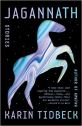
  1. Jagannath (Karin Tidbeck)

51R2HDz9hfL._SX322_BO1,204,203,200_

This collection of short stories, covering narratives from people falling in love with machines to a girl following vittra in the woods, explores how disorienting, beautiful, and downright absurd our reality is when observed through different lenses. I’d recommend this collection to anyone interested in science fiction and fantasy with an intimate streak of psychological realism.  

–Joanna Cleary, Blog Editor  


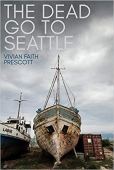
  1. The Dead Go to Seattle (Vivian Faith Prescott)

511wRxVnmzL._SX331_BO1,204,203,200_This collection is made up of 43 linked stories that take place in Wrangell, Alaska and are told by a young woman named Tova. Through the stories Tove tells, she reveals elements of herself, her hometown, the people with whom she grew up, the history and even the myths from her small town. I’d recommend this collection to anyone who loves stories centered around place and how place shapes identity, and to anyone who loves cultural mythology.   

–Lisa Stice, Poetry Editor


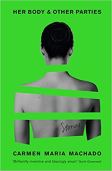
  1. Her Body and Other Parties (Carmen Maria Machado)

41N7lsvNg2L._SX323_BO1,204,203,200_Women begin to physically fade away during the Great Recession. Bodies respond to weight loss attempts in a terrifying manner. In this collection, readers will find stories that combine horror, fairy tales, queer love, and all manner of darkness and light. Machado’s writing defies categorization, and her deft exploration of the meaning of women’s bodies through gorgeous prose will appeal to fans of Neil Gaiman and Helen Oyeyemi.

–Sophie Panzer, Prose Editor


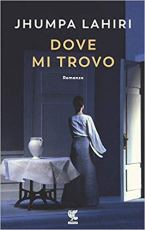
  1. Dove mi trovo (Jhumpa Lahiri)

411j4O8mOvL._SX312_BO1,204,203,200_.jpgThis might seem like a strange choice. Lahiri’s second book written in Italian is a romanzo, a novel. But every chapter of the books reads like a short story, a very short story story, and some chapters even read like microfiction. Although only available in Italian currently, the book is extremely different from anything Lahiri has ever written. There is something dialogic about her work– the way the narrator speaks with isolation, the isolation of places around her and the isolation of time. Everything is fused closely within the scope of her minute, razor-edged words, and yet everything seems dispersed. The close of every chapter leaves you with a gasp. Instead of folding close, every chapter folds in on itself as most endings in the form of the short story do.

–Devanshi Khetarpal, Editor-in-Chief


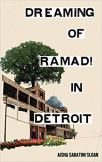
  1. Dreaming of Ramadi in Detroit (Aisha Sabatini Sloan)

513CkfAho0L._SX311_BO1,204,203,200_Race, sexuality, youth, memory, family, art, violence, pop culture and more all intersect in Sloan’s collection of essays. All twelve pieces read as separate stories within the continuum of her life. Sloan plays with form, teaching the reader how to read the page which shape-shifts throughout each story. Somehow we find intimacy in the moments of ambiguity and concern in her profound critique over what it means to be a living, breathing, complex human of right now.

–Maria Prudente, Blog Editor


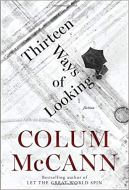
  1. Thirteen Ways of Looking (Colum McCann)

51jkI9h7e1L._SX336_BO1,204,203,200_McCann’s novella-length piece, the first narrative in his eponymous collection of tales about empathy, is, at heart, an experimental inspection of male aging. Peter Mendelssohn’s story of growing old is elegantly woven into a detective frame and contemplates the many losses that old age provokes. It’s an angry piece that reeks of bodily inabilities and slow decay—but reads as a poetic exploration of words, language, and life. McCann’s story is thus a painful read with some unexpected twists and turns, but more importantly, one that cautions us to be patient with each other.

-Stela Dujakovic, Prose Editor

To view staff bios, please visit our Masthead page.

On Shakespeare’s 455th Birthday

BY JOANNA CLEARY AND MARIA PRUDENTE

Joanna Cleary: I’m so excited that we’ve agreed to have a conversation on the best-known playwright in the history of English literature– William Shakespeare — in honour of his birthday. As an English and Theatre major, it probably comes as no great shock to hear that I love his plays and sonnets. However, it might come a surprise to find out that I didn’t consider myself a fan of his work until I saw it performed in the theatre. My first exposure to Shakespeare came when my ninth grade English Literature class studied Romeo and Juliet. While I loved the rich images Shakespeare created, I struggled with the unfamiliar language and often grew frustrated because I read the script much more slowly than I read contemporary works. When my class when to see a live performance of Romeo and Juliet, however, I found myself absolutely immersed in the world being created in front of me. I grew to deeply appreciate Shakespeare as one who not only writes about the human condition but does so in a way that allows everything he focuses on – from emotional character development to philosophical questions – to take on an ephemeral life of itself. Now over to you – when did you first learn about Shakespeare?

Maria Prudente: Romeo and Juliet was my first experience too. My first monologue class was a Shakespeare workshop. I began, “But soft, what light through yonder window breaks” and I remember the creative director of the theatre looking utterly confused. In retrospect, I love that at twelve I didn’t bother to gender the monologue, but in actuality, I just liked it best. I thought it was elegant and beautiful, I didn’t care that a man said it. In my freshman year of high school, I was cast as Rosaline for our production of R&J. I was gutted. I had no lines though I got to wear a special floral head-piece. For a character who never speaks, it was easy to create an interpretation of her because Shakespeare offers us information on “fair Rosaline” through other characters: Romeo, Mercutio, and Benvolio. I am not surprised to hear that you became a fan after seeing his work in the theatre. I support the notion that Shakespeare should be seen, not just read. In terms of writing, what I’ve always liked about Shakespeare is that there is no subtext; the language does the work for you and that, in essence, is the brilliance of Shakespeare’s writing. There is a vast legacy of work to choose from — what is your favorite Shakespearean sonnet or play?

JC: I know it’s a bit of a cliché to cite this as my favourite Shakespearean text, but I love Romeo and Juliet. While it’s often dismissed as overly dramatic and unrealistic, I strongly believe that the dramatic tension and spectacular plotline is precisely what captures the feeling of newfound love in the play. My favourite line of the first act is when Romeo first sees Juliet and declares “[o], she doth teach the torches to burn bright” (Act 1.5.42) — the statement is so simple, but also so profound and bursting with emotion. I completely support the contemporary social emphasis on people knowing how to be independent, I also think that love — platonic love, romantic love, and everything in between — has an important place in the human condition and deserves to be recognized in poetic expressions such as this. Speaking of how Shakespeare relates to the modern world, what do you think are the best contemporary adaptations of his work?

MP: I agree with you that the universal themes of love are why Romeo & Juliet is so captivating. We understand it as kids because they, too, are impulsive, impassioned kids and we nostalgically, sympathetically relate as adults. For me, I measure the best contemporary adaptations of his work by what is most relatable. Whether we are consciously aware or not, what we connect to when we watch The Lion King is what we connect to in Hamlet, and, what we connect to when we watch My Own Private Idaho (a classic Gus Van Zant film) is what we connect to in Henry IV. My favorite is Ten Things I Hate About You as a modern adaptation of The Taming of the Shrew. At theatre conservatory, I was selected to perform Kate’s monologue for several hours over several days for prospective students and I resented the fact that Kate wasn’t more like her modern adaptation in 10 Things I Hate About You. In the movie, we see Kat as a feminist figure, and in Shrew, Shakespeare characterizes Katherine as a fiery female turned anti-feminine, submissive wife. Would Kat have said to Patrick, “Humble your pride, then, since it’s useless, and place your hand beneath your husband’s foot? As a gesture of my loyalty, my hand is ready if he cares to use it”? I don’t think so. That’s why I think modern adaptations are important because they spark a bigger conversation. Was Shakespeare commenting on misogyny and feminity in Taming of the Shrew? Do we believe this was his point of view? Did 10 Things I Hate About You try to deconstruct gender and female oppression and correct the characterization of Katherine through Kat? Shakespeare is still challenging us in the 21st century. Aside from comparing modern adaptations, what do you suggest people do if they want to understand and enjoy Shakespeare’s work?

JC: I definitely agree that contemporary adaptations of Shakespeare’s work often help make the material more relatable to people who aren’t familiar with the language or the era in which he was writing. However, I also think that people should also experience performances of his original scripts in order to fully appreciate the nuanced worlds Shakespeare creates through his language; after all, he’s known for being a poet just as much as he is for being a playwright. If there are no performances of Shakespeare’s work playing, I’d recommend listening to his work via audiobook to hear his words being said aloud, which is how they are intended to be heard. I had to listen to an audiobook recording of Othello when I studied the play in my Gr. 10 English Literature class. Initially, I hated that audiobook because it moved too fast for me to keep up, as I wanted to stop every time I came across a word I didn’t understand (which was often) and look it up. However, I gradually came to understand that it didn’t matter if I didn’t understand every word because hearing the play aloud helped me more deeply emotionally connect to the world being created before me. Anyways, going back to your acting background, what Shakespeare character (regardless of sex or gender) have you always wanted to play?

MP: I’m jealous of those boys playing Hamlet. There’s even a play by William Missouri Downs called, Women Playing Hamlet where a woman cast as Hamlet has a massive existential crisis during the whole process. Because Hamlet is so consumed by his masculinity (or lack thereof), it would be fun and challenging maybe to regender him; to flip his questioning his bravery “am I coward?” and the insult of “unmanly grief” on its head. What role would you like to play?

JC: I’ve always wanted to play one of the three witches in Macbeth. Like all delightfully grotesque characters, I think it takes skill to not overdo their persona or characterize them in a predictable way that’s been already been done. Personally, I’m interested in looking at the witches as characters who raise questions on class and status in the play – what does it mean for Macbeth, a member of the upper class, to talk with witches and, later in the play, go as far as to seek them out? What does that say about class corruption? And, if one looks at the witches as symbols of femininity, what do they say about gender roles and dynamics? What does it mean for them to, in a way, seduce Macbeth? I would love to take on a role rich with the potential to explore topics such as these. I also greatly enjoy ensemble work and would relish the opportunity to work with two other actors playing my fellow witches, as it has been my experience that a show is strongest when members of the cast are united. Moving onto Shakespeare himself, however, what’s one question that you’d ask him if you two were somehow able to have a conversation?

MP: I think I would ask how much politics during the Elizabethan era influence him. I think his work verges on the political by way of his characters and it would be interesting if there were specific issues that felt so pressing he needed to write about them. We are living at a time of extreme political polarization so I would be interested to know what he would write about today.  What would you ask?

JC: Hmm, interestingly, I don’t know if I would ask him anything. I thought I’d have lots of questions ready in response to you, but nothing seems to be coming to mind. I think perhaps I don’t want Shakespeare himself to influence my perception of his work, as so many insightful and creative relationships between us and him have been built precisely because of the fact that there are huge gaps in our knowledge of his life. That said, I think today is a wonderful opportunity to spend some time pondering the many mysteries of William Shakespeare and re-read some of his poetry, be it his sonnets or his plays. And now over to you, dear readers – we hope that you too can spend some time reading Shakespeare on his 455th birthday!


149460297287447

JOANNA CLEARY is an undergraduate student double majoring in English Literature and Theatre and Performance at the University of Waterloo. Her work has previously appeared or is forthcoming in The /tƐmz/ Review, The Hunger, Pulp Poets Press, Every Pigeon, Glass: A Journal of Poetry, and Subterranean Blue Poetry, among others.

155113583331125364MARIA PRUDENTE has written about feminist ethics for Manifest-Station and is featured in Grey Wolfe Publishing’s upcoming anthology of nonfiction short stories. Maria is a professional stage and film actress. She received her training from the Lee Strasberg Theatre & Film Institute and graduated from the American Musical & Dramatic Academy with a concentration in Musical Theatre performance. Maria is the Content Editor at CountrySkyline, LLC and proud member of Actor’s Equity Association. She lives in NYC where she studies Creative Writing at Columbia University.