And They Lived

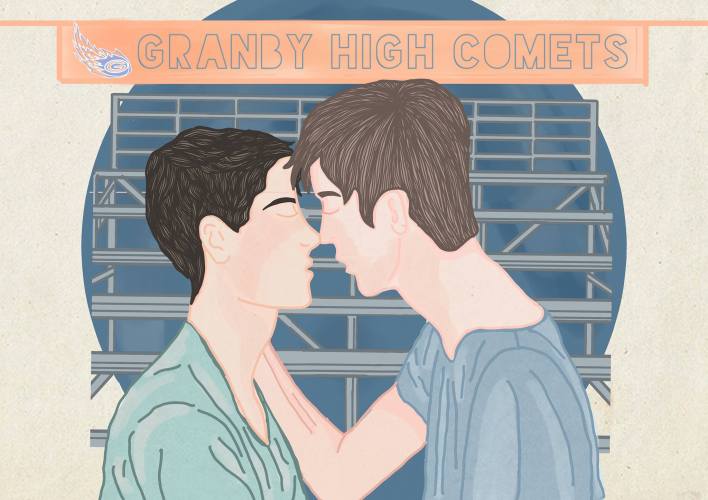
Neither of them can believe they let themselves be persuaded to come out tonight. It is winter in Boston or New York or Toronto. They both have exams to study for. Graduate degrees to get. Student loans to justify taking out. But someone pleaded and someone else insisted and somehow they have found themselves here. The room is an odd mix of dark wood and plastic. They try to remember how to be social. He sits down next to her at the bar. She glances at him. He notices that they have the same eyes. Piercing blue or liquid black or stormy gray. Both of their faces are chapped from the wind blowing off Lake Michigan or the Thames. She pulls a tube of balm out of her pocket. Uncaps it. Smoothes it over her lips. He pretends not to watch. She pretends not to notice that he is watching. He asks her what she’s drinking. Winces at how stupid his voice sounds. She grimaces sympathetically and thinks to herself that he has a nice face. Sees his sweatshirt. Realizes that they went to the same university in New Brunswick or Ann Arbor or Montreal for undergrad. She tells him this and offers to buy him a cider or a beer. He accepts. They talk about school and Shakespeare and faraway places they want to visit someday. They discuss war and death and politics. They talk about parents. He likes his. She likes her mother, not her father. A song they both like starts to play. Then a bad song comes on. Then another. And another. She wants to leave. He wants to go with her. They pay for their drinks in euros or dollars or pounds. They decide to go to his place since his roommate is out. They get into a taxi. The snow is swirling on Seventh Avenue. The Vienna State Opera House is lit up against the night. The hands on Big Ben strike eleven. She reaches for his cold hand with her gloved one. The cab lets them out at his apartment. They go upstairs. They kiss. They undress each other. They fall onto his bed. His last thought before he sleeps is that if the condom broke and she becomes pregnant, their child will have beautiful eyes. They wake up early in the morning and eat bagels or croissants or pan dulce for breakfast. They smile cautiously. They do not want to seem clingy or desperate, but something fits. There is a comfortable ease in the way they eat and speak. They both have classes to get to but agree to spend the next day together. They meet at the riverbank and hold hands as they walk along the Danube. They go to the Met and look at the suits of armor and the hieroglyphs in the Egyptian wing. They eat goulash in small restaurants on the winding streets of Prague. He meets her friends. She meets his parents in the suburbs. The days are getting longer. They like kissing the most in the late afternoon, when the world glows soft purple and they can imagine they are the only ones in it. They decide to move in together. They pool their belongings and buy an apartment to put their mismatched sheets and plates in. They adopt a cat. They cook spaghetti and coq au vin and tortilla de espana in their tiny kitchen. He finishes grad school. Starts working as a lawyer or a professor. She still has one year left. Starts sending out resumes. Her sweaters are threadbare and all her jeans have holes. Weeks pass. She gets a letter. Reads it once. Reads it again. Reads it so many times that the paper warps beneath her sweating fingers. She bites her lip until it bleeds. He can taste it when he kisses her. Something is wrong. She is crying. He sees the letter. Reaches for it. As he reads she tells him that there is a job somewhere far away, a different country, at a magazine in Paris or a fashion company in Milan or a lab in Sydney. It is ridiculously perfect, she says, the opportunity of a lifetime, a childhood dream come true, every incredible cliche she can think of. She didn’t think she was going to get it. He looks at her. Realizes that she is not crying at the prospect of making an agonizing choice. She is crying because she has already decided. He briefly considers what their life could be like in this new place. Stops himself. He has a life here. He cannot give up his job in this economy. He cannot give up his entire family, he tells her. Maybe she nods. Perhaps she understands. Perhaps they fight and call each other selfish. Maybe their yelling sends the cat dashing for the fire escape. It doesn’t matter. She moves out at the end of the month. She takes half of the plates, the books, the clothing. He keeps the cat. A year passes. They often unknowingly get drunk at the same time, despite the difference in time zones. Two years. They both love their jobs. Three. He thinks he sees her on the subway but can’t be sure. Four. She gets engaged and breaks it off within a month. Five. He buys a ring he can’t bring himself to put on his girlfriend’s finger. Six. The cat dies. Seven. There was a car crash. A lightning bolt. A razor blade. He hears the news from a friend of a friend. A Facebook update. An announcement in the paper. Her name floats before him on a screen. He can see the truck skidding on black ice. The flash in a field soaked by sheets of rain. Blood trickling down white bathroom tiles.  It is winter and the streets are dark. The bar where they met went out of business years ago. He goes to one that has just opened. Orders a cider or a beer. Bad music is playing. He hears a voice call his name. Turns and sees his sister’s friend. She is wearing a lot of makeup or no makeup at all. He does not notice if she is pretty. He buys her a drink. They talk about work or an article one of them saw online. After an hour they go out to the parking lot and press against each other. She is his best friend’s mother or his brother’s ex or possibly his cousin. It doesn’t matter to him because in this tiny moment held between their lips someone else is not cold and dead in the ground but alive, alive, alive.


SOPHIE PANZER splits her time between her hometown in New Jersey and Montreal, Quebec, where she studies history at McGill University. She attended the 2014 Kenyon Review Young Writers Workshop and received a national medal for journalism from the Scholastic Art and Writing Awards. Her work has appeared in the Young Adult Review Network, Teen Ink, The Veg, and Yiara Magazine.
Abuse of the Body

13479947_10208220749589642_1085720231_n

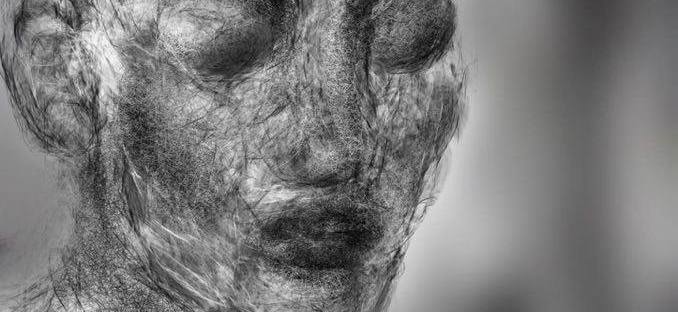
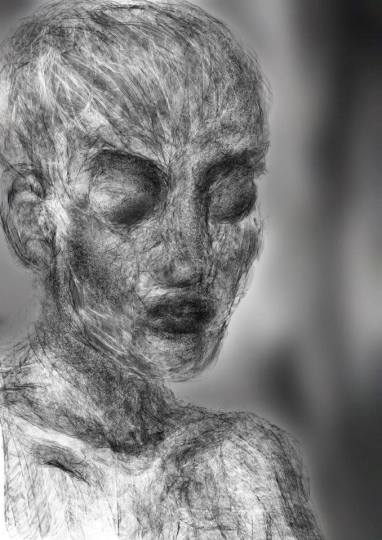
Illustration by Ashwin Pandya

Abuse of the body comes as no surprise. I know this. It’s Friday night and I’m at the regular keg, in the empty lot behind the warehouse, and soon the fighting will start. I know this. It’s hard not to when I’m here, already reaching for my second cup and then a third. In Elk Horn, Iowa, this is Friday night. A bonfire. A keg. Thirty or so of us huddled together, waiting for something to happen.

The boys all wear what you’d expect them to; varsity jackets and steel-toed work boots.The girls are in their uniforms–tight  jeans, blue eyeshadow, foundation caking their cheeks. I’m an outlier in my loose clothing, my short hair, and like this I stay invisible. I look around for Sarah but don’t see her. To my right a gaggle of girls are all laughing. They sound like hyenas in my ear and Jenna’s red cup is tilted dangerously close to spilling on my sneakers, but I don’t say anything. Sarah is the only one I talk to.

The fighting comes naturally, like moving through water. A pack of boys in the steaming slick of the night–of course there’s violence. Of course. It only sounds strange because nobody wants to look at it that way. A pack of boys with nothing better to do, with trucks and beer and fists.

Think about where we were born from–that kind of carnage. Scrawny boy-chests flat and unmuscled as dead earth. The edge of town and how it goes barren, colorless dirt. Think about our fathers and reclining sofas, about ice tires, about Fox News and algebra II and complacency. It makes sense, the boys with fists.

I’m the only girl who fights. We crowd around the keg and I drink fast, thinking of the twenty I slipped the Fareway cashier for a case because he doesn’t ID, long as he can keep the change. In the cold my body begins to feel edgeless, skin blurring into night. I fight the boys because because it’s the only option. When you fight, they stop spitting at your feet. When you fight, they leave you alone. When you fight, there are no post-it notes stuck to your backside, no roadkill shoved inside your locker, and they don’t make fun of your short hair.

Tonight, Andrew swings the first punch, this time at Billy. The party backs up, makes a circle. Billy punches Andrew back, red Solo cup sailing out of his hand and clattering to the concrete. So it begins.

The boys fight like dogs, their breathing loud, heavy. Andrew’s smaller, so the crowd thinks he’s done for, but I know it doesn’t matter, that his body is a steel plate dipped into life, that his knuckles could crack your teeth into dust. Billy swings but Andrew’s too fast. He ducks beneath his aim, laughing.  He strikes Billy’s cheekbone. I can hear the sound, the collision of flesh on flesh. Billy’s jaw drops and before he can hide it, shock washes over his face in a wave. In that half second, Andrew punches him square in the stomach. He doubles over, a wail escaping him. Andrew not stopping until Bobby is on the ground. No longer the big one. Not anymore.

Andrew, out of breath, takes Billy’s limp hand from his side and raises it in his, signaling the end. Steam rises off his face and neck in the cold, and he grins with all of his teeth showing. The audience cheers drunk and enraptured, made delirious by the violence. It’s only now that my presence is noticed. People around me look out from the corner of their eyes, trying to see if I’m watching. I am. Under my sweater, my heart beats full and heavy, and even in the cold I can feel my hot breath, my wet lips. I’m waiting and imagining my hands as fists, the fight inside a drunken circle. Its own breed of church. Where the anger in me prays, gets reborn staticky and new.

Andrew’s still now, steam rising off his neck, making him look like a stallion. He comes toward me, nostrils flared, gripping my shoulder in the damp curve of his palm, and I nod, stepping forward. The crowd shifts so that we are now in the center. Andrew stands still, hands by his side. He gives a slight nod and this is my cue to swing, hard, right hook aimed at his jaw but he’s faster than me, ducks. He swings straight forward and hits me square in the stomach. I should be doubled over now, but instead I feel electric, I feel like a live wire, and I just smile. Andrew pauses, and in that second I punch his shoulder. He steps back, stunned, and then I’m going for his gut, his face, his hands plastered over his eyes because he knows I’m not stopping. I don’t mean to knee him in the groin because I don’t like to fight dirty, but I do it without thinking. Andrew is on the ground. He reaches up his palms in surrender. I help Andrew up and we re-enter the crowd.

Roy steps into the empty circle now. His varsity jacket looks waxy in the dark and the blockish jut of his forehead and wide nose are the only discernible features on his face. Roy’s the most brutish of the boys, so I don’t volunteer to fight him, despite sidelong glances from the crowd around me. I don’t mind getting beat up, but I’m not trying to die.

This moment of pause is when I notice Sarah for the first time all night. I see her lanky figure from afar, tight jeans and long blonde hair, hear her high-pitched laugh. From the way she is standing, one hip jutting out, hand gripping a beer, I can tell how drunk she is. It doesn’t take much for Sarah to get wasted but that doesn’t stop her. In her cowgirl boots and blue eyeshadow, she looks, for a moment, like a statue in the cold. My best friend. Not that she knows this. Sarah and I have lived on the same street for fifteen years. We hang out on weekdays, textbooks spread across my living room table. I help her study and she tells me about her life, the boys who wait outside her door to take her on dates, her parents’ arguing, where she hopes she’ll wind up. I never have anything to say back so I just listen, study the blonde highlights in her hair, her perfect nose. She’s my best friend but I’m more like a bookmark, something holding her in place.

“Roy!” Sarah shouts. “Roy!” And then she’s stepping into the circle’s center, the crowd suspended in silence. “Roy! Fight me!” she laughs, although there’s an edge to her voice. “Do it!” Billy shouts. One of the boys starts yelling, “Fight, fight, fight!” Sarah’s stands there grinning, like an idiot, until Roy winds up his right arm and hits her. Hard.

Something swells in my throat and my jaw drops. At first Sarah was laughing in Roy’s face, her teeth bared. But then he hits  her, a slap across the face that sounds like a loud crack in the night. It’s horrible to watch,the way her neck jerks from the impact of his strength. Her baby blue eyeshadow almost luminescent in the dark. My best friend.

I want to stop him, but I’m gridlocked by bodies and paralyzed by fear, knowing Roy could unhinge my jaw like snapping a toothpick.

I remember, now, algebra class second period. How they once sat together. How Roy’s hand drifted to Sarah’s knee in a way he thought was subtle. I remember her giggling at his bad jokes and then I remember them not speaking. I remember a week later Sarah holding hands with Roger McCormick. Not Roy.

He stands face-to-face with Sarah, and everything is silent. She’s breathing heavily. He rears back to hit her again, but last minute she ducks and takes off, breaking through the parting throng of people, running, running into the dark.

I sprint after her, my eyes fixed on her moving figure ahead of me, her swinging arms. I don’t know how far she goes but finally she rounds the corner on a barn along the edge of the road, leans against its wall, catches her breath.

My breath makes little puffs of fog in the cold but my heart’s still beating like crazy. Part of it’s the running but it’s also something else, the ugliness I watched, how something dark and sickly was born from within the circle, from the force of Roy’s fists.

The December air starts biting into us now that we’re suddenly so sober, and we find the barn door from its outline in the dark, its door hanging half-open on a crooked hinge.

Inside, we lean against a wall, sliding down until we’re sitting on the concrete floor. It’s dark and empty, no animals inside, no hay lining stalls or farm tools hanging from the wall. Through the rafters I can see slivers of moonlight shining in. Surrounded by all this empty, our breathing echoes back at us, amplified in the soft dark.

I look at Sarah, really look at her, and assess her face. She has a welt in the shape of a hand, a bloody nose. She’s ghost-pale. I wrap my arm around her and she presses her face into my shoulder, her breath soft against my neck. We sit and I think about Roy Normally, I can handle the violence. Enjoy it, even. But tonight was something much darker, a corrosive rage, ripping through me.

Sarah doesn’t make any noise when she starts to cry. I feel a wetness against my neck and I just know, so I stroke her hair, like spun gold between my fingers.

Sarah’s laugh from inside the circle rings in my ears. The image of her like a statue, like a saint, out in the cold. We didn’t deserve any of this. She didn’t, anyway. Me, I know I can take it. That’s why I do.

Sarah lifts her head and her eyes meet mine, wide and glassy.

“Why did I do that?” she asks in a whisper, and I kiss the top of her head, without thinking. I love her, so much. “You’re my best friend and you don’t even know it,” I want to say. But I don’t. I stroke her hair. I say, “I don’t know, Sarah. You know I’m the only girl who fights.”


GRETA WILENSKY was the 2015 runner-up in prose for the first annual Winter Tangerine Review Prizes and the 2016 runner-up for So to Speak’s annual fiction competition. Her fiction and poetry is published or forthcoming in the Best Teen Writing Anthology of 2015, Souvenir Lit Journal, Alexandria Quarterly, Blueshift Journal, the James Franco Review, Bartleby Snopes, Duende, Gone Lawn and So to Speak. Her work has been displayed at MoMA PS1 in NYC and in the Department of Education building in Washington, D.C. She lives in Lowell, MA.

ASHWIN PANDYA is a sketch-artist and illustrator, whose work has graced many book-covers. Acknowledged for his digital art as well as musical compositions, Ashwin Pandya can sketch given any situation, description or character. You can visit his website here.

Cairo, Illinois

He walked into the diner and there she was, looking as though she’d been expecting him. Her eyes flitted across his face, then back to the empty table before her. He studied her down-turned face, hair mussed up but not too much, makeup there but less than what he was used to seeing. Then he glanced at the smudgy windows and scuffed floor, and the brown stains on the tables, and he walked over and sat down.

The waitress came and asked if he wanted anything, like she was already certain he didn’t.

“Coffee,” he said. “And you got ice cream?”

“Just vanilla.”

“That’s fine. Vanilla’s fine.”

The waitress left and he turned to the girl and thought about telling a joke before he remembered she’d said he wasn’t funny. So instead he said, “‘Fraid I was gonna have to go all the way to Tennessee.”

She glanced at him but didn’t say what she wanted to. He tried to let his face tell her she could talk to him, but he’d never been good at that and couldn’t start now.

“Thought I saw your car outside Springfield,” he said. “Almost put the flasher out and pulled them over until I got close enough to read the license plate. Saved myself a good deal of embarrassment.”

The waitress brought his order and he drank the coffee black and ate a small scoop of ice cream. Almost as bland as one could get, but it’d been a sweltering few days and he’d been using the air-conditioning as little as possible to conserve gas. He hadn’t known a man his age had that much sweat in him. Thought it all would’ve leaked out over the previous decades. But maybe he wasn’t as old as he felt. He couldn’t always remember anymore because it didn’t matter.

He said, “He leave you, then?”

She met his eyes for the first time. Empty but hard, like she’d fought herself into a corner and didn’t have any fight left in her but still refused to accept defeat. He knew he was in some way responsible for that, and nothing he could say or do would ever untie the knot coiling in his stomach. Can’t change who you are, or who you’ve made those around you.

“Three days ago,” she said. Her voice a dulled knife blade. “Some town smaller’n this one.”

“You don’t seem too wrecked by it.”

“We’d been fighting a while. Got tired of it.” The closest she would ever come to admitting he’d been right.

“Hattie,” he said, but his mouth went dry and even another scoop of ice cream couldn’t coax the words out. He knew he looked a fool, sitting there chewing ice cream when he should be asking about the most important question a father could ask. He figured this must be how she’d seen him for a long time, and his cheeks flushed and he took another bite but it didn’t help.

“I’m fine,” she said, and now he was the one who couldn’t meet her eyes. “We’re both fine.”

He nodded, still looking down. “Okay. Well. Good.”

“Really?”

“Yeah.”

A semi rumbled by outside, causing the windows to rattle. He turned to watch it pass. Remembered a few years ago he’d pulled over a similar rig and as he was walking up to it he had some sort of premonition, like a brilliant flash went off in his head, and he was already reaching for his pistol when the door opened and the driver stepped out with the crowbar. All hopped up on energy drinks and PCP, didn’t even notice when he fell and twisted an ankle, wasn’t any pain, barely even a limp. Kept on coming and swinging that crowbar until his own momentum spun him around and a few solid whacks with the pistol butt against the back of his skull took him down.

That was the closest he’d ever come to dying on the job and he’d never told anyone outside the office. Hattie had been too young, just ten, and her mother was six months in the ground. Who else was there to tell? To admit that he’d been scared shitless, that he’d seen that crowbar arch within an inch of his face and the metal was so rusted and dirty the sun didn’t even reflect off it, and he’d been certain his death would be brutal and dull without even the glint of polished steel. He would get a star on some wall and his daughter would be shipped off to her grandparents and maybe there would be a nice obituary in his hometown paper, if they still even had one. That wasn’t supposed to be enough. There had been more to it once, he thought.

But he couldn’t say it now anymore than he could then, and she still wasn’t old enough to understand. So he watched the truck go by while she watched him and eventually she said, “I knew you’d find me.”

He glanced at her but couldn’t tell if that was praise or resignation. He’d known he would, too, because all her life she’d been inclined to follow a straight line. She may occasionally divert on a tangent—that damned boy, for example, whom he was relieved to see was gone and not missed—but she kept on the new path until something else knocked her off it. She thought he didn’t listen to her but he did in his own way, her mother had understood that. He’d heard her talk about Nashville, how she had the talent to make it there. And maybe she did, too, but she wasn’t even out of school yet and if that failed, then what? And in her condition, too, which was a hell of a way to think about it, but he couldn’t see it any other way despite how much he’d tried.

“I’m glad I did,” he said, the words sounding flat even though he meant it and she knew he did.

She gestured southward. “Would you have been able to come after me if I’d crossed the river?”

Come after me. Like she was running from him as opposed to something. Like he didn’t have her best intentions at heart. Like he was the enemy. Which he could see how in her eyes he might be, but he didn’t like to think she’d see him that way. He hoped she knew better deep down.

He said, “I took some time off. Jurisdiction don’t matter right now.”

“You kept the gun.”

“I did.”

She held his eyes a moment, thinking why he’d kept the gun. Already made up her opinion why, even though truthfully he’d kept it out of habit and duty. Probably should have left it behind. Sent the wrong message. But he’d been wearing it almost twenty years now. What did she know about habits at her age?

There was a grease-stained clock above the restrooms that told him the hottest part of the afternoon was encroaching, and he felt no desire to get out in it, but the diner wasn’t much cooler. His ice cream had melted and he stirred the soupy remains with his spoon. He wanted to tip the bowl up to his lips and drink it, but he wouldn’t do such a thing even in private.

“Can I ask you a question?” she said.

He swallowed and looked up. “Of course.”

“What would Mom have thought of all this?”

He looked into her eyes and saw that this was the crux of the matter for her, proof that he didn’t understand her because he didn’t understand women in general, to an extent that was almost criminal. And it wasn’t as though he could deny this fundamental flaw in his makeup. He had no more insight into the workings of her mind that he had her mother’s, except for occasional glimpses that only furthered to confuse him. How he had even gotten married in the first place was a mystery to him, maybe the most beautiful and painful mystery of all. He had just taken for granted that his life was going where it was supposed to go, good or bad, except he had never envisioned it leading him to a rundown diner at the southernmost tip of the state, and if he had maybe he would’ve realized sooner how precarious a situation he was in, how apt he was to lose what mattered most to him.

Any answer he gave would be the wrong one, so he said, “She would have loved you and supported you,” which was true enough. But as to what she would’ve thought? Would she have been angry, disappointed, joyous? Jealous, even, because she’d wanted another child and he hadn’t? He didn’t know. She’d been gone too long, which wasn’t really an excuse but it was what he had.

Across the booth Hattie gave a small huff that seemed weighted with disappointment. Or maybe she was just as tired as she looked. He thought maybe this, more than the fighting or the baby, had driven her to stop here off the main highway and wait for him. She was just beginning to understand how weary life could be.

“I can’t make you come back with me,” he said. “I guess legally I could ’cause you’re still a minor, but I won’t.” He paused. “I want you to, though. To come back.”

She stared at him for a bit and he could see her turning it over, looking for a way out, but there wasn’t one so she nodded and said, “‘Kay.”

He left too much money and outside she told him she had a few things at a motel and he said he needed to get gas, and they could meet for dinner a few hours down the road, he’d call her. He watched her pull out of the lot and chose to trust that she would follow him. If she didn’t then he wouldn’t know for a while, but at least he’d have had a chance to see her, see that she was all right. He would have something to take away from this no matter what happened.

He filled up his tank and headed back north but fifteen minutes later the truck started shaking and he pulled off to the side of the highway before it could give out altogether. He climbed out and checked under the hood but couldn’t find anything obviously wrong. A bad batch of gas, then. He climbed inside and let the cool air caress his face, the truck sputtering a little.  After a while her car sped by. He thought he saw her turn her head to look at him, but she didn’t stop. He watched her until she merged with the horizon, a slow fade that seemed to drain something from him. Instead of calling for assistance, he just sat there staring ahead, trying to decide if he had the strength to go after her a second time.


DANIEL DAVIS is the Nonfiction Editor of The Prompt Literary Magazine. His own work has appeared in various online and print journals. You can find him on Facebook, or on Twitter.

He Has Gone To Be In His Own Bed

13902120_884940411636009_1934409682_o

Illustration by Priyanka Paul

I was on my knees wearing only my underwear with the tube of Troye’s cock in my mouth when his father opened the door. He didn’t say a word to either at us, not at first. He smelt of cake batter and icing. His eyes, red in the whites, pretended to express sorrow. I felt dirty and wrong. I put on my shirt, then my pants and stood behind Troye. He walked up to his father with his hand held out in front of him.

    Dad, said Troye, I am so sorry.

    His father said nothing. He covered his face with his hands and took a deep breath.

    Troye touched his father’s shoulder, and repeated himself, Dad, I am so sorry.

    There was a moment of silence from both of them, and then his father showed his face again. He looked the opposite as my father did when he first saw me intimate with another man. His face was wrinkled and mad, his look of scorn directed at me.

    Who do you think you are? he asked me.

    I reached for my shoes and tried to think of a good response. Troye was my closest friend. We had that respect to listen and try to understand one another, to not judge and attempt to change our perceptions and beliefs. It had been four months since Troye told me how he felt toward men and me. We were sitting under an overpass, listening to the train leave town for Richmond. I can’t really explain things completely, he had said, but I’m happy when I see you. Then he kissed me for the first time.

    Can you promise me something? he asked me after his lips left mine.

    What is it?

    I need you to promise not to tell everyone else about this. Not until I say so.

    I promise, I said, nourishing that special loyalty between us, and agreeing to keep what we had behind closed doors—either at my house on the weekends, or at his house right after school when his father would be away at work. Today, though, we met later than usual. I had went home when classes were done. I took an hour nap and then woke up to a text from Troye that read: Dad is running an hour or two late running deliveries. Want to come over for a quick bit and say hey? I told myself on the way home that I would rest and then do my homework for Chemistry II and fill out the forms for junior year photos, but I responded to Troy with delight. I said I would be over in a few minutes after I grabbed a quick snack.

    I couldn’t help myself. It sucked going a day without seeing him face-to-face. Only I should have gotten over myself and stuck to our agreement. I should have told him no and reminded him about the risk of not knowing exactly when his father would be pulling up into the driveway.

    Troye’s father pointed at me. He demanded of me, Answer me, faggot!

    Dad, please stop.

    His father punched him in jaw, knocking him against the wall behind me. The photos of Troye with his parents fell from their nails and off the dresser. Troye down against the wall and onto the carpet floor. I helped him up, and the two of us pushed past his father as he tried to swing and grab us. We ran out of the house. Troye’s cheeks, normally the color of paste, were swollen and turning into the color of an over-ripened plum.

    We ran for a couple of blocks. The dust and dirt on the sidewalk we raised up fizzled and dissolved in the heat radiating up from the concrete. We passed by rows of house, all old and vinyl with dish satellites attached to their roofs. Each was one of a handful of colors: mint green, coral, white, or sky blue. We turned into a cul-de-sac and sat on a sidewalk bench. Troye rested his head on my shoulder and cried, while I stroked his hair and wiped the blood from off of his face with the sleeve of my shirt. Flies snarled and buzzed around our heads in the hot air. I bent over and gave him my shoes. I worried his feet may have blistered and ached. I told him everything would be okay and that I would help him in any way he needed.

*

    A little more than a year later, two days before Christmas break, Troye and I met on the visiting-team bleachers of our high school’s football field. Our meeting was a favor he had asked of me. Since the deal with his father, and school getting foster care involved, we had taken a break from things. We were still friends, but friends that only kissed each other in the bathroom when no one was looking, and who cut class together every so often to grab a late breakfast together at Waffle House.

    My dad tried to see me, again yesterday said Troye.

    Do what my mamma told me to tell you, and tell whoever is in charge that you don’t want him near you.

    It doesn’t matter. I think I’ll be moving in with my grandparents soon.

    That sounds nice. Now you can have your own room again.

    I smiled at him, but he didn’t smile back. I felt concern mixed with anger lift inside me as he remained silent and I realized that my comment had only brought more grief to Troye’s situation, that there was something else he had to tell me about moving in with his grandparents that would upset me.

    He rolled a stone that was underneath his hands against the cold bleacher. They live pretty far. In Oklahoma. A thirteen-hour drive if you don’t stop to piss or get gas.

    I chewed on my bottom lip and took his hands. He turned away from me and bowed his head. I asked him if there was a relative that lived closer that could take him in. But there were none that were accepting of what his father had told them. So I asked him about telling his grandparents that he would rather not live with them since he was so close to being done with school and didn’t want to say goodbye to his friends.

    If they would only be so reluctant, he said.

    Then what else is there? There has to be some way to keep you here. God damnit, why wouldn’t they cut you some slack? After all the hell you’ve been through?

    Troye lifted his head. I stared at his hazel eyes then rubbed my nose against his and leaned in, leading his lips to mine. When we finally pulled away, I looked at the scar on his right cheek and ran my thumb across it. I thought about that day and said, I hope you never have to deal with that again.

    I won’t.

    He gave me a peck on the cheek as our rides home pulled up in the school parking lot. We grabbed our backpacks and walked together, hand in hand. As we approached my car, he told me in my ear, Call me tonight.

    When?

    Just some time before you go to bed.

    Is there a time you plan on turning in specifically? I don’t want to wake you.

    You’re such a silly goose. He hugged me and walked away from me as I grabbed the door handle. Just text me if you’re that worried.

*

    I waited until after dinner was over to call. There was no answer. He responded with a phone call around midnight. We spoke for only a few minutes. He told me that he got busy working on something and that his phone had died. I trusted him. I thought for sure that whatever he had been doing related to his grandparents and thinking about earlier. To make up for things, he asked me out for coffee in the morning at the coffee shop next to school. I told him that I was looking forward to it, and he promised me that he would call me if he ended up arriving their first or started running late.

    But In the morning, I ordered my coffee from the barista without Troye, without any call or text. Steam lifted from the small sip hole of my cup. The sun was just over the parking garage across the street, and the sky was red with low, dark gray clouds. A flock of geese passed over my head, as a couple, a guy and girl, stepped outside, arm in arm, sharing a glazed doughnut with sprinkles. I took a sip from my coffee and burned my tongue. I spat what was in my mouth on to the ground and wiped my lips. Annoyed, I tried calling Troye. There was no answer. So, then I texted him—Where are you?

    I waited five minutes after finishing my drink before zipping up my jacket and walking to school. I sat through class like I normally did and didn’t reach out to anyone about him. When I got picked up at the end of the day, I drew a picture of Troye and I in my math notebook and sent him a picture of it. What I had sent looked like crap and nothing like either one of us, but in the picture Troye was sitting on a rock overlooking a cliff and the ocean. I was sitting beside him with my legs crossed and my hand not far from his on the grass.

    When I got home, I had dinner with my parents, then sat outside with my Mamma on the back porch. She smoked a cigarette and finished drinking a bottle of lime Smirnoff.

    Haven’t heard from Troye today, I said.

    Have you called and checked on him?

    I did earlier, but not since.

    She took another drag and flicked her ashes in the empty bottle between us. Doesn’t seem like him. You see him at school?

    No.

    Well, maybe something important came up and he had to miss today. I wouldn’t sweat it, honey.

    I leaned back and looked at the acorns and leaves of the trees all covered in ice that sparkled like gemstones and diamonds in the light from the porch. The sky was empty and dark, the air still and cold.

    Weird how it’s almost a new year, isn’t it? I wish it were summer. Would be nice to go swimming. Troye enjoys going to Virginia Beach and Whitehurst.

    Dear, we got at least two more months of this cold before it’s even spring. Not that I mind. I like when it’s cold and I get to wear my sweaters and coats.

    Maybe I’ll wear that red cardigan you got me for Christmas last year and go see Troye tomorrow if he doesn’t say anything to me tonight.

    You do that, son, said Mamma, but don’t go off pestering the boy if you get there tomorrow and he’s not in the mood to be all social. Give him space. Give him time to come to you. He’s got a lot on his plate.

    My phone vibrated in my pocket. Troye had left a text. It read: Babe, getting to have you in my life has been such a blessing. You make me laugh all the time, and I have always counted on you to have my back. I will never forget when you took me to your house after my dad walked in on us in my room. You cleaned my face and put that silly Hello Kitty band aid on it. I’m sorry that I have no luck and have such a screwed-up life. I got a lot to make sense of right now, and you don’t need to be with someone who doesn’t know himself no more than he knows a stranger on the streets. I love you, and I’m sorry I’ve put you through all this.

    I put down my phone not knowing if I should cry or scream. I thought of how there was nothing directly stated that said I wouldn’t be seeing Troye for a very long time, but I figured that Troye had probably made up his mind about moving away, and he was happy and open to the possibility of a fresh start after being hurt so badly. I imagined how life would have gone had I stayed home that day. This would have been the point in our relationship where we understand each other, completely, and we are beginning to map out rooming together in college. I pictured us beside one another, in our own house, sharing the same bed and looking back on our childhood as older men. But it was clear Troye didn’t want that anymore, and as much as I wanted to respond with something hateful from the shock of his message, I didn’t. I tried to be fine with that last moment of us together, on the bleachers, just talking as best friends.

    My Mamma finished her cigarette and rubbed the side of my arm.

    You ready to go inside, hun? It’s starting to get late.

    I chuckled. I’m not sure why. I suddenly realized how cold it was. I leaned forward and slid my hands beneath me. The wood of the porch was warm from my body. I sucked on my upper teeth till my gums bled. Mamma put her arm around me.

    Dear, you alright?

    Sure, Mamma. You bet.


DEXTER BENJAMIN GORE is a native to Aynor, SC but has spent the past year traveling the Deep South and working on his MFA in Creative Writing at Old Dominion University in Norfolk, VA. He is currently working on his first novel. Dexter‘s stories have appeared in The Dead Mule School of Southern Literature, TEMPO Magazine, Archarios, KY Lavender Bluegrass: LGBT Writers on the South, and Deep South Magazine.

PRIYANKA PAUL is a humanities student at St. Xavier’s College, Mumbai. She’s a self taught artist and loves to experiment with different mediums. She also writes and most of her written work is accompanied by her illustrations. Her art is highly influenced by social issues, gender studies and a basic liberal outlook of the world.

Feathers

Dædlus tortures himself with questions. What went wrong? Was one feather out of place? A handful of down slathered in wax instead of a flight feather? One plume shaken loose by the force of the wind? Or was it simply the heat of the sun?

* * *

She sat at the window in her parents’ bedroom, rested her back on her father’s bedside table. The Chapstick she held belonged to her father. She smacked its waxy scent onto her lips, used the twisty end of the tube to trace the lines of the book in her lap—an endless book of Greek mythology, the story of Dædlus and Icarus. She read this particular story from beginning to end, end to beginning, over and over and over. What would it be like, she wondered, to feel the ground fall out from under her feet, to ride the currents of the wind up and down, then up, up, up into the sun?

Dædlus had been commissioned by King Minos to build a labyrinth to house the Minotaur. Such a noble cause. A holy cause. Icarus, she imagined, was as proud of his father as she was of her own. Her father had been called by God to preach the Gospel, to pastor a church, to battle the darkness of the world. A holy cause. But she wondered if Icarus felt trapped within that world, the way she sometimes felt in her own. She dog-eared a page and set the book down, gazed out the window. She traced the movement of the wind, the shadows trembling over the gravel driveway. The leaves of the towering elm, ruffled by the breeze, transformed into a thousand tiny feathers. Sunlight poured through the window. She felt its warmth wash over her, wax melting down her arms. She closed her eyes and imagined her own ascent into the sun.

* * *

The wind whoomps the underside of his wings and he is in the air. Icarus extends his arms, allows the wind to carry him before he tilts to explore its contours. He twists one wing and catches a current that carries him down. His toe skips off the crest of a wave. Twisting the other direction, he spirals upward. He casts a glance down the center of the invisible vortex carrying the weight of his body, sees his father—feet submerged in sand, eyes straining, lips forming words that are lost to the wind as Icarus tastes the clouds. Higher. Higher. Icarus flies too close to the sun and plummets to his watery death.

Or so the story goes.

* * *

The magic hour. Every evening, her father settled in the recliner. Her little brother always beat her to the coveted seat on their father’s lap, so she sat on the arm of the chair, leaned on her father’s shoulder. He pulled out a book and read aloud—worlds opened before them, invited them into their adventure, horror, wonder. The Lion, the Witch, and the Wardrobe. Treasure Island. The Jungle Book. The Hobbit. He loved British writers and Tolkien was a favorite. If you like this one, he told them, we can read the other three. That particular evening, the motley band of dwarves and their burglar hobbit were rescued from gnashing wolves and goblins by the Eagles: : Over them swooped the eagles; the dark rush of their beating wings smote them to the floor or drove them far away; their talons tore at goblin faces.

* * *

Six months after their escape from the labyrinth, they are still trapped on the island. The wings are ready. Dædlus tests them out first. He follows the wind’s lead, leans into his run down the beach to set the wings parallel to the current. His feet leave the ground. He takes his lessons from the seagulls—tilt the wings this way and bank to the left, a slight twist to rise or fall. When his feet finally land back on the hot sand he pulls the wings off his arms and watches as three feathers slip out of their waxen beds. The sun had begun to melt the wax. Dædlus warns Icarus not to fly too high for too long. Icarus pulls the wings over his arms, lets their hollow weight rest on his young, broadening shoulders. A gentle breeze draws the wings back and they spread into the air. Icarus steps back to keep his balance and Daedlus reaches out. Father and son, arm-locked, eyes locked. Dædlus tells his son how to gain altitude, how to hover closer to the waves.

Whatever you do, don’t fly too close to the sun.

Icarus turns around, back to the wind, and runs headlong down the beach.

* * *

Her love for Tolkien, she inherited from her father. And Lewis and Longfellow and Austen. Her dream to ride a train through England, to hike the rocky coasts of Ireland, to walk the Scottish moors—all from him. Her penchant for writing, also from him—her earliest memory of the sheer delight to be found in writing words on a blank page was scented with his Chapstick (she’d stolen it from his bedside table). Her obsessive need to keep the peace, never rock the boat, to bloom where she’s planted—also his. She had his knees, his eyes, his slow metabolism. It had all come from him—difficult to say what hadn’t been passed down from him to her. She read books and wrote stories, dreamt of the day she’d finally travel the British Isles. When her parents argued, she tried to mediate.When the old ladies in the church complained about her ratty shoes, she tried to remember to wear her nicer ones the next Sunday. She walked miles every day and went on a low-fat diet to shed the extra pounds she saw in the mirror. She did all of these things and more, waited for her father to notice. When he did, she felt complete. When he didn’t, she just tried harder.

* * *

For months after their escape from the labyrinth, Icarus wanders the beach, hour after hour, day after day, seagulls soaring overhead. He picks up every stray feather he can find. Picks them up by the quill and writes in the air with invisible ink, dreams of freedom. One feather at a time. He tucks them into his leather satchel, brings them back to his father. Dædlus works hour after hour in the shadow of an old tree, gathers branches and ties them together in the shape of a seagull’s wing. He melts wax over a fire and drip drip drips it over the quill of a feather. He holds it in place until the wax hardens. One feather at a time. After months of this work, did all the feathers start to look alike? How did Dædlus know which feathers were which and which feathers to put where?

* * *

One day, she stopped going to church. She slipped out the front door on a blustery autumn Sunday, walked down the flagstone path she’d walked countless times on her way to church. Instead of continuing down the path she climbed into her car, jammed the key into the ignition. She felt every rotation of the tires on her drive across town. To a coffee shop. She stepped out of the wind, ordered a house coffee and pushed a wrinkled dollar bill across the counter. She sat at a table near the sun-warmed window and brought the steaming cup to her chapped lips. The wind swept across the parking lot, escaped her notice. Her eyes traced lines through a thin volume of poetry: A lost arrival is wandering.

* * *

After their escape from the labyrinth, Dædlus and Icarus breathe deeply the island air and dig their toes into the hot sand. No longer lost in corridors, trapped by countless walls, suffocating in relentless darkness. Removed from the constant danger of being discovered by the minotaur, father and son relish their newfound freedom. Icarus turns his face to the sky. A seagull soars overhead like a phoenix, wings ablaze in sunlight. Days go by. The sun is no longer the source of blessed light; it is relentless, ravaging heat. Their feet are rubbed raw by the sand, and a walk on the beach brings nothing but searing pain; then their feet become calloused, no longer sensitive to the pleasant warmth of the sand between their toes. The cries of the gulls overhead become tiresome. The island becomes a prison of its own. It is time to escape. Again.

* * *

One summer, she drank her first beer—a Sam Adams’ Summer Ale. The bottle clinked against the metal edge of the opener in her hand. It hissed when she pried the cap. She sniffed at the faint mist that danced over the glass, pleased to find the aroma floral and sweet, different from the smell of the men who frequented her father’s church—grizzled men with wobbling steps and glazed eyes. The beer was cold on her lips and snapped at her tongue, warmed her throat all the way down. She sat across the bonfire from a friend who opened a bottle for himself. Her father’s voice returned to her: alcohol is dangerous, the first step toward ultimate destruction. She swallowed her fear with another sip from the bottle.

* * *

She seldom speaks to her father these days. She doesn’t call him as often as she feels she should. But he doesn’t call her either. Her mother tells her that he feels like he failed his daughter — that he tortures himself with questions. What went wrong? Should he have made her read her that he often? Did he set a bad example? What could he have done differently?


BARBARA LANE lives her life between Flagstaff, Arizona and her home state of New Mexico. She earned her MFA at Northern Arizona University and served as the 2015-2016 nonfiction editor for Thin Air Magazine. She hikes a lot, she reads even more, and she habitually burns her toast. Her work has also appeared at Art House America and Queen Mobs Teahouse.

Loadshedding

The loadshedding was unexpected and, in most ways, unwelcome, especially at this part of the day. It was not uncommon for the locality to collapse into darkness, of course, and the darkness had been becoming something of a regular, unwanted house guest over the last year. Yet surrounded by the placental darkness that dropped as abruptly over this South Kolkata locality as a tangled mess of cobwebs at Phutka’s tea shop could come loose at the slightest hint of carelessness, somehow the shadows seemed longer, and the silence, desperate for air.

“Are we out of candles?”

“I think we might have some left. But I’ll have to look for them. Don’t you have a flashlight lying around somewhere?”

There was a sound of feet shuffling away towards the other end of the room. A few books were moved. Something fell out, and the perpetrator could be heard bending over to pick it up, the folds of a starched shirt crackled slightly into wrinkles. A drawer opened with a loud creak, and after moving around a few of its inhabitants, the candle was withdrawn.

“I found one. Where do you keep the matchsticks?”

“On the shelf above the cabinet. Towards the edge.”

A frantic hand felt blindly along the shelf. Then a matchstick flared up with its characteristic crisp crackle, dim and yellow light slowly spreading over the room like a winter fever.

“At least there’s some light now.”

“How long do you think this’ll last?”

The other voice waited, measuring the seconds, as if not sure what context the question followed, or exactly how precise the answer should be.

Then, as if it had made up its mind, the voice coughed a little.

“Maybe an hour. Maybe two. Who knows?”

That seemed to the speaker a perfect sentence, deliberate and slow, offering no promises, no hopes, but soothing all the same. The deniability of knowledge had always been a saviour of such conversations.

But the one who had asked the question seemed to grow even more restless at this prospect.

“I wonder why they keep doing this to us?

“Imagine how hard it’ll be on everyone, to be sitting in this absolute darkness, with the hoards of summer mosquitoes from the South Kolkata drains hungry for our blood.”

As if in punctuation, a loud resounding slap on one’s thigh notified of the forgotten fact that the mosquitoes were a true menace, and more so in this godforsaken darkness.

“I was just talking to Mr. Choudhury in the morning, and he says his son recently went to the electric department office to submit an application. And the clerk there told him these power cuts will only get worse as the summer advances. Mrs. Choudhury was worried about it too. Her daughter is appearing for her boards this year, and she told me that it’s impossible to study with these power cuts.”

The other person seemed to have not heard the story, or maybe heard, but found it easier to ignore.

Instead, a strange worry suddenly wriggled uneasily through the whole conversation.

“Mr. Choudhury talked to you today morning? Did he ask anything about us?”

“No, he didn’t. Too busy talking about this postgraduate course his son is doing.” The voice sounded comforting. “And even if he does, everyone in this locality knows we are colleagues. That is enough for their curiosity.”

The other person let out an audible sigh.

“I wish we didn’t have to do this.”

“Me too. But we don’t have a lot of options. And nothing else matters, besides this house and us living together under its roof.”

“Talking about living together, did you catch the news today? I think I heard someone mentioning us somewhere. In passing, of course.”

“They always do. I’m tired of hearing it over and over again. I guess we have to learn to just live with it now.”

With that, their voices trailed into silence again. The humming mosquitoes kept getting louder. The candle flickered at times, and there was a slight crackling when the flame encountered molten wax that had solidified on the body of the candle itself.

The candle had almost burnt till midway when the voices started talking again.

“You know, I met Professor Sen on the way to work today. Wedged in between two pudgy ladies, sweating profusely as always. Brought back memories of our college days.”

The other person smiled and, in the flickering light, the smile looked tinged with sadness.

“College life was good. Especially after I met you. Remember our first meeting, the waiter had served you my coffee, and you had already drunk half of it when he realized his mistake and pointed it out to a furious me.”

Silence again.

This time heavier. And almost foreboding.

“Back then, we never would’ve thought we’d end up like this.”

“Oh, but I did. The moment I saw you walk over to my table and apologize, I knew we’d end up this way somehow.”

The other voice sounded cautious now.

“Do you think we are doing something wrong? Our parents don’t talk to us anymore, you know. And your brother, who used to fight with people who bullied you, doesn’t even ask if you’re doing okay. Sometimes, it scares me. The enormity of our situation.”

The end seemed abrupt. As if dipped into silence by the repercussions of the words that had just escaped the lips.

“I love you,” the first voice said.

As if all answers to their fears, their forbiddance lies in those three words.

Like Jesus Christ, walking over the water, while his disciples in a rudimentary fishing boat stare with awe at the myth being born right in front of their eyes.

Was it hope?

Or was it desperation?

Was Jesus their saviour, or the physical representation of their collective voices, promising them salvation, but more than that, the choice of freedom?

Were these three words, clinging to each other, breathless, caught in the darkness of an old Kolkata apartment like a baby deer gets caught in front of the fast approaching circle of lights from the headlights of a rickety car, all they had hoped for, to save them from their fears and inhibitions and the warring society at large?

Both voices seemed strangely uninformed.

“I love you too. Yes. That’s all that matters.” The replying voice had finality to it.

In the floor below, Mr. Choudhury warily wiped off sweat from his neck and balding head as he talked to his wife.

“You know I met that fellow who lives upstairs today. Nice guy. Gave me a few tips about our daughter’s career choices as well.

“Dev, isn’t that his name? And the other one is Boddhi. Such a pair of handsome guys. I wonder if we’ll get invited to their wedding though. Two feasts, eh?”

And with that, he laughed, as the electricity finally came back on, and the television set crackled to life.


NILESH MONDAL, 22, is an undergraduate in engineering by choice, and a poet and writer by chance. His works have been published in magazines and ejournals like In Plainspeak, Cafe Dissensus, Textploit, ArtRefurbish, Fiction Magazine, The Hans India, etc. He works at Terribly Tiny Tales, an online storytelling platform.

Marie, a novitiate of the Ursuline Order, hears jazz while running errands for the Mother (New Orleans, Louisiana 1956)

Cold glass bottle clasped in hand, she hurries to her cloister, never before out to hear the sounds of an emerging city. Never before hearing the whine of a saxophone. She stops. She faces the neon flickering radiation, The Blue Nile, above the door holding the belly of Sound. Curiosity pulls the handle to her.

Bare feet float down the stairs; shins shiver with each wooden creak. Body follows, hip bones thrust through white woven cotton, pulled by Sound. His thumping thumb pressing above her pelvis, his brushing fingers running up her spine. She carries the heady smells of a southern summer (magnolia and wet pavement at dusk) behind her, pausing to taste this new front at the convergence on the last stair: cigarettes, brass, and gin. She cannot speak this olfactory language ahead of and below her (only that behind); her vocabulary fails, so she swallows, stepping down and in to understand, and the olfactory fronts pant around her, licking and crawling inside, until the door swings shut behind and the two are one, she in the middle of a dimly lit room, unknowingly made new.

No man’s head turns from the bar to look at her bright moon face, gasping in ecstasy overcome from her wimpled folds, yet the air and mood has shifted.  Genteel drawls cease, and the band reigns.

Yes, yes, yes, whispered, yes.

Yes wet on the tongues of many, wet on her tongue. The bass man’s fingers fly over deep strings and chords. Body scoops its mahogany curves, building the yes in jerks and folds.

Aahn squeezes out as a long hot release, from the lips of the man or the bowels of the bass? He builds again.

What is this feeling inside, between the legs, running along the surface of the thigh? Is there a word for this? It is not the music; it is made by the music. Warm and unsatisfied, liquid dripping, she feels a resonance within her hips.

The drummer’s brushes sweep a rattle; fingernail slides the cymbal’s razor rim for a ring that hits her ear, muddling her mind with mad sounds travelling down.

After sixteen years of uncertainty, God’s throbbing language is at last loud.  She’ll tell the Mother, triumphant, milk in hand!

And the saxophone pulls her forward, floating blur of swaying white mass and milk held tight, into the light.  Fingers pressing keys and body swung around neck, he dances and she dances. Satisfaction wails on high.


SYLVIA ROBINSON is a recent graduate of the Hotchkiss School and plans to attend Kenyon College in the fall. She is from Summerville, South Carolina, the birthplace of sweet tea, though she’ll take hers unsweetened.