Small Places I’ve Filled


My mother’s womb

the playhouse 

born of my father’s hands

laundry chute 

and linen closet

back seat of a Corolla

that tiny studio 

Chicago.

A boy’s heart.


I climb into these 

spaces frantic

a wild boar hunted

trembling. 

I sniff

get comfortable –


I climb into 

these poems 

whose words linger 

like lint

from a motel-quilt 

sky. Yet


always 

there’s pleasure

settling my body 

home 

where I can 

pull the curtains

burn incense

and fill 

pages

like bodies do coffins.


CANDICE KELSEY‘s work has appeared in such journals as Poet Lore, The Cortland Review, and North Dakota Quarterly. She was a finalist for Poetry Quarterly’s Rebecca Lard Award and was recently nominated for a Pushcart Prize. Her first full-length manuscript is forthcoming with Finishing Line Press. An educator of 20 years’ standing, she lives in Los Angeles with her husband and three children.

There’s a sound in Yiddish like choking

There’s a sound in Yiddish like choking;

it’s a shock to hear the first time

and impossible to produce without spitting

unless it was bred into you


when you were soft and malleable 

and your tongue wasn’t bent on the harder things.

Those consonants that start in the heart

and end on the fingertips.


That sound is stored somewhere in my blood

but not the words to accompany it,

besides the names of food.

At least that one’s to be expected.


The language itself didn’t make it to me

but I guess that’s to be expected too:

when you need to travel light you have to leave things behind you

and your history is no different.


The people who knew that language probably found it

too heavy to take along with them.

So I suppose it’s somewhere back beyond us,

dropped in the Pale of Settlement


alongside the luggage and animals,

the ancestors, and the other parts of my family tree

that were clipped where they grew.

So considering what they needed to drop,


I can’t blame them for leaving words too.

Because really, that’s all they are. Words.

Nothing so intangible after all.

Nothing we can’t live without if we need to.


But that sound like choking made it through somehow

so please forgive me when I pronounce it harder than I should.

The names for food I do know and say too loudly.

The names of people I know by heart but never met. 


LAURENCE LEVY-ATKINSON is a poet and writer based in Melbourne, Australia. His work can be found in many places, including: Southerly, Australian Poetry Journal, Poetica Magazine, and A Quiet Courage. He was featured as part of the 2016 Slinkies emerging writers series and was shortlisted for the 2018 Anna Davidson Rosenberg Poetry Award.

Princess to Prince from Atop Twenty Mattresses


Hyperaware of eyelashes hovering over my field 

of vision, so close & so there– I pluck them all out

the way I wish I could pluck the useless tongue 

from my mouth, leaning against teeth that clack 

like shattering glass on the wrong side of the ear 

canal. Noise scrapes like sand in a sockless shoe,

digs at the skin in unseen symmetries until my body

resembles an alien topology. I wish I could say

your courtly hold on my ungloved hand feels softer 

than chisel on marble, but every advertisement

of affection pares me down until I’m more skeleton 

than girl, and how can a pile of loose bones navigate 

a life like this? It’s all fluorescent lights, lacey  

borders, unexpected ringtones, underwire bras.

When I am crowned Queen of a Body Transcended, 

the coronation will take place in my sleep. And when 

you kiss my forehead, for the first time I won’t feel 

corrosive acid eating at strata of petrified muscle. 

You will wreathe my shoulders in vegetable greens, 

and celebrate the         pearl       for lack of the oyster.


AUDREY DUBOIS is a poet from Rhode Island, and is currently a creative writing graduate student at Emerson College. Her work has appeared in Plain China and Rushlight. She likes weird antiques, frozen yogurt, and PBS documentaries about Karen Carpenter. Audrey can be found on social media at @platypusinplaid.

Hester Poem

Dear Hester,
I know
He keeps his left hand in your mouth
that’s where it lives
along with other useless things
molars incisors your thick blackened tongue it ticks against
your teeth runs its fingers along the grooves a mountain range
in your mouth biting
into the meat of your cheek
it is sweet but tastes like
copper and like sweat and
the very tip of a needle at
the moment before it
enters the skin
he is not a thimble
he is not an ocean or a minnow
you are not a whale
feeding on things
smaller than yourself
swallowing god

OLIVIA currently resides in North Dakota where she teaches and coordinates the tutoring center at Dickinson State University. She earned her MFA in poetry from Wichita State University in 2016. Her work has appeared in Salon Magazine by Honeybee Press, Impressions, Mikrokosmos, and is forthcoming in Ethel and North Dakota Quarterly. She spends her time watching too many horror movies, growing a tiny human, and writing poetry.

Pride: A Reading Collection

Although the spirit of queer pride should last 365 days a year, today marks the last Friday of Pride month 2019. Here are the top picks of LGBTQ+ literature or works of literature written by LGBTQ+ writers to last you all until June 2020.

Links to buy books mentioned below through Amazon can be accessed by clicking on the titles.


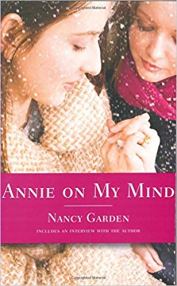
Annie on my Mind by Nancy Garden

5185EJRdm6L._SX306_BO1,204,203,200_

I found this book at a time when I was just beginning to come to terms with my queerness and it helped normalize being gay for me. While this love story between two girls takes place in the 1980s, the nuanced character development and intricacies of the love explored helped me realize that being all forms of love deserve to exist not solely defined by their political status.

– Joanna Cleary, Blog Editor

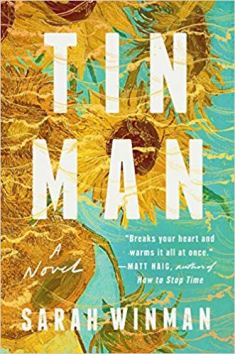
Tin Man by Sarah Winman

61hSwd-0SFL._SX329_BO1,204,203,200_

I read Tin Man on the recommendation of a friend, unaware of the storyline or the synopsis. The story I encountered was perhaps one of the most emotionally poignant ones I had read. Tin Man depicts love and sexuality beyond the cardboard boxes we put them in and touches upon art, friendship, and desire by freeing these from their socially gendered labels. It’s a warm, gradual narrative on sadness and nostalgia, and the transformative potential of love.

-Smriti Verma, Poetry Editor

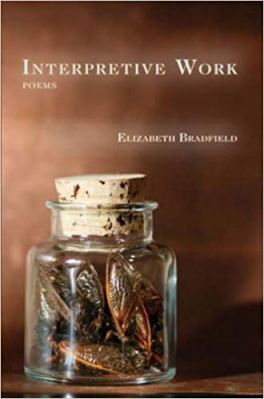
Interpretive Work by Elizabeth Bradfield

41EhCDN5g5L._SX328_BO1,204,203,200_

While the poems in this collection often deal with the conflicts of history, politics, culture, and family, hope and beauty win out for the view of the future. Her poems cross boundaries into the vulnerable to reveal how loving someone can help you love the world.It’s published by Artoi Books, which is an imprint of Red Hen Press (Arktoi Books publishes literary poetry by lesbian writers).

-Lisa Stice, Poetry Editor

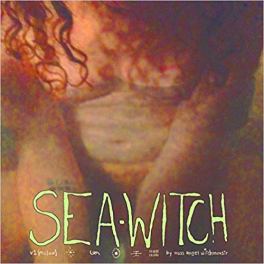
Sea-Witch: Vol. 1 (May She Lay Us Waste) by Never Angeline Nørth (formerly Moss Angel (formerly Sara June Woods))

51ir2n0bp5L._SY498_BO1,204,203,200_

I think Sea-Witch was revolutionary for me: a work centered around transsexuality, a genre-fluid/genre-defying and literature-altering book, Never Angeline Nørth’s book is about a girl monster, a witch-god, about their origin stories and journeys and narratives. I don’t know how to summarize this book but I do know that this book will change the way you look at and critique texts, and I believe it is a great introduction, both in terms of form and content (as much as I despise considering those as the two components of a text), to what the category of LGBTQ+ literature is and can be. Sea-Witch helped me come to terms with my still-developing notion of what my own sexuality is and what it means to me. The book sounds tumultuous but that is the beauty, that is its defiance, and that is what motivates me to make peace with my tumultuous sexuality.

-Devanshi Khetarpal, Editor-in-Chief

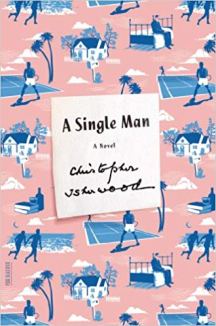
A Single Man by Christopher Isherwood

51ookXy1DJL._SX328_BO1,204,203,200_

Christopher Isherwood was one of the first queer authors I came across during my English studies, and his stories opened up new perspectives to regard the world I’d grown up in. In my private Isherwood collection, A Single Man still stands out most remarkably. An artistically crafted story about seclusion and otherness, it tells the tragic end of a curtained love in a homophobic society that grants no (public) closure for the bereaved. But more powerfully, Isherwood’s insight into a single day of a grieving man revealed to me the beauty of two men in love – physically and emotionally. Reading A Single Man, you’ll certainly be touched by the despair that travels from the first to the last page. But I also hope that you’ll be ignited – to make reality better.

– Stela Dujakovic, Prose Editor

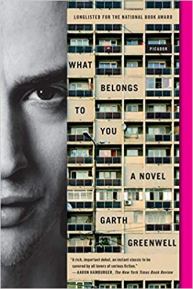
What Belongs to You by Garth Greenwell

51vJrvVkcZL._SX331_BO1,204,203,200_

Look Garth Greenwell up on Youtube and listen to him read aloud from his work before you read this novel. He was trained as poet before turning to prose, and his history shows in his work: every sentence has a rhythm that demands to be read aloud. That isn’t to say that the ideas of his work don’t matter, but auditory beauty is a nice way to ease yourself into the story that is ultimately devastating. The story follows an American professor teaching in Bulgaria, who pays a young man named Mitko for sex and comes back to him again and again. The driving question of the novel is whether Mitko really has a connection with the narrator, or if it’s all just loneliness making infatuation feel like love. I’m not gay, I’ve never been to Bulgaria, and the world of illicit sexuality described in the book is something I’ve never experienced. Which might have been part of why I liked it so much: much of the power of fiction is to show you what you’ve never known or seen. But even more powerful is the universality of the book. Wondering if your love is real or not is something that every romantically-inclined person has felt, no matter who you are or who you love.

– John S. Osler III, Prose Editor

To view staff bios and learn more about our staff, check out our Masthead page here.

Interview with Mihir Vatsa

Our Blog Editors interviewed Mihir Vatsa, an Indian poet and the editor of Vayavya, for this week’s blog. In this interview, we ask him about the practice of writing and the habits that pertain to it in some way or another. We also ask Mihir about not only staying committed to writing, but also staying committed to writing about Hazaribagh.


Blog Editors: Ernest Hemingway wrote first thing in the morning. Maya Angelou reserved hotel rooms just to write. Stephen King forced himself to write six pages every day. Susan Sontag instructed people when not to call. Have you developed any specific methods for writing?

Mihir Vatsa: I wish I could reserve hotel rooms to write. Someday, perhaps, I will. I usually write at night– the darkness sorts relevance from distraction. When I am writing to meet a deadline, I set a target. With prose, it is thousand words. Poetry is more malleable that way– just three lines could be a poem too, as long as they are good three lines. I am more relaxed with poetry, less so with prose. The latter demands some discipline, I have learned recently.  

BE: Do you journal? And how well do you work with or meet deadlines?

MV: Unfortunately, no, I don’t maintain a journal. I do have some romantic affinity towards the process though, and I like to hear stories that involve journal writing. I have tried it before, but have stopped midway. Trivial things begin to annoy me– is the notebook cover journalish enough, what if I wrote something and someone read it, if I am doing it on my PC then what should be the password, do I really want it personal or do I secretly want it read? I think of these clearly pressing thoughts and defer it.

I think I can work with deadlines, though I procrastinate a lot. So if the deadline is tomorrow, I would get working today, not sleeping, not eating, a bit possessed. It’s not a healthy practice for a writer, but then writers are not really known for their exemplary health.

BE:Do you outline ideas before or do you let the form teach you what kind of story you are writing?

MV: I do outline, but mostly in mind. I prefer having some ideas, some thoughts about what I should write once I start the computer. Often a poem is left hanging for a few days: one stanza emerges, then there is the wait, then another line comes up. When I am not writing, I am working with collages– cut here, paste there. When I think I have enough to go with, I start typing. With longer poems, I take it slow, filling in the blanks first, then tying the content up as the form suggests. With prose, and especially essays, I have found that it’s helpful to have some pointers beforehand, a road map, on how to progress from one thought to the other without jarring the flow.  

BE: What do you do when you become stuck while writing?

MV: If the deadline is far, I give in to the block. I switch to Netflix or Youtube, or take up a book which I had been meaning to read. You can only watch something for so long. When saturation hits, writing becomes a needed retreat. Sometimes I get stuck because I don’t want to put an idea into a form that I have already done before. Then, reading helps. I go to the internet and read whatever poetry I can find, preferably by poets who are alive. That way, I get to see what other poets in the world are doing, how they are managing language, how they are working with form, and so on. The last time I got stuck, the deadline was close. So I ordered a book and told myself not to touch it before I finished writing. It kind of worked.

BE: How do you stay committed to Hazaribagh? Is there a different lens or observation you require in order to practice the writing of something so close when you want it to reach far?

MV: This is a really good question, actually. My upcoming book A Highland in the East (Speaking Tiger Books 2019) is a memoir about living and travelling in the Hazaribagh plateau, and though I had a great time writing it, I was also often conflicted about my loyalty to Hazaribagh. I am not talking about the town per se– Hazaribagh is like any other small Indian town. It has its half-finished buildings with exposed brickwork, it has its temples and mosques and narrow streets. Somehow these things haven’t appealed to me yet. I am more attached to Hazaribagh’s landscape. Therefore, the hills, the trees, the rivers, etc are my points of affect. I remember, this one time, my friend Raza Kazmi and I were staying for a few days at Palamu Tiger Reserve in Latehar. The place is about a six-hour drive from Hazaribagh. There, I was surrounded by taller hills, denser forests, reliable waterfalls, and it made me sad. What if I outgrow Hazaribagh? “You can be committed to Hazaribagh and still enjoy Palamu,” Raza said something along this line, and though I understood him, I was still uncertain. What I fear is that one day there will be nothing wonderful about Hazaribagh for me. No waterfall will excite me. Been there, done that– that kind of boredom, you know, and so I try to modify perspectives. There is a lot in Hazaribagh, things that I still don’t know, so maybe one day I will enjoy the roads, or the history, or engage with the place in a more direct, participatory way. At the moment, I am gripped by the plateau; later, it might be some other aspect of the town.

Perception is universal– the way I perceive Hazaribagh may be similar or different to people who perceive other places, but the act is not uniquely mine. As writers, we work in and with shared cultures, so I think while Hazaribagh may be a little-known, “niche” place to write about, the things I feel when I am in Hazaribagh do resonate with people outside. When I post a photo of a hill range and see the reactions on it, I know I am doing something right. I try to understand the relevance of Hazaribagh for other people, and this is a conjecture at best, but I think that in Hazaribagh, I work through a dual-gaze. I am both an insider and the outsider, insider to the town, outsider to the plateau. When I look for information on, say, how the lake came about, or how the hill was fashioned earlier to appear the way it does now, I am being a hopeless local historian; on the other hand, when I venture into the forest, trailing a stream and not knowing where it would take me, I feel more like a tourist. Perhaps this duality works, though I am not sure yet.

BE: Do you think your editorial practice, or editorial ethics, have impacted your practice as a writer?

MV: Maybe? I don’t really know. Earlier I used to get irritated at the long wait to get a response, but as someone who has also been on the other side of things, I realise now that such delays happen, especially if you are working as a small, un- or underpaid team. One thing that I loved doing as an editor was to really edit– and not just select– a poem for publication, you know, the old-fashioned way. I would chance upon a poem which was almost ready, except that it didn’t work in some parts and patches. Whenever it was the case, I offered detailed feedback, putting the ball in the poet’s court. Here is what I think. If you agree, we can go ahead with the publication. With my own writing too, I am not averse to feedback or revision. I appreciate it if someone devotes a chunk of their time to offer comments on my work. This is something that I cherish with respect to writing, mine or someone else’s.


155727205559673739MIHIR VATSA is the author of the poetry collections Painting That Red Circle White (Authors Press 2014) and Wingman (Aainanagar & Vayavya 2017). A former Charles Wallace Fellow of Writing at University of Stirling, UK, Mihir is the winner of Srinivas Rayaprol Poetry Prize and a Toto Funds the Arts Award in Writing. Mihir lives in the plateau-town of Hazaribagh, India, where he works across the disciplines of literature, writing and human geography.

On Shakespeare’s 455th Birthday

BY JOANNA CLEARY AND MARIA PRUDENTE

Joanna Cleary: I’m so excited that we’ve agreed to have a conversation on the best-known playwright in the history of English literature– William Shakespeare — in honour of his birthday. As an English and Theatre major, it probably comes as no great shock to hear that I love his plays and sonnets. However, it might come a surprise to find out that I didn’t consider myself a fan of his work until I saw it performed in the theatre. My first exposure to Shakespeare came when my ninth grade English Literature class studied Romeo and Juliet. While I loved the rich images Shakespeare created, I struggled with the unfamiliar language and often grew frustrated because I read the script much more slowly than I read contemporary works. When my class when to see a live performance of Romeo and Juliet, however, I found myself absolutely immersed in the world being created in front of me. I grew to deeply appreciate Shakespeare as one who not only writes about the human condition but does so in a way that allows everything he focuses on – from emotional character development to philosophical questions – to take on an ephemeral life of itself. Now over to you – when did you first learn about Shakespeare?

Maria Prudente: Romeo and Juliet was my first experience too. My first monologue class was a Shakespeare workshop. I began, “But soft, what light through yonder window breaks” and I remember the creative director of the theatre looking utterly confused. In retrospect, I love that at twelve I didn’t bother to gender the monologue, but in actuality, I just liked it best. I thought it was elegant and beautiful, I didn’t care that a man said it. In my freshman year of high school, I was cast as Rosaline for our production of R&J. I was gutted. I had no lines though I got to wear a special floral head-piece. For a character who never speaks, it was easy to create an interpretation of her because Shakespeare offers us information on “fair Rosaline” through other characters: Romeo, Mercutio, and Benvolio. I am not surprised to hear that you became a fan after seeing his work in the theatre. I support the notion that Shakespeare should be seen, not just read. In terms of writing, what I’ve always liked about Shakespeare is that there is no subtext; the language does the work for you and that, in essence, is the brilliance of Shakespeare’s writing. There is a vast legacy of work to choose from — what is your favorite Shakespearean sonnet or play?

JC: I know it’s a bit of a cliché to cite this as my favourite Shakespearean text, but I love Romeo and Juliet. While it’s often dismissed as overly dramatic and unrealistic, I strongly believe that the dramatic tension and spectacular plotline is precisely what captures the feeling of newfound love in the play. My favourite line of the first act is when Romeo first sees Juliet and declares “[o], she doth teach the torches to burn bright” (Act 1.5.42) — the statement is so simple, but also so profound and bursting with emotion. I completely support the contemporary social emphasis on people knowing how to be independent, I also think that love — platonic love, romantic love, and everything in between — has an important place in the human condition and deserves to be recognized in poetic expressions such as this. Speaking of how Shakespeare relates to the modern world, what do you think are the best contemporary adaptations of his work?

MP: I agree with you that the universal themes of love are why Romeo & Juliet is so captivating. We understand it as kids because they, too, are impulsive, impassioned kids and we nostalgically, sympathetically relate as adults. For me, I measure the best contemporary adaptations of his work by what is most relatable. Whether we are consciously aware or not, what we connect to when we watch The Lion King is what we connect to in Hamlet, and, what we connect to when we watch My Own Private Idaho (a classic Gus Van Zant film) is what we connect to in Henry IV. My favorite is Ten Things I Hate About You as a modern adaptation of The Taming of the Shrew. At theatre conservatory, I was selected to perform Kate’s monologue for several hours over several days for prospective students and I resented the fact that Kate wasn’t more like her modern adaptation in 10 Things I Hate About You. In the movie, we see Kat as a feminist figure, and in Shrew, Shakespeare characterizes Katherine as a fiery female turned anti-feminine, submissive wife. Would Kat have said to Patrick, “Humble your pride, then, since it’s useless, and place your hand beneath your husband’s foot? As a gesture of my loyalty, my hand is ready if he cares to use it”? I don’t think so. That’s why I think modern adaptations are important because they spark a bigger conversation. Was Shakespeare commenting on misogyny and feminity in Taming of the Shrew? Do we believe this was his point of view? Did 10 Things I Hate About You try to deconstruct gender and female oppression and correct the characterization of Katherine through Kat? Shakespeare is still challenging us in the 21st century. Aside from comparing modern adaptations, what do you suggest people do if they want to understand and enjoy Shakespeare’s work?

JC: I definitely agree that contemporary adaptations of Shakespeare’s work often help make the material more relatable to people who aren’t familiar with the language or the era in which he was writing. However, I also think that people should also experience performances of his original scripts in order to fully appreciate the nuanced worlds Shakespeare creates through his language; after all, he’s known for being a poet just as much as he is for being a playwright. If there are no performances of Shakespeare’s work playing, I’d recommend listening to his work via audiobook to hear his words being said aloud, which is how they are intended to be heard. I had to listen to an audiobook recording of Othello when I studied the play in my Gr. 10 English Literature class. Initially, I hated that audiobook because it moved too fast for me to keep up, as I wanted to stop every time I came across a word I didn’t understand (which was often) and look it up. However, I gradually came to understand that it didn’t matter if I didn’t understand every word because hearing the play aloud helped me more deeply emotionally connect to the world being created before me. Anyways, going back to your acting background, what Shakespeare character (regardless of sex or gender) have you always wanted to play?

MP: I’m jealous of those boys playing Hamlet. There’s even a play by William Missouri Downs called, Women Playing Hamlet where a woman cast as Hamlet has a massive existential crisis during the whole process. Because Hamlet is so consumed by his masculinity (or lack thereof), it would be fun and challenging maybe to regender him; to flip his questioning his bravery “am I coward?” and the insult of “unmanly grief” on its head. What role would you like to play?

JC: I’ve always wanted to play one of the three witches in Macbeth. Like all delightfully grotesque characters, I think it takes skill to not overdo their persona or characterize them in a predictable way that’s been already been done. Personally, I’m interested in looking at the witches as characters who raise questions on class and status in the play – what does it mean for Macbeth, a member of the upper class, to talk with witches and, later in the play, go as far as to seek them out? What does that say about class corruption? And, if one looks at the witches as symbols of femininity, what do they say about gender roles and dynamics? What does it mean for them to, in a way, seduce Macbeth? I would love to take on a role rich with the potential to explore topics such as these. I also greatly enjoy ensemble work and would relish the opportunity to work with two other actors playing my fellow witches, as it has been my experience that a show is strongest when members of the cast are united. Moving onto Shakespeare himself, however, what’s one question that you’d ask him if you two were somehow able to have a conversation?

MP: I think I would ask how much politics during the Elizabethan era influence him. I think his work verges on the political by way of his characters and it would be interesting if there were specific issues that felt so pressing he needed to write about them. We are living at a time of extreme political polarization so I would be interested to know what he would write about today.  What would you ask?

JC: Hmm, interestingly, I don’t know if I would ask him anything. I thought I’d have lots of questions ready in response to you, but nothing seems to be coming to mind. I think perhaps I don’t want Shakespeare himself to influence my perception of his work, as so many insightful and creative relationships between us and him have been built precisely because of the fact that there are huge gaps in our knowledge of his life. That said, I think today is a wonderful opportunity to spend some time pondering the many mysteries of William Shakespeare and re-read some of his poetry, be it his sonnets or his plays. And now over to you, dear readers – we hope that you too can spend some time reading Shakespeare on his 455th birthday!


149460297287447

JOANNA CLEARY is an undergraduate student double majoring in English Literature and Theatre and Performance at the University of Waterloo. Her work has previously appeared or is forthcoming in The /tƐmz/ Review, The Hunger, Pulp Poets Press, Every Pigeon, Glass: A Journal of Poetry, and Subterranean Blue Poetry, among others.

155113583331125364MARIA PRUDENTE has written about feminist ethics for Manifest-Station and is featured in Grey Wolfe Publishing’s upcoming anthology of nonfiction short stories. Maria is a professional stage and film actress. She received her training from the Lee Strasberg Theatre & Film Institute and graduated from the American Musical & Dramatic Academy with a concentration in Musical Theatre performance. Maria is the Content Editor at CountrySkyline, LLC and proud member of Actor’s Equity Association. She lives in NYC where she studies Creative Writing at Columbia University.