Once,

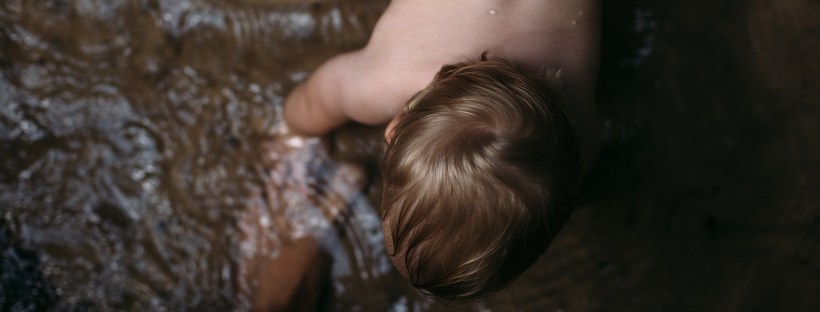
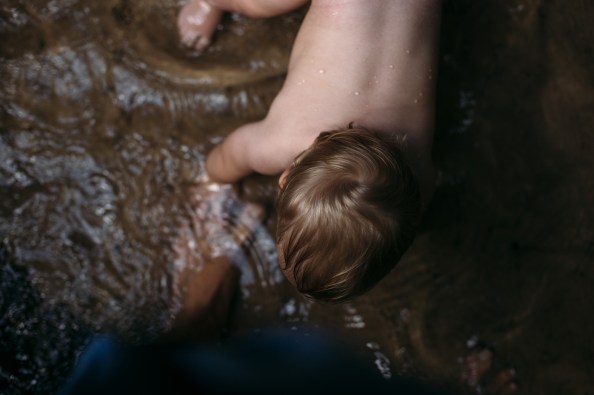
img_9280_amandaodonoughue

Photograph by Amanda O’Donoughue

when I was brave,

I beat a flutter-tempo against the skin drum

of my mother’s scuppernong belly,

me inside, the translucent fruit, mellowing

from the early tartness at the first-of-season.


When I was five

and my brother was brave,

our mother would rest half a tumbler of watered wine

on the firmness of her roundness

that pressed against breasts

and bladder and lungs,

drinking the red, sipping it like jewels,

laughing at the glass balancing on its own there.


In my fourth decade, I am brave all over again,

and I drink a quarter glass in my turn,

and though the midwife says “Don’t tell me” when I do,

she admits wine is a human thing.


Red wine and chocolate for longevity,

for craving’s satisfaction, for courage and endorphins.

Grapes split on teeth in summer,

but press to feet in their season—

a purple flow that starts with seeds,

comes to lips, to darkness, then light—

the pulp and flesh becoming over time.


SAMARA GOLABUK is a two-time Pushcart nominee whose work has appeared in Strong Verse, Peacock Journal, The Whistling Fire, 5×5, and others. She has two children, works in communications and marketing, has recently returned to university to complete her BA in Creative Writing, and is a long-time member of The Scribe Tribe, a weekly poetry writing and workshop group.

AMANDA O’DONOUGHUE is a portrait photographer living in Tallahassee, FL. She spends her days raising her two young sons and exploring the abundant natural resources that North Central Florida has to offer. She has extensive experience with documentary birth photography, mother & child fine art portraiture, and commercial work. More at www.amandaodonoughuephotography.com or at her personal project shedding light on post-partum depression, www.partum.me.
Fleeting

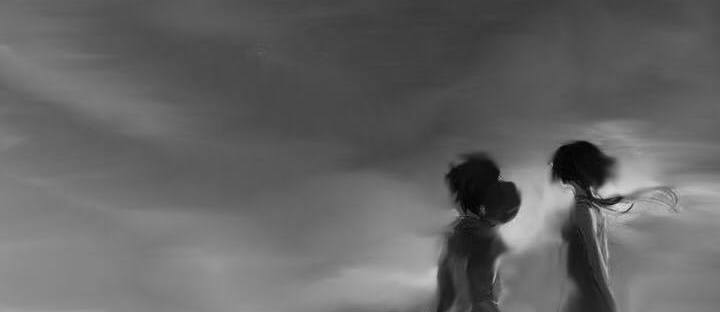
Illustration by Ashwin Pandya

Illustration by Ashwin Pandya

That was the summer of infernal heat, and every day Alice Evers wore an annoying hat with tangled primroses spilling pink and yellow down her back. So, we chased her and catcalled and threw brown pebbles and spitballs at her head and missed and did it all over again until Bobby Jackson blew it clean off her head with a rock from his slingshot. Then we all ran and laughed and even when we saw her lying on the ground with that strange red blistering her ear, we still laughed and laughed and said she shouldn’t have worn that hat, but Amy got mad and walked Alice home and then all our moms knew everything about it. Of course, then we were all mad at Amy. All summer long we were mad at Amy while we hoed the tomatoes and weeded zinnias and washed cars and all the other stupid stupid stupid chores that were all Amy’s fault. So we were grounded and punished and tired of the heat, and when August started, we chafed and scratched in our damp night clothes, but Bobby would wake us after midnight by whispering at our windows, trying and trying to get us to come out to the football field to drink beer, but we were all scared of our fathers and tired of being grounded and cleaning the garage when it didn’t need cleaning again, so we rolled over toward our walls and pretended we didn’t hear him even when his voice sounded tired and sad and not at all angry—just hurt. Then it was time to buy school clothes, and we forgot about Bobby and the beer and the football field and even Amy as we argued with our mothers and fathers over the color of backpacks and composition books and pens. Fall breezes lofted away the heat and apples ripened and our thoughts were full of essays and history and the value of x and even Amy was forgiven her sins and Bobby was walking Alice to classes and whatever had hinged on that white-hot day disappeared like the first flakes of snow testing their strength against the heat of our tongues.


W. E. PASQUINI’s poetry has appeared in Cheat River Review, Cider Press Review, and Fourth River, among others. Pasquini has been nominated for a Pushcart and has been a finalist in various book and chapbook competitions including: New Rivers Press’s MVP; Concrete Wolf Poetry Contest; and Frost Place Competition. Pasquini completed an MFA in creative writing and studied film at the University of South Florida in Tampa, Florida.

ASHWIN PANDYA is a sketch-artist and illustrator, whose work has graced many book-covers. Acknowledged for his digital art as well as musical compositions, Ashwin Pandya can sketch given any situation, description or character. You can visit his website here.

Reenacting the Edda

I picture Sigyn¹

standing with her bowl,

that child-bride poised

over the bowels of her baby.

No time to grieve, she reaches

for the serpent’s mouth

and milks it until her arms ache.


When I was fifteen, I too learned

to hold a bowl over my lover’s head

for hours at a time. My arms burned.

My lips, worm-white with cold,

said nothing as the rain trickled

down. Back then, love

was the role I had been taught:

No spitting. No fighting.

Just water crusting over a lip,

then dropping off.


¹Sigyn is a goddess in Norse mythology, and the wife of Loki.


EMILY BARTHOLET is a highly caffeinated student at Dickinson College, where she wishes she could major in everything. When she’s not studying, she can usually be found writing under a tree, or, when it rains, curled up in a beloved coffee shop. Her poetry has appeared online and in print, most notably in Third Point Press and Rat’s Ass Review’s ‘Love and Ensuing Madness’ collection.

Well, Love, I’m Walking

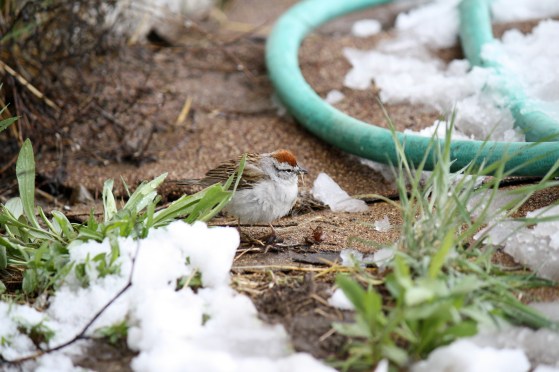
IMG_2360.JPG

Photograph by Jim Richards

Walking around

the yard in the sun

looking at birds

after the long winter,

selfish and dark,

mourning your loss.

The usual: thrush,

starling, chickadee,

pine siskin with

dull yellow waking

on its wings. You

should be with me.

The sound of sod

drying out, a slow

sizzle. A zephyr.

I close my eyes so

my face will feel it.

I should see you

when I open them.

The quaking aspen’s

bare branches cleave

equinox blue. A rabbit

disappears beneath

that hideous old spruce.


JIM RICHARDS’ poems have been nominated for Best New Poets 2015, two Pushcart Prizes, and have appeared recently in Prairie Schooner, South Carolina Review, Juked, Comstock Review, Poet Lore, and Texas Review, among others. He lives in eastern Idaho’s Snake River valley, and in 2013 he received a fellowship from the Idaho Commission on the Arts. To read more of his work visit www.jim-richards.com.

Relics


Sebastian, you are with me again,
lodging in the cool warrens of my mind.
I heard your voice in the mouth of a classmate
who leaned over and whispered,

Do you see them? Three deer,
sapling legs flickering among bare shrubs,
their bodies carved lean and stark by winter.
Blue shadows on the dimpled snow, it is easy
for them to pass through briers.
Pliant ears, pelt stretched
over haunches unscathed.
It was never easy for you,
to be slashed by tangled branches,
geometric like cracked glass.

You asked questions like a deer
starting to run. One hoof, then a clumsy
pitch into a two-beat gallop

hurtling forward despite
my refusal to meet
your soft eyes, avoiding
the taut fear that was like glimpsing
my own terrible reflection.
You plucked the hunter’s
arrows from your flank and asked me
why I looked so mean. I hid
a quiver behind my back.

Sebastian, when I want good luck,
I still tap the antlers mounted on my wall.


RACHEL HERTZBERG is a rising sophomore at Bryn Mawr College. Her poetry can also be found in Parallax Online, Words Dance, and The Rusty Nail. In her spare time she likes to explore and write letters. She is originally from Minneapolis.

On Such Little Things Happiness Depends


You say, Stop singing, lean your head

on my shoulder, begin your own lullaby—


secret system of your voice like bubbling water,

divine manipulation of threads


woven through wind and kissed by stars,

secret pieces of news divulged to the night.


The black-crowned heron builds

his nest out of music by moonlight.


Coyotes march from great distances,

the door-keepers and sentries of the dark.


Magnolia blossoms as big as the cold

crystal moon lean down their sweet scent


and listen while the moth spreads

her brown wings and flies like a shadow


silent through the trees. Night after night

you sing your story to the stars


until you drop down exhausted on your bed

and your little dog lies down at your feet.


Some words borrowed and rearranged from “The Nightingale and the Rose,” Stories for Children,” by Oscar Wilde (original words verbatim as they appear in order in the story: “nest,” “on what little things does happiness depend,” “secrets of philosophy are mine” “night after night I have told his story to the stars,” “silent,” “spread her brown wings,” “passed through the grove like a shadow,” “built out of music by moonlight,” “voice like water bubbling,” “and the cold crystal moon leaned down and listened”) and from “The Use of Spies,” The Art of War, by Sun Tzu (original words verbatim as they appear in order in the chapter:   “marching them great distances,” “drop down exhausted in the highways,” “secret system,” “divine manipulation of the threads,” “cannot make certain of the truth,” “secret piece of news divulged,” “door-keepers and sentries”)


LISA STICE received a BA in English literature from Mesa State College (now Colorado Mesa University) and an MFA in creative writing and literary arts from the University of Alaska Anchorage. She is a military wife who lives in North Carolina with her husband, daughter and dog. She is the author of a full-length poetry collection, Uniform (Aldrich Press, 2016). You can find out more about her and her publications on her website and on Facebook.

Two Poems


[Memory: like dew]


Memory: like dew

(of you   my son)

on spider’s silk,

on roses.


The leaving of sun

for moonlight

on the pond’s surface.


The still waters.


The stillness of my memory

drips

on you

for you  my son.


Fatherhood


break birds’ flight

to moss on stone


examine the simplicity of their makeup:


watch the water drip down the back;


look at the moss drink the dew;


wind blows through the thousand canyons

of its feathers

as easily as it does

through the green silk.


but the complexity in the Woven Child

brings you to divine (un)certainty.


How do feathers breed gasps of air?

How does moss anchor to stone?


CARSON SAWYER is a poet and short story writer living in Omaha, Nebraska. He has been published in Common Ground Review and is a gradate of the University of Iowa’s Young Writers’ Workshop.