ALIYAH WARWICK is a student in Maharishi International University’s MFA in Creative Writing program. She enjoys dabbling in dance, puppetry, Dungeons & Dragons, and languages like Italian and Swedish. You can find an essay she wrote about her experience learning Italian in Zenith Literary Magazine. Her poetry was published in Lothlorien Poetry Journal and will be featured in the forthcoming anthology, Conestoga Zen, Issue 2.
fimbria pulling the delicate pearl into my cistern,
my red sinew.
I can see the Tor from here! I shout,
climbing mound after mound of the Green Mother’s body.
The Earth is fertile. And I have my poppy seed.
It is symphonic and delightful.
Eat the water, my pearl, my shining descendant,
I say to star in my belly,
eat it with your hands.
This egg tells me that ova need more than water,
that they desire fruit like their other mother.
I am an orchard woman now.
Blastocyst, zygote,
cells dividing in their miniature geometry.
In a library of embryos, this one would shine
and sing upon me–
unfolding like lace made of light and new flesh.
She is the animal, burrowing, and I am the dirt,
and I am already full of her;
her scent, her texture.
She looks at me in the dark,
and I think, there is no country, no volcano
wide enough to hold this child.
I call out anyway:
Come to me now, in these startling millennia,
and show me your first, truest form–
scarlet, sharp, and female.
ALORAH WELTI is a nineteen-year-old Minnesota-born feminist, synesthete, and emerging poet and artist. Her work has been featured in the anthology Re-membering with Goddess: Healing the Patriarchal Perpetuation of Trauma (Girl God Books, 2022) and is upcoming in Allium, A Journal of Poetry & Prose. She currently lives on stolen Mohican and Wabanaki land, now called Berkshire County, Massachusetts, with her family.
Flitter of sunfish. This lake ebbs and bubbles and hums.
Flimsy butter and russet leaves
coat the grease that spills from motorboats. Toads sing
with puffy glands. Spur-throated insects jaunt in mud,
interlace
their spindly legs. Ting.
Wind sharpens, the thumbs
of flimsy butter and russet leaves
join in whirlwind dance
atop dusk-light on water. The lithe swan
plucks at plumes, white bits interlace
and swirl as if writing. Spinning in gusts, wings
and thumbs
of flimsy butter and russet leaves
interlace.
Collector
attic scattered hay
searching beneath snarls of wood
for words unfurled purred
(in the y of yes,
and circle e, one arm curved
with flowers, and s)
in broken shingles.
rain gurgles, beams stow moisture.
I have spent my life
(Stuck in the twilight
is a tumble of bright stars
that blink up and down)
searching famous homes
–palms over smooth floor sanded
down to a softness
the side of your thumb–
carriage house in franklin rumored
to have housed him
(in the bottom drawer
Nathaniel Hawthorne’s bureau
gauze holds baby teeth)
said to have held her
(munch’s girl, signed lithograph
her frayed hair —)
void of memory,
useless tasks, I do not grieve
for my father.
ROSAMARIA is an experimental playwright, poet and screenwriter from Boston, MA. She writes for both indoor and outdoor stages, and is an alum of Company One Theatre of Boston. Her latest poem, ‘Aunt Mariana’s Dream,’ was published in Truancy Magazine in 2019. Her short play, ZOE AND EDDIE: ZOOM, was included in the Smith and Kraus Anthology, Laughter is the Best Medicine, December 2021. Rosamaria is currently working with Nuisance Barking Productions filming her new project, a short horror, ‘Viola.’
AARON LELITO is a visual artist and writer from Buffalo, NY. In his photographic work, he is primarily drawn to the patterns and imagery of nature. His images have been published as cover art in Red Rock Review, Peatsmoke Journal, and The Scriblerus. His work has also appeared in Barzakh Magazine, Humana Obscura, EcoTheo Review, and About Place Journal. He is editor in chief of the art & literature website Wild Roof Journal. See more of his work on Instagram @aaronlelito
Twin cities. with you too— the Kama bank, our sauna in the dacha, grand rifts, games, gifts the night like You quickly fever of the bleak, pothole debris— and there is same. Infants paired cages. salad with and then you snow scene you
I feel twinned side by side on cooling from the nude. In glitter-framed which drop on iron curtains. feel it too; dermis of delve below more of the crushed in their Green and red everything. Now sparkle in the gave me, still.
MELISSA EVANS lives in Oxford, UK. She is interested in spaces where art and science crossover, particularly studies in neurocognitive poetics. Her work has appeared or is forthcoming in Barzakh Magazine, The Closed Eye Open, Hare’s Paw Journal, The Banyan Review, Cathexis Northwest Press, The Write Launch, and elsewhere.
& commotion is the atmosphere we swim in / we be drawled dialect
made new by our loud untamed uproar / we ebonic vernacular to
create everything from nothing / we gumbo ya-ya
to survive the crossroads
/ shout fuck you fucking fucks!!
to complaints that Black folks are too angry / & like / you know /
need to stop yelling / we are a people who talk over one another /
jumping in
& out of conversations / the megawatt sensory thrum in the room
when we know that we’re alive / & living out loud
we are an open people
of candor in fellowship / the rock & a hard place / where we find
our diaspora of tribe / beyond the caution of our mouths frozen
wider than / what we really want to say / about It’s complicated / or
we can’t discuss an ongoing investigation /
about No comment! / which is a straight line
between the blatant lie / & the omission of the truth /
between what’s real & / what we believe we saw / or remembered
what happened / that is most often
more one-sided than it is reported to be /
is what happened to us / but not what they did / the killings & our
dying [as the eye—such the object] tethered to
the oppressive gravity of the outside gaze / the body behind the
body camera / is the eye only sees in each thing /
that for which it looks /
& it only looks for that / of whichit already has an idea /
we are as legible as an enemy of the state / we are homicides trembled
together / en-flocked between the perseverance of a pendulum /
& the destructive arc of a wreck[on]ing ball /
Note: Italicized fragments by William Blake and Alphonse M. Bertillon.
henry 7. reneau, jr. writes words of conflagration to awaken the world ablaze, an inferno of free verse illuminated by his affinity for disobedience—is the spontaneous combustion that blazes from his heart, phoenix-fluxed red & gold, like a discharged bullet that commits a felony every day, exploding through change is gonna come to implement the fire next time. He is the author of the poetry collection, freedomland blues (Transcendent Zero Press) and the e-chapbook, physiography of the fittest (Kind of a Hurricane Press), now available from their respective publishers. Additionally, his collection, A Non-Violent Suicide Poem [or, The Saga of The Exit Wound], was a finalist for the 2022 Digging Press Chapbook Series. His work is published in Superstition Review, TriQuarterly, Prairie Schooner, Zone 3; Poets Reading the News and Rigorous. His work has also been nominated multiple times for the Pushcart Prize and Best of the Net.
While all writers struggle to find inspiration from time to time, grappling with bouts of writers’ block can seriously shake your confidence as a writer. Many writers tend to think of their craft as an aspect of their identity, so facing writers’ block for an extended period of time can easily seep into other facets of life, causing self-doubt or artistic insecurity.
Gathered based on experience and other writers’ recommendations, these 15 techniques include suggestions for how to make authentic progress in your creative process and ultimately overcome writers’ block. While no individual writing approach or activity offers a universal remedy, these methods offer a variety of options to address possible root causes of writers’ block and foster inspiration.
Use the “Cut-Up Technique”
Popularized by William S. Borroughs and subsequently used by artists like David Bowie, this technique can provide writers with a hands-on, creative approach to finding inspiration. By cutting up an existing piece of writing and rearranging words and phrases to create something new, you may be able to spark unique and unorthodox ideas to use in your writing. The physical elements of practicing this technique can also enable your mind to naturally wander, further aiding the creative process.
Try a Guided Writing Journal
Guided journals can be useful to ensure that you dedicate some time to your craft each day, but they can also contribute to ideas for larger projects or creative endeavors. Trying a guided journal that focuses on your home genre or different genres that you want to experiment with can bring some form and structure into the writing process, helping you find a sense of direction as you explore new artistic territory. Another writer recommended Noor Unnahar’s Find Your Voice: A Guided Poetry Journal for Your Heart and Your Art, and it has been a simple, valuable resource to try new approaches in my writing.
Visit a New Place that Stimulates Your Senses
Traveling to new places, even within your local area, can be an incredibly valuable source of inspiration. Encountering new environments provides opportunities for descriptive writing involving all of the senses, and experiencing a place for the first time brings your mind into a greater awareness of your surroundings.
Change Your Daily Routine
Try changing your routine in the morning or evening and see how these shifts impact your mindset throughout the day. If you have a morning commute, consider changing your route or method of transportation for a day and see how this difference in your movement might differently inform your awareness of spaces around you.
Change Your Writing Routine or Environment
Having a consistent, familiar process and environment for writing can feel comfortable and reassuring, especially when embarking on a new creative project. But when you find yourself struggling with writers’ block or grasping for new sources of inspiration, writing in the same environment each day can seem to make your creative mentality stagnate as well. Writing in a coffee shop, outside in a park, or even in your backyard or balcony might open your mind to different ways of thinking and writing. Trying to write at a different time of day than you usually do could also trigger a rewarding shift in your artistic mindset.
Create Blackout Poetry
Similar to the cut-up method, erasure techniques allow you to seek external inspiration in other writers’ words. Blackout poetry can stand alone as an art form, but the process of creating erasure poetry can also be a source of inspiration for other genres of writing or art. In particular, if you don’t consider yourself to be a writer of poetry, this technique can showcase your own capacity to create in a new genre or provide you with distinctive phrases to carry into your other work.
Read Part of a Book You Wouldn’t Normally Choose
Visit a library or bookstore and choose a book off of the shelf that you have little or no interest in. Reading a chapter or even just a few pages could pique your interest, teach you something new, or introduce you to a topic or subculture that you had never considered exploring previously.
Write an Ekphrastic Poem or Narrative
Visual art can hold a powerful capacity to awaken latent creativity by engaging writers’ senses and imaginations. Writing a piece based on a work of visual art could provide you with a new way of approaching your work or introduce you to ideas to explore further in longform writing. Writing based on abstract art in particular can pose a unique challenge to open your mind to idiosyncratic ideas and unconventional ways of thinking.
Write to a Rhythm (Or Don’t)
Songwriters and poets who prefer to write in form often approach their writing with an acute awareness of prosody and the rhythm of language. But being attentive to rhythm in prose can also valuably alter the way writers engage with their work on the sentence level, offering an opportunity to uniquely engage the reader, sharpen dialogue, or diversify your writing style. As Truman Capote explained, “the greatest pleasure of writing is not what it’s about, but the music the words make.”
Conversely, if you frequently write using rhythm as a formal device, consider subverting your usual rhythmic techniques to write freely or bring greater acoustic complexity into your writing.
Force Yourself (Allow Yourself) to Free Write
Being a common exercise in workshops and classroom settings, free writing may be intimidating or uncomfortable for some writers. But seeking to write in an uninhibited way can directly demonstrate the power of vulnerability in your writing. Writing down your fleeting thoughts and ideas can enable you to more clearly see both their rawness and their value, allowing you to more effectively assess what ideas you want to expand and explore moving forward. If you already find yourself actively working on a project but feel stuck, free writing could enable you to get “words on the page” to revise and refine later.
Create Visual Art (Even if You’re the Only One Who Ever Sees It)
If you write and create visual art as well, these two artistic processes can overlap or naturally contribute to each other. But if you consider writing to be your exclusive creative pursuit, trying your hand at drawing or painting could serve as a source of inspiration that enables you to approach your writing from a different perspective.
Change Writing Formats or Mediums
Similar to creating in a brand new visual medium, experimenting with a new genre or format of writing could engage your creative mind in different ways. You could try writing descriptive poetry to incorporate into your fiction, or experiment with writing prose to later refine into poetry. If you write fiction that includes dialogue, try formatting conversations in a script or screenplay style to shift your perspective of the interplay between your characters’ voices.
Make a Collage
Collaging can be a relaxing method to open your mind to visual sources or inspiration—and an affordable way to create distinctive, personalized decor. Being attentive to the colors, textures, and words or phrases that speak to you can provide you with a greater awareness of your mental landscape or state of mind. Creating a collage can also be a useful way to create a hands-on representation of physical settings or emotional undertones that you want your writing to convey.
Seek out the Stories of Your Family and Friends
Talking to relatives and friends often opens new possibilities for both nonfiction and fiction writing. Older relatives in particular may have valuable stories to share about their past experiences, and these can provide you with inspiration while also offering an opportunity to document family history. Giving your friends an opportunity to share their stories or talk about their interests or goals can provide them with a platform for their voice and allow you to get to know each other better. If you plan to use these discussions to inform your writing in a direct way, it is always vital to be upfront about how you would like to utilize the content of your conversations.
Give Yourself (and Your Writing) Some Space
If you find yourself feeling uninspired or feel especially depleted in your writing, taking a break from writing for a few days could be what you really need to get back on track. While giving yourself some space from writing may feel unproductive, it could actually be what your mind needs to come up with new ideas in an organic, unforced way. You may return to your writing feeling renewed and naturally inspired, or you could be able to approach a different technique with greater mental openness. Either way, providing yourself with an opportunity to decompress creatively can jumpstart your artistic process in the long run and allow your writing to flow more freely.
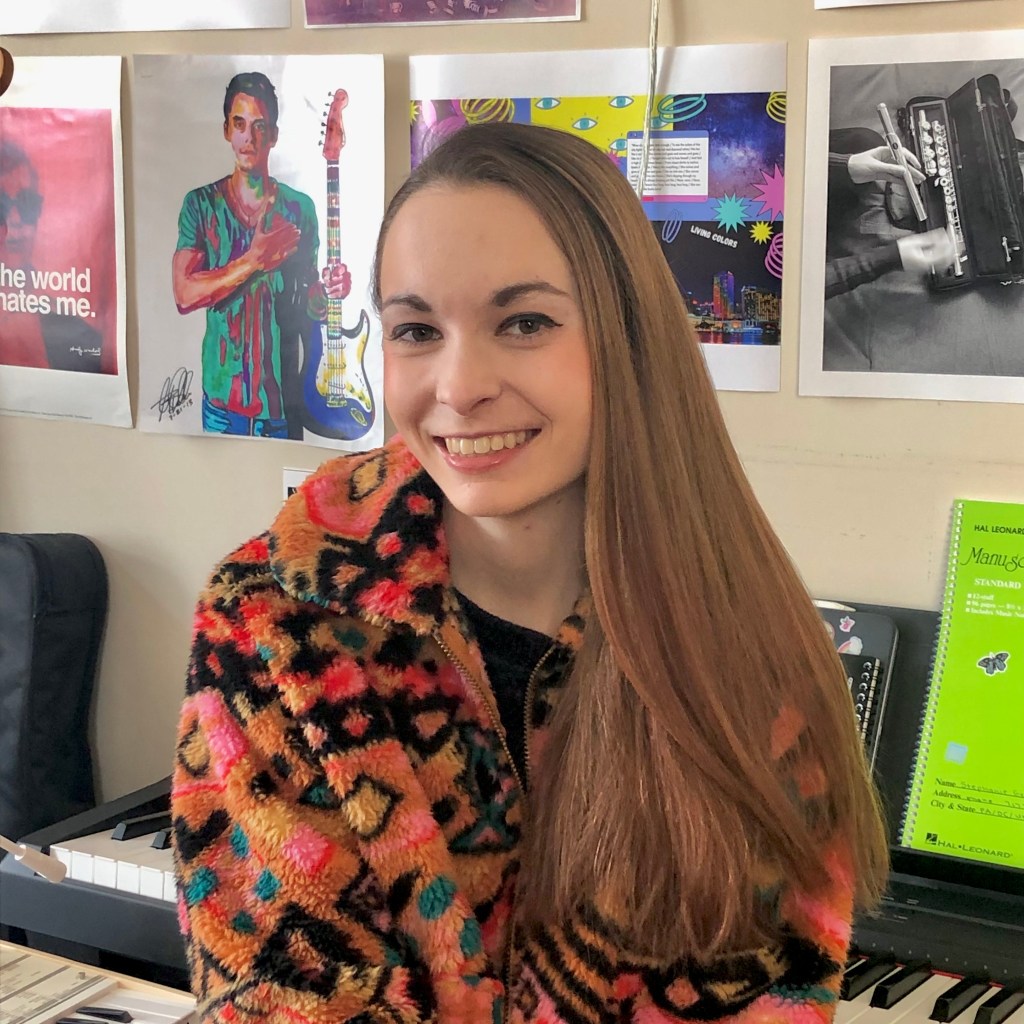
STEPHANIE GEMMELL is a writer and composer currently living in Pennsylvania. Her writing has been featured in Just Place Chapbook, Capitol Letters, The Ekphrastic Review, The Rival GW, and in the poetry anthology Falling Leaves published by Day Eight. She also attended the 2021 Glen Workshop as a poetry and songwriting fellow. She recently graduated summa cum laude from George Washington University with a BA in Religious Studies and minors in Journalism and Psychology. Her work is motivated by the unique power of art to ask meaningful questions and inspire authenticity.
 Inklette Magazine