Pride: A Reading Collection

Although the spirit of queer pride should last 365 days a year, today marks the last Friday of Pride month 2019. Here are the top picks of LGBTQ+ literature or works of literature written by LGBTQ+ writers to last you all until June 2020.

Links to buy books mentioned below through Amazon can be accessed by clicking on the titles.


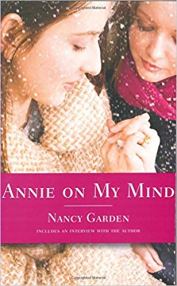
Annie on my Mind by Nancy Garden

5185EJRdm6L._SX306_BO1,204,203,200_

I found this book at a time when I was just beginning to come to terms with my queerness and it helped normalize being gay for me. While this love story between two girls takes place in the 1980s, the nuanced character development and intricacies of the love explored helped me realize that being all forms of love deserve to exist not solely defined by their political status.

– Joanna Cleary, Blog Editor

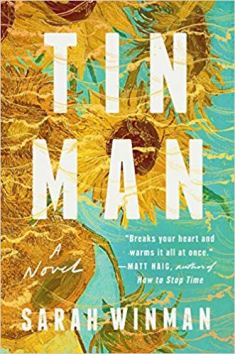
Tin Man by Sarah Winman

61hSwd-0SFL._SX329_BO1,204,203,200_

I read Tin Man on the recommendation of a friend, unaware of the storyline or the synopsis. The story I encountered was perhaps one of the most emotionally poignant ones I had read. Tin Man depicts love and sexuality beyond the cardboard boxes we put them in and touches upon art, friendship, and desire by freeing these from their socially gendered labels. It’s a warm, gradual narrative on sadness and nostalgia, and the transformative potential of love.

-Smriti Verma, Poetry Editor

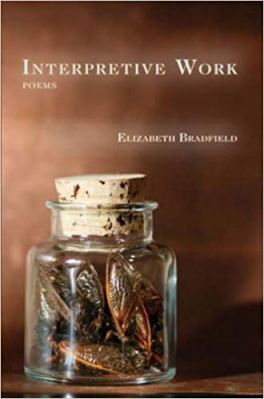
Interpretive Work by Elizabeth Bradfield

41EhCDN5g5L._SX328_BO1,204,203,200_

While the poems in this collection often deal with the conflicts of history, politics, culture, and family, hope and beauty win out for the view of the future. Her poems cross boundaries into the vulnerable to reveal how loving someone can help you love the world.It’s published by Artoi Books, which is an imprint of Red Hen Press (Arktoi Books publishes literary poetry by lesbian writers).

-Lisa Stice, Poetry Editor

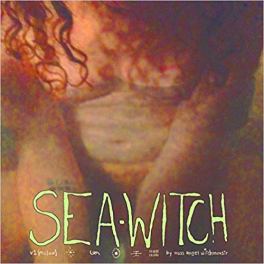
Sea-Witch: Vol. 1 (May She Lay Us Waste) by Never Angeline Nørth (formerly Moss Angel (formerly Sara June Woods))

51ir2n0bp5L._SY498_BO1,204,203,200_

I think Sea-Witch was revolutionary for me: a work centered around transsexuality, a genre-fluid/genre-defying and literature-altering book, Never Angeline Nørth’s book is about a girl monster, a witch-god, about their origin stories and journeys and narratives. I don’t know how to summarize this book but I do know that this book will change the way you look at and critique texts, and I believe it is a great introduction, both in terms of form and content (as much as I despise considering those as the two components of a text), to what the category of LGBTQ+ literature is and can be. Sea-Witch helped me come to terms with my still-developing notion of what my own sexuality is and what it means to me. The book sounds tumultuous but that is the beauty, that is its defiance, and that is what motivates me to make peace with my tumultuous sexuality.

-Devanshi Khetarpal, Editor-in-Chief

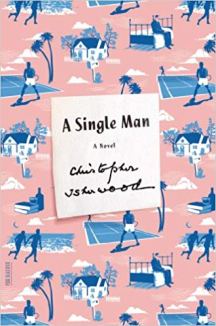
A Single Man by Christopher Isherwood

51ookXy1DJL._SX328_BO1,204,203,200_

Christopher Isherwood was one of the first queer authors I came across during my English studies, and his stories opened up new perspectives to regard the world I’d grown up in. In my private Isherwood collection, A Single Man still stands out most remarkably. An artistically crafted story about seclusion and otherness, it tells the tragic end of a curtained love in a homophobic society that grants no (public) closure for the bereaved. But more powerfully, Isherwood’s insight into a single day of a grieving man revealed to me the beauty of two men in love – physically and emotionally. Reading A Single Man, you’ll certainly be touched by the despair that travels from the first to the last page. But I also hope that you’ll be ignited – to make reality better.

– Stela Dujakovic, Prose Editor

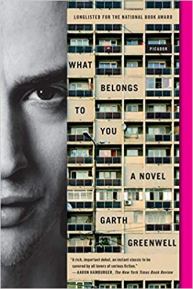
What Belongs to You by Garth Greenwell

51vJrvVkcZL._SX331_BO1,204,203,200_

Look Garth Greenwell up on Youtube and listen to him read aloud from his work before you read this novel. He was trained as poet before turning to prose, and his history shows in his work: every sentence has a rhythm that demands to be read aloud. That isn’t to say that the ideas of his work don’t matter, but auditory beauty is a nice way to ease yourself into the story that is ultimately devastating. The story follows an American professor teaching in Bulgaria, who pays a young man named Mitko for sex and comes back to him again and again. The driving question of the novel is whether Mitko really has a connection with the narrator, or if it’s all just loneliness making infatuation feel like love. I’m not gay, I’ve never been to Bulgaria, and the world of illicit sexuality described in the book is something I’ve never experienced. Which might have been part of why I liked it so much: much of the power of fiction is to show you what you’ve never known or seen. But even more powerful is the universality of the book. Wondering if your love is real or not is something that every romantically-inclined person has felt, no matter who you are or who you love.

– John S. Osler III, Prose Editor

To view staff bios and learn more about our staff, check out our Masthead page here.

The Met Gala & Our Notes on Camp


Notes by Maria Prudente

How do we apply language and meaning to an aesthetic? Can we be precise? Susan Sontag attempts precision in 58 paragraphs by listing in detail the sensibility of “camp” for those who are unaware. “The essence of camp” she begins, “is the love of the unnatural: of artifice and exaggeration.”

I’d read Sontag’s essay last summer and by the end of it felt I’d need to remember all of it. Highlight number 5 and number 6 oh and number 7, too. Read up on Henry James and Oscar Wilde for good measure. What does Greta Garbo look like again? Oh, I love this word epicene- so precise! Sontag grasped an idea I understood very well but couldn’t explain myself. Camp is better seen and felt. How did Sontag manage to describe taste, style, and convention while simultaneously debunking all three and making it clear and knowable? My answer is research! If you’re thinking this a quick read on some idle Tuesday night, behold, open your google browser and cancel your morning workout.

The 2019 Met Gala gave people who’d never read Sontag’s work or given thought to taste as a sensibility: good and downright awful, nothing in between. On Monday night I feverishly hashtagged metgala and received minute-to-minute updates (yes, this was during finals) of the looks from the evening. On the red carpet, most celebrities shrugged and gritted their teeth when asked of their thoughts on the night’s theme. For me, Kim Kardashian was the complete embodiment of camp as an aesthetic. Kardashian represents a feeling in our country- she doesn’t have any extraordinary talents in the entertainment industry, but she has a famous lineage which has made her popular. Popularity is an aesthetic in the United States. Her choice to work with Thierry Mugler of House of Mugler was a smart choice- Kardashian clearly understood the aesthetic because she is aesthetic. Inspired by Sophia Loren drenched in water in the film Boy On A Dolphin, Kardashian arrived dripped in wet in diamond with a tan that matched her dress. She was a walking photograph- a walking sensibility- Kim Kardashian wearing Mugler was “camp.”

The exhibition takes you from 17th-century fashion to modern day. If only Sontag were alive today I wonder if she would add or cross-off anything to her precise list of “camp” and it’s imprecision. One line I keep with me because it’s easy to remember: “the ultimate camp statement: it’s good because it’s awful…Of course, one can’t always say that.”


Notes by Devanshi Khetarpal

It was my last day in New York before I went home for the summer. I wondered if I had the time, in between packing or resting and going to my favorite diner, to go to the Met and visit the exhibit on “Camp,” the theme for this year’s Met Gala. I wasn’t sure if fashion, or couture, specifically, is something I understand, something I “get.” Thankfully, “Notes on Camp” by Susan Sontag was #trending, and inevitably came to my attention the day after the Met Gala. I read it thoroughly, and enjoyed every bit of it just as I have always enjoyed Sontag’s writing, and thought that maybe this time, after I visit an exhibit on Islamic and Pahari art that interested me, I might as well go to the gallery and have a look at dresses, jewelry, whatever they may have there. I had no idea what to expect, what the displays would be like. Should I be using “Camp” as an adjective at all? Is it one? These are just some of the questions that passed my mind.

I finally made the decision to go to the exhibit and thought I’d just skim through everything I needed to see in order to understand. I didn’t have too many questions, I didn’t want too many answers. But as soon as I saw the pink wall (…“is this millennial pink?” I asked myself) with “CAMP” written on it, I was taken aback by surprise because the first thing I noticed was the abundance of text. Old books and manuscripts were kept open behind the glass, sometimes next to shoes or dresses or miniature sculptures that looked like paperweights, the kind no one uses now. As I kept making my way through the exhibit, I saw familiar names: William Shakespeare, Oscar Wilde, Christopher Isherwood, Susan Sontag, among others. I saw brand names, too, of course: Gucci, Louis Vutton, fashion houses I have not heard of and whose names I cannot pronounce but whose clothes, I am certain, are beyond what I can ever imagine affording. I realise that fashion is everything I love and loathe, perhaps like writing in some ways.

But the textuality of the exhibit was unexpected. I didn’t expect to see the world of fashion, the fashion industry, take such an initiative to reflect on its language, the history of its language and to use it as a method to innovate, create, critique, expand. I have been obsessed with the sartorial choices of my favorite writers. I think of Tishani Doshi in Georgia Hardinge’s “sculptural dresses,” I often think of Arundhati Roy draping a saree with her deliciously curly, short hair. I have always wanted to steal their wardrobes; when I was growing up, I wanted to dress up as a writer, like the people I have seen at literary festivals across the country: unapologetically Indian, apparently comfortable, truly colorful and invariably and individually stylish. I had no clue how they did it and through the years, I have been trying to develop my own “sensibility” rather than style. I put myself together deliberately, slowly, cautiously before any poetry reading or public lecture. And even though I am not too well acquainted with the artifice, extravagance and how they must be effectively constructed, or amalgamated into one’s identity, donned as one’s outfit, I do know that camp is a different kind of textuality and intertextuality, one that’s atmospheric too.

I realized this as I walked through the exhibit: the text was pasted onto the glass and the specimens were behind the text. The text became the foreground and retained its textuality, while the specimens became not just evidence of the text but also became the subtext, the background, even in the event of the text merely describing the specimen. This three-dimensional presentation is something intriguing. Was I supposed to treat the text as something that brings out the real of the specimen? Am I supposed to treat the text rather than the specimen as the interface of the textual and the embodied, the real, the exhibited? Or am I supposed to treat the text as hyper-real, something with the capability to break free from the specimen and emerge embodied? I might never know. But while I saw Sontag’s notes on Camp (note the capital ‘C’), I recalled the phrases I had been seeing: “akimbo pose,” “queer attitudes,” “camp it up.” Every piece certainly was different but what appealed to me most was the necessity of the text. The text, the writer of the text was on top of the whole and Sontag’s text appeared atop the semicircle of glass displays, each letter being typed away, fading into each other as the line extended with the soft sound of a typewriter emerging. That, for me, was camp: the crowd, the abundance of text, the many glass displays, the specimens, the color, the sound, the bright light shining on each one, making them stars in the show.


To plan your visit or find out more about the ongoing exhibition at the Metropolitan Museum of Art in New York, visit their website by clicking here


155113583331125364MARIA PRUDENTE has written about feminist ethics for Manifest-Station and is featured in Grey Wolfe Publishing’s upcoming anthology of nonfiction short stories. Maria is a professional stage and film actress. She received her training from the Lee Strasberg Theatre & Film Institute and graduated from the American Musical & Dramatic Academy with a concentration in Musical Theatre performance. Maria is the Content Editor at CountrySkyline, LLC and proud member of Actor’s Equity Association. She lives in NYC where she studies Creative Writing at Columbia University.

155993350752344725

DEVANSHI KHETARPAL is from Bhopal, India, but currently lives in New York City, where she is a junior at  NYU majoring in Comparative Literature with a minor in Creative Writing. Her poetry collection, Small Talk, is coming out soon from Writers Workshop India, Kolkata, and her poems have been published or are forthcoming in Sahitya Akademi’s Indian LiteratureBest Indian Poetry 2018, Transom, Aainanagar, Vayavya, TRACK//FOUR etc. among others. She is a recipient of the 2018 David J. Travis Undergraduate Research Fund for research on modern Italy, and has studied abroad at NYU Florence and NYU Paris. She has served as an intern at Poets House, and currently works as an application manager for The Speakeasy Project, a poetry reader for Muzzle Magazine, and as a student office assistant for the NYU Department of Comparative Literature. Khetarpal can speak, read, write and translate from or to Hindi, English and Italian, and will start learning Punjabi soon.

Interview with Mihir Vatsa

Our Blog Editors interviewed Mihir Vatsa, an Indian poet and the editor of Vayavya, for this week’s blog. In this interview, we ask him about the practice of writing and the habits that pertain to it in some way or another. We also ask Mihir about not only staying committed to writing, but also staying committed to writing about Hazaribagh.


Blog Editors: Ernest Hemingway wrote first thing in the morning. Maya Angelou reserved hotel rooms just to write. Stephen King forced himself to write six pages every day. Susan Sontag instructed people when not to call. Have you developed any specific methods for writing?

Mihir Vatsa: I wish I could reserve hotel rooms to write. Someday, perhaps, I will. I usually write at night– the darkness sorts relevance from distraction. When I am writing to meet a deadline, I set a target. With prose, it is thousand words. Poetry is more malleable that way– just three lines could be a poem too, as long as they are good three lines. I am more relaxed with poetry, less so with prose. The latter demands some discipline, I have learned recently.  

BE: Do you journal? And how well do you work with or meet deadlines?

MV: Unfortunately, no, I don’t maintain a journal. I do have some romantic affinity towards the process though, and I like to hear stories that involve journal writing. I have tried it before, but have stopped midway. Trivial things begin to annoy me– is the notebook cover journalish enough, what if I wrote something and someone read it, if I am doing it on my PC then what should be the password, do I really want it personal or do I secretly want it read? I think of these clearly pressing thoughts and defer it.

I think I can work with deadlines, though I procrastinate a lot. So if the deadline is tomorrow, I would get working today, not sleeping, not eating, a bit possessed. It’s not a healthy practice for a writer, but then writers are not really known for their exemplary health.

BE:Do you outline ideas before or do you let the form teach you what kind of story you are writing?

MV: I do outline, but mostly in mind. I prefer having some ideas, some thoughts about what I should write once I start the computer. Often a poem is left hanging for a few days: one stanza emerges, then there is the wait, then another line comes up. When I am not writing, I am working with collages– cut here, paste there. When I think I have enough to go with, I start typing. With longer poems, I take it slow, filling in the blanks first, then tying the content up as the form suggests. With prose, and especially essays, I have found that it’s helpful to have some pointers beforehand, a road map, on how to progress from one thought to the other without jarring the flow.  

BE: What do you do when you become stuck while writing?

MV: If the deadline is far, I give in to the block. I switch to Netflix or Youtube, or take up a book which I had been meaning to read. You can only watch something for so long. When saturation hits, writing becomes a needed retreat. Sometimes I get stuck because I don’t want to put an idea into a form that I have already done before. Then, reading helps. I go to the internet and read whatever poetry I can find, preferably by poets who are alive. That way, I get to see what other poets in the world are doing, how they are managing language, how they are working with form, and so on. The last time I got stuck, the deadline was close. So I ordered a book and told myself not to touch it before I finished writing. It kind of worked.

BE: How do you stay committed to Hazaribagh? Is there a different lens or observation you require in order to practice the writing of something so close when you want it to reach far?

MV: This is a really good question, actually. My upcoming book A Highland in the East (Speaking Tiger Books 2019) is a memoir about living and travelling in the Hazaribagh plateau, and though I had a great time writing it, I was also often conflicted about my loyalty to Hazaribagh. I am not talking about the town per se– Hazaribagh is like any other small Indian town. It has its half-finished buildings with exposed brickwork, it has its temples and mosques and narrow streets. Somehow these things haven’t appealed to me yet. I am more attached to Hazaribagh’s landscape. Therefore, the hills, the trees, the rivers, etc are my points of affect. I remember, this one time, my friend Raza Kazmi and I were staying for a few days at Palamu Tiger Reserve in Latehar. The place is about a six-hour drive from Hazaribagh. There, I was surrounded by taller hills, denser forests, reliable waterfalls, and it made me sad. What if I outgrow Hazaribagh? “You can be committed to Hazaribagh and still enjoy Palamu,” Raza said something along this line, and though I understood him, I was still uncertain. What I fear is that one day there will be nothing wonderful about Hazaribagh for me. No waterfall will excite me. Been there, done that– that kind of boredom, you know, and so I try to modify perspectives. There is a lot in Hazaribagh, things that I still don’t know, so maybe one day I will enjoy the roads, or the history, or engage with the place in a more direct, participatory way. At the moment, I am gripped by the plateau; later, it might be some other aspect of the town.

Perception is universal– the way I perceive Hazaribagh may be similar or different to people who perceive other places, but the act is not uniquely mine. As writers, we work in and with shared cultures, so I think while Hazaribagh may be a little-known, “niche” place to write about, the things I feel when I am in Hazaribagh do resonate with people outside. When I post a photo of a hill range and see the reactions on it, I know I am doing something right. I try to understand the relevance of Hazaribagh for other people, and this is a conjecture at best, but I think that in Hazaribagh, I work through a dual-gaze. I am both an insider and the outsider, insider to the town, outsider to the plateau. When I look for information on, say, how the lake came about, or how the hill was fashioned earlier to appear the way it does now, I am being a hopeless local historian; on the other hand, when I venture into the forest, trailing a stream and not knowing where it would take me, I feel more like a tourist. Perhaps this duality works, though I am not sure yet.

BE: Do you think your editorial practice, or editorial ethics, have impacted your practice as a writer?

MV: Maybe? I don’t really know. Earlier I used to get irritated at the long wait to get a response, but as someone who has also been on the other side of things, I realise now that such delays happen, especially if you are working as a small, un- or underpaid team. One thing that I loved doing as an editor was to really edit– and not just select– a poem for publication, you know, the old-fashioned way. I would chance upon a poem which was almost ready, except that it didn’t work in some parts and patches. Whenever it was the case, I offered detailed feedback, putting the ball in the poet’s court. Here is what I think. If you agree, we can go ahead with the publication. With my own writing too, I am not averse to feedback or revision. I appreciate it if someone devotes a chunk of their time to offer comments on my work. This is something that I cherish with respect to writing, mine or someone else’s.


155727205559673739MIHIR VATSA is the author of the poetry collections Painting That Red Circle White (Authors Press 2014) and Wingman (Aainanagar & Vayavya 2017). A former Charles Wallace Fellow of Writing at University of Stirling, UK, Mihir is the winner of Srinivas Rayaprol Poetry Prize and a Toto Funds the Arts Award in Writing. Mihir lives in the plateau-town of Hazaribagh, India, where he works across the disciplines of literature, writing and human geography.

On Shakespeare’s 455th Birthday

BY JOANNA CLEARY AND MARIA PRUDENTE

Joanna Cleary: I’m so excited that we’ve agreed to have a conversation on the best-known playwright in the history of English literature– William Shakespeare — in honour of his birthday. As an English and Theatre major, it probably comes as no great shock to hear that I love his plays and sonnets. However, it might come a surprise to find out that I didn’t consider myself a fan of his work until I saw it performed in the theatre. My first exposure to Shakespeare came when my ninth grade English Literature class studied Romeo and Juliet. While I loved the rich images Shakespeare created, I struggled with the unfamiliar language and often grew frustrated because I read the script much more slowly than I read contemporary works. When my class when to see a live performance of Romeo and Juliet, however, I found myself absolutely immersed in the world being created in front of me. I grew to deeply appreciate Shakespeare as one who not only writes about the human condition but does so in a way that allows everything he focuses on – from emotional character development to philosophical questions – to take on an ephemeral life of itself. Now over to you – when did you first learn about Shakespeare?

Maria Prudente: Romeo and Juliet was my first experience too. My first monologue class was a Shakespeare workshop. I began, “But soft, what light through yonder window breaks” and I remember the creative director of the theatre looking utterly confused. In retrospect, I love that at twelve I didn’t bother to gender the monologue, but in actuality, I just liked it best. I thought it was elegant and beautiful, I didn’t care that a man said it. In my freshman year of high school, I was cast as Rosaline for our production of R&J. I was gutted. I had no lines though I got to wear a special floral head-piece. For a character who never speaks, it was easy to create an interpretation of her because Shakespeare offers us information on “fair Rosaline” through other characters: Romeo, Mercutio, and Benvolio. I am not surprised to hear that you became a fan after seeing his work in the theatre. I support the notion that Shakespeare should be seen, not just read. In terms of writing, what I’ve always liked about Shakespeare is that there is no subtext; the language does the work for you and that, in essence, is the brilliance of Shakespeare’s writing. There is a vast legacy of work to choose from — what is your favorite Shakespearean sonnet or play?

JC: I know it’s a bit of a cliché to cite this as my favourite Shakespearean text, but I love Romeo and Juliet. While it’s often dismissed as overly dramatic and unrealistic, I strongly believe that the dramatic tension and spectacular plotline is precisely what captures the feeling of newfound love in the play. My favourite line of the first act is when Romeo first sees Juliet and declares “[o], she doth teach the torches to burn bright” (Act 1.5.42) — the statement is so simple, but also so profound and bursting with emotion. I completely support the contemporary social emphasis on people knowing how to be independent, I also think that love — platonic love, romantic love, and everything in between — has an important place in the human condition and deserves to be recognized in poetic expressions such as this. Speaking of how Shakespeare relates to the modern world, what do you think are the best contemporary adaptations of his work?

MP: I agree with you that the universal themes of love are why Romeo & Juliet is so captivating. We understand it as kids because they, too, are impulsive, impassioned kids and we nostalgically, sympathetically relate as adults. For me, I measure the best contemporary adaptations of his work by what is most relatable. Whether we are consciously aware or not, what we connect to when we watch The Lion King is what we connect to in Hamlet, and, what we connect to when we watch My Own Private Idaho (a classic Gus Van Zant film) is what we connect to in Henry IV. My favorite is Ten Things I Hate About You as a modern adaptation of The Taming of the Shrew. At theatre conservatory, I was selected to perform Kate’s monologue for several hours over several days for prospective students and I resented the fact that Kate wasn’t more like her modern adaptation in 10 Things I Hate About You. In the movie, we see Kat as a feminist figure, and in Shrew, Shakespeare characterizes Katherine as a fiery female turned anti-feminine, submissive wife. Would Kat have said to Patrick, “Humble your pride, then, since it’s useless, and place your hand beneath your husband’s foot? As a gesture of my loyalty, my hand is ready if he cares to use it”? I don’t think so. That’s why I think modern adaptations are important because they spark a bigger conversation. Was Shakespeare commenting on misogyny and feminity in Taming of the Shrew? Do we believe this was his point of view? Did 10 Things I Hate About You try to deconstruct gender and female oppression and correct the characterization of Katherine through Kat? Shakespeare is still challenging us in the 21st century. Aside from comparing modern adaptations, what do you suggest people do if they want to understand and enjoy Shakespeare’s work?

JC: I definitely agree that contemporary adaptations of Shakespeare’s work often help make the material more relatable to people who aren’t familiar with the language or the era in which he was writing. However, I also think that people should also experience performances of his original scripts in order to fully appreciate the nuanced worlds Shakespeare creates through his language; after all, he’s known for being a poet just as much as he is for being a playwright. If there are no performances of Shakespeare’s work playing, I’d recommend listening to his work via audiobook to hear his words being said aloud, which is how they are intended to be heard. I had to listen to an audiobook recording of Othello when I studied the play in my Gr. 10 English Literature class. Initially, I hated that audiobook because it moved too fast for me to keep up, as I wanted to stop every time I came across a word I didn’t understand (which was often) and look it up. However, I gradually came to understand that it didn’t matter if I didn’t understand every word because hearing the play aloud helped me more deeply emotionally connect to the world being created before me. Anyways, going back to your acting background, what Shakespeare character (regardless of sex or gender) have you always wanted to play?

MP: I’m jealous of those boys playing Hamlet. There’s even a play by William Missouri Downs called, Women Playing Hamlet where a woman cast as Hamlet has a massive existential crisis during the whole process. Because Hamlet is so consumed by his masculinity (or lack thereof), it would be fun and challenging maybe to regender him; to flip his questioning his bravery “am I coward?” and the insult of “unmanly grief” on its head. What role would you like to play?

JC: I’ve always wanted to play one of the three witches in Macbeth. Like all delightfully grotesque characters, I think it takes skill to not overdo their persona or characterize them in a predictable way that’s been already been done. Personally, I’m interested in looking at the witches as characters who raise questions on class and status in the play – what does it mean for Macbeth, a member of the upper class, to talk with witches and, later in the play, go as far as to seek them out? What does that say about class corruption? And, if one looks at the witches as symbols of femininity, what do they say about gender roles and dynamics? What does it mean for them to, in a way, seduce Macbeth? I would love to take on a role rich with the potential to explore topics such as these. I also greatly enjoy ensemble work and would relish the opportunity to work with two other actors playing my fellow witches, as it has been my experience that a show is strongest when members of the cast are united. Moving onto Shakespeare himself, however, what’s one question that you’d ask him if you two were somehow able to have a conversation?

MP: I think I would ask how much politics during the Elizabethan era influence him. I think his work verges on the political by way of his characters and it would be interesting if there were specific issues that felt so pressing he needed to write about them. We are living at a time of extreme political polarization so I would be interested to know what he would write about today.  What would you ask?

JC: Hmm, interestingly, I don’t know if I would ask him anything. I thought I’d have lots of questions ready in response to you, but nothing seems to be coming to mind. I think perhaps I don’t want Shakespeare himself to influence my perception of his work, as so many insightful and creative relationships between us and him have been built precisely because of the fact that there are huge gaps in our knowledge of his life. That said, I think today is a wonderful opportunity to spend some time pondering the many mysteries of William Shakespeare and re-read some of his poetry, be it his sonnets or his plays. And now over to you, dear readers – we hope that you too can spend some time reading Shakespeare on his 455th birthday!


149460297287447

JOANNA CLEARY is an undergraduate student double majoring in English Literature and Theatre and Performance at the University of Waterloo. Her work has previously appeared or is forthcoming in The /tƐmz/ Review, The Hunger, Pulp Poets Press, Every Pigeon, Glass: A Journal of Poetry, and Subterranean Blue Poetry, among others.

155113583331125364MARIA PRUDENTE has written about feminist ethics for Manifest-Station and is featured in Grey Wolfe Publishing’s upcoming anthology of nonfiction short stories. Maria is a professional stage and film actress. She received her training from the Lee Strasberg Theatre & Film Institute and graduated from the American Musical & Dramatic Academy with a concentration in Musical Theatre performance. Maria is the Content Editor at CountrySkyline, LLC and proud member of Actor’s Equity Association. She lives in NYC where she studies Creative Writing at Columbia University.

Conversation between Joanna Cleary and Maria Prudente

Blog editors, Joanna Cleary and Maria Prudente, talk about their writing lives and its challenges, writers who inspire them, the importance of an artistic community, and, of course, blogging and their plans for the Inklette blog!


Maria Prudente: Hi, Joanna. I’m going to start us off here and begin with sharing a little about me. I grew up in the suburbs of a tiny university town in Charlottesville, Virginia, where I tacked up pictures of New York City behind my bed. I always knew I wanted to be an actress, so I moved a few weeks after I graduated high school to begin my conservatory program in musical theatre. It was super intense. I barely remember eating, sleeping or talking to people, really, but it helped me get started on my career at 19 and, I never looked back. When I was younger I made everything so romantic and that included how I viewed my life as a performer but being an actor is tough. Your dreams build and break within an instant. A couple of years ago, I found myself emotionally and creatively depleted. I wanted to create myself all over again. My brain was hungry and I longed to fulfill the academic in me. Now, I’m at Columbia in my second year studying Creative Writing. Before I go more into detail on that, I want to know about you and your life at the University of Waterloo where you are studying English and Theatre, correct?

Joanna Cleary: Correct! I grew up in Toronto, Ontario (that’s in Canada, eh) and, much like you always knew you wanted to act, I somehow always knew that I wanted to write. Even though I didn’t start to write creatively until I was a teenager, my childhood was consumed with books and visits to the library. I found there was a specific sense of peace within the worlds that the written word created, one which I couldn’t always find in real life. Because I spent multiple periods in my childhood struggling with anxiety, retreating to these worlds offered me a break from my own problems. I found that reading, and later, writing, helped me understand myself and the world around me more deeply. As I began to branch out into writing plays as well as poetry and the occasional rambling short story, I realized I want to create worlds that do for other people what the written word did for me growing up; I want to help people escape, reflect on who they are, and find the strength to return to reality more prepared to cope with it. This brings me to a question I have for you, Maria – how did you first get into writing?  

MP: I started writing as a kid. It offered me a sense of relief. You mentioned struggling with anxiety which I can completely identify with and it all began in my childhood. Growing up I could put on this face of being very normal and, you know, playing flashlight tag with the other kids in the neighborhood, but, I also felt like an outsider. I was the only kid with a single parent who also happened to be sick. I spent an unusual amount of time worrying. I was alone a lot. We didn’t have as much money as the other families. When you are a kid, your imagination is what keeps you company but, I found that writing was a more immediate way to express myself. I could create the worlds of other people and writing allowed me to consistently return to those worlds.

JC: I completely agree that your imagination keeps you company when you’re a child, but, especially as you grow up, writing can offer a more direct way to create the worlds you want to make real. Having always been an introvert, I also felt like a bit of an outsider many times during my childhood. I often felt as though there was something about other people that I didn’t quite understand, or that I was afraid of. Reading and writing helped me cope with this, as I didn’t need the people in books to understand me; I was happy just to co-exist in their worlds. Growing up, I often became extremely irritated when watching book-to-movie adaptations that didn’t create the exact world I had imagined for the book in question (which was most of the time, if not always). However, as I continued to grow older (and realized that I may have a slightly obsessive need for control), I realized that subjectivity is one of the most empowering aspects of art. Nobody can ever completely control how another person writes, as we all have unique writing styles, as well as writing ideas, that can’t ever be truly micromanaged by others. With this in mind, I began to delve into writing as a form of emotional expression that created the worlds I knew I imagined and nobody else did, at least not in the same way. Do you find writing to be an immediate form of expression for you as well?

MP: Absolutely. Today, it’s still a great relief to put a word to a feeling. The writing program at Columbia has challenged me in such a wonderful way. It’s humbling to sit in a workshop and listen to people read your work aloud without you, the writer, being able to explain it or justify your choices. I admit I am hypersensitive. I have all but cried when a piece gets gutted because one tiny moment in the story doesn’t click with them. I try not to sit and self-loathe. I’m getting better but some days can be harder than others. I do care a lot but I try to pick what’s necessary to think about for revision and what isn’t. I try to stay focused on improving content and less on perceptions of my work over all. Some things will resonate deeply with people and some things won’t. How do you deal with workshops and critiques of your work? How do you move forward?

JC: I can be extremely sensitive to feedback if I feel that my work is misinterpreted. For instance, if I write a piece that specifically intends to play with the conventions of typical narrative structure and people spend all their time talking about how they don’t understand the lack of a proper beginning/middle/end, I’ll struggle not to dismiss feedback as having missed the entire point of what I was trying to do. My childhood desire for control clearly has not diminished in the slightest. However, the creative writing and play development workshops I’ve participated in throughout my university education have taught me that everyone has something useful to say, even if I may not agree with it. For instance, comments made by people talking about the lack of a conventional narrative arc in a piece without a clearly defined beginning/middle/end may help me understand that I need to be clearer about my aesthetic intentions. As a creative writing professor once told me, we’re usually the most defensive about criticism we know is true. Hence, I always try to keep an open mind when listening to feedback, even if my gut reaction is to shut down. If I succeed, I often find that people offering feedback can help me as much as my initial sources of writing inspiration. Speaking of which, can you speak to which writers influence you?

MP:  When I was eleven, I stole “The Virgin Suicides” by Jeffrey Eugenides from my brother’s bookshelf and read it over and over. I became obsessed with that story the same way the boys in the book grow obsessed with the Lisbon sisters. I read the
“The Marriage Plot” on a trip to London and had to stop reading because I was irritated I hadn’t written it myself. I like the darkness to Eugenides’ work. I’m a massive fan of playwrights. After getting the chance to put their work into action, it’s hard not to feel creatively committed to them. From Shaw, Strindberg, and Chekhov to John Osborne, Ariel Dorfman, Mamet, Rabe, LaBute. I think Leslie Jamison should be required reading for nonfiction writers on how to master work that combines the personal with research. My list keeps growing as I keep learning. Who are you favorite writers?

JC: I love e.e. cummings, Toni Morrison, Margaret Atwood, Lucille Clifton, Sarah Kay, Lauren Groff, and Hanya Yanagihara (in no particular order). One of my favourite hobbies, however, is picking up a writing collection or visiting an online magazine, going to a random page, and reading what’s on there. I love discovering new artists as much as I love revisiting familiar ones. Becoming suddenly acquainted with the unique style of a contemporary artist I have never heard of before often inspires me to continue writing when I feel stuck. It’s important to remember what makes you want to write and what you want to write for. I often find simply being exposed to the sheer desire to write and the energy that the written word can have compels me to write for those moments and emotions in my own life that can’t be expressed in any other way. What about you – what you you write for/against? What compels you to write?

MP: I do feel this urgency to write about what repulses me. I had a professor encourage this notion to our small group of maybe six writers last summer. It’s tougher in non-fiction. In that particular class, I started writing about being a hypochondriac and having contamination OCD. I’d had some distance from it so I understood that I could imbue some humor into it because on some level it is funny. It also feels deeply selfish. I was a nervous wreck to share that with my class but they encouraged me to go even further. That same summer I had this assignment that I didn’t like. We had to do an art review and I was having a tough time picking one piece so, I ended up writing this ultra-cynical meta-critique on several paintings and simulations. It ended up being this dark-humor commentary on corporatized art in Chelsea. I had clearly made a mistake choosing Chelsea Galleries and yet it worked! I would say that I am like most non-fiction writers: I write to understand. I have to ask because we are co-editors for Inklette, do you have any prior experience writing blogs?

JC: Almost none! Aside from a writing a few Inklette blog posts over the past few years, blogging is a new medium for me. This is why, after having been a poetry reader/dditor ever since I joined Inklette, I wanted to try and form of writing with which I have less experience. I’ve always been interested in creative nonfiction and I love reading blogs because they are often intimately related with the idea of knowing writers as people. I believe that is essential to the empathetic interpersonal bonds that writing creates. However, I know that you have a blog because I’ve shamelessly stalked you on it. Tell me more about your blogging experience!    

MP: Oh gosh! Sometimes I forget that it’s out there and I suddenly feel naked. I didn’t know you posted for Inklette before, that’s so cool! My blog, Pink Moon, is a year old. It is a mixture of the political and the poetic. It’s not meant to be polished, it’s messy and honest. I insert my voice in the kinds of work I post there but, for Inklette, I think the work should primarily be about telling the stories of others and exploring shared conversations. Supporting other writers, learning about them and reading what they have to say is so important for our growth as writers.

JC: I agree – community is essential to the life of writing, which is why I’m thrilled to be working on the Inklette blog with you. As for everyone reading, we hope that you’ll stick around for more messiness, opinions, art, and random tidbits coming your way.

MP: Agreed! Stay tuned!


149460297287447JOANNA CLEARY is an undergraduate student double majoring in English Literature and Theatre and Performance at the University of Waterloo. Her work has previously appeared or is forthcoming in The /tƐmz/ Review, The Hunger, Pulp Poets Press, Every Pigeon, Glass: A Journal of Poetry, and Subterranean Blue Poetry, among others.


155113583331125364

MARIA PRUDENTE has written about feminist ethics for Manifest-Station and is featured in Grey Wolfe Publishing’s upcoming anthology of nonfiction short stories. Maria is a professional stage and film actress. She received her training from the Lee Strasberg Theatre & Film Institute and graduated from the American Musical & Dramatic Academy with a concentration in Musical Theatre performance. Maria is the Content Editor at CountrySkyline, LLC and proud member of Actor’s Equity Association. She lives in NYC where she studies Creative Writing at Columbia University.


826 LA

Inklette’s blog shall be featuring organisations, groups and individuals from all across the world that work to promote creativity among children and underrepresented communities. 

We would like to thank 826LA for being a part of this initiative. Special thanks to Art and Photography Editor, William Higgins. 


From the Crazy World Down Here                      

Deisy Garcia


Dear grandma,


I miss you a lot and I wish we could be together right now. People from el rancho would tell my family, “Oh! She looks just like her grandma!” And I only saw you when I was eleven months old, basically a baby. I don’t have many memories of you.

I have a short, faint memory of you, grandpa, and your son—my dad—when I was running around in the summer where there were crops and dirt. You were all running around, you were giggling and laughing, and so was I. But I still love you a lot. Cancer dragged you out of this world and God knows why. And a couple of months later my dearly loved grandpa took flight and went to the wonderful paradise with you. I just miss you a lot, and I hope to see you one day and be with you forever and ever, and laugh and play with you and grandpa.

I wish that we were together, with grandpa too, and never ever be separated.


From the crazy world down here,                                   

Deisy ❤


Just One Day

Samuel Luis


All I know is that I used to be a nice kid that would do his work and was focused on his future. With time, that vision I had about myself faded away. Now it seems like I don’t care, but really, inside me I feel bad about myself. When I try to refocus and try to get back on track, it seems like it runs away from me and I go back to not caring. The teachers’ words come through one ear and come out from the other. My mom tries to talk to me but sometimes I just don’t know what’s wrong with me. I don’t know what it is. I want to get back on that track of success. I argue with my mom a lot now and I feel bad for my mom because she has to deal with me. I feel sad and worried about my mom’s health, she works hard to support us since my dad left to Mexico, not caring about us. That’s why I just wish  I could go back in time and try to change stuff I did. Change something. Change what I did wrong. At least just change one little small thing that would change my future, my present, my past, change something in time. Then I think about it, maybe this is how my life is supposed to be. Maybe God decided to make my life take this path. On times when I’m sad I tend to believe maybe God doesn’t exist, maybe he is just fake. I have asked myself that question and can’t come to the conclusion of whether he exists or not. Why does my life have to be like this? Did I choose for my life to be like this? Maybe I’m looking at my life from the wrong perspective, maybe I need to think deeper. Just maybe I need to think better about my life. All I know is that I will one day change and will get back on that track of success that I seek, and will become that kid that I once was. Not the same but similar. Just one day I will seek what I’m seeking: peace between my thoughts and my feelings. Just one day all the arguing with my mom will stop and there will be peace. Just one day I will have peace. Just one day.


Blue Nail Polish

Nadia Villegas


Blue nail polish has a big meaning for me

To others it is just a color

To others it is just nail polish

Blue is my favorite color

After all, blue is the most popular color in the world

Yet that is not why I like blue nail polish

I believe that blue nail polish transcends gender and sexuality

I am surrounded by people wearing blue nail polish, whether they are a boy or girl


This is amazing because blue nail polish allows you to express yourself

No matter who you are


Yet there are ignorant people that think it’s not right for men to wear blue nail polish

How can such a small little jar of the color blue bring such discrimination?

There is no law or rule anywhere that says men can’t wear blue nail polish

Yet people find it a problem

Why do stupid people start opening their big mouths by calling them gay?

Blue nail polish is freedom

Blue nail polish is expression

Blue nail polish is defiance

Blue nail polish is ignoring what other people think and staying true to yourself


Who Is “Pretty”?

Michael Rodriguez


To be “Pretty” takes responsibility,

Cute is Ugly’s best friend,

But Is Ugly really a thing?

You can not call another “Ugly” if you

Can not look at yourself as “Pretty”

Pretty is Perfection,

The real you, it is the best version of you.

Pretty is Reflection,

Reflection on any major events that make you unique.

Pretty is Effort,

The more effort you put to think you are “pretty.”


Pretty is Thoughtful,

Thinking of others can affect you more than another.

Pretty is Time,

It takes time to call yourself reliable.

Pretty is Youthful,

Unite with any generation showing purity and youth.


It Has No Meaning

Daniela Martinez


Have you ever had someone tell you, “You’re ugly!’’ or, “You are NOT pretty!’’?

Lies, LIES!!!


I mean no one, NO ONE, was born good looking or perfect.

“Pretty,” that word can make you feel better or sometimes worse. To me, the word “Pretty” really doesn’t mean a lot.

All the time, ALL THE TIME, I used to get bullied, and all because of that word.

People tell me that I am ugly, that no one will ever go out with me. I mean, some girls say, “Who needs guys anyways?!’’ I totally agree. Dating can wait.

But times change and people change. Time changes when you don’t expect it and people change when they hurt you verbally or physically.


I was too scared to go to school because I knew that once I stepped into class, I was going to get bullied. I always heard that they called me names behind my back. When I was at school the only thing I could think about was getting home. By the time I got home, I cried like a baby. And ‘til this day I feel that I am dead on the inside. Thanks to those people, I am shy around people, I am not social, and I am quiet. People that know me don’t know that. Now they know. I am just dead on the inside.


I can love my family and friends, but the people that hurt me—NOT EVEN ONE BIT!!! Every time I see them I feel like I want to torture them for every moment they made me suffer. I don’t want anyone suffering like I did. I just heard that my friend got beaten up by a tenth grader. I heard how they called him names. People that go through that: SPEAK UP!!! Don’t stay quiet the same way that I did. It is NEVER too late to say, “STOP!!!”


Who has the rough face now?

Lily Rodriguez


I was bullied when I was little for a lot of reasons. I hit puberty at a young age, especially acne. I never had the ability to control how my body was working. I never wanted all the other kids at school to make fun of me because my face was not as smooth as theirs. All the other kids would tell me, “You need some Proactive.”  I did in fact use Proactive, but it only made my face breakout even more. I tried all the acne products, like Proactive, Neutrogena, and even used a lemon. My mother told me to stop touching my face continuously. My mother eventually ran out of money to buy all these products and gave up for a while. It seemed like everywhere I would go I was never safe from these judgments. I began to think that it was not natural for a second grader to be taller than other children in the class, and to have a face that was rougher than all of the other children’s smooth faces. I even began to take birth control pills in the fourth grade! I had to follow so many rules, like not eating certain things at certain times. For example, not eating two hours before taking the pill and waiting thirty minutes after I took the pill to eat. I hated my skin. It was not natural. As I got older, my acne started to fade away; however, the scars still make an appearance.


Barbie

Ciro Benitez


I remember a time when I truly missed someone. It’s usually not a good feeling when your pet dies. There are times when you have bad days and all that cheers you up is your pet. My family had a guinea pig, our second one. We adopted her from Petco, four months after our first guinea pig died.


She was really cute. I loved her so much that at times it was torture for her. It felt amazing every time I held her, fed her, and overall being with her. When she was dying I felt as if my heart was torn out of my body and thrown into a chest, never to be opened ever again. I felt sad but my eyes didn’t even water. She was struggling to walk in her cage, she couldn’t keep her balance and her whole body would tilt over when she tried. I attempted to feed her but she couldn’t chew. My mom was by my side and maybe that’s why I didn’t shed at least one tear. I don’t like crying in front of others, not even my family. At some point, Barbie––that was her name––just stayed in one spot. She was still breathing but I knew she wouldn’t be moving from that spot. My mom put a big towel over the cage and I went to sleep that night in the same room where my guinea pig was. I will forever remember Barbie and of course every other pet companion I have had or will ever have.


My Thoughts on Prison

Nasim Zarenejad


Prison is a place with a lot of personalities. At first you only see delinquents and rebels roaming around the hallways trying to act tough and brave. But if you took a second glance and understood each and every person carefully, you can see that most of them don’t have a simple life but a complicated one. Each and every person has their own story, which brought them to that bad place known as prison. They all had a reason to come to that nightmare and they need help. They committed a crime because of a mistake they wish they had never done, or because of an urge for a pleasure because they couldn’t control themselves.  Regardless of whether they regret what they did or not, they all need help emotionally and mentally. I believe that prison should not be a punishment for their crimes or mistakes but a somewhat “school” where they all could learn to understand and fix their problems.


Top places I want to go to

Milanka Patterson


The top places I want to go to are Paris, Hawaii, New York, Florida, London, and Guatemala. There are probably many other places, but I want to go to those for now.


Paris:


Paris is such an amazing place and I want to got here because of all their amazing food and of course, to see the Eiffel Tower. I also know there’s lots of things about modeling in Paris, so that’s another reason to go!


Florida:


I want to go to to Florida because it’s very beachy and summery like Hawaii. I mostly want to go there because of Disney World and to go to Miami and see an alligator in somebody’s pool.


Guatemala:


I want to to go Guatemala because there are lot of volcanoes there and I really want to see a volcano! Plus, I have family there and I heard they have beaches with black sand––I want to see that! It also seems very adventurous and I love adventures!


Hawaii:


I want to go there SOOO BADLY! I will one day. It’s super beautiful––all the animals, the beaches, and all of the different activities. I can’t even explain how many things I would do, all the pictures I would take.


New York:


I also want to go to New York because all the headquarters for acting and modeling are there. Plus, all the lights! The fashion shows! Everything!!!


London:


I don’t really know why I want to go to London, but I do and I guess it’s because of the queens and kings. I think that’s cool.


How would I get there?


Whenever I travel, I go with my family. But as I get older maybe my family won’t want to be traveling all the time. So instead, I would want to go with my best friends! Imagine going on plane rides, staying in hotels, going on adventures in a city you’ve never explored before with the people you love! That is my ideal life and how I would want to spend it!


Mexico

Luz R.


Mexico is important to me and my family because Mexico is the place where my mom, dad, uncles, aunts, and cousins were born. My mom and dad were born in San Sebastian Tutla. They left when they got married, and haven’t seen their moms and dads in a long time. Whenever I go there they take the trip seriously because instead of them going to Mexico, they send us to visit the family. Whenever we go to Mexico they get sad because they would like to see their families.


The Lake

By Xavyer Fletes


There is a myth that people tell of the forest in Pikoro Village. They say in the heart of the forest is a big lake that is full of life, animals, and plants. The lake is said to have a magical essence of a celestial spirit who was once a king. He was the king of the Fiore region. He was the greatest king ever, he made sure the citizens were never in poverty. He made sure everyone was healthy. The kingdom was at the highest point of its renaissance, but the prince was jealous that everyone loved the king and had never paid attention to the prince. The prince took the king’s life, poisoning him with a box of vipers. He put it in the king’s bed and in the morning the king was dead. When the king died the spirits had given him a second chance, but in another form; he would be a lake and control what happens around it. The king wanted the people who drink from it to have some kind of power, so they can carry on his legacy and capture the people who are ill-hearted. To get there is a treacherous journey. Only people who pass are pure of heart, but the people who are tainted are usually not able to come back in one piece, mentally or physically. The king is able to tell who is pure of heart by making a series of challenges they have to pass. He can sense the essence of good-hearted and tainted-hearted people. The king makes sure if they are good-hearted by the test he lays out. The ones who do get through in one piece (which are tainted) would run at the chance of power and destroy everything at sight. The lake has one more defense of action. The sirens would drag the tainted-hearted to the deepest part of the lake and never let them go. The good-hearted people who drink from the lake are granted any power their heart desires.


Venice Beach, California

Ashla Chavez Razzano


The salty sea air of Venice Beach, California drifts through the beach town’s streets and past my window. The sun is covered in gloomy marine-layer this morning, like every morning, until the warmth of the afternoon burns through the grey. I spend my time on my roof, balancing above the incline. Balancing above the longtime-locals that roam the streets, artists and surfer and skaters alike. On my roof, I gaze at the streets’ movement and distant buildings, trees, and mountains. At different times of day, the scene changes, reflecting the change in mood of the community. My favorite time to be here is dawn, when the fresh scent of day is soft and cold, and the dim blue sky is slightly illuminated by the oncoming sun (5:35 AM). Soon the morning becomes noon and the warmth of the day reaches its peak. Summer, and weekends, the crowds of locals and currents of tourists run through the neighborhood, holding skateboards and backpacks full of towels with sand stuck to their flip flops. This is when chatter fills the air, with my neighbor’s “oldies-radio” playing loud from their front yard. The day is anything but still (3:17 PM).


By the evening, my neighbor’s radio has been turned off, and behind my home I see other locals chain smoking on outside tables, holding conversation as the sky darkens and their windows’ lights create shadows under their tapping feet. With the dozen or so restaurants and bars and cafes on my street, there’s still a distant chatter. It’s calm and soft, but surrounded by movement (6:53 PM).


Did you know…

Estefania Flores


You grab

the ball, you dribble

and you shoot. You throw

the ball after you aim, and

eagerly watch the round sphere, hoping

it will go through the net. You can’t

travel or kick the ball. You

cannot even dribble with

two hands. Yes, I play basketball.    

I don’t look like the kind of

girl that plays a sport. But… I’m #14

on the court, don’t judge.


MISSION STATEMENT:  826LA is a non-profit organization dedicated to supporting students ages 6 to 18 with their creative and expository writing skills, and to helping teachers inspire their students to write. Our services are structured around our understanding that great leaps in learning can happen with one-on-one attention, and that strong writing skills are fundamental to future success. With this in mind, we provide after-school tutoring, evening and weekend workshops, in-school tutoring, help for English language learners, and assistance with student publications. All of our programs are challenging and enjoyable, and ultimately strengthen each student’s power to express ideas effectively, creatively, confidently, and in his or her individual voice.
Here’s Why Art Is Never Easy

BY NILESH MONDAL

If you thought it was going to be easy, it’s not. It never was.

When musicians are complimented on their compositions, it’s not their talent alone you’re applauding. You’re cheering for their story, you’re cheering for all those moments they split their hand open on the strings of their instrument, bathing its wooden body in their blood. This ritual is what makes up their music.

How a pint of blood loses life, turns into a mess which must be doused in industrial solvent to be removed, becomes a stain which looks like spilling wine on ebony, while the instrument slowly takes a life of its own, screeches and screams and tugs at our hearts like a newborn come into this watching world, that’s how music is born.

Art always had its story.

Every photograph, Polaroid or digital, plastic or gigabytes of memories and moments, it all came from a story. The story of a woman standing in front of a bulldozing crowd, with beating heart that trembles but never runs.

The belief that what she stands for is worth standing for, even in the face of a stampede or reckless bullets striving to find target. The story of a toddler smiling, eyes wide, cheeks wrinkled, the first moment one realises our bodies aren’t bodies but a circus of human emotions, that they can flex their muscles and make someone laugh along, stretch their throat into producing cries which brings people running to attend to their needs.

Years later when the toddler would grow up, they’ll learn how easy it had been all along to stand on trembling legs in front of a lover walking through the ruins of their spirit, how it feels to become a roaming tongue stroking sparks into fire.

Every poem tells a story.

Every brush stroke on naked canvas talks to you. You’ve only got to listen.

If you thought it was going to be easy, it wasn’t.

Nothing is.

Our love is an apartment on fire and we run around in circles trying to find an exit hatch, or a room in the basement where we’ll be safe when the flames run out. Our lives are struggles, to bear witness, to speak out, to stand for something which we believe is worth standing for. If you thought it is easy, it isn’t. But easy, isn’t always beautiful.

The artists will tell you that.


150001269352842.gifNILESH MONDAL, 23, is an engineer by choice, and poet by chance. His works have been published in various magazines and e-journals like Bombay Literary Review, Café Dissensus, Muse India, Inklette, Kitaab, Coldnoon Travel Poetics, etc. He was one of the winners of Juggernaut’s Short Story Contest in 2016. He currently works as a writer for Terribly Tiny Tales and Thought Catalog, as prose editor for Moledro Magazine, and is an intern at Inklette Magazine. His first book of poetry, Degrees of Separation, (Writers Workshop), was released in June 2017 and debuted at #2 of the Amazon Bestseller list of Poetry.