Angel Pills

pillsink-1

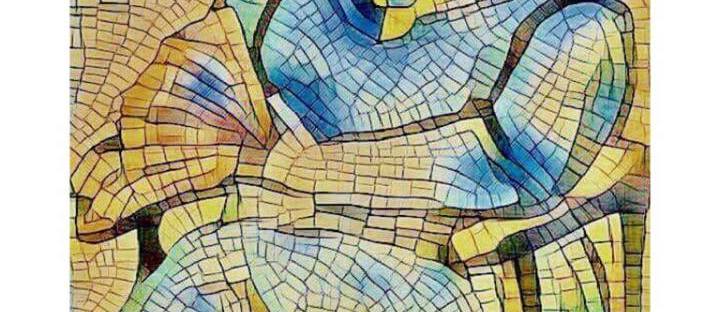
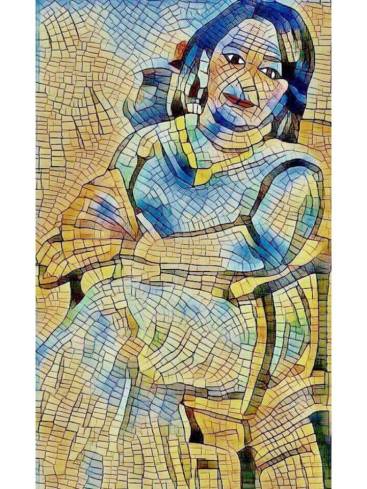
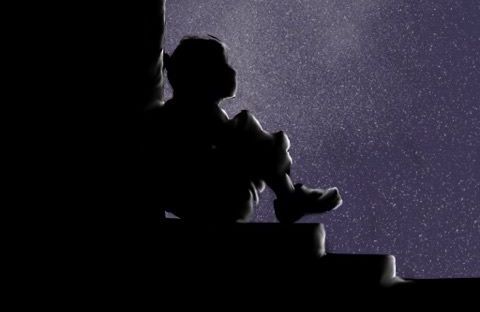
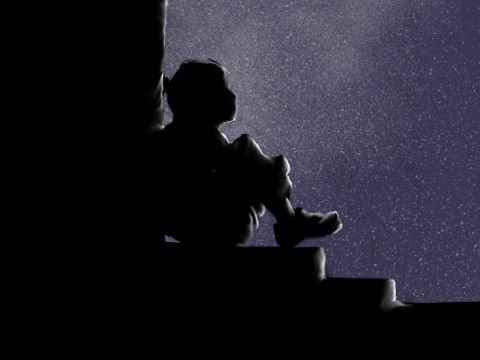
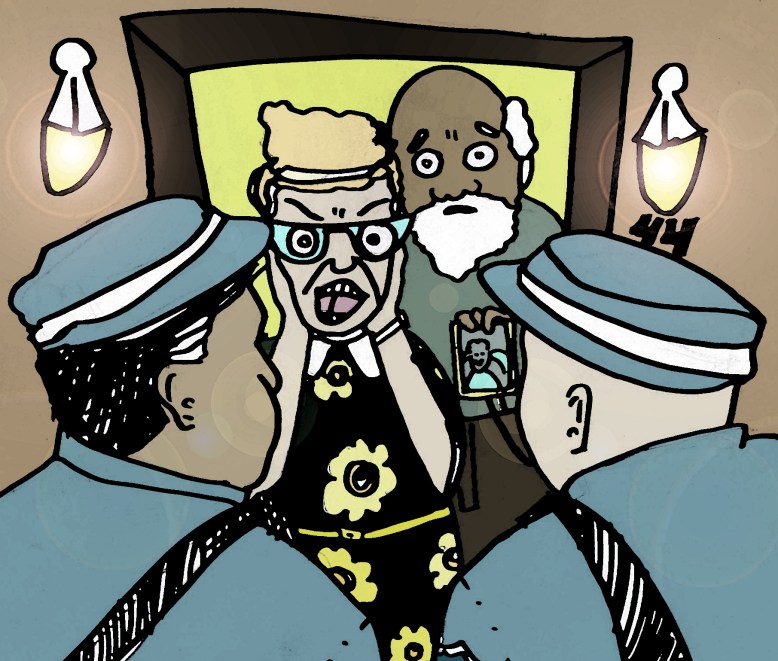
Illustration by Alexandria Heather


Richard has told you his version of things—most of which is accurate—but believe me, what I’m going to tell you now is the key to undoing this mess. Richard, please stop. You’ve said your piece, now just let me add this one thing.

Here, do you see this bottle? I got it from Maggie, the manager of Stacy’s Natural Foods down on First Street, a friend and trusted resource for many years, so certainly I had no reason to doubt her—I mean, the capsules looked so much like those bulky multiple vitamin-mineral supplements that one would be hard-pressed to detect a visual difference in—who could have guessed the hell they would bring down on my family? Although it’s true that Maggie couldn’t vouch for them one hundred percent since they were new to the marketplace, not yet FDA approved, meaning that she had no customer testimonials with which to reassure me, and yet if you looked on the Internet, plenty of parents and doctors alike were raving about this Angeliva treatment, better known as Angel Pills, and since I was at the end of my rope, I figured what the hell. It’s worth a try.

Okay, so in retrospect yes, it does seem somewhat risky, but I assure you that I resorted to the pills only after the more orthodox parenting techniques had failed: lecturing, pleading, threatening, grounding, taking away of the car keys and the iPhone and the Internet, rearranging of her bedroom according to the principles of feng shui—all  of these exhausted before I turned to Dear Amy, that advice columnist, who apparently had no time for the likes of me, and to Jesus Christ himself, atheist although I am and have been for the past twenty years, which just goes to show you how desperate I had become, with sleep deprivation also a factor—but all of these I tried, I swear to you, before I slipped that capsule to Jenna one morning at breakfast, passing it off as a new vitamin/mineral supplement for vegans, which she and I both are in spite of Richard’s constant ragging about riboflavin and iron. Please don’t stare at me like that. I had to do something, didn’t I?

They went to work overnight, those angel pills, worked like magic, I swear to God, and oh, what a sweet change from the bitchy, secretive behavior we had been subjected to in the previous months, the surliness, the pouting, we could do not one thing right, could we Richard? And then the very next day, here she is dancing into my studio, asking me to read a story she wants to submit to the high school literary magazine—a quirky little piece about a shopping mall in an alternate universe; kid stuff, sure, but clever enough, and grammatically perfect, as far as I could tell.

Not that it matters much, the writing—although I admit she’s not bad at it; she inherited some of my genes, so naturally she’ll be pulled in a creative direction now and then, but science is really her thing: chemistry, biology, all the classes I struggled with in high school she aces, no problem, so it’s only natural she plans to be a doctor, like Rickard here—and she’s on track, too. Or at least she was, until this recent shit-storm hit, right on track for acceptance at both Stanford and Cal Poly, her top choices,  no easy feat for kids these days, with all the demands placed on them by the universities, as if the hormones and social pressure alone aren’t enough to keep them—and us—constantly on the brink of madness. But it all came easy for our Jenna: the A plus average, the extra-curriculars, the honors and awards, and what a great group of friends, too—nice kids from good homes, just like her: motivated, responsible and well behaved. We thought we’d won the kid lottery, didn’t we, Richard?

So looking back, all was well until the new semester began, kids got shuffled into different classes, and Jenna became lab partners with Cody Hall, this kid we had never heard of until she started complaining about having to do more than her share of the chemistry projects, and he certainly was never a part of her social group, but next thing you know the phone rings at half past three on a school night and it’s the local police—maybe it was one of you two, I don’t remember—letting us know they’ve found Jenna and Cody parked out by the lake with a six-pack.  Richard drove out to retrieve her, assuring me that kids do this stuff, it’s not such a big deal, we’ll just give the lecture about household rules and expectations and ground her for a week, he said. Jenna claimed to be “freaked out” by the whole police thing, said she didn’t know what she could’ve been thinking. It would most definitely not happen again.

Next night I was up until long after midnight overworking a painting for the upcoming local arts festival—a stressful enough time for me even without Jenna’s bullshit—when suddenly I was struck by a gut-wrenching attack of mother’s intuition, so I rushed to Jenna’s room and sure enough, the bed was empty and the window thrown open, no concern for the utility bill or the safety of the rest of us. She didn’t get home until around 4:00 a.m.—I’m pretty sure there was weed involved this time—and after another lecture, this one actually more of a shoutfest, Jenna shrugged and said, “Okay, you win. You’re right. Whatever.”  When she went wandering again the next night, Richard bolted her windows shut, but as we soon learned, that’s nothing a love-struck boyfriend with a screwdriver can’t fix.

This went on for about a month, with Jenna coming in at all hours under the influence of God knows what, along with recorded phone messages from the school reporting that she was skipping classes here and there, and one call from her Advanced Chemistry teacher concerned about the dive in Jenna’s grade, with Jenna hoping to get into Stanford and all. Who could blame me for turning to Maggie and the Angel Pills?

So when Jenna allowed—no, she actually asked me to read her little sci-fi shopping mall story, I was thrilled to see such results from only one pill, but the next day was even better: a red-eyed Jenna came home with the news that she had broken up with Cody, said it was for the best; he was wrong for her, too wild, so she’d decided to focus on schoolwork and hang out with her real friends, and she hoped to win back her father’s and my trust. We crossed our fingers and dared to hope.

Two days later, I was collecting moldy Dr. Pepper cans and other trash from Jenna’s room when I found the Bible. Yep. Oh, I was startled, sure, but then I thought okay, this could be a good thing, even though we’re not churchgoers, Richard and I, because I sometimes worry that maybe we should’ve given Jenna a little more exposure to religion so that she could draw her own conclusions from more than an occasional Christmas pageant. So let her explore, I thought. No harm there.

At dinner one night, almost two weeks exactly after she took that first pill, she mentioned that “by the way” she had joined the First Baptist Church over on East Avenue after accepting Jesus as her personal savior, sending chills through my agnostic heart, I must confess—no offense, if either one of you is religious.

And when she said she probably wouldn’t be going to Stanford or Cal Poly after all, that she was researching a bible college in Texas where she could prepare to serve the Lord as a minister, I knew I had to get her off those damn pills. I didn’t know, I swear to God—oh, I guess there must’ve been a warning somewhere in all that paper that came with the bottle, but nobody reads that stuff, right? I didn’t know, until I spoke with Maggie just a few minutes ago, that you can’t just stop the pills cold turkey; you need to be weaned off, or there can be certain side effects. So as soon as Jenna left the table I stupidly jumped right up and fed the half bottle of remaining pills to the garbage disposal.

Richard has already told you the rest: this morning Jenna was gone, leaving this little note that basically says don’t bother to look, and  Richard suspects she’s run off with Cody. Yes, of course we’ve called his house, but nobody’s picking up, which is par for the course over there.

Richard thinks the sudden withdrawal from the pills has messed with Jenna’s brain chemistry, causing her to revert to the old self-destructive behavior, but on that we disagree. Stop trying to shush me, Richard. They need this information.

What I think is that the side effects caused by the withdrawal might be taking another form. Look right over there, by her bedroom door. Do you see them?  Richard will tell you they’re from the old down comforter that she dragged around as a baby, and that she must’ve rescued it from the attic to take with her on this latest adventure, dropping feathers along the way. But I’m pretty sure I threw away what was left of that rag years ago. I know I did.

And I’ll tell you another thing I’m certain of: those pills were definitely affecting Jenna, and in a good way at first. There were a couple of nights, right after her break-up with Cody, when I awoke in a near-panic and rushed into her room, but each time, I found her smiling in her sleep, so sweet and peaceful, her hair and skin glowing in the moonlight, hands folded under her chin, looking as if she were ready for the “Now I Lay Me Down To Sleep” thing we used to do when she was a little girl.

Oh, I saw that look you just gave each other, but I didn’t imagine any of this, I tell you. Somehow those pills made Jenna want to be good. She was maybe a little confused about what “good” really means, that’s all. And the dosage was probably just a tad too high, which would explain the feathers.

And as you can probably tell by his sour face and the way he keeps trying to cut me off, Richard holds me responsible, points out that I haven’t slept more than a few hours in a row for several months now, and wants to convince me I’m losing it, which just dumps more stress on me and isn’t the least bit productive, in my opinion. I think our only hope is to get Jenna back home and on the pills again, at a reduced dosage of say, half a pill a day, or one every other day; I’ll have to do some research, talk to Maggie. The important thing here—and on this I think we can all agree, even Richard—is that we get our girl home and back on track before the college application deadline.

I see from your faces that you blame me for this mess, maybe because you’re too young to have teenage children of your own. Just wait until you’re on the receiving end of one of those three a.m. phone calls. But please don’t let your judgmental attitudes stop you from doing your job. You are the police, after all, judging by your badges and your guns. It’s your duty to find my daughter and bring her home.


PEGGY SCHIMMELMAN is a writer and poet from Livermore, CA. She is the author of Whippoorwills, a novel, and her short stories and poems can be seen in the Comstock Review, Pacific review, Aleola, 100wordstories.org and others. Her poetry chapbook, Crazytown, is undergoing publication. When not writing, she reads and plays around with percussion.

ALEXANDRIA HEATHER is mostly water.

Natural Science

15909613_10209879182569430_874178960_n.jpg

Illustration by Ashwin Pandya

and all around him, blue points of flame pop up into the air like the tips of pencils, like

the engines of rockets aimed for the earth, but Bobby waits, holding his newly burning

match, still believing that what everyone else has done will somehow be harder for him,

worried that he will be the only one who can’t. His lab partner, Reid, grinning past a

street-broken tooth, lowers the large rock back onto the desktop, concealing again the

dirty message he’d scrawled in marker during some earlier class, tipped up to reveal

proudly now, in secret. The rocks were set around the room to demonstrate the different

kinds — sediment, volcanic, something else — not for graffiti. Bobby wishes the craggy

note at least made sense, that he could take part in the joke, the secret, but he doesn’t

understand. Masturbation Rocks. There had been classes about that last spring, an

entire summer ago, but for all he’s tried to forget since or had only pretended to

understand in the first place, he’s sure that rocks have nothing to do with it. His uncle

had made a joke once about monkeys in the zoo, laughing alone, but they were at least

monkeys, not rocks. Feeling the flame moving down toward his fingertips, Bobby rotates

the metal handle on the counter to point forward and reaches the flame of the match out

toward the top of the rifle-like cylinder, waiting for his too to turn blue, and then maybe


MATTHEW BRENNAN is a writer, editor, translator, and blogger from the Pacific northwest. His work has received several awards and fellowships, and more than 70 of his short fictions and poetry translations have been published in journals, including The Citron Review, SmokeLong Quarterly, Emerge Literary Journal, The Los Angeles Review, and Superstition Review. He earned his MFA in fiction at Arizona State University. Website: http://matthewbrennan.netTwitter: @MatthewBrennan7 

ASHWIN PANDYA is a sketch-artist and illustrator, whose work has graced many book-covers. Acknowledged for his digital art as well as musical compositions, Ashwin Pandya can sketch given any situation, description or character. You can visit his website here.

Harvest Moon

Monday evening

My dad and I sit in the rec room watching football on the sixty-inch plasma TV bolted to the wall.  Announcers yell and refs blow whistles.  Play stops and starts and stops again.  I don’t get it, but my dad worships the game so I take my cues from him.  

“Dammit!” my dad yells. His beer spatters. “Interception my ass! You believe that, Gordy?”

“Yeah, I know,” I say, even though I have no idea.  Red and blue and white and silver uniforms and helmets surge back and forth across the screen.  “I don’t believe that.”

“Jesus H. Baldheaded Christ,” he says, shaking his head.  

“Yeah, I know.  Jesus.”

My dad tips me a wink and takes another swallow of his beer.  “You’ll get the hang of this game yet, Gordy.  See if you don’t.”

I can’t help but grin.  I know he’s wrong, I’ll never understand this game as long as I live, but his offhand compliment rings in my ears.


Tuesday morning

It’s taken me a month but I finally get the courage to ask Rhonda LeClerc to the Harvest Moon dance.  

“Hey,” I say as I catch up to her in the hallway between first and second period.  She’s coming out of the biology lab with her books clutched to her chest.  She wears big, round glasses that give her a perpetually surprised look.  Her dark brown hair is cut in a bob that frames her face like a Rembrandt portrait.  As usual she is looking at the floor.

“Hey,” I say again.  We walk together.  “So, yeah.  I was wondering…there’s the dance this Friday…”

Words slide out in a run-on sentence.  “Yes I want to go with you that would be great I’m really glad you asked me.”

I’m twenty pounds lighter.

We walk together some more.  Kids pass us on either side.  I love Rhonda’s run-on sentences.  I try to get her to talk again.

“Yeah,” I say.  “Okay, that’s awesome.  Yeah.  How’re classes going so far?”

She nods and her bob bounces.  I could watch it all day.  “They’re going great getting A’s so far but Mr. Dunphy my Communications teacher is kind of weird but that’s okay I guess.”

I’m enchanted.


Wednesday afternoon

My dad’s a building inspector for the city.  He notices things.  It’s his job.  He takes his job home with him a lot.  

“You got a girl, Gordy?” he asks, peering at me across pot roast and broccoli.  He’s peering at me.  “You look like you got a girl.”

I feel my face turning red.  My two younger sisters both stare at me, smirking.  My mom beams.  

“No.  No girlfriend.  No time.”

“Bullshit,” he says.  “You got yourself a girlfriend, Gordy.  I can tell.  Is it that LeClerc girl?”

I spill gravy.  “You know about Rhonda?”  It’s out before I even realize it.

My dad spears roast triumphantly.  “Rhonda LeClerc!  I know her father.  Brad LeClerc.  Good man.”

My little sisters snort laughter.  I don’t know if it’s at me or at our dad.  My mom just keeps beaming.  She looks so proud of me.  My left foot starts twitching under the table.  I try to clean up the spilled gravy.  

“You taking her to that dance?” my dad says.

“I don’t know.  Maybe.”  I drop the napkin I’m using to clean up.  I bend over to pick it up.

“Bring a condom, Gordy,” my dad says.  I freeze, still bent over.  “Use protection.”  Out of the corner of my eye I see him pointing at me with a forkful of dark green broccoli.  I see my mom nodding in beatific agreement.

I straighten slowly.  I don’t know what to say.  My little sisters are watching.  They’re only eight and five.  

I plaster on a smile that I don’t feel.  “I will for sure.  Hey, when’s the next game?”

He chews his broccoli like a hippopotamus.  “Tomorrow night.  You in?”

“Definitely.”    


Thursday morning

I catch up to Rhonda after first period again.  

“Hey.  I’m psyched about going to the dance tomorrow.”

She stares at the floor.  “I can’t go I’m really sorry my dad said he talked to your dad and your dad said something about condoms and so my dad freaked a little bit and said I can’t go.”

My heart stops.  “That sucks, that really sucks.  That’s crappy.”

She walks a little faster but I keep up.  She doesn’t say anything.

“You sure?  You sure you can’t go?”  I must sound pretty emotional because Rhonda suddenly stops and turns and looks straight at me.  Her eyes are wet.  She has a birthmark on the left side of her forehead shaped like a spiral galaxy.  I’ve never noticed it before.  

“My dad’s a jerk and he won’t let me go and I hate him for it and I’m so sorry Gordy I really want to go I really do!”

I’ve known Rhonda since third grade.  On her first day the teacher introduced her to the class  and she stared at the floor.  She had big glasses then, too.  She walked to the desk right next to mine.  She looked over at me and smiled, just for a second.  That was it for me.  

For the last seven years I’ve been thinking about her.  

There’s a smile like a supernova on her face and I realize I just said that last sentence out loud.

“I’ve thought about you all this time too Gordy and it makes me happy that you’ve thought about me too and I wish my dad wasn’t such a jerk.”  She reaches out and touches my cheek.  Kids pass by around us, oblivious to my rapture.  Unbelievable.  

In the next moment I am kissing her, there in the school hallway between periods one and two.  She is warm and alive and tastes like strawberry lip balm.

Reluctantly we break the kiss.  Some kind of knowledge has passed between us.  Alchemy has happened.  

She speaks first, in a whisper.  “We have to go to the dance.  You know that, right?”  It isn’t a challenge, just a question.


Thursday evening

My dad eats Sour Cream and Onion-flavor Ruffles, washing them down with cold Budweiser. Crumbs spill down the front of his shirt.  In front of us, the uniforms charge back and forth across the screen.  Play starts and stops, seemingly at random.  

“Her dad says she can’t go to the dance,” I say.  

“That so?” my dad replies.  He munches chips.  

“Yeah,” I say.  “She says it’s because you talked to her dad.”

“Yeah?” he says.  He swigs Bud.  “Dammit!  That ref is blind.”

I pick up the remote and turn the TV off.

My dad stares at me.  “What the hell’d you do that for, Gordy?”

“I’m going to that dance with Rhonda.  Just so you know.”

“The hell you are.  If her dad said no, that’s it.  End of story.”

I nod.  “Sure, dad.”  I turn the game back on.  It’s an Old Spice aftershave commercial right now.  “Football makes no sense.  Running back and forth across a field and running into people.  What’s the point?  What’s the fucking point, dad?”

He spills his beer. I’ve never sworn in front of my father before.  I stand up.  He looks up at me with a strange expression.

“Well, enjoy the rest of the game, dad,” I say as I drop the remote in his lap.  “I hope your side wins.”


Friday evening

Rhonda and her brother, Ray, pick me up at 8:13.  I get into Ray’s beat-up Chevy Cavalier when it pulls up to the curb.  My family watches from the living room window.  I can’t see anyone’s expression.

Ray LeClerc is a big dude with biceps like flak guns.  When he drops us off outside the gym he grabs me by my suit lapel before I climb out.  

“That’s my sister right there,” he says in a near-whisper.  Rhonda is already out of the car, standing next to the gym door where lights and music pour out and kids pour in, perfect in a floral-print dress.  Her birthmark glows in the orange sodium-arc lamps of the parking lot.  “She’s a sweet kid.”  Then he lets me go without saying anything more.  He doesn’t have to.  

As he pulls away from the curb he honks twice and waves out the window.  “Be good, you two!” he yells.  “Midnight!  Be here!”


Later Friday evening

The dance goes about the way these things usually do.  It’s awkward.  For a few minutes, we sit at one of the round, paper-covered tables and listen to the music together.  It’s loud, and when I finally get the nerve to ask her to dance with me, I practically have to shout.

“Want to dance?” I yell in her ear.

“Sure that would be great Gordy do you mean right now?” Somehow she manages to maintain a volume that’s audible over the music.

“Yeah,” I say into her ear.  “You have great lungs, by the way!”

She smiles, and my knees tremble.

We walk to the dance floor together, weaving around tables and people.  The current song is “Love is a Battlefield,” classic Pat Benatar.  Neither of us knows how to dance, so we improvise.  Her touch on the back of my shirt is electric.  We manage to get almost all the way through the song before I step on her foot.  She winces.

“Oh, shit, I’m sorry!” I tell her, hoping she won’t remove her hand from my back.  There’s a few inches of space between us, my hand is on her shoulder, and all I can think about is holding her closer.

“It’s all right I’m okay but let’s sit down for a little bit okay?”

We weave back to our table.  All the while, I’m silently calling myself every name for idiot I can think of.  We sit down.  She reaches out and finds my hand with hers and gives me the slightest of squeezes.  She’s looking at me, not with her usual dazzling smile but with a faint curve of her lips that I can’t quite read.  The gym is warm even though it’s fall outside.  Hundreds of teenage bodies packed into one room, that’s what happens.  The DJ must have a great subwoofer setup because the bass thuds through my chest like a second heartbeat.  Rhonda’s hand feels sweaty in mine.  She’s holding tight.  I’m sweating a little, too.  It trickles down into the collar of my Oxford shirt, tickling the fine hairs on my neck.  Rhonda’s big glasses reflect the twirling spotlights the DJ has set up, warm reds and oranges to enhance the fall harvest theme.  Rhonda doesn’t seem to want to look at the lights, only at me.  This makes me extraordinarily happy.  

We leave the dance early and walk to cool off.  My tie is loosened.  We keep holding hands as we walk.  It’s late, maybe ten-thirty.  Her perfume catches my nostrils and holds them gently.

Eventually we reach a pocket park a mile or so from the school.  We sit together on the wet grass.  I hardly notice the dampness seeping through my suit trousers because moonlight is making Rhonda’s birthmark glow and she is looking at me and her eyes are trying to tell me something that she can’t come out and say in one of her magical run-on sentences.

I have a raging erection that I try to ignore.  I’ve brought condoms in my wallet.  We kiss.  We fumble.  The grass is cold on bare skin.  She still doesn’t say anything.  Neither do I.  Our bodies carry us.  

The condom is harder to manage than I thought it would be.  Eventually, with Rhonda’s help, I manage to put it on.  She smiles gently at the awkwardness of the situation.  She relaxes me with her smile.  I breathe.  She lays down in the moonlight.  She takes off her glasses and she becomes Cindy Crawford and Marilyn Monroe and all the ancient love goddesses rolled into one.  I want take time, to explore her with my hands, my fingertips, my tongue, but then she slides her skirt above her waist and suddenly a single desire crowds out all others.  She guides me and I enter her.  She cries out sharply, then collapses into a long moaning.  I’m moaning too, I realize.  We rock back and forth, slightly out of sync like two boats bobbing next to each other on choppy water.  There’s a rhythm of some kind, but I can’t quite pick it up.

Abruptly, and much too soon, I climax.  It’s amazing.  Then it’s over.  


Very early Saturday morning

We get ourselves together with quick, efficient movements.  It’s a few minutes past midnight, and we need to get back.  We walk back to the school.  

When Ray pulls up and we get in, he turns and gives me a hard stare.  I manage to meet his gaze.  I’m sure he can tell.  But he just turns back around and drives us away.

Ray drops me off at my house.  I go in.  Everyone is asleep.  I go to my bedroom, peel off my suit, put on some pajamas I drag out of my laundry hamper, and crawl into bed.  I lay awake for a long time, looking at the moon through my window.


Monday morning

I catch up to Rhonda as she comes out of the biology lab.  Her birthmark is an amoebic blob.

“Hey,”  I say.

“Hey,” she says back.  

“Did you sleep at all on Friday?  I didn’t.”

“Yeah I slept okay I’m sorry you didn’t did you have fun at the dance I did I thought it was nice.”

Her run-on sentence is hard to follow but I detect the question inside it. “Yeah it was pretty cool,” I say.  

“I’m glad you think so too I gotta get to Communications Mr. Dunphy you know how he is.”  She scoots off before I can sort out what she’s just said.  Maybe I’ll ask her later if we run into each other.  


DR. BRIAN KIRCHNER holds a doctorate in Geology and teaches Earth Science at a college near Detroit, Michigan. He is 46 years old and has been writing as a hobby for several years. He writes short fiction and poetry. He lives in Royal Oak, Michigan, USA.

Brinjals

14963086_10209317440046218_865084039_n

Illustration by Ashwin Pandya

Mrs. Kaul was one of those neighbours that made you hate the whole lot. She had quick eyes and a heavy face. She wore a lot of gold, and talked in a loud way about things.  Or maybe it was just that loud statements, when lacking substance, have a tendency to somehow end up even louder than intended. She had once been a hot shot in the media world and was the prime dolled up face that promptly gave the six o’clock news  some twenty thirty years ago. As was the way of things, her male co-anchor got promoted and she got a neat receipt of the expiry date of her shelf life. The following week she was replaced by a young just-out-of-college-something with a beauty mark on her jaw and some really bad pronunciations. The entire incident, I believe, was starched, ironed, folded and then neatly stacked up in the towering pile of wrongdoings that the world had done to Mrs. Kaul. The stack, in exchange, bred the tiny revenges she took from the world with her quick tongue, crafting tailor fitted slits of words, that knifed her audience where she knew they were their weakest. She hated all things young and hated all women who she thought were pretty. She loved saying that NEWS stood for knowing everything about the north, east, west and the south. Home of course, was always conveniently left out.

She had a husband. Had him. Like a handbag. He was there and she was there and  both of them knew they were far too old to be looking for the people they thought they would fall in love with. But more than age, it was the realization that they had each become some contorted version of their actual selves that blockaded their paths to domestic bliss.

He was a quiet sort of man. He had once worked in the government administrations but now channelled all his wrinkled energy in tending to his cottage garden. Brinjal plants ivied the floors and potato stems stood like stout little soldiers. Occasional chillies popped up like diseases and sunflowers burst with a neon roar. He spent hours in the garden, sowing, examining, trimming , evening out the trimming, cherry picking tomato seeds, and avoiding entering his own house. The reluctance to go sat like fat dew drops on each petal of each plant.  His suicide hardly came as a surprise. The maid found him hanging from the ceiling one morning.

Mrs Kaul became even more bitter over the next few months. She would come over to our house and her words hung in the air like wet vomit. Silence became the loudest response she got and yet sympathy was slapped over her like facial cream; she didn’t really resist. She went around her life like luggage on the moving belt that nobody had claimed. She left the house a few years ago. A family of five came after them. With a neat set of parents and three children that looked fresh out of a milk advertisement. The garden was occupying far too much space for the blow up balloon pool, so they mowed it. And besides, who grows brinjals?


MEHAR HALEEM is a seventeen year old student who writes for the editorial board of her school . She is a curator for Efiction India and her works have been published or are going to be published in the forthcoming issues of Alexandria Quarterly, The Noisy Island, Sprout, The Bombay Review, Melancholy Hyperbole, Inklette and elsewhere . She currently lives in New Delhi , India.

ASHWIN PANDYA is a sketch-artist and illustrator, whose work has graced many book-covers. Acknowledged for his digital art as well as musical compositions, Ashwin Pandya can sketch given any situation, description or character. You can visit his website here.

What Monsters Take and What They Leave Behind

15909641_10209879178969340_1564624964_n

Illustration by Ashwin Pandya

There’s a monster in the lake behind our house. Emma and I saw it. Well, we didn’t technically “see” it. We heard a deep growl coming from down there and there was this big dark shadow over the middle of the water. “Look Julie,” Emma cried. “It’s Lassie!”

Dad doesn’t want us going out on the lake when he isn’t watching us. I think he’s afraid Lassie will get us. He doesn’t want to lose any more girls to monsters. We already lost Mom to some monster named Brandon. I never even saw it happen. Emma and I were in school, but I heard my father on the phone with him once. He said, “No person with a heart could possibly steal a woman away from her husband and children.” Every person has a heart, so Brandon has to be a monster.

We only go to the lake on Saturdays or Sundays. That’s when Dad has the time to take us. He’s always busy in his office on weeknights and he says we have to focus on homework then. On school nights, Emma and I sit at the window, staring out at the lake. Lassie comes out when the sun starts to set. He prefers nights and shady days. I asked Dad why that was. “He probably has sensitive skin,” he answered. Emma wanted to throw a bottle of sunscreen in the water for him. I told her no, that it’s safer for us to swim during the day if he’s afraid of the sun.

Loch Ness Monsters also like pickles. I think I learned that during Monster Week on the Discovery Channel. When we go swimming, we sneak pickles from the fridge and sink them in the lake so Lassie isn’t hungry for us. You should never swim without at least three pickles. That is just enough to make us look too large for his stomach to handle. No one misses the pickles. Emma and I hate them and Dad only ever bought them for Mom. Why he never stopped, I don’t know.

The monster came for Mom almost a year ago. I never saw him, but I sometimes hear Dad talking about him on the phone. Brandon’s a hairy giant. He took Mom all the way across the country to a place in the mountains in California. Giants like mountains because they’re both tall. Dad says Brandon is bad, like Lassie, but sometimes he lets Mom send us things in the mail. She says she is happy but she misses us and maybe someday she’ll bring us out there to see her. Emma says she can’t wait. I don’t think it’ll happen though. I think Brandon sends those things to make us believe everything is fine. How could she be happy living with a monster?

I can’t blame Dad for losing Mom. I don’t think he really believed monsters were real before Brandon came along. He wasn’t equipped with the knowledge of monsters’ behaviors and how to keep them away.

After we lost Mom, I started reading books from the school library about all of the different monsters. Our house is surrounded by tree lines, which for all I know, hide all of the worst kinds of monsters in the darkness at night. I recruited Emma to monster-proof the house. I sprinkled garlic powder all over the carpets in the house to keep the vampires away. I read that giants like beans, so Emma started sneaking her green beans from dinner into her pockets and we put them in the yard. The beans would distract the giants and they would forget that they had come to take us away.

I don’t want to lose Emma to another Brandon. Dad played a song once about a Purple People Eater and I didn’t know what to do about that one until he explained that that monster only eats people who are purple. None of us are purple but one night, just to be safe, I gathered all of the purple clothes in the house and threw them away.

I never found anything to defend against lake monsters though. I once tried to lure Lassie out into the sunlight with a pickle on a string, hoping the rays would burn him up into dust, like vampires in the morning. Emma sat excitedly by my side. Dad asked what we were doing with a pickle and Emma responded, “Fishing for monsters!” He sighed and went back to reading his book. Lassie did not appear. There wasn’t even a ripple in the water. We threw the pickle in and went back up to the house with Dad.

Every attempt made to trap Lassie failed. We could not catch a lake monster. The water was dark below the surface. Even our own bodies disappeared in the lake when we swam. I never made it very deep either, but the water seems to go on forever. It’s impossible to know where Lassie is below the surface. Not even Mystery Inc. could solve the mystery of the Loch Ness Monster in their movie, and they could solve any mystery. Every day he remained was another day we were all at risk.

When it seemed like we would never figure out how to stop Lassie, I asked Mom. I wrote a letter hoping that Brandon would know something, that maybe monsters knew secrets about other monsters. Dad didn’t like us sending things back to Mom when we got stuff from her, so I kept it a secret from him, and from Emma. I found her address on an envelope in Dad’s study while he was busy making dinner. I took a new envelope and copied it on there. The tricky part was getting it to the mailbox without Dad seeing. Every morning he looks through the mail that he is going to send before taking it outside. I just had to slip it in the middle after he checked through them. When he went to the bathroom, I tucked it right in. Emma watched, giving me a questioning look and I just smiled back, letting her know it was our secret.

Things are looking up. I have recruited the help of another monster who seems less dangerous than the one we’re currently dealing with. Since it’s Saturday, Emma and I get ready to go back down to the lake with Dad. I pack my bag with a whole jar of pickles, ready to throw some in the water before jumping in myself. Emma packs her inflatable ring. Dad walks us down the hill, book in hand, and sits himself in the grass while we head straight for the water. We throw our pickles in and follow shortly after them.

The lake feels cold at first, but I warm up as time passes. The sky was cloudy in the morning and the warmth of the sun hasn’t reached below the lake’s surface. The phone starts ringing faintly from the house. Usually Dad ignores it while we are playing in the water. When the ringing ends, it picks back up again and he lets it ring. The third time, Dad gets up. “I’ll be back in a minute,” he says, “Be careful.” Emma and I stay in the water. It’s the first time we’re in the lake and he isn’t right there with us. Emma is excited and starts splashing me harder with water. I return fire and it becomes a full-blown water battle.

Suddenly, Emma starts sinking a little. Her tube is deflating rapidly. Lassie. He has her. He went for her greatest weakness first, the only thing keeping her afloat. As he pulls at her feet, she starts going under water and popping back up, fighting back. She screams for me and I jump out of the water. Running to my bag, I grab the pickles. Opening the jar is difficult. My hands are slimy and pruned from the dirty water. They keep slipping on the cold metal lid. I get the lid loose and throw the whole jar in the water. Lassie doesn’t give up when the pickles hit.

Emma is still going under, disappearing longer each time. Protecting Emma from the monsters was my only job. I yell for Dad. He yells back, “Your mom’s on the phone. What did you send…” He stops when he looks down at Emma struggling in the water. He drops the phone, stumbling back down the hill.

Emma’s head comes up for another breath just as Dad dives into the lake after her. She goes back under into the darkness. I think it’s the end. Lassie will get them both. Seconds feel like minutes while I kneel at the edge of the water waiting. Dad comes bursting out of the water, holding Emma. She’s coughing and rubbing at her eyes. Dirt covers her face. He sets her down on the grass, whispering to her. I stay where I am, confused. Why did Lassie let them go? Mom must have told Dad the secret over the phone just before he came down the hill. I stare out at the water and watch as the flattened plastic of Emma’s tube drifts further and further across the lake.


BECCA BLAUCH, 23, lives in her hometown of Pittsburgh, PA. She earned her BFA at Penn State Erie, The Behrend College in 2015. She is currently completing her MFA at Chatham University. She has served at the nonfiction editor of Behrend’s Lake Effect for two years. Inklette will be her first publication.

ASHWIN PANDYA is a sketch-artist and illustrator, whose work has graced many book-covers. Acknowledged for his digital art as well as musical compositions, Ashwin Pandya can sketch given any situation, description or character. You can visit his website here.

Blaine’s Fire

A short story
BY JOHN S. OSLER III

The first day of summer after ninth grade, Blaine Cohen burnt all of his journals.

It’s a fairly common practice, burning notebooks at the end of the school year. At least, it is at my school, where everyone has a ranch house out in the middle of Texan nowhere where there’s no one to notice a massive column of smoke coming from blazing math homework and english papers as you vent your pent up anger and anti-intellectualism that’s as much a part of Farrand blood as iron.

Blaine, though, he’s not from one of the old families with a ranch house. He’s not from Farrand, not a Texan, not even a southerner. He hails from Meadville, Pennsylvania, and his only home is a townhouse on the border between the good part of Farrand and the bad part, built into the side of an old riverbed where the train tracks run.

Blaine didn’t light up his schoolwork either, he burnt his personal writing. Every page filled to the margin. Fantasy novels were the most common in his oeuvre, but he had poetry too, and slice-of-life short stories and highly inaccurate nonfiction and page long who-done-it mysteries with no solutions and choose-your-own-adventure stories that always ended in your death and flash fiction and dervish essays and dozens of other kinds of writing I’d never even heard of.

I wasn’t there to see the setup, but I can imagine it, piles tattered of notebooks rising like mountains on his dehydrated brown lawn. Maybe he sprayed some lighter fluid or insect repellent on it before dropping one of his stepfather’s collectable cigarette lighters.

What I did see was Blaine five minutes after the act. He rung my doorbell, and when I came out to see him his face was bright red, his hands on his knees, panting hard, like an excited dog. Blaine was fit, but the Texan summer heat was crushing.

“Hi Blaine,” I said.

“Hi,” he said, his word just another exhausted breath.

“Um, do you want to come in?” I asked.

“Actually,” he said, standing up straight and beginning to speak normally, “I was thinking you could come over to my house.”

“Okay.”

“Question: do you have a fire extinguisher?”

“Yeah,” I grabbed it from the closet next to the front door. Blaine could be so weird, so I’d given up trying to understand him years ago. I assumed we’d use the fire extinguisher to propel ourselves in some abandoned shopping cart he found in the woods or to use it for a game of spin the fire extinguisher with his cousins from Waco or something even less orthodox.

We started making our way to his house. After maybe a block of walking he looked up, surveyed the rising plume of smoke, and said, “You know, we should probably run.”

I realized we were going to use the fire extinguisher for its intended and sprinted to his house.

By the time we got there, the notebook pile was ash, the flames had begun rising on his little brother’s rotten wooden playhouse, and tendrils were spreading to the car port.

I unloaded every bit of foam from the fire extinguisher and only made a small wet patch in the growing blaze. So I grabbed my cell phone and made a quick, panicked call to the fire department.

“What is this?” I asked when I was done.

“I burnt all my notebooks,” he said.

I wasn’t sure what was more shocking, the growing inferno melting his brother’s yellow plastic swings or the idea that he would burn his dragon’s horde of notebooks. He’d punched me in the gut and stopped talking to me for a month when I’d spilled water on one by accident. To burn them? All of them? That wasn’t like Blaine as all.

On second thought, it was totally like Blaine. Consistently inconsistent.

“I wanted a clean start,” he continued. “No matter what I did, it always felt like I was repeating myself. I wanted to be reborn as a writer, rising from the ashes of my slaughtered past like a glorious phoenix.”

On a rational level, it was nonsense. On a literary level, it was a cliched metaphor. Either way I was unsatisfied.

The fire was starting to climb up the wooden siding of his house. If the fire department didn’t come soon, there wouldn’t be much of a house left.

“You know, we could have burnt them at my ranch house. I’m going there this weekend, you could come along and-”

Blaine shoved his palm into my sternum and for a moment I couldn’t breath. I stumbled backwards, tripped myself up, and collapsed to the pavement. As I looked up from my low angle on the ground, vision blurry from the pain, I saw Blaine surrounded by flames below and smoke above. His face was red again, this time from fury. He looked positively satanic.

The landlord evicted Blaine’s family, of course. It was the only rational thing to do, when your tenants burn down the carport, swing set, living room, and most of the master bedroom. When the poor guy came to break the news, Blaine’s stepdad punched a few of his teeth out.

To escape his stepdad’s wrath, he stayed with my family all summer and two months of the school year. It was fun, at first, like having a sleepover that didn’t end the next morning. But before long it became more like having an irritable brother with random mood swings who didn’t get along with my actual brothers.

I was almost happy to see him move back to Meadville with his ex-stepmom, because I was finally rid of that shifty mix of envy and pity I always get with him. He’s lived through a lot, and if he keeps going the way he’s been going he’ll suffer a lot more than I will in my lifetime.

But, if life experience is what feeds a writer, then he’ll be the best damn novelist of the century, provided he lives to adulthood and ever has something besides ashes to send to the publishers.


147326423367437JOHN S. OSLER III is a freshman at Grinnell College in Iowa majoring in English and Psychology. He has written over two hundred satirical articles for his underground newspaper The Southern View, and a few for his high school’s legitimate newspaper,Zephyrus, on the side. He has published short stories in Sprout Magazine, The Phosphene Journal, and Random Sample Review.

Boogie Board


One dollar. Jeez, the cool one was just one dollar more, Evan thought. That’s all, just a stupid dollar, but no, we can’t spend one more stupid dollar to get the damn boogie board with the red flames on it. Stupid mom. Stupid money. Stupid boogie board. What kind of stupid dork rides a boogie board anyway? Stupid beach. Stupid fucking vacation. This is going to suck. Totally suck.

Thunk. The boy slammed the door to the old Ford Fairlane. What an ugly dumb old car. Why don’t we have a decent ride like regular people, he thought, before he heard the screaming.

Jesus, what’s that sound, he thought, covering his ears as the desperate noise grew louder. It was like no sound he’d ever heard before. What the hell is going on? He swung his 13-year-old body, all legs and shoulder blades, around back to the Ford Fairlane, back to the back door of the back seat where his knees had ached moments before as he’d tried to sleep, pretzeled in between the dinged up ice chest and the discounted flowered boogie boards his mom insisted were good enough for one round at the beach, never mind how juvenile they made him look, like some kind of teeny bopper, girly girl, and why couldn’t he have a real surfboard anyway like normal kids, like the cool dudes really doing it, really riding the waves, not just boogie boarding with his dumb old mom, he thought, as the howl grew louder and stranger and louder and stranger until it surrounded him.

“Mom,” he started to call, but then he saw her there in front of him, with this horrible sound coming out of her. “Mom!” he shouted, scared now that his mom, was suddenly screaming bloody murder like some woman in a horror film. “Mom!” he screamed himself.

“The key,” she screamed, “Get the key out of my bag! Unlock the door, Evan, unlock the fucking car door!”

What the fuck, he thought, and then he saw it, his mom who never stopped moving, never stopped taking care of business was frozen to the side of the Ford Fairlaine, the little finger on her left hand pinned in the door jamb of the car’s back door he’d just slammed shut.

She was yelping “nnn…nnn…nnn,” like a wounded dog.

He looked around. Where the hell was her bag, this thing that was like a part of her, like some black hump that grew on her side? Where? And then he saw it, sitting peacefully on the hood of the car, out of her reach.

And finally, with the quickness honed from hundreds of wipe outs on his long board, he lunged for the bag, dug his hand into its bottomless unknown and pulled out the keys with the keychain of the wooden cheetah he’d carved for her out of a tree branch at summer camp four years before. He found the car key, unlocked the driver’s side door and, in one motion, unlocked the back door and swung it open.

His mother slumped to the ground beside the car, whimpering, her body folded over her hand like the corner kids lighting their cigarettes on a windy day.

He slumped down beside her and put his arm around her and rocked her back and forth the way she had done to him, jeez, like a million times before.

“God, I’m sorry, Mom,” he said. “I’m so sorry,” and suddenly they were both crying, stupid laugh crying, and rocking back and forth together there on the asphalt in the parking lot at the end of the beach while streaks of grey sand blew across it.

“Here,” he said, and he reached for his mother’s injured hand, limp and helpless as it was. One by one he gently rubbed the other fingers, her ring finger that still wore her wedding ring even though his dad had been dead, what, five years now, and the middle finger he saw her raise only once when a road racer nearly ran them down on their way to his first baseball game, and the index finger and thumb that were always busy chopping or folding or typing something.

“Coach Wells taught me this after I jammed my finger in practice once. You remember, it swelled up like a boiled hot dog you said. Thanks a lot by the way,” Evan said. “Took me a year before I could eat a hotdog again.

“Anyway, it confuses your nerve endings, Coach said. They’re so busy sending massage messages from the other fingers that there’s not enough juice left for the pain messages. Cool, huh?” Evan glanced over at his mom.

“Yeah, cool,” his mom said, her voice quiet and shaky.

“Is it working?” he asked.

“Uh huh,” she nodded and closed her eyes.

“I’m sorry I made a fuss about the boogie board, mom,” he said, rubbing her ring finger with both his hands. “It’s just a dumb boogie board; it doesn’t matter. I just want you to be alright.”

“Yeah, I’m sorry I was such a tightwad about the extra dollar, buddy,” she said, opening her eyes. “All I ever really want in life is for you to be happy and for me not to worry any more. That’s worth so much more than a dumb dollar.”

“Yeah, I know,” he said, pressing more gently on each of her fingers. “I’m already happy, mom. I just want your pain to stop.”

His mother laughed suddenly and ruffled his shaggy hair with her other hand. “That’s the sweetest thing a boy can ever say to his mama. You keep saying that until you’re 35, OK?”

“OK, mom,” he said. “OK. I promise I’ll say it all the time.”


ELIZABETH BRUCE is a native Texan writer and theatre artist based in DC. Her debut novel, And Silent Left the Place, won Washington Writers’ Publishing House Fiction Award and distinctions from Texas Institute of Letters and ForeWord Magazine. She’s published in Gargoyle, Bare Back Magazine, Lines & Stars, Paycock Press’ Gravity Dancers, Long Short Story, and Washington Post, and received grants from DC Commission on the Arts & Humanities, Poets & Writers, and the McCarthey Dressman Educational Foundation. Bruce co-founded Sanctuary Theatre with Michael Oliver and Jill Navarre. Her work has won Carpetbag Theatre’s Lucas Award & has been produced at Capital Fringe Festival, Adventure Theatre and Sanctuary Theatre.