Editor’s Note

Dear readers,

The sixteenth issue of Inklette Magazine is here. Publishing these issues makes me feel like I am retelling the contributors’ story not to you, but to myself. There is something comforting in writing to you— the reader— as if I am with you. I like writing in this epistolary mode more, perhaps more than I should. There is something about my apostrophe to you that helps me locate myself in the present. Outside of this relation, without the listener or the other, it is hard to know or sense oneself in the present.

In her editorial note to our last issue, our prose editor, Anouck, wrote about the other. It struck me as strange since I thought, going through this issue over the past few weeks, that all the writers and artists here have someone in mind, even if they are not necessarily the ‘other.’ What is the form of those others— their presence or their absence?

In ‘Shelter Number Twelve‘ by Omi Anish, the ‘we’ breaks down into a ‘you’ and an ‘I.’ Oliver J. Brooks starts his poem by asking us to pause: “Let me stop you right there—see how my love revolves around you?” In Susan Rich’s poem, the narrator admits that like so many of us, “I’ve always desired a different life than the one I am living.” I’ve wondered what it takes to write these relations into sentences that seem to be drawing inside their own bodies, between I and oneself, between oneself and the world.

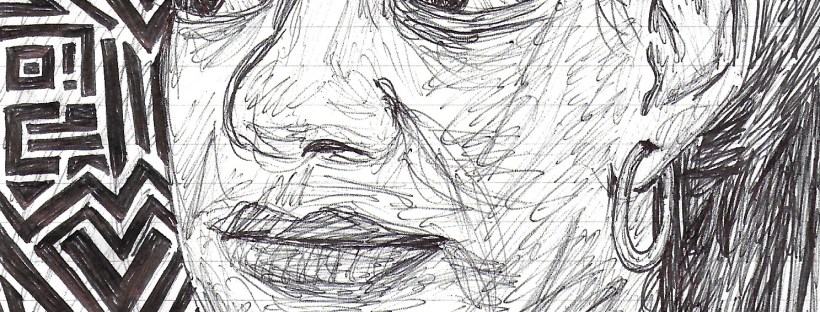
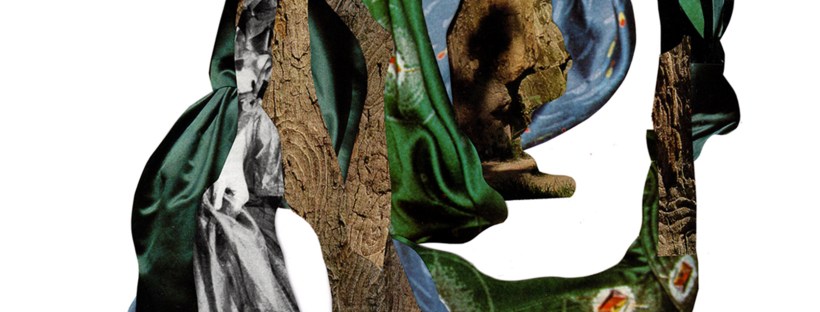
With this issue, I thought of pairing some of the artwork with each piece. I was resistant to imposing the artwork on the writing, uncomfortable with the idea of ‘making’ two things speak to each other. But language, I know, is all about making, forcing, wrenching. So often I dream of a language that is a collage rather than a legible portrait. So often I wonder if I can ever write about or as someone else, not merely from the depths of another’s perspective or language, but from the negation or loss of it. If these pieces speak to each other, or to others we’ve published, I shall let them. And if you find yourself, too, in the company of these pieces, wondering about intimacies and distances between speaking, writing, and relating one voice to the other, I hope you won’t say, “I didn’t notice you, because I didn’t know who you were.”

Sincerely,

Devanshi Khetarpal

Editor-in-Chief, Inklette Magazine
Editor’s Note

Dear readers,

The other is a fixture in every community.  Both desirable and threatening in their strangeness, the others, whoever they might be, stand in opposition to the status quo. We define ourselves against their inscrutable, endlessly adaptable figures. And isn’t the other so often the unwilling linchpin of the community? Without the other, who would unite us in mutual fear, envy, pity, pride, disgust, and desire? As I see it, both short story selections in this issue celebrate the other.

 In Brad Minnick’s “The Groundskeeper and the Seven Lawnmowers,” neighbors trade gossip about the oddball down the street. It is only until their other is missing that they realize exactly what they have lost. Samruddhi Ghodgaonkar’s “The Demigod” imagines the inner life of a Hijra. Both drawn to and repulsed by what they refuse to understand, the narrator’s community rejects her right to selfhood. The best literature asks us to question our own motives, beliefs, and systems of empathy. Who do we exclude? Why? What do we seek to gain—bliss by way of ignorance? safety in numbers? the upper hand?

I serve as prose editor for Inklette, and my lifelong discomfort with poetry speaks to my own readiness to avoid the other—the unfamiliar, the untamable. I tell myself that I love language in all its forms. If that is true, why have I turned my back on poetry for so long? I have finally decided to embrace my discomfort and give reading poetry a whirl. (Writing my own poetry is, as of right now, still out of reach…)

When it comes to poetry, I am a child again—curious and afraid, exposed and highly receptive. I struggle to analyze stanzas and find that my experience is almost entirely sensual. In the face of a stunning poem, I am mute. Deprived of my usual intellectual pussyfooting, my capacity to embody language emerges. While reading Rose Nagle’s “Alton Bay Villanelle,” I feel the “thwack of wood duck’s striated tail” like a wet slap against my forearm. And when I read how the “toads sing with puffy glands,” it’s as if the lymph flanking my throat swells in recognition. henry 7. reneau’s poem “the wreck(on)ing ball blue(s)” beats like a battle cry in my ears: a “megawatt sensory thrum.” My mouth twitches with the desire to read it out loud, or just shout something wordless.

Writing this editor’s note, I am reminded of the importance of curious and inclusive literary communities like Inklette. Thank you to each and every contributor and reader for taking part!

Anouck Dussaud
Prose Editor