of vision, so close & so there– I pluck them all out
the way I wish I could pluck the useless tongue
from my mouth, leaning against teeth that clack
like shattering glass on the wrong side of the ear
canal. Noise scrapes like sand in a sockless shoe,
digs at the skin in unseen symmetries until my body
resembles an alien topology. I wish I could say
your courtly hold on my ungloved hand feels softer
than chisel on marble, but every advertisement
of affection pares me down until I’m more skeleton
than girl, and how can a pile of loose bones navigate
a life like this? It’s all fluorescent lights, lacey
borders, unexpected ringtones, underwire bras.
When I am crowned Queen of a Body Transcended,
the coronation will take place in my sleep. And when
you kiss my forehead, for the first time I won’t feel
corrosive acid eating at strata of petrified muscle.
You will wreathe my shoulders in vegetable greens,
and celebrate the pearl for lack of the oyster.
AUDREY DUBOIS is a poet from Rhode Island, and is currently a creative writing graduate student at Emerson College. Her work has appeared in Plain China and Rushlight. She likes weird antiques, frozen yogurt, and PBS documentaries about Karen Carpenter. Audrey can be found on social media at @platypusinplaid.
Dear Hester,
I know
He keeps his left hand in your mouth
that’s where it lives
along with other useless things
molars incisors your thick blackened tongue it ticks against
your teeth runs its fingers along the grooves a mountain range
in your mouth biting
into the meat of your cheek
it is sweet but tastes like
copper and like sweat and
the very tip of a needle at
the moment before it
enters the skin
he is not a thimble
he is not an ocean or a minnow
you are not a whale
feeding on things
smaller than yourself
swallowing god
OLIVIA currently resides in North Dakota where she teaches and coordinates the tutoring center at Dickinson State University. She earned her MFA in poetry from Wichita State University in 2016. Her work has appeared in Salon Magazine by Honeybee Press, Impressions, Mikrokosmos, and is forthcoming in Ethel and North Dakota Quarterly. She spends her time watching too many horror movies, growing a tiny human, and writing poetry.
Although the spirit of queer pride should last 365 days a year, today marks the last Friday of Pride month 2019. Here are the top picks of LGBTQ+ literature or works of literature written by LGBTQ+ writers to last you all until June 2020.
Links to buy books mentioned below through Amazon can be accessed by clicking on the titles.
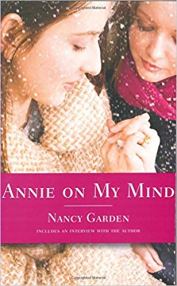
I found this book at a time when I was just beginning to come to terms with my queerness and it helped normalize being gay for me. While this love story between two girls takes place in the 1980s, the nuanced character development and intricacies of the love explored helped me realize that being all forms of love deserve to exist not solely defined by their political status.
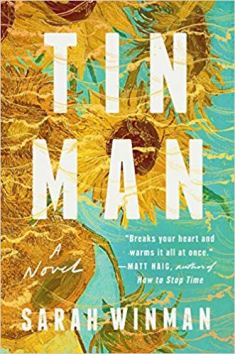
I read Tin Man on the recommendation of a friend, unaware of the storyline or the synopsis. The story I encountered was perhaps one of the most emotionally poignant ones I had read. Tin Man depicts love and sexuality beyond the cardboard boxes we put them in and touches upon art, friendship, and desire by freeing these from their socially gendered labels. It’s a warm, gradual narrative on sadness and nostalgia, and the transformative potential of love.
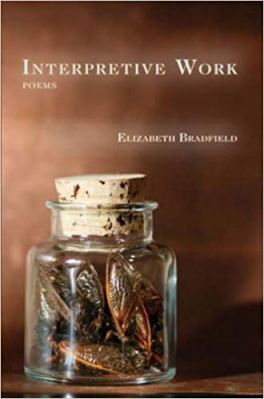
While the poems in this collection often deal with the conflicts of history, politics, culture, and family, hope and beauty win out for the view of the future. Her poems cross boundaries into the vulnerable to reveal how loving someone can help you love the world.It’s published by Artoi Books, which is an imprint of Red Hen Press (Arktoi Books publishes literary poetry by lesbian writers).
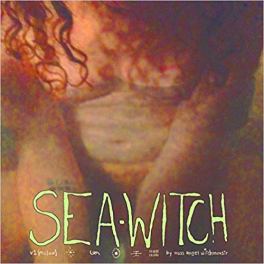
I think Sea-Witch was revolutionary for me: a work centered around transsexuality, a genre-fluid/genre-defying and literature-altering book, Never Angeline Nørth’s book is about a girl monster, a witch-god, about their origin stories and journeys and narratives. I don’t know how to summarize this book but I do know that this book will change the way you look at and critique texts, and I believe it is a great introduction, both in terms of form and content (as much as I despise considering those as the two components of a text), to what the category of LGBTQ+ literature is and can be. Sea-Witch helped me come to terms with my still-developing notion of what my own sexuality is and what it means to me. The book sounds tumultuous but that is the beauty, that is its defiance, and that is what motivates me to make peace with my tumultuous sexuality.
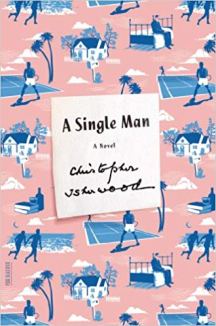
Christopher Isherwood was one of the first queer authors I came across during my English studies, and his stories opened up new perspectives to regard the world I’d grown up in. In my private Isherwood collection, A Single Man still stands out most remarkably. An artistically crafted story about seclusion and otherness, it tells the tragic end of a curtained love in a homophobic society that grants no (public) closure for the bereaved. But more powerfully, Isherwood’s insight into a single day of a grieving man revealed to me the beauty of two men in love – physically and emotionally. Reading A Single Man, you’ll certainly be touched by the despair that travels from the first to the last page. But I also hope that you’ll be ignited – to make reality better.
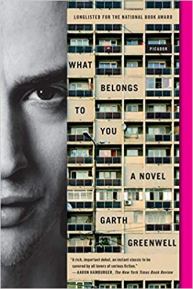
Look Garth Greenwell up on Youtube and listen to him read aloud from his work before you read this novel. He was trained as poet before turning to prose, and his history shows in his work: every sentence has a rhythm that demands to be read aloud. That isn’t to say that the ideas of his work don’t matter, but auditory beauty is a nice way to ease yourself into the story that is ultimately devastating. The story follows an American professor teaching in Bulgaria, who pays a young man named Mitko for sex and comes back to him again and again. The driving question of the novel is whether Mitko really has a connection with the narrator, or if it’s all just loneliness making infatuation feel like love. I’m not gay, I’ve never been to Bulgaria, and the world of illicit sexuality described in the book is something I’ve never experienced. Which might have been part of why I liked it so much: much of the power of fiction is to show you what you’ve never known or seen. But even more powerful is the universality of the book. Wondering if your love is real or not is something that every romantically-inclined person has felt, no matter who you are or who you love.
– John S. Osler III, Prose Editor
To view staff bios and learn more about our staff, check out our Masthead page here.
The world of music and language, literature, poetry, books share intimate connections. In the process of reading and writing, we can often be reminded of music and songs. Exploring these connections, we have compiled for you a literary playlist consisting of a few songs that remind us of writers, of their works, and add to our own experiences as readers and writers. Take a look and give these a listen!
Shalott by Emilie Autumn
I love how the song retells Tennyson’s famous poem from the point-of-view of the Lady of the tower herself, and how it gives back some semblance of agency to her– as though she’s talking back to the poet, the poem and the Victorian tradition and her reply is her only form of rebellion.
– ARCHITA MITTRA, Prose EDITOR
Queen of Peace by Florence + The Machine
Although this song is about a king who goes mad with suffering after his only son is lost in a battle, it has always reminded me of King Lear. The tale of grief making a king realize that he’s just a man paints a vivid picture of Lear reuniting with Cordelia, only to be parted from her once again.
– JOANNA CLEARY, BLOG EDITOR
AAJ JANE KI ZID NA KARO by Farida Khanum
The song was originally a nazm written by Fayyaz Hashmi, a Pakistani poet. And in Farida Khanum’s voice, of course, there is a different texture, a different poetics I find at work. For some reason, I think that this song to be has always expressed the journey or passage of time, age, history in romantic, personal, political, philosophical ways with a remarkable simplicity. I love this version by Coke Studio Pakistan the most, and it always reminds me not just of this link between music and language and the changing, different bodies of the two, but also the beautiful poem by Akhil Katyal that we published in Inklette too, where he writes about Farida Khanum: “she does not hide the age / in her voice.” This makes me tear up, and I think his poem is a perfect afterword for the song itself.
– DEVANSHI KHETARPAL, EDITOR-IN-CHIEF
The Latin One by 10,000 Maniacs
This is directly inspired by Wilfred Owen’s Dolce et Decorum Est. It changes some of the words, but still captures the horrific and more complicated aspects of war.
Lucy by the The Divine Comedy
Lucy by The Divine Comedy is an awesome musical version of William Wordsworth’s poem of the same name.
Meet Me at the Cemetery by The Smiths
And to go along with my moody theme, I have always loved Meet Me at the Cemetery Gates by the Smiths. I love the literary references, and I think Oscar Wilde would approve of it.
– LISA STICE, POETRY EDITOR
RIVERMAN by Nick Drake
It’s pure poetry strummed over the guitar in an odd 5/4 time signature. It has been suggested by Drake’s friends from Cambridge University that William Wordsworth’s lyrical poem, Idiot Boy served as his source of inspiration. For me, the song underscores an existential dread: “Betty said she prayed today / For the sky to blow away / Or maybe stay / She wasn’t sure.” It transports me to a grassy meadow somewhere in Virginia, sitting under a tree and reading poetry by A. E. Housman, John Keats and, of course, Wordsworth. I think the words of Nick Drake should be read and listened to under trees, too.
– Maria Prudente, BLOG EDITOR
To read staff bios, check out our Masthead page here.
Summer’s almost here, and hopefully, that means having some time to relax, read, and munch on your favourite snacks. We asked the Inklette team what they like to eat and/or drink while reading, and their answers do not disappoint. Read some delicious bits below:
Hot Chocolate + Cheese
Hot chocolate requires no explanation, as it’s so delicious it can be consumed under any circumstances. Cheese is tasty, filling, and, unlike chips, it doesn’t run the risk of making my fingers greasy as I turn the pages of my book.
Joanna Cleary, Blog Editor
Tea (usually Earl Grey with milk and sugar) + dark chocolate
Both have floral scents and flavors that wake up my brain and send me into a dreamy state.
Lisa Stice, Poetry Editor
Black Coffee
I like my coffee like I like my reading life– dark and bitter. When I’m reading, I like to drink black coffee, no matter how stereotypically “writerly” it is. Coffee helps keep me focused as I read long poetry collections, stopping for a sip between each poem. The roughness of the bitter black coffee stirs the imagination, keeps the body and mind robust, and brings whatever I’m reading to back to life.
Angela Gabrielle Fabunan, Poetry Editor
Iced Tea
I recently learned how to make iced tea because of the heat wave going on in Delhi and after many tries (too many than I wish to admit), I’m happy to have perfected it. Nothing goes so well with a good book as a glass literally full of sugar and lemon juice and tea.
Smriti Verma, Poetry Editor
San Pellegrino Mineral Water + prosciutto-wrapped melon
Summer reading is a smack of something sweet and salty and dancing bubbles inside a glass with ice and the bottle nearby. Sticky fingers on pages? That’s what the Pellegrino is for!
Maria Prudente, Blog Editor
Cappuccino + Chicken Empanada or Black and Red Cherry Danish
I was never really fond of cappuccinos before going to Italy. But after having lived in Florence for five months, where I had some of the best cappuccinos at the Oblate and at Le Murate, my views have changed. Back at home, in New York, I love sitting down with a cappuccino and some chicken empanadas or danishes in my neighborhood coffee shop. A cappuccino is rich, and so are chicken empanadas and danishes. They are all warm and much like literature, they enrich my mind, my soul, my mind and, certainly, my stomach.
Devanshi Khetarpal, Editor-in-Chief
Milk Tea + Chocolate Croissant
I’ve swapped out my coffee addiction for milk tea, and I’m currently trying out a dozen or so different instant brands. My favorites have a slight earthiness with the hints of black tea, but the milk and sugar make it a perfect light drink for reading. If I want something to munch on, I’ll go for chocolate croissants. Buttery, flaky, and best of all, the chocolate is left neatly within its folds.
Sarah Lao, Social Media Manager
Cold Coffee with Ice Cream
I’m sort of addicted to coffee and milkshakes, and having a nice cold drink while I read a page-turning epic fantasy is absolutely glorious- be it a homemade delicacy or a fancy drink at a cafe, with dollops of whipped cream. I might add some chocolate truffles or cookies, from time to time. I’m also mildly lactose intolerant, but when has that stopped anyone?
Archita Mittra, Prose Editor
To learn more about our staff and read staff bios, visit our Masthead page here.
How do we apply language and meaning to an aesthetic? Can we be precise? Susan Sontag attempts precision in 58 paragraphs by listing in detail the sensibility of “camp” for those who are unaware. “The essence of camp” she begins, “is the love of the unnatural: of artifice and exaggeration.”
I’d read Sontag’s essay last summer and by the end of it felt I’d need to remember all of it. Highlight number 5 and number 6 oh and number 7, too. Read up on Henry James and Oscar Wilde for good measure. What does Greta Garbo look like again? Oh, I love this word epicene- so precise! Sontag grasped an idea I understood very well but couldn’t explain myself. Camp is better seen and felt. How did Sontag manage to describe taste, style, and convention while simultaneously debunking all three and making it clear and knowable? My answer is research! If you’re thinking this a quick read on some idle Tuesday night, behold, open your google browser and cancel your morning workout.
The 2019 Met Gala gave people who’d never read Sontag’s work or given thought to taste as a sensibility: good and downright awful, nothing in between. On Monday night I feverishly hashtagged metgala and received minute-to-minute updates (yes, this was during finals) of the looks from the evening. On the red carpet, most celebrities shrugged and gritted their teeth when asked of their thoughts on the night’s theme. For me, Kim Kardashian was the complete embodiment of camp as an aesthetic. Kardashian represents a feeling in our country- she doesn’t have any extraordinary talents in the entertainment industry, but she has a famous lineage which has made her popular. Popularity is an aesthetic in the United States. Her choice to work with Thierry Mugler of House of Mugler was a smart choice- Kardashian clearly understood the aesthetic because she is aesthetic. Inspired by Sophia Loren drenched in water in the film Boy On A Dolphin, Kardashian arrived dripped in wet in diamond with a tan that matched her dress. She was a walking photograph- a walking sensibility- Kim Kardashian wearing Mugler was “camp.”
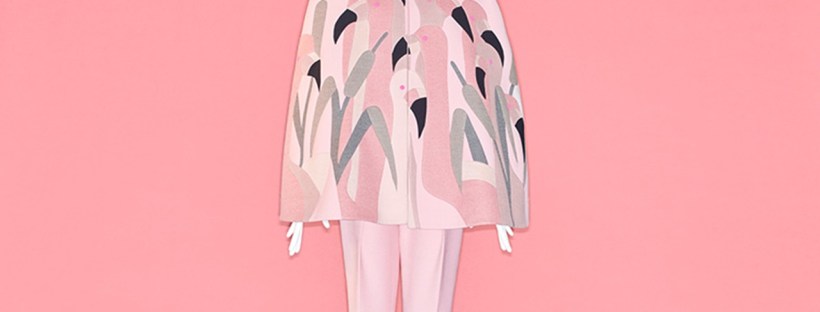
The exhibition takes you from 17th-century fashion to modern day. If only Sontag were alive today I wonder if she would add or cross-off anything to her precise list of “camp” and it’s imprecision. One line I keep with me because it’s easy to remember: “the ultimate camp statement: it’s good because it’s awful…Of course, one can’t always say that.”
Notes by Devanshi Khetarpal
It was my last day in New York before I went home for the summer. I wondered if I had the time, in between packing or resting and going to my favorite diner, to go to the Met and visit the exhibit on “Camp,” the theme for this year’s Met Gala. I wasn’t sure if fashion, or couture, specifically, is something I understand, something I “get.” Thankfully, “Notes on Camp” by Susan Sontag was #trending, and inevitably came to my attention the day after the Met Gala. I read it thoroughly, and enjoyed every bit of it just as I have always enjoyed Sontag’s writing, and thought that maybe this time, after I visit an exhibit on Islamic and Pahari art that interested me, I might as well go to the gallery and have a look at dresses, jewelry, whatever they may have there. I had no idea what to expect, what the displays would be like. Should I be using “Camp” as an adjective at all? Is it one? These are just some of the questions that passed my mind.
I finally made the decision to go to the exhibit and thought I’d just skim through everything I needed to see in order to understand. I didn’t have too many questions, I didn’t want too many answers. But as soon as I saw the pink wall (…“is this millennial pink?” I asked myself) with “CAMP” written on it, I was taken aback by surprise because the first thing I noticed was the abundance of text. Old books and manuscripts were kept open behind the glass, sometimes next to shoes or dresses or miniature sculptures that looked like paperweights, the kind no one uses now. As I kept making my way through the exhibit, I saw familiar names: William Shakespeare, Oscar Wilde, Christopher Isherwood, Susan Sontag, among others. I saw brand names, too, of course: Gucci, Louis Vutton, fashion houses I have not heard of and whose names I cannot pronounce but whose clothes, I am certain, are beyond what I can ever imagine affording. I realise that fashion is everything I love and loathe, perhaps like writing in some ways.
But the textuality of the exhibit was unexpected. I didn’t expect to see the world of fashion, the fashion industry, take such an initiative to reflect on its language, the history of its language and to use it as a method to innovate, create, critique, expand. I have been obsessed with the sartorial choices of my favorite writers. I think of Tishani Doshi in Georgia Hardinge’s “sculptural dresses,” I often think of Arundhati Roy draping a saree with her deliciously curly, short hair. I have always wanted to steal their wardrobes; when I was growing up, I wanted to dress up as a writer, like the people I have seen at literary festivals across the country: unapologetically Indian, apparently comfortable, truly colorful and invariably and individually stylish. I had no clue how they did it and through the years, I have been trying to develop my own “sensibility” rather than style. I put myself together deliberately, slowly, cautiously before any poetry reading or public lecture. And even though I am not too well acquainted with the artifice, extravagance and how they must be effectively constructed, or amalgamated into one’s identity, donned as one’s outfit, I do know that camp is a different kind of textuality and intertextuality, one that’s atmospheric too.
I realized this as I walked through the exhibit: the text was pasted onto the glass and the specimens were behind the text. The text became the foreground and retained its textuality, while the specimens became not just evidence of the text but also became the subtext, the background, even in the event of the text merely describing the specimen. This three-dimensional presentation is something intriguing. Was I supposed to treat the text as something that brings out the real of the specimen? Am I supposed to treat the text rather than the specimen as the interface of the textual and the embodied, the real, the exhibited? Or am I supposed to treat the text as hyper-real, something with the capability to break free from the specimen and emerge embodied? I might never know. But while I saw Sontag’s notes on Camp (note the capital ‘C’), I recalled the phrases I had been seeing: “akimbo pose,” “queer attitudes,” “camp it up.” Every piece certainly was different but what appealed to me most was the necessity of the text. The text, the writer of the text was on top of the whole and Sontag’s text appeared atop the semicircle of glass displays, each letter being typed away, fading into each other as the line extended with the soft sound of a typewriter emerging. That, for me, was camp: the crowd, the abundance of text, the many glass displays, the specimens, the color, the sound, the bright light shining on each one, making them stars in the show.
To plan your visit or find out more about the ongoing exhibition at the Metropolitan Museum of Art in New York, visit their website by clicking here.
MARIA PRUDENTE has written about feminist ethics for Manifest-Station and is featured in Grey Wolfe Publishing’s upcoming anthology of nonfiction short stories. Maria is a professional stage and film actress. She received her training from the Lee Strasberg Theatre & Film Institute and graduated from the American Musical & Dramatic Academy with a concentration in Musical Theatre performance. Maria is the Content Editor at CountrySkyline, LLC and proud member of Actor’s Equity Association. She lives in NYC where she studies Creative Writing at Columbia University.
DEVANSHI KHETARPAL is from Bhopal, India, but currently lives in New York City, where she is a junior at NYU majoring in Comparative Literature with a minor in Creative Writing. Her poetry collection, Small Talk, is coming out soon from Writers Workshop India, Kolkata, and her poems have been published or are forthcoming in Sahitya Akademi’s Indian Literature, Best Indian Poetry 2018, Transom, Aainanagar, Vayavya, TRACK//FOUR etc. among others. She is a recipient of the 2018 David J. Travis Undergraduate Research Fund for research on modern Italy, and has studied abroad at NYU Florence and NYU Paris. She has served as an intern at Poets House, and currently works as an application manager for The Speakeasy Project, a poetry reader for Muzzle Magazine, and as a student office assistant for the NYU Department of Comparative Literature. Khetarpal can speak, read, write and translate from or to Hindi, English and Italian, and will start learning Punjabi soon.
Joanna Cleary: Rejection: it’s awful. Unfortunately, however, artists– regardless of medium, experience, and to a large event, even talent– have to face rejection on a continual basis, which is why I’m so excited to have a conversation about it. Since we live in an increasingly progress-oriented world, rejection has become equated with failure and failure with shame. However, when I received my first rejection letter at the age of twelve or thirteen, I felt proud. Even though my poem wasn’t accepted by the magazine I’d submitted to (and for good reason– it was terrible), I was thrilled that somebody other than me, literary editors no less, had actually read what I’d written. I’d given something – a perspective, perhaps, or a story – to somebody else. I learned that being an artist is about giving; as long as you try to do that, you’re on the right path. Even though rejection is undeniably discouraging, I’ve learned to never be ashamed of offering my work to others. Now over to you– tell me about your first rejection.
Maria Prudente: I didn’t get a part I wanted in my high school musical. I was a sophomore, and I had my heart set on playing Velma in “Chicago,” but this senior who was known for doing beauty pageants and had never done theatre before walked in and nailed her audition. It was between the two of us in callbacks, but the director loved her; and the next day when the cast list went up I was, as expected, devastated. I think it’s common to compare and self-loathe in the first moments of rejection. I kept thinking, “If only I was older and sexier and more tan and had longer legs…” the list kept going but it was all superficial. Within a couple of hours of feeling sad about it, I realized what I had that this senior didn’t have was experience, knowledge, and a deep curiosity and love for performing.
Consequently, I ended up not only taking a small part like Mona in the “Cell Block Tango” and making my monologue land a big laugh every performance, but I ended up being an assistant director for the show. Deciding to turn the pain of that particular rejection of that role into a new role where I could contribute to the theatre in a new way was incredibly empowering. But, as you stated earlier, experiencing rejection is ongoing for artists. How do you cope?
JC: I think the key to coping with rejection is not letting it define you as a person and artist.
Whenever I receive a particularly difficult rejection, I make an effort to do something I enjoy, such as having a cup of hot chocolate or going for a run. By investing energy into who I am as a person, I don’t feel as if my self-worth relies on who I am as an artist. However, I also use rejection as a motivator when it comes to my identity as a writer – for every rejection I receive, I try to send out one or more submissions into the world so that there will always be a glimmer of possibility for me to aspire towards. Again, over to you – how do you cope with rejection?
MP: I think you have a really healthy outlook. Creating routines to feel connected to our sense of self or reciting positive self-talk is an ideal way to deal with rejection. It’s also a really hard thing to practice. There have been days where I have found out from several publications that my work hasn’t been accepted. Sometimes I’ll read that my work was being considered but wasn’t quite right for their issue and I obsess over what thing it was that kept them from putting my piece in the “yes” pile. I think tailoring work for certain publications is important for writers to improve their chances especially if they are trying to build a body of work. Submitting work and finding out what people like is so subjective and completely out of our control. All we can do is revise, rewrite and re-wire the way we accept rejections and instead use them to, as you say, motivate us. When I’m looking for a win, I write something that I feel really good about and I save it to my documents for my eyes only. I think sometimes having something in my back pocket helps me to feel confident. Returning to a piece and cutting it or building on it can be really satisfying because it isn’t being judged by anyone but you, the writer. I can tell a story and chip away at the truth the way I want to. What’s important for writers to remember is why they write and for whom they write. This helps me keep a grip on reality and reminds me of what I love about writing in the first place.
An acting teacher of mine always said: “tell the story simply and clearly”. The same can be said for writing. I often remember this phrase when I feel caught up on using flowery language or I’m inside an overly stylized piece and I fall away from what I’m trying to say. Have any mentors from your past or present given you advice that you’ve found valuable in your writing?
JC: A creative writing mentor of mine once told me not to think of rejection as a lost opportunity, but as an opportunity to give meaning to hardship through growth. Like you say, we need to revise the way we accept rejections so they enhance our ambition instead of draining it. It’s all about finding a balance between controlling our stories and accepting that, oftentimes, we can’t control everything in our lives. I’ve learned to tell myself that I can control what happens to me, but I do have more say over what I make happen.
MARIA PRUDENTE has written about feminist ethics for Manifest-Station and is featured in Grey Wolfe Publishing’s upcoming anthology of nonfiction short stories. Maria is a professional stage and film actress. She received her training from the Lee Strasberg Theatre & Film Institute and graduated from the American Musical & Dramatic Academy with a concentration in Musical Theatre performance. Maria is the Content Editor at CountrySkyline, LLC and proud member of Actor’s Equity Association. She lives in NYC where she studies Creative Writing at Columbia University.
JOANNA CLEARY is a college student double majoring in English Literature and Drama. Her work has appeared or is forthcoming in Cicada Magazine, Inklette, Glass Kite Anthology, Parallel Ink, Phosphene Literary Journal, HIV Here and Now, and On the Rusk. Poetry has been a long-time passion of hers. When she is not writing, she can be found reading, eating various forms of chocolate, and, of course, thinking about writing.
 MARIA PRUDENTE has written about feminist ethics for Manifest-Station and is featured in Grey Wolfe Publishing’s upcoming anthology of nonfiction short stories. Maria is a professional stage and film actress. She received her training from the Lee Strasberg Theatre & Film Institute and graduated from the American Musical & Dramatic Academy with a concentration in Musical Theatre performance. Maria is the Content Editor at CountrySkyline, LLC and proud member of Actor’s Equity Association. She lives in NYC where she studies Creative Writing at Columbia University.
 MARIA PRUDENTE has written about feminist ethics for Manifest-Station and is featured in Grey Wolfe Publishing’s upcoming anthology of nonfiction short stories. Maria is a professional stage and film actress. She received her training from the Lee Strasberg Theatre & Film Institute and graduated from the American Musical & Dramatic Academy with a concentration in Musical Theatre performance. Maria is the Content Editor at CountrySkyline, LLC and proud member of Actor’s Equity Association. She lives in NYC where she studies Creative Writing at Columbia University.
 JOANNA CLEARY is a college student double majoring in English Literature and Drama. Her work has appeared or is forthcoming in
  Inklette Magazine