The Endless Night

On May 6th, 2017, at exactly 1:53 AM Central Standard Time, the sun turned off.

Around the time when the piercing rays of the sun would normally be peeking through the blinds, curtains, and tent flaps of the Western Hemisphere, hundreds of millions were shutting off their alarms and groaning, reluctantly dragging themselves out of bed for a day of work, school, or driving to visit Aunt JJ in El Paso. But there was no sunlight.

Manuel Hidalgo of Santiago, Chile didn’t notice. Neither did the Ross family of Lincoln, Nebraska, nor the entire city of Pittsburgh. However, Uh Yong-Sook in Seoul did, as did 80,347,568 Chinese farmers and 458 kangaroo ranchers. 3,434,847 people fell off their bikes after suddenly not being able to see where they were going. 84,568 people, in 189 different languages, asked someone near them, “Is there a solar eclipse happening?” 27,446 people replied “I don’t think so,” 14,871 said “No idea,” 4,104 said “Yes,” and 38,157 people pretended like they didn’t hear.

8,408,372 people screamed, 2,109,334 people pinched themselves, 843,145 laughed, and two drunk middle-aged men shouted at their wives to turn the lights back on, even though they were both outside.

As billions of electrons zoomed along cables stretching across the Earth, carrying with them messages, pictures, and cries for help, newscasters, used car salesmen, and gourmet chefs all asked the same question: Where did the sun go?

Whether it was through TV, radio, or looking outside, by 9:24am CST, nearly everyone on Earth knew that something was wrong. Everyone except 284,485,460 kids too young to know what the sun was, 45,278,994 elderly who refused to believe it, and 83,428 people in comas.

Katie Webster of Tuskegee, Alabama didn’t see it either.


****

           On May 6th, 2017, at 9:24 AM Central Standard time, Katie Webster was where she normally was at this time: sleeping in her bed, where she would remain for another six hours or so. Her mother, Mary Webster, was downstairs in her kitchen, watching her TV in disbelief. Her twelve-year old brother Mac and fourteen year-old-sister Angie were sitting at the table, patiently coloring some pictures of dolphins and squirrels. And her father, Roy Webster, was currently in Alaska, getting drunk off four different types of liquor, although none of them knew that. After two years of having to deal with three kids on opposite sleep schedules, Roy had gone out for a pack of cigarettes and never come back.

Katie Webster was born August 16th, 2010, weighing in at seven pounds, five ounces. Her breathing was steady, appetite good, and she laughed and cried as much as any other baby.

One year later, her mom took her in to the doctor after she got a particularly bad sunburn. After hours in the ER, a team of a dozen or a hundred doctors broke the news. They called it Xeroderma Pigmentosum. It was rare, it was serious, and it wasn’t going anywhere. All Katie saw were a bunch of giants in white coats. Then she saw her mom start to cry, so she cried too.

****

          After two days of no sun, the potent initial shock subsided and gave way to a more sustained, constant fear around the world. Hundreds came forward as the Messiah, the Second Coming, the Grand Wizard of Destiny, announcing that Judgement Day was upon them and God, Satan, or some fourth-dimensional shape-shifters were coming to save them or damn them. Millions believed it.

It was the golden age of TV news. They brought on agriculture experts claiming that plants need light to grow. They brought on thermodynamic physicists claiming that the sun provides heat to the Earth. They brought on clinical psychologists claiming that sunlight combats depression and fatigue. They brought on nutritionists and biologists, photographers and congressmen, astronomers and practitioners of sorcery and magic, all with the same doomed message. The more fear they produced, the higher their numbers climbed, as more and more sat in their homes, too afraid to go outside, to look out their windows, to confront the debilitating terror that what was going on in the world of their TV’s might be going on in their world as well.

Meanwhile, great plans were set in motion by the governments of the world.

China quickly pulled together a mission to the dark and lifeless sun – but it failed shortly after liftoff because an engineer working on the first stage decoupling had gotten distracted by a donut and input pi as 31.4159265.

Germany figured out how to extract nutrients from rocks and, with no time for preliminary trials, enlisted a few thousand brave souls to try out the diet. It wasn’t tasty, but it kept them alive. At least for a few days, until they all began experiencing diarrhea the likes of which has never been seen before on Earth. Their hair started to fall out, their nails grew at 1000x the normal rate, and their tongues turned blue. And then they died slow, painful deaths.

And the UN commissioned a great ship to be built, filled with great works of art, music, and literature, history books and science books, pictures, videos, machines, artifacts, and relics: things to capture the essence, the beauty, and hardship of humanity. They cast it away, on a course out of the solar system. They hoped that one day, somewhere deep in the future, something would find it and think about humans, about Earth, about the fact that humanity existed and, in some small way, mattered.

However, nothing seemed to work. No amount of funds, bureaucracy, or bipartisanship seemed to be able to overcome the brutal fact that the source of Earth’s heat, energy, and life for billions of years was now gone.

****

          Katie Webster couldn’t quite grasp what was happening. Her world of darkness and artificial light now pervaded into the hours when she was usually locked away behind her protective curtains. “Hey, on the bright side, now you’ll never get a sunburn,” her mom had said through choked tears and bitter fear. Katie wasn’t quite sure what she meant.

Katie wasn’t quite sure of a lot of things. Like why her tutor Jody hadn’t been showing up. She missed her warm hugs and coffee breath. On the other hand, Mac and Angie seemed to be around a whole lot more. But when Katie asked them why they weren’t at school, all they did was stare back with wide eyes, before looking at the TV.

Whenever her mom would wake her up at these strange hours and she would ask why, all she would get is “don’t worry, Katie.” But she was worried. Her life had suddenly changed, and she had no idea why.

 ****

          Word spread that they had a couple of weeks before it would get noticeably colder. A few more after that and the outer extremities of the Earth would be virtually uninhabitable. Two months in, they expected hypothermic deaths by the millions. Six months, and it was a different world.

Governments urged people back to work – food, water, and energy require working economies. They reopened schools to keep children busy, and poured billions into research, though whether to focus on astronomy or theology was anybody’s guess. They promised that they had the best and the brightest working overtime, though 87,431 of the best and 44,181 of the brightest had long since retreated to secret cabins far from civilization.

Out of the public eye, delicately hatched plans began to take shape as many vied for the heroic position of savior: savior of themself, savior of their family, and savior of humanity. 

****

          The last, and only, time Katie had been on anything like a school bus was when her mom had let her go with Angie on a stargazing field trip. She remembered the foreign world of chatter, gossip, hormones. Laughter rung in her ears as she lay on the mossy ground, drawing lines between stars. That was also the last time she heard laughter that wasn’t Jody’s. She wondered why everybody laughed differently, and why school buses were yellow.

She wondered why she was now on a school bus, surrounded by strangers. She wasn’t used to this many people; it was disorienting and destabilizing. She joked about it being a magic school bus to the girls behind her. They stared for a second before continuing to talk about their favorite youtubers. Years of being exposed Jody’s antiquated taste in TV let her down as attempt after attempt to relate ended in failure. She retreated into her seat, silently hoping that these were the popular girls and she would find company in a less highly-viewed, but less critical clique.

Her mom had said to take the bus back home after school. She wondered how long school was. She spent the day being told about numbers by sweaty grown-ups, even though Jody had already taught her all of it. She quickly learned to keep quiet and not answer every question, even though she knew the answers. However, the damage was done, as rumors and notes spread about the smart-alec new girl.

After a lonely lunch, she reluctantly rode a wave of children out to the blacktop. Katie watched as other kids ran around the huge floodlights, screaming and pushing. She had never seen so many kids. She didn’t even know places like this existed.

Like an astronaut emerging from a ship onto a hostile alien planet, she was cautious and scared. She noticed a patch of trees and ran to it, thinking of the woods behind her house, something familiar, something safe, something she knew more intimately than books and tv shows. She began exploring, stomping around when her teacher, Mrs. Fuller, came up to her.

“Hey sweetie, would you mind coming back to the blacktop?”

        Katie didn’t want to and didn’t think she had to listen to Mrs. Fuller.

        “No thanks.”

        Mrs. Fuller persisted.

        “Listen, honey, we want everybody on the blacktop so we can watch – ”

        “Why were you crying in the bathroom this morning?”

        Mrs. Fuller stared. Katie, curious and ignorant, didn’t stop.

        “Is it because your stomach is so big, and it makes you look weird?”

        Mrs. Fuller, five weeks away from giving birth to a son in a world with no light, cried the whole drive home, but not before telling the other teachers to deal with “that little devil child in the woods.”

        It took four of them to finally manage to get Katie back on the blacktop. And there she stood, a lonely and confused astronaut taken prisoner on an alien planet.

After a few minutes she noticed a boy coming towards her.

She knew about boys. She had read 2,731 pages and watched 1,459 minutes of tv about boys. She wondered what kind of boy he would be.

He waved, so she waved back. Would he be a mean boy? He said “Hi,” and she said “Hi.” Would he pull her hair?

His name was Michael. Eventually he went up to her and tapped her arm.

“You’re it.”

She watched him run away, looking back over his shoulder. She stood there, bewildered and sad. A few minutes later he returned.

“Are you gonna tag me?” he asked.

“What’s tag?”

After he explained, off they ran, and 30 minutes and 30 tags later, Katie and Michael stumbled inside, grinning from ear to ear.

 ****

         The cold was steadily growing, the darkness relentless and infinite. Rationing began in Australia, Angola, and Amsterdam, after two months and eighteen days in the dark. Millions of farm animals had died, and farmers rushed to salvage any meat they could. But instead of selling it off, they decided to keep it, as they realized that they didn’t need money; what they needed was food. And just like that, thousands of years after its inception, the people of the world began to lose faith in the institution that had nurtured civilization, forged great armies, and dominated the lives of kings and peddlers alike. Farmers everywhere, embittered by the cold, sent shockwaves of doubt and fear all around the globe.

The hoarding came first, then the looting. Neighbors became enemies as they wondered how much gas, food, water they were hiding from each other. As communities slowly crumbled, so did common notions of civility, of manners, of patience, courtesy, and shared humanity.

A few places managed to band together, to cooperate and channel their common fear into productivity instead of hostility. The town of Doolin, Ireland, managed to pool all of their resources and restore faith in the local government, successfully doling out rations and making tough decisions to ensure their survival for as long as possible.

Addis Ababa pulled together like no other city could, with 90% of able adults going in to work, to keep the city functioning and producing, spurring the economy and keeping their supplies of food and energy steady.

And a small town in Australia decided to go out with a bang, gathering all of their food and alcohol and throwing a fifteen-day feast, filled with music, dancing, and debauchery, preferring to spend their last days in the hedonistic presence of friends and loved ones as opposed to slowly dying from the hunger, if not the cold.

As hope deteriorated, an idea, the inklings of a plan, were born in the mind of a prominent energy researcher, and a few weeks and phone calls later, Dr. Laura Butler announced her daring and heroic plan to save the Earth.

In front of reporters, cameras, and the world, Dr. Butler and her coalition of scientists described her pioneering new method of energy extraction, capable of producing sixteen times the energy from the same amount of fuel. This, coupled with a special form of lamp inspired by those used to treat babies with Jaundice, could save millions, if not billions, she said.

By producing not only light that mimics sunlight, but also vast amounts of heat, the lamps could not only provide the necessary conditions for humans to survive, but crops and animals, too. Everybody would have to gather in densely packed cities, leaving their homes, their lives, the memories behind them. Life would be unquestionably altered, but life would remain.

Billions donated, and research and development began. Countless scientists, engineers, urban planners, and designers offered their services, and for a select few, she graciously accepted and let them join her team. The world held its breath as its hope for survival was crafted in labs and factories, while food, water, and heat continued to decline. 

**** 

          At lunch the next day, Katie was sitting alone when Michael plopped his tray and himself down next to her.

They spent recess running, jumping, tagging, and laughing. As Katie rested against the wall after a particularly taxing but successful tag, a girl came up to her.

“Are you playing tag?”

Katie recognized her from lunch the day before. She didn’t let Katie sit next to her.

“Yes, but you can’t play!” Katie screamed, blind rage erupting, the painful memory of one of her first ever rejections reverberating in her head, the deep desire for revenge, for justice, for this girl, this witch to feel how she had felt-

But as Katie watched her walk away, she remembered the Golden Rule. Words she had read countless times, had heard countless characters speak.

“Sorry, you can join if you want.”

And like that, Amber entered her life and her games of tag.

Katie, Michael, and Amber spent every recess racing among the trees and the kids, feeling the soles of their shoes grind the asphalt, releasing the beautiful smell of rubber and rock that Katie was growing to love so much.

Soon, they were joined by a third. Then a fourth. After her first two weeks at school, Katie had acquired a small posse of recess-time adventure-seekers and tag-fanatics. They ran, carefree, under the floodlights, dodging each others’ hands, laughing, screaming, unaware of the stress, worry, and fear dominating the minds of the teachers who stood around them, silent and bleary-eyed. One day, she tripped and fell. She skinned her knee and cut her lip, but she didn’t care. She felt more alive than she ever had; her knee became a symbol for adventure, her lip a symbol for freedom.

The other kids were impressed by Katie’s agility and speed, skills nurtured and improved over countless empty nights running through the woods around her home, just her and a million crickets, all ignoring her mother’s cries to return home. Exploring was her love, an escape from the strange, dull world inside the house. The woods were her home; she felt warm and safe, even on those cold moonlit nights.

Never did she realize that there were others just like her out there, others wishing to feel the wind in their hair and sweat on their necks. She had always been so alone, assumed it would be that way forever. But as she played, she found warmth and safety in these people. She began smiling and laughing with them during class, talking about candy and cartoons on the bus, and feeling a bittersweet contentment as she left them, sad to leave but excited to laugh with them tomorrow.

Her mom, resigned to their new life of darkness, took down the blackout curtains in her room and Katie sat on her bed, looking up at the sunless sky filled with stars. Her dark prison cell became a waiting room with a view, a place to pass the hours until she could see her friends again.

****

          Dr. Laura Butler and her team of world-savers worked tirelessly as the people of Earth watched. Men, women, and children put all of their faith in chemistry, in physics in thermodynamics and materials science and quantum mechanics. Updates came daily, and Dr. Butler spared them the jargon and complexity. She kept it simple and gratifying, enough to excite the public.

Hope became the new business of TV. As spirits lifted, communities started gathering to share food and watch the news together, the atmosphere contagious and electric with hope. Billionaires announced grand contributions, appearing on TV with Dr. Butler to accept them. Progress accelerated and the people of Earth began envisioning their future, one devoid of the light and heat of the sun but filled with the light and heat of chemical reactions, a cheap substitute but a substitute nonetheless.

The countdown began when Dr. Butler said they nearly had it; it was only a matter of days until they were ready for mass production. With all the manufacturing resources they had devoted, they could light the world in a few months.

Small celebrations were thrown, celebrations of human ingenuity and the sheer willpower to survive. Celebrations of that which had turned us from apes into kings in a cosmological second.

Then, one day, Dr. Laura Butler stopped showing up on TV. No longer did her voice assure everybody that the solution was close. The people of Earth remained incredulously glued to their screens, wondering what had happened. Bewilderment swept across the globe and remained until, a few days later, a weary looking man appeared on TV.

He apologized and apologized. Apologized he had taken part. Apologized he had been selfish. Apologized he had participated in the lies.

As he described the elaborate plan that had been born in the mind of Dr. Laura Butler and perpetuated by the hundreds brought in to legitimize it, people in all time zones felt like they were sinking to the depths of the deepest ocean trench. He said the guilt was eating him alive. He said it wasn’t fair, how he and the others had taken the world’s money and bought themselves tickets to survival. He said Dr. Laura Butler was so convincing, so trustworthy. She said it was for the survival of humanity, how only a few could survive, how they were pioneers, how they would go down in history as the saviors of the human race.

He described the elaborate underground structure being built; the true product of the world’s money. He described the systems of air filtration, water purification, and hydroponics he had worked on in exchange for a ticket to salvation and a closed mouth. He described how they would not only survive but thrive, a few thousand living in luxury and decadence while billions starved and froze above.

He had bought into it. He had believed Dr. Butler when she said that this was the only way. That without this humanity was doomed.

He apologized and apologized, and then he stepped out of view of the camera, never to be seen again.

Riots broke out, the worst the world has ever seen. Fires the size of cities lit up the globe, giving a brief respite from the eternity of cold that would follow. The collective outrage fueled a mass search for the underground safe haven the man was talking about. Within days it was found, deep in the Canadian wilderness. The infrastructure that remained of the internet was used to organize a mob hundreds of thousands strong, which descended on the location like a swarm. They burned the living quarters, ate the food, found those that had already moved in and mercilessly beat them, and promised the same for any yet to move in.

Dr. Laura Butler, Jesus turned Satan, was found fourteen miles away trying to escape. And the masses turned her into a horrifying example of the most brutal human capabilities, an example that was broadcast live on the internet for millions to watch.

Anger and mob mentality brought about the destruction of the underground Noah’s Ark, and just like that, humanity’s last hope for survival disappeared.

****

          Katie’s mom sat her children down to explain what had happened. To explain that all hope was lost, that they didn’t have long. Katie didn’t pay much attention. Her mind was elsewhere, dreaming of what games they would play tomorrow. Content to go to school forever, as long as she could play with her friends.

She thought back to her world before, a world of artificial darkness and manufactured air inside her house, occasionally broken up when she was allowed to go outside. Now, the darkness was pure, deep, penetrating, the air crisp and smooth on the lungs. Her countless stuffed animals were replaced by real friends, friends who could laugh with her, get mad at her, talk to her.

Her mom spoke of the end of the world, but Katie was more worried about her friends: she thought of Michael, and Amber, and Michelle, and Drew and Ian. What would happen to them? Would they still be at school tomorrow?

 ****

          On March 3rd, 2018, at exactly 12:17 PM Central Standard Time, the sun turned back on.

Manuel Hidalgo of Santiago, Chile, was temporarily blinded and dropped the makeshift club he was about to use to smash a grocery store window. The Ross family of Lincoln, Nebraska looked through the barricaded slats covering their window and screamed. The city of Pittsburgh, now a fraction of its population a few months earlier, felt the warm, comforting, life-affirming rays of the sun for the first time in two months, twenty-one days, fourteen hours and thirty-three minutes. They all stopped what they were doing and basked, like a city of a thousand lizards. They felt the warmth overtake them, reaching deep into their bones.

Uh Yong-Sook didn’t notice. Neither did 4,844,685 Chinese farmers or 47 kangaroo ranchers. But within minutes, electrons had zoomed across the Earth, informing them of the news. And they eagerly waited, waited, waited, for the most beautiful sunrise the world has ever seen.

****

          At 12:17 PM, Katie Webster was outside, half a mile from her house, upset at her mom for not sending her to school, confused as to why her mom was saying school had stopped being organized.

So she had run away. She dashed through the woods, leapt over creeks, and stomped on all the dead plants. Then, suddenly, the sky opened up, and Katie Webster saw something she had only seen in the days before memory.

Panic gripped her, and she bolted out of the woods, emerging under the vast expanse of unfamiliar, starless blue sky. The rays of sunlight enveloped her, and she felt what everyone from British Columbia to Buenos Aires was feeling. She sat, stunned, for a minute that felt like a millennium. She wondered if Michael felt it too.

She heard her mom, crying her name. She ran back to the house, eager to share whatever this was with whoever was there. Nearing her back porch, she saw Mac and Angie dancing. As she rushed to join in, she saw her mom’s tear stained face emerge, stuck between what seemed like laughter and fear. She thought her mom was going in for a hug, so Katie opened her arms and embraced her.

Her mom held her tight and covered her with a blanket. Katie was confused while her mom dragged her inside, away from the warm, destructive, life-affirming and deadly rays of the sun. Katie flailed and fought in confusion and anger as she heard the door shut behind her.

****

          While Mac and Angie Webster danced and sang, everywhere else friends hugged, families cried, and couples made so much love that nine months later hospitals around the world would suffer shortages of space and medical supplies. But no one thought of the future. All thought was on the present, and the sweet, simple joy of sunlight that came with it.

Huge celebrations kicked off, impromptu parades were thrown, and joy was spread on the rays of the sun.

****

           Meanwhile, Mary Webster marched through her home, up her stairs, down the hall, and into the furthest bedroom, to hang up her daughter’s blackout curtains once more.


JIMMY BANTA studies Film and Math at NYU, and loves reading, watching, listening to, and consuming stories of all kinds. After spending time screenwriting, he recently decided to get into creative prose writing, which has been incredibly fun and rewarding. In his free time, he loves to enjoy nature, good music, good food, and good company.
Plants Need to be Tended to

        We lived in a cathedral-like apartment a family was murdered in right outside of Chinatown. I hoped it’d be cheaper than other apartments, but the landlord reasoned, “The painters we brought in are very talented, baroque style, no blood stains anywhere.”

        “What is baroque?” my roommate asked.

        “I don’t know. Naked people?” he said.

        “Why would we want nudes on our kitchen walls?” I said.

        “I would,” he said, offering no discounted price. Instead, the landlord provided cans of air freshener, offering a complimentary pamplemousse candle as well, one he purchased the night before from the adult store across the street.  

       “Why don’t you just call pamplemousse what it is, a grapefruit?” I snapped, frustrated he would not lower the rent.

        “Come on, it’s Manhattan. Do you want the pamplemousse candle or not?” he retorted. I grabbed the candle from him.

        The candle felt like a truce—to live amongst ivory angels on walls and, in its grandeur, Westernized life. When Ren and I first signed the lease, I assumed she was older, shocked that we were only a month apart; the girl acted thirty-five years old at twenty. We both emigrated from a city sheltered between mountains, known for its ice sculptures and beer gardens. That’s all I knew about her before we lived together: that we lived on neighboring streets back in Japan. She dabbled with men in their thirties, donning corporate clothing to grocery stores and tucking foliage around the apartment as if she and I were a married couple on HGTV. The vegetation masked the sewage odor, and she swore by this.

        She was a painter at the time, while I studied chemistry at the university. Everyone in my family was gone, even the professor who orchestrated my scholarship. I expected to resign myself to vagrancy after graduation and return to my hometown, but as an undertow pulls someone beneath a wave, Ren brought me back ashore to where I saw a future for myself as a doctor. I wish I could say this to her, how she chose my path in life. The week we moved in, Ren sprained her ankle and made me promise to never call an ambulance.

        “The hospital is only a block away. Will you help me down the stairs?” Proximity to the hospital didn’t seem reasonable enough to deter an ambulance, but I conceded.

        “Don’t lean on your leg like that,” I said. We hobbled down the stairs.

        “I remember you telling me you wanted to be a doctor, no?”

        “I don’t recall saying that—”

        “You know caring for plants ages you.” She spoke as if she were addressing a fifth-grade classroom, “Ripens you into maturation. You should try it. It’s great practice for nurturing people, and you can work up towards a bonsai.”

        “A bonsai?”

        “Yes, a miniature tree. I can help you care for it, too,” She winked at me.

         Ren started me off with fake ones, cradling and caressing them between her hands.

         “Water the leaves as if they breathed,” she said.

         So there I was, slapping the pitcher at them, onto the dirt—sloshing—unable to get it to stop splashing on the counter. I smiled at Ren, who nodded back and said, “Technique could use some work, but nice.”

        Not long after, I nurtured lithops, called ‘living stones.’ One, Ren jested, looked like a freshly-shaved asshole. Not the aesthetic I was going for, so I left them out in the living room, where for a month each day I came home to water them until one night work kept me late. They all wrinkled and died.

        Ren’s painting class ended soon and the subway took her thirty minutes to return home, leaving me shy of an hour to fix this. I paged through the newspapers in search of a replacement to find a Venus flytrap on sale, advertised for ‘Women adopters only’ by a man who lived across Tompkins Square Park. I sprinted over.

        “I wasn’t expecting anyone,” the lanky, red-haired man admitted. “But I understand. Jupiter is quite the catch,” he added. He invited me in and sat me on the couch to exchange pots.

        I shook his hand and ran back home to find Ren wiping her shoes on the mat. Before we entered the door, she eyed Jupiter and said, “How does one kill a rock? I need to visit my mother this weekend. Can you not kill the other plants while I’m gone?”

        She prepared Castella cakes before her train ride, along with a bouquet of white lilies wrapped in ribbon. Ren told me how she and her mother were very close. They took care of each other, especially after Ren’s sister left for university when Ren turned nine. Her mother couldn’t speak English well. Diffident and soft spoken, she asked Ren to help with doctor visits and taxes. They used to make days out of it. Ren would skip school, her mother would take her to this one greenhouse with wild shrubs and drooping trees encased in a giant dome, and then they’d go to the appointment. Her mother always worried they’d run out of money. She worried constantly about money. Ren only told me about her mother’s pendulum of moods once.

        “Is everything O.K. at home?” I asked.

        “I wasn’t finished talking. Don’t enter a stranger’s home ever, and just because the lithops were slanted at birth doesn’t mean they were dead. They probably only needed sunlight.”

        I wondered why Ren’s mood shifted so suddenly. Then I grew distracted and spent the night researching what Jupiter should eat. Why did I give up so easily on the rocks, and is a rock like a toddler? Thankfully, Jupiter could feed himself; all I had to do was throw some water onto the soil every now and then.

        But also, I could be wrong.

        Not even a week passed by before the chomping heads twisted off their stems, and as I watched the leaves shrivel, I thought back to the stones. I distractedly tripped over the Venus flytrap, and the pot cracked. Visiting every forum on every plant website I could find, I met a kind man from Mushroom Association of Mequon who responded to my queries.

       “Things like these happen. Just glue the shards back together. Most importantly, when was the last time your Venus Flytrap was fed?” He asked.

        I hurried to the dumpster behind my apartment and herded flies into a mason jar. Spoon-feeding Jupiter, I gathered a surge of confidence and purchased the book, Bonsái, which I left on the kitchen counter for Ren to take notice.

        She did not notice.

        I yawned and tossed the book onto the living room table next to Ren’s legs. “You’re not ready yet,” she said, without lifting her gaze. She did not mention her visit home, and so I refrained from mentioning the phone call I received from her sister that morning. Ren never mentioned that her mother resided in a hospital for some time, and I didn’t find it appropriate to tell her I knew.

        Once the snow fell, the superintendent placed an insulated shroud over the windows that made my bare room a womb and prison. Trapped between papery skin walls, I lived at Clark’s apartment more often than mine, except for one morning, when I realized I had forgotten to blow out the candles on my bedside table.

        I slipped back into the sweltering air to find my room adorned in petals, succulents and cacti ascending my pale desk—a ladder with heavy rungs as bookshelves. Paintings of dark figures in deserts hung on the walls. I thought I understood why Ren would perform such a deed, why she would decorate my room with desolate silhouettes, but I didn’t know how to mollify her. I returned to my bed again to keep her company.

        The space was suffused with life when we both were home. I would bake crisp apples and taro crepes while jazz resonated through the rooms, and Ren would light the candles and waft sage and incense through the air. The baroque disappeared beneath the foliage. She laid out plants everywhere: in the cabinets, above the toilet, along the window sills. One day she knelt down, nudging a plant below the sink, to discover a fat, tender rat squirming underneath the pipes. The landlord tried to convince us it was just a chubby mouse, but when Ren ordered he remove it himself, he agreed the creature was too vicious to be a mouse.

        Ren stayed up the entire night studying the contract, and she leveraged a lawsuit over the rat ordeal, convincing the landlord to install a third window panel. Her persistence didn’t surprise me. An enormous glass wall replaced the exposed brick—the rest of the bare angels too—transforming the apartment into a lush greenhouse.

        Amidst the renovations, rent was still demanded of us, and money ran dry. I spent my hours drudging at the library in anticipation for my anatomy exam. Ren took initiative and aggressively painted, and together, we harnessed more imaginative jobs. We hosted tea ceremonies, meditative practices—her sister taught us breathing techniques. As we cleaned the teapot, preparing loose-leaf, we shared our delusional ambitions, ambitions we never spoke about with others, ones that pervaded the fragile lining of our rationale. We saw in them glimpses of a future worth living for. Then it happened. Ren conjured the business that paid our rent.

        “Explain the job to me one more time,” I said.

        “It’s like a dog kennel but for stationary plants.”

        Not everything needs labels, Ren argued, but I called it ‘plant sitting.’ I flipped over one of the engraved name tags she splayed out on the kitchen table. The job felt too niche to attract any clients, but we agreed to try it.

        Surprisingly, the business collected more rent money than any of our others had. Everything ran smoothly until a couple with a critically injured bonsai returned from their spiritual journey a month earlier than the given date. They planned a two-month vacation to Salt Lake City.

        Ren and I were roaming through the narrow streets until we squatted on a bench to rest our legs. She spotted the couple walking their child on a leash through the park. When they locked eyes with her, they stopped mid-stroll, tugging on the child to halt. Ren was irate. The couple offered her a tripled pay, a tossed-in bonus even for intentionally leaving the bonsai with her while in town so she’d revive it. Hours she dedicated to spraying the leaves, pruning every night and day, and delicately wrapping aluminum around the branches, she felt taken advantage of. She mumbled about caring for her mother. Chucking the tree onto the ground, from then on, her moods swung wild.

       Two weeks passed, and her anger did not dissipate. “How dare he tell me I’m afraid to commit,” Ren declared. “I can’t be his girlfriend. I don’t need another person’s feelings to consider right now,” she paced the hall.

        I could hardly see her through the greenery.

        “Maybe we could sell some of these plants, and you could use the time you’d spend nurturing the plants to consider his feelings instead—”

        “How are you so willing to be with Clark?” She said. “Eager to be owned by someone else, is that it?”

        I wanted to tell her how even the plants we tended to were transient and could never be owned by us, but I couldn’t find the words.

        Later that night, Ren stumbled in swaying her arms around, heaving over the toilet. “I can hold my own hair,” she protested. I tied a loose ponytail and pivoted backwards, but she clasped onto my hand.

        Her breathing seemed off.

        Without letting go of my fingers, she whispered, “Some people aren’t meant to nurture.” At first I thought this was directed towards me, a bit hurt, but no alcohol fumes escaped her breath. I immediately nudged her face upward, slapping her cheek softly, “Ren, what did you take?”

        Eleven minutes and thirty-seven seconds passed before the paramedics rushed in to pump her stomach out.

        We spoke very little after that. Rusty, corroding walls no longer dominated the interior, only patches of wooden floor. She warned me to never call the ambulance again. Her sallow cheeks and bones appeared too heavy for her skin, heavier with each dying plant.

        I imagined Ren as my sister and decided caring for a bonsai would make her forget how sad she was. I went and bought one with a sticker with 82 years pasted on it. “Goddamn,” I mumbled on the last flight of stairs under my breath, which I was nearly out of. The door cracked open, and I twisted the knob to find Ren gazing out the opened window.

        “I never told you. When I went home, it was my mother’s gravestone I visited.”

         I lowered the bag without realizing, and her attention drifted towards my hand. She asked what it contained. I hesitated because the timing felt off, but her face reddened, so I slowly presented the bonsai to her. She nearly fell back.

        “Get it away from me!”  

        “Caring is intuitive. It gives you purpose.” She refused the gift. Her countenance expressionless, absent.

        The following morning, I asked Ren’s older sister to meet for coffee. She told me how Ren washed her mother’s sheets, baked her Castella cakes, brushed her hair before bedtime after her hospitalization. Ren was only 11-years old when their mother died. It was ill timing. The ambulance came during rush hour. Ren found her dead.

        The sister dabbed the corner of her mouth with a folded napkin. “Imagine an empty funeral parlor where the only ones there are your two children. I don’t hate her.” She paused for a moment, then continued, “I don’t hate my mother. She brought us to this country barely able to speak its tongue. She suppressed her own self-hatred, her humiliation to care for us for as long as she could. Should one be despised for that, for self-loathing?” She placed her hand on mine as she paid for the check. Before we parted ways, she said, “But her soul, beyond the control of the vessel in which it nestles, was not stripped of because that would imply its possession in the first place.” That was the last time I saw her.

         I kept the bonsai, tending to its needs, its tendrils as hands, its leaved branches as lungs. I thought of the tree’s age as I watched it wither. Why didn’t possession of the vessel ensure survival of its soul? I grew angry with the sister’s comment before we gave our goodbyes. Perhaps I didn’t do enough.

        I sat on the edge of my bed, enveloped in the desolate figures. Women adumbrated into tortured shapes, each writhing in her own way. The paintings weaved a vast desert, where one bled into the others, seeping through the frames. The largest one nailed to the wall’s center. A figure laid on her side away from the onlooker towards bountiful mounds of sand, and as I closed my eyes, I saw it happen. How Ren couldn’t pull the heavy couch out to reach her mother’s black bed of hair. How her finger forced still against the dark figure’s neck. How she smothered her flesh with wash cloths while rivulets bled through them, and how instead of the hospital rushing paramedics by foot, an ambulance drove over, arriving too late because traffic was too heavy.

        I didn’t buy any more plants after that. I decided I’d rather care for people. The sewer smell was gone, no more pamplemousse candles. Volunteering at the hospital, I wheel chaired old ladies down hallways and delivered cards to patients. I rarely came home, leaving a toothbrush and pajamas and shorts at Clark’s. I still thought about Ren often. She and her boyfriend had the apartment to themselves, though they mostly stayed at his studio, everyone abandoning the plants altogether.


RACHEL JACOBSON will earn a BA in Anthropology and a minor in Creative Writing at New York University. Additionally to reading and writing, she relies on photography to keep sane. She is devoted to writing about minorities and interracial dynamics.

Pride: A Reading Collection

Although the spirit of queer pride should last 365 days a year, today marks the last Friday of Pride month 2019. Here are the top picks of LGBTQ+ literature or works of literature written by LGBTQ+ writers to last you all until June 2020.

Links to buy books mentioned below through Amazon can be accessed by clicking on the titles.


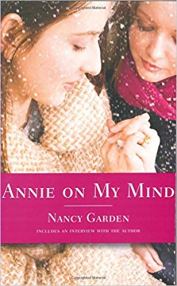
Annie on my Mind by Nancy Garden

5185EJRdm6L._SX306_BO1,204,203,200_

I found this book at a time when I was just beginning to come to terms with my queerness and it helped normalize being gay for me. While this love story between two girls takes place in the 1980s, the nuanced character development and intricacies of the love explored helped me realize that being all forms of love deserve to exist not solely defined by their political status.

– Joanna Cleary, Blog Editor

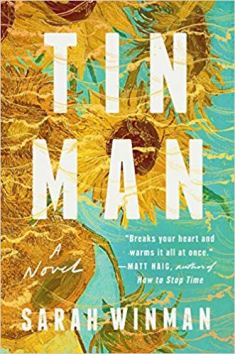
Tin Man by Sarah Winman

61hSwd-0SFL._SX329_BO1,204,203,200_

I read Tin Man on the recommendation of a friend, unaware of the storyline or the synopsis. The story I encountered was perhaps one of the most emotionally poignant ones I had read. Tin Man depicts love and sexuality beyond the cardboard boxes we put them in and touches upon art, friendship, and desire by freeing these from their socially gendered labels. It’s a warm, gradual narrative on sadness and nostalgia, and the transformative potential of love.

-Smriti Verma, Poetry Editor

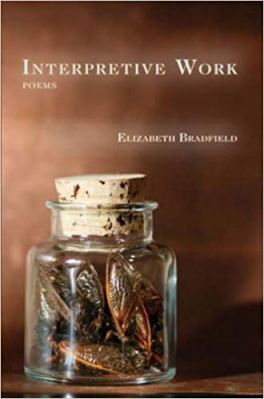
Interpretive Work by Elizabeth Bradfield

41EhCDN5g5L._SX328_BO1,204,203,200_

While the poems in this collection often deal with the conflicts of history, politics, culture, and family, hope and beauty win out for the view of the future. Her poems cross boundaries into the vulnerable to reveal how loving someone can help you love the world.It’s published by Artoi Books, which is an imprint of Red Hen Press (Arktoi Books publishes literary poetry by lesbian writers).

-Lisa Stice, Poetry Editor

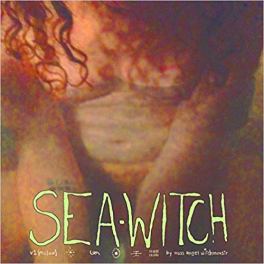
Sea-Witch: Vol. 1 (May She Lay Us Waste) by Never Angeline Nørth (formerly Moss Angel (formerly Sara June Woods))

51ir2n0bp5L._SY498_BO1,204,203,200_

I think Sea-Witch was revolutionary for me: a work centered around transsexuality, a genre-fluid/genre-defying and literature-altering book, Never Angeline Nørth’s book is about a girl monster, a witch-god, about their origin stories and journeys and narratives. I don’t know how to summarize this book but I do know that this book will change the way you look at and critique texts, and I believe it is a great introduction, both in terms of form and content (as much as I despise considering those as the two components of a text), to what the category of LGBTQ+ literature is and can be. Sea-Witch helped me come to terms with my still-developing notion of what my own sexuality is and what it means to me. The book sounds tumultuous but that is the beauty, that is its defiance, and that is what motivates me to make peace with my tumultuous sexuality.

-Devanshi Khetarpal, Editor-in-Chief

A Single Man by Christopher Isherwood

51ookXy1DJL._SX328_BO1,204,203,200_

Christopher Isherwood was one of the first queer authors I came across during my English studies, and his stories opened up new perspectives to regard the world I’d grown up in. In my private Isherwood collection, A Single Man still stands out most remarkably. An artistically crafted story about seclusion and otherness, it tells the tragic end of a curtained love in a homophobic society that grants no (public) closure for the bereaved. But more powerfully, Isherwood’s insight into a single day of a grieving man revealed to me the beauty of two men in love – physically and emotionally. Reading A Single Man, you’ll certainly be touched by the despair that travels from the first to the last page. But I also hope that you’ll be ignited – to make reality better.

– Stela Dujakovic, Prose Editor

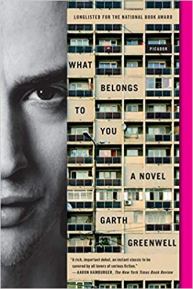
What Belongs to You by Garth Greenwell

51vJrvVkcZL._SX331_BO1,204,203,200_

Look Garth Greenwell up on Youtube and listen to him read aloud from his work before you read this novel. He was trained as poet before turning to prose, and his history shows in his work: every sentence has a rhythm that demands to be read aloud. That isn’t to say that the ideas of his work don’t matter, but auditory beauty is a nice way to ease yourself into the story that is ultimately devastating. The story follows an American professor teaching in Bulgaria, who pays a young man named Mitko for sex and comes back to him again and again. The driving question of the novel is whether Mitko really has a connection with the narrator, or if it’s all just loneliness making infatuation feel like love. I’m not gay, I’ve never been to Bulgaria, and the world of illicit sexuality described in the book is something I’ve never experienced. Which might have been part of why I liked it so much: much of the power of fiction is to show you what you’ve never known or seen. But even more powerful is the universality of the book. Wondering if your love is real or not is something that every romantically-inclined person has felt, no matter who you are or who you love.

– John S. Osler III, Prose Editor

To view staff bios and learn more about our staff, check out our Masthead page here.

Interview with Mihir Vatsa

Our Blog Editors interviewed Mihir Vatsa, an Indian poet and the editor of Vayavya, for this week’s blog. In this interview, we ask him about the practice of writing and the habits that pertain to it in some way or another. We also ask Mihir about not only staying committed to writing, but also staying committed to writing about Hazaribagh.


Blog Editors: Ernest Hemingway wrote first thing in the morning. Maya Angelou reserved hotel rooms just to write. Stephen King forced himself to write six pages every day. Susan Sontag instructed people when not to call. Have you developed any specific methods for writing?

Mihir Vatsa: I wish I could reserve hotel rooms to write. Someday, perhaps, I will. I usually write at night– the darkness sorts relevance from distraction. When I am writing to meet a deadline, I set a target. With prose, it is thousand words. Poetry is more malleable that way– just three lines could be a poem too, as long as they are good three lines. I am more relaxed with poetry, less so with prose. The latter demands some discipline, I have learned recently.  

BE: Do you journal? And how well do you work with or meet deadlines?

MV: Unfortunately, no, I don’t maintain a journal. I do have some romantic affinity towards the process though, and I like to hear stories that involve journal writing. I have tried it before, but have stopped midway. Trivial things begin to annoy me– is the notebook cover journalish enough, what if I wrote something and someone read it, if I am doing it on my PC then what should be the password, do I really want it personal or do I secretly want it read? I think of these clearly pressing thoughts and defer it.

I think I can work with deadlines, though I procrastinate a lot. So if the deadline is tomorrow, I would get working today, not sleeping, not eating, a bit possessed. It’s not a healthy practice for a writer, but then writers are not really known for their exemplary health.

BE:Do you outline ideas before or do you let the form teach you what kind of story you are writing?

MV: I do outline, but mostly in mind. I prefer having some ideas, some thoughts about what I should write once I start the computer. Often a poem is left hanging for a few days: one stanza emerges, then there is the wait, then another line comes up. When I am not writing, I am working with collages– cut here, paste there. When I think I have enough to go with, I start typing. With longer poems, I take it slow, filling in the blanks first, then tying the content up as the form suggests. With prose, and especially essays, I have found that it’s helpful to have some pointers beforehand, a road map, on how to progress from one thought to the other without jarring the flow.  

BE: What do you do when you become stuck while writing?

MV: If the deadline is far, I give in to the block. I switch to Netflix or Youtube, or take up a book which I had been meaning to read. You can only watch something for so long. When saturation hits, writing becomes a needed retreat. Sometimes I get stuck because I don’t want to put an idea into a form that I have already done before. Then, reading helps. I go to the internet and read whatever poetry I can find, preferably by poets who are alive. That way, I get to see what other poets in the world are doing, how they are managing language, how they are working with form, and so on. The last time I got stuck, the deadline was close. So I ordered a book and told myself not to touch it before I finished writing. It kind of worked.

BE: How do you stay committed to Hazaribagh? Is there a different lens or observation you require in order to practice the writing of something so close when you want it to reach far?

MV: This is a really good question, actually. My upcoming book A Highland in the East (Speaking Tiger Books 2019) is a memoir about living and travelling in the Hazaribagh plateau, and though I had a great time writing it, I was also often conflicted about my loyalty to Hazaribagh. I am not talking about the town per se– Hazaribagh is like any other small Indian town. It has its half-finished buildings with exposed brickwork, it has its temples and mosques and narrow streets. Somehow these things haven’t appealed to me yet. I am more attached to Hazaribagh’s landscape. Therefore, the hills, the trees, the rivers, etc are my points of affect. I remember, this one time, my friend Raza Kazmi and I were staying for a few days at Palamu Tiger Reserve in Latehar. The place is about a six-hour drive from Hazaribagh. There, I was surrounded by taller hills, denser forests, reliable waterfalls, and it made me sad. What if I outgrow Hazaribagh? “You can be committed to Hazaribagh and still enjoy Palamu,” Raza said something along this line, and though I understood him, I was still uncertain. What I fear is that one day there will be nothing wonderful about Hazaribagh for me. No waterfall will excite me. Been there, done that– that kind of boredom, you know, and so I try to modify perspectives. There is a lot in Hazaribagh, things that I still don’t know, so maybe one day I will enjoy the roads, or the history, or engage with the place in a more direct, participatory way. At the moment, I am gripped by the plateau; later, it might be some other aspect of the town.

Perception is universal– the way I perceive Hazaribagh may be similar or different to people who perceive other places, but the act is not uniquely mine. As writers, we work in and with shared cultures, so I think while Hazaribagh may be a little-known, “niche” place to write about, the things I feel when I am in Hazaribagh do resonate with people outside. When I post a photo of a hill range and see the reactions on it, I know I am doing something right. I try to understand the relevance of Hazaribagh for other people, and this is a conjecture at best, but I think that in Hazaribagh, I work through a dual-gaze. I am both an insider and the outsider, insider to the town, outsider to the plateau. When I look for information on, say, how the lake came about, or how the hill was fashioned earlier to appear the way it does now, I am being a hopeless local historian; on the other hand, when I venture into the forest, trailing a stream and not knowing where it would take me, I feel more like a tourist. Perhaps this duality works, though I am not sure yet.

BE: Do you think your editorial practice, or editorial ethics, have impacted your practice as a writer?

MV: Maybe? I don’t really know. Earlier I used to get irritated at the long wait to get a response, but as someone who has also been on the other side of things, I realise now that such delays happen, especially if you are working as a small, un- or underpaid team. One thing that I loved doing as an editor was to really edit– and not just select– a poem for publication, you know, the old-fashioned way. I would chance upon a poem which was almost ready, except that it didn’t work in some parts and patches. Whenever it was the case, I offered detailed feedback, putting the ball in the poet’s court. Here is what I think. If you agree, we can go ahead with the publication. With my own writing too, I am not averse to feedback or revision. I appreciate it if someone devotes a chunk of their time to offer comments on my work. This is something that I cherish with respect to writing, mine or someone else’s.


155727205559673739MIHIR VATSA is the author of the poetry collections Painting That Red Circle White (Authors Press 2014) and Wingman (Aainanagar & Vayavya 2017). A former Charles Wallace Fellow of Writing at University of Stirling, UK, Mihir is the winner of Srinivas Rayaprol Poetry Prize and a Toto Funds the Arts Award in Writing. Mihir lives in the plateau-town of Hazaribagh, India, where he works across the disciplines of literature, writing and human geography.
Staff Recommendations: Short Stories

If you happen to be looking for some good reads to browse through as the days lengthen, perhaps on your porch or at the beach, look no further. The Inklette team has compiled a list of beloved short stories and short story collections for you to peruse at your leisure.

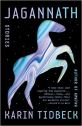
  1. Jagannath (Karin Tidbeck)

51R2HDz9hfL._SX322_BO1,204,203,200_

This collection of short stories, covering narratives from people falling in love with machines to a girl following vittra in the woods, explores how disorienting, beautiful, and downright absurd our reality is when observed through different lenses. I’d recommend this collection to anyone interested in science fiction and fantasy with an intimate streak of psychological realism.  

–Joanna Cleary, Blog Editor  


  1. The Dead Go to Seattle (Vivian Faith Prescott)

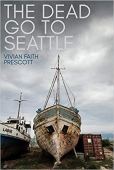
511wRxVnmzL._SX331_BO1,204,203,200_This collection is made up of 43 linked stories that take place in Wrangell, Alaska and are told by a young woman named Tova. Through the stories Tove tells, she reveals elements of herself, her hometown, the people with whom she grew up, the history and even the myths from her small town. I’d recommend this collection to anyone who loves stories centered around place and how place shapes identity, and to anyone who loves cultural mythology.   
–Lisa Stice, Poetry Editor


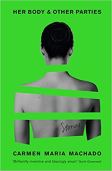
  1. Her Body and Other Parties (Carmen Maria Machado)

41N7lsvNg2L._SX323_BO1,204,203,200_Women begin to physically fade away during the Great Recession. Bodies respond to weight loss attempts in a terrifying manner. In this collection, readers will find stories that combine horror, fairy tales, queer love, and all manner of darkness and light. Machado’s writing defies categorization, and her deft exploration of the meaning of women’s bodies through gorgeous prose will appeal to fans of Neil Gaiman and Helen Oyeyemi.
–Sophie Panzer, Prose Editor


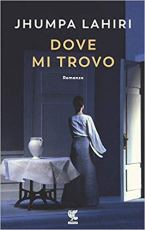
  1. Dove mi trovo (Jhumpa Lahiri)

411j4O8mOvL._SX312_BO1,204,203,200_.jpgThis might seem like a strange choice. Lahiri’s second book written in Italian is a romanzo, a novel. But every chapter of the books reads like a short story, a very short story story, and some chapters even read like microfiction. Although only available in Italian currently, the book is extremely different from anything Lahiri has ever written. There is something dialogic about her work– the way the narrator speaks with isolation, the isolation of places around her and the isolation of time. Everything is fused closely within the scope of her minute, razor-edged words, and yet everything seems dispersed. The close of every chapter leaves you with a gasp. Instead of folding close, every chapter folds in on itself as most endings in the form of the short story do.
–Devanshi Khetarpal, Editor-in-Chief


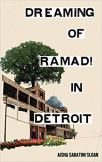
  1. Dreaming of Ramadi in Detroit (Aisha Sabatini Sloan)

513CkfAho0L._SX311_BO1,204,203,200_Race, sexuality, youth, memory, family, art, violence, pop culture and more all intersect in Sloan’s collection of essays. All twelve pieces read as separate stories within the continuum of her life. Sloan plays with form, teaching the reader how to read the page which shape-shifts throughout each story. Somehow we find intimacy in the moments of ambiguity and concern in her profound critique over what it means to be a living, breathing, complex human of right now.
–Maria Prudente, Blog Editor


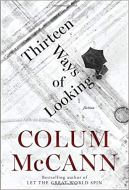
  1. Thirteen Ways of Looking (Colum McCann)

51jkI9h7e1L._SX336_BO1,204,203,200_McCann’s novella-length piece, the first narrative in his eponymous collection of tales about empathy, is, at heart, an experimental inspection of male aging. Peter Mendelssohn’s story of growing old is elegantly woven into a detective frame and contemplates the many losses that old age provokes. It’s an angry piece that reeks of bodily inabilities and slow decay—but reads as a poetic exploration of words, language, and life. McCann’s story is thus a painful read with some unexpected twists and turns, but more importantly, one that cautions us to be patient with each other.

-Stela Dujakovic, Prose Editor

To view staff bios, please visit our Masthead page.

On Shakespeare’s 455th Birthday

BY JOANNA CLEARY AND MARIA PRUDENTE

Joanna Cleary: I’m so excited that we’ve agreed to have a conversation on the best-known playwright in the history of English literature– William Shakespeare — in honour of his birthday. As an English and Theatre major, it probably comes as no great shock to hear that I love his plays and sonnets. However, it might come a surprise to find out that I didn’t consider myself a fan of his work until I saw it performed in the theatre. My first exposure to Shakespeare came when my ninth grade English Literature class studied Romeo and Juliet. While I loved the rich images Shakespeare created, I struggled with the unfamiliar language and often grew frustrated because I read the script much more slowly than I read contemporary works. When my class when to see a live performance of Romeo and Juliet, however, I found myself absolutely immersed in the world being created in front of me. I grew to deeply appreciate Shakespeare as one who not only writes about the human condition but does so in a way that allows everything he focuses on – from emotional character development to philosophical questions – to take on an ephemeral life of itself. Now over to you – when did you first learn about Shakespeare?

Maria Prudente: Romeo and Juliet was my first experience too. My first monologue class was a Shakespeare workshop. I began, “But soft, what light through yonder window breaks” and I remember the creative director of the theatre looking utterly confused. In retrospect, I love that at twelve I didn’t bother to gender the monologue, but in actuality, I just liked it best. I thought it was elegant and beautiful, I didn’t care that a man said it. In my freshman year of high school, I was cast as Rosaline for our production of R&J. I was gutted. I had no lines though I got to wear a special floral head-piece. For a character who never speaks, it was easy to create an interpretation of her because Shakespeare offers us information on “fair Rosaline” through other characters: Romeo, Mercutio, and Benvolio. I am not surprised to hear that you became a fan after seeing his work in the theatre. I support the notion that Shakespeare should be seen, not just read. In terms of writing, what I’ve always liked about Shakespeare is that there is no subtext; the language does the work for you and that, in essence, is the brilliance of Shakespeare’s writing. There is a vast legacy of work to choose from — what is your favorite Shakespearean sonnet or play?

JC: I know it’s a bit of a cliché to cite this as my favourite Shakespearean text, but I love Romeo and Juliet. While it’s often dismissed as overly dramatic and unrealistic, I strongly believe that the dramatic tension and spectacular plotline is precisely what captures the feeling of newfound love in the play. My favourite line of the first act is when Romeo first sees Juliet and declares “[o], she doth teach the torches to burn bright” (Act 1.5.42) — the statement is so simple, but also so profound and bursting with emotion. I completely support the contemporary social emphasis on people knowing how to be independent, I also think that love — platonic love, romantic love, and everything in between — has an important place in the human condition and deserves to be recognized in poetic expressions such as this. Speaking of how Shakespeare relates to the modern world, what do you think are the best contemporary adaptations of his work?

MP: I agree with you that the universal themes of love are why Romeo & Juliet is so captivating. We understand it as kids because they, too, are impulsive, impassioned kids and we nostalgically, sympathetically relate as adults. For me, I measure the best contemporary adaptations of his work by what is most relatable. Whether we are consciously aware or not, what we connect to when we watch The Lion King is what we connect to in Hamlet, and, what we connect to when we watch My Own Private Idaho (a classic Gus Van Zant film) is what we connect to in Henry IV. My favorite is Ten Things I Hate About You as a modern adaptation of The Taming of the Shrew. At theatre conservatory, I was selected to perform Kate’s monologue for several hours over several days for prospective students and I resented the fact that Kate wasn’t more like her modern adaptation in 10 Things I Hate About You. In the movie, we see Kat as a feminist figure, and in Shrew, Shakespeare characterizes Katherine as a fiery female turned anti-feminine, submissive wife. Would Kat have said to Patrick, “Humble your pride, then, since it’s useless, and place your hand beneath your husband’s foot? As a gesture of my loyalty, my hand is ready if he cares to use it”? I don’t think so. That’s why I think modern adaptations are important because they spark a bigger conversation. Was Shakespeare commenting on misogyny and feminity in Taming of the Shrew? Do we believe this was his point of view? Did 10 Things I Hate About You try to deconstruct gender and female oppression and correct the characterization of Katherine through Kat? Shakespeare is still challenging us in the 21st century. Aside from comparing modern adaptations, what do you suggest people do if they want to understand and enjoy Shakespeare’s work?

JC: I definitely agree that contemporary adaptations of Shakespeare’s work often help make the material more relatable to people who aren’t familiar with the language or the era in which he was writing. However, I also think that people should also experience performances of his original scripts in order to fully appreciate the nuanced worlds Shakespeare creates through his language; after all, he’s known for being a poet just as much as he is for being a playwright. If there are no performances of Shakespeare’s work playing, I’d recommend listening to his work via audiobook to hear his words being said aloud, which is how they are intended to be heard. I had to listen to an audiobook recording of Othello when I studied the play in my Gr. 10 English Literature class. Initially, I hated that audiobook because it moved too fast for me to keep up, as I wanted to stop every time I came across a word I didn’t understand (which was often) and look it up. However, I gradually came to understand that it didn’t matter if I didn’t understand every word because hearing the play aloud helped me more deeply emotionally connect to the world being created before me. Anyways, going back to your acting background, what Shakespeare character (regardless of sex or gender) have you always wanted to play?

MP: I’m jealous of those boys playing Hamlet. There’s even a play by William Missouri Downs called, Women Playing Hamlet where a woman cast as Hamlet has a massive existential crisis during the whole process. Because Hamlet is so consumed by his masculinity (or lack thereof), it would be fun and challenging maybe to regender him; to flip his questioning his bravery “am I coward?” and the insult of “unmanly grief” on its head. What role would you like to play?

JC: I’ve always wanted to play one of the three witches in Macbeth. Like all delightfully grotesque characters, I think it takes skill to not overdo their persona or characterize them in a predictable way that’s been already been done. Personally, I’m interested in looking at the witches as characters who raise questions on class and status in the play – what does it mean for Macbeth, a member of the upper class, to talk with witches and, later in the play, go as far as to seek them out? What does that say about class corruption? And, if one looks at the witches as symbols of femininity, what do they say about gender roles and dynamics? What does it mean for them to, in a way, seduce Macbeth? I would love to take on a role rich with the potential to explore topics such as these. I also greatly enjoy ensemble work and would relish the opportunity to work with two other actors playing my fellow witches, as it has been my experience that a show is strongest when members of the cast are united. Moving onto Shakespeare himself, however, what’s one question that you’d ask him if you two were somehow able to have a conversation?

MP: I think I would ask how much politics during the Elizabethan era influence him. I think his work verges on the political by way of his characters and it would be interesting if there were specific issues that felt so pressing he needed to write about them. We are living at a time of extreme political polarization so I would be interested to know what he would write about today.  What would you ask?

JC: Hmm, interestingly, I don’t know if I would ask him anything. I thought I’d have lots of questions ready in response to you, but nothing seems to be coming to mind. I think perhaps I don’t want Shakespeare himself to influence my perception of his work, as so many insightful and creative relationships between us and him have been built precisely because of the fact that there are huge gaps in our knowledge of his life. That said, I think today is a wonderful opportunity to spend some time pondering the many mysteries of William Shakespeare and re-read some of his poetry, be it his sonnets or his plays. And now over to you, dear readers – we hope that you too can spend some time reading Shakespeare on his 455th birthday!


149460297287447

JOANNA CLEARY is an undergraduate student double majoring in English Literature and Theatre and Performance at the University of Waterloo. Her work has previously appeared or is forthcoming in The /tƐmz/ Review, The Hunger, Pulp Poets Press, Every Pigeon, Glass: A Journal of Poetry, and Subterranean Blue Poetry, among others.

155113583331125364MARIA PRUDENTE has written about feminist ethics for Manifest-Station and is featured in Grey Wolfe Publishing’s upcoming anthology of nonfiction short stories. Maria is a professional stage and film actress. She received her training from the Lee Strasberg Theatre & Film Institute and graduated from the American Musical & Dramatic Academy with a concentration in Musical Theatre performance. Maria is the Content Editor at CountrySkyline, LLC and proud member of Actor’s Equity Association. She lives in NYC where she studies Creative Writing at Columbia University.
Interview with Anders Carlson-Wee

This interview was recorded on March 20, 2019, at a reading in the Writing Center of the Westminster Schools in Atlanta, Georgia. We would like to acknowledge the school, faculty members, English department, and Anders Carlson-Wee for their time and support.


Sarah Lao: What does your writing process look like? Where do you get inspiration?

Anders Carlson-Wee: I’m kind of a workhorse of a writer, meaning I’ll stubbornly sit down to write day after day even if I’m not feeling terribly inspired or like I’m not getting a good idea going. And I’m very comfortable, I think more than some people, drafting stuff that just isn’t good, at least in the beginning. So, if I’m on a good writing roll, I’ll just draft a fresh piece everyday. Most of those are terrible, and I throw them away, but once every couple weeks, something starts sticking, and I’m thinking “this piece might have some legs, and I might be able to grow it into something.” I’ll work on this piece for a while, and the process goes on. I’d say it takes me around a year and a half to finish a poem, and I go through a lot of different stages. I’ll show the piece to people who I trust as readers, I’ll go back to it and revise again and again, and I’ll just keep fine tuning it. Eventually, I’ll memorize it and start working on it in my head; I’ll walk around and keep doing the edits. It’s a long process, but in terms of inspiration, it’s hard to know where it all comes from. It’s really a bit of a mysterious process, but for me, I think a lot of it’s about noticing what gets me emotional and noticing what sort of things obsess my mind. Whether they’re stories or topics, I just find ways to write about it, and I’d say the majority of my attempts fail. But, I keep trying to find an angle in that will somehow bring it to life. And most of the pieces don’t work. And then finally some of them do, and I keep editing those. So, The Low Passions is a book of fifty-three poems. It took me more than ten years to write, and I probably drafted two thousand poems to get to the fifty-three.

SL: How did you get involved in poetry?

ACW: I’m dyslexic and when I was little, I didn’t really trust visuals. It took me a while to learn to read and to write, and I did what was called mirror writing which is where you write backwards, and then if you hold it up to a mirror, it looks correct. So it took me a while to learn those basic skills, and I depended a lot on the oral sounds and oral aspects of language. I would memorize long segments of dialogue, and then I was also being inundated with sermons because I was growing up in two churches with my parents. So I was around that a lot and didn’t really notice how much I was taking to it, but I think I really did have a kind of natural knack for memorizing language. But yeah I liked stories and everything but it didn’t really click as a life pursuit until I got to college. I was 21 when I started college, and I ended up in a class with a woman named Mary Cornish. She was such a good teacher, and she really brought poetry to life for me. A few weeks into that class, I was totally hooked, and I was ready to reshape my whole life to make poetry the center of it.

SL: Do you call yourself a poet?

ACW: No, I don’t really like saying I’m a poet when I’m meeting people. I think it’s mainly just the extra baggage of “poet” as a word instead of just saying “writer,” and that’s generally what I say if people ask me what I do. “Poet” seems a little loaded, and somehow it feels pretentious in a way to people—at least where I’m from. It’s a very practical culture in Minnesota. And I think my parents struggle with that as pastors, too. It makes you kind of outside of “normal” human daily life.


IMG_4238.jpg

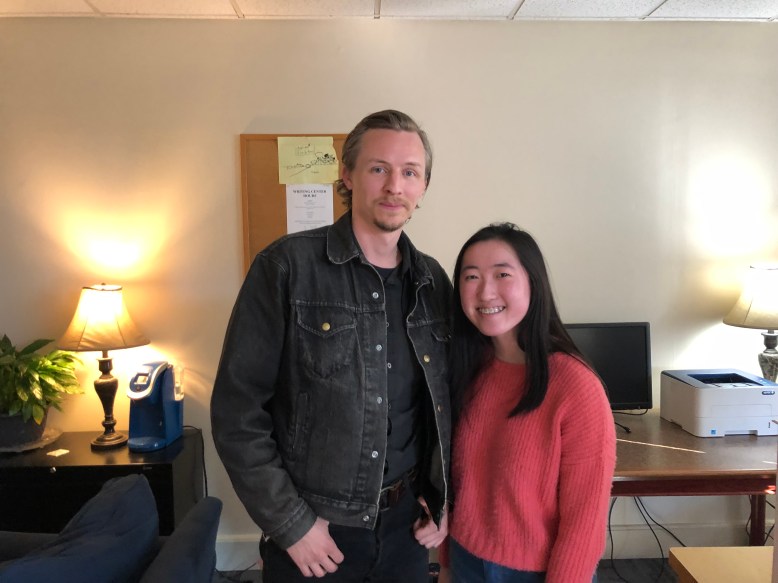
Anders Carlson-Wee (left) with our Social Media Manager, Sarah Lao (right).


SL: Can you tell us a little bit about your newest book, The Low Passions?

ACW: Yeah, this collection is sort of a sequence of adventure stories. On the one hand, there’s a lot about traveling by freight train and bicycle and hitchhiking all around the country. And those adventure stories are counterpointed by these meditations on family that’s happening from the distance of being on the road.

SL: So, what does the phrase “the Low Passions” mean, and why did you pick it as the title for your collection?

ACW: The Low Passions is an obscure term from Christianity. It means all things of the earth, all things tangible, all things of this physical world, and it’s usually used in a derogatory sense to mean the things that seduce us, the things that make us feel greed or lust. It’s a derogatory term as opposed to the high passions, which would be everything spiritual and of heaven. I’m a very tactile person, very physical, and very oriented toward my body. And I think part of the project of the book for me was a desire to craft something that was lifting up those “low passions” theoretically, and the book kind of turned the term on its head and gave it a little more spiritual heft toward something more positive. Being someone who’s deeply invested in the earth and everything tangible—the tactile and the human body—I really wanted that to be considered sacred. So for me, “the Low Passions” was a term I grabbed onto because it was used in a derogatory sense, and fuck that. I wanted to find a way to honor that. Though I’m not religious personally, since I haven’t quite found a form of faith that works for me, I do think the Christian story is incredible, and one of the things that I really value is the idea that God comes down and becomes physical in the form of Jesus. And in that story, that’s the way to know God: through the physical, through the body, through the earth. To me, that’s a powerful story.

SL: How do you put your books together? Is there a specific process you go through?

ACW:  Right. So there’s so many permutations for how you might construct poems into a book. It’s overwhelming. I did have a very long stage where I spread it all out on the floor, and I stood on tables to get an eagle’s eye view just to see everything and try to trick myself into defamiliarizing it for myself. But honestly, my editor at Norton played a big role in shaping the final order. There was a good handful of poems that did a total swap from the front to the back and vice versa, and I think that really helped make the book pop in its final form. I wouldn’t have ever seen that, so that was a moment where having an editor was a great blessing to me.

SL: With how much The Low Passions captures these often forgotten, yet haunting glimpses of destitution and decay in America, and in light of last year’s controversy with “How-To,” how do you think it’s possible to respectively give a voice to those unheard without eliciting offense? Where does the line between artistic freedom and offensive speech start?

ACW: Yeah. I think art is an ongoing sequence of attempts. Artists are always kind of trying things, and all art is a leap into the unknown because art’s not something that needs to be duplicated. Like if you’re building houses, it’s fine to just build the same house twice, more or less, right? Let’s just build the house again. But with writing and with art, you’re not trying to build the same thing that artists of the past have built. You’re trying to find something new and create art into a new space. And so I think art is an ongoing series of attempts. If the attempts don’t work or don’t help the culture in some way, they fall into obscurity. People don’t need to interact with them, and that’s fine. But, if other forms of art seem to help a culture in some way, then they’ll stick around and become part of the zeitgeist and people’s imaginations. And that’s great. I think that’s healthy and good for art. People try things. Some of them work, and some of them don’t.

SL: Do you have any favorite words? Some words that you just enjoy sonically?

ACW: For me, I tend to favor the Anglo-Saxon aspects of the English language: the kind of monosyllabic words like “lake” and “rock” and “crust” that are very consonant heavy. Those types of words are very physical as far as forcing you to slow down because the more consonants you say, the more your mouth needs to come to complete rests before starting the next word. One thing that is really beautiful about the English language is that it combines those kinds of Anglo-Saxon words with a ton of influence from other romantic languages. You can have sentences that have these strong, percussive kind of consonant-heavy sounds that can be almost gravelly and very intense, and then you can suddenly have a word like “beautiful” which has a lot of flow and spreads out across a few syllables. And so in English, you can combine those two types to make some really cool sentences.

SL: So, what’s next? What are you working on currently?

ACW: Well, right now while I’m on tour, I’m just doing all the readings, but I am working on another book. I would not dare give anything away about it yet, but I’m excited to get back to it.


155448716410359295.gifANDERS CARLSON-WEE is the author of The Low Passions (W.W. Norton, 2019). His work has appeared in BuzzFeed, Ploughshares, Virginia Quarterly Review, Poetry Daily, The Sun, and many other places. His debut chapbook, Dynamite, won the Frost Place Chapbook Prize. The recipient of fellowships from the National Endowment for the Arts, the McKnight Foundation, the Camargo Foundation, Bread Loaf, Sewanee, and the Napa Valley Writers’ Conference, he is the winner of the 2017 Poetry International Prize. His work has been translated into Chinese. Anders holds an MFA from Vanderbilt University and lives in Minneapolis.

155448712822039068SARAH LAO is a sophomore at the Westminster Schools in Atlanta, Georgia. She currently edits for Evolutions Magazine, reads for Polyphony Lit, and serves as the Social Media Manager for Inklette Magazine. Her work has been published or is forthcoming in Sooth Swarm Journal, Liminality and the Inflectionist Review, among others. When she is not writing, she enjoys eating scones, playing piano, and spending time with her dog.