Interview with Linda Ashok and Jamel Brinkley

Our blog editors, Maria Prudente and Joanna Cleary, were interested in interviewing writers about their obsessions and repulsions and how they influence writing. Scroll down to read their interviews with two writers we love, Linda Ashok and Jamel Brinkley.


LINDA ASHOK

Maria Prudente: I find that writers need to return to their obsessions in their work. Do you write about your obsessions and, is it challenging to find new ways to write about them?

Linda Ashok: I am not sure about what is implied by obsession. Are you referring to recurring motifs? The thing about my writing is that I never have to think too hard and I mostly go with the flow; writing is quite organic for me as I extract elements from my unsettling dreams. In this process, there are elements that appear quite frequently but they neither demand anything nor dictate. 

MP: Are you ever driven to write about what repulses you? How do you fight the urge to not write around it but through it?

LA: Like anybody else, I am repulsed by any kind of violence but I do write about it because it is therapeutic for me. It helps me to see the underlining of what we perceive as violence. It also builds familiarizes the readers to recognize violences they experience in their personal or public spaces.

Joanna Cleary: As a Communications and Branding professional as well as a writer, how do you think the increasing role of virtual reality and communication in our lives has affected your creativity and creative work? 

LA: Well, virtual reality has built and broken our lives in many ways. In my case, I leveraged virtual reality to expand my creative pursuit; I lived places before I literally travelled to those places. Imagining I am in a certain place, imagining the lives of people local to those places, helped me manifest my desire to live those places in real life through positive affirmations. I experienced their poetry, their struggle, their joys through virtual reality. So yes, it contributed a lot to my writing while also exposing me to a lot of toxicity that affected my mental health in several ways. That I am currently dealing with social anxiety is because of being overwhelmed by the duality of people as seen on social media vs real life. And of course when your life is affected, it does reflect in your work too.

JC: Can you speak to what inspired the title of your 2012 book of poetry, whorelight

LA: My book came out in 2017. I imagined a different name for it and that was whorefrost. But over the four years of its preparation, I found a mention of ‘whorefrost’ somewhere on the net and that really upset me. I wanted to have a unique name to my book. So I continued brainstorming until one day I coined ‘whorelight’ to define how light streams into our darkness, sleeps with it, and leaves everything illuminated. I feel it is akin to those sex-workers who somehow fill in a lot of void in the lives of their customers; and therefore ‘whorelight’ talks about many such moments and experiences that prostituted to fill the many spaces in my life forever inquisitive about meanings.

MP: I was so moved by your poem, ‘We Two Women Can Father A Child.’ Can you elaborate on how that particular piece came to be? 

LA: A certain phase of my childhood happened in the company of my biological mother and my step mother. My mother was too courageous to share her family space with my step mother and she did it to help my dad manage his finances better. In the wake of the world being more accomodating of non-binary relationship, that childhood experience of mine acted as a prop wherein I imagined my mothers discussing how they alone can father me without my dad being around. It is also a depiction of my queer sensibilities imagining two women fathering a child with more considerate human values.

JC: When I read “chew my tongue like a cannibal/ eating a red, fleshy berry” from your poem, ‘Tongue-Tied,’ I was  struck by the theatricality of language. Do you ever perform your work live?

LA: I do. But to myself. These poems are not for a listening audience as the kind of patience they have wouldn’t be enough to simulate the interior theatricality of the poem or poems as such. And even if I am given a very patient and perceptive audience, I would still refrain from performing it as these are very intimate pieces. 


JAMEL BRINKLEY

Maria Prudente: Writers seem to write a lot about their obsessions. Maybe that obsession is a place or a type of person. A writer I know constantly writes about going back inside her mother’s womb. Do you write about any of your obsessions?

Jamel Brinkley: I would say I do, but I’m usually not aware of that fact until after after I’ve written and I can retrospectively look at my work to truly see what I have done. For example, only in hindsight did I see that in my book I was writing about, and obsessed with, families, brotherhood and male friendship, masculinity, and love of various kinds.

MP: Are you driven to write about what repulses you? How do you face that challenge head on?

JB: I think I’m driven to write about what fascinates me, about what I have questions about, and perhaps that sometimes means writing about what repulses me. I think the challenge is making sure that what I’m writing about is interesting to me, so if feeling repulsed is the only response I have to a character or action, then I probably won’t write about it. Complicated or even contradictory emotion is key in driving and sustaining my interest in any story.

Joanna Cleary: According to your website’s description of your collection, A Lucky Man, the work “reflects the tenderness and vulnerability of black men and boys whose hopes sometimes betray them, especially in a world shaped by race, gender, and class—where luck may be the greatest fiction of all.” Can you speak to what luck means to you? Is it an obsession or a repulsion, or both? 

JB: I wouldn’t say that luck is a repulsion; maybe it’s something like an obsession. On the one hand, luck, or the idea of being lucky, is one that I mean to take seriously in the book. I hope that every story contains at least one moment of genuine joy or pleasure or grace for my characters, the kind of moment that makes one feel lucky to be alive. On the other hand, or at the same time, I do mean my invocation of luck to be seen with some irony. For the protagonist of my title story, for instance, luck comes to mean something painful. His life hasn’t turned out the way he expected. And the idea of being fortunate, of being blessed by fate, means that his sense of deserving good things in his life is a lie. What I’m talking about now isn’t unrelated to the myth of meritocracy, which, for some reason, so many people in this country believe in wholeheartedly.  

JC: According to your website, you have many literary events and workshops coming up. Can you speak to how you find that participating in these events influence your work as a writer?  

JB: It’s a real pleasure to meet with readers of my work and with those who are interested in reading my work, and it’s fun to meet with people who are devoted to the writing life. That said, there is a difference between being an author (a public figure) and a writer (a private figure), and participating in all these events has pulled me away from writing. I’ve felt less like an artist than a promoter of my own work. In response to that feeling, I’m learning to be a little less precious about the conditions I require. For example I’m learning how to write in the sterile environments of hotel rooms and, at times, even on airplanes, instead of always needing my apartment, my desk, my coffee mug.

JC: Can you tell us about your current writing fellowship at Stanford?

JB: The Stegner Fellowship is a two-year gift of time and money for which I am very grateful. I benefit from the amazing writing and insights of my peers, the other fiction fellows, when we meet for workshop every week. And we all benefit from working with the Stanford creative writing faculty, with incredible people like Elizabeth Tallent and Chang-rae Lee.


155245443168026013.gif

Author of whorelight, LINDA ASHOK is the 2017 Charles Wallace India Trust Fellow in Creative Writing (Poetry) at the University of Chichester, UK. She is the publisher of RLFPA Editions, Founder/President of RædLeaf Foundation for Poetry & Allied Arts that funds the annual RL Poetry Award (since 2013), and the founding editor of the Best Indian Poetry series. For features, press coverage, published works and more, visit lindaashok.com

 

155245443168026013-2

Photo credit: Arash Saedinia


JAMEL BRINKLEY is a graduate of Columbia University and the Iowa Writers’ Workshop. He has received fellowships from Kimbilio Fiction, the Wisconsin Institute for Creative Writing, and Stanford University. A Lucky Man is his first book. He lives in California.
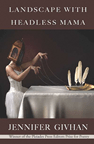
Interview with Jenn Givhan

In celebration of International Women’s Day, our blog editors, Joanna Cleary and Maria Prudente, interviewed poet and novelist Jenn Givhan for the Inklette blog. Read on to know more about the women writers who inspire her, writing about motherhood and lots more!


Maria Prudente:
In your collection, Landscape with Headless Mama, you include the experiences of what you call “different mother-entities”. What compelled you to write about women through the collective experience and difference in motherhood?

Jenn Givhan: When I first tried having a baby, I experienced infertility and loss. Though I felt like a mother and mothered the unborns of my heart and imagination, I could not bring a living child into this world. At the time I was working on my Master’s degree in literature, focusing specifically on Latinx views and portrayals of motherhood, searching for mothers outside of the narrow definitions of birthmother that Western society put dataURI-1552097845512upon the lexicon, and found that in many other cultures (Latin American/Mexican, for instance) much of the mothering work is shared by tías, hermanas, abuelas, primas (i.e., female relatives) and I was taken, for instance, with Laura Esquivel’s novel Like Water for Chocolate and the role of Nacha, the abuela figure, the magical cook, an indigenous woman who is the primary caregiver of Tita as she grows up, and then later, adult Tita as the wet nurse of her sister’s baby, who becomes a Nacha-like figure to the girl, raising her in the kitchen. As I searched through the literature and began forming my own poetics, I asked questions of motherhood such as is the infertile woman the fertile woman’s doppelganger? Does she represent a fear of being without value in patriarchal society? This all helped me develop a poetics of motherhood outside of the patriarchy in my first collection and beyond, and I’m currently working on a lyric-hybrid memoir Quinceañera with Baby Fever that further delves into my experiences as a Latina growing up on the Mexicali border, examining the cultural stigmas toward childbearing and mothering in the Latina community filtered through my own experiences with teenage sexuality, contraceptives, abortion clinics, miscarriages, and violent relationships with machismo boys/men.  

MP: How does your identity as a Mexican-American women influence how and what you write?

JG: My identity as a Mexican-American woman is embedded in everything I write—even when I don’t explicitly examine my cultural heritage or reference it in my work—because it is linked to my worldview, my deepest belief system, how I view the world and myself. As I discussed before, my work tends to examine mothers at the center, all the variations and possibilities for what mother means, and my own Mexican-American mother is at the heart of this. Everything I write grapples with the complexities inherent in straddling cultures, roles, expectations. Where mainstream U.S. culture would ask me why on earth, for instance, I’d try having a baby while still a college student, why I’d adopt a baby in grad school, my Mexican family never once questioned my deep desire to be a mother, even so young. Now, I’m examining the changing perspectives in my culture and re-evaluating the expectations I felt so crucial, and I’m showing my daughter all the myriad choices she has—she’s eight years old, and we’re already planning for Harvard, which is where she says she will attend college, and which we’re visiting this summer after a book expo for my first novel. I love the Mexican-American woman role model I can be for her—she sees that I’m a mother, yes, but that’s just one aspect of who I am and the possibilities she can hold for herself, if she so desires. She is growing up to know her own strength, and that’s the most powerful aspect of our Latina badassery I can pass onto her.

“Alongside these forebears, I strive to weave together a multilayered song of endurance, survival, and, ultimately, celebration sung by the many women of color working together in the resistance.”

Joanna Cleary: Trinity Sight, your debut novel about a woman’s journey through a dystopian New Mexico, combines indigenous oral-historical traditions with modern apocalyptic fiction. What inspired you to do that? 

JG: I started out writing a story about a woman in New Mexico who loses her family and is on her own, and must find her own strength if she hopes to reunite with them, and perhaps more importantly, to see who she always was, with or without her family. The core of this story, then, is very close to my own heart, and speaks to my own greatest fear(s). Because my own family is from New Mexico on my great-grandmother’s side, and has roots to the Puebloan peoples, the stories that I was researching as I was reclaiming my own family history became enmeshed in protagonist’s search for strength and resilience. I didn’t necessarily set out to write a “post-apocalyptic” book, but the stories of the ancients here in the Southwest lend themselves to the cycles of destruction and rebirth that the indigenous peoples here have long known of and recorded in their sacred stories. I’m so grateful that my own inner journey connected with the ancients’—and that I’ve been able to glean a different perspective on dystopian fiction from a Latinx/indigenous perspective, centering us in our lands.

MP and JC: Which women writers have influenced you the most?

JG: My work follows the tradition of lucille clifton, who writes, “we have always loved us” and “come celebrate with me/that everyday/something has tried to kill me/and failed,” and Audre Lorde, who writes, “The master’s tools will never dismantle the master’s house.” My work follows my forebears Sandra Cisneros, Rosario Castellanos, Sor Juana Inéz de la Cruz, Toni Morrison, and Ana Castillo, and through paths tread clearer by contemporary poets Lisa D. Chavez, Natalie Diaz, Natasha Trethewey, Patricia Smith, and Margo Tamez. Alongside these forebears, I strive to weave together a multilayered song of endurance, survival, and, ultimately, celebration sung by the many women of color working together in the resistance.

MP and JC: What do you think is the most important message to share with emerging women writers?

JG: Believe in yourselves, beauties. Believe in yourselves so strong and resilient, so neverending, that no one, no one, can knock you down longer than it takes you to brush yourselves off and stand up, stronger, taller, braver than before, and to put your whole heart out there again and again and again. People will try to keep you down. And you will fall sometimes. And it will hurt. I wish I could say it won’t, but it will. You might not publish your first poem or story or even your tenth. You might have to send your book a hundred places. All the while you are putting your entire heart out for the world to see, keep learning. Keep growing. Keep shining. Stay open. When doors shut in your face, knock harder, knock louder. Knock the effing doors down. Climb up the fire escapes. Never, ever give up. Keep studying. Keep transforming. Keep shutting down the patriarchy. Shut that shit down every single time. And this all starts here: believe. In yourselves, in your truths, in your worth. As I believe in you. Together, we will change this whole world. ❤


15521042047946229.gifJENN GIVHAN, a National Endowment for the Arts and PEN/Rosenthal Emerging Voices fellow, is a Mexican-American writer and activist from the Southwestern desert. She is the author of four full-length collections: Landscape with Headless Mama (2015 Pleiades Editors’ Prize), Protection Spell (2016 Miller Williams Poetry Prize Series edited by Billy Collins), Girl with Death Mask (2017 Blue Light Books Prize chosen by Ross Gay), and Rosa’s Einstein (Camino Del Sol Poetry Series, forthcoming 2019), and the chapbooks: Lifeline (Glass Poetry Press) and The Daughter’s Curse (Yellow Flag Press). Her novels, Trinity Sight and Jubilee, are forthcoming from Blackstone Press. Her honors include the Frost Place Latinx Scholarship, a National Latinx Writers’ Conference Scholarship, the Lascaux Review Poetry Prize, Phoebe Journal’s Greg Grummer Poetry Prize chosen by Monica Youn, the Pinch Poetry Prize chosen by Ada Limón, the Joy Harjo Poetry Prize 2nd place chosen by Patricia Spears Jones, and fifteen Pushcart nominations. Her work has appeared in Best of the Net, Best New Poets, Poetry Daily, Verse Daily, Ploughshares, POETRY, TriQuarterly, Boston Review, AGNI, Crazyhorse, Witness, Southern Humanities Review, Missouri Review, and The Kenyon Review, among many others. Givhan holds a Master’s degree in English from California State University Fullerton and an MFA from Warren Wilson College, and she can be found discussing feminist motherhood at jennifergivhan.com as well as Facebook & Twitter @JennGivhan. 
Ice

        Ever since the cold Sunday afternoon where her father took her to the ice rink, Emily had always dreamed of the day when she would tie up her skates and cross a frozen Pacific Ocean.             

        When she was a sophomore in high school, every winter morning, Emily woke up hours before school started and ran to a local pond. She would need to be in excellent physical condition to endure the long journey across the Pacific. The pond was about the size of her Algebra classroom. Emily carved circles into the ice from above as a ring of leafless trees watched from above. The sun hadn’t come out yet but Emily figured that would help prepare her for the long stretches of darkness that she would be sure to encounter.

        On mornings where she was up early enough that her brain had yet to realize it no longer should be dreaming, Emily imagined her father. She imagined him right by her side, there to be balanced on, holding her the way he used to when Emily wanted to go back home because her legs were tired and the air was cold. She imagined wearing the snug, purple jacket her father had gifted her, which barely fit over her shoulders, the soothing weight of her father’s golden necklace she’d inherited heavy against her chest.     

        Skating on the Pacific, they could talk about all the fish that they could see just beneath the frozen surface of the sea. Maybe they would see a whale. Emily’s father used to love going on and on about whales. Every time Emily passed by an aquarium or hopped into her mother’s sedan, she remembered her father. She could hear his voice:   

        “Emily, Emily. Did you know that a blue whale’s tongue weighs as much as an elephant? Did you know they have hearts the size of cars? Do you get how mighty big that is, Em? Our hearts are this big,” he would say chuckling, waving his fist.

        Of course, Emily couldn’t spend every morning skating. Some mornings mom would need extra help getting Charlie out the door with his books in his backpack and his lunch in his hand. Other mornings she had to go grocery shopping or make a run to the laundromat or the pharmacy. And, though she didn’t like to admit it, some mornings the promised warmth of hot chocolate, a good book, and her pink blanket, which had earned the nickname The Giant Tongue from her father, kept her off the ice.

        But Emily promised herself that she would never go more than three days without skating. It was a trick her father taught her.

        “It’s okay to take a day or two off, Em,” he would say. “But never let me catch you going more than three days without practicing, even if it’s only for five minutes.”

        And though Emily had given up piano many years earlier, she still heard her father’s words on lazy winter mornings or when she caught a cold. She always made it out to the ice, purple jacket slung over her back, necklace pressed firmly into her chest as if pulled by her own gravity. And when it was too warm and the ice melted away, Emily put on her socks and slid around her room.

        By the time she was sixteen, Emily had begun to pack for her journey. Stacks of canned tuna and packets of almonds sprawled across her bedroom floor. A pair of flashlights, a dozen batteries, and a pocket knife sat on top of maps that Emily had used to chart her way through the Pacific. She left on a warm Tuesday.


      The day she died, Emily’s desk was covered with all sorts of maps, most of them drawnover and annotated with thoughts or quick reminders. They dripped sporadic, ripped edges and all. On the Northwest corner of a map charting the migration pattern of Gray Whales in the Pacific, in skipping black ink, Emily had written down another one of her father’s favorite sayings: “A fish stuck in a rip current can go its whole life working very hard to stay very still.”

        Occasionally, on cold Sunday mornings, a bright gold necklace can be seen swimming alongside whales.


MAX PAIK is an incoming senior at Half Moon Bay High School. Though he has many interests, sunsets and avocados top his list of favorite things. When he’s older, he hopes to get the chance to travel the world. He also likes math, though he tries to keep that relatively private.

Unseen

Camphor, I decided, as I sniffed the air delicately. It had to be. My head throbbed; rubbery veins would pump with thick red blood that threatened to tear the walls of its containers. I clench my jaw to calm the throbbing. It works, and the musty aroma settles on my skin, my mouth. Taste buds on my tongue curl into oblivion; hoping to avoid the smell that fast travels through my nostrils; it won’t be long before-

You’re awake, the voice says; it’s oily. I nod, aware that the voice cannot see me. Have you slept at all? he asks, concern clouding his voice.

I shake my head, ever so slightly. This time he knows because my hair rustles against the fabric of my pillow. Blue, he told me, is the color of our pillows, when we dressed them in their cases last week. I imagine resting my head against the sky when I sleep.

Do you want me to tell you a story? he asks softly, after a pause of uncertainty.

My moods for my husband’s stories vary greatly; I lust after them on some days, on others they make me sick with all the improbable plots.

Today, I crave a story, and he tells me one about a girl with only four fingers on one hand. I imagine jagged flesh, unevenly cut; yellow bone peeking out of the pink flesh. The handiwork of a jealous lover, he says unfeelingly. Handiwork, handy work, hands, cut hands. My tongue flips these words around. No man ever gave her a ring. There was no finger to place the ring on. My stomach turns at the thought of fresh blood, smelling of coarse iron dripping on her skirt, unable to stop. When it finally ceases, she smiles, the worst is over.  

In the morning, I kiss his arm; the velvety skin like a pot of honey, like the ones my father would gift my mother on their anniversaries. As kids we found it touching, though she never liked honey. The pots were always the same; glass and rounded. They had a ribbon tied around the neck, always baby pink. Sometimes, the honey stained the ribbon. I would dip my chubby finger in the pot when my father was not looking and suck it. The chalky, cloying honey left a bitter aftertaste. The dregs that remained on my fingers would be wiped against the back of my dresses. He grunts contentedly, possibly happy that my kiss woke him up rather than the piercing alarm. He lightly reciprocates the kiss on my forehead, like a grazing feather. We are late; me for my dog-sitting and him for his magazine job. I write, he told me once, stories, thought pieces, anything they want me to write.

Anything? I asked.

Sometimes, he replied, they ask you to write against what you stand for. I do it anyway. The real world has no place for morals.

That’s not true. You are not firm enough, my voice rises.

And you don’t understand the real world, he retorted immediately, almost too fast, as if he had rehearsed the answer.

I cry for a long time after that, he brings roses. The silky texture of the flowers calms me. It’s as if he never uttered those words. Roses are the flowers I like the least, he knows it.

When he returns home from work, the honey on his skin disappears, instead replaced by salt, not like the salt in sea-water. Stale, musty sweat, a fluid I believe only he secretes. I relish it.

Oli, I hear him coo. My neighbor’s ten year old labrador jumps from my lap towards him. Do you think we should get a dog? he asks absently. The thumping of Oli’s tail on our wooden floor tells me he is scratching the dog under his ear, and then moving his fingers just above his snout, finally cupping Oli’s face in both his hands. I would love one, I answer. The conversation is a script. A reused one. It repeats periodically but never materializes. As he walks towards me, the smell of his sweat mixed with Oli’s odor floats towards me, reaching me before he does. We kiss for a moment, the duration decreases every day, knowingly or unknowingly. Oli is probably watching, wondering about the depth of our affection. Quite shallow, old boy, I say in my head. If we were dogs, him and me, we could fuck and separate. Unfortunately, we are human beings with a pressing need to commit.

Growing up on a farm, I prayed for modernity to hit my family like a truck. They were old-school. The frills in the collars of my dress suffocated me and I wore my hair long enough to tie it around my neck like a noose. Let me cut it, please, I begged routinely. Yet they were adamant.

Jesus wore his hair long, too. If he could, as a man, you can, my mother said, eliciting giggles from my father and oldest brother. I cut an inch or two every month and buried the strands in the soil. A subtle act of rebellion. I was empowered. Then, I saw him. He was scrawny, built like a thirteen year-old boy instead of eighteen. Sparse tufts of hair grew on his face, above his lip. I wanted to know what his body would feel like against mine, how my skin would redden when his prickly beard chafed it. When we had sex, it was bumpy, like pulling a worn car over a rocky hill. It didn’t matter. The entire time he was inside me, I thought of how invigorating it was to break yet another rule my parents bound me by.

The next day, I went blind.

Blind is too absolute. What happened to me was slightly different. I ceased to see. My eyes refused to open, like they were glued shut. The days that followed, I felt different fingers on my face. My mother’s sleek, pearl-like finger tips that were scented with cocoa butter, the lotion my aunt sent her from abroad that she used, tried to pry my eyes open. My father pushed hers aside and did the same with his stubby fingers coated with the sour smell of smoke. Doctors’ fingers touched my face too. I remember a particular doctor, a middle-aged man with soft hands. His gentle touch comforted me. Amidst all this, I was oddly peaceful. My usual bellowing nature rested gently against the adversity, accepting its fate without question. Perceptive, the doctor stated one day. I could smell fairly well. I could distinguish scents, flavors, fragrances. Fresh pine, citrus, floral, mint, rot. I made an inventory in my head. Smells were stacked up against each other, available to me when my sight failed.

My only friend back then visited our house every day, brimming with gossip and stories. My eyes remained closed, a mystery according to doctors. Surprisingly no illness accompanied my sudden loss of sight. I was healthy. My friend would hold my hand and we would walk by a lake for hours. She told me about her cousins abroad who wore mini-skirts and dyed their hair; about Sandi the German shepherd that the postman adopted; about her boyfriend who was saving himself until marriage. I was abreast with the news of the world around me.

He asked about you, she said on one of such walks, referring to the boy I hadn’t seen since the night we slept together.

What does he say?

He wants to meet you again. I told him about what happened, she said. We arranged a meeting, for him to meet me. It had to be discreet, away from my house lest my parents found out. On the day of the meeting, I rubbed some of my mother’s cocoa butter lotion on myself. By then, I knew all my dresses just by their textures. I chose the one which I would wear for a party; slightly shorter than the others and lavender. I pulled it down so that the beginning of the line of my cleavage was visible. I hoped he hadn’t changed since the day I saw him and slept with him.

Does it hurt? he asked, not wanting to be insensitive.

No, I shook my head.

I wanted to ask you if- if I could, well, see more of you?

I smiled in assent.

It was during our courtship that my eyes opened. I woke up one morning, and my eyelids were open. My family jumped with joy and clapped, but I still could not see. It was dark.

You have magnificent eyes, he said when he saw me.  They are like little globes. I could stare at them forever.

They are empty, I said. He touched his lips to my eyebrows. His strong perfume overpowered my sense of smell. My eyes watered. A cheap, imitation perfume that stores sold, with a picture of a man with bulging muscles, I assumed. Beneath that, I drew in his coconut-like scent, the one that he carried with him even after we got married.

Our wedding was a modest affair, like our marriage. All the guests could fit into the large canopy my mother designed in front of our house. He stood by me the entire time, describing every single aspect of the ceremony. My dress, he told me, was an ivory colored satin piece that clung to my upper body and then flowed to the ground. It shone in the sun, he said, like a pearl. Its sleeves ended at my elbows and the neckline plunged. I carried a bouquet of roses, his choice. The intense fragrance seeped into the roof my head during the ceremony and developed into a slight headache later. That night, after all the guests left, we made love in my bedroom. It felt different from the first time. This time, he knew what to do with his hands; his tongue did not slobber all over my chin; he asked if I was pleased at regular intervals and I was. We slept on our wedding clothes afterwards.

After Oli’s mother, an old, cheerful woman took him back home, I feel a strange sort of loneliness. I want a baby, I tell him that evening. My hands try to grasp something in the empty air, in vain, hoping for a presence, something new to play with. I hear him sigh. His face would contort next, scowling, deepening the lines that are drawn vaguely on his shapely face, I assume.

Why, he says. It’s not a question. He does not expect an answer. The gentleness in his voice brings in a deluge of memories from the days of our courtship; of him stroking the back of my neck as my cantankerous self would send a barrage of questions his way, demanding to know this and that. The answers would come promptly, in vivid details so that I could conjure images not visible to me. It was easier for us then, without the ache of a marriage balancing on a thin thread gnawing at us.

I want a baby, I repeat again. My shoulders ache; I realize I have been slouching. The newspaper crinkles as he folds it and places it on the table. It will be a baby, a tiny human being. It’s not as easy as taking care of a dog, he says in exasperation at my stubbornness.

I have half a mind to throw a fit, fling myself against the wall and sob heavily, a tactic that has worked in the past. Instead, I resolutely push my chin up. I know, I say. A scenario flashes through my mind. A round-faced girl with curls that stick out from behind her ears, as tall as my knee, pushes her arms upwards, asking me to carry her. I say no, pouting, as if carrying her is an impossible task. She shakes her head with tenacity only capable of her mother and scrunches up her nose. We name her Eve; the first woman, who defied convention.

His breathing deepens. Okay, he says.

My insides burn with ecstasy. I will be a mother, soon, if nature wills.

That night he tells me a story again, about a woman who adopted a puppy and raised it lovingly in the mountains. The puppy grew up to love her like she was his own. Their bond thrived away from civilization, in the cold mountains. One day, a man looking for shelter stayed in their cottage, a cosy place. The next morning, the man’s limbs were found away from his body, ripped apart brutally. The dog was a wolf.

I wake up to his hands on my body, softly running them across my stomach, my hip bone and the flesh of my thighs. My eyes remain closed because they will never open again.


CEMA D’SOUZA, 19, is currently pursuing her triple major in Journalism, Psychology and English Studies at Christ University, Bangalore and breaking her New Year resolutions at an alarming speed. A quintessential bookworm, she can always be found with her nose buried in a good book.

In Defense of Fiction

BY JOHN S. OSLER III

It’s been bugging me for a long time that whenever I want to compare something I’ve written to another story, it’s almost invariably a movie or TV show. Ever since I read Stephen King’s On Writing and made a lot of oathes of dedication to the craft of fiction (which were, ironically, pretty poorly worded) I’ve been careful to spend more time reading than watching. But still, even when I’m conceiving a scene for something I’m writing, it’s usually in the language of film, working out the lightning, color palette, scenery layout, and audio. It’s usually a struggle to incorporate senses like smell, touch, or taste, senses you can’t see on the screen. And I can’t help but ask myself why.

Of course, there are plenty of innocuous explanations. You can watch seven or eight movies in the time it takes you to read a book, so of course more characters on film come to mind than those in print. And then there’s the fact that people talk more about movies and TV than about books, so they get reinforced mentally. But I think it’s important to know about your format when you’re telling a story or making art; knowing what it can do well, what it can’t do well, and what it simply can’t do. For too long I thought that I would be a writer because of a series of negatives and only one positive: I can’t draw, I can’t find a decent camera or boss people around to much effect, I can’t tell stressed from unstressed syllables upon pain of failing an English assignment, I want to tell stories, so that really only leaves one option open. There needs to be more to it than that, I know there does, and in this piece I’m going to try and find out what.

My knee jerk response to the prose-versus-film debate is that they’re just two different forms of communication: words and images. That sounds like a pleasant, if evasive, answer, but it doesn’t really work even on a superficial level. Because isn’t poetry more a format of words than prose? Poetry is meant to be read aloud, the sounds of the words matter more than they do in prose. The words themselves became the smallest unit of communication, rather than the sentences. There’s the argument that prose is more efficient for constructing a narrative, but narrative poetry is an ancient and ongoing tradition. From this perspective, prose is something of a neutral husk in a spectrum with the immersive images of film on one end and the musical language of poetry on the other. People turn still frames of movies into posters (I have quite a few hanging in my dorm), and even in our increasingly illiterate society people quote poetry. Cinematic book covers or quoting prose with the rhythm of poetry always makes it seem like it’s trying to fit it into a format that it’s not, to say that it would have been better off incarnated some other way.

I’m simplifying things. Movies have scripts, of course, and poetry is much more complicated than I’m making it out to be. The spectrum of art isn’t two dimensional, it has more axes than the human mind can comprehend. Still, I can’t help but ask, what does fiction prose have to offer?

I have a few answers. One is imagination. In both of the formats I described, what you see is essentially what you get. There is no imaginative work to watching a movie, what happens in each frame is an indisputable fact of the story (unless there’s some artsy twist) and there’s nothing past the edges of the frame but a studio lot. And even if a line from poetry brings to mind an evocative image, that image is inextricably linked to the words that spawned it. But written fiction is different. There are too many words to memorize or even remember fully when you move on to the next paragraph. The words work as a sort of outline, then, a framework from which you build a scene in your mind. Imaginary scenes aren’t as memorable as cinematic ones, but they have their advantages. One is that the reader gets a sort of ownership of them, and often that interpretation lets the text be a window into the reader as much as the writer. In the novel We Need to Talk About Kevin, the reader is inevitably posed the question of whether Kevin or his mother is responsible for his violence, a question that each reader has to answer alone (and many disagree on). This question is still there in the movie, but it’s not as strong or as poignant.

Another strength is that it can be more immersive. I haven’t actually seen any first person movies, but from what I’ve read they’re invariably disorienting and ineffective. Voice over monologues can achieve a similar effect, but that’s essentially a tactic from fiction appropriated by another genre. Poems from perspectives are common, but let’s be honest, no one talks in rhyme or meter or line breaks. No one thinks like that either, and that’s one of the real triumph of fiction: not just to put you in someone else’s position, but to insert you into their very brain. More than any other art form, fiction is about empathy, and its power is to force you to realize the humanity in anyone dreamt up by some scribbler.

Which kind of blends into my final point. Say your parents are picking you up from college. You haven’t seen them for months and don’t know how to start to explain everything that happened in that time. What do you do? You don’t show them a video record of your life, you don’t spend hours laboring over the syllabic construction of every word. You don’t sing, you don’t dance, you don’t paint, you don’t do whatever verb goes with a multi-media experimental abstract expression campaign about the feelings of disillusion that come with growing up. You don’t write either, I guess, but you do tell a story. Maybe it’s character study searching for the impetus of your roommate’s violent radical political views, maybe it’s a tragic four-hour epic about your crippling anxiety, maybe it’s nothing more than a dirty joke you heard in the dining hall that you realize is probably out of bounds for family talk when the rest of the car ride home passes in silence. No matter what, it’s essentially prose. It’s the oldest type of storytelling, it’s the most basic to our nature and, damnit, I’ll come right out and say it: it’s the best.


12003007_1001022556622760_6551224101653223437_n-2jj.png

JOHN S. OSLER III is a sophomore at Grinnell College. He has written over two hundred satirical articles for his underground newspaper The Southern View, and a few for his high school’s legitimate newspaper, Zephyrus, on the side. He has published short stories in the Grinnell Underground Magazine, Sprout Magazine, The Phosphene Journal, Moledro Magazine, and Random Sample Review.

826 LA

Inklette’s blog shall be featuring organisations, groups and individuals from all across the world that work to promote creativity among children and underrepresented communities. 

We would like to thank 826LA for being a part of this initiative. Special thanks to Art and Photography Editor, William Higgins. 


From the Crazy World Down Here                      

Deisy Garcia


Dear grandma,


I miss you a lot and I wish we could be together right now. People from el rancho would tell my family, “Oh! She looks just like her grandma!” And I only saw you when I was eleven months old, basically a baby. I don’t have many memories of you.

I have a short, faint memory of you, grandpa, and your son—my dad—when I was running around in the summer where there were crops and dirt. You were all running around, you were giggling and laughing, and so was I. But I still love you a lot. Cancer dragged you out of this world and God knows why. And a couple of months later my dearly loved grandpa took flight and went to the wonderful paradise with you. I just miss you a lot, and I hope to see you one day and be with you forever and ever, and laugh and play with you and grandpa.

I wish that we were together, with grandpa too, and never ever be separated.


From the crazy world down here,                                   

Deisy ❤


Just One Day

Samuel Luis


All I know is that I used to be a nice kid that would do his work and was focused on his future. With time, that vision I had about myself faded away. Now it seems like I don’t care, but really, inside me I feel bad about myself. When I try to refocus and try to get back on track, it seems like it runs away from me and I go back to not caring. The teachers’ words come through one ear and come out from the other. My mom tries to talk to me but sometimes I just don’t know what’s wrong with me. I don’t know what it is. I want to get back on that track of success. I argue with my mom a lot now and I feel bad for my mom because she has to deal with me. I feel sad and worried about my mom’s health, she works hard to support us since my dad left to Mexico, not caring about us. That’s why I just wish  I could go back in time and try to change stuff I did. Change something. Change what I did wrong. At least just change one little small thing that would change my future, my present, my past, change something in time. Then I think about it, maybe this is how my life is supposed to be. Maybe God decided to make my life take this path. On times when I’m sad I tend to believe maybe God doesn’t exist, maybe he is just fake. I have asked myself that question and can’t come to the conclusion of whether he exists or not. Why does my life have to be like this? Did I choose for my life to be like this? Maybe I’m looking at my life from the wrong perspective, maybe I need to think deeper. Just maybe I need to think better about my life. All I know is that I will one day change and will get back on that track of success that I seek, and will become that kid that I once was. Not the same but similar. Just one day I will seek what I’m seeking: peace between my thoughts and my feelings. Just one day all the arguing with my mom will stop and there will be peace. Just one day I will have peace. Just one day.


Blue Nail Polish

Nadia Villegas


Blue nail polish has a big meaning for me

To others it is just a color

To others it is just nail polish

Blue is my favorite color

After all, blue is the most popular color in the world

Yet that is not why I like blue nail polish

I believe that blue nail polish transcends gender and sexuality

I am surrounded by people wearing blue nail polish, whether they are a boy or girl


This is amazing because blue nail polish allows you to express yourself

No matter who you are


Yet there are ignorant people that think it’s not right for men to wear blue nail polish

How can such a small little jar of the color blue bring such discrimination?

There is no law or rule anywhere that says men can’t wear blue nail polish

Yet people find it a problem

Why do stupid people start opening their big mouths by calling them gay?

Blue nail polish is freedom

Blue nail polish is expression

Blue nail polish is defiance

Blue nail polish is ignoring what other people think and staying true to yourself


Who Is “Pretty”?

Michael Rodriguez


To be “Pretty” takes responsibility,

Cute is Ugly’s best friend,

But Is Ugly really a thing?

You can not call another “Ugly” if you

Can not look at yourself as “Pretty”

Pretty is Perfection,

The real you, it is the best version of you.

Pretty is Reflection,

Reflection on any major events that make you unique.

Pretty is Effort,

The more effort you put to think you are “pretty.”


Pretty is Thoughtful,

Thinking of others can affect you more than another.

Pretty is Time,

It takes time to call yourself reliable.

Pretty is Youthful,

Unite with any generation showing purity and youth.


It Has No Meaning

Daniela Martinez


Have you ever had someone tell you, “You’re ugly!’’ or, “You are NOT pretty!’’?

Lies, LIES!!!


I mean no one, NO ONE, was born good looking or perfect.

“Pretty,” that word can make you feel better or sometimes worse. To me, the word “Pretty” really doesn’t mean a lot.

All the time, ALL THE TIME, I used to get bullied, and all because of that word.

People tell me that I am ugly, that no one will ever go out with me. I mean, some girls say, “Who needs guys anyways?!’’ I totally agree. Dating can wait.

But times change and people change. Time changes when you don’t expect it and people change when they hurt you verbally or physically.


I was too scared to go to school because I knew that once I stepped into class, I was going to get bullied. I always heard that they called me names behind my back. When I was at school the only thing I could think about was getting home. By the time I got home, I cried like a baby. And ‘til this day I feel that I am dead on the inside. Thanks to those people, I am shy around people, I am not social, and I am quiet. People that know me don’t know that. Now they know. I am just dead on the inside.


I can love my family and friends, but the people that hurt me—NOT EVEN ONE BIT!!! Every time I see them I feel like I want to torture them for every moment they made me suffer. I don’t want anyone suffering like I did. I just heard that my friend got beaten up by a tenth grader. I heard how they called him names. People that go through that: SPEAK UP!!! Don’t stay quiet the same way that I did. It is NEVER too late to say, “STOP!!!”


Who has the rough face now?

Lily Rodriguez


I was bullied when I was little for a lot of reasons. I hit puberty at a young age, especially acne. I never had the ability to control how my body was working. I never wanted all the other kids at school to make fun of me because my face was not as smooth as theirs. All the other kids would tell me, “You need some Proactive.”  I did in fact use Proactive, but it only made my face breakout even more. I tried all the acne products, like Proactive, Neutrogena, and even used a lemon. My mother told me to stop touching my face continuously. My mother eventually ran out of money to buy all these products and gave up for a while. It seemed like everywhere I would go I was never safe from these judgments. I began to think that it was not natural for a second grader to be taller than other children in the class, and to have a face that was rougher than all of the other children’s smooth faces. I even began to take birth control pills in the fourth grade! I had to follow so many rules, like not eating certain things at certain times. For example, not eating two hours before taking the pill and waiting thirty minutes after I took the pill to eat. I hated my skin. It was not natural. As I got older, my acne started to fade away; however, the scars still make an appearance.


Barbie

Ciro Benitez


I remember a time when I truly missed someone. It’s usually not a good feeling when your pet dies. There are times when you have bad days and all that cheers you up is your pet. My family had a guinea pig, our second one. We adopted her from Petco, four months after our first guinea pig died.


She was really cute. I loved her so much that at times it was torture for her. It felt amazing every time I held her, fed her, and overall being with her. When she was dying I felt as if my heart was torn out of my body and thrown into a chest, never to be opened ever again. I felt sad but my eyes didn’t even water. She was struggling to walk in her cage, she couldn’t keep her balance and her whole body would tilt over when she tried. I attempted to feed her but she couldn’t chew. My mom was by my side and maybe that’s why I didn’t shed at least one tear. I don’t like crying in front of others, not even my family. At some point, Barbie––that was her name––just stayed in one spot. She was still breathing but I knew she wouldn’t be moving from that spot. My mom put a big towel over the cage and I went to sleep that night in the same room where my guinea pig was. I will forever remember Barbie and of course every other pet companion I have had or will ever have.


My Thoughts on Prison

Nasim Zarenejad


Prison is a place with a lot of personalities. At first you only see delinquents and rebels roaming around the hallways trying to act tough and brave. But if you took a second glance and understood each and every person carefully, you can see that most of them don’t have a simple life but a complicated one. Each and every person has their own story, which brought them to that bad place known as prison. They all had a reason to come to that nightmare and they need help. They committed a crime because of a mistake they wish they had never done, or because of an urge for a pleasure because they couldn’t control themselves.  Regardless of whether they regret what they did or not, they all need help emotionally and mentally. I believe that prison should not be a punishment for their crimes or mistakes but a somewhat “school” where they all could learn to understand and fix their problems.


Top places I want to go to

Milanka Patterson


The top places I want to go to are Paris, Hawaii, New York, Florida, London, and Guatemala. There are probably many other places, but I want to go to those for now.


Paris:


Paris is such an amazing place and I want to got here because of all their amazing food and of course, to see the Eiffel Tower. I also know there’s lots of things about modeling in Paris, so that’s another reason to go!


Florida:


I want to go to to Florida because it’s very beachy and summery like Hawaii. I mostly want to go there because of Disney World and to go to Miami and see an alligator in somebody’s pool.


Guatemala:


I want to to go Guatemala because there are lot of volcanoes there and I really want to see a volcano! Plus, I have family there and I heard they have beaches with black sand––I want to see that! It also seems very adventurous and I love adventures!


Hawaii:


I want to go there SOOO BADLY! I will one day. It’s super beautiful––all the animals, the beaches, and all of the different activities. I can’t even explain how many things I would do, all the pictures I would take.


New York:


I also want to go to New York because all the headquarters for acting and modeling are there. Plus, all the lights! The fashion shows! Everything!!!


London:


I don’t really know why I want to go to London, but I do and I guess it’s because of the queens and kings. I think that’s cool.


How would I get there?


Whenever I travel, I go with my family. But as I get older maybe my family won’t want to be traveling all the time. So instead, I would want to go with my best friends! Imagine going on plane rides, staying in hotels, going on adventures in a city you’ve never explored before with the people you love! That is my ideal life and how I would want to spend it!


Mexico

Luz R.


Mexico is important to me and my family because Mexico is the place where my mom, dad, uncles, aunts, and cousins were born. My mom and dad were born in San Sebastian Tutla. They left when they got married, and haven’t seen their moms and dads in a long time. Whenever I go there they take the trip seriously because instead of them going to Mexico, they send us to visit the family. Whenever we go to Mexico they get sad because they would like to see their families.


The Lake

By Xavyer Fletes


There is a myth that people tell of the forest in Pikoro Village. They say in the heart of the forest is a big lake that is full of life, animals, and plants. The lake is said to have a magical essence of a celestial spirit who was once a king. He was the king of the Fiore region. He was the greatest king ever, he made sure the citizens were never in poverty. He made sure everyone was healthy. The kingdom was at the highest point of its renaissance, but the prince was jealous that everyone loved the king and had never paid attention to the prince. The prince took the king’s life, poisoning him with a box of vipers. He put it in the king’s bed and in the morning the king was dead. When the king died the spirits had given him a second chance, but in another form; he would be a lake and control what happens around it. The king wanted the people who drink from it to have some kind of power, so they can carry on his legacy and capture the people who are ill-hearted. To get there is a treacherous journey. Only people who pass are pure of heart, but the people who are tainted are usually not able to come back in one piece, mentally or physically. The king is able to tell who is pure of heart by making a series of challenges they have to pass. He can sense the essence of good-hearted and tainted-hearted people. The king makes sure if they are good-hearted by the test he lays out. The ones who do get through in one piece (which are tainted) would run at the chance of power and destroy everything at sight. The lake has one more defense of action. The sirens would drag the tainted-hearted to the deepest part of the lake and never let them go. The good-hearted people who drink from the lake are granted any power their heart desires.


Venice Beach, California

Ashla Chavez Razzano


The salty sea air of Venice Beach, California drifts through the beach town’s streets and past my window. The sun is covered in gloomy marine-layer this morning, like every morning, until the warmth of the afternoon burns through the grey. I spend my time on my roof, balancing above the incline. Balancing above the longtime-locals that roam the streets, artists and surfer and skaters alike. On my roof, I gaze at the streets’ movement and distant buildings, trees, and mountains. At different times of day, the scene changes, reflecting the change in mood of the community. My favorite time to be here is dawn, when the fresh scent of day is soft and cold, and the dim blue sky is slightly illuminated by the oncoming sun (5:35 AM). Soon the morning becomes noon and the warmth of the day reaches its peak. Summer, and weekends, the crowds of locals and currents of tourists run through the neighborhood, holding skateboards and backpacks full of towels with sand stuck to their flip flops. This is when chatter fills the air, with my neighbor’s “oldies-radio” playing loud from their front yard. The day is anything but still (3:17 PM).


By the evening, my neighbor’s radio has been turned off, and behind my home I see other locals chain smoking on outside tables, holding conversation as the sky darkens and their windows’ lights create shadows under their tapping feet. With the dozen or so restaurants and bars and cafes on my street, there’s still a distant chatter. It’s calm and soft, but surrounded by movement (6:53 PM).


Did you know…

Estefania Flores


You grab

the ball, you dribble

and you shoot. You throw

the ball after you aim, and

eagerly watch the round sphere, hoping

it will go through the net. You can’t

travel or kick the ball. You

cannot even dribble with

two hands. Yes, I play basketball.    

I don’t look like the kind of

girl that plays a sport. But… I’m #14

on the court, don’t judge.


MISSION STATEMENT:  826LA is a non-profit organization dedicated to supporting students ages 6 to 18 with their creative and expository writing skills, and to helping teachers inspire their students to write. Our services are structured around our understanding that great leaps in learning can happen with one-on-one attention, and that strong writing skills are fundamental to future success. With this in mind, we provide after-school tutoring, evening and weekend workshops, in-school tutoring, help for English language learners, and assistance with student publications. All of our programs are challenging and enjoyable, and ultimately strengthen each student’s power to express ideas effectively, creatively, confidently, and in his or her individual voice.

City Strolls

She walks in the dusk, collecting images through windows. The late fall air nips at her cheeks as she steps in and out of the light that tumbles from houses and blankets the sidewalk in yellow. She mourned the stars when she first moved to the city but now she sees they were never lost, merely fallen to the ground. They pepper the jagged panorama, clustering around downtown and freckling the eastern hills. She worships the silent movements of families settling into the day’s end. There’s clinking silverware and lazy conversation muted by windowpanes. She remembers the warmth of those crowded tables, prefers the memories—the looking in, the seeing and not being seen.

These walks are meant as an escape, a way to be a part of something and separate from it. There’s an intimacy to passing a person in twilight. It’s different than touch, but no less electrifying. She smiles at them, one shadow to another. And how lovely they seem now, wandering like her.

In daylight she has a job, prepares meals, gets irritated at careless drivers. The daylight is frenzied, unforgiving. It’s there, under unfiltered light, that the faces she passes have flickers of familiarity—a nose with a similar curvature to hers, eyes the same blue as her mother’s. In those moments of imagined recognition, she brings her hand to her own face, which is too exposed, and she thinks of the one she left behind. The one whose face she never had time to learn.

In the night, details are difficult to make out and time is slower, easier to control. In the night it’s those families, safe behind the glass, that seem so vivid. Children bound from sofa cushion to the floor in footed pajamas, hair wet. Televisions blaze. Grateful for closed doors, she shakes away the smell of fruity-scented bubble baths and the calm of socked feet tangled together atop a coffee table. How easy it seems looking in.

It isn’t. It wasn’t.

Up a hill, her muscles flex and she’s reminded of the horses she drew in grade school. She’d never ridden one, still hasn’t. She loved them for their gallop, how their muscles rippled through their bodies. Their strength was visible, undeniable. The boy who sat next to her in homeroom—the one with the mole on his neck—used to make fun of her drawings. He said horses were for old hags, cat ladies. He thought those were threats and wanted her to hide her horses in shame. Instead, she swallowed her anger and tucked her best drawing behind the transparent film of her binder.

Now, looking back, it seems that at eleven she was her most self-assured. She used to stay awake at night, the glow from her nightlight fanning against her wall and the laugh track from her parents’ television show spilling under the crack in her bedroom door. She preferred the cricket chirps outside, the inky expanse of night. It was the unknown of the moon-stained darkness that drew her to her window’s edge, her back to canned laughter and neatly wrapped endings.

But as she got older—exposed to the underbelly of the unknown, the threats that came from exposing her desire—that those neat, happy endings became more alluring. She stopped staring down those who told her how to be. First she just ignored, pretended she didn’t hear what other people said. But in a way, silence was a form of acquiescence and her resolve softened.

Then she fell in love. She gave herself fully to the hope of another and her muscles atrophied.

It wasn’t until she found herself in that certain kind of life that she remembered it was something she’d never wanted. In those months spent in unwashed sheets, her husband at work, she looked out their double pane windows at the still, tree-lined streets and began to remember. With her colicky infant in arms, the vacant feeling of small pink lips latched to aching nipple, she pieced together the truth, which was that some people weren’t meant to be stuck behind glass. This kind of life would lead to her decay and only by leaving could she work her way back to the quiet confidence of her eleven-year-old self.

Now her muscles take her up this steep city hill. Her heartbeat quickens and she feels her vitality as small pricks against the surface of her skin. With deep breathes she lets in the fog, which crawls through her and curls into her lungs. The smell of damp leaves, sound of forgotten conversations. She swallows the dim yellow streetlights, the cool wind, and the darkness of carless roads.

These curtain-less windows give her a view into a life she was meant to want. The life she turned her back on. Standing on the dark side of the pane, amongst the scent of night jasmine, she pushes down those stabs of guilt until they return to that familiar, persistent ache. She waves away the memory of that small face, full of need. Her absence was a gift—the only form of love she knew how to give. Because someone so hell-bent on freedom could never love without condition.

Before descending, returning to her quiet apartment, she looks up, taking in the steep facades of the houses, which are pushed together like a line of toy soldiers. The house above her gives off a dim light. An empty room, she thinks at first, but as she turns there’s a glint. Light reflects off of a pair of glasses and she sees an old woman sitting next to a table lamp. Her cushioned chair faces the view and her hand rests on top of a cane. Out she looks, the interior of her room still, her eyes on the younger woman standing on the street below. Neither moves or smiles. They merely regard each other until one of them—though it’s hard to tell which one first—looks away, back toward their dark, winking city.


ELENA MURPHY was a finalist for The Best Small Fictions 2017 anthology and won first place in Writer Advice’s 2016 Flash Fiction Contest. Her work has appeared in Calamus Journal and an anthology by 2Leaf Press. She lives in Sacramento and the San Francisco Bay Area.