Fleeting

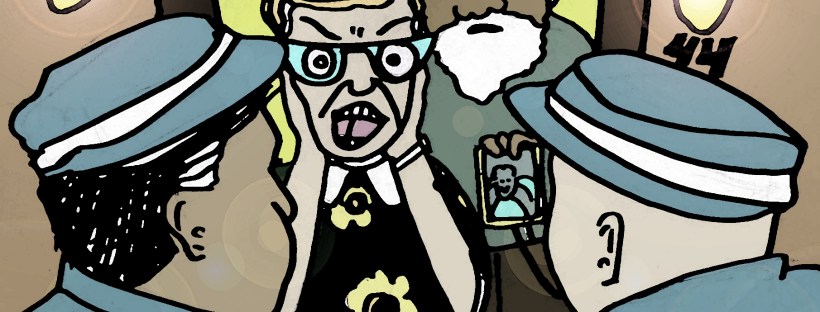
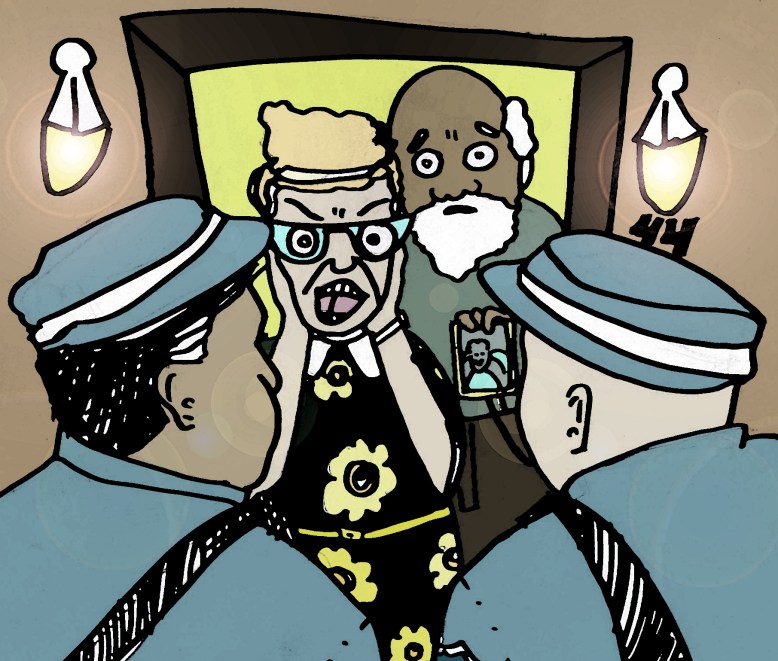
Illustration by Ashwin Pandya

Illustration by Ashwin Pandya

That was the summer of infernal heat, and every day Alice Evers wore an annoying hat with tangled primroses spilling pink and yellow down her back. So, we chased her and catcalled and threw brown pebbles and spitballs at her head and missed and did it all over again until Bobby Jackson blew it clean off her head with a rock from his slingshot. Then we all ran and laughed and even when we saw her lying on the ground with that strange red blistering her ear, we still laughed and laughed and said she shouldn’t have worn that hat, but Amy got mad and walked Alice home and then all our moms knew everything about it. Of course, then we were all mad at Amy. All summer long we were mad at Amy while we hoed the tomatoes and weeded zinnias and washed cars and all the other stupid stupid stupid chores that were all Amy’s fault. So we were grounded and punished and tired of the heat, and when August started, we chafed and scratched in our damp night clothes, but Bobby would wake us after midnight by whispering at our windows, trying and trying to get us to come out to the football field to drink beer, but we were all scared of our fathers and tired of being grounded and cleaning the garage when it didn’t need cleaning again, so we rolled over toward our walls and pretended we didn’t hear him even when his voice sounded tired and sad and not at all angry—just hurt. Then it was time to buy school clothes, and we forgot about Bobby and the beer and the football field and even Amy as we argued with our mothers and fathers over the color of backpacks and composition books and pens. Fall breezes lofted away the heat and apples ripened and our thoughts were full of essays and history and the value of x and even Amy was forgiven her sins and Bobby was walking Alice to classes and whatever had hinged on that white-hot day disappeared like the first flakes of snow testing their strength against the heat of our tongues.


W. E. PASQUINI’s poetry has appeared in Cheat River Review, Cider Press Review, and Fourth River, among others. Pasquini has been nominated for a Pushcart and has been a finalist in various book and chapbook competitions including: New Rivers Press’s MVP; Concrete Wolf Poetry Contest; and Frost Place Competition. Pasquini completed an MFA in creative writing and studied film at the University of South Florida in Tampa, Florida.

ASHWIN PANDYA is a sketch-artist and illustrator, whose work has graced many book-covers. Acknowledged for his digital art as well as musical compositions, Ashwin Pandya can sketch given any situation, description or character. You can visit his website here.

Reenacting the Edda

I picture Sigyn¹

standing with her bowl,

that child-bride poised

over the bowels of her baby.

No time to grieve, she reaches

for the serpent’s mouth

and milks it until her arms ache.


When I was fifteen, I too learned

to hold a bowl over my lover’s head

for hours at a time. My arms burned.

My lips, worm-white with cold,

said nothing as the rain trickled

down. Back then, love

was the role I had been taught:

No spitting. No fighting.

Just water crusting over a lip,

then dropping off.


¹Sigyn is a goddess in Norse mythology, and the wife of Loki.


EMILY BARTHOLET is a highly caffeinated student at Dickinson College, where she wishes she could major in everything. When she’s not studying, she can usually be found writing under a tree, or, when it rains, curled up in a beloved coffee shop. Her poetry has appeared online and in print, most notably in Third Point Press and Rat’s Ass Review’s ‘Love and Ensuing Madness’ collection.

Editors’ Note

“I don’t know a single writer who doesn’t get more rejections than acceptances. I submit less often than most, but even I know the feeling of getting a form rejection email and wondering, “Did you guys even read this?” To spend hours writing and re-writing 5,000 words, and getting a little under a hundred in response, it’s terrible, it’s just terrible.

The thing is, I’m on the other side of the equation too, so I know we read the stories. I know because I have all 127 submissions, printed on Grinnell’s dime (if I’m going to pay tuition, I might as well get my money’s worth) in the drawer of the desk where I sit as I write this.

My introduction to English Literature class last semester was subtitled “Literature as Equipment for Living.” The thesis of the class was that literature is more than some abstract study, that narratives are what sustain us as a civilization. Even if the class didn’t always deliver on that lofty concept, I think it still has merit. I think that because, on the deserted fourth floor of the library, on days when I had an absurd amount of work to get through, I’d take a break from reading some long dead literary critic’s supremely confusing argument that knitting is a form of masterburation and read a submission. And it revitalized me in a way nothing else could have.

We sent out a lot of rejection emails this issue. If you got one of them, I want to let you know that your story got me through the nightmarish parts of my first semester of college. And even now, sometimes I get out of bed at night to open my drawer and pull out the stack of submissions. I have to go through them with a tiny flashlight to avoid waking up my roommate. Once I find the one I want, I go through it, line by line, until I find the sentence I dreamt about, the sentence so beautifully constructed I just had to read it. And, more often than not, it comes from a rejected submission.

It’s terrible, I know, but if it’s any help, know that your story isn’t forgotten.”

– John S. Osler III, Prose Editor


“I’m absolutely, madly in love with Regina Spektor and have loved this song since I started listening to her music. This song is not only about growing up, but it has been with me as I grew up. I listened to it a lot when editing and reading submissions. This, I suppose, is part of what growing up is to me, and is partially how I conceptualized the theme of this issue.”

– Joanna Cleary, Poetry Editor 


“If I’d had to talk about something iconic that represents the concept of “growing up” for me, it would definitely have to be Taylor Swift for me. Taylor, despite whatever conspiracy boyfriends and/or transitions from humble country to mainstream pop music, has always been there. At least, her music has. And I just feel that’s how music works – at one point, it’s not even about the lyrics or the person singing them or the whole history associated with it, it’s just the tune and the rhythm that is so appealing to the soul you sort of lose yourself in it. So when “Red” came out and Taylor completely left her old roots of country music, it didn’t bother me one bit. I still stayed up all night to listen to the album because each of the songs were gems in some way, and at that point it was not about what the music was about, it was about experiencing it.

And this might be a long shot, but that’s how I feel all poetry works – you don’t have to understand all metaphors or analyze the poem. That’s never the point. The point of reading a poem is to experience it, to submerge yourself in the poem so much that you just become full of feeling. And much like Taylor Swift’s music, that’s how I’d describe all the pieces in this issue – each of them are gems in their own right, because they’re all so different and yet so same. Whether it’s the raw narrative of “Fleeting” or the subtle beauty in the last lines of “Valencia Rain,” it’s the experience these poems will give you while reading them, something to cherish.”

– Smriti Verma, Poetry Editor


“I always thought growing up is a linear process that involves magically learning how to sustain human relationships and gaining soufflé-making abilities overnight. There’s a certain ease ten-year-old me saw in the adults around me. A comfortable, almost languid movement that managed to flow through their bodies. It didn’t scream, but confidently stated its presence, and they seemed to have a sureness of their place in their own skin. I thought that’s something you learn as you grow up, but apparently, there’s a couple of more important lessons that come first. Growing up is often realising how young you actually are. It’s about accepting inabilities and limitations, and finding ways to work with, not through, or around them. But the most growing up I’ve done, I think, is learning how to read poetry without feeling jealous. That’s growing up. I don’t know if I’d ever manage to cultivate that grace I always admired, but some day, I hope I’m sturdy enough to be a solid grown up for some ten-year-old watching me.”

-Harnidh Kaur, Poetry Editor 


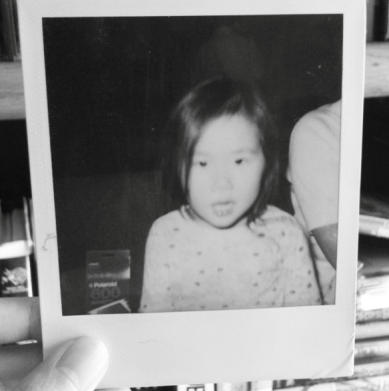
16830328_1419454141459845_972470202_n-1

 “Here’s a picture of me in my prime. I’m not sure how old I was, but I’m sure that I didn’t know what growing up would mean for me. I think I had a general vision of who I wanted to be when I grew up—someone collected, poised, and unapologetically true to herself. Growing up has been trying to become that person I created in my head. I thought it would be easy—I didn’t anticipate the obstacles I would have to face to reach that vision. I’m still growing, trying to become the person I’ve always wanted to be and more.”

-Liana Fu, Prose Editor 


“Growing up, music always was a big part of how I got by. When I first got into listening to music, it was bands like Paramore, Fall Out Boy, and Breaking Benjamin – all the angsty teen stuff. Since then I’ve delved into many more genres that define me now, but as I find myself on the verge of another change toward being an adult, I’m returning to these old favorites. It brings back a sense of nostalgia that has carried me through the last few months, but this angst and change has been defining for me with this issue.”

-Laurelann Heather Easton, Prose Editor 


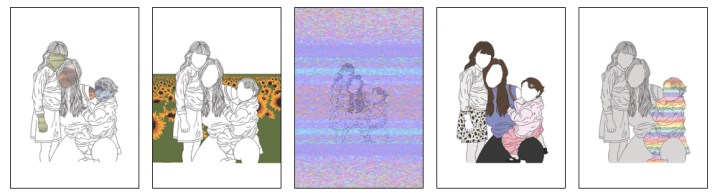
“These are five different manipulations of an illustration I made of an old family photo, (from left to right) my sister, my mother, and me. Each represent a different aspect of my memory of my childhood and reflecting on it.”

16805273_886170931525854_1948760853_o

-Michelle Wosinski, Graphic Fiction Editor 


“As I read submissions for this issue, I revisited some cornerstones of my literary experience — from Hans Christian Anderson fairytales to The Jungle Book — and saw the same richness in mythology in them as I did in the work written for this issue. Work about, for, and reflecting on childhood is uniquely evocative, largely because of the nature of memory. Seemingly random experiences have been magnified and stored away in perfect clarity for decades, while years can blur away, only defined by a single emotion or relationship. This memory-warp lends itself especially well to poetry, itself a confusing blend of truth and mythology. The prevalence in creation was especially fitting for this issue: two poems, “How Wrinkles Were Invented” and “How Catholic School Was Invented”, invented fascinating histories both remarkably similar and radically different. And from reflecting on the present with help of the past, as in Samara Golabuk’s “Once”, to a full immersion in memory, found in Bayley Van’s “Valencia Rain”, the work in this feature took me both to the past and the future of all our selves. I hope you enjoy this issue. Let it blend into your own experiences, and find its homes in your fictions of infancy and beyond.”

-Shereen Lee, Poetry Editor


“Even though I’m still a freshman and Keegan wrote this for commencement, it embodies that pivotal change of growing up while still recognizing that getting older isn’t a path towards an ending.”

Link to article: The Opposite of Loneliness by Marina Keegan (Yale News)

-Nathalia Baum, Prose Editor 


“Truth be told, ‘Growing Up’ isn’t my favorite theme. It is, in some ways, an idea I am afraid of. If I could have anything in the world, I would like to be right here— 17 (okay, maybe 18), snuggled up with a cup of French press, reading Milan Kundera. But, as a voice inside me keeps saying, that ain’t happening.

Growing up in small-town India, one of the first lessons I learnt at school and at home was learning how to respect elders, or ‘grown-ups.’ For a young girl like me, my mother-tongue, Hindi, was puzzling. It had far too many words, far too many suffixes, and far too many names one had to remember while referring to grown-ups, respectfully. I recall asking my mother, “If I drink a glass of milk everyday, will I become a didi?” My mother would nod. And with a beaming smile, I would take her for her word.

However, much to my five-year-old self’s disappointment, the didi I have become is an uncanny, naive soul. It’s a person I love as much as I loathe. Since we started working on this issue, a lot has changed in my life. And a lot will change. In six months, I’ll be starting college in the maze that is New York city. I’ll be leaving friends and loved ones behind, the ones who’ve sustained me through the years. It is difficult to say at this juncture if I will be able to preserve the child in me. If the journey of life was about moving on instead of growing up, it would have been easier.”

Devanshi Khetarpal, Editor-in-Chief 


“‘Growing Up’, I guess for the most part, is learning to fence with a double-edged sword and cutting yourself, sometimes too deeply, in the process. I find the phrase terrifying- the present tense signals some kind of a Sisyphean prison I’m desperately and impatiently trying to escape, the opposite is alluring with the promise of a Peter Pan-esque utopia, the meaning suggests I have to leave a part of my self, my skin, to cross over. I’m 20 and what scares me is that perhaps I haven’t grown up in all the ways that matter. And that’s not, won’t, be okay. This is the way I see it, if ‘growing up’ were a smell, it would be that of a dying person- losing hope, giving up, tasting bitterness, acid, stale hospital linen. It’s a surrendering to the fact that there are some things you can never change, some fragrant places you can never return to, some faces in the mirror you can never see. Yet, living in the present tense has its charms: I know where I’m going, but I haven’t gotten there yet.

-Archita Mittra, Prose Editor 

Angel Pills

pillsink-1

Illustration by Alexandria Heather


Richard has told you his version of things—most of which is accurate—but believe me, what I’m going to tell you now is the key to undoing this mess. Richard, please stop. You’ve said your piece, now just let me add this one thing.

Here, do you see this bottle? I got it from Maggie, the manager of Stacy’s Natural Foods down on First Street, a friend and trusted resource for many years, so certainly I had no reason to doubt her—I mean, the capsules looked so much like those bulky multiple vitamin-mineral supplements that one would be hard-pressed to detect a visual difference in—who could have guessed the hell they would bring down on my family? Although it’s true that Maggie couldn’t vouch for them one hundred percent since they were new to the marketplace, not yet FDA approved, meaning that she had no customer testimonials with which to reassure me, and yet if you looked on the Internet, plenty of parents and doctors alike were raving about this Angeliva treatment, better known as Angel Pills, and since I was at the end of my rope, I figured what the hell. It’s worth a try.

Okay, so in retrospect yes, it does seem somewhat risky, but I assure you that I resorted to the pills only after the more orthodox parenting techniques had failed: lecturing, pleading, threatening, grounding, taking away of the car keys and the iPhone and the Internet, rearranging of her bedroom according to the principles of feng shui—all  of these exhausted before I turned to Dear Amy, that advice columnist, who apparently had no time for the likes of me, and to Jesus Christ himself, atheist although I am and have been for the past twenty years, which just goes to show you how desperate I had become, with sleep deprivation also a factor—but all of these I tried, I swear to you, before I slipped that capsule to Jenna one morning at breakfast, passing it off as a new vitamin/mineral supplement for vegans, which she and I both are in spite of Richard’s constant ragging about riboflavin and iron. Please don’t stare at me like that. I had to do something, didn’t I?

They went to work overnight, those angel pills, worked like magic, I swear to God, and oh, what a sweet change from the bitchy, secretive behavior we had been subjected to in the previous months, the surliness, the pouting, we could do not one thing right, could we Richard? And then the very next day, here she is dancing into my studio, asking me to read a story she wants to submit to the high school literary magazine—a quirky little piece about a shopping mall in an alternate universe; kid stuff, sure, but clever enough, and grammatically perfect, as far as I could tell.

Not that it matters much, the writing—although I admit she’s not bad at it; she inherited some of my genes, so naturally she’ll be pulled in a creative direction now and then, but science is really her thing: chemistry, biology, all the classes I struggled with in high school she aces, no problem, so it’s only natural she plans to be a doctor, like Rickard here—and she’s on track, too. Or at least she was, until this recent shit-storm hit, right on track for acceptance at both Stanford and Cal Poly, her top choices,  no easy feat for kids these days, with all the demands placed on them by the universities, as if the hormones and social pressure alone aren’t enough to keep them—and us—constantly on the brink of madness. But it all came easy for our Jenna: the A plus average, the extra-curriculars, the honors and awards, and what a great group of friends, too—nice kids from good homes, just like her: motivated, responsible and well behaved. We thought we’d won the kid lottery, didn’t we, Richard?

So looking back, all was well until the new semester began, kids got shuffled into different classes, and Jenna became lab partners with Cody Hall, this kid we had never heard of until she started complaining about having to do more than her share of the chemistry projects, and he certainly was never a part of her social group, but next thing you know the phone rings at half past three on a school night and it’s the local police—maybe it was one of you two, I don’t remember—letting us know they’ve found Jenna and Cody parked out by the lake with a six-pack.  Richard drove out to retrieve her, assuring me that kids do this stuff, it’s not such a big deal, we’ll just give the lecture about household rules and expectations and ground her for a week, he said. Jenna claimed to be “freaked out” by the whole police thing, said she didn’t know what she could’ve been thinking. It would most definitely not happen again.

Next night I was up until long after midnight overworking a painting for the upcoming local arts festival—a stressful enough time for me even without Jenna’s bullshit—when suddenly I was struck by a gut-wrenching attack of mother’s intuition, so I rushed to Jenna’s room and sure enough, the bed was empty and the window thrown open, no concern for the utility bill or the safety of the rest of us. She didn’t get home until around 4:00 a.m.—I’m pretty sure there was weed involved this time—and after another lecture, this one actually more of a shoutfest, Jenna shrugged and said, “Okay, you win. You’re right. Whatever.”  When she went wandering again the next night, Richard bolted her windows shut, but as we soon learned, that’s nothing a love-struck boyfriend with a screwdriver can’t fix.

This went on for about a month, with Jenna coming in at all hours under the influence of God knows what, along with recorded phone messages from the school reporting that she was skipping classes here and there, and one call from her Advanced Chemistry teacher concerned about the dive in Jenna’s grade, with Jenna hoping to get into Stanford and all. Who could blame me for turning to Maggie and the Angel Pills?

So when Jenna allowed—no, she actually asked me to read her little sci-fi shopping mall story, I was thrilled to see such results from only one pill, but the next day was even better: a red-eyed Jenna came home with the news that she had broken up with Cody, said it was for the best; he was wrong for her, too wild, so she’d decided to focus on schoolwork and hang out with her real friends, and she hoped to win back her father’s and my trust. We crossed our fingers and dared to hope.

Two days later, I was collecting moldy Dr. Pepper cans and other trash from Jenna’s room when I found the Bible. Yep. Oh, I was startled, sure, but then I thought okay, this could be a good thing, even though we’re not churchgoers, Richard and I, because I sometimes worry that maybe we should’ve given Jenna a little more exposure to religion so that she could draw her own conclusions from more than an occasional Christmas pageant. So let her explore, I thought. No harm there.

At dinner one night, almost two weeks exactly after she took that first pill, she mentioned that “by the way” she had joined the First Baptist Church over on East Avenue after accepting Jesus as her personal savior, sending chills through my agnostic heart, I must confess—no offense, if either one of you is religious.

And when she said she probably wouldn’t be going to Stanford or Cal Poly after all, that she was researching a bible college in Texas where she could prepare to serve the Lord as a minister, I knew I had to get her off those damn pills. I didn’t know, I swear to God—oh, I guess there must’ve been a warning somewhere in all that paper that came with the bottle, but nobody reads that stuff, right? I didn’t know, until I spoke with Maggie just a few minutes ago, that you can’t just stop the pills cold turkey; you need to be weaned off, or there can be certain side effects. So as soon as Jenna left the table I stupidly jumped right up and fed the half bottle of remaining pills to the garbage disposal.

Richard has already told you the rest: this morning Jenna was gone, leaving this little note that basically says don’t bother to look, and  Richard suspects she’s run off with Cody. Yes, of course we’ve called his house, but nobody’s picking up, which is par for the course over there.

Richard thinks the sudden withdrawal from the pills has messed with Jenna’s brain chemistry, causing her to revert to the old self-destructive behavior, but on that we disagree. Stop trying to shush me, Richard. They need this information.

What I think is that the side effects caused by the withdrawal might be taking another form. Look right over there, by her bedroom door. Do you see them?  Richard will tell you they’re from the old down comforter that she dragged around as a baby, and that she must’ve rescued it from the attic to take with her on this latest adventure, dropping feathers along the way. But I’m pretty sure I threw away what was left of that rag years ago. I know I did.

And I’ll tell you another thing I’m certain of: those pills were definitely affecting Jenna, and in a good way at first. There were a couple of nights, right after her break-up with Cody, when I awoke in a near-panic and rushed into her room, but each time, I found her smiling in her sleep, so sweet and peaceful, her hair and skin glowing in the moonlight, hands folded under her chin, looking as if she were ready for the “Now I Lay Me Down To Sleep” thing we used to do when she was a little girl.

Oh, I saw that look you just gave each other, but I didn’t imagine any of this, I tell you. Somehow those pills made Jenna want to be good. She was maybe a little confused about what “good” really means, that’s all. And the dosage was probably just a tad too high, which would explain the feathers.

And as you can probably tell by his sour face and the way he keeps trying to cut me off, Richard holds me responsible, points out that I haven’t slept more than a few hours in a row for several months now, and wants to convince me I’m losing it, which just dumps more stress on me and isn’t the least bit productive, in my opinion. I think our only hope is to get Jenna back home and on the pills again, at a reduced dosage of say, half a pill a day, or one every other day; I’ll have to do some research, talk to Maggie. The important thing here—and on this I think we can all agree, even Richard—is that we get our girl home and back on track before the college application deadline.

I see from your faces that you blame me for this mess, maybe because you’re too young to have teenage children of your own. Just wait until you’re on the receiving end of one of those three a.m. phone calls. But please don’t let your judgmental attitudes stop you from doing your job. You are the police, after all, judging by your badges and your guns. It’s your duty to find my daughter and bring her home.


PEGGY SCHIMMELMAN is a writer and poet from Livermore, CA. She is the author of Whippoorwills, a novel, and her short stories and poems can be seen in the Comstock Review, Pacific review, Aleola, 100wordstories.org and others. Her poetry chapbook, Crazytown, is undergoing publication. When not writing, she reads and plays around with percussion.

ALEXANDRIA HEATHER is mostly water.

Well, Love, I’m Walking

IMG_2360.JPG

Photograph by Jim Richards

Walking around

the yard in the sun

looking at birds

after the long winter,

selfish and dark,

mourning your loss.

The usual: thrush,

starling, chickadee,

pine siskin with

dull yellow waking

on its wings. You

should be with me.

The sound of sod

drying out, a slow

sizzle. A zephyr.

I close my eyes so

my face will feel it.

I should see you

when I open them.

The quaking aspen’s

bare branches cleave

equinox blue. A rabbit

disappears beneath

that hideous old spruce.


JIM RICHARDS’ poems have been nominated for Best New Poets 2015, two Pushcart Prizes, and have appeared recently in Prairie Schooner, South Carolina Review, Juked, Comstock Review, Poet Lore, and Texas Review, among others. He lives in eastern Idaho’s Snake River valley, and in 2013 he received a fellowship from the Idaho Commission on the Arts. To read more of his work visit www.jim-richards.com.

Harvest Moon

Monday evening

My dad and I sit in the rec room watching football on the sixty-inch plasma TV bolted to the wall.  Announcers yell and refs blow whistles.  Play stops and starts and stops again.  I don’t get it, but my dad worships the game so I take my cues from him.  

“Dammit!” my dad yells. His beer spatters. “Interception my ass! You believe that, Gordy?”

“Yeah, I know,” I say, even though I have no idea.  Red and blue and white and silver uniforms and helmets surge back and forth across the screen.  “I don’t believe that.”

“Jesus H. Baldheaded Christ,” he says, shaking his head.  

“Yeah, I know.  Jesus.”

My dad tips me a wink and takes another swallow of his beer.  “You’ll get the hang of this game yet, Gordy.  See if you don’t.”

I can’t help but grin.  I know he’s wrong, I’ll never understand this game as long as I live, but his offhand compliment rings in my ears.


Tuesday morning

It’s taken me a month but I finally get the courage to ask Rhonda LeClerc to the Harvest Moon dance.  

“Hey,” I say as I catch up to her in the hallway between first and second period.  She’s coming out of the biology lab with her books clutched to her chest.  She wears big, round glasses that give her a perpetually surprised look.  Her dark brown hair is cut in a bob that frames her face like a Rembrandt portrait.  As usual she is looking at the floor.

“Hey,” I say again.  We walk together.  “So, yeah.  I was wondering…there’s the dance this Friday…”

Words slide out in a run-on sentence.  “Yes I want to go with you that would be great I’m really glad you asked me.”

I’m twenty pounds lighter.

We walk together some more.  Kids pass us on either side.  I love Rhonda’s run-on sentences.  I try to get her to talk again.

“Yeah,” I say.  “Okay, that’s awesome.  Yeah.  How’re classes going so far?”

She nods and her bob bounces.  I could watch it all day.  “They’re going great getting A’s so far but Mr. Dunphy my Communications teacher is kind of weird but that’s okay I guess.”

I’m enchanted.


Wednesday afternoon

My dad’s a building inspector for the city.  He notices things.  It’s his job.  He takes his job home with him a lot.  

“You got a girl, Gordy?” he asks, peering at me across pot roast and broccoli.  He’s peering at me.  “You look like you got a girl.”

I feel my face turning red.  My two younger sisters both stare at me, smirking.  My mom beams.  

“No.  No girlfriend.  No time.”

“Bullshit,” he says.  “You got yourself a girlfriend, Gordy.  I can tell.  Is it that LeClerc girl?”

I spill gravy.  “You know about Rhonda?”  It’s out before I even realize it.

My dad spears roast triumphantly.  “Rhonda LeClerc!  I know her father.  Brad LeClerc.  Good man.”

My little sisters snort laughter.  I don’t know if it’s at me or at our dad.  My mom just keeps beaming.  She looks so proud of me.  My left foot starts twitching under the table.  I try to clean up the spilled gravy.  

“You taking her to that dance?” my dad says.

“I don’t know.  Maybe.”  I drop the napkin I’m using to clean up.  I bend over to pick it up.

“Bring a condom, Gordy,” my dad says.  I freeze, still bent over.  “Use protection.”  Out of the corner of my eye I see him pointing at me with a forkful of dark green broccoli.  I see my mom nodding in beatific agreement.

I straighten slowly.  I don’t know what to say.  My little sisters are watching.  They’re only eight and five.  

I plaster on a smile that I don’t feel.  “I will for sure.  Hey, when’s the next game?”

He chews his broccoli like a hippopotamus.  “Tomorrow night.  You in?”

“Definitely.”    


Thursday morning

I catch up to Rhonda after first period again.  

“Hey.  I’m psyched about going to the dance tomorrow.”

She stares at the floor.  “I can’t go I’m really sorry my dad said he talked to your dad and your dad said something about condoms and so my dad freaked a little bit and said I can’t go.”

My heart stops.  “That sucks, that really sucks.  That’s crappy.”

She walks a little faster but I keep up.  She doesn’t say anything.

“You sure?  You sure you can’t go?”  I must sound pretty emotional because Rhonda suddenly stops and turns and looks straight at me.  Her eyes are wet.  She has a birthmark on the left side of her forehead shaped like a spiral galaxy.  I’ve never noticed it before.  

“My dad’s a jerk and he won’t let me go and I hate him for it and I’m so sorry Gordy I really want to go I really do!”

I’ve known Rhonda since third grade.  On her first day the teacher introduced her to the class  and she stared at the floor.  She had big glasses then, too.  She walked to the desk right next to mine.  She looked over at me and smiled, just for a second.  That was it for me.  

For the last seven years I’ve been thinking about her.  

There’s a smile like a supernova on her face and I realize I just said that last sentence out loud.

“I’ve thought about you all this time too Gordy and it makes me happy that you’ve thought about me too and I wish my dad wasn’t such a jerk.”  She reaches out and touches my cheek.  Kids pass by around us, oblivious to my rapture.  Unbelievable.  

In the next moment I am kissing her, there in the school hallway between periods one and two.  She is warm and alive and tastes like strawberry lip balm.

Reluctantly we break the kiss.  Some kind of knowledge has passed between us.  Alchemy has happened.  

She speaks first, in a whisper.  “We have to go to the dance.  You know that, right?”  It isn’t a challenge, just a question.


Thursday evening

My dad eats Sour Cream and Onion-flavor Ruffles, washing them down with cold Budweiser. Crumbs spill down the front of his shirt.  In front of us, the uniforms charge back and forth across the screen.  Play starts and stops, seemingly at random.  

“Her dad says she can’t go to the dance,” I say.  

“That so?” my dad replies.  He munches chips.  

“Yeah,” I say.  “She says it’s because you talked to her dad.”

“Yeah?” he says.  He swigs Bud.  “Dammit!  That ref is blind.”

I pick up the remote and turn the TV off.

My dad stares at me.  “What the hell’d you do that for, Gordy?”

“I’m going to that dance with Rhonda.  Just so you know.”

“The hell you are.  If her dad said no, that’s it.  End of story.”

I nod.  “Sure, dad.”  I turn the game back on.  It’s an Old Spice aftershave commercial right now.  “Football makes no sense.  Running back and forth across a field and running into people.  What’s the point?  What’s the fucking point, dad?”

He spills his beer. I’ve never sworn in front of my father before.  I stand up.  He looks up at me with a strange expression.

“Well, enjoy the rest of the game, dad,” I say as I drop the remote in his lap.  “I hope your side wins.”


Friday evening

Rhonda and her brother, Ray, pick me up at 8:13.  I get into Ray’s beat-up Chevy Cavalier when it pulls up to the curb.  My family watches from the living room window.  I can’t see anyone’s expression.

Ray LeClerc is a big dude with biceps like flak guns.  When he drops us off outside the gym he grabs me by my suit lapel before I climb out.  

“That’s my sister right there,” he says in a near-whisper.  Rhonda is already out of the car, standing next to the gym door where lights and music pour out and kids pour in, perfect in a floral-print dress.  Her birthmark glows in the orange sodium-arc lamps of the parking lot.  “She’s a sweet kid.”  Then he lets me go without saying anything more.  He doesn’t have to.  

As he pulls away from the curb he honks twice and waves out the window.  “Be good, you two!” he yells.  “Midnight!  Be here!”


Later Friday evening

The dance goes about the way these things usually do.  It’s awkward.  For a few minutes, we sit at one of the round, paper-covered tables and listen to the music together.  It’s loud, and when I finally get the nerve to ask her to dance with me, I practically have to shout.

“Want to dance?” I yell in her ear.

“Sure that would be great Gordy do you mean right now?” Somehow she manages to maintain a volume that’s audible over the music.

“Yeah,” I say into her ear.  “You have great lungs, by the way!”

She smiles, and my knees tremble.

We walk to the dance floor together, weaving around tables and people.  The current song is “Love is a Battlefield,” classic Pat Benatar.  Neither of us knows how to dance, so we improvise.  Her touch on the back of my shirt is electric.  We manage to get almost all the way through the song before I step on her foot.  She winces.

“Oh, shit, I’m sorry!” I tell her, hoping she won’t remove her hand from my back.  There’s a few inches of space between us, my hand is on her shoulder, and all I can think about is holding her closer.

“It’s all right I’m okay but let’s sit down for a little bit okay?”

We weave back to our table.  All the while, I’m silently calling myself every name for idiot I can think of.  We sit down.  She reaches out and finds my hand with hers and gives me the slightest of squeezes.  She’s looking at me, not with her usual dazzling smile but with a faint curve of her lips that I can’t quite read.  The gym is warm even though it’s fall outside.  Hundreds of teenage bodies packed into one room, that’s what happens.  The DJ must have a great subwoofer setup because the bass thuds through my chest like a second heartbeat.  Rhonda’s hand feels sweaty in mine.  She’s holding tight.  I’m sweating a little, too.  It trickles down into the collar of my Oxford shirt, tickling the fine hairs on my neck.  Rhonda’s big glasses reflect the twirling spotlights the DJ has set up, warm reds and oranges to enhance the fall harvest theme.  Rhonda doesn’t seem to want to look at the lights, only at me.  This makes me extraordinarily happy.  

We leave the dance early and walk to cool off.  My tie is loosened.  We keep holding hands as we walk.  It’s late, maybe ten-thirty.  Her perfume catches my nostrils and holds them gently.

Eventually we reach a pocket park a mile or so from the school.  We sit together on the wet grass.  I hardly notice the dampness seeping through my suit trousers because moonlight is making Rhonda’s birthmark glow and she is looking at me and her eyes are trying to tell me something that she can’t come out and say in one of her magical run-on sentences.

I have a raging erection that I try to ignore.  I’ve brought condoms in my wallet.  We kiss.  We fumble.  The grass is cold on bare skin.  She still doesn’t say anything.  Neither do I.  Our bodies carry us.  

The condom is harder to manage than I thought it would be.  Eventually, with Rhonda’s help, I manage to put it on.  She smiles gently at the awkwardness of the situation.  She relaxes me with her smile.  I breathe.  She lays down in the moonlight.  She takes off her glasses and she becomes Cindy Crawford and Marilyn Monroe and all the ancient love goddesses rolled into one.  I want take time, to explore her with my hands, my fingertips, my tongue, but then she slides her skirt above her waist and suddenly a single desire crowds out all others.  She guides me and I enter her.  She cries out sharply, then collapses into a long moaning.  I’m moaning too, I realize.  We rock back and forth, slightly out of sync like two boats bobbing next to each other on choppy water.  There’s a rhythm of some kind, but I can’t quite pick it up.

Abruptly, and much too soon, I climax.  It’s amazing.  Then it’s over.  


Very early Saturday morning

We get ourselves together with quick, efficient movements.  It’s a few minutes past midnight, and we need to get back.  We walk back to the school.  

When Ray pulls up and we get in, he turns and gives me a hard stare.  I manage to meet his gaze.  I’m sure he can tell.  But he just turns back around and drives us away.

Ray drops me off at my house.  I go in.  Everyone is asleep.  I go to my bedroom, peel off my suit, put on some pajamas I drag out of my laundry hamper, and crawl into bed.  I lay awake for a long time, looking at the moon through my window.


Monday morning

I catch up to Rhonda as she comes out of the biology lab.  Her birthmark is an amoebic blob.

“Hey,”  I say.

“Hey,” she says back.  

“Did you sleep at all on Friday?  I didn’t.”

“Yeah I slept okay I’m sorry you didn’t did you have fun at the dance I did I thought it was nice.”

Her run-on sentence is hard to follow but I detect the question inside it. “Yeah it was pretty cool,” I say.  

“I’m glad you think so too I gotta get to Communications Mr. Dunphy you know how he is.”  She scoots off before I can sort out what she’s just said.  Maybe I’ll ask her later if we run into each other.  


DR. BRIAN KIRCHNER holds a doctorate in Geology and teaches Earth Science at a college near Detroit, Michigan. He is 46 years old and has been writing as a hobby for several years. He writes short fiction and poetry. He lives in Royal Oak, Michigan, USA.
Natural Science

15909613_10209879182569430_874178960_n.jpg

Illustration by Ashwin Pandya

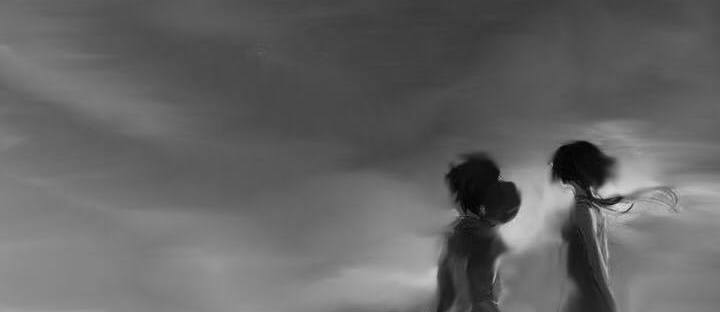
and all around him, blue points of flame pop up into the air like the tips of pencils, like

the engines of rockets aimed for the earth, but Bobby waits, holding his newly burning

match, still believing that what everyone else has done will somehow be harder for him,

worried that he will be the only one who can’t. His lab partner, Reid, grinning past a

street-broken tooth, lowers the large rock back onto the desktop, concealing again the

dirty message he’d scrawled in marker during some earlier class, tipped up to reveal

proudly now, in secret. The rocks were set around the room to demonstrate the different

kinds — sediment, volcanic, something else — not for graffiti. Bobby wishes the craggy

note at least made sense, that he could take part in the joke, the secret, but he doesn’t

understand. Masturbation Rocks. There had been classes about that last spring, an

entire summer ago, but for all he’s tried to forget since or had only pretended to

understand in the first place, he’s sure that rocks have nothing to do with it. His uncle

had made a joke once about monkeys in the zoo, laughing alone, but they were at least

monkeys, not rocks. Feeling the flame moving down toward his fingertips, Bobby rotates

the metal handle on the counter to point forward and reaches the flame of the match out

toward the top of the rifle-like cylinder, waiting for his too to turn blue, and then maybe


MATTHEW BRENNAN is a writer, editor, translator, and blogger from the Pacific northwest. His work has received several awards and fellowships, and more than 70 of his short fictions and poetry translations have been published in journals, including The Citron Review, SmokeLong Quarterly, Emerge Literary Journal, The Los Angeles Review, and Superstition Review. He earned his MFA in fiction at Arizona State University. Website: http://matthewbrennan.netTwitter: @MatthewBrennan7 

ASHWIN PANDYA is a sketch-artist and illustrator, whose work has graced many book-covers. Acknowledged for his digital art as well as musical compositions, Ashwin Pandya can sketch given any situation, description or character. You can visit his website here.