Writers are a curious sort of bunch. Unique in their never-ending quest for knowledge of the world, its inhabitants, and everything that lies beyond what the synapses of our brains can comprehend. They strive for explanation, description, “hows” to our “whys” and “whys” to our “hows.” They create. They paint with pencils, pens, lips,–that subtle art of stringing letters, words, and sentences together until hearts bleed and minds burst.
One such artist, Rachel Yoder, truly embodies this essence of a writer. Yoder’s unique voice has appeared in publications such as The New York Times, The Chicago Tribune, The Paris Review Daily, and The Sun Magazine. Her works have also received The Editors Prize in Fiction by The Missouri Review and notable distinctions in Best American Short Stories and Best American Nonrequired Reading. For our fourth issue, we were incredibly fortunate to be able to have a conversation with her about the inner workings of a writer’s mind. We invite you to come and listen in on this conversation and be as charmed as we were.
PUT_CHARACTERS_HERE
Please enjoy and stay ink-hearted,
Prose Staff, Inklette Magazine
Since the theme of our fourth issue is ‘Growing Up,’ we wondered if there was an experience you had growing up that you feel greatly influenced your writing?
RY: Stories were a big deal in my family. I grew up Mennonite, with a large extended family, so stories from the Bible as well as stories that chronicled our family history were always held up as very important—for passing along culture and values, for reminding us of who we were and where we came from, for creating a family culture of sharing and togetherness.
My parents also read. A LOT. Magazines and books were ubiquitous in our household and, through this, I learned to value words.
I was also a vociferous reader growing up. Since we lived at the dead end of a dirt road, I had to come up with my own entertainment often. I remember spending entire afternoons—hours and hours at a time—reading. It was normal for me to finish two to three books a week when I was in elementary school and junior high. Thinking back on those days is delicious now. I wish I could spend an entire sunny afternoon reading Catcher in The Rye for the first time again.
Oh! And how could I forget the detail that my mom was a librarian? My second home for most of my childhood was the public library. My best friends literally were books. So it only seems reasonable that I grew up to be a writer.
Also, do you think where you grew up influenced your writing?
RY: I grew up in a Mennonite commune in the Appalachian foothills of eastern Ohio. Because of this, I was always traveling between worlds and trying to figure out how to navigate wildly different value systems successfully. I studied the people and places around me. I wanted to figure out the rules so that I could master them and excel. Because I was always outside looking in, I was in the role of outsider, which is a familiar place for writers to find themselves. For most of my life up until my adulthood, I always—absolutely always—felt like an outsider: in school, in the small town where I lived, within the conservative Mennonite culture of my extended family, then in college and the elite, moneyed circles I found myself in there. So this outside status has definitely situated my voice as a writer and also dictated to an extent my aesthetic approach to my writing. I always try to push toward the edges of genre and form. I don’t want my stuff to be usual. I want it to be as challenging and strange as it can be while also connecting with readers in an essential way.
Do you write in different genres/forms? How do you shift from one to another? Does that change your creative process?
RY: I definitely write in different genres and forms. My mainstays are short stories and short essays. Usually the subject matter of a particular piece dictates my approach to it. If I want to think something through, if I want a piece to be able to “talk about” or “think about” an idea, I look to the athleticism of the essayistic form. If I just want to take you on an experience, if I want you to come along as a friend but I don’t really have a point in mind, a story is a better approach. Honestly, though, most of the stuff I write is hard to categorize. It can work as either a story or an essay, depending on your mood.
What is the first thing you typically comprehend upon waking up?
RY: How I want to keep sleeping! Since having a baby (who is now nearly 3) my waking-up has drastically changed. I used to be a big time sleeper-inner, but now my schedule is run by a tiny tyrant who insists I “play trains” with him at 6:30 in the morning. The first word in my head when I wake up is almost always “coffee.”
In your essay “Why Writers Need Unicorns,” you tackle the topic of rediscovering the Muse–as you matured as a writer and person, did inspiration and the way it came to you evolve/change?
RY: Oh man. Yes! When I had unlimited time to write, and was single without a husband or a family, I felt my way through my writing. Whatever great sadness or loneliness or love I was experiencing or dwelling on became the thing I needed to work through and examine. I also thought about the past a lot. Ah, what to do with endless time? I was forever in my head.
Now, I have almost no time, much less time to dwell on trifles such as feelings or the past. So these days my writing feels more planned and calculated. I think a lot about what I want to write before I do and am not compelled solely by my feelings. I think: what would be a project that’s interesting both content-wise and form-wise? To what do I want to dedicate my very limited time? What sort of project would other people like to read? I have to be smarter and more efficient in how I approach my writing time, so there’s more thinking through a project before I start it.
Which authors or pieces have helped you become a better writer? And which aspects of those pieces struck you the most?
RY: Mary Ruefle’s book The Most Of It opened up a new door in my brain. I saw that writing could be both playful and dead smart. I didn’t have to be so serious, so life-or-death with my writing. It could both skip along and sing as well as kick ass and take names, so to speak.
I’ve also been deeply influenced by Joe Wilkins’ beautiful essay and memoir “Out West” published in Orion Magazine. It showed me that a single piece of writing can successfully and brilliantly flow from breathless storytelling to researched reportage to passages of tear-inducing poetry. It’s such an astonishing piece of writing and the sort of work that I aspire to. It had a real-world point to it, but it’s also deeply personal and also would be beautiful if read aloud.
I also tend to really love things that I have no idea how to categorize, because I feel as though they’re forging new neural pathways in my head and they give me this weird, perplexed and elated sensation as I read them. Some examples: Duplex by Kathryn Davis, Grief is The Thing With Feathers by Max Porter, the aforementioned Mary Ruefle book, Big Kids by Michael DeForge, and anything by Gina Wynbrandt (a graphic artist out of Chicago. Go find her books NOW.). Also, I think Rachel Cusk is a genius and probably the smartest, most talented author currently writing, but if I were in high school, I wouldn’t be interested in her work. Read her when you’re 30?
In your writing, you use some very unique metaphors–are there specific inspirations for how you develop these?
RY: I don’t know if this is okay to say, but while I was writing The Hard Problem, I was going through a phase where I smoked a fair amount of pot. This is pertinent because the pot definitely loosened something up in my head and made what happened in this book possible. It allowed me to loft from idea to idea in a way I wouldn’t otherwise. (To be clear, I never wrote while stoned, but there was a residue leftover when I sat down to write, like all the doors in my mind had been unlocked.) I am NOT condoning or promoting pot use. What I am promoting is experimentation with breaking the bonds of your usual thinking. How can you irrationalize yourself? How can you move outside your usual ways of thinking and seeing? That is so much of the work of writing for me. How can I move into a space where my brain is firing in ways that are surprising even to me? If I am able to let go and allow the writing to show me the way, it leads me to the right places. If I’m trying to impose ideas I have on the writing, if I’m consciously trying to make it strange, it usually winds up sounding bad.
What legacy do you hope your writing leaves behind?
RY: I guess I’d just like it to show what it was like to be Rachel Yoder. I want it be writing that’s so idiosyncratic and specific, you can’t mistake it for work by someone else. I am trying to map my brain for other people. I am trying to give you an experience of my inner worlds. If I wind up sounding like someone else, I’ve failed, at least in my estimation.
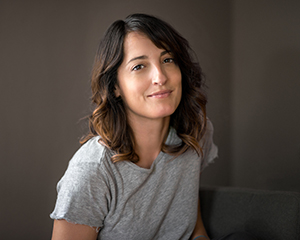
RACHEL YODER grew up in a Mennonite community in the Appalachian foothills of eastern Ohio. She now lives in Iowa City with her husband and son. Her debut short story collection, Infinite Things All At Once, is forthcoming from Curbside Splendor Publishing in August 2017. The Hard Problem, coming out in 2018 from Curbside Splendor, is an experimental essay collection and will contain pieces such as “Why Writers Need Unicorns.”
You can buy Rachel’s books from Curbside Splendor’s website here. Links to her work can also be found on her website here.

She and Mary Polanzak are the founding editors of draft: the journal of process, a literary journal. draft features first and final drafts of stories, poems, and essays, along with author interviews about the creative process.
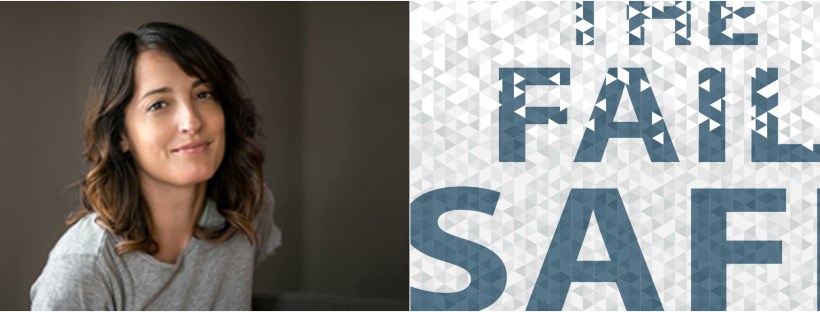
Rachel hosts The Fail Safe, an interview podcast that explores how today’s most successful writers grapple and learn from creative failure.
Links to published work, suggested by Rachel, that might be of particular interest to Inklette readers are: The Mindfuck (The Normal School), Fart Mart (Guernica/PEN American Flash Fiction Series), Four Short Essays from The Hard Problem (The American Reader), Three Short Essays from The Hard Problem (The Rumpus), Symbols (Hobart).

 Inklette Magazine